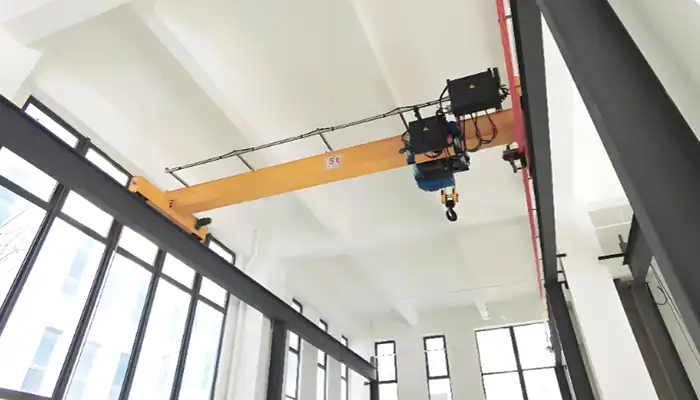
5 Ton Overhead Crane Price in Kazakhstan: Full Cost Guide
Content Quick Link
Comprehensive Guide: 5 Ton Overhead Crane Price in Kazakhstan
Most Important Takeaway -For Kazakhstan Industrial Buyers
In Kazakhstan’s industrial environment—whether it is a steel workshop in Karaganda, a mining base in Pavlodar, or a manufacturing facility near Almaty—the acutual cost of a 5 ton overhead crane is never limited to the supplier’s quotation.
In practice, experienced local buyers already understand a key principle: a crane is not just a product purchase, but a long-term operational asset integrated into the production system.
This means the investment includes equipment supply, structural adaptation to the workshop, long-distance transport across Kazakhstan, on-site installation, and all supporting modifications required to ensure safe and stable operation.
What Kazakhstan Buyers Usually Care About First
- The final crane price depends heavily on workshop condition and real installation environment
- European-style cranes are chosen for long-term reliability and stable performance rather than only initial cost
- Span and lifting height significantly influence steel usage and total project investment
- Transport across Kazakhstan’s large territory is a major part of total project cost
- Installation in mining and steel regions requires practical adaptation to real site conditions
- Hidden costs such as runway beams and electrical upgrades are very common in actual projects
FAQ: 5 Ton Overhead Crane Cost and Buying Guide in Kazakhstan
Q: What is the total cost of a 5 ton overhead crane in Kazakhstan including installation and delivery?
A: The real cost of a 5 ton overhead crane in Kazakhstan usually includes not only the crane itself but also transport, installation, and workshop preparation.
- In most Kazakhstan projects, the "crane price" you see from suppliers is only the equipment part, not the full installed system cost.
- When adding rail installation, delivery from China or regional suppliers, and on-site commissioning in cities like Almaty, Astana, or Karaganda, the total investment becomes higher than the initial quotation.
- Remote industrial sites such as mining areas often increase logistics and installation expenses due to distance and access conditions.
Q: Why do different suppliers give very different prices for the same 5 ton overhead crane in Kazakhstan?
A: Prices differ because crane design level, structure strength, and configuration are not the same even if the capacity is identical.
- Some crane suppliers offer standard single girder overhead crane systems used for light and medium workshop lifting, while others provide European-style bridge cranes designed for continuous industrial operation.
- Differences in hoist quality, steel structure thickness, and electrical control systems such as frequency control or basic contactor systems also affect pricing.
- In Kazakhstan steel plants and mechanical workshops, buyers often compare not just "price per ton," but how long the crane can operate without frequent maintenance or downtime.
Q: How does European-style overhead crane design influence long-term use in Kazakhstan industries?
A: European-style crane design improves long-term reliability and reduces maintenance needs in continuous industrial operations.
- Many steel production and mining facilities in Kazakhstan prefer this design because it performs better in long working cycles with fewer interruptions.
- The optimized box girder structure reduces stress on wheels, motors, and gearbox systems, which is important in heavy-duty environments like metallurgy plants.
- Although the initial overhead crane price is higher, buyers often consider the lower breakdown rate and stable production flow as more valuable over time.
Q: Why does span affect 5 ton overhead crane cost so much in Kazakhstan workshops?
A: Span has a direct impact on steel usage and structural strength, which significantly changes the total crane cost.
- In many Kazakhstan workshops, spans of 10 to 28 meters are common, especially in older industrial buildings.
- A wider span means the bridge beam must carry higher bending load, which increases steel weight and fabrication cost.
- If the workshop structure is not originally designed for modern overhead lifting equipment, additional reinforcement or runway beam adjustment may be required before installation.
Q: What transport costs should be expected when shipping a 5 ton overhead crane to Kazakhstan?
A: Transport cost depends on distance, oversized cargo handling, and cross-border logistics from supplier countries into Kazakhstan.
- Crane components like main girders and end beams are usually transported separately by rail or combined road-rail systems due to size limitations.
- Routes through China–Kazakhstan rail corridors often pass logistics hubs such as Almaty or Astana before reaching industrial regions or mining sites.
- For remote areas, inland transportation and customs procedures can become a noticeable part of the total overhead crane project cost.
Q: What installation problems are commonly seen in Kazakhstan crane projects?
A: Installation challenges usually come from site conditions, equipment availability, and workshop structure limitations.
- In remote industrial zones or mining sites, lifting equipment such as mobile cranes may not always be available on schedule.
- Rail alignment across long workshop spans must be precise, especially in older steel workshops where structural conditions vary.
- Weather conditions in open or semi-open workshops can also affect installation timing and workforce coordination.
Q: What hidden costs do buyers usually discover after buying a 5 ton overhead crane in Kazakhstan?
A: Hidden costs usually come from workshop preparation, electrical upgrades, and structural reinforcement requirements.
- Many buyers first focus on the crane price but later find that runway beam systems need fabrication or adjustment to match real workshop conditions.
- Older factories often require electrical system upgrades, including busbar or cable power supply modifications to match modern crane control systems.
- Structural reinforcement, load testing, and certification requirements are common in Kazakhstan industrial safety practice before the crane can enter full operation.
Crane Pricing in Kazakhstan Industrial Practice
Pricing is shaped by how the crane will actually be used
In Kazakhstan, purchasing decisions for a 5 ton overhead crane are usually not made on a quick quotation comparison. Most buyers in steel plants, mining sites, and mechanical workshops look at one simple question first: will this crane keep working steadily in daily production without frequent interruption.
It sounds basic, but this is where most of the real discussion starts. Price matters, of course, but it is usually considered after checking reliability, maintenance access, and whether local teams can handle long-term operation without complex support.
- Steel plants often prioritize stable lifting cycles over low initial cost
- Mining-related workshops focus on durability under heavy dust and temperature changes
- General fabrication shops usually look for easy maintenance and spare part availability
- Remote industrial sites prefer equipment that does not require frequent technical visits
In many cases, buyers in Kazakhstan say it in a very direct way: "We need something that works, not something that looks cheap on paper."
What actually forms the 5 ton overhead crane price in Kazakhstan
The final price is not a single number from a catalog. It is built step by step, depending on how the project is arranged from factory production to installation on site in Kazakhstan.
A typical quotation includes several connected parts, and each one changes depending on site conditions and project requirements.
- Core crane equipment, including girder, hoist, motors, and electrical system
- Structural adaptation based on workshop span, height, and building condition
- Transport arrangement from supplier country into Kazakhstan industrial regions
- Installation work, including rail alignment and commissioning after setup
If the workshop is older or originally not designed for overhead lifting systems, additional structural checks or reinforcement may be needed. This is common in many industrial buildings across Kazakhstan, especially in facilities built during earlier industrial development periods.
Sometimes buyers only notice this after equipment arrives. That is why experienced engineers usually review drawings before confirming final pricing.
Why installation often decides the real project cost
In many Kazakhstan industrial projects, delivery of equipment is only the middle stage. The more important part comes after the crane reaches the site.
Installation and commissioning often take more time and coordination than expected, especially in remote areas where lifting equipment and technical teams are limited.
- Rail installation requires accurate alignment across long workshop spans
- Electrical connection depends on existing factory power conditions
- Load testing must match real working conditions, not only theoretical values
- Weather conditions can affect installation schedules in open or semi-open workshops
In mining regions or distant industrial zones, logistics and installation planning often matter as much as the crane itself. Some buyers even plan installation windows around weather and production downtime, just to avoid disruption.
In simple terms, as many Kazakhstan plant managers put it, "the crane is bought in one step, but it becomes useful only after everything is properly installed and tested."
Crane Structure and Cost Logic in Kazakhstan Projects
Standard Crane Structure -Common Industrial Choice
In many workshops across Kazakhstan, the most commonly used option is still the standard single girder or double girder overhead crane. It is not a new concept, but it fits the working reality of many factories, especially those that run steady production without very complex lifting cycles.
Most buyers choose this type because it keeps the project straightforward. The structure is familiar, spare parts are easy to find, and maintenance can usually be handled by in-house technicians without relying on highly specialized service teams.
In daily operation, this matters more than it looks on paper. Many facilities are located far from major cities, so having a system that is simple to maintain is often more valuable than advanced features that require external support.
- Single girder cranes are commonly used in lighter workshop conditions
- Double girder versions are preferred when loads are heavier or span is larger
- Maintenance is generally easier and does not require advanced technical training
- Suitable for continuous but not extremely intensive lifting cycles
Typical applications include mechanical repair workshops, medium manufacturing plants, steel fabrication units, and general industrial facilities. In these environments, the focus is usually on stable operation and predictable maintenance cost, not complex automation or high-end control systems.
In practice, many Kazakhstan buyers look at it in a simple way: if the crane can run daily without complicated servicing, it is already a suitable choice.
European-Style Crane (Long-Term Investment Approach)
In larger industrial sectors in Kazakhstan, especially steel production and mining-related enterprises, European-style overhead cranes are being adopted more often. The reason is not only technical performance, but also long-term operational planning.
These cranes are designed with a more optimized structure. The steel usage is more efficient, the movement is smoother, and the system is built to handle frequent lifting cycles with less strain on key components.
In daily operation, this difference becomes noticeable over time. The crane runs with fewer interruptions, and mechanical wear develops more slowly compared to standard designs.
- Structural design reduces unnecessary weight while maintaining strength
- Smoother lifting and travel movement under frequent operation
- Better suited for continuous production environments such as steel mills
- Reduced stress on wheels, gears, and hoisting mechanisms over time
Although the initial investment is higher, many Kazakhstan engineers and plant managers still prefer this option in heavy-duty industries. The reasoning is practical: fewer breakdowns mean fewer production stops, and in industries like steel and mining, stopping production even for a short time can affect the whole workflow.
In purchasing decisions, it is often said in a straightforward way: higher initial cost is acceptable if the equipment keeps production stable over the long run.
Span, Lifting Height, and Real Workshop Conditions in Kazakhstan
Span: The Most Underestimated Cost Factor
In Kazakhstan, workshop spans are often larger than what many foreign suppliers first expect. It is common to see spans ranging from 10 to 28 meters, especially in steel workshops, repair plants, and mining-related facilities. This comes from older industrial building layouts where production space was designed wide and open.
On paper, span looks like just a number. In practice, it directly changes steel usage, structural weight, and the final crane cost. A wider span means the main girder must carry more bending load, and the whole structure needs stronger reinforcement to stay stable during daily lifting work.
This is where real project experience matters. Many buyers in Kazakhstan usually check the building condition early, before finalizing crane specifications, because structural limitation is often the hidden factor that changes the whole budget.
- Wider span increases steel material and fabrication cost
- Main girder design becomes heavier and more complex
- Runway beam alignment and support strength must be checked carefully
- Older factory buildings may need reinforcement before installation
- Engineering review is often required before final approval
In many cases, experienced plant engineers will say something simple: "It is not the crane that is difficult, it is the building that decides the limit." That reflects the practical thinking behind most procurement decisions.
Lifting Height and Practical Operation Needs
Lifting height in Kazakhstan projects depends strongly on the type of industry and how the workshop is organized. In standard mechanical workshops, 6 to 12 meters is usually enough. But in steel plants, heavy fabrication shops, and mining equipment facilities, the requirement often goes higher, sometimes reaching 20 meters or more.
Higher lifting height is not just about reaching further. It affects the hoist system, rope length, motor power, and even the stability of the whole structure. When height increases, every component needs to work under longer travel distance and higher load control requirements.
In operation, Kazakhstan buyers usually focus on one thing: whether the crane can lift and move loads smoothly during daily work without slowing down production flow. Technical numbers matter, but usability on site matters more.
- Standard workshops typically use 6–12 meter lifting height
- Heavy industrial halls often require 12–20+ meters
- Higher height increases hoist motor load and system complexity
- Clearance between crane and roof structure must be carefully checked
- Practical operation smoothness is more important than design figures
In industrial factory discussions, it is often described in simple terms: "We just need it to reach and work without trouble." That reflects the practical mindset in many industrial facilities.
Steel Structure Adaptation in Real Conditions
Kazakhstan's industrial environment is not uniform. Many workshops were built during earlier industrial periods, and others are located in regions with harsh climate conditions. This creates a wide variation in structural conditions from site to site.
Cold winters, hot summers, and long-term structural aging all affect how overhead cranes are installed and operated. Because of this, standard crane designs often need adjustment before they can be safely used in real workshops.
Structural reinforcement, anti-corrosion treatment, and on-site modifications are common parts of many projects. These are not optional in many cases—they are necessary steps to ensure long-term stability and safe operation.
- Older Soviet-era workshop structures may require load verification
- Temperature changes affect steel expansion and long-term performance
- Anti-corrosion coating is often needed for durability
- On-site adjustment ensures proper alignment and safe operation
- Each workshop may require different engineering adaptation
In many Kazakhstan industrial projects, engineers tend to prioritize safety and long-term reliability over strict standard design. As a result, every installation becomes a small adaptation process rather than a fixed template.
Transport and Logistics Across Kazakhstan
Kazakhstan is a large country with long distances between industrial zones, and this reality has a direct impact on crane project cost and planning. For most buyers, transport is not just a delivery step. It is part of the project structure itself, and it needs to be planned from the beginning, not added at the end.
In many cases, 5 ton overhead crane components are shipped in sections from production bases in China or nearby manufacturing regions. The main girder, end beams, hoist system, and electrical cabinets are usually transported separately to manage size and weight limits.
The main transport route often passes through China–Kazakhstan rail corridors, then continues through logistics hubs such as Almaty and Astana before reaching the final site. From there, inland trucking is arranged to reach steel plants, mining areas, or remote industrial facilities.
For buyers in Kazakhstan, this process is familiar but still requires careful coordination. Timing, customs handling, and inland delivery must all be aligned, otherwise installation schedules can easily be delayed.
- Oversized main girder transport requires special handling and permits
- Rail and road combination transport is commonly used for large components
- Customs clearance can affect delivery timing if documentation is not prepared correctly
- Remote mining or industrial sites often increase inland transport cost
- Coordination between supplier, logistics company, and site team is essential
In practical terms, many project managers in Kazakhstan treat logistics as part of engineering planning. As they often say in a straightforward way, “If the crane arrives late or incomplete, installation cannot even start.”
Installation Reality in Kazakhstan Industrial Sites
Installation is the stage where all earlier planning becomes visible in practice. On paper, it looks like a standard sequence: assembly, alignment, wiring, and testing. But in Kazakhstan industrial conditions, the process often requires more flexibility than expected.
The installation work usually includes assembling the main structure, positioning the crane on runway beams, adjusting rail alignment, connecting the electrical system, and performing final load testing before operation begins. Each step must be done carefully, because small deviations can affect long-term performance.
However, challenges often appear on site. In remote industrial areas, lifting equipment such as mobile cranes may not always be readily available. Weather conditions, especially in open workshops, can also affect scheduling. At the same time, coordinating skilled workers across large industrial zones requires practical planning rather than fixed timelines.
- Crane assembly depends on availability of lifting equipment on site
- Rail alignment requires precision over long workshop distances
- Electrical connection must match existing factory power systems
- Load testing is mandatory before final operation approval
- Weather and site access conditions can influence installation progress
In Kazakhstan industrial practice, installation is often viewed as the moment when design meets reality. Engineers and plant managers usually observe closely during this stage because it confirms whether the crane system is truly suitable for daily production.
As many site supervisors put it in simple words, “Once installation is done properly, the rest is just normal operation.”
Hidden Costs That Matter in Real Projects
Runway Beam System
The runway beam system is often the first cost that is not fully included in the initial crane quotation. Many buyers focus on the crane capacity and span, but the supporting structure inside the workshop plays an equally important role.
In Kazakhstan, especially in older industrial buildings, runway beams may not be ready for modern overhead crane loads. This leads to additional work such as fabrication, alignment, and structural checking before installation can proceed.
This is not just steel work. It is about ensuring the crane moves smoothly and safely across the full travel distance.
- New runway beams may need to be fabricated on site or locally
- Alignment work is required to ensure smooth crane movement
- Load-bearing capacity must match actual crane weight and operation cycles
- Older buildings often need structural review before installation begins
- Small alignment errors can affect long-term wheel and rail wear
In many projects, engineers will say directly that runway preparation is part of the crane system, not separate from it.
Electrical System Adaptation
Electrical compatibility is another area where hidden cost often appears, especially in older factories across Kazakhstan. Many facilities were built with earlier power systems that do not fully match modern crane control requirements.
Before operation, the electrical system may need adjustment or upgrading to ensure stable performance. This is particularly important when cranes are used for frequent lifting cycles.
- Voltage matching with factory supply system may be required
- Busbar or cable power supply systems may need installation
- Control cabinet integration with existing workshop layout is necessary
- Power stability affects smooth operation and motor life
- Remote sites may require additional electrical protection measures
In practice, electrical preparation is often underestimated until installation begins, which can delay commissioning if not planned early.
Workshop Reinforcement Work
In many Kazakhstan industrial facilities, especially older workshops, structural reinforcement becomes part of the crane project. These buildings were not always designed for modern overhead lifting loads, so additional engineering checks are required.
This step ensures the building can safely carry both static and dynamic crane loads during operation.
- Column reinforcement may be required in aging structures
- Concrete foundation upgrades are sometimes necessary
- Load capacity verification is needed before installation approval
- Structural condition varies significantly between factories
- Engineering assessment helps prevent long-term safety issues
In many cases, reinforcement work is not optional. It depends on the real condition of the workshop, not the crane specification.
Testing and Compliance
Before a crane can enter normal operation, testing and inspection are required. This is a standard step in Kazakhstan industrial practice, especially for safety assurance in steel and mining-related industries.
The process usually includes load testing, inspection of mechanical and electrical systems, and preparation of necessary documentation for operation approval.
- Load testing confirms real lifting capacity under working conditions
- Mechanical inspection checks brakes, wheels, and hoisting system
- Electrical system testing ensures stable control performance
- Documentation may be required for internal or external approval
- Final commissioning confirms readiness for daily operation
This stage is important because it verifies that the system is not only installed, but also safe for continuous use.
Spare Parts and Long-Term Operation Planning
Long-term operation planning is often considered early by experienced Kazakhstan buyers, especially in industries where downtime directly affects production output.
Instead of focusing only on initial delivery, many companies also plan for maintenance support and spare parts availability.
- Brake pads, wheels, and wire ropes are common wear parts
- Maintenance kits help reduce unexpected downtime
- Operator training improves safe daily usage
- Spare parts planning reduces dependence on urgent external supply
- Preventive maintenance supports stable long-term operation
In many industrial discussions, buyers often summarize it simply: a crane is not only about installation, but about how it performs after one year, three years, and beyond.
Conclusion
For industrial buyers in Kazakhstan, a 5 ton overhead crane is not just a piece of equipment. It becomes part of the workshop itself, used every day in real production work. Once installed, it directly affects how smoothly the factory runs.
From steel workshops in Karaganda to mining sites in remote areas, most experienced buyers think in a very practical way. They do not focus only on the lowest price. Instead, they ask a simple question: will this crane work reliably in daily operation without causing downtime?
In real projects, one idea is often repeated in a very straightforward way: a crane is valuable not because it is cheap, but because it keeps production running without interruption.
- Stable operation is more important than low initial price
- The crane must match the real workshop structure and working conditions
- Transport and installation are part of the real total cost
- Maintenance and spare parts availability matter in long-term use
- Production continuity is the main priority in steel and mining industries
When all parts of the project are planned together—crane selection, workshop conditions, transport, and installation—the result is a system that works properly in daily production, not just on paper.
In Kazakhstan’s industrial practice, this is a common understanding. A well-planned crane project is not only a purchase, but a long-term working asset that supports stable production and reduces unexpected stops in operation.

Article by Bella ,who has been in the hoist and crane field since 2016. Bella provides overhead crane & gantry crane consultation services for clients who need a customized overhead travelling crane solution.Contact her to get free consultation.
Yuantai Cranes
Overhead Crane Manufacturer with CE, ISO, SGS, CNEX Certificates.
- Main Specifications - Capacity: 0.5–550 tons | Span: up to 40m | Speed: 0.8–12 m/min | Duty: A3–A7 | Power: 380–690V, 50/60Hz | Control: pendant/remote/cabin
- Full engineering: FEA/PLC/VFD + in-house build + global delivery + on-site support, for workshops, factories, EPC contractors, industrial projects, etc.
- Support: design, manufacturing, testing, service – end-to-end, customized lifting solutions worldwide.
How to Get an Accurate Crane Price for Your Application?
Tips: Copy the spec list, fill in your details, and paste it into the form on the right/ down-below for a quick price.
- Crane type:_____ . (e.g., overhead crane, gantry crane, jib crane)
- Max weight to lift:_____ tons. (e.g., 2t, 5t, 10t, 20t, 50t)
- Lifting height:_____ m. (How high does the hook need to reach?
- Workshop width (span):_____ m . (Distance between the two crane rails)
- Travel distance:_____ m . (How long does the crane need to move along the runway?)
- Control type:_____. (Pendant / remote / cabin Control)
- Power supply:_____. (Local voltage & frequency – e.g., 380V, 50Hz, 3-phase)
- What will it be used for?_____ (e.g., steel fabrication, concrete products, mold handling, general manufacturing, etc.)
- Any special requirements?_____ (e.g., extreme temperature, dusty or explosive environment, special paint color, etc.)
Just leave a message via the contact form and our hoist and crane engineer will contact you with in 24working hours.
Get Your Custom Quote–Quick & Easy
Fill in what you know. Skip what you don't – we'll help.Any question will be reply with 24 working hours