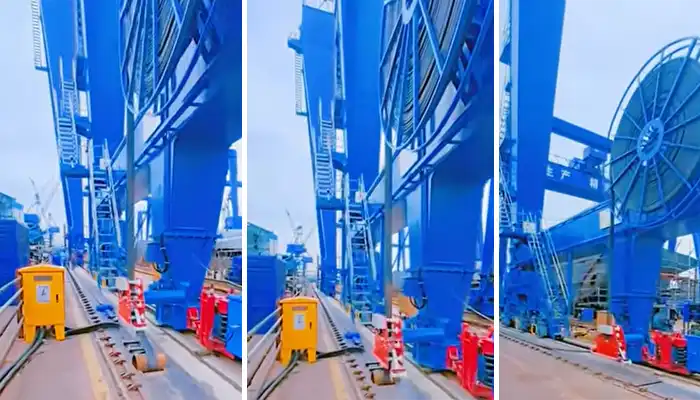
200-Ton Shipbuilding Gantry Crane – Cable Reel Setup Guide
Content Quick Link
Case Study Outline: 200-ton Shipbuilding Gantry Crane – Cable Reel Setup and Testing
200-ton Shipbuilding Gantry Crane Installation
Case overview of centralized power supply setup with cable reel, focusing on smooth operation, stability, and heavy-duty reliability.
Project Name: 200-ton Shipbuilding Gantry Crane Installation
This project involved installing a 200-ton gantry crane at a shipbuilding yard. The crane needed a centralized power supply system to handle long travel distances and heavy loads safely. The main goal was to ensure reliable, uninterrupted operation for moving large ship sections and components.
Objective
The primary objective was to set up and test a centralized power supply system with a cable reel. This setup allows the crane to receive stable power along its entire travel path while minimizing wear on the cable. Smooth operation was a key priority, as any jerks or interruptions could affect both the crane and the workpiece.
Key points:
- Deliver consistent power to the hoist, trolley, and auxiliary systems.
- Reduce cable friction and prevent twisting or tangling during operation.
- Ensure the system is ready for full-capacity lifts and long travel distances.
- Provide a setup that is easy to inspect, maintain, and adjust over time.
Key Focus
The installation centered on three practical areas:
- Smooth Cable Retraction: Proper tensioning, damping, and retraction force to avoid jerks and cable wear.
- Stable Electrical Connectivity: Maintaining consistent voltage and current throughout the crane's travel range.
- Heavy-Duty Operation Reliability: Ensuring the system works without interruptions even under full load or during frequent operation.
This case study walks through how the cable reel setup was installed, tested, and fine-tuned, highlighting practical lessons that other crane buyers and assembly teams can apply to similar heavy-duty cranes.
200-ton Shipbuilding Gantry Crane – Background
Understanding the crane's heavy-duty requirements, centralized power supply needs, and operational environment challenges.
Heavy-Duty Shipbuilding Crane
This 200-ton gantry crane was designed specifically for moving large ship components, such as hull sections, engines, and heavy machinery. The loads are not only heavy but also need precise placement, which requires smooth and stable crane operation at all times.
Key considerations:
- Lifts can weigh hundreds of tons, demanding reliable hoist performance.
- Precise positioning is essential for assembly of large ship parts.
- Any jerks or uneven motion can damage the load or disrupt workflow.
Need for a Centralized Power Supply
Because of the crane's long travel distances and heavy loads, a centralized power supply was necessary. Independent power lines or distributed systems would have created voltage drops and inconsistent performance. Using a centralized system ensures that the hoist, trolley, and auxiliary equipment all receive stable power throughout the crane's range of motion.
Practical benefits:
- Consistent electrical supply along the entire runway.
- Reduced risk of motor stalls or interruptions under heavy loads.
- Simplifies maintenance and troubleshooting compared with multiple independent power feeds.
Operational Environment Challenges
The crane operates outdoors in a shipyard, which brings its own set of challenges. Exposure to dust, humidity, and uneven surfaces can impact both the cable and mechanical components if not properly protected.
Factors addressed in this project:
- Dust and debris: Protective tube shields the cable and prevents abrasion.
- Humidity and corrosion: Components were selected and maintained to resist rust and wear.
- Uneven terrain and long spans: Cable tensioning and damping systems were fine-tuned to handle movement over long travel distances without stressing the cable.
200-ton Shipbuilding Gantry Crane – Equipment and Components
Overview of crane capacity, power supply, cable management, and protective features for reliable heavy-duty operation.
Crane Capacity
The gantry crane has a lifting capacity of 200 tons, designed to handle the heaviest ship components safely. The sheer weight and size of these loads demand stable, consistent power and precise movement along the crane's entire runway.
Key considerations:
- Full-load lifting requires reliable electrical and mechanical performance.
- Heavy-duty hoists and trolleys must operate smoothly to prevent jerks that could damage the load.
- Long-span crane movement increases the importance of proper cable management and tensioning.
Power System: Centralized Power Supply
To ensure smooth and uninterrupted operation, the crane uses a centralized power supply. This system provides a single, main source of electricity for the hoist, trolley, and auxiliary systems, maintaining consistent voltage along the full travel path.
Practical advantages:
- Reduces the risk of voltage drops over long distances.
- Simplifies maintenance and troubleshooting.
- Supports heavy-duty and continuous operation without unexpected stops.
Cable Management: Cylindrical Tube and Cable Reel System
The power cable is routed through a cylindrical protective tube and managed via a cable reel system. This setup ensures smooth extension and retraction while protecting the cable from environmental wear.
Features and benefits:
- Cylindrical tube: Shields the cable from abrasion, dirt, and moisture.
- Cable reel system: Maintains proper winding and retraction, preventing twists or tangles.
- Supports smooth movement of the crane along long spans.
Protective Features: Damping, Tension, and Retraction Mechanisms
To reduce wear and prolong cable life, damping, tension, and retraction devices are integrated into the system. These mechanisms make cable movement smooth and controlled.
Key points:
- Tension control: Keeps the cable taut without overstressing it.
- Damping system: Smooths acceleration and deceleration, preventing jerks.
- Retraction mechanism: Ensures consistent winding onto the reel without friction or tangling.
With these components in place, the crane operates safely and efficiently, even under heavy loads and in challenging shipyard environments.
200-ton Shipbuilding Gantry Crane – Installation Process
Step-by-step process for cable reel setup, cable tube installation, and centralized power connection for smooth shipyard crane operation.
Cable Reel Setup
The first step in installation was mounting the cable reel onto the crane structure. Proper alignment ensures smooth cable winding and reliable electrical connection along the crane's travel path.
Practical steps:
- Mount the reel firmly to the crane's frame, ensuring it is level and secure.
- Check that the reel can rotate freely without obstruction.
- Align the cable path so it winds evenly, avoiding twists or kinks.
- Verify that the reel handles both retraction and extension smoothly before connecting power.
Cable Tube Installation
Next, the power cable was routed through a cylindrical protective tube. This step protects the cable from abrasion, environmental exposure, and mechanical damage during crane operation.
Key points:
- Route the cable carefully to avoid sharp bends or tight angles.
- Secure the tube to prevent movement that could pinch or damage the cable.
- Use guides or rollers where the cable changes direction to reduce friction.
- Ensure the cable can move freely within the tube along the full crane span.
Power Connection
With the cable properly routed, the centralized power feed was connected to the crane's distribution panel. Safety and reliability are priorities during this step.
Steps to ensure safety and performance:
- Connect the main power feed according to the crane's electrical specifications.
- Install isolation switches for emergency shutdown and safe maintenance access.
- Check all connections for tightness, cleanliness, and correct polarity.
- Perform a preliminary test to confirm power reaches the hoist, trolley, and auxiliary systems before operational testing.
This installation process ensures that the cable system operates smoothly, maintains consistent electrical connectivity, and is protected from wear or damage. Proper setup at this stage prevents downtime and extends the life of the crane's centralized power supply.
200-ton Shipbuilding Gantry Crane – Testing and Adjustment
Step-by-step guide to initial testing, full-span operational checks, and fine-tuning for smooth crane operation.
Initial Tests
After installation, the first step is to test the cable under no load over a short distance. This allows the team to confirm that alignment and retraction are correct before putting the system under full operational stress.
Practical steps:
- Perform a short-distance cable run along a section of the crane runway.
- Check for smooth retraction and even winding on the reel.
- Inspect the cable for twists, rubbing against tube edges, or interference with rollers and guides.
- Ensure the damping and tension mechanisms respond correctly.
Full-Span Operational Test
Once the initial test is satisfactory, the crane is run along its entire span to simulate real operational conditions. Both no-load and test-load runs help identify potential issues before full-scale operation.
Testing checklist:
- Move the crane along the full runway without a load first. Observe cable movement for jerks or uneven winding.
- Conduct a second run with a test load representative of actual lifting operations.
- Monitor electrical stability at the hoist and trolley to detect voltage drops or interruptions.
- Confirm the cable retracts and extends smoothly over the full span.
Adjustments
Even a well-installed system may require fine-tuning. Adjustments ensure the cable operates smoothly and reduces wear over time.
Key adjustments:
- Tension: Fine-tune so the cable is taut but not overstressed. Avoid slack that can tangle or excessive strain that can damage connectors.
- Damping: Adjust to smooth out acceleration and deceleration during movement. This prevents jerks and stress on the cable.
- Retraction Force: Verify that the cable winds evenly on the reel without pulling too hard or leaving loose loops.
Proper testing and adjustment are essential for reliable crane operation. Taking the time to run these checks and make precise adjustments ensures the cable system functions smoothly under heavy loads and frequent travel, while also extending its service life.
200-ton Shipbuilding Gantry Crane – Key Challenges & Results
Overview of the main challenges during installation and the outcomes after testing and adjustment.
Key Challenges
During the setup of the 200-ton shipbuilding gantry crane, several challenges had to be addressed to ensure smooth, safe, and reliable operation. These challenges are common for heavy-duty cranes operating in shipyard environments.
Main challenges:
- Cable Protection in Outdoor Environments: Dust, humidity, and debris in the shipyard can cause abrasion, tangling, or premature cable wear without proper protection.
- Balancing Tension and Damping: The cable must retract and extend smoothly under heavy loads. Incorrect tension can cause jerks, stress on the reel, or connector damage.
- Maintaining Consistent Electrical Connection: Long travel spans can lead to voltage drops or interruptions, affecting hoist and trolley performance. Proper centralized power feed setup and cable alignment are essential.
By identifying these challenges early, the team implemented targeted solutions, including protective tubes, fine-tuned tension and damping, and careful alignment of the cable reel and guides.
Results / Outcomes
After completing installation, testing, and adjustment, the centralized power system performed as intended. Operational tests confirmed that the setup could handle the demands of heavy-duty shipbuilding work.
Key results:
- Smooth Cable Operation: Winding and unwinding were consistent and free from jerks or tangling.
- Stable Electrical Power: Hoist, trolley, and auxiliary systems received uninterrupted power along the entire crane runway.
- Reduced Cable Wear: The cylindrical protective tube combined with proper tension and damping minimized friction and extended cable life.
- Reliable Crane Performance: The crane is fully operational, safely handling large loads with smooth, efficient movement.
This successful outcome shows that careful planning, installation, and adjustment of a centralized power supply system significantly improves the safety, reliability, and efficiency of heavy-duty gantry cranes in demanding outdoor environments.
Lessons Learned / Recommendations
Installing and testing the 200-ton shipbuilding gantry crane provided several practical insights for buyers, operators, and assembly teams. These lessons highlight what makes a centralized power supply system reliable and long-lasting in demanding environments.
Pre-Installation Planning and Alignment
Careful planning before installation is essential. Misalignment or poor preparation can lead to cable wear, operational delays, and maintenance headaches.
Key points:
- Survey the crane runway, span, and environment before installation.
- Align cable reels, rollers, and guides precisely with the crane's travel path.
- Plan cable routing to avoid sharp bends, pinching, or interference.
Calibrating Tension, Damping, and Retraction Force
Heavy-duty cranes place significant stress on the cable system. Fine-tuning these mechanisms ensures smooth operation and reduces the risk of damage.
Practical tips:
- Adjust tension to keep the cable taut but not overstressed.
- Set damping to smooth acceleration and deceleration.
- Verify retraction force to prevent jerking or uneven winding.
Routine Inspection and Preventive Maintenance
Even a perfectly installed system requires ongoing care to maintain reliability and safety.
Recommendations:
- Inspect cables, reels, and protective tubes regularly for wear or debris.
- Check tension, damping, and retraction mechanisms after heavy use.
- Maintain a log of inspections, adjustments, and component replacements.
Protective Tubes and Guides
For outdoor or harsh environments, physical protection of the cable is non-negotiable. Protective tubes and guides prevent abrasion and exposure to dust, moisture, or temperature extremes.
Best practices:
- Use cylindrical tubes along the full cable path.
- Add guides or rollers where the cable changes direction.
- Clean and maintain protective systems to extend cable life.
Conclusion
The 200-ton shipbuilding gantry crane case demonstrates how a well-planned centralized power supply system can make a big difference in heavy-duty operations. By combining cable reels with protective tubes and carefully adjusted tension, damping, and retraction, the crane operates smoothly, safely, and reliably.
Key Takeaways
- Stable and Smooth Operation: Properly aligned cable reels and protective tubes prevent jerks, tangling, or uneven retraction.
- Reduced Cable Wear: Protective tubes, tensioning, and damping mechanisms extend cable life in harsh outdoor environments.
- Minimized Risk of Damage: Following structured installation and adjustment procedures reduces the chances of electrical or mechanical issues.
- Reliable Heavy-Duty Performance: Centralized power supply ensures consistent electricity along the crane's full travel span, supporting full-load lifting and long-span movement.
In summary, investing time in planning, installation, testing, and fine-tuning is crucial. A properly executed centralized power supply system not only improves crane performance but also reduces downtime, maintenance needs, and operational risk—ensuring the 200-ton shipbuilding gantry crane is ready for demanding shipyard operations.

Article by Bella ,who has been in the hoist and crane field since 2016. Bella provides overhead crane & gantry crane consultation services for clients who need a customized overhead travelling crane solution.Contact her to get free consultation.
Yuantai Cranes
Overhead Crane Manufacturer with CE, ISO, SGS, CNEX Certificates.
- Main Specifications - Capacity: 0.5–550 tons | Span: up to 40m | Speed: 0.8–12 m/min | Duty: A3–A7 | Power: 380–690V, 50/60Hz | Control: pendant/remote/cabin
- Full engineering: FEA/PLC/VFD + in-house build + global delivery + on-site support, for workshops, factories, EPC contractors, industrial projects, etc.
- Support: design, manufacturing, testing, service – end-to-end, customized lifting solutions worldwide.
How to Get an Accurate Crane Price for Your Application?
Tips: Copy the spec list, fill in your details, and paste it into the form on the right/ down-below for a quick price.
- Crane type:_____ . (e.g., overhead crane, gantry crane, jib crane)
- Max weight to lift:_____ tons. (e.g., 2t, 5t, 10t, 20t, 50t)
- Lifting height:_____ m. (How high does the hook need to reach?
- Workshop width (span):_____ m . (Distance between the two crane rails)
- Travel distance:_____ m . (How long does the crane need to move along the runway?)
- Control type:_____. (Pendant / remote / cabin Control)
- Power supply:_____. (Local voltage & frequency – e.g., 380V, 50Hz, 3-phase)
- What will it be used for?_____ (e.g., steel fabrication, concrete products, mold handling, general manufacturing, etc.)
- Any special requirements?_____ (e.g., extreme temperature, dusty or explosive environment, special paint color, etc.)
Just leave a message via the contact form and our hoist and crane engineer will contact you with in 24working hours.
Get Your Custom Quote–Quick & Easy
Fill in what you know. Skip what you don't – we'll help.Any question will be reply with 24 working hours