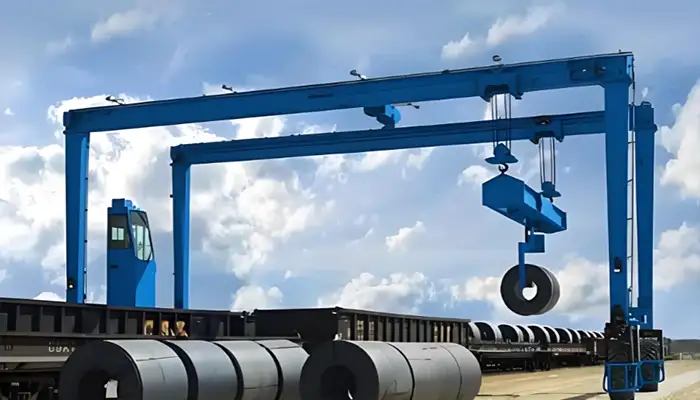
RTG Crane Ground Pressure & Foundation Guide – Steel Yards
Content Quick Link
Proper assessment of RTG crane ground pressure and foundation design is critical to ensure safety, minimize operational downtime, and protect steel coil yard assets. A: Divide the total weight (crane + coil) by the number of tires, and account for dynamic loads like lifting, cornering, or acceleration. A: Weak or uneven soil can cause settlement, pavement cracks, and crane misalignment, compromising safety and efficiency. A: Reinforced concrete slabs, proper subgrade preparation, and multi-layer pavement design distribute wheel loads and resist dynamic stresses. A: Design clear, reinforced paths for cranes, align lanes with coil storage, and plan for smooth turning zones to reduce stress on tires and pavement. A: Regular inspections, tire monitoring, and proactive foundation care prevent rutting, uneven settlement, and equipment downtime.
Key Takeaways – Questions Solved Here
Q1: How do I calculate RTG crane wheel load for different steel coil weights?
Q2: Why are soil type and bearing capacity crucial for crane stability?
Q3: How do concrete pavement and foundation design prevent settlement and misalignment?
Q4: What are best practices for crane travel lanes, turning areas, and material flow optimization?
Q5: How does maintenance and monitoring extend RTG crane and pavement lifespan?
Introduction
Rubber-Tyred Gantry (RTG) cranes are widely used in steel coil yards because they can move freely on tires instead of fixed rails. This makes it easy to reach different storage areas and adjust to changes in coil placement. In other words, they are flexible and convenient for busy yards handling a variety of steel coil sizes.
However, because RTG cranes run on tires, they put a lot of pressure on the ground at specific points. If the pavement or foundation is not strong enough, problems can happen, such as uneven ground, cracks, or even crane instability. These issues can slow down operations, increase repair costs, and create safety risks for workers.
This guide explains everything you need to know about RTG crane ground pressure and foundation design. We cover the basics, like how much weight each tire puts on the ground, and go deeper into planning foundations, designing concrete slabs, reinforcing soil, and planning travel lanes. By the end, you will understand how to prepare your steel coil yard so your RTG cranes can work safely and efficiently.
Key Points Covered Here:
- RTG cranes are mobile and flexible, but their tires create heavy concentrated loads.
- Weak foundations can cause uneven settlement and operational delays.
- The guide explains both simple and advanced steps, from tire load calculations to foundation and pavement design.
RTG Crane Ground Pressure
In steel coil yards, understanding RTG crane ground pressure is one of the first steps to safe and efficient operations. Rubber tyred gantry cranes carry heavy coils on tires, concentrating weight on a small area. Proper calculation of ground pressure helps in designing foundations, concrete slabs, and travel lanes that can support repeated use without damage.
What is Ground Pressure?
Ground pressure is the force each tire of a rubber tyred gantry crane applies to the ground, divided by the area of contact. For rubber tyred wheel cranes, the weight is focused on a few points rather than spread along rails. Understanding both static and dynamic pressures is critical to avoid cracks, uneven settlement, and operational issues.
- Static ground pressure: This is the load applied when the RTG gantry crane is stationary, for example, when waiting between lifts or parked for a short period.
- Dynamic ground pressure: This occurs when the crane is moving, lifting coils, turning, or accelerating. Dynamic loads can temporarily exceed static loads and must be considered for foundation design.
Factors Influencing Ground Pressure
Several factors determine how much pressure a rubber tyred gantry crane places on the ground. Each of these factors plays a key role in pavement and foundation planning for steel coil yards.
- Crane weight: Includes the RTG crane's empty weight (tare weight) plus the maximum payload. Heavier cranes or fully loaded lifts increase tire loads significantly.
- Tire configuration and size: More tires or larger tires spread the weight across a bigger area, reducing ground pressure. Smaller tires or fewer tires concentrate the load and increase stress on the pavement.
- Dynamic loads during operation: Lifting, cornering, or sudden starts and stops add extra forces to certain tires. This is especially important for RTG gantry cranes handling uneven or heavy coil stacks.
Typical Ground Pressure Ranges
Ground pressure varies depending on the size of the RTG crane, tire setup, and load. Knowing typical ranges helps engineers design foundations and concrete pavements that last.
- Small RTG cranes (up to 20–30 tons): Usually produce 100–200 kPa per tire under normal load.
- Medium RTG gantry cranes (30–60 tons): Ground pressure ranges between 200–350 kPa per tire.
- Heavy rubber tyred wheel cranes (over 60 tons): Can generate 350–500 kPa or more, particularly during full-load lifting or tight turns.
Example:
- A medium RTG crane lifting a 25-ton steel coil may put 8–10 tons on each tire. Concrete pavement must be designed to withstand pressures over 250 kPa to prevent cracks and uneven settlement.
Safety margins:
- Engineers typically design foundations with a 20–30% safety margin above calculated pressures to account for uneven surfaces, tire wear, or unexpected dynamic loads.
- This ensures rubber tyred gantry cranes operate safely and foundations last longer without frequent maintenance.
Soil and Ground Conditions
For rubber tyred gantry cranes, the ground beneath the crane is just as important as the crane itself. Weak or uneven soil can cause settlement, rutting, or cracks in the pavement. Understanding soil types, bearing capacity, and reinforcement options ensures that RTG gantry cranes operate safely and efficiently in steel coil yards.
Soil Types and Bearing Capacity
The type of soil affects how well it can handle the concentrated loads of rubber tyred wheel cranes. Even soils that look firm can settle under repeated crane operations.
Key Soil Types in Steel Coil Yards:
- Clay: Soft and compressible; may need extra reinforcement to avoid settlement.
- Silt: Moderate strength but can retain water, which reduces stability under heavy loads.
- Sand: Drains well and can handle weight if properly compacted.
- Gravel: Strong and stable, ideal as a base layer for crane travel lanes.
Minimum Bearing Capacity Guidelines for RTG Cranes:
- Small cranes: 100–150 kPa
- Medium RTG gantry cranes: 200–300 kPa
- Heavy rubber tyred gantry cranes: 350–500 kPa
Tip: Always check soil conditions with site testing. Even visually strong soil may need reinforcement to support fully loaded RTG cranes.
Ground Reinforcement Techniques
Even good soil often needs reinforcement to support the repeated, concentrated loads of rubber tyred gantry cranes. Proper reinforcement helps prevent rutting, uneven settlement, and long-term pavement damage.
Practical Reinforcement Options:
- Compaction: Strengthens subgrade soil and reduces uneven settlement under crane tires.
- Geotextiles: Layers of geotextile fabric stabilize the ground and prevent soil mixing with gravel or concrete layers.
- Reinforced Gravel Layers: Helps distribute tire loads and protects the subgrade beneath crane travel lanes.
- Concrete Pads: High-load areas such as coil loading/unloading zones or sharp turns often require reinforced concrete slabs.
- Drainage Management: Proper slopes and drainage channels prevent water accumulation, which can weaken soil and pavement.
Tip: Combining compaction, geotextiles, and gravel layers is often more cost-effective than pouring concrete across the entire yard.
Assessment Methods
Before and after foundation construction, regular soil assessment is key for safe operation of RTG gantry cranes and rubber tyred wheel cranes.
Soil Investigation Techniques:
- Standard Penetration Test (SPT): Measures soil density and strength at different depths.
- Plate Load Test: Determines actual soil bearing capacity under a test load.
Ongoing Inspections:
- Monitor crane paths for rutting or uneven wear.
- Look for soft spots or settlement, especially after heavy rains or unusual crane operations.
- Regular checks allow early intervention to prevent costly repairs or operational delays.
Tip: Consistent monitoring of the ground and foundation ensures your RTG cranes operate safely and your yard remains productive.
Foundation Design Requirements
The foundation is the backbone of any steel coil yard. For rubber tyred gantry cranes, a well-designed foundation ensures smooth operation, prevents uneven settlement, and supports heavy, repeated loads. Neglecting foundation design can lead to cracks, pavement rutting, or unsafe working conditions for both operators and equipment.
Design Principles
A strong foundation starts with good design. The goal is to handle the concentrated loads of RTG cranes and rubber tyred wheel cranes while minimizing long-term maintenance.
- Uniform load distribution: Ensure that crane loads are evenly spread across the foundation to prevent rutting or localized settlement. Uneven loads can tilt the crane or damage the pavement.
- Accommodating dynamic, repeated loads: Foundations should support not only the static weight of the crane but also the extra forces generated during lifting, turning, or braking. RTG gantry cranes frequently operate under these dynamic conditions.
- Expansion joints and stress relief design: Concrete slabs expand and contract with temperature changes. Proper joints prevent cracking and allow slabs to handle repeated crane movements without damage.
Tip: Always consider the combined effect of crane weight, coil loads, and movement patterns when planning foundation design.
Concrete and Pavement Specifications
The materials and structure of the pavement directly affect how well a rubber tyred gantry crane operates in a steel coil yard.
- Concrete thickness, grade, and reinforcement: Use reinforced concrete thick enough to handle both static and dynamic loads. Slabs under high-load areas, such as coil loading zones, may require extra thickness and steel reinforcement.
- Multi-layer pavement structure: A strong foundation includes multiple layers: compacted subgrade, sub-base, base course, and surface slab. Each layer contributes to distributing wheel loads and supporting crane movement.
- Considerations for heavy steel coil handling: Areas with frequent crane stops or turning maneuvers experience higher stresses. Reinforced slabs and durable concrete grades reduce the risk of cracking or surface damage.
Tip: Combining thick, reinforced concrete slabs with proper sub-base preparation ensures long-term performance under repeated RTG crane operations.
Foundation Layout Planning
Planning the layout of the foundation is just as important as designing the materials. Poor layout can reduce efficiency and increase wear on both the crane and pavement.
- Travel lanes, turning zones, and stopping pads: Clearly define paths for RTG gantry cranes to minimize sharp turns and uneven load distribution. Reinforce turning areas and stopping pads to handle concentrated wheel loads.
- Aligning foundation with coil storage layout: Organize foundation and pavement to match storage locations. Efficient material flow reduces unnecessary crane travel, lowering dynamic stress on the pavement.
- Planning for future expansion: Steel coil yards may grow over time. Design foundation layouts to allow additional crane paths or heavier loads without needing major reconstruction.
Tip: Coordinate closely with yard planners and crane suppliers. Early alignment between foundation layout and material handling patterns prevents costly redesigns later.
Foundation Design Requirements
The foundation is the backbone of any steel coil yard. For rubber tyred gantry cranes, a well-designed foundation ensures smooth operation, prevents uneven settlement, and supports heavy, repeated loads. Neglecting foundation design can lead to cracks, pavement rutting, or unsafe working conditions for both operators and equipment.
Design Principles
A strong foundation starts with good design. The goal is to handle the concentrated loads of RTG cranes and rubber tyred wheel cranes while minimizing long-term maintenance.
- Uniform load distribution: Ensure that crane loads are evenly spread across the foundation to prevent rutting or localized settlement. Uneven loads can tilt the crane or damage the pavement.
- Accommodating dynamic, repeated loads: Foundations should support not only the static weight of the crane but also the extra forces generated during lifting, turning, or braking. RTG gantry cranes frequently operate under these dynamic conditions.
- Expansion joints and stress relief design: Concrete slabs expand and contract with temperature changes. Proper joints prevent cracking and allow slabs to handle repeated crane movements without damage.
Tip: Always consider the combined effect of crane weight, coil loads, and movement patterns when planning foundation design.
Concrete and Pavement Specifications
The materials and structure of the pavement directly affect how well a rubber tyred gantry crane operates in a steel coil yard.
- Concrete thickness, grade, and reinforcement: Use reinforced concrete thick enough to handle both static and dynamic loads. Slabs under high-load areas, such as coil loading zones, may require extra thickness and steel reinforcement.
- Multi-layer pavement structure: A strong foundation includes multiple layers: compacted subgrade, sub-base, base course, and surface slab. Each layer contributes to distributing wheel loads and supporting crane movement.
- Considerations for heavy steel coil handling: Areas with frequent crane stops or turning maneuvers experience higher stresses. Reinforced slabs and durable concrete grades reduce the risk of cracking or surface damage.
Tip: Combining thick, reinforced concrete slabs with proper sub-base preparation ensures long-term performance under repeated RTG crane operations.
Foundation Layout Planning
Planning the layout of the foundation is just as important as designing the materials. Poor layout can reduce efficiency and increase wear on both the crane and pavement.
- Travel lanes, turning zones, and stopping pads: Clearly define paths for RTG gantry cranes to minimize sharp turns and uneven load distribution. Reinforce turning areas and stopping pads to handle concentrated wheel loads.
- Aligning foundation with coil storage layout: Organize foundation and pavement to match storage locations. Efficient material flow reduces unnecessary crane travel, lowering dynamic stress on the pavement.
- Planning for future expansion: Steel coil yards may grow over time. Design foundation layouts to allow additional crane paths or heavier loads without needing major reconstruction.
Tip: Coordinate closely with yard planners and crane suppliers. Early alignment between foundation layout and material handling patterns prevents costly redesigns later.
Maintenance and Monitoring
Regular maintenance and monitoring are essential to keep RTG cranes and rubber tyred gantry cranes running safely in steel coil yards. Even a well-designed foundation and pavement can deteriorate over time due to repeated loads, weather conditions, and heavy steel coil handling. A proactive maintenance plan prevents downtime, reduces repair costs, and extends the life of both the crane and the yard surface.
Pavement Inspection
The foundation and travel lanes of rubber tyred wheel cranes should be inspected regularly to identify early signs of wear or damage.
- Cracks: Look for hairline cracks in concrete slabs, which can expand under repeated loads.
- Rutting: Check for depressions or tire imprints where cranes frequently stop or turn.
- Settlement: Identify uneven surfaces that could tilt the crane or cause wheel misalignment.
Tip: Schedule inspections monthly in high-traffic areas and after heavy rain or unusual crane operations to catch issues early.
Tire Condition and Pressure Monitoring
The tires of an RTG gantry crane are the interface between the crane and the foundation. Proper tire maintenance ensures load distribution remains even and prevents localized pavement damage.
- Tire pressure: Maintain manufacturer-recommended pressure for consistent contact area.
- Tire wear: Inspect for uneven wear, cuts, or damage that can alter load distribution.
- Load distribution: Rotating or replacing tires as needed ensures that all wheels share weight evenly, reducing ground pressure spikes.
Tip: Consistent tire monitoring reduces pavement stress and improves crane stability during heavy lifts.
Adjustment Strategies for Operational Changes
Steel coil yards evolve, and crane operations may change over time. Adjusting maintenance routines and foundation care is essential to adapt to new loads, coil sizes, or crane paths.
- Travel lane adjustments: Reinforce areas where crane paths shift or coil stacking changes.
- Load pattern changes: Increase inspection frequency in zones where heavier coils are handled.
- Weather adaptation: Inspect after prolonged rain, flooding, or freeze-thaw cycles to prevent foundation damage.
Tip: Keeping maintenance flexible and responsive ensures that rubber tyred gantry cranes continue operating efficiently without major repairs or downtime.
Practical Tips for Steel Coil Yards
Operating a steel coil yard efficiently requires more than just a well-designed RTG crane and strong foundation. Small planning details and proactive measures can prevent pavement damage, reduce downtime, and improve crane safety. These tips focus on practical actions you can take to maximize the performance of rubber tyred gantry cranes and rubber tyred wheel cranes in daily operations.
Avoid Low-Bearing Zones in Crane Paths
Not all soil in a yard supports heavy crane loads equally. Even small weak spots can cause pavement rutting or uneven settlement when an RTG gantry crane passes over them repeatedly.
- Tip: Survey your yard to locate low-bearing areas or soft soil patches.
- Tip: Reroute crane travel lanes or reinforce these zones with compacted gravel or concrete pads.
- Example: A medium RTG crane traveling over poorly compacted silt can quickly create depressions that affect both load distribution and crane stability.
Consider Modular Concrete Slabs
Using modular or pre-cast concrete slabs allows for easier maintenance in high-load areas. If a slab is damaged by repeated wheel loads, it can be replaced without disrupting the entire travel lane.
- Tip: Focus modular slabs in coil loading/unloading zones or sharp turns where rubber tyred gantry cranes exert maximum ground pressure.
- Tip: Reinforce joint areas to handle dynamic loads from heavy coils.
Collaborate with Crane Manufacturers
Crane manufacturers have detailed specifications for load distribution, wheel configuration, and tire contact area. Using this information helps design foundations and pavement accurately for RTG gantry cranes.
- Tip: Request site-specific load diagrams and wheel pressure data.
- Tip: Share your yard layout and expected coil weights to ensure foundation and crane paths are optimized.
Plan for Future Growth
Steel coil yards evolve. Today's medium RTG crane might be replaced with a larger model, or heavier coils might be handled in the future. Planning for growth prevents costly reconstruction.
- Tip: Design travel lanes, turning zones, and stopping pads to accommodate heavier cranes.
- Tip: Leave room for additional reinforced areas or extended crane paths.
- Tip: Consider long-term pavement durability when selecting concrete grades and reinforcement for high-load zones.
Summary Tip: Small design and maintenance decisions—like avoiding weak zones, using modular slabs, consulting with crane manufacturers, and planning for growth—can significantly reduce downtime and extend the life of both rubber tyred gantry cranes and your steel coil yard foundation.
Conclusion
Safe and efficient operation of RTG cranes in steel coil yards starts with a solid understanding of ground pressure and foundation design. Proper planning ensures that rubber tyred gantry cranes and rubber tyred wheel cranes can handle heavy steel coils without causing pavement damage, uneven settlement, or operational delays.
- Accurate ground pressure assessment: Knowing the static and dynamic loads of your RTG crane allows engineers to design foundations that handle real operational conditions.
- Proper foundation design: Using reinforced concrete, compacted subgrades, and reinforced gravel layers prevents cracks, rutting, and uneven settlement.
- Early planning prevents costly retrofits: Identifying low-bearing zones, high-load areas, and dynamic stress points before construction reduces maintenance costs and downtime.
- Collaboration is key: Engineers, yard planners, and crane suppliers must work together. Sharing load data, yard layout, and future growth plans ensures that the steel coil yard performs optimally today and is ready for tomorrow's heavier cranes.
Final Thought: A well-planned foundation and carefully monitored operations not only protect your RTG gantry cranes but also improve efficiency, safety, and longevity of the entire steel coil yard.

Article by Bella ,who has been in the hoist and crane field since 2016. Bella provides overhead crane & gantry crane consultation services for clients who need a customized overhead travelling crane solution.Contact her to get free consultation.
Yuantai Cranes
Overhead Crane Manufacturer with CE, ISO, SGS, CNEX Certificates.
- Main Specifications - Capacity: 0.5–550 tons | Span: up to 40m | Speed: 0.8–12 m/min | Duty: A3–A7 | Power: 380–690V, 50/60Hz | Control: pendant/remote/cabin
- Full engineering: FEA/PLC/VFD + in-house build + global delivery + on-site support, for workshops, factories, EPC contractors, industrial projects, etc.
- Support: design, manufacturing, testing, service – end-to-end, customized lifting solutions worldwide.
How to Get an Accurate Crane Price for Your Application?
Tips: Copy the spec list, fill in your details, and paste it into the form on the right/ down-below for a quick price.
- Crane type:_____ . (e.g., overhead crane, gantry crane, jib crane)
- Max weight to lift:_____ tons. (e.g., 2t, 5t, 10t, 20t, 50t)
- Lifting height:_____ m. (How high does the hook need to reach?
- Workshop width (span):_____ m . (Distance between the two crane rails)
- Travel distance:_____ m . (How long does the crane need to move along the runway?)
- Control type:_____. (Pendant / remote / cabin Control)
- Power supply:_____. (Local voltage & frequency – e.g., 380V, 50Hz, 3-phase)
- What will it be used for?_____ (e.g., steel fabrication, concrete products, mold handling, general manufacturing, etc.)
- Any special requirements?_____ (e.g., extreme temperature, dusty or explosive environment, special paint color, etc.)
Just leave a message via the contact form and our hoist and crane engineer will contact you with in 24working hours.
Get Your Custom Quote–Quick & Easy
Fill in what you know. Skip what you don't – we'll help.Any question will be reply with 24 working hours