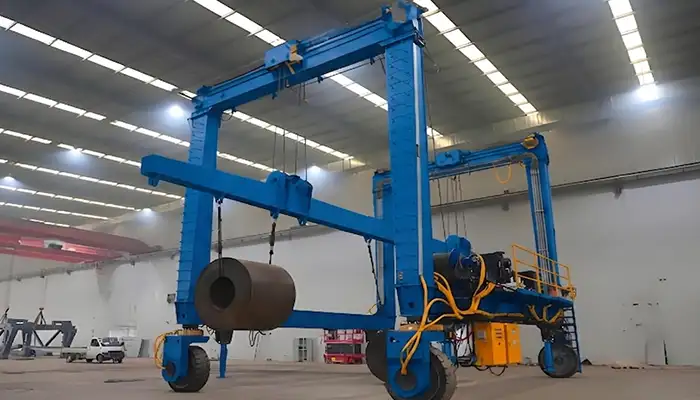
RTG Crane Steel Coil Handling 20T–120T Capacity Guide
Content Quick Link
Most Important Takeaway
Selecting an RTG crane for steel coil handling is not simply about choosing a rated lifting capacity such as 20 ton, 40 ton, 60 ton, or 120 ton. In real industrial use, the actual working capacity is determined by coil weight conditions, lifting tool configuration, safety margin design, and yard workflow requirements. Buyers who only focus on nominal capacity often face overload risk, inefficient operation, or unnecessary cost. A correct selection must reflect real steel coil logistics conditions in steel mills, ports, and coil storage yards.
Key Takeaways
- Steel coil weight varies significantly by production type, and must be correctly classified before selecting an RTG crane
- Standard RTG crane capacity ranges from 20T to 120T+, but usable capacity depends on system configuration, not just nameplate rating
- Lifting tools such as C-hooks, coil lifters, and electromagnetic systems directly reduce effective lifting capacity
- Safety margin design is critical for preventing overload, structural fatigue, and operational instability
- Overload risks in steel coil handling often come from dynamic movement, uneven coil stacking, and improper capacity matching
- Yard workflow, including coil turnover rate and storage layout, has a direct impact on required RTG crane capacity selection
Questions answered in this guide include how to choose RTG crane capacity for steel coil handling, why rated capacity differs from working capacity, how lifting tools affect crane selection, what safety margin is required for steel coils, and how to match crane capacity with real yard operations.
Role of RTG Crane in Steel Coil Handling Operations
What an RTG Crane Actually Does in a Steel Coil Yard
RTG cranes, also called rubber tyred gantry cranes, are used where steel coils need to be moved freely around the yard. They run on rubber tires, not rails, so the crane can move across different zones, making the handling process flexible and adaptable to changing layouts, truck arrivals, and shipping plans.
How RTG Cranes Work in Daily Steel Coil Handling
RTG cranes connect unloading, storage, and loading into a continuous flow in steel yards.
- Unload steel coils from trucks or trailers
- Place them into storage rows in the yard
- Move them again for delivery or processing needs
It's not just lifting; it moves material through the whole yard process.
Typical Jobs RTG Cranes Handle in Coil Yards
- Unloading steel coils from transport vehicles and placing them safely into storage
- Stacking coils in organized rows for easy retrieval
- Moving coils to processing areas like slitting lines or production workshops
- Rearranging coil positions when shipment schedules or customer orders change
These repeat tasks require stable, easy-to-control cranes for long working hours.
Why Buyers Choose RTG Cranes for Steel Coil Handling
Buyers need more than lifting capacity—they require a system that handles changing layouts and different coil sizes. RTG cranes are ideal for:
- Large outdoor yards with uneven or unclean ground
- Stable lifting and smooth travel for daily safety and efficiency
- Flexible operations without rail constraints
Simple Way to Understand the Role of RTG Cranes
An RTG crane is a mobile lifting tool that links trucks, storage areas, and production lines without fixed infrastructure.
- Handle unloading and loading between trucks and storage
- Keep coil stacks organized in flexible layouts
- Reduce waiting time during material transfer
- Link different steps in the steel coil handling flow
- Operate in open yards without rail installation
This flexibility makes RTG cranes essential in yards where movement, changing layouts, and adaptable operations are the norm.
Steel Coil Weight Classification for Crane Capacity Selection
How to classify steel coils by weight to select the right RTG crane capacity for your yard.
Why Coil Weight Must Be Defined First
Before selecting an RTG crane, understanding the steel coil weight range is crucial. Coil size, thickness, steel grade, and production method all affect lifting weight. Correct classification ensures the crane matches real yard operation.
Grouping coils by weight helps match RTG crane capacity with actual yard needs instead of theoretical numbers.
Light Steel Coils (5T–20T Range)
Light steel coils are smaller, easier to handle, and often moved frequently. Focus is on speed and cycle efficiency rather than maximum lifting power.
- Cold rolled coil storage and dispatch
- Light manufacturing supply chains
- Small coil distribution centers
RTG cranes for this range are lower capacity but designed for frequent operation and smooth handling.
Medium Steel Coils (20T–40T Range)
This is the most common working range. Coils are heavier and require stable lifting control, balancing capacity with operational efficiency.
- General steel processing centers
- Steel coil distribution warehouses
- Import and export coil yards
Often used as the starting point for standard RTG crane selection in new yards.
Heavy Steel Coils (40T–80T Range)
Heavier coils demand stronger crane structure, higher wheel load capacity, and stable hoisting control.
- Steel mill production yards
- Structural steel fabrication plants
- Heavy coil storage and transfer areas
Crane operation is typically continuous under load.
Ultra-Heavy Steel Coils (80T–120T+ Range)
Ultra-heavy coils are for large-scale industrial, shipbuilding, and heavy engineering projects. These cranes are usually custom-engineered with reinforced structure and high safety stability.
- Shipbuilding steel supply handling
- Large industrial fabrication projects
- Heavy engineering material logistics
Selection depends on capacity, structural design, safety factor, and long-term load stability.
Simple Way to Understand Coil Classification
- Light coils: speed and frequent lifting
- Medium coils: balance between capacity and efficiency
- Heavy coils: structural strength and stability
- Ultra-heavy coils: customized engineering design
This classification ensures the RTG crane capacity is correctly matched to real steel coil handling operations.
Standard RTG Crane Capacity Ranges in Steel Industry Applications
How to choose the right RTG crane capacity for different steel coil handling operations.
Why RTG Crane Capacity Varies by Industry
RTG crane capacity is determined by daily operating conditions, not just maximum lifting weight. Different industries handle varying coil sizes, production speeds, and storage methods. Frequency of lifting, stacking height, and yard flow all affect capacity selection.
Even if buyers first ask for a "50 ton RTG crane," it's more important to consider how the crane will be used day-to-day.
20 Ton to 32 Ton RTG Cranes for Steel Service Centers
Used in steel service centers and medium coil storage yards, handling standard cold rolled or lighter hot rolled coils at high movement frequency.
- Steel distribution warehouses
- Regional coil storage yards
- Processing centers for light and medium coils
- Truck loading and unloading operations
- Faster lifting cycles
- Flexible yard movement
- Lower operating cost
- Easier maintenance access
40 Ton to 50 Ton RTG Cranes for Medium Steel Processing Plants
Ideal for handling heavier coils where stability and consistent daily operation are critical.
- Medium steel processing plants
- Heavy coil transfer areas
- Integrated storage and processing facilities
- Port-side steel logistics terminals
This range balances lifting capability with operational efficiency and is commonly chosen for long-term yard planning.
60 Ton to 80 Ton RTG Cranes for Steel Mills and Heavy Coil Yards
For steel mills and heavy fabrication industries, handling larger and denser coils under continuous production conditions.
- Steel mill coil storage yards
- Structural steel production plants
- Heavy industrial logistics terminals
- Large export coil handling zones
- Higher wheel loads
- Stronger gantry rigidity
- Stable hoisting during long travel distance
- Continuous heavy-duty operation
Reliability and long-term durability are prioritized over speed.
100 Ton to 120 Ton+ RTG Cranes for Heavy Engineering Projects
Used for ultra-heavy steel coils in large-scale manufacturing, shipbuilding, or specialized engineering projects. Most systems are custom-engineered.
- Shipbuilding steel logistics
- Heavy equipment manufacturing plants
- Large steel export terminals
- Heavy engineering material yards
- Structural reinforcement design
- Anti-sway control systems
- Wheel load distribution
- Long-term maintenance planning
At this scale, the crane becomes a core production infrastructure element.
How Buyers Usually Match Capacity with Application
- 20T–32T → high-frequency light and medium coil handling
- 40T–50T → balanced processing and storage operations
- 60T–80T → heavy steel mill and industrial coil handling
- 100T–120T+ → oversized coils and continuous heavy-duty projects
Experienced buyers evaluate workflow intensity and material type before deciding the final RTG crane capacity.
Influence of Lifting Tools on RTG Crane Working Capacity
Why Lifting Tools Matter in Steel Coil Handling
In steel coil handling operations, the lifting tool is not just an accessory attached below the hoist. It is part of the complete lifting system and directly affects the actual working capacity of the RTG crane.
Many buyers focus first on the crane tonnage itself, such as a 40 ton RTG crane or 80 ton gantry crane, but the lifting attachment can change the real usable capacity quite a lot. In some projects, the lifting tool alone may weigh several tons.
This means the crane does not use its full rated capacity for the steel coil itself. Part of the capacity is already consumed by the lifting device.
That is why experienced crane buyers usually ask two separate questions:
- What is the rated crane capacity?
- What is the actual coil handling capacity after lifting tool deduction?
These are not the same thing.
Common Lifting Tools Used for Steel Coil Handling
Understanding different lifting devices and their impact on RTG crane capacity and operation.
C-Hook Lifting Device
The C-hook lifts horizontal coils through the center eye. Common in steel mills and coil yards for high-frequency handling.
- Fast loading and unloading
- Simple structure and easy maintenance
- Handles repeated operations efficiently
Practical considerations:
- Heavy C-hooks reduce usable lifting load
- Uneven coil positioning can create side load stress
- Large hooks need more lifting height clearance
Mechanical Coil Lifters with Mandrel Expansion
Uses an expanding mandrel to lock the coil for lifting, improving stability and surface protection.
- High coil positioning accuracy
- Stable handling during travel
- Surface protection for sensitive steel
Considerations:
- Increased equipment weight
- More complex maintenance
- Additional moving components inside the lifting mechanism
Electromagnetic Coil Lifting Systems
Used in automated handling or specific steel grades, no mechanical insertion needed.
- Fast handling speed
- Easier automation integration
- No coil eye insertion required
Practical limitations:
- Power failure protection needed
- Surface condition sensitivity
- Material or temperature restrictions
- Extra electrical system complexity
Spreader Beams for Multi-Coil Handling
Used when handling multiple smaller coils together to improve efficiency in logistics operations.
- Batch loading operations
- Port export logistics
- Transfer between storage zones
Impact on crane design:
- Increases total suspended weight
- Higher dynamic load during travel
- Additional structural stress during acceleration and braking
Rated Capacity vs Actual Working Capacity
Rated capacity is the maximum load under ideal conditions. Actual working capacity is lower due to lifting tool weight, hook blocks, dynamic load, and safety factors.
- A 60 ton RTG crane with a heavy C-hook may handle only 52–55 tons of coil safely
- An 80 ton crane may have reduced practical load during continuous operation
Dynamic Load and Movement Effects
Crane movement, acceleration, braking, and travel generate dynamic forces that increase stress on the system.
- High travel speeds or long distances
- Uneven yard surfaces
- Heavy coils near maximum capacity
Dynamic effects impact hoisting mechanisms, main girders, wheel assemblies, and trolley systems. Engineers consider these when calculating safe load limits.
Why Buyers Should Consider the Complete Lifting System
RTG crane selection must consider the lifting device as part of the full system.
- Maximum coil weight
- Lifting attachment weight
- Required lifting height
- Travel speed requirements
- Daily handling frequency
- Future production increases
Neglecting lifting tool configuration can lead to overload conditions even if crane tonnage looks sufficient on paper.
Safety Margin Design in Steel Coil Handling RTG Systems
Safety margin is one of the most important parts of RTG crane design for steel coil handling. In many projects, buyers focus heavily on rated lifting capacity, but long-term safety and stable operation depend just as much on the safety margin built into the system. Steel coil handling creates continuous heavy load conditions. Coils are dense, compact, and often moved repeatedly throughout the day. Even when the crane is operating within rated capacity, the structure still experiences additional stress during lifting, traveling, braking, and stacking. This is why RTG cranes used for steel coils are usually designed with extra load allowance instead of operating continuously at theoretical maximum limits.
Why Safety Margin Is Critical in Steel Coil Handling
Steel coil handling creates continuous heavy load conditions. Even when operating within rated capacity, additional stresses occur during lifting, traveling, braking, and stacking. Extra load allowance ensures stable and safe long-term operation.
What Creates Additional Load Stress in Coil Handling
In steel coil yards, the crane rarely works under perfect conditions. Several factors increase actual operating stress beyond the static coil weight. Common load stress sources include:
- Coil weight variation between batches
- Uneven coil positioning during lifting
- Dynamic force during acceleration and braking
- Wind load in outdoor RTG crane operation
- Uneven ground conditions in storage yards
- Continuous high-frequency lifting cycles
For example, a steel coil listed as 50 tons may not always have perfectly balanced weight distribution. During lifting or travel, slight movement in the load center can increase stress on the hoisting system and crane structure. This is exactly why safety margin is necessary.
Typical Safety Factor Range in RTG Crane Design
Safety margin in RTG crane steel coil handling systems is usually calculated as a percentage above normal working load. For general industrial applications:
- Safety factor commonly ranges from 1.1 to 1.25 times the working load
For heavy-duty steel yard operations:
- Safety factor may increase to 1.25 to 1.4 times depending on usage intensity
For demanding environments such as:
- Export terminals
- Continuous production steel mills
- Heavy industrial logistics centers
Additional redundancy may be included in:
- Main girder structure
- Hoisting mechanism
- Wheel load design
- Electrical control systems
The more demanding the operating environment, the more conservative the safety design usually becomes.
How Safety Margin Affects RTG Crane Structure
Safety margin directly affects almost every major crane component. Higher safety margin may require:
- Stronger main girder design
- Larger wheel assemblies
- More stable gantry frame structure
- Higher grade wire ropes
- Reinforced hoisting mechanisms
- More reliable braking systems
This is one reason why two RTG cranes with the same rated capacity may look very different in structure and price. A crane designed for light warehouse operation is very different from one designed for continuous steel mill coil handling.
Safety Margin and Outdoor RTG Crane Operation
Most steel coil handling RTG cranes work outdoors. Outdoor operating conditions may include:
- Strong wind load across open yards
- Rain affecting ground traction
- Temperature variation affecting steel structure stress
- Dust and debris in industrial environments
When carrying heavy steel coils, even moderate wind can increase load swing during travel. For large span RTG cranes handling 60 ton, 80 ton, or 120 ton steel coils, wind stability becomes an important part of safety margin design.
Why Continuous Operation Requires Higher Safety Design
Steel coil handling systems in steel mills often run for long working hours with repeated lifting cycles. Continuous operation increases:
- Structural fatigue
- Hoisting system wear
- Heat buildup in motors and brakes
- Stress concentration in welded areas
Because of this, RTG cranes used in steel production environments are usually designed with more conservative safety margins compared with general warehouse gantry cranes.
Practical Example of Safety Margin in Capacity Selection
A buyer may initially request a 50 ton RTG crane because the maximum coil weight is around 45 tons. After including:
- C-hook weight
- Dynamic load allowance
- Outdoor operating conditions
- Continuous production cycle requirements
The engineering recommendation may increase to:
- 60 ton RTG crane system instead of 50 ton
This adjustment ensures safe long-term operation rather than theoretical lifting only.
Why Buyers Should Not Select Cranes Too Close to Maximum Load
One common mistake is choosing a crane that operates too close to its maximum rated capacity daily, which can lead to:
- Faster structural fatigue
- Higher maintenance cost
- Reduced equipment lifespan
- Increased overload risk
- More downtime during production
Cranes operating near full load continuously experience heavier wear on wire ropes, brakes, wheel systems, hoisting motors, and trolley mechanisms. Experienced buyers focus on stable long-term operation instead of minimizing initial crane size.
Safety Margin Is About Reliability, Not Only Safety
In steel coil handling RTG systems, safety margin ensures crane reliability over years of continuous operation. A properly designed safety margin helps:
- Maintain stable lifting performance
- Reduce unexpected shutdowns
- Extend crane service life
- Improve long-term operating efficiency
- Support future production increase without immediate crane replacement
For steel mills, coil storage yards, and industrial logistics terminals, this is an important part of total operating cost over the crane system's lifetime.
Overload Risks in Real Steel Coil Handling Operations
In steel coil handling operations, overload does not always happen because the crane suddenly lifts more than its rated capacity. In many cases, the problem develops slowly over time through daily operating conditions. An RTG crane may technically stay within its rated load, but repeated stress from heavy cycles, uneven lifting, and constant movement can still create overload-related damage inside the system. This is especially common in steel mills with continuous production flow, high-frequency coil storage yards, outdoor logistics terminals handling mixed coil sizes, and older crane systems operating near full capacity every day.
Why Overload Problems Are More Common Than Many Buyers Expect
Overload risk in steel coil handling is not only about "how many tons the crane lifts." It is also about how the crane is used hour after hour. Even when operating within rated load, repeated stress from daily cycles, uneven lifting, and constant movement can create internal damage over time.
How Dynamic Lifting Increases Crane Stress
Steel coil handling is rarely a simple vertical lift. The crane usually lifts, travels, brakes, turns, and lowers the coil within a short cycle. Additional load stress commonly comes from:
- Fast acceleration during travel
- Sudden braking while carrying heavy coils
- Uneven yard surfaces
- Coil swing during trolley movement
- Repeated lifting cycles throughout the shift
For example, a 50 ton steel coil may create much higher temporary stress during movement than during static hanging. Crane engineers always calculate dynamic load, not only coil weight itself.
Uneven Coil Positioning Creates Hidden Overload
Uneven load positioning can change load balance quickly. This often happens when:
- The coil center is not aligned correctly
- The lifting tool enters unevenly into the coil eye
- Multiple coils are lifted together
- Coil dimensions vary between batches
When the load shifts slightly to one side, stress concentration increases on hoisting mechanisms, trolley wheels, main girders, and wire ropes. Over time, this uneven loading accelerates fatigue inside the crane structure.
Incorrect Use of Lifting Tools Can Cause Overload Conditions
Lifting tools are another common source of overload-related problems. Typical issues include:
- Using oversized C-hooks that add unnecessary dead weight
- Improper spreader beam configuration
- Incorrect coil lifter positioning
- Lifting coils outside recommended dimensions
Sometimes the crane itself is not overloaded, but the lifting tool creates uneven force distribution, increasing structural stress. This is why cranes and lifting attachments must be designed together.
Structural Risks Caused by Overload Conditions
Long-term overload gradually affects crane structure. Common structural risks include:
- Main girder deformation
- Fatigue cracks near welded sections
- Trolley frame stress damage
- Excessive wheel load pressure
- Wire rope wear and shortening lifespan
- Hoisting gearbox overload
In heavy-duty RTG crane operations, these problems often appear first in high-stress areas with repeated daily load cycles. Once structural fatigue begins, maintenance frequency usually increases quickly.
Operational Risks During Steel Coil Handling
Overload creates handling risks during operation, including:
- Coil slipping during lifting
- Unstable coil stacking in storage rows
- Excessive load swing during travel
- Reduced braking stability
- Difficulty controlling the crane at full load
Outdoor conditions like wind and uneven ground worsen these problems, especially for 60–120 ton coils.
How Overload Affects Long-Term Crane Performance
Continuous overload usually leads to:
- Shorter crane service life
- Higher maintenance cost
- More frequent shutdowns
- Increased spare parts replacement
- Reduced operational efficiency
Even a few hours of unexpected crane downtime can interrupt material flow and affect production schedules. Overload prevention is therefore both a safety and production reliability issue.
Warning Signs Buyers and Operators Should Watch For
Some overload problems can be identified early. Common warning signs include:
- Excessive vibration during lifting
- Abnormal noise from trolley or hoisting system
- Uneven wheel wear
- Slower lifting speed under normal load
- Frequent brake overheating
- Visible structural deflection during heavy lifts
Ignoring these signs often leads to larger repair costs later.
Why Proper Capacity Selection Prevents Overload Problems
Proper capacity selection reduces overload risk. A correct RTG crane design should consider:
- Maximum coil weight
- Lifting tool weight
- Dynamic load during travel
- Outdoor operating conditions
- Daily lifting frequency
- Future production increase
Stable operation is usually more valuable than saving on initial crane size, especially for steel coil handling systems.
Matching RTG Crane Capacity with Yard Workflow Design
Choosing an RTG crane for steel coil handling is not only about the maximum coil weight. In many projects, the bigger challenge is how the crane fits into the daily workflow of the yard. Two steel coil yards may handle the same 40 ton coils, but their crane requirements can be completely different. Workflow design is just as important as lifting capacity during RTG crane selection. Buyers searching for terms like "RTG crane for steel coil yard," "coil storage gantry crane," or "steel mill material handling crane" are usually trying to solve both lifting and workflow efficiency problems at the same time.
Daily Coil Turnover Directly Affects Crane Selection
One of the first things crane engineers evaluate is daily coil turnover volume, meaning how many coils move through the yard during a normal working day. High turnover operations usually need:
- Faster lifting cycles
- Shorter waiting time for trucks
- Quicker travel speed across the yard
- Flexible movement between storage zones
Lower turnover operations may focus more on:
- Stable heavy lifting
- Long-term storage handling
- Precision positioning
- Reduced structural stress during continuous heavy loads
A yard moving hundreds of coils per day requires a very different RTG crane setup compared with a yard handling occasional oversized coils.
How Stacking Height Changes Capacity Requirements
Stacking height directly affects RTG crane design. Higher stacking means:
- Greater lifting height
- Increased load sway during lifting
- More precise positioning requirements
- Additional structural stability demand
For example:
- Low stacking yards may operate efficiently with smaller RTG cranes
- High-density storage yards may require taller gantry structures and more stable trolley control systems
As lifting height increases, handling stability becomes more important, especially for large steel coils in outdoor environments.
Transport Method Also Changes RTG Crane Requirements
The way coils enter and leave the yard affects crane selection. Typical transport methods include:
- Truck loading and unloading
- Rail wagon handling
- Internal factory transfer vehicles
- Port terminal transport systems
Truck-based operations usually require:
- Faster handling speed
- Flexible travel routes
- Quick turnaround between loading positions
Rail loading operations may require:
- Longer span RTG cranes
- More accurate positioning control
- Stable lifting over narrow loading areas
Port and export terminals often need:
- Continuous handling cycles
- Integration with logistics scheduling
- Larger operational coverage area
The crane must match the movement pattern of the whole logistics system, not only the coil weight.
Yard Layout Design Influences Crane Efficiency
The physical layout of the steel coil yard directly impacts RTG crane performance. Important layout factors include:
- Width of storage lanes
- Distance between stacking rows
- Truck traffic flow
- Turning space for crane travel
- Ground load capacity
- Coil storage density
A compact yard with narrow aisles may require:
- More precise crane control
- Faster positioning response
- Smaller turning radius
A large open steel yard may prioritize:
- Long travel distance efficiency
- Wide-span crane structure
- Higher travel speed
Poor yard layout can cause operational bottlenecks even when crane capacity is sufficient.
Matching Capacity with Different Steel Coil Yard Types
Different steel coil handling environments usually follow different RTG crane capacity patterns.
20 Ton to 40 Ton RTG Cranes for High-Frequency Distribution Yards
High-frequency distribution centers usually focus on:
- Fast truck loading
- Frequent coil movement
- Short storage cycles
- Medium coil sizes
In these operations, flexibility and speed are often more important than extreme lifting power.
Typical applications include:
- Regional steel distribution centers
- Coil processing warehouses
- Service centers with continuous truck traffic
40 Ton to 60 Ton RTG Cranes for Balanced Processing Operations
This range is commonly used where operations require both:
- Medium-heavy coil handling
- Stable continuous production support
Typical environments include:
- Steel processing facilities
- Integrated storage and cutting lines
- Mixed coil handling operations
These yards usually need a balance between handling speed, structural stability, and long working hours.
60 Ton to 120 Ton RTG Cranes for Heavy Steel Mill Operations
Heavy steel mills and industrial logistics terminals often require large RTG crane systems designed for continuous heavy-duty operation. These environments involve:
- Large steel coil dimensions
- High daily material volume
- Long travel distances
- Outdoor heavy-load handling
In these applications, the crane becomes part of the production infrastructure itself. Buyers usually focus heavily on:
- Structural durability
- Long-term maintenance reliability
- Wheel load stability
- Continuous operating performance
Why Workflow Often Matters More Than Maximum Capacity
One common mistake in RTG crane procurement is selecting equipment only according to maximum coil weight. For example:
- A yard handling 30 ton coils continuously every few minutes may require a stronger and faster system than a yard occasionally lifting 50 ton coils
This happens because:
- Frequent operation increases fatigue
- Yard congestion slows material flow
- Waiting time affects logistics efficiency
- Repeated travel cycles increase wear on crane components
In many steel coil handling projects, workflow efficiency has a bigger impact on operating cost than lifting capacity itself.
Practical Selection Approach for Buyers
When matching RTG crane capacity with yard workflow, buyers should evaluate:
- Maximum coil weight
- Average daily handling volume
- Number of lifting cycles per shift
- Stacking height requirements
- Yard size and layout
- Truck and rail traffic flow
- Future production expansion plans
This gives a more realistic basis for RTG crane selection than simply comparing tonnage alone. A well-matched crane system improves:
- Material flow efficiency
- Yard organization
- Equipment lifespan
- Long-term operating stability
Experienced crane suppliers usually study the entire steel coil handling process before confirming final RTG crane specifications.
Engineering Selection Logic for RTG Crane Buyers
Why Proper RTG Crane Selection Starts with Workflow, Not Only Capacity
Many buyers begin RTG crane selection by asking for a specific tonnage, such as a 40 ton RTG crane or an 80 ton steel coil handling crane. But in practical steel coil handling projects, the selection process usually starts somewhere else — understanding the actual operating conditions.
A crane that looks sufficient on paper may still struggle in daily operation if the yard workflow, lifting frequency, or coil handling method was not considered during planning.
This is why experienced crane suppliers usually study:
- Coil weight range
- Lifting method
- Yard layout
- Daily handling volume
- Future production plans
before confirming final RTG crane specifications.
Step 1: Start with Maximum Coil Weight, Not Average Weight
The first step in RTG crane selection is identifying the maximum steel coil weight the crane may handle during operation. This is important because:
- Coil weight can vary between production batches
- Future orders may involve heavier materials
- Some oversized coils may only appear occasionally but still must be handled safely
One common mistake is selecting the crane based on average coil weight instead of maximum working load. For example:
- A yard may normally handle 35 ton coils
- But occasional 45 ton coils may also enter the system
If the crane is selected only for the average load, operating flexibility becomes limited later.
Buyers should also confirm:
- Coil width
- Coil outer diameter
- Coil inner diameter
- Coil stacking method
These factors affect lifting stability and lifting tool design.
Step 2: Include Lifting Tool Weight in the Calculation
After confirming coil weight, the next step is calculating lifting attachment weight. This includes:
- C-hook weight
- Coil lifter weight
- Spreader beam weight
- Hook block assembly weight
In steel coil handling systems, lifting tools can add several tons to the total suspended load. For example:
- A 50 ton steel coil combined with a heavy-duty C-hook may create a total lifting load much higher than expected
In RTG crane engineering calculations, the crane is designed for the total suspended system weight, not just the steel coil itself.
Step 3: Apply Safety Factor Based on Operating Conditions
Once the total lifting load is known, a safety margin must be added according to the working environment. The required safety factor depends on:
- Outdoor or indoor operation
- Wind conditions
- Daily lifting frequency
- Travel distance
- Production intensity
- Ground conditions in the yard
For light industrial applications, lower safety factors may be acceptable. But steel mills and continuous production environments usually require more conservative design margins. This is especially important for:
- Heavy steel coil handling
- High-frequency operations
- Long-span RTG cranes
- Continuous shift operation
Step 4: Match the Load with Standard RTG Crane Capacity Ranges
After including:
- Maximum coil weight
- Lifting attachment weight
- Dynamic load allowance
- Safety factor requirements
the resulting working load can then be matched with standard RTG crane capacity ranges. Typical selection ranges include:
- 20 ton to 32 ton RTG cranes for light and medium coil handling
- 40 ton to 60 ton systems for balanced processing operations
- 60 ton to 80 ton RTG cranes for steel mills and heavy coil yards
- 100 ton to 120 ton+ RTG cranes for oversized industrial coil handling
A slightly larger crane capacity often improves:
- Operating stability
- Maintenance interval
- Long-term equipment life
- Future production flexibility
Step 5: Consider Future Expansion Before Finalizing the Crane
Many steel coil handling projects expand over time. Production increases, coil sizes change, and yard layouts are reorganized. Buyers should evaluate:
- Planned production increase
- Future heavier coil requirements
- Additional storage area expansion
- Possible increase in truck or rail traffic
- Automation upgrades in later stages
A crane selected only for current operation may become undersized after a few years. Replacing an undersized RTG later is much more expensive than slightly increasing capacity during the initial investment stage.
Why Experienced Buyers Focus on Long-Term Operation
An undersized crane often leads to:
- Higher maintenance frequency
- Faster component wear
- Reduced operating efficiency
- Production delays during peak workload
- More stress on hoisting systems and wheel assemblies
This is why experienced buyers focus on:
- Stable long-term operation
- Equipment durability
- Workflow efficiency
- Future operational flexibility
Practical Selection Questions Buyers Should Prepare
Before requesting a quotation for an RTG crane for steel coil handling, buyers should prepare the following information:
- Maximum steel coil weight
- Coil dimensions and storage method
- Type of lifting tool required
- Daily handling volume
- Number of working shifts
- Yard layout and travel distance
- Outdoor environmental conditions
- Future production expansion plans
Providing this information early helps crane manufacturers recommend a more accurate RTG crane configuration instead of simply offering a standard tonnage model.
Good RTG Crane Selection Is About Balance
A good RTG crane selection balances:
- Lifting capacity
- Structural safety
- Yard workflow efficiency
- Long-term operating cost
- Future production flexibility
For steel coil handling operations, the goal is not simply choosing the largest crane. The goal is choosing a crane system that can operate safely and efficiently for many years under real production conditions.
Frequently Asked Questions on RTG Crane for Steel Coil Handling: 20T to 120T Capacity Size Guide
Q: What size RTG crane is usually used for steel coil handling?
A: Most steel coil handling operations use RTG cranes ranging from 20 ton to 80 ton, while large steel mills and heavy industry projects may require 100 ton to 120 ton systems.
- Steel service centers and coil warehouses often use 20T–40T RTG cranes for fast loading and unloading.
- Heavy steel coil storage yards and steel mill logistics systems usually require larger gantry cranes with stronger structure and continuous duty performance.
- The correct crane size depends on coil weight, handling frequency, stacking height, and lifting tool configuration.
Q: How do I choose the right RTG crane capacity for my steel coil yard?
A: The correct RTG crane capacity should be based on maximum coil weight, lifting attachment weight, yard workflow, and future production plans.
- Buyers often search for a "50 ton steel coil gantry crane," but actual selection also depends on C-hook weight, lifting height, and daily operating cycles.
- A coil handling crane working continuously in a steel mill usually needs more operating reserve than a crane used occasionally in a warehouse yard.
- Future expansion matters too. A slightly larger RTG crane may prevent costly replacement later.
Q: Why is the actual lifting capacity lower than the rated RTG crane capacity?
A: Because the crane must also carry the weight of the lifting tool, hook block, and dynamic operating load during movement.
- A 60 ton RTG crane may only safely handle around 52–55 tons of actual steel coil weight when using a heavy-duty C-hook or coil lifter.
- Dynamic forces during travel, acceleration, and braking increase stress on the gantry crane structure.
- This is why crane manufacturers separate rated capacity from working load capacity in steel coil handling projects.
Q: What lifting tools are commonly used for steel coil handling cranes?
A: The most common lifting tools are C-hooks, mechanical coil lifters, electromagnetic lifting systems, and spreader beams.
- C-hooks are widely used in steel coil yards because they allow fast horizontal coil handling.
- Mechanical coil lifters provide more stable positioning for heavy steel coils and automated production lines.
- Electromagnetic lifting systems are sometimes used in automated steel processing facilities where fast handling is required.
Q: Why is safety margin important for RTG cranes handling steel coils?
A: Safety margin helps protect the crane from overload stress caused by continuous heavy lifting and outdoor operating conditions.
- Steel coil handling creates additional stress during travel, braking, and stacking, even when the crane is within rated load.
- Wind load, uneven yard surfaces, and high-frequency lifting cycles increase structural fatigue over time.
- Heavy-duty RTG cranes for steel mills are usually designed with additional load allowance and reinforced gantry structures.
Q: What overload problems happen in steel coil handling operations?
A: Overload conditions can cause structural fatigue, unstable lifting, excessive wheel load, and shorter crane service life.
- Common overload issues include girder deformation, wire rope wear, trolley stress, and load swing during travel.
- Overload does not always come from lifting too much weight at once. Continuous operation near full capacity can also damage the crane gradually.
- Many steel mill crane maintenance problems start from repeated heavy-duty cycles over long periods.
Q: Is RTG crane better than rail mounted gantry crane for steel coil yards?
A: RTG cranes are usually better for flexible steel coil yards, while rail mounted gantry cranes are better for fixed handling routes.
- Rubber tyred gantry cranes can move freely across changing storage layouts without rail installation.
- Rail mounted gantry cranes are more common in fixed production lines or dedicated rail handling terminals.
- Steel coil storage yards with changing truck traffic and flexible stacking often prefer RTG crane systems.
Q: How does yard layout affect RTG crane selection?
A: Yard layout affects crane span, travel distance, stacking method, and overall handling efficiency.
- Narrow storage lanes may require more precise gantry crane control and compact movement.
- Large outdoor steel yards often require long-span RTG cranes with higher travel speed.
- Buyers planning a steel coil handling project should evaluate truck flow, stacking density, and loading areas before confirming crane specifications.
Q: What industries commonly use RTG cranes for steel coil handling?
A: RTG cranes are widely used in steel mills, steel service centers, coil storage yards, ports, and heavy industrial logistics terminals.
- Steel processing plants use gantry cranes for moving coils between storage and production lines.
- Port terminals use RTG cranes for steel coil export handling and truck loading operations.
- Heavy fabrication industries and shipbuilding supply chains also use large capacity RTG crane systems for oversized steel coils.
Q: Can one RTG crane handle different coil sizes and weights?
A: Yes, but the crane and lifting attachment must be designed for the full working range.
- Mixed steel coil handling operations often require adjustable lifting tools and additional operating reserve capacity.
- Coil width, diameter, and stacking method all affect lifting stability.
- Buyers handling both small and heavy steel coils usually select more flexible RTG crane configurations to avoid future operating limitations.
Q: What information should buyers prepare before requesting an RTG crane quotation?
A: Buyers should prepare coil weight, dimensions, lifting height, yard layout, handling frequency, and power supply information.
- Important details include maximum steel coil weight, required gantry span, outdoor working conditions, and preferred lifting tools.
- Suppliers also need to understand truck loading methods, stacking height, and future production expansion plans.
- Providing complete technical information helps avoid under sizing the crane system.
Q: What is the typical service life of an RTG crane for steel coil handling?
A: A properly designed RTG crane can operate for many years in heavy-duty steel coil handling environments.
- Service life depends on operating intensity, maintenance quality, load conditions, and safety margin design.
- Cranes operating continuously near full capacity usually require more maintenance and component replacement.
- Heavy-duty RTG cranes designed for steel mills typically use reinforced structure and higher durability components for long-term operation.
Conclusion
RTG crane selection for steel coil handling from 20 ton to 120 ton capacity range is a system engineering decision rather than a simple specification choice. Real performance depends on coil weight classification, lifting tool configuration, safety margin design, and yard workflow structure.
For buyers in steel mills, coil storage yards, and industrial logistics terminals, the correct solution is not the highest capacity crane but the most balanced system that ensures safe operation, stable production flow, and long term cost efficiency.

Article by Bella ,who has been in the hoist and crane field since 2016. Bella provides overhead crane & gantry crane consultation services for clients who need a customized overhead travelling crane solution.Contact her to get free consultation.
Yuantai Cranes
Overhead Crane Manufacturer with CE, ISO, SGS, CNEX Certificates.
- Main Specifications - Capacity: 0.5–550 tons | Span: up to 40m | Speed: 0.8–12 m/min | Duty: A3–A7 | Power: 380–690V, 50/60Hz | Control: pendant/remote/cabin
- Full engineering: FEA/PLC/VFD + in-house build + global delivery + on-site support, for workshops, factories, EPC contractors, industrial projects, etc.
- Support: design, manufacturing, testing, service – end-to-end, customized lifting solutions worldwide.
How to Get an Accurate Crane Price for Your Application?
Tips: Copy the spec list, fill in your details, and paste it into the form on the right/ down-below for a quick price.
- Crane type:_____ . (e.g., overhead crane, gantry crane, jib crane)
- Max weight to lift:_____ tons. (e.g., 2t, 5t, 10t, 20t, 50t)
- Lifting height:_____ m. (How high does the hook need to reach?
- Workshop width (span):_____ m . (Distance between the two crane rails)
- Travel distance:_____ m . (How long does the crane need to move along the runway?)
- Control type:_____. (Pendant / remote / cabin Control)
- Power supply:_____. (Local voltage & frequency – e.g., 380V, 50Hz, 3-phase)
- What will it be used for?_____ (e.g., steel fabrication, concrete products, mold handling, general manufacturing, etc.)
- Any special requirements?_____ (e.g., extreme temperature, dusty or explosive environment, special paint color, etc.)
Just leave a message via the contact form and our hoist and crane engineer will contact you with in 24working hours.
Get Your Custom Quote–Quick & Easy
Fill in what you know. Skip what you don't – we'll help.Any question will be reply with 24 working hours