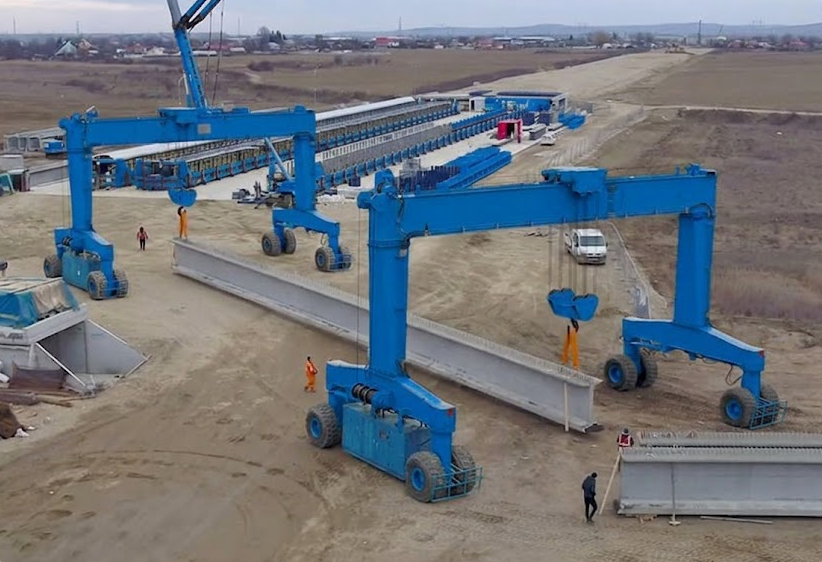
How to Select RTG Crane Capacity for Precast Concrete Yards
Content Quick Link
Learn how to select the right RTG crane capacity for precast concrete yards, including beam weight calculation, safety margins, and real project sizing guidance.
Most Important Takeaway
Selecting the correct RTG crane capacity for precast concrete yards is not about choosing the biggest crane available—it is about matching real beam weights, handling frequency, and future yard expansion with a safe and cost-efficient lifting margin.
- How do you calculate the real weight of precast concrete beams, slabs, and tunnel segments?
- What crane capacity is suitable for typical bridge beam handling projects?
- How much safety margin should be added for RTG crane selection?
- Why do many buyers over-size or under-size their gantry crane systems?
- How do yard layout, lifting frequency, and production volume affect crane capacity choice?
- What mistakes lead to unsafe lifting or unnecessary investment costs?
Your Trusted Rubber Tyred Gantry Crane Manufacturer & Supplier
How to Select the Right RTG Crane Capacity for Precast Concrete Yards
Precast Concrete Handling Requirements
Precast concrete yards do not handle just one type of product. The load changes depending on what is being produced. One day it may be bridge beams, another day box girders, slabs, or tunnel segments. Each one behaves differently when lifted.
This is important because lifting is not only about weight. Shape and balance matter just as much.
- Bridge beams are long and need stable control during lifting
- Box girders are heavier in the middle and can feel unbalanced
- Slabs are flat but often moved in groups
- Tunnel segments are curved and need careful positioning
Another point that is often missed is the lifting points. These are the hooks or steel anchors built into the concrete. They are not always placed perfectly in the center. So the load can tilt slightly when lifted.
In many cases, buyers focus only on “how many tons the crane can lift.” But in real yard work, the load is not always clean or evenly balanced. That is where problems usually start.
Load Calculation for Precast Elements
Choosing the right crane capacity starts with understanding the real lifting weight on site, not just the number on the drawing. Real weights vary from production to production and must be considered for safe operation.
Why Drawing Weight Is Not Enough
The actual weight of precast elements often differs from the design value. Even small differences can affect crane selection and safety.
- Real lifting weight is always slightly different from the drawing
- Variations occur between production batches and specific elements
What Causes Weight Differences in Real Production
Several small factors together affect final lifting weight:
- Beam size varies slightly during casting
- Steel reinforcement adds extra weight not always included in early design data
- Lifting hardware such as hooks, plates, or embedded anchors adds load
- Concrete mix density can vary between batches
- Moisture and curing conditions change final element weight
Simple Example from Bridge Beam Handling
For example, a bridge beam may be designed as 40 tons, but real production differences can increase the actual lifting weight to 42–45 tons.
- Even small differences matter when selecting crane capacity
- Accounting for reinforcement and lifting components ensures safer operation
Why One Fixed Number Is Not Safe
Loads are never perfectly constant; using a single drawing weight is unsafe for crane selection.
- Actual lifting weights come in a range, not a fixed value
- Crane must safely handle occasional heavier loads as well as daily averages
Practical Way to Calculate Load Range
Consider three working levels for practical load calculation:
- Light beams: normal daily lifting work
- Average beams: most common working condition
- Heavy beams: maximum load defining crane capacity
Even if heavy beams are lifted only occasionally, the crane must handle them safely. Always base crane capacity on real yard conditions, including production variations and added components.
Determining Practical RTG Crane Capacity Range
Selecting the right RTG crane capacity is about matching real production needs, not relying on a single fixed number. Consider the full working range of loads handled in the yard.
Why Capacity Should Not Be a Single Fixed Number
Crane capacity must consider variations in daily and weekly production. One fixed number rarely reflects actual workload.
- Production is not uniform; different products are handled in the same week or day
- Using a working capacity range is more practical for real yard operations
Light-Duty Precast Yards -Small Slabs and Wall Panels
These yards handle lighter precast components with frequent lifting cycles.
- Small slabs, wall panels, or thin precast units
- High lifting frequency with short cycle times
- Focus on smooth movement and fast operation rather than maximum tonnage
A lower-capacity RTG crane is typically sufficient as long as lifting is stable and repeated without production slowdown.
Medium Bridge Beam Yards-Most Common Application
These yards represent the majority of bridge construction projects, handling moderate loads continuously.
- Bridge beams with medium weight range
- Regular lifting during daily production cycles
- Need for both strength and operational flexibility
Balanced RTG crane capacity ensures stable performance for frequent beam handling without overdesign.
Heavy Infrastructure Projects-Large Girders and Tunnel Segments
For very heavy or complex precast elements, cranes must support higher loads and precise handling.
- Large bridge girders or prestressed beams
- Tunnel segments with heavy reinforced structure
- Higher demands on lifting stability and control
Higher-capacity RTG cranes with reinforced structure and enhanced stability control are required for safe operation.
Key Rule for Capacity Selection
Crane capacity should be based on regular heavy loads, not rare extremes.
- Regular heavy loads define the real working condition
- Rare overloads should not cause unnecessary oversizing
- The goal is safe, stable, and efficient daily operation
Simple Decision Logic
To simplify selection:
- Light production → lower capacity, high efficiency
- Medium production → balanced capacity for mixed loads
- Heavy production → higher capacity with reinforced structure
The correct RTG crane capacity comes from the loads most frequently lifted under normal maximum working conditions, not from occasional peak cases.
Safety Margin and Real Engineering Practice
Safety margin is an integral part of RTG crane selection. It ensures the crane can handle real working conditions without overdesign or unnecessary cost.
Why Safety Margin Is Part of Every Crane Decision
Crane capacity alone is not enough; safety margin ensures real operational conditions are handled safely.
- Compensates for variations in actual lifting weight and load behavior
- Balances between overdesign and operational safety
- Ensures consistent performance without risking structure or production stability
What Happens When Safety Margin Is Too High
Oversized cranes may appear robust but create hidden long-term issues.
- Higher purchase and installation cost
- Heavier crane structure increases load on runway beams and foundations
- Reduced operational efficiency due to slower movement and unnecessary mass
Result: system stronger than needed, more expensive, and less efficient.
What Happens When Safety Margin Is Too Low
Insufficient safety margin creates direct operational risks.
- Overload during heavy beam lifting
- Faster wear on hoisting system and structural parts
- Shorter crane service life
- Difficulty passing safety inspections
Impact: affects both production stability and on-site safety.
How Safety Margin Is Actually Determined
Engineering practice adjusts safety margin based on real working conditions.
- Lifting frequency and daily cycle stress
- Load movement: sudden starts, stops, and positioning
- Outdoor exposure: wind load and open yard conditions
- Operation style: manual vs semi-automatic control impacts load stress
Simple Way to Understand It
A good safety margin balances stability and cost without unnecessary overdesign.
- Enough to handle real lifting variations
- Not too much to increase cost or reduce efficiency
- Adjusted to match usage frequency and intensity
This balance ensures RTG cranes are safe, practical, and reliable for long-term precast yard operations.
Influence of Yard Layout and Operation Frequency
RTG crane capacity depends not only on lifting weight but also on how the yard is arranged and how often loads are moved.
Why Layout and Workflow Affect Crane Capacity
Crane selection is influenced by both load and operational flow.
- Two yards with the same beam weight may need different crane configurations
- Efficient material movement reduces unnecessary strain on crane operation
- Workflow determines how much speed, stability, and control are required
Key Layout and Operation Factors
Several practical yard conditions impact crane performance:
- Number of beams handled per day: High output needs faster lifting cycles
- Distance between casting and storage: Longer travel affects crane speed and cycle efficiency
- Stacking height and storage pattern: Higher stacking requires precise positioning and stability control
- Turnaround time requirement: Quick mold release and rapid relocation keep production continuous
How High-Frequency Production Changes the Requirement
In high-frequency yards, cranes operate continuously, so design priorities shift.
- Faster travel speed becomes critical
- Stable lifting under repeated cycles outweighs occasional peak capacity
- Smooth operation reduces delays between casting and storage
- Control accuracy directly affects productivity
Crane design is adjusted to support continuous workflow rather than just maximum load.
Practical Way to Understand It
Even identical maximum load requirements can lead to different crane needs based on yard usage.
- Yard A: 10 beams/day, short travel → standard RTG capacity sufficient
- Yard B: 30+ beams/day, long travel, higher stacking → requires more efficient crane for speed and stability
The key question is not only "how heavy?" but also "how often and how fast?" Weight, distance, and frequency together shape the RTG crane design and capacity selection.
Common Mistakes in RTG Crane Capacity Selection
Many precast yard crane issues come from missing project information early on, not from the crane itself.
Mistake 1: Using Drawing Weight Instead of Real Production Data
Relying only on theoretical beam weight is a common early planning error.
- Drawing weight is often idealized
- Real beams include reinforcement and lifting hardware
- Production variations change actual lifting load
This results in a crane that looks correct on paper but may not match real yard conditions.
Mistake 2: Ignoring Future Project Changes
Some buyers only consider current projects, overlooking future production needs.
- Heavier bridge beams may be introduced later
- Yard expansion may require handling larger segments
- New infrastructure projects may demand a different lifting range
Without flexibility, the crane can become limiting too early.
Mistake 3: Forgetting Spreader and Rigging Weight
Crane capacity calculations often miss the weight of lifting equipment itself.
- Spreader beams
- Lifting hooks or clamps
- Wire ropes or lifting frames
These components can add several tons. Ignoring them may cause the working load to exceed expectations.
Mistake 4: Choosing Based Only on Price
Making decisions solely on initial cost can create imbalance.
- Undersized cranes struggle with heavy loads
- Oversized cranes increase investment without operational benefit
- Poor balance between cost and daily efficiency
Price alone does not reflect real-world crane performance in the yard.
What These Mistakes Lead To
Ignoring these factors early results in two main outcomes:
- Higher long-term costs from rework, upgrades, or inefficiency
- Operational limits where certain beams cannot be handled smoothly
Both affect production flow and yard performance. RTG crane capacity must be based on complete working data: real beam weight, lifting equipment, and future plans—not just drawings or price comparisons.
Engineering Balance Between Cost, Safety, and Performance
Choosing an RTG crane is about more than price or capacity; it is about aligning daily production, safety, and long-term use.
Matching Real Beam Weights
The crane must match the real lifting load in the yard, not just the design value.
- Handling actual bridge beams, slabs, or girders with reinforcement included
- Considering lifting accessories and rigging weight
- Covering normal production variation without overload stress
If this match is not accurate, safety risks or unnecessary costs may appear later.
Stable Performance Under Repeated Work
Precast yards operate in cycles, so the crane must remain stable under continuous operation.
- Frequent lifting and traveling
- Continuous start-stop operations
- Repeated loading and unloading cycles
A system that only performs occasionally will slow down production flow.
Allowing Room for Future Changes
Yards often expand or change production over time, so the crane setup should accommodate future requirements.
- Slightly heavier future precast elements
- Increased daily production demand
- Possible yard layout changes or expansion
This avoids early limitations without oversizing the crane unnecessarily.
Ensuring Safe Operation in All Conditions
Safety is built into the balance of load, structure, and environment.
- Full load conditions without instability
- Outdoor wind influence in open yards
- Uneven load positioning during lifting
- Normal operator handling variations
If safety margin and real loads are misaligned, operations become risky or restrictive.
Final Practical View
RTG crane selection should balance cost, daily operation, and safety.
- Cost stays reasonable
- Daily operation remains smooth
- Safety is consistent under real working conditions
The difference between a basic purchase and a proper engineering solution is this balance. When cost, safety, and performance align with real yard conditions, the crane supports production instead of limiting it.
FAQs: RTG Crane Selection and Precast Handling
How do you calculate the real weight of precast concrete beams, slabs, and tunnel segments?
Real weight is calculated based on finished production conditions, not just design drawings.
- Include reinforcement steel, lifting hardware, and embedded accessories
- Consider batch-to-batch variations in concrete density and moisture content
- Use a range of light, average, and heavy beam weights to define practical crane capacity
What crane capacity is suitable for typical bridge beam handling projects?
Capacity depends on the real lifting weight of beams and yard workflow.
- Light-duty yards → smaller beams, lower capacity RTG crane for high-frequency lifting
- Medium bridge beam yards → moderate loads, balanced crane capacity for daily operation
- Heavy infrastructure → large girders or tunnel segments, higher capacity crane with stability control
How much safety margin should be added for RTG crane selection?
Safety margin ensures stable and safe operation under real working conditions.
- Enough margin to cover normal variations in lifting weight and rigging
- Not so high that it increases cost or reduces efficiency
- Adjusted based on lifting frequency, load behavior, and outdoor conditions
Why do many buyers over-size or under-size their gantry crane systems?
Crane sizing errors often come from incomplete or inaccurate project information.
- Over-sizing → purchasing cost too high, heavier structure, slower daily operation
- Under-sizing → overload risk, faster wear, shorter service life
- Ignoring rigging weight, production variation, or future project changes
How do yard layout, lifting frequency, and production volume affect crane capacity choice?
Crane selection depends on more than just load weight.
- Long travel distances require higher crane speed or efficiency
- High-frequency lifting emphasizes stable and repeated performance over peak tonnage
- Complex stacking or high storage requires precise control and anti-sway systems
What mistakes lead to unsafe lifting or unnecessary investment costs?
Common mistakes occur when critical data is overlooked in early planning.
- Relying only on drawing weight and ignoring rigging and real production variations
- Not planning for future yard expansion or heavier beams
- Choosing based solely on price instead of balanced engineering needs
- Neglecting yard layout impact, load frequency, or lifting system behavior
Conclusion
Selecting the right RTG crane capacity for precast concrete yards is a structured engineering decision, not a simple tonnage choice. By accurately evaluating beam weights, safety margins, and operational demand, buyers can avoid both overinvestment and safety risks while ensuring stable long-term production efficiency in precast handling operations.

Article by Bella ,who has been in the hoist and crane field since 2016. Bella provides overhead crane & gantry crane consultation services for clients who need a customized overhead travelling crane solution.Contact her to get free consultation.
Yuantai Cranes
Overhead Crane Manufacturer with CE, ISO, SGS, CNEX Certificates.
- Main Specifications - Capacity: 0.5–550 tons | Span: up to 40m | Speed: 0.8–12 m/min | Duty: A3–A7 | Power: 380–690V, 50/60Hz | Control: pendant/remote/cabin
- Full engineering: FEA/PLC/VFD + in-house build + global delivery + on-site support, for workshops, factories, EPC contractors, industrial projects, etc.
- Support: design, manufacturing, testing, service – end-to-end, customized lifting solutions worldwide.
How to Get an Accurate Crane Price for Your Application?
Tips: Copy the spec list, fill in your details, and paste it into the form on the right/ down-below for a quick price.
- Crane type:_____ . (e.g., overhead crane, gantry crane, jib crane)
- Max weight to lift:_____ tons. (e.g., 2t, 5t, 10t, 20t, 50t)
- Lifting height:_____ m. (How high does the hook need to reach?
- Workshop width (span):_____ m . (Distance between the two crane rails)
- Travel distance:_____ m . (How long does the crane need to move along the runway?)
- Control type:_____. (Pendant / remote / cabin Control)
- Power supply:_____. (Local voltage & frequency – e.g., 380V, 50Hz, 3-phase)
- What will it be used for?_____ (e.g., steel fabrication, concrete products, mold handling, general manufacturing, etc.)
- Any special requirements?_____ (e.g., extreme temperature, dusty or explosive environment, special paint color, etc.)
Just leave a message via the contact form and our hoist and crane engineer will contact you with in 24working hours.
Get Your Custom Quote–Quick & Easy
Fill in what you know. Skip what you don't – we'll help.Any question will be reply with 24 working hours