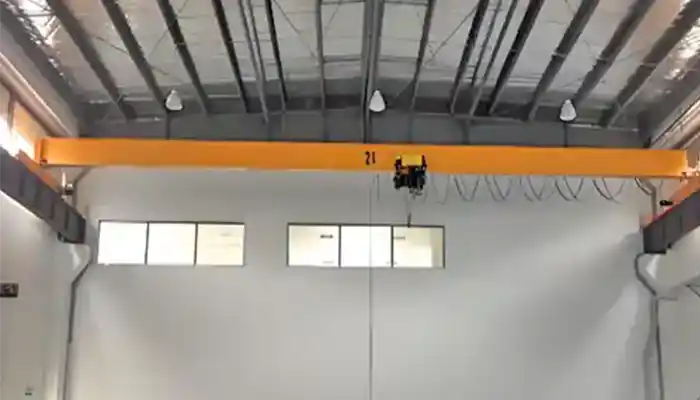
EPC Crane Selection Guidelines for Engineering Teams
Content Quick Link
Most Important Takeaway
Crane selection for EPC projects should never start from tonnage alone. A correct engineering decision is built on a full system analysis of load behavior, maintenance demand, plant layout constraints, environmental conditions, and electrical-control integration. Only by combining all five factors can engineering teams design a safe, cost-efficient, and long-life overhead crane system.
- How EPC teams should structure crane selection beyond simple capacity calculation
- How to correctly evaluate equipment weight and real working load conditions
- How maintenance frequency directly affects crane duty classification and lifecycle cost
- How spatial limitations in plant design impact crane type and configuration
- How environmental conditions change material, protection level, and safety design
- How electrical and automation systems influence crane performance and integration
Questions Answered in This Guide
- What is the correct engineering workflow for crane selection in EPC projects?
- Why is tonnage alone not enough for crane design decisions?
- How do maintenance patterns affect crane configuration and duty class?
- How should plant layout influence crane span, height, and coverage design?
- What environmental factors must be considered in industrial crane systems?
- How do electrical systems and automation affect final crane selection?
Introduction: Why EPC Crane Selection Needs System Thinking
In EPC and industrial projects, crane selection is often treated as a quick decision. Many people start with one simple question: "What tonnage do we need?" It sounds correct, but in real engineering work, it is not enough. An overhead crane is not an independent machine. It works inside a full plant system, and it must match the building structure, equipment layout, maintenance needs, and daily operating conditions. If one part does not fit, problems will show up later during installation or operation.
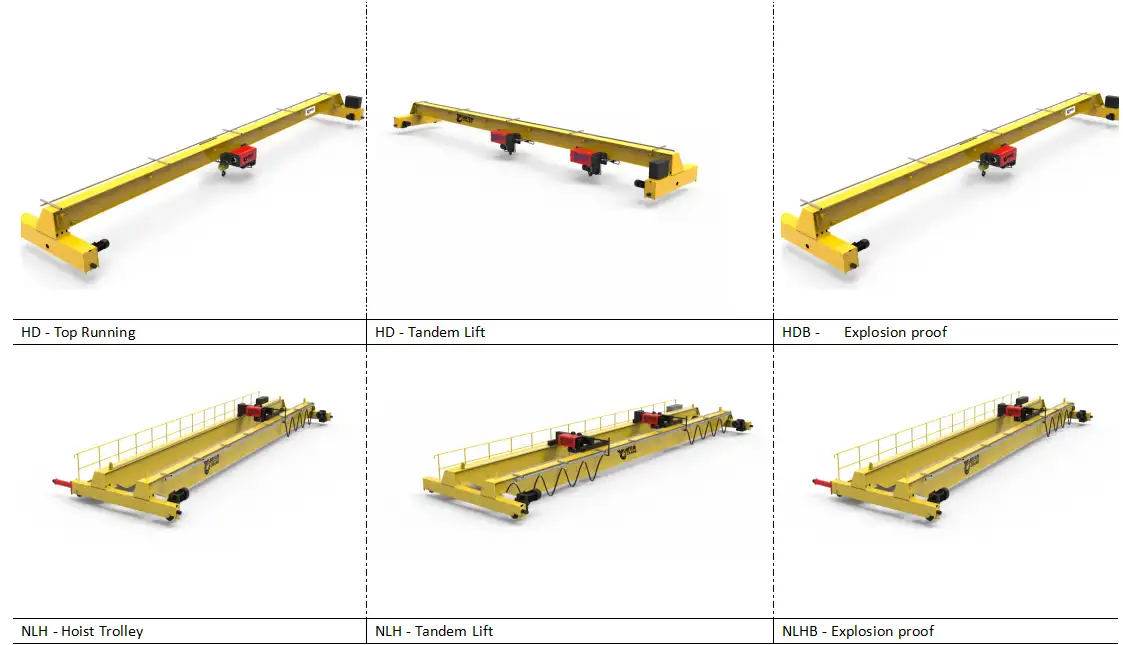 Hot Sale Overhead Cranes System
Typical Problems When Crane Selection Is Not Fully Planned
In many projects, issues only appear after the crane is already installed. At that stage, changes become difficult and expensive.
Common problems include:
- The crane cannot reach some maintenance areas
- The hook height is not enough for equipment lifting
- The crane is used too frequently and wears out faster
- The electrical system does not match real site conditions
These problems usually do not come from crane quality itself. They come from incomplete planning at the beginning of the project.
Crane Selection Should Start from Real Use
Before thinking about tonnage, EPC teams should first understand how the crane will actually be used in daily operation. This step is often skipped, but it is the most important part of the selection process.
In most plants, the crane is used for:
- Lifting motors, pumps, and process equipment
- Handling parts during maintenance shutdowns
- Emergency repairs when equipment fails
- Moving loads across different working areas
Once these real tasks are clear, selecting the right crane becomes more practical and accurate. The design starts to reflect actual site behavior instead of assumptions.
Why Tonnage Alone Is Not Enough
A crane may meet the required tonnage, but still not work well in the plant. This is a common situation in EPC projects where only load capacity is considered.
For example:
- It may not cover all working areas
- Some equipment may be difficult to reach
- It may operate too often for its design level
- Maintenance becomes difficult over time
So the main issue is not only "how much it can lift," but "how it will actually be used in the system."
Simple Idea Behind Good Crane Selection
In EPC engineering, crane selection should follow the plant design, not sit apart from it. It is part of the system, not a separate equipment choice.
A well-integrated crane should match:
- Equipment layout
- Building structure
- Maintenance requirements
- Environmental conditions
- Electrical and control systems
When these factors are considered together, the crane becomes a stable part of the plant. It supports daily operation instead of creating extra limitations.
Equipment Weight Analysis: Defining the Real Working Load
The first step in crane selection is not choosing the tonnage. It is understanding what will actually be lifted in the plant. In practice, this step decides whether the crane will work smoothly or cause problems later. A crane is not designed for a single number on paper. It is designed for real working situations. If this is missed at the beginning, the rest of the design can easily drift away from reality.
Look at What Is Really Being Lifted
Instead of jumping directly into "10 ton or 20 ton," EPC teams should first list all actual lifting objects in the plant.
This usually includes:
- Motors, pumps, gearboxes, and process equipment
- Heavy spare parts used during maintenance
- Combined assemblies with pipes, frames, or attachments
- Lifting tools such as hooks, slings, or spreader beams
To be honest, the real load is often slightly heavier than expected. Not always by a large margin, but enough to affect real operation.
The key idea is simple: don't only read the nameplate weight—look at the full lifting condition.
Think About the Heaviest Case, Not the Normal Case
In daily operation, loads are usually moderate. But the real stress on a crane often comes during shutdown maintenance or emergency repair work.
At that time, equipment is often:
- Fully assembled and harder to separate
- Surrounded by tight space or nearby structures
- Lifted together with extra fixtures or supports
So the crane must be designed for the worst realistic case, not just normal lifting conditions.
This is also where many systems look fine during design but show limits during real maintenance work.
Small Forces That People Often Ignore
Weight is not the only force acting on a crane. In real operation, additional dynamic forces always exist.
For example:
- Acceleration force when the trolley starts moving
- Impact force during braking or stopping
- Small swings or shocks during load positioning
- Uneven load distribution during lifting
These forces are not large individually, but over time they affect wear, structure stress, and service life.
So the real question is not only "can it lift?" but also "how will it lift every day in real operation?"
Don't Forget Future Changes
A plant today is not the same as the plant five years later. Equipment may be upgraded, production may increase, and maintenance methods may change.
So EPC teams usually keep a reasonable margin for:
- Heavier replacement equipment in the future
- Increased production capacity
- Changes in maintenance strategy
This is not about over-designing. It is about avoiding a system that becomes too tight or restrictive later.
Why This Step Really Matters
If the load is underestimated, the crane may be overloaded in real use, which creates safety and reliability risks.
If it is overestimated too much, the crane becomes heavier, more expensive, and less efficient than needed.
So both extremes are not ideal. The goal is balance.
In simple terms, getting the load definition right at this stage reduces problems in installation, operation, and long-term maintenance.
Simple Summary
Equipment weight analysis is not just about checking numbers. It is about understanding real lifting conditions inside the plant.
Once this step is done properly, everything after it—crane type, duty class, structure, and electrical design—becomes clearer and more stable.
Maintenance Frequency Analysis: How Duty Class is Defined
After understanding the real load, the next step is to look at how often the crane will actually be used. This is where EPC projects start to reflect real operating conditions, not just design drawings. In simple terms, it is not only about what you lift, but how often you lift it. A crane used a few times a week behaves very differently from one used all day in a production cycle. This is why maintenance frequency directly affects duty class and long-term reliability.
Daily Use vs Maintenance Use Is Not the Same
In many plants, there are two very different working patterns, and they should not be mixed when designing crane duty.
- Daily operation lifting: smaller, repeated, and predictable tasks
- Shutdown maintenance lifting: heavier, less frequent, but more demanding
A crane used only for occasional maintenance does not experience the same stress as a crane supporting daily production work.
So before selecting duty class, EPC teams need to clearly separate these two usage patterns. Otherwise, the design may look correct on paper but behave differently in real operation.
Frequent Maintenance Means Higher Duty Requirement
When maintenance happens often, the crane becomes part of the routine workflow instead of a backup tool.
In these cases:
- Motors, pumps, and parts are lifted regularly
- Start-stop cycles increase significantly
- Operators rely on the crane as a daily working tool
To be honest, this is where standard-duty cranes often start to feel limited in real use.
That is why higher duty classes or reinforced mechanisms are often required—not because of extreme loads, but because of continuous usage over time.
Emergency Lifting Should Not Be Ignored
In real plant operation, unexpected failures are normal. A pump may stop, a gearbox may fail, or a pipeline section may need urgent repair.
When this happens, the crane becomes a critical response tool.
EPC teams should consider:
- How fast the crane must respond during breakdowns
- Whether it can handle unplanned heavy lifting
- If repeated emergency use increases wear over time
This part is often underestimated during design, but it directly affects real-world reliability.
Spare Parts Handling and Repeated Loads
Some plants frequently move spare parts or replace components during operation. This creates repeated lifting cycles that are easy to overlook during planning.
Typical scenarios include:
- Frequent motor or pump replacement
- Regular inspection and reinstallation of equipment
- Moving parts between storage and maintenance areas
Even if each load is not very heavy, repetition matters. Over time, it affects gearbox wear, rope life, and motor heat load.
So it is not only "how heavy," but also "how often."
Why Duty Class Comes from Real Usage
Duty class is often treated as a technical label, but in reality it comes directly from working behavior inside the plant.
If the crane is:
- Used often → higher duty class is required
- Used occasionally → standard duty may be enough
- Used under mixed conditions → balanced design is needed
So instead of choosing duty class first, EPC teams should first understand usage patterns. The classification naturally follows that logic.
Simple Summary
Maintenance frequency is not a small detail. It directly defines how long the crane can perform reliably in real operation.
Once EPC teams clearly understand usage patterns—daily work, maintenance cycles, and emergency lifting—the correct duty class becomes much easier to define.
In short, load tells you what the crane lifts. Frequency tells you how long it can keep doing it.
Spatial Layout Constraints: Integrating Crane Design with Plant Architecture
After load and usage frequency are clear, the next step is to look at something very practical—the space inside the plant. In EPC projects, this is where theory meets reality. A crane may look suitable on paper, but once it is placed inside a real building layout, conditions change quickly. Walls, columns, equipment positions, and maintenance zones all start to matter. The key question becomes simple: can the crane actually work inside this building without limitation?
Span Is Limited by Building Structure
The first thing to check is the span. In most projects, it is already defined by the building design and cannot be changed easily later.
It depends on:
- Column spacing
- Workshop width
- Structural grid layout
If the span is not correctly matched, the crane may become oversized or fail to fully cover the working area.
In simple terms, the crane must fit between the building columns naturally—not forced or adjusted after construction.
Hook Height Must Match Real Lifting Needs
Hook height is another point that often causes problems later. It is not only about lifting capacity, but about vertical working space.
EPC engineers must consider:
- Height of the equipment to be lifted
- Clearance above installed machines
- Hook approach height under the beam
- Space required for slings, hooks, and lifting tools
In real projects, even a small lack of headroom can block maintenance work. And once installed, adjustments are not easy.
So this point needs careful checking during the design stage, not after installation.
Runway Structure Must Carry Real Loads
The crane does not work alone. It depends on runway beams and the building structure.
So engineers need to evaluate:
- Runway beam strength and stiffness
- Column load capacity
- Whether reinforcement is required
- Long-term fatigue from repeated crane movement
Sometimes the crane is correctly selected, but the supporting structure is not strong enough. That is where hidden problems appear during operation.
This is why crane design and building structure should always be considered together, not separately.
Coverage of Maintenance Zones
A very practical question is simple: can the crane actually reach all working areas?
In many plants, maintenance zones are not perfectly aligned. Equipment may be placed in corners, tight spaces, or near obstacles.
So EPC teams should check:
- Full travel coverage along the workshop
- Whether any "blind lifting zones" exist
- Accessibility of key maintenance points
- Overlap between crane travel and equipment layout
If any area cannot be reached, maintenance becomes slow or unsafe. This is often discovered too late if not checked early.
Complex Plants May Need More Than One Crane
In larger or more complex facilities such as steel plants or process workshops, a single crane is sometimes not enough.
In such cases, engineers may consider:
- Two cranes working in the same bay
- Coordinated lifting systems
- Modular crane designs for different zones
- Shared runway systems for flexibility
This is not about adding complexity. It is about ensuring every working area is actually covered.
In real industrial sites, full coverage is often more important than simple equipment layout.
Simple Summary
Spatial layout is about one thing: whether the crane can physically work inside the plant without restriction.
Even if load and duty class are correct, a poor layout match can still cause operational issues.
So EPC teams should always evaluate span, height, structure, and coverage together. When these four points are aligned, the crane works smoothly in real operation—not just on drawings.
Environmental Conditions: Adapting Crane Design to Real Operating Environments
After load, duty, and layout are clear, the next step is to look at the working environment. This is often underestimated in EPC projects, but in real operation it directly affects crane life and safety. A crane that works well in a clean indoor workshop may fail early in a harsh environment, not because of design mistakes, but because the environment was not fully considered from the beginning. So the key question is simple: where will the crane actually operate every day?
Corrosion Is a Slow but Serious Factor
In chemical plants, wastewater treatment plants, and coastal facilities, corrosion is always present. It does not fail suddenly—it develops slowly over time.
EPC teams should consider:
- Moist air and chemical fumes in the workspace
- Salt exposure in coastal regions
- Long-term rust risk on steel structures
- Electrical cabinet corrosion over time
Standard protection is often not enough in these conditions. Coating system, sealing quality, and surface treatment must match real exposure levels.
To be honest, corrosion is not an immediate problem. It becomes a long-term maintenance cost if ignored early.
Temperature Changes Affect Real Performance
Temperature is often underestimated, but it has a direct impact on crane performance.
In hot or cold environments:
- Lubrication performance changes
- Steel expansion or contraction affects alignment
- Electrical components may become unstable
- Brake and gearbox behavior can vary
For example, high temperatures can reduce grease efficiency, while low temperatures can increase starting resistance.
So the real question is not only "can it operate," but "how stable will it operate across different seasons."
Dust and Hazardous Areas Need Extra Protection
In many industrial environments, dust is not just a cleanliness issue—it directly affects mechanical and electrical systems.
Typical applications include:
- Steel plants with heavy dust
- Cement and bulk material handling areas
- Mining-related workshops
- Chemical or hazardous zones
In these environments, cranes may require:
- Sealed motors and gearboxes
- Dust-proof electrical enclosures
- Explosion-proof (Ex) systems where required
- Improved sealing for moving components
If these are not considered, the crane may still run, but maintenance frequency will increase over time.
Outdoor Operation Brings Additional Loads
Outdoor cranes face a wider range of environmental influences compared to indoor systems.
Engineers need to consider:
- Wind load affecting crane stability
- Rain and water protection for electrical systems
- UV exposure causing material aging
- Day–night temperature variation
In some projects, wind conditions can directly limit crane operation, requiring shutdown under high wind speeds.
So outdoor crane design requires a different approach compared to indoor systems.
Why Environmental Classification Matters
All these conditions lead to one conclusion: environment defines protection level.
A correct classification helps determine:
- Paint and coating system
- Electrical sealing level
- Motor and gearbox protection
- Structural material selection
If this step is missed, the crane may still operate, but its service life will be shorter than expected and maintenance cost will increase over time.
Simple Summary
Environmental conditions are not secondary details. They are part of the real working load of the crane system.
Once EPC teams clearly understand whether the environment is corrosive, dusty, hot, cold, or outdoor, they can define the right protection level and design a crane that performs reliably over time.
Electrical and Control System Integration: Defining Modern Crane Performance
After load, duty, layout, and environment are clear, the next step is electrical and control design. In many EPC projects, this part is sometimes treated as "standard supply," but in real operation it is one of the key factors that decides how stable and safe the crane will run every day. A modern overhead crane is not only steel and motors. It is an electromechanical system. The mechanical part lifts the load, but the electrical and control system decides how smooth, accurate, and safe that lifting will be. So the key question is simple: how will the crane be powered, controlled, and protected in real operation?
Power Supply Must Match Local Conditions
The first basic check is power compatibility. It sounds simple, but it is often missed in early EPC planning stages.
Engineers should confirm:
- Voltage level (such as 380V, 415V, 440V depending on region)
- Frequency standard (50Hz or 60Hz)
- Stability of plant power supply
- Available capacity during peak crane operation
If these conditions are not matched correctly, problems such as unstable operation, motor heating, or control faults may appear later.
Even small mismatches in power conditions can affect long-term reliability in real use.
Control Method Must Fit Real Operation
Control is not just a technical choice. It directly affects how operators use the crane every day.
Common control methods include:
- Pendant control for basic and simple operation
- Cabin control for frequent or heavy-duty lifting
- Remote control for flexible and safer ground operation
Each method fits different working conditions. For maintenance-focused plants, remote control is often preferred because it improves visibility and reduces operator exposure.
In simple terms, the control method should match real working behavior—not just product availability.
Automation and Anti-Sway Control Improve Accuracy
In more advanced EPC projects, automation is becoming more common in crane systems.
Key functions include:
- PLC-based control for coordinated operation
- Anti-sway systems to reduce load swinging
- Positioning control for accurate load placement
- Speed control for smoother lifting and lowering
These functions are not only for convenience. They help reduce operator errors, especially in repetitive or precision lifting tasks.
Smoother motion also reduces mechanical stress over time, improving overall service life.
Integration with Plant Systems
In modern industrial facilities, cranes are often connected to wider plant control systems.
This may include:
- SCADA systems for monitoring and supervision
- MES systems for production coordination
- Centralized maintenance or safety platforms
When integrated properly, the crane becomes part of the overall plant workflow. Operators can track performance, faults, and usage data more easily.
This is especially useful in plants where multiple cranes operate at the same time.
Safety Systems Are Not Optional
Safety functions are a core part of electrical design, not an optional upgrade.
EPC teams should always include:
- Overload protection to prevent over-capacity lifting
- Limit switches for travel and lifting boundaries
- Emergency stop systems for immediate shutdown
- Fault detection and diagnostic functions
These systems help prevent accidents and reduce damage when abnormal conditions occur.
In real operation, safety systems are often what prevent small issues from turning into serious failures.
Simple Summary
Electrical and control integration turns a crane from a basic lifting machine into a controlled industrial system.
When power, control, automation, and safety are designed together, the crane operates more smoothly and consistently in real conditions.
In short, mechanical design lifts the load—but electrical design controls how well it is lifted every time.
Engineering Optimization: Balancing Cost, Safety, and Lifecycle Performance
After all key factors are defined—load, duty, layout, environment, and electrical system—the next step is where EPC teams step back and review the whole system again. This is the optimization stage. At this point, the crane is no longer just a list of specifications. It becomes part of the plant itself. The key question is simple: does this design really work in the long run, or does it only look correct on paper? In real EPC projects, this step often decides whether the crane will operate smoothly for years or create hidden costs later.
Cross-Check Load and Structure Together
Even when load calculation is correct, it still needs to match the building structure.
EPC teams should confirm:
- Whether runway beams can safely carry crane loads
- If column strength is sufficient under real working cycles
- Whether deflection and stress remain within limits
- If future load changes are still structurally safe
Sometimes everything looks correct individually, but when combined, small mismatches appear. This is normal in real engineering work, so cross-checking is necessary.
To be honest, many later operational issues come from skipping this step.
Check If Maintenance Is Really Practical
A crane may look correct in design, but maintenance determines how it performs in reality.
Engineers should ask:
- Can maintenance teams safely access key components?
- Is there enough space for inspection and repair work?
- Are wearing parts easy to replace without full disassembly?
- Does the layout support smooth shutdown maintenance?
If maintenance is difficult, the crane will still operate—but downtime and repair cost will increase over time.
In real plant operation, simple maintenance access often matters more than detailed technical specifications.
Compare Lifecycle Cost, Not Just Purchase Price
One common EPC mistake is focusing only on initial cost. Cranes are long-term assets, not one-time purchases.
A realistic evaluation should include:
- Initial purchase and installation cost
- Maintenance and spare parts cost over time
- Energy consumption during daily operation
- Downtime cost during repairs or failures
In some cases, a slightly higher initial investment results in lower total cost over 10–20 years.
So the real decision is not "lowest price," but "best value over time."
Energy Use and Long-Term Operation
Energy efficiency is becoming more important in modern industrial plants.
Key points include:
- Motor efficiency levels
- Frequency and duty of operation cycles
- Use of variable speed drives for smoother control
- Energy recovery or regenerative options in suitable systems
Even small efficiency improvements become meaningful when cranes operate continuously over long periods.
So it is not only about saving electricity—it also helps reduce mechanical stress.
Avoiding Two Common Problems
In EPC crane selection, two typical issues often appear:
- Over-design: The crane is stronger than required. It increases cost and structure size without real benefit.
- Under-design: The crane cannot fully handle real working conditions, leading to frequent issues and higher maintenance cost.
The goal of optimization is balance—not too heavy, not too weak, but suitable for actual operation.
Simple Summary
Engineering optimization is the final check before confirming crane design.
When load, structure, maintenance, cost, and energy use are reviewed together, EPC teams can avoid unnecessary investment and long-term operational risks.
In simple terms, this step turns design from theoretical correctness into real-world reliability.
Conclusion: A Complete Engineering Approach to Crane Selection
Crane selection in EPC projects is a multi-variable engineering decision that directly impacts plant safety, efficiency, and long-term operational cost.
A correct approach always integrates:
- Real equipment load analysis
- Maintenance-driven duty classification
- Structural and spatial design constraints
- Environmental adaptation requirements
- Electrical and automation system integration
When all five factors are aligned, the overhead crane system becomes a reliable, long-life industrial asset that supports stable plant operation and future expansion.

Article by Bella ,who has been in the hoist and crane field since 2016. Bella provides overhead crane & gantry crane consultation services for clients who need a customized overhead travelling crane solution.Contact her to get free consultation.
Yuantai Cranes
Overhead Crane Manufacturer with CE, ISO, SGS, CNEX Certificates.
- Main Specifications - Capacity: 0.5–550 tons | Span: up to 40m | Speed: 0.8–12 m/min | Duty: A3–A7 | Power: 380–690V, 50/60Hz | Control: pendant/remote/cabin
- Full engineering: FEA/PLC/VFD + in-house build + global delivery + on-site support, for workshops, factories, EPC contractors, industrial projects, etc.
- Support: design, manufacturing, testing, service – end-to-end, customized lifting solutions worldwide.
How to Get an Accurate Crane Price for Your Application?
Tips: Copy the spec list, fill in your details, and paste it into the form on the right/ down-below for a quick price.
- Crane type:_____ . (e.g., overhead crane, gantry crane, jib crane)
- Max weight to lift:_____ tons. (e.g., 2t, 5t, 10t, 20t, 50t)
- Lifting height:_____ m. (How high does the hook need to reach?
- Workshop width (span):_____ m . (Distance between the two crane rails)
- Travel distance:_____ m . (How long does the crane need to move along the runway?)
- Control type:_____. (Pendant / remote / cabin Control)
- Power supply:_____. (Local voltage & frequency – e.g., 380V, 50Hz, 3-phase)
- What will it be used for?_____ (e.g., steel fabrication, concrete products, mold handling, general manufacturing, etc.)
- Any special requirements?_____ (e.g., extreme temperature, dusty or explosive environment, special paint color, etc.)
Just leave a message via the contact form and our hoist and crane engineer will contact you with in 24working hours.
Get Your Custom Quote–Quick & Easy
Fill in what you know. Skip what you don't – we'll help.Any question will be reply with 24 working hours