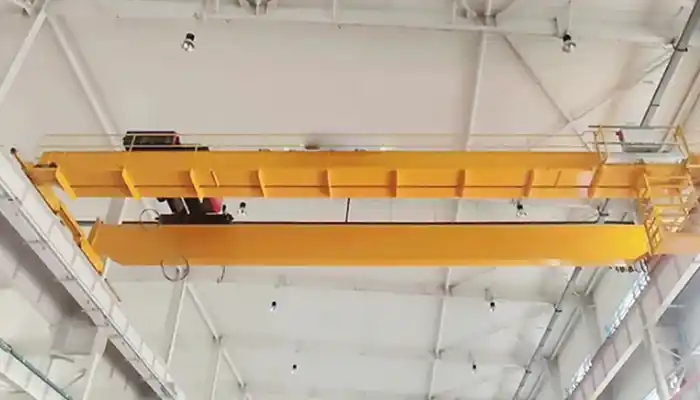
Workshop Crane Systems in Water Treatment Plants Guide
Content Quick Link
Centralized Maintenance Hub Design – Comprehensive Engineering Guide
Most Important Takeaway
A well-designed workshop crane system is not just a support facility—it is the central maintenance engine of a water treatment plant, directly determining how fast equipment can be repaired, restored, and returned to service, which ultimately controls the plant’s overall downtime and operational stability.
- The workshop crane system acts as the centralized maintenance hub for the entire plant
- It directly reduces plant downtime by accelerating repair and spare part turnaround
- It requires higher duty classification than process-area cranes due to intensive use
- Flexible coverage and multi-directional material flow are critical for efficiency
- Poor workshop crane design leads to maintenance bottlenecks across all plant zones
Role of Workshop Crane Systems in Water Treatment Plants
In water treatment plants, the workshop crane system functions as the central maintenance hub, where all major repair, refurbishment, and spare part assembly activities are concentrated. Instead of relying on multiple local cranes across process zones, the workshop becomes the unified service center that supports the entire facility.
This centralized maintenance structure allows all critical components—from pumps and motors to filtration assemblies and sludge handling parts—to be dismantled, repaired, and reassembled in a controlled environment.
Engineering Function and System Importance
A workshop crane system in a water treatment plant is not only used for lifting. Its real function is to keep the maintenance flow continuous and uninterrupted. It connects breakdown, repair, and return-to-service into a single operational chain. Compared with process-area cranes, workshop cranes handle more variable loads, more frequent lifting cycles, and a wider range of equipment types such as pumps, gearboxes, valve assemblies, and motor units.
Continuous Equipment Circulation Inside the Plant
One of the core functions of a workshop crane system is to support continuous movement of equipment between field operation and maintenance areas, ensuring that faulty units do not remain idle in the system.
- Failed components are removed from pump stations, filter zones, or sludge treatment areas
- Equipment is transferred into the workshop for inspection, disassembly, and repair
- After repair, units are tested, reassembled, and returned to operation
This cycle requires stable crane coverage and reliable handling capability. Any delay in lifting or transfer can extend overall equipment downtime.
Role in Reducing Waiting Time Between Maintenance Stages
In many water treatment plants, downtime is not caused only by equipment failure, but also by waiting time between maintenance steps such as lifting, transport, and repair preparation.
- Equipment can be moved directly to repair stations without multiple handling steps
- Heavy parts can be positioned immediately at assembly or overhaul areas
- Repair work and spare part preparation can be carried out in parallel
In practice, this reduces non-productive time and allows maintenance teams to focus more on actual repair work rather than material movement.
Closed-Loop Maintenance Flow and Plant Stability
A well-designed workshop crane system supports a closed-loop maintenance flow, where equipment moves smoothly from operation to repair and back into service without long interruptions.
This structure improves overall plant stability in several ways:
- Equipment turnover becomes more predictable and easier to manage
- Emergency repairs can be handled without blocking other maintenance tasks
- Spare parts preparation and installation become more efficient
Over time, this reduces pressure on process zones, as backup equipment is not forced into extended operation while waiting for repairs.
The system is not only about lifting performance, but about maintaining a continuous and connected maintenance chain that supports stable plant operation.
Design Considerations for Workshop Crane Systems
Designing a workshop crane system for a water treatment plant is not only about selecting lifting capacity or span. The real challenge is matching crane behavior with daily maintenance workflows. Workshop environments are often busy, variable, and unpredictable, so the crane system must remain stable under repeated use while still flexible enough to support different repair tasks.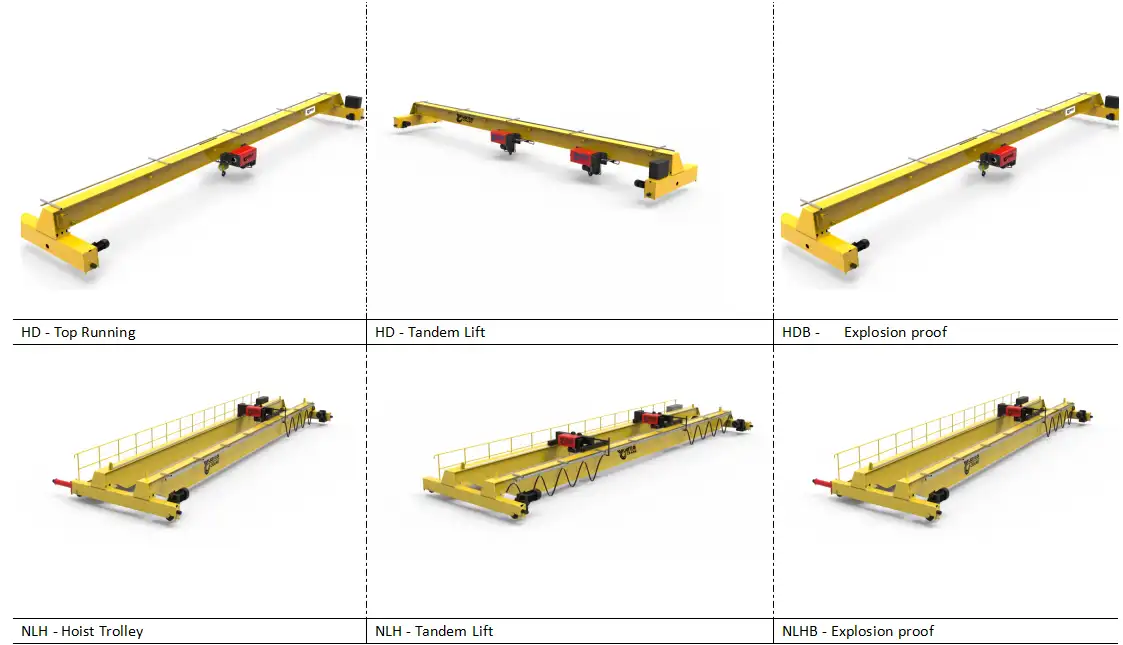
Hot Sale workshop crane system - Customized European style ovehead crane systems for your industrial material handling needs
Higher Duty Class Requirement
Workshop cranes operate under a much more intensive working rhythm compared to process cranes. Instead of occasional lifting, they are used continuously for lifting, shifting, positioning, and re-handling equipment during maintenance cycles.
This creates sustained mechanical and electrical stress on the system, requiring a higher duty classification for reliable long-term operation.
- Hoisting mechanisms require higher wear resistance for wire rope, drum, and brake assemblies
- Motors need improved heat dissipation for long continuous maintenance cycles
- Structural components such as girders and end carriages require higher fatigue strength
In practice, this ensures stable performance even during peak maintenance periods such as shutdowns or seasonal inspection work.
Flexible Lifting Coverage Across the Workshop
A workshop crane system must provide full functional coverage across all working zones, not just physical span coverage. The goal is to avoid dead zones and unnecessary material handling steps.
Typical workshop zones include repair bays, assembly tables, storage racks, and testing areas, often operating simultaneously.
- Full-span coverage reduces the need for secondary lifting equipment
- Smooth travel between zones allows direct movement of equipment between stages
- Clear lifting paths reduce manual repositioning of heavy components
When properly designed, operators spend less time repositioning loads and more time completing actual maintenance tasks.
Spare Part Handling and Storage Optimization
In a workshop environment, spare parts are continuously moved between storage and maintenance stations. Components such as pump shafts, motor housings, gear units, and valve assemblies often undergo multiple handling stages.
If crane planning is not aligned with storage layout, this movement becomes inefficient and increases downtime risk.
- Stable lifting control is required for precision components that cannot tolerate impact or swing
- Storage layout should match crane reach to minimize unnecessary lifting cycles
- Separation of storage and repair zones improves safety and reduces congestion
In many real workshop cases, inefficiency comes from poor material flow design rather than repair complexity.
Multi-Directional Maintenance Flow Design
Workshop maintenance does not follow a linear process. Equipment often moves repeatedly between inspection, disassembly, machining, assembly, and testing stages.
The crane system must therefore support multi-directional flow without blocking ongoing operations.
- Components can move directly between inspection and repair zones without detours
- Multiple maintenance tasks can run simultaneously without crane interference
- Equipment repositioning does not disrupt other lifting operations
This becomes especially important in large water treatment plants where multiple systems require maintenance at the same time. Proper crane flow planning enables parallel maintenance instead of sequential delays.
Engineering Impact on Plant Performance
A centralized workshop crane system has a direct impact on overall water treatment plant performance. It does not operate as a background utility. Instead, it becomes the key link between equipment failure, repair activity, and return-to-service. In real operation, maintenance teams often find that if the workshop crane system is slow or poorly organized, the entire plant performance is affected.
Reduced System-Wide Downtime
When the workshop crane system is properly designed, failed equipment does not remain idle waiting for handling or transfer. The crane becomes the connection point that keeps repair work moving step by step.
- Faulty pumps, motors, or valve assemblies can be transferred quickly into repair zones
- Heavy components do not require slow manual repositioning or external lifting support
- Repair preparation time is reduced through direct and controlled handling
This significantly reduces the delay between equipment failure and the actual start of repair work, which is often the longest downtime phase in many plants.
Faster Emergency Repair Response
Water treatment plants often face unexpected breakdowns. In such cases, response speed becomes critical. A well-prepared workshop crane system allows immediate action without waiting for external lifting support.
- Emergency components can be lifted immediately without external equipment delays
- Critical parts can be moved directly to inspection or disassembly areas
- Maintenance teams can start repair work faster with ready lifting access
This reduces the gap between failure detection and physical repair execution, helping stabilize plant operation during sudden downtime events.
Improved Maintenance Scheduling Flexibility
A properly organized workshop crane system also improves how maintenance is scheduled and executed. Instead of being limited by lifting availability, maintenance tasks can run in a more flexible and parallel manner.
- Multiple equipment units can be processed simultaneously inside the workshop
- Planned maintenance and emergency repair can operate in parallel without conflict
- Workload can be distributed more evenly across different maintenance stations
This flexibility helps prevent maintenance backlog, especially during peak inspection or overhaul periods.
Extended Equipment Lifecycle Through Proper Refurbishment
Equipment in water treatment plants often operates under continuous load and harsh environmental conditions. Over time, refurbishment becomes essential for extending service life.
A workshop crane system supports this by enabling safe handling during full disassembly and rebuilding processes.
- Large assemblies can be fully dismantled without lifting risk or damage
- Components can be cleaned, inspected, and reassembled in controlled conditions
- Reinstallation becomes more accurate due to stable and repeatable handling
Proper refurbishment supported by reliable lifting increases equipment lifespan and operational consistency.
Lower Long-Term Operational Disruption Risk
When maintenance handling is slow or inconsistent, small issues can develop into longer interruptions. A centralized workshop crane system helps reduce this risk by keeping maintenance flow stable and continuous.
- Equipment enters repair cycles without long waiting periods
- Bottlenecks in lifting and movement are reduced
- Maintenance work is less affected by handling limitations
Over time, this improves plant stability and reduces repeated unplanned shutdowns caused by delayed repairs.
Practical Conclusion
The workshop crane system is closely connected to how smoothly a water treatment plant operates under real working conditions. It influences not only repair speed, but the entire maintenance rhythm of the facility.
In practical terms, it functions less as a simple lifting device and more as a core support system that keeps maintenance and operation continuously connected without interruption.
System Integration Within Water Treatment Facilities
A workshop crane system in a water treatment plant is never a stand-alone setup. It is closely connected to all major process areas because almost every heavy maintenance task eventually passes through the workshop. Whether it is pumps, gearboxes, valve assemblies, or sludge handling components, all equipment flows into this central maintenance point. This integration is not only physical, but also organizational, defining how maintenance work is structured across the entire plant.
Centralization of Heavy Maintenance Tasks
One of the core purposes of system integration is to reduce scattered maintenance activities and concentrate heavy repair work in a single controlled workshop environment.
- Large components from filtration systems and pump stations are transferred into one maintenance hub
- Sludge treatment equipment and drive units are repaired within the same workshop space
- Chemical dosing equipment is serviced without requiring separate field-based repair setups
This centralization reduces duplication of tools, manpower, and space, while improving overall maintenance organization.
Standardization and Easier Spare Part Management
When maintenance is centralized, spare part handling also becomes more structured. The workshop crane system supports this by ensuring consistent and repeatable material movement.
- Common components across plant zones are managed within a unified storage system
- Heavy parts follow standardized lifting and transfer procedures
- Inventory tracking becomes clearer as parts return to a single workshop location after maintenance
Over time, this reduces confusion in spare part usage and helps avoid duplication or incorrect replacements.
Shortened Equipment Replacement Cycles
Delays in lifting and transport are one of the main reasons equipment replacement cycles become longer than expected in water treatment plants.
- Equipment can be moved directly from process areas into the workshop without intermediate handling steps
- Repair preparation and replacement activities can run in parallel instead of sequential delays
- Reinstallation becomes faster due to centralized processing and handling
This reduces the total cycle time from failure to recovery, which is especially important during peak operational periods.
More Efficient Use of Maintenance Resources
When all heavy maintenance flows into a single workshop system, resource utilization becomes significantly more efficient. The crane system plays a key role by enabling smooth internal movement.
- Maintenance teams focus more on repair work rather than managing lifting logistics
- Tools, equipment, and spare parts are shared within a controlled environment
- Work scheduling becomes clearer due to centralized operations
This reduces idle time for both personnel and equipment while improving coordination efficiency.
Importance of Strong Integration Strategy
The performance of a workshop crane system depends not only on its design, but also on how well it is integrated into the overall plant layout and maintenance strategy. Without proper integration, even a well-designed system can become inefficient.
When integration is properly implemented:
- Maintenance across different zones follows a unified workflow
- Equipment movement becomes predictable and easier to control
- The workshop operates as a stable maintenance hub rather than an isolated facility
This level of coordination improves long-term operational reliability and supports consistent maintenance planning in continuously operating plants.
FAQs — What Problems This Guide Solves
This section answers practical engineering and operational questions related to workshop crane systems in water treatment plants. The focus is on real maintenance efficiency, uptime improvement, and layout design rather than theoretical crane selection.
How does a workshop crane system improve overall water treatment plant uptime?
A: It reduces the time between equipment failure and repair completion.
Explanation:
A centralized workshop crane system allows failed components to be moved immediately into maintenance areas without waiting for external lifting or additional handling steps. This shortens the downtime cycle and accelerates equipment return to service.
- Direct transfer from process zones to workshop repair areas
- Faster start of repair work due to always-available lifting capacity
- Reduced waiting time during emergency breakdowns
Why is centralized maintenance design more efficient than distributed repair setups?
A: It simplifies maintenance work by concentrating heavy repair activities in one controlled location.
Explanation:
Instead of maintaining multiple small repair points across the plant, a centralized workshop reduces duplication of equipment, tools, and manpower while improving coordination of maintenance tasks.
- One shared crane system supports all heavy lifting needs
- Easier management of spare parts and repair workflows
- Less time lost in setup and coordination between zones
What crane duty class is required for a high-frequency maintenance workshop?
A: A higher duty class crane is required to handle continuous and repeated lifting cycles.
Explanation:
Workshop cranes operate under frequent use conditions with irregular loads and long working hours. This requires stronger mechanical design and improved thermal performance.
- Reinforced hoisting system for repeated operations
- Improved motor cooling and endurance design
- Higher fatigue resistance for structural components
How should crane coverage be designed for spare parts and equipment overhaul?
A: Crane coverage should allow full access to all storage, repair, and assembly zones.
Explanation:
Efficient workshop operation depends on smooth movement between maintenance areas without re-handling or blocked access paths. Coverage must support complete equipment flow.
- Direct lifting access from storage to repair stations
- Full-span movement across the workshop floor
- Reduced need for secondary handling equipment
What layout and lifting strategy prevent maintenance bottlenecks?
A: A layout that supports parallel workflows and unrestricted crane movement prevents bottlenecks.
Explanation:
Maintenance delays often occur when equipment movement is restricted or when multiple tasks compete for the same lifting space. A well-planned crane system avoids these operational conflicts.
- Separate but connected zones for inspection, repair, and testing
- Ability to run multiple maintenance tasks simultaneously
- Clear lifting paths to avoid operational interference
Conclusion
The workshop crane system in a water treatment plant is a critical infrastructure element that defines the efficiency of the entire maintenance ecosystem. By centralizing repair operations, optimizing spare part handling, and supporting multi-directional workflows, it significantly reduces downtime and improves long-term plant reliability.
From an engineering perspective, investing in a properly designed workshop crane system is not just a maintenance decision—it is a strategic upgrade to the plant’s operational resilience and lifecycle efficiency.

Article by Bella ,who has been in the hoist and crane field since 2016. Bella provides overhead crane & gantry crane consultation services for clients who need a customized overhead travelling crane solution.Contact her to get free consultation.
Yuantai Cranes
Overhead Crane Manufacturer with CE, ISO, SGS, CNEX Certificates.
- Main Specifications - Capacity: 0.5–550 tons | Span: up to 40m | Speed: 0.8–12 m/min | Duty: A3–A7 | Power: 380–690V, 50/60Hz | Control: pendant/remote/cabin
- Full engineering: FEA/PLC/VFD + in-house build + global delivery + on-site support, for workshops, factories, EPC contractors, industrial projects, etc.
- Support: design, manufacturing, testing, service – end-to-end, customized lifting solutions worldwide.
How to Get an Accurate Crane Price for Your Application?
Tips: Copy the spec list, fill in your details, and paste it into the form on the right/ down-below for a quick price.
- Crane type:_____ . (e.g., overhead crane, gantry crane, jib crane)
- Max weight to lift:_____ tons. (e.g., 2t, 5t, 10t, 20t, 50t)
- Lifting height:_____ m. (How high does the hook need to reach?
- Workshop width (span):_____ m . (Distance between the two crane rails)
- Travel distance:_____ m . (How long does the crane need to move along the runway?)
- Control type:_____. (Pendant / remote / cabin Control)
- Power supply:_____. (Local voltage & frequency – e.g., 380V, 50Hz, 3-phase)
- What will it be used for?_____ (e.g., steel fabrication, concrete products, mold handling, general manufacturing, etc.)
- Any special requirements?_____ (e.g., extreme temperature, dusty or explosive environment, special paint color, etc.)
Just leave a message via the contact form and our hoist and crane engineer will contact you with in 24working hours.
Get Your Custom Quote–Quick & Easy
Fill in what you know. Skip what you don't – we'll help.Any question will be reply with 24 working hours