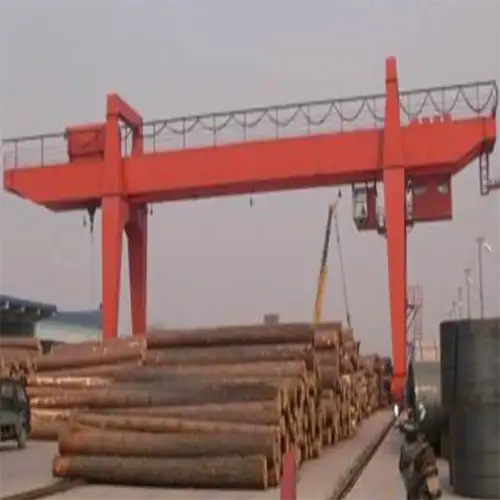
Rail Mounted Gantry Crane for Timber Yard & Log Handling
Complete guide to rail mounted gantry crane timber yard design, log handling gantry crane capacity, outdoor yard gantry crane systems, and industrial use.
| Crane Type | Rail mounted gantry crane with ground rail travelling |
| Crane Capacity | 10–100 tons, hot sale 30 ton to 80 ton |
| Span Length | Customized. |
| Lifting Height | Customized. |
| Coverage Area Type | Rectangular, rail-defined working zone (fixed bay layout). Gantry cranes operate within a long rectangular coverage area, typically aligned with timber storage lanes for linear stacking, sorting, and dispatch operations. |
| Application | Rail Mounted Gantry Cranes (RMG) in timber yards handle logs and timber bundles in fixed storage areas with high efficiency. They are used for stacking, sorting, moving, and loading/unloading trucks, ensuring smooth yard operations. Key phases: Receivin |
| Certifications | CE / ISO / SGS / Other third-party inspection |
| Customization | Customized material handling cranes solutions available for indoor, outdoor, hazardous, corrosive, c |
Crane Manufacturer: Yuantai Cranes – 30+ Years Professional Crane Manufacturer from China
Category: Featured
Tags: rmgcrane,outdoorcrane
Your Trusted Gantry Crane Manufacturer & Supplier
Rail Mounted Gantry Crane Timber Yard Guide
Most Important Takeaway
A rail mounted gantry crane timber yard system is not selected by crane type alone—it is a fully integrated industrial gantry crane solution where capacity (10 ton, 20 ton, 32 ton gantry crane), yard layout, lifting method, and timber or log handling workflow must be engineered together. In projects, the difference between a high-efficiency outdoor gantry crane yard and a bottleneck system comes down to matching crane configuration with timber handling conditions, not just tonnage.
- How to select the correct rail mounted gantry crane capacity (10 ton, 20 ton, 25 ton, 32 ton gantry crane) for timber storage yards
- When to use a single yard gantry crane vs two industrial gantry cranes in high-volume timber logistics
- How outdoor gantry crane yard design affects storage efficiency and truck dispatch flow
- How timber handling gantry crane systems differ from standard container or steel yard cranes
- What defines a high-performance log handling gantry crane system for sawmills and timber ports
- Which lifting tools (spreader beams, grabs, clamps) are used in industrial timber handling operations
- How rail structure, wheel load, and foundation design impact long-term crane reliability
- How to optimize throughput in industrial gantry crane timber storage yards
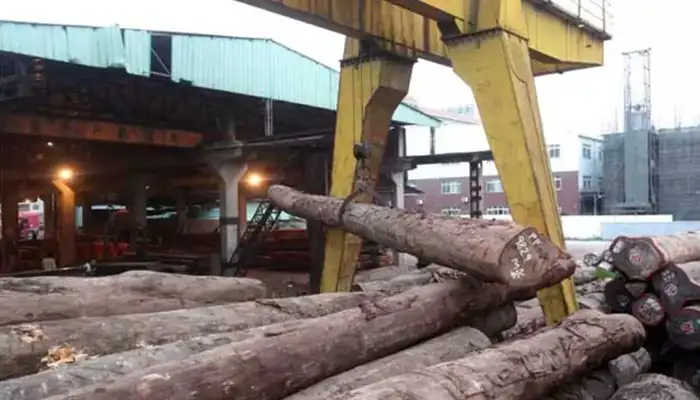
FAQ: Questions This Guide Solves
What is the best rail mounted gantry crane for timber yard storage?
Q: What is the best rail mounted gantry crane for timber yard storage?
A: The most common choice for timber storage yards is a 20 ton rail mounted gantry crane for balanced log and lumber handling.
In most outdoor timber storage and sawmill logistics yards, operators usually search for a reliable yard gantry crane that can handle mixed loads without overcomplicating the system.
- A 20 ton configuration works well for bundled lumber, logs, and general industrial timber handling.
- For smaller yards, lighter 10–16 ton systems are often used, while large export yards may shift to higher-capacity industrial gantry crane setups.
Should I choose a 20 ton gantry crane or a 32 ton gantry crane for log handling?
Q: Should I choose a 20 ton gantry crane or a 32 ton gantry crane for log handling?
A: A 20 ton gantry crane is suitable for standard log handling, while a 32 ton gantry crane is used for oversized or heavy export timber logs.
In rail mounted gantry crane timber yard projects, buyers often compare 20 ton gantry crane for logs versus heavy duty 32 ton log handling gantry crane depending on workload.
- 20 ton systems cover most sawmill and general timber yard operations with mixed log sizes.
- 32 ton systems are chosen when logs are large diameter, dense, or frequently lifted in heavy bundles in export terminals or industrial storage yards.
When is a dual yard gantry crane system better than a single outdoor gantry crane?
Q: When is a dual yard gantry crane system better than a single outdoor gantry crane?
A: A dual gantry crane system is better when timber throughput is high and continuous loading and unloading must run in parallel.
In high-volume timber logistics hubs, users often look for dual rail mounted gantry crane system for timber yard efficiency.
- One crane typically handles inbound log unloading and stacking.
- The second crane manages outbound dispatch and truck loading, reducing congestion in outdoor gantry crane yards.
How does a timber handling gantry crane improve log stacking efficiency?
Q: How does a timber handling gantry crane improve log stacking efficiency?
A: A timber handling gantry crane improves stacking efficiency by enabling fast, precise, and high-density stacking of logs and bundled lumber.
- It allows vertical stacking in outdoor storage yards with controlled movement.
- It reduces manual handling and improves cycle time in rail mounted gantry crane timber yard systems.
What is the difference between a log handling gantry crane and a standard industrial gantry crane?
Q: What is the difference between a log handling gantry crane and a standard industrial gantry crane?
A: A log handling gantry crane is designed specifically for irregular timber loads, while a standard industrial gantry crane is for general structured materials.
- Log handling systems use hydraulic grabs or timber clamps for uneven, wet, or bark-covered logs.
- Industrial gantry cranes are more general-purpose and may not be optimized for long timber stability.
How do I design an outdoor gantry crane yard for timber storage and dispatch?
Q: How do I design an outdoor gantry crane yard for timber storage and dispatch?
A: An effective outdoor gantry crane yard is designed with clear zoning, optimized rail span, and separated inbound and outbound logistics flow.
- Separate zones for logs, bundled lumber, and finished timber improve organization.
- Proper aisle spacing and rail alignment reduce crane travel time and improve yard efficiency.
What crane configuration is used in sawmills, timber ports, and wood processing plants?
Q: What crane configuration is used in sawmills, timber ports, and wood processing plants?
A: Sawmills typically use 10–20 ton gantry cranes, while ports and large timber yards use dual systems or 25–32 ton heavy-duty cranes.
- Sawmills focus on bundled lumber handling with moderate capacity cranes.
- Ports require higher throughput systems, often using dual yard gantry cranes for continuous operations.
How do rail mounted gantry crane systems improve heavy timber logistics performance?
Q: How do rail mounted gantry crane systems improve heavy timber logistics performance?
A: Rail mounted gantry crane systems improve timber logistics by enabling continuous, high-density, and structured movement of logs and lumber across the yard.
- They reduce manual handling and forklift dependency in outdoor storage yards.
- They increase throughput by enabling faster stacking, retrieval, and dispatch cycles in industrial gantry crane operations.
Rail Mounted Gantry Crane Timber Yard Overview
A rail mounted gantry crane timber yard system is more than just a crane—it's a complete material handling solution for industrial timber operations. These systems are built to handle heavy loads, like logs, bundled lumber, and processed timber, continuously and efficiently. In practical terms, they allow timber yards to operate at high throughput without relying solely on trucks, forklifts, or manual labor.
Unlike mobile handling equipment, a yard gantry crane or industrial gantry crane provides several advantages that directly affect yard productivity and safety:
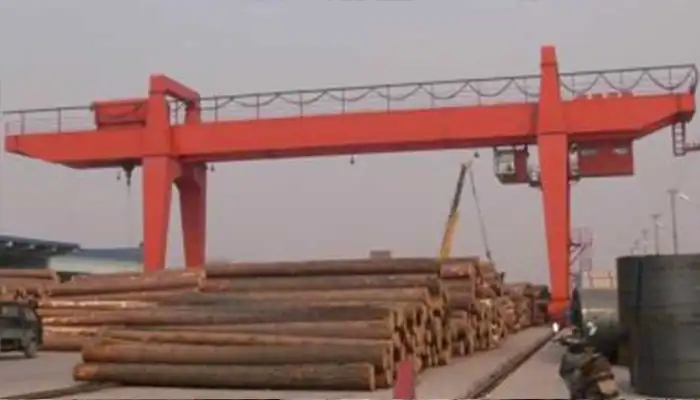
- High-density stacking in outdoor timber storage yards
A rail mounted gantry crane allows operators to place logs and lumber bundles precisely in narrow lanes, maximizing storage space. Outdoor gantry crane yards can often store more timber per square meter than forklift-only yards because the crane can reach further and lift heavier loads. - Stable lifting for long and irregular loads
Timber and logs are irregular, flexible, and heavy. A timber handling gantry crane can safely lift long beams, logs, or uneven bundles without tilting or swaying dangerously. This stability reduces damage to materials and keeps the operation safer for workers. - Efficient integration with trucks, trailers, and processing lines
Timber yards need to move materials in and out quickly. A rail mounted gantry crane can work directly with trucks, trailers, or processing lines, reducing the number of handling steps and speeding up dispatch and loading. - Continuous operation under demanding industrial environments
Outdoor gantry cranes are designed for long-term, heavy-duty use. They can handle timber in all weather conditions, from rain-soaked logs to dry, heavy bundles, without compromising safety or performance.
Industries That Use Outdoor Gantry Crane Timber Systems
These systems are widely applied where high-volume timber handling is required. Typical applications include:
- Sawmills and wood processing plants
Handling raw logs, cut beams, and processed lumber with a single outdoor gantry crane or multiple cranes for large-scale operations. - Timber export ports and logistics terminals
Moving large volumes of logs and timber bundles between ships, storage yards, and trucks, often with 20–32 ton gantry cranes for heavy log handling. - Large-scale lumber distribution yards
Organizing and storing different types of timber efficiently, using yard gantry cranes to stack lumber in precise zones according to size, type, or grade. - Industrial construction material storage facilities
Timber used in construction often comes in long lengths or heavy bundles. Industrial gantry cranes make it possible to lift, move, and store these materials safely, even in outdoor yards exposed to weather.
In industrial projects, using a rail mounted gantry crane system for timber handling increases yard efficiency, reduces material damage, and minimizes reliance on manual labor. Proper planning of the yard layout, crane capacity, and lifting attachments ensures that operations run smoothly day after day, even when dealing with heavy logs or oversized timber bundles.
Timber and Log Handling Requirements in Gantry Crane Yards
A timber handling gantry crane system in a rail mounted gantry crane timber yard has to deal with load conditions that are not fixed or uniform. In operations, timber is never as predictable as steel coils or containers. Logs bend slightly, bundles shift, and weight distribution changes depending on moisture and stacking method. Because of this, every yard gantry crane system used for timber storage must be designed with flexibility in mind, not just rated capacity on paper. In practical industrial gantry crane applications, especially in sawmills, timber ports, and outdoor storage yards, the handling system must continuously adapt to changing load geometry and surface conditions.
Typical Timber Materials Handled in Log Handling Gantry Crane Systems
A log handling gantry crane or timber yard crane usually deals with several material types in daily operation. Each one behaves differently during lifting, so the crane configuration and attachments must be selected carefully.
Common materials include:
- Raw logs used in log handling gantry crane operations
These are irregular in shape and weight. Some logs are straight, others slightly curved or tapered, and bark conditions also affect grip and friction. Hydraulic grabs or specialized log tongs are often required. - Cut lumber bundles (beams, planks, boards)
These are more structured but still flexible when bundled. A timber handling gantry crane typically uses spreader beams or lifting frames to avoid strap damage and bundle collapse during lifting. - Strapped or palletized timber packs
These are more standardized but still sensitive to uneven loading. Proper lifting balance is important to prevent shifting during crane travel in an outdoor gantry crane yard.
Typical Load Ranges in Rail Mounted Gantry Crane Timber Yards
In rail mounted gantry crane timber yard systems, load planning is usually divided by operational zones and handling method rather than a single fixed value.
Typical load ranges include:
- 1–10 ton bundled timber packs (light handling)
Used in small storage zones or secondary sorting areas. A small yard gantry crane or single girder 10 ton gantry crane is often enough for this range. - 10–20 ton standard industrial lumber loads
This is the most common operating range in medium and large timber yards. A 20 ton gantry crane is widely used for balanced performance between cost and lifting capability. - 20–30+ ton heavy log stacks for export or sawmill operations
Used in heavy-duty log handling gantry crane systems, especially in export terminals or large sawmill yards. These systems typically require double girder structures and reinforced rail foundations.
Handling Challenges in Timber and Log Gantry Crane Operations
Unlike standardized industrial cargo, timber introduces several practical handling challenges that directly affect crane design and operation.
In a rail mounted gantry crane timber yard, operators must deal with:
- Load imbalance is common
Logs are rarely uniform in diameter or density. Even bundled timber packs can shift slightly during lifting, especially when straps are not evenly tensioned. This requires careful hook positioning and sometimes -time operator adjustment. - Surface friction varies (wet, dry, bark-covered logs)
A log handling gantry crane system often works in outdoor conditions. Rain, humidity, or bark residue can change friction levels significantly, affecting grip reliability and load stability during lifting and travel. - Lifting requires spreader beams or hydraulic grabs
Standard hooks are not sufficient for most timber operations. A proper timber handling gantry crane uses spreader beams for bundled lumber and hydraulic grabs for logs to ensure controlled lifting and safe load distribution. - Safety margin of 20–30% is standard in industrial gantry crane design
In practical engineering terms, rated capacity is never the actual working limit. For industrial gantry crane timber applications, designers typically apply a 20–30% safety margin to account for dynamic load movement, uneven distribution, and operational shock during travel and placement.
System Integration in Outdoor Gantry Crane Timber Yard Operations
In industrial outdoor gantry crane timber yard operations, these handling requirements define how the entire system is designed—from crane tonnage selection (10 ton, 20 ton, 32 ton gantry crane) to rail structure strength and lifting attachment configuration. A properly matched system reduces material damage, improves stacking accuracy, and keeps the workflow stable even under continuous heavy-duty operation.
Gantry Crane Capacity Selection for Timber Handling Yards
Selecting the correct ton gantry crane for timber handling is one of the most important decisions in a rail mounted gantry crane timber yard system. In practice, this is not only about lifting weight. It is about how logs, lumber bundles, and storage cycles behave in yard operations. A mismatch in capacity often leads to slow dispatch, unsafe lifting conditions, or unnecessary investment in oversized industrial gantry crane systems. In most outdoor gantry crane yard projects, capacity planning is directly linked to timber type, storage density, and daily throughput requirements.
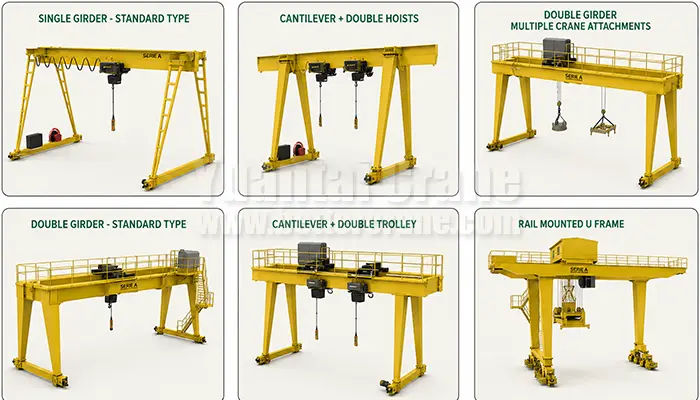
Single Rail Mounted Gantry Crane Systems (Standard Timber Yard Configuration)
A single rail mounted gantry crane system is the most widely adopted solution in medium-scale timber storage and handling operations. In a typical timber handling gantry crane yard, this setup is chosen when the operation needs a stable balance between investment cost, daily throughput, and operational simplicity.
In practical terms, a yard gantry crane system with a single crane is easier to manage, easier to maintain, and easier to integrate into standard outdoor logistics flow. It is often the first choice for sawmills, timber yards, and medium-sized wood processing facilities where material flow is steady but not extremely high-volume.
Typical Configurations of Single Yard Gantry Crane Systems (10–16 Ton Range)
In rail mounted gantry crane timber yard projects, the capacity selection is usually divided into three working ranges based on timber type, stacking height, and handling frequency.
10–16 ton gantry crane: small sawmills and bundled lumber yards
This configuration is commonly used in smaller timber processing plants where bundled lumber is the dominant material.
It fits well for:
- Light to medium-duty timber handling gantry crane operations
- Bundled wood packs, planks, and processed beams
- Frequent lifting cycles with controlled load sizes
In practice, this range is often selected when the yard layout is compact and material movement distances are short. The operation is simple, and the crane can run continuously without complex coordination systems.
20 Ton Gantry Crane: Standard Industrial Timber Yard Configuration
The 20 ton gantry crane is the most common capacity used in rail mounted gantry crane timber yard systems.
It is widely considered the "working standard" for many industrial timber operations, not just a middle option.
This configuration is suitable for:
- Mixed handling of logs and bundled timber
- Standard outdoor gantry crane yard operations
- Continuous stacking and dispatch cycles in industrial logistics
In many projects, operators prefer the 20 ton class because it handles most practical timber conditions without overcomplicating the system. It works well when the yard needs flexibility—logs one day, lumber bundles the next.
25–32 Ton Gantry Crane: Heavy Log Handling and Export Timber Terminals
This 25 ton gantry crane, 30 ton gantry crane and 35 ton gantry cranes are used in heavy-duty log handling gantry crane systems, especially where large logs or high-density timber stacks are involved.
Typical applications include:
- Large diameter logs in sawmills and timber ports
- Export timber terminals handling heavy bundled loads
- High stacking requirements in outdoor storage yards
These cranes are usually double girder industrial gantry crane systems, built for continuous outdoor operation. Rail structures must also be reinforced to handle higher wheel loads and long-term stress.
In practical operation, this range is selected when load weight and stability become more important than cost efficiency.
Best Suited For (Yard Applications)
A single yard gantry crane system is best suited for:
- Linear outdoor gantry crane yard layouts with clear inbound and outbound material flow
- Moderate throughput timber storage and dispatch operations where daily handling is stable
- Cost-efficient industrial timber handling systems, especially where simplicity is preferred over multi-crane coordination
- Sawmills and medium-scale logistics yards that require reliable but not overly complex crane operation
In industrial projects, this configuration is often the most practical starting point for a rail mounted gantry crane timber yard, because it allows operators to scale operations gradually without introducing unnecessary system complexity at the beginning.
Dual Gantry Crane Systems -High-Throughput Timber Yard Configuration
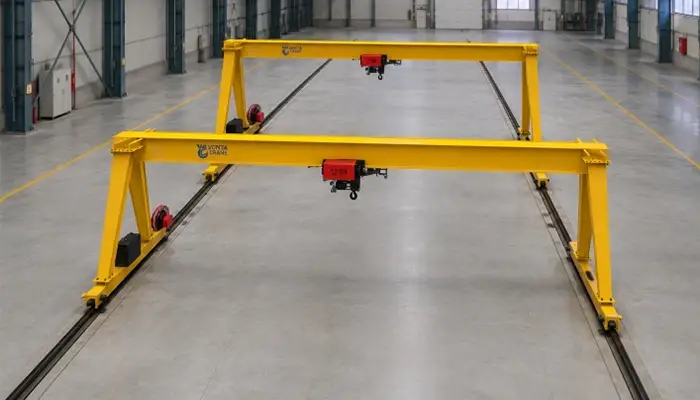
In large-scale industrial gantry crane timber yard systems, a single crane often becomes a limiting factor once the volume of logs, bundled lumber, and dispatch demand increases. When material flow is continuous, especially in export or distribution environments, a dual rail mounted gantry crane system is commonly adopted to keep operations stable and avoid congestion in stacking and loading areas. This type of yard gantry crane configuration is designed for throughput, not simplicity. It is used where the timber yard is expected to run like a continuous logistics facility rather than a basic storage area.
Typical Dual Gantry Crane Setups
In rail mounted gantry crane timber yard projects, dual crane systems are usually standardized around medium to heavy-duty capacities:
- 2 × 16 ton gantry cranes
- 2 × 20 ton gantry cranes
This range is widely used because it provides enough lifting capacity for both bundled timber and log handling while still maintaining operational flexibility in outdoor conditions.
Each crane operates within a defined zone, reducing overlap and minimizing interference during high-frequency lifting cycles.
Operational Principle in Timber Handling Gantry Crane Yards
A dual timber handling gantry crane system is not simply two cranes working side by side. It is a structured workflow system where yard space is divided according to function.
In practice, the layout is arranged as follows:
- Dedicated stacking zone for timber storage
One crane focuses on organizing incoming material into storage stacks. This includes logs, bundled lumber, and graded timber sorted by size or destination. - Separate dispatch zone for loading trucks or rail transport
The second crane handles outbound operations. This includes loading trucks, preparing export shipments, or feeding downstream processing lines. - Parallel crane operation for continuous material flow
Both cranes operate simultaneously without waiting for shared workspace clearance. This reduces idle time and keeps the outdoor gantry crane yard system running continuously.
In industrial use, this separation is what allows higher throughput without increasing operational complexity inside each crane system.
Why Dual Gantry Crane Systems Are Used in Timber Yards
A dual rail mounted gantry crane system is typically selected when the timber yard reaches a certain operational scale where a single crane cannot maintain stable flow.
It is commonly used in:
- Large timber ports and export terminals handling continuous ship loading cycles
- High-volume sawmill logistics yards with steady inflow of logs and outbound lumber
- Industrial timber distribution hubs operating on near 24/7 schedules
In these environments, the key requirement is not just lifting capacity, but continuous movement of material without interruption.
Practical Operational Insight
In industrial industrial gantry crane timber handling projects, this configuration is usually chosen when the system priority shifts from cost control to throughput stability.
A dual crane setup reduces waiting time between stacking and dispatch operations. It also helps avoid congestion in the yard during peak loading periods, especially when trucks and storage activities occur at the same time.
In simple terms, when a single yard gantry crane system starts to feel "busy all the time," a dual crane system is usually the next practical step in scaling a timber handling operation.
Tandem Operation -Special Log Handling Gantry Crane Systems
In advanced log handling gantry crane systems, a more specialized working mode is used when a single rail mounted gantry crane is no longer sufficient for safe lifting. This is known as tandem operation, where two cranes are controlled to lift and move one shared load at the same time. In practical industrial gantry crane timber yard applications, this is not a routine operation. It is used only when load dimensions or weight exceed the safe working capacity of a single yard gantry crane system, especially in heavy log handling environments such as export terminals or large sawmill yards.
Working Principle of Tandem Gantry Crane Operation
A tandem timber handling gantry crane system is designed so that two cranes operate in a synchronized manner. Both cranes share the load equally or in a controlled ratio, depending on load geometry and lifting point arrangement.
Typical operational characteristics include:
- Combined lifting capacity of 30–40 tons depending on crane configuration
In industrial projects, two 20 ton gantry cranes can be paired to handle oversized timber loads that would otherwise exceed single-crane safety limits. The effective capacity depends on load balance and control precision. - Used for oversized logs, heavy bundled timber packs, or export-grade timber loads
This mode is common in log handling gantry crane operations where large-diameter logs or dense timber stacks are prepared for shipping or long-distance transport. - Requires synchronized control systems to ensure balanced lifting and stable movement
Both cranes must move at the same speed during hoisting, trolley travel, and gantry travel. Even small timing differences can create load swing or uneven stress on the structure, so synchronized control is essential.
Where Tandem Operation Is Used in Timber Yard Systems
This operating mode is highly specialized and is not part of standard outdoor gantry crane yard design. It is only used in specific industrial conditions such as:
- Heavy-duty industrial gantry crane timber export terminals
- Large sawmills handling oversized or irregular log batches
- Special loading zones in rail mounted gantry crane timber yard systems where extreme loads occur occasionally rather than continuously
In most cases, tandem operation is planned as a backup or special function rather than daily working mode.
Practical Design Consideration in Timber Handling Gantry Crane Systems
In rail mounted gantry crane timber yard engineering, tandem operation highlights an important principle: crane capacity alone does not define system capability.
Instead, designers must consider:
- How timber flows through the yard during peak operations
- Whether load sizes are consistent or highly variable
- Frequency of oversized log handling events
- Whether the system is designed for continuous industrial flow or occasional heavy lifting
In practical terms, a timber handling gantry crane system is always a balance between routine efficiency and occasional heavy-load flexibility. Tandem operation is simply one method used when extreme lifting conditions appear in industrial timber logistics environments.
Outdoor Gantry Crane Yard Layout Design
An efficient outdoor gantry crane yard layout design is one of the core factors that determines how well a rail mounted gantry crane timber yard system performs in operation. In practice, even a correctly selected yard gantry crane or industrial gantry crane will underperform if the yard layout is not organized properly. The crane may have enough capacity, but it will spend too much time traveling instead of lifting and stacking. A good outdoor gantry crane system for timber storage is always based on one simple idea: reduce unnecessary movement and keep material flow direct.
Key Layout Principles for Timber Handling Gantry Crane Yards
In timber handling gantry crane yard projects, layout planning is usually based on material flow direction, crane travel path, and separation of operations. The goal is to make stacking, retrieval, and dispatch as continuous as possible.
Rail span typically 50–200 meters depending on yard scale
The rail span of a rail mounted gantry crane timber yard depends on storage capacity and throughput demand. Smaller sawmills may use 50–80 meter spans, while large timber ports or industrial distribution yards can extend up to 200 meters or more.
A longer span increases storage capacity, but it must be balanced with crane travel efficiency and structural cost.
Dedicated Storage Zones for Logs, Lumber, and Finished Timber
A properly planned log handling gantry crane yard separates materials by type and handling method.
Typical zoning includes:
- Log storage zone for raw timber handled by hydraulic grabs
- Bundled lumber zone for timber handling gantry crane operations using spreader beams
- Finished product zone for ready-to-ship timber packs
This separation avoids confusion during stacking and reduces mixing of different timber grades, which is important in export and industrial supply operations.
Separate Loading and Unloading Lanes for Truck Logistics
In a well-designed outdoor gantry crane yard system, truck movement should never interfere with crane operation.
Common practice includes:
- Dedicated inbound lane for unloading logs or bundled timber
- Separate outbound lane for loading trucks or trailers
- Clear staging areas for temporary storage before dispatch
This reduces congestion under the crane and allows the industrial gantry crane system to operate continuously without interruption.
Minimum Aisle Spacing of 5–8 Meters for Crane and Vehicle Safety
Aisle spacing in a rail mounted gantry crane timber yard is not only about access—it is also about safety and operational clearance.
Typical design range:
- 5–8 meters for truck movement and turning space
- Wider spacing in heavy log handling gantry crane yards where oversized loads are frequent
This spacing ensures that cranes can operate without interference from vehicles and reduces collision risk in active yard zones.
How a Well-Designed Yard Gantry Crane Layout Improves Performance
A properly structured yard gantry crane system for timber storage directly improves both productivity and operational stability.
In industrial applications, a good layout provides:
- Short crane travel distance
Materials are placed closer to the crane working path, reducing unnecessary gantry movement and improving cycle efficiency. - Faster stacking and retrieval cycles
When zones are clearly defined, operators do not need to search or reposition loads repeatedly. This is especially important in high-frequency timber handling gantry crane operations. - Reduced idle time for industrial gantry crane systems
Less waiting, fewer conflicts between loading and stacking, and smoother workflow between inbound and outbound operations. - Higher storage density in outdoor environments
A well-planned outdoor gantry crane timber yard layout allows tighter stacking without blocking crane movement, improving land utilization without sacrificing safety.
Timber Handling Attachments for Gantry Cranes
A timber handling gantry crane system in a rail mounted gantry crane timber yard cannot operate safely or efficiently with a basic hook alone. Timber is irregular, often long, sometimes wet, and frequently bundled under uneven tension. Because of this, every yard gantry crane or outdoor gantry crane system used in timber storage requires purpose-built lifting attachments designed for industrial handling conditions. In practical industrial gantry crane applications, the attachment is not an accessory—it is part of the working system. The choice of tool directly affects cycle time, load safety, and material damage rate.
Spreader Beams for Bundled Lumber Handling
Spreader beams for bundled lumber are one of the most common tools used in a timber handling gantry crane system, especially in sawmills and distribution yards.
These beams are designed to:
- Distribute load evenly across bundled timber packs
- Prevent strap deformation or bundle collapse during lifting
- Maintain stability during crane travel in an outdoor gantry crane yard
In operation, spreader beams are typically used when handling:
- Cut lumber bundles (planks, beams, boards)
- Palletized timber packs in rail mounted gantry crane systems
- Export-ready timber bundles requiring careful surface protection
They are widely used in 20 ton gantry crane systems where mixed timber handling is common.
Hydraulic Grabs for Log Handling Gantry Crane Operations
A hydraulic grab is the standard attachment for log handling gantry crane systems. Unlike bundled timber, logs are not fixed or uniform, so a grabbing mechanism is required.
Key functions include:
- Secure gripping of raw logs with bark or irregular surfaces
- Handling of wet, heavy, or uneven timber loads
- Fast loading and unloading in sawmill or timber port operations
In industrial industrial gantry crane timber yard applications, hydraulic grabs are used when:
- Logs are stacked loosely in outdoor storage areas
- High-volume log transfer is required in export terminals
- Continuous loading cycles are needed without manual intervention
This attachment is essential in heavy-duty 25–32 ton gantry crane systems used for large log handling operations.
Fork Attachments for Standardized Timber Packs
Fork-style lifting attachments are used in more structured yard gantry crane systems where timber is already packaged into uniform bundles or pallet-like units.
They are suitable for:
- Standardized timber packs with consistent dimensions
- Pre-stacked lumber units in industrial storage yards
- Fast loading operations in distribution hubs
In many rail mounted gantry crane timber yard designs, fork attachments are used in secondary handling stages, where precision and speed matter more than raw lifting flexibility.
Anti-Slip Pads for Wet or Uneven Loads
In outdoor gantry crane timber yard environments, moisture and surface variation are constant challenges. Timber can be wet from rain, covered in bark, or unevenly stacked.
Anti-slip pads are used to:
- Increase friction between lifting tool and timber surface
- Reduce load movement during lifting and crane travel
- Improve safety when handling wet logs or unstable bundles
These pads are especially useful in log handling gantry crane operations where surface conditions cannot be controlled, such as outdoor storage yards and port terminals.
Why Attachments Are Critical in Timber Gantry Crane Systems
In practical rail mounted gantry crane timber yard operations, the attachment defines how efficiently the crane performs, not just its rated tonnage.
A properly selected attachment system:
- Reduces timber damage during lifting and stacking
- Improves cycle time in high-throughput yard operations
- Enhances safety in industrial gantry crane environments
- Allows one crane to handle multiple timber types without modification
In industrial applications, the difference between a slow yard and an efficient one is often not the crane itself, but the timber handling attachment strategy used with the gantry crane system.
Structural and Rail System for Industrial Gantry Cranes
The backbone of any outdoor gantry crane timber yard is its rail and structural system. Even the most capable rail mounted gantry crane cannot operate safely or efficiently if the rails are misaligned, the foundation is weak, or environmental forces are not accounted for. In industrial projects, rail infrastructure determines crane reliability, cycle speed, and long-term maintenance costs. A well-designed rail system is essential for industrial gantry crane timber handling operations, especially in outdoor environments where wind, rain, and heavy loads interact with the structure daily.
Rail Alignment Accuracy for Smooth Crane Travel
Accurate rail alignment is crucial for all yard gantry crane systems. Misaligned rails lead to uneven wheel loads, excessive wear, and unstable crane motion.
In practice:
- Rails should be checked for straightness and level before crane commissioning
- Tolerances must account for thermal expansion in outdoor environments
- Alignment impacts lifting precision and load safety in log handling gantry crane operations
Reinforced Concrete Foundations for 20–32 Ton Gantry Cranes
Heavy-duty timber handling gantry cranes exert significant point loads on their rails. Reinforced concrete foundations provide:
- Long-term structural stability under continuous operation
- Support for double girder 25–32 ton gantry cranes used in log handling or export terminals
- Resistance to settlement, which could affect crane travel and safety
Proper foundation design also reduces vibration during heavy lifting and improves operator comfort.
Proper Wheel Load Distribution for Long-Term Stability
In industrial gantry crane timber yard systems, wheels transfer massive loads to rails and foundations. Uneven wheel load distribution can cause:
- Premature rail wear
- Unequal stress on crane structure
- Safety hazards in high-speed or tandem crane operation
Designers typically calculate wheel loads based on maximum rated crane tonnage plus a safety margin of 20–30% to account for dynamic load effects.
End Stops and Buffer Systems for Safety
Outdoor gantry crane systems require physical safety measures to prevent runaway cranes at the end of rails. Properly installed:
- End stops absorb impact energy during emergency stops
- Buffer systems prevent crane overtravel, especially in high-throughput timber yards
- Positioning should consider crane span, load inertia, and potential wind drift
These systems are mandatory in yards where crane travel exceeds 50 meters or more.
Wind Load Resistance for Outdoor Timber Storage Yards
Timber yards are often open to the elements. Industrial gantry cranes must withstand lateral forces from wind without structural compromise.
Practical considerations:
- Lateral bracing in crane gantry frames
- Rail anchoring systems that resist overturning or shifting
- Operational wind limits integrated into crane control systems
This is especially critical in outdoor log handling gantry crane operations, where loads are irregular and susceptible to sway.
Why Structural and Rail Design Matters
Poorly designed rails or foundations directly impact:
- Crane travel smoothness and cycle times
- Load safety and stability during stacking and retrieval
- Long-term maintenance costs for industrial gantry crane timber yards
In practical rail mounted gantry crane timber yard design, rail and structural engineering is not optional. It is the foundation of safe, efficient, and continuous operation for yard gantry cranes, whether handling small lumber bundles or massive logs in outdoor industrial applications.
Operational Workflow in Timber Handling Gantry Crane Yards
A smooth and well-planned operational workflow is essential for any rail mounted gantry crane timber yard system. Even the most robust industrial gantry crane will underperform if material flow is not organized. In practical timber yard operations, the workflow directly impacts stacking efficiency, load safety, and throughput. A yard gantry crane system should be designed to move timber continuously, with minimal idle time for the crane and other yard equipment.
Typical Timber Handling Process
The operational cycle in an outdoor gantry crane timber yard usually follows a structured sequence:
- Incoming timber unloading using rail mounted gantry crane
Logs, lumber bundles, and timber packs are lifted from trucks or trailers. In large yards, this may also include unloading from rail cars. - Sorting by size, type, or destination
Timber is organized according to species, length, thickness, or customer order. Proper sorting reduces handling errors and speeds up subsequent stacking. - Stacking in designated outdoor storage zones
Using spreader beams, hydraulic grabs, or fork attachments, cranes place timber in pre-defined zones for efficient storage and retrieval. - Retrieval using FIFO or dispatch-based scheduling
The choice between First-In-First-Out (FIFO) or priority dispatch depends on the yard's operational strategy. Export yards may prioritize shipment schedules, while sawmills may follow production sequencing. - Loading onto trucks or rail transport systems
Outbound cranes move timber to shipping or processing points. This phase is optimized by planning separate inbound and outbound lanes to avoid congestion.
Separation of Crane Functions for Efficiency
High-throughput industrial gantry crane timber yards often assign distinct roles to each crane to maximize operational efficiency:
- One timber handling gantry crane for inbound material
Dedicated to unloading and stacking, reducing conflicts with outbound operations. - One crane for outbound logistics and dispatch
Handles truck or rail loading, ensuring continuous flow without waiting for inbound activities to finish.
In practical terms, separating crane functions reduces idle time, improves safety, and increases throughput in outdoor timber storage yards, especially in log handling gantry crane operations where load size and complexity vary significantly.
Operational Efficiency in Timber Yard Systems
In rail mounted gantry crane timber yard projects, well-defined workflows make the difference between a crane sitting idle half the day and a system that achieves its full rated throughput, whether handling bundled lumber, raw logs, or large industrial timber loads.
Optimized workflow design ensures continuous movement across stacking, sorting, and dispatch stages, reducing bottlenecks and improving overall yard productivity.
Safety Systems in Outdoor Gantry Crane Operations
A rail mounted gantry crane timber yard requires strict safety control systems due to heavy and irregular loads. In outdoor gantry crane and industrial gantry crane operations, safety design directly affects uptime, equipment life, and operator protection.
| Safety System | Purpose / Function | Practical Notes for Timber Handling Gantry Cranes |
|---|---|---|
| Anti-sway control | Minimizes swinging of long timber loads during hoisting and travel | Essential for rail mounted gantry crane timber yards handling logs and long lumber bundles. Reduces load impact, improves stacking accuracy, and increases operator control. |
| Overload protection systems | Prevents lifting beyond rated tonnage | Critical in industrial gantry crane systems handling irregular timber loads. Protects hoist, wire rope, and structural components from overloading. |
| Wind speed monitoring | Monitors wind conditions for safe outdoor crane operation | Important for outdoor gantry crane timber yards. Prevents unsafe operation when handling long logs exposed to wind forces. |
| Emergency stop systems | Instant shutdown of crane operations during risk events | Essential safety layer for yard gantry crane systems. Installed in operator cabin and remote control systems for fast response. |
| Operator visibility enhancement | Improves visual control using cameras or elevated cabins | Supports safe handling in timber handling gantry crane operations. Reduces blind spots when stacking logs or bundled timber in outdoor yards. |
| Fire risk control | Reduces fire hazards in dry timber storage areas | Important in outdoor timber storage yards. Includes monitoring, separation zones, and emergency response equipment. |
Automation in Industrial Gantry Crane Timber Yards
Modern industrial gantry crane systems in rail mounted gantry crane timber yard applications increasingly integrate automation to improve efficiency, traceability, and safety. In practical outdoor gantry crane operations, automation reduces manual coordination and helps stabilize high-throughput timber handling workflows.

| Automation System | Function | Practical Application in Timber Handling Gantry Crane Yards |
|---|---|---|
| Remote-controlled yard gantry crane operation | Allows crane control from a remote station instead of cabin operation | Used in timber handling gantry crane systems to improve operator safety and visibility. Reduces fatigue in continuous outdoor gantry crane yard operations. |
| RFID-based timber tracking systems | Tracks timber movement and inventory using RFID tags | Common in rail mounted gantry crane timber yards for -time stock control. Helps identify log batches, bundled lumber, and shipment destinations accurately. |
| Warehouse and yard management integration | Connects crane operations with digital inventory systems | Improves coordination between inbound, storage, and outbound operations. Widely used in industrial gantry crane timber logistics hubs. |
| Collision avoidance for multi-crane systems | Prevents crane-to-crane or crane-to-load interference | Essential in dual yard gantry crane systems operating in shared rail zones. Improves safety in high-density timber storage yards. |
| Semi-automatic stacking optimization | Assists operators in optimizing stacking patterns | Used in outdoor gantry crane timber yards to improve storage density. Reduces unnecessary crane travel and improves stacking consistency for logs and lumber. |
These automation systems are most commonly applied in high-throughput timber ports, sawmill logistics centers, and industrial gantry crane timber distribution hubs where continuous operation and material traceability are required.
Capacity Planning for Gantry Crane Timber Systems
Capacity planning in a rail mounted gantry crane timber yard system is a system-level engineering decision. It is not only about selecting a crane based on rated tonnage such as a 20 ton gantry crane or 32 ton gantry crane, but about matching crane capability with timber flow, yard layout, storage behavior, and handling cycle time. In practical industrial gantry crane timber handling operations, the actual output of a yard depends on how fast logs and bundled lumber move through the system—from unloading, to stacking, to retrieval, and finally to dispatch. If any part of this flow is unbalanced, even a high-capacity crane will not deliver expected performance. A well-planned yard gantry crane system ensures that crane capacity, rail span, and workflow are aligned so the yard operates continuously without unnecessary waiting time.
Capacity planning in a rail mounted gantry crane timber yard system is a system-level design task. It combines crane tonnage selection, yard layout, and timber flow conditions. In practice, performance depends more on workflow efficiency than rated lifting capacity alone.
| Category | Definition | Typical Range in Timber Handling Gantry Crane Systems | Practical Notes |
|---|---|---|---|
| Tons per hour handling capacity | Actual weight of timber moved per hour including lifting, travel, and stacking cycles | Small yards: 15–30 tons/hour Medium rail mounted gantry crane timber yards: 30–80 tons/hour Large industrial gantry crane systems: 80–150+ tons/hour | Depends on crane speed, lifting attachment (spreader beam or log grab), and yard layout efficiency. Used to evaluate working productivity, not theoretical crane capacity. |
| Bundles per day throughput | Total number of timber bundles, logs, or stacks handled per day | Small yards: 80–150 bundles/day Medium timber yards: 150–350 bundles/day High-throughput timber ports: 400–800+ bundles/day | Directly affects truck scheduling and warehouse dispatch planning. Important for sawmills and timber logistics hubs. |
| Crane utilization rate | Percentage of time crane is actively handling loads | Efficient systems: 60%–85% Overloaded systems: 85%+ Poor layout systems: below 50% | Used to evaluate whether a single gantry crane system is enough or if dual cranes are needed. A key indicator for yard efficiency and bottleneck detection. |
| Storage density per square meter | Amount of timber stored per unit yard area | Standard yards: 1.5–3.5 tons/m² Optimized rail mounted gantry crane timber yards: 3–6 tons/m² High-density port yards: 6–8+ tons/m² | Influenced by stacking height, aisle spacing, and zoning design. Critical for outdoor gantry crane yard land utilization. |
Tons per Hour Handling Capacity (Working Output)
This is one of the most practical indicators in a timber handling gantry crane system. It measures how much timber the crane system can actually move in operation, not theoretical lifting capacity.
In yard operations, this is affected by:
- Hoisting speed and trolley travel speed
- Type of lifting attachment (spreader beam vs hydraulic log grab)
- Operator efficiency and stacking method
- Distance between storage zones and loading points
Typical working range in timber yards:
- Small sawmill yards: 15–30 tons/hour
- Medium rail mounted gantry crane timber yards: 30–80 tons/hour
- Large port or industrial yards: 80–150+ tons/hour (multi-crane systems)
Bundles Per Day Throughput (Yard Productivity Level)
This metric defines how many timber bundles, log stacks, or palletized loads are handled per day in a yard gantry crane system.
It is commonly used in sawmills and timber distribution hubs where truck scheduling and production flow depend on daily output stability.
Typical ranges:
- Small timber yards: 80–150 bundles/day
- Medium industrial timber yards: 150–350 bundles/day
- High-throughput timber ports and logistics yards: 400–800+ bundles/day (dual crane systems)
Crane Utilization Rate (System Efficiency Indicator)
This measures how much time the industrial gantry crane is actively working versus idle time.
In timber yards:
- Low utilization usually means poor yard layout or long travel distances
- High utilization may indicate bottlenecks in stacking or dispatch zones
- Balanced utilization is typically the target in engineered rail mounted gantry crane systems
Typical operational range:
- Efficient yards: 60%–85% utilization
- Overloaded systems: 85%+ (risk of bottleneck)
- Poorly designed yards: below 50%
This metric is often used to decide whether a single 20 ton gantry crane is enough or whether a dual crane system is required.
Storage Density per Square Meter (Land Utilization Efficiency)
This defines how efficiently timber is stored in a given yard area using a outdoor gantry crane system.
Proper design increases storage without expanding land area by:
- Increasing stacking height
- Optimizing aisle spacing
- Separating log, lumber, and finished product zones
Typical storage performance:
- Standard sawmill yards: 1.5–3.5 tons/m²
- Optimized rail mounted gantry crane timber yards: 3–6 tons/m²
- High-density port storage yards: 6–8+ tons/m² (with controlled stacking systems)
Typical Gantry Crane Capacity Used in Timber Handling Yards
In industrial projects, crane selection is usually standardized around several proven capacity ranges rather than custom values.
| Gantry Crane Configuration | Typical Capacity | Application Scenario | Practical Use in Timber Handling |
|---|---|---|---|
| 1 × 10–16 ton gantry crane | Light-duty lifting system | Small sawmills and local timber yards | Used for bundled lumber and light timber packs. Suitable for short travel distances and simple yard layouts. |
| 1 × 20 ton gantry crane | Standard industrial configuration | Medium rail mounted gantry crane timber yards | Most commonly used system in timber handling gantry crane operations. Handles mixed logs and bundled lumber efficiently. |
| 1 × 25–32 ton gantry crane | Heavy-duty system | Export terminals and large sawmills | Used for heavy log handling gantry crane operations. Requires reinforced rails and double girder structure. |
| 2 × 16–20 ton gantry cranes | Dual crane high-throughput system | Large timber ports and logistics hubs | One crane handles inbound log handling, the other handles dispatch. Improves continuous flow in industrial gantry crane systems. |
1 × 10–16 Ton Gantry Crane (Light Timber Yards)
Used in:
- Small sawmills
- Local timber processing workshops
- Bundled lumber handling only
Typical role:
Light-duty stacking and short-distance movement with frequent but low-weight lifting cycles.
1 × 20 Ton Gantry Crane (Standard Timber Yard Configuration)
This is the most common configuration in rail mounted gantry crane timber yard systems.
Used in:
- Medium sawmills
- General timber storage yards
- Mixed log and bundled lumber handling
Why it is widely used:
- Balanced between cost and performance
- Handles most timber conditions
- Works well in both indoor and outdoor gantry crane yard environments
Typical role:
General-purpose timber handling gantry crane system for daily operations.
1 × 25–32 Ton Gantry Crane (Heavy-Duty Log Handling Systems)
Used in:
- Timber export terminals
- Large sawmills with log yards
- Heavy industrial timber storage facilities
Typical handling:
- Large diameter logs
- Heavy bundled timber stacks
- Export-grade timber loads
This configuration is usually a double girder industrial gantry crane system with reinforced rail foundations and higher duty classification.
2 × 16–20 Ton Gantry Cranes (High-Throughput Systems)
Used in:
- Large timber ports
- Industrial distribution hubs
- Continuous 24/7 logistics operations
Operational logic:
- One crane handles inbound log handling
- One crane handles outbound loading and dispatch
This reduces waiting time and improves flow stability in high-volume yard gantry crane systems.
Practical Engineering Insight
In rail mounted gantry crane timber yard design, capacity planning is never decided by tonnage alone. It is a combination of:
- Timber type (logs vs bundled lumber)
- Yard layout and travel distance
- Handling attachment type
- Daily throughput requirement
- Whether operation is single-crane or dual-crane
A properly designed system allows a 20 ton gantry crane to outperform a poorly organized higher-capacity crane simply because the workflow is optimized.
In industrial practice, the goal is not just lifting heavier loads—it is maintaining continuous, stable, and predictable timber flow from storage to dispatch.
Maintenance for Outdoor Gantry Crane Systems
Maintenance is critical for reliable operation of rail mounted gantry crane timber yard systems. Outdoor industrial gantry cranes, especially those handling heavy logs and timber bundles, require preventive measures to minimize downtime and extend service life.
| Maintenance Task | Purpose / Function | Practical Application in Timber Handling Gantry Crane Systems |
|---|---|---|
| Rail alignment inspection | Ensure smooth crane travel and prevent rail wear | Critical for outdoor gantry crane yards handling heavy timber loads. Misaligned rails can increase wear on wheels and reduce crane lifespan. |
| Wire rope and hoist system checks | Inspect for fraying, wear, and proper tension | Ensures safe lifting of logs and lumber bundles. Prevents accidents and maintains crane load capacity reliability. |
| Lubrication of moving components | Reduce friction and mechanical wear | Includes trolley wheels, crane wheels, and hoist mechanisms. Regular lubrication keeps industrial gantry crane systems running smoothly. |
| Dust and wood debris removal | Prevent contamination of mechanical and electrical systems | Outdoor timber handling yards generate sawdust and bark debris. Regular cleaning reduces hoist and motor damage, maintaining crane performance. |
| Corrosion protection for outdoor environments | Prevent rust and structural weakening of crane components | Especially important for gantry cranes exposed to rain, humidity, or coastal conditions. Includes painting, coatings, and protective covers. |
| Structural inspection for heavy-duty 20–32 ton gantry cranes | Check girders, columns, welds, and foundation integrity | Ensures the crane can safely handle oversized logs and heavy timber stacks. Identifies fatigue or deformation early to prevent operational failure. |
Conclusion: Send Us An Inquiry
A rail mounted gantry crane timber yard system is a complete engineered solution that integrates yard layout design, timber handling gantry crane selection, and industrial gantry crane capacity planning into one coordinated system. In industrial projects, the performance of the yard depends on how well these elements are matched to actual timber flow conditions rather than theoretical crane specifications alone.
In practical applications across sawmills, timber ports, and wood processing industries, the most commonly adopted and proven configurations include:
- 20 ton gantry crane for standard timber yards
Used as the baseline configuration for mixed log and bundled lumber handling in medium-scale rail mounted gantry crane timber yard systems. - Dual 16–20 ton yard gantry crane system for high-throughput operations
Designed for continuous industrial timber logistics where inbound and outbound workflows operate in parallel to reduce congestion and idle time. - 32 ton gantry crane for heavy log handling and export terminals
Applied in heavy-duty log handling gantry crane operations, especially where oversized logs and high-density timber stacks are common.
When properly designed and configured, an outdoor gantry crane timber yard system improves storage utilization, reduces manual handling risks, and supports stable high-volume timber logistics performance. It is widely applied in industrial environments where consistent material flow and reliable crane operation are required for daily production and distribution.

Yuantai Cranes
Overhead Crane Manufacturer with CE, ISO, SGS, CNEX Certificates.
- Main Specifications - Capacity: 0.5–550 tons | Span: up to 40m | Speed: 0.8–12 m/min | Duty: A3–A7 | Power: 380–690V, 50/60Hz | Control: pendant/remote/cabin
- Full engineering: FEA/PLC/VFD + in-house build + global delivery + on-site support, for workshops, factories, EPC contractors, industrial projects, etc.
- Support: design, manufacturing, testing, service – end-to-end, customized lifting solutions worldwide.
How to Get an Accurate Crane Price for Your Application?
Tips: Copy the spec list, fill in your details, and paste it into the form on the right/ down-below for a quick price.
- Crane type:_____ . (e.g., overhead crane, gantry crane, jib crane)
- Max weight to lift:_____ tons. (e.g., 2t, 5t, 10t, 20t, 50t)
- Lifting height:_____ m. (How high does the hook need to reach?
- Workshop width (span):_____ m . (Distance between the two crane rails)
- Travel distance:_____ m . (How long does the crane need to move along the runway?)
- Control type:_____. (Pendant / remote / cabin Control)
- Power supply:_____. (Local voltage & frequency – e.g., 380V, 50Hz, 3-phase)
- What will it be used for?_____ (e.g., steel fabrication, concrete products, mold handling, general manufacturing, etc.)
- Any special requirements?_____ (e.g., extreme temperature, dusty or explosive environment, special paint color, etc.)
Just leave a message via the contact form and our hoist and crane engineer will contact you with in 24working hours.
Get Your Custom Quote–Quick & Easy
Fill in what you know. Skip what you don't – we'll help.Any question will be reply with 24 working hours