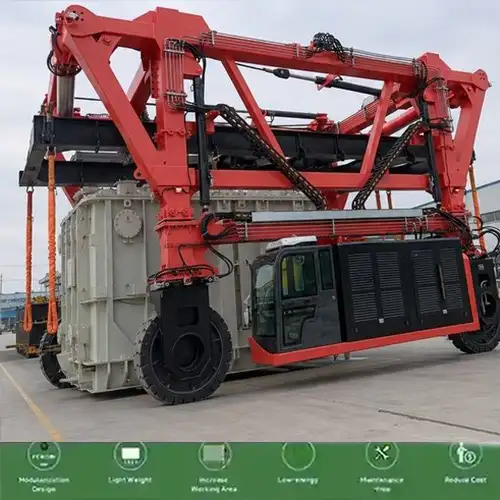
80T Straddle Carrier Case in Kazakhstan | ESS Crane Solution
80T straddle carrier case in Kazakhstan for energy storage container handling. Fully hydraulic design solves dust, cold and extreme climate challenges.
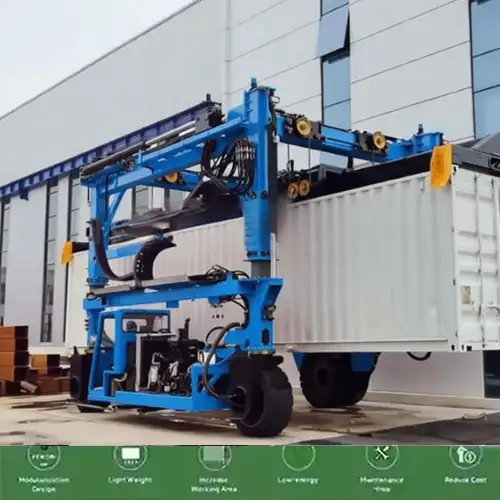
| Crane Type | Rubber Tyred Hydrauic Straddle Carrier - 80 Ton Fully Hydraulic Rubber-Tyred Straddle Carrier for BESS Energy Storage Container Handling, with Hydraulic Lifting and Travel, Multi-Wheel Steering, Customized BESS Container Spreader. |
| Crane Capacity | 80 ton |
| Span Length | Customized |
| Lifting Height | Customized |
| Coverage Area Type | Rubber tyred straddle carrier with 360 steering , Rubber-tyred mobile operation across outdoor BESS yards and project sites, without fixed rails, with high ground clearance for flexible container movement. |
| Application | BESS Container Handling, Energy Storage Container Transport, Battery Cabinet Lifting, ESS Container Stacking, Solar Farm Battery Handling, Wind Power ESS Transport, Modular Power Station Installation, Data Center Battery Container Handling, Port ESS Conta |
| Certifications | CE / ISO / SGS / Other third-party inspection |
| Customization | 80 ton hydraulic lifting, BESS container spreader, cold-weather hydraulic system, dust protection, low-temperature components, rubber-tyred travel, multi-wheel steering, and customized container handling interface. |
Crane Manufacturer: Yuantai Cranes – 30+ Years Professional Crane Manufacturer from China
Category: Straddle Carrier
Tags: straddlecrane,80ton
Your Trusted Straddle Carrier Manufacturer & Supplier
80T Straddle Carrier Case in Kazakhstan | ESS Crane Solution
Fully Hydraulic Design Solves Dust, Cold and Extreme Climate Challenges
Customer Profile (Industry Background)
Energy Storage Container Project in Kazakhstan Inland Industrial Zone
Energy Storage Container Project in Kazakhstan Inland Industrial Zone
This project comes from the energy storage system (BESS) sector, focused on power infrastructure development and heavy container logistics handling in Kazakhstan. In this kind of inland industrial project, people usually say it very directly: "if the equipment is stable, the whole site runs; if it stops, everything slows down." That reflects the practical mindset in many Kazakhstan industrial and energy projects.
The site is located in a Kazakhstan inland energy and logistics zone, where projects are often large-scale, open, and exposed to natural conditions. In these working environments, business teams usually value one thing first—reliability in daily operation, not just technical specifications on paper.
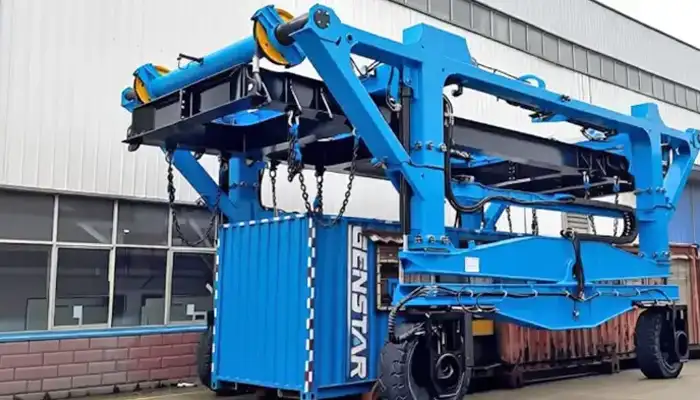
Project Type – Energy Storage Container Logistics Yard
This is a BESS container logistics and heavy-duty handling yard project, where energy storage containers are moved, positioned, and integrated into power infrastructure systems.
The main handled load is energy storage containers (BESS containers). These are complete industrial energy systems with internal battery modules, and in many Kazakhstan projects, they are treated as long-term infrastructure assets.
Typical operations include:
- Unloading energy storage containers from transport trucks
- Internal yard transfer using straddle carrier systems
- Positioning containers for installation or grid connection
- Coordination with lifting cranes and auxiliary handling equipment
Local operators often say: "containers must move smoothly, no interruption in the flow."
Operation Scope – Crane and Straddle Carrier Integrated Workflow
Container handling is usually a combined system of cranes, trucks, and straddle carriers working together. Workflow includes:
- Trucks bring in energy storage containers
- Cranes or lifting equipment unload the containers
- Straddle carriers move containers inside the yard
- Containers are stacked or staged for later installation
Site managers describe it as "a continuous movement cycle—no empty waiting time." Even small delays affect the entire schedule, so equipment must be stable, predictable, and easy to coordinate.
Location Condition – Kazakhstan Inland Industrial Environment
The project is in an inland Kazakhstan industrial zone, typical of Central Asian continental climate projects.
Local teams often say: "winter is very cold, summer is very hot, and the wind carries dust most of the time."
- Strong seasonal temperature differences
- Frequent dust and wind in open yards
- Dry inland air with fine particles affecting machines
- Remote sites with limited maintenance support
- Long operational cycles during construction
Equipment stability is valued more than theoretical performance due to dust and temperature challenges.
Key Requirement – Stable Heavy-Duty Container Handling in Real Field Conditions
The core requirement is a heavy-duty straddle carrier system that works reliably in harsh Kazakhstan inland conditions for energy storage container handling.
Local teams expect:
- Safe container handling without interruptions
- Seamless operation with crane systems
- Minimal adjustment or repair requirements
- Stable performance under dust and temperature changes
As engineers say, "what works every day is what matters most." The real need is a stable, long-term container handling system supporting continuous BESS project operations with coordinated cranes, straddle carriers, and yard logistics.
Lifting Requirements , Your Operational Demand
Practical container handling demand for BESS projects in Kazakhstan inland industrial zones
Core Working Demand – What the site actually needs
Equipment in Kazakhstan inland energy projects is judged by one practical question: "Can it keep the yard moving every day without trouble?" For BESS container handling, this is critical because downtime affects the entire project schedule.
- Equipment type: 80-ton heavy-duty straddle carrier system (rubber tyred container handling system)
- Rated capacity: continuous 80-ton level lifting and transport
- Working logic: crane-fed + truck arrival + yard transfer cycle
- Operation environment: open inland Kazakhstan industrial yard with dust, wind, and temperature variation
Operation Mode – How the yard actually runs day by day
Operations in real project sites are continuous during execution. Equipment must follow a stable rhythm, described by site managers as "no stop in the flow, just keep containers moving."
- High-frequency daily movement of energy storage containers (BESS containers)
- Continuous yard circulation between unloading, storage, and installation zones
- Coordinated operation with container cranes and transport trucks
- Repetitive lifting cycles under real working load, not intermittent use
Performance Expectations – What "reliable" really means on site
Reliability is measured by uninterrupted daily operation, especially under inland Kazakhstan conditions with dust and temperature variations.
- Stable lifting performance under full-load 80-ton container conditions
- Accurate positioning for energy storage container placement in yard layout
- Continuous operation under dust, wind, and seasonal temperature variation
- Smooth coordination with crane operations without workflow delay
Practical Engineering Understanding
Local engineers and operators understand: "If the equipment fits the flow, the project stays on schedule." Lifting requirements are therefore part of overall container handling system reliability.
This is not just about lifting heavy loads. It is about keeping straddle carrier operations, crane systems, and yard logistics working as one continuous chain, day after day, under real inland conditions.
Energy Storage Container-BESS Container
Understanding the practical handling requirements of BESS containers in Kazakhstan inland industrial projects
Load Type – Energy Storage Container - BESS Container
In Kazakhstan inland energy projects, the load itself dictates responsibility on site. People often say: "this is power equipment, treat it carefully." The handling system is designed for energy storage containers -ESS / BESS containers- used in power infrastructure and grid support projects.
- Load type: Energy storage containers -ESS containers / BESS containers-
- Application: Industrial power storage and grid support systems
- Handling method: Straddle carrier and crane coordinated container transfer system
These containers are fully functional energy systems installed inside ISO container frames, not empty shells.
Load Characteristics – High-Value Industrial Equipment
- High-value lithium battery energy storage systems inside container structure
- Fully integrated industrial-grade container body with reinforced structure
- Sensitive internal electrical and thermal management components
- Requires stable handling without impact, tilt, or uncontrolled movement
Daily operation prioritizes slow and stable movement over speed, particularly during positioning and stacking.
Typical Weight Range – Heavy-Duty Handling Requirement
- Typical working condition: up to 80 tons gross load configuration
- Heavy-duty class container handling requirement for large-scale energy storage projects
- Continuous lifting and transfer cycles within yard operation system
This weight level places the project in a heavy-duty straddle carrier application range, emphasizing equipment stability over peak lifting speed.
Handling Risk – Safety and Stability Priority
- High safety requirement due to energy storage system sensitivity
- Risk of internal battery system damage if handling is unstable
- Requirement for controlled lifting, smooth travel, and precise placement
- Need to avoid impact, vibration, and sudden movement during transfer
Engineers often emphasize: "the container is not just heavy, it is sensitive inside." Handling systems must ensure stable, low-impact movement of BESS containers under heavy-duty working conditions, even in open inland Kazakhstan environments with wind, dust, and temperature variation.
Application Environment-Working Conditions
Real working conditions for BESS container handling in Kazakhstan inland industrial projects
Kazakhstan Inland Industrial Conditions
Site engineers often describe the environment as: "it is not extreme every minute, but it never stays easy for long." The project operates in a harsh inland climate environment similar to desert-edge logistics regions, where temperature, dust, wind, and ground conditions influence equipment performance year-round.
Extreme Temperature Variation
- Very cold winters with sub-zero operating conditions affecting start-up and hydraulic response
- Hot summers creating continuous thermal stress on hydraulic systems, seals, and lubricants
- Large daily temperature swings causing expansion and contraction of structural components
Equipment is constantly under thermal cycling stress. Local operators say: "winter and summer are like two different jobs for the same machine."
High Dust and Sand Exposure
- Continuous presence of airborne fine dust particles in the working zone
- Risk of dust intrusion into hydraulic joints, moving pins, and mechanical connections
- Accumulation of fine sand affecting sealing and lubrication stability
Straddle carrier and rubber tyred systems require reinforced sealing and stable hydraulic design for long-term reliability.
Strong Wind Conditions
- Frequent wind-driven sand movement across the yard
- Abrasive impact on structural surfaces and exposed components
- Dust carried by wind entering mechanical gaps and connections
Without proper structural protection, gradual wear on equipment surfaces occurs during normal operation.
Remote Industrial Location
- Limited access to maintenance support and spare parts supply
- Longer response time for technical service intervention
- High dependence on equipment reliability over frequent maintenance
- Expectation of stable operation with minimal downtime
Operators emphasize: "the machine must keep working even when service is not nearby."
Ground Condition Variability
- Mixed gravel and compacted soil surface conditions
- Uneven ground hardness across zones
- Occasional deformation due to heavy container movement
- Requirement for stable movement without excessive vibration or sinking risk
This directly affects the stability requirement of rubber tyred straddle carriers during loaded travel and turning.
Engineering Impact -What These Conditions Mean in Real Operation
- Hydraulic system stability is critical due to temperature variation and dust exposure
- Electrical and sensitive components face higher risk under dust and thermal cycling
- Structural fatigue increases with repeated seasonal expansion/contraction
- Equipment design must prioritize long-term operational stability over peak performance
Engineers summarize: "if it survives the environment, it will survive the project."
Proposed Equipment Solution
Recommended heavy-duty straddle carrier system for Kazakhstan inland BESS container project
Equipment Selection – System Overview
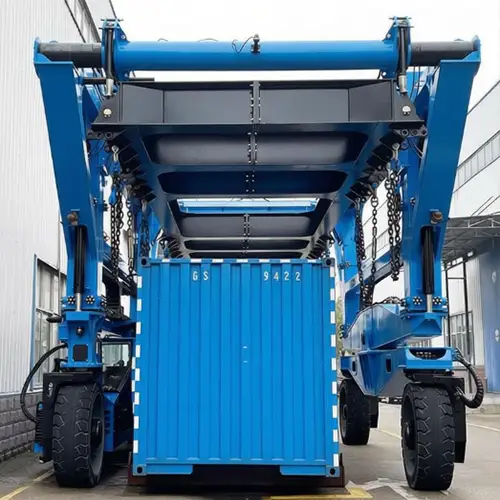
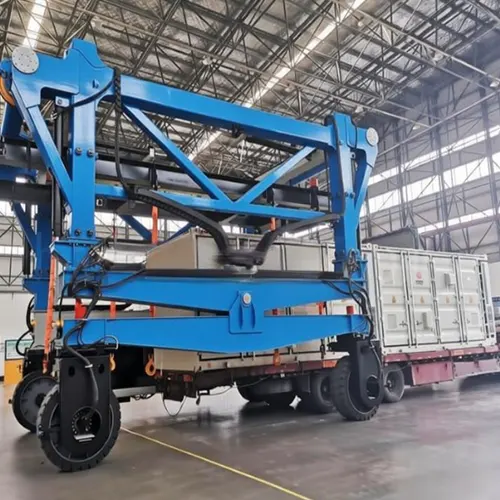
The recommended equipment is an 80-ton fully hydraulic straddle carrier system, designed for heavy ESS container logistics operations, where cranes, trucks, and yard transport all work in a continuous flow.
This is a rubber tyred container handling system built for long-cycle, high-load industrial operation, particularly suitable for BESS container movement in harsh inland environments.
Core Design Concept – Why This Configuration
The design principle follows: stable power + stable structure + stable operation = stable yard flow
- Reducing dependence on exposed electrical systems
- Improving adaptability to dust, wind, and temperature variation
- Maintaining continuous operation under heavy container loads
- Supporting crane-fed logistics workflow without interruption
Technical Configuration Breakdown
Rated Capacity
- 80 tons working load class
- Suitable for heavy energy storage container (BESS container) handling
- Designed for continuous yard circulation, not single lifting cycles
Drive System
- Fully hydraulic transmission system
- Stable torque output under variable load conditions
- Better performance in dusty and temperature-changing environments
Power Unit
- Industrial-grade diesel generator system
- Reliable operation for remote Kazakhstan inland sites
- Stable energy supply for continuous lifting cycles
Tire System
- Solid rubber tires for heavy-duty yard operation
- High resistance to puncture and ground wear
- Stable movement on gravel and compacted soil surfaces
Steering System
- Internal direct steering mechanism
- Precise control during loaded turning and positioning
- Suitable for narrow yard logistics flow between cranes and storage zones
Lifting System
- Reinforced hydraulic lifting structure
- Wear-resistant guide blocks for long service life
- Stable lifting behavior under full 80-ton load conditions
- Reduced vibration during lifting and lowering cycles
Practical Application Understanding
Equipment selection focuses on survival under daily Kazakhstan inland working conditions, not just specifications.
- Continuous energy storage container (ESS container) handling stability
- Smooth coordination with container cranes and yard transport systems
- Reliable operation in dusty, cold-winter, and hot-summer inland environments
- Lower risk of downtime in remote industrial sites
This solution ensures the container handling flow remains stable, predictable, and uninterrupted in real field conditions, which is critical for Kazakhstan industrial energy projects.
Key Features & Advantages
Designed for continuous, heavy-duty BESS container handling in Kazakhstan inland industrial projects
Key Features
- Fully hydraulic drive system (no exposed sensitive electrical dependency)
- Q355 high-strength reinforced steel structure
- Heavy-duty solid tire configuration
- Precision steering system for yard maneuvering
- Dual-stability hydraulic lifting system
These features ensure continuous operation in dust-heavy inland yards, crane-fed logistics systems, and energy storage container handling workflows without frequent interruption or complex maintenance requirements.
Key Advantages
- High dust resistance for desert-like inland environments
- Stable performance under extreme temperature differences between winter and summer
- Reduced electrical failure risk in harsh outdoor conditions
- Strong adaptability to remote inland operation sites with limited maintenance access
- Long lifecycle performance under continuous heavy-duty container handling cycles
This equipment is built to keep energy storage container (BESS) logistics running steadily between cranes, trucks, and yard storage areas, even in challenging environmental conditions.
Problem Solving Section
Addressing practical concerns of energy storage container handling in Kazakhstan inland industrial projects
Q1: Why is an electric straddle carrier not suitable for this project environment?
A: In inland Kazakhstan conditions, dust and fine sand are constantly present in the working yard. Over time, these particles can enter electrical cabinets, motors, and connectors. This increases the risk of short circuits, insulation failure, and unplanned shutdowns. In daily operation, even small electrical faults can interrupt the entire container flow between cranes and yard systems.
Q2: Why is a fully hydraulic system preferred instead of electric drive?
A: A fully hydraulic transmission system reduces direct dependence on exposed electrical components. It performs more steadily in environments with dust, wind, and temperature changes. In practical terms, hydraulic systems are easier to stabilize in field conditions where maintenance access is limited and equipment must keep running continuously.
Q3: Can 45T or 50T equipment replace an 80T straddle carrier?
A: In this type of energy storage container (BESS) project, it is generally not recommended. Although 45T or 50T units can handle some standard containers, they do not provide enough safety margin for continuous heavy-duty 80-ton class operations. In real yard conditions, insufficient capacity often leads to higher mechanical stress, reduced service life, and higher long-term risk.
Q4: Why are solid tires used instead of pneumatic tires?
A: Solid tires are more suitable for inland Kazakhstan yard conditions where gravel, compacted soil, and debris are common. They reduce puncture risk and provide more stable performance under heavy load movement. In continuous operation, this helps maintain consistent container handling without unexpected tire-related downtime.
Q5: What is the main operational benefit of this design choice?
A: The main benefit is stable and predictable container handling performance under harsh inland conditions. The design reduces failure risk caused by dust, temperature variation, and continuous operation cycles. In practical project terms, it supports uninterrupted energy storage container movement with lower maintenance dependency and higher operational reliability.
Your Trusted Container Straddle Carrier Crane Manufacturer & Supplier
Global Environmental Background
Equipment selection for energy storage container logistics projects should align with real yard conditions, not only rated load.
In real industrial planning for straddle carriers, rubber tyred straddle carriers, and container handling systems, equipment selection is always closely linked to the working environment. For energy storage container (BESS) logistics projects, the environment often decides the final tonnage choice more than theoretical design.
Across different regions, operators usually follow a simple rule: "match the machine to the yard condition, not just the container weight."
Typical Desert & Arid Countries - Most Severe Dust Conditions
Real field insights for energy storage container handling in harsh desert and arid regions.
Saudi Arabia
- Port + desert logistics integration zones
- Extreme summer heat + continuous fine dust in yard areas
Typical straddle carrier capacity used:
- 45T for mixed container operations
- 60T–80T for heavy industrial and energy projects
Practical tips:
- Prioritize fully hydraulic or reinforced transmission systems
- Use sealed electrical protection design due to dust penetration risk
- Ensure high cooling capacity for hydraulic oil system
Special attention:
- Heat + dust combination accelerates wear on seals and joints
- Avoid undersized equipment for continuous 24/7 port operations
United Arab Emirates (UAE)
- Dubai and Abu Dhabi logistics hubs
- Combination of port terminals and inland container yards
- Frequent sandstorms and high ambient temperatures
Typical straddle carrier capacity used:
- 40T–45T for standard container logistics
- 50T–70T for mixed or heavy yard operations
Practical tips:
- Choose strong air filtration and cooling systems
- Optimize for high-frequency container turnover
- Ensure compatibility with crane-fed container flow systems
Special attention:
- Sandstorms reduce visibility and increase mechanical wear
- Continuous operation requires stable hydraulic performance
Qatar
- LNG and energy port operations
- Mixed environment: dust + humidity + coastal salt corrosion
Typical straddle carrier capacity used:
- 45T–60T for port logistics
- 70T–80T for energy infrastructure and heavy container handling
Practical tips:
- Anti-corrosion treatment is critical for long-term use
- Hydraulic system sealing must handle both dust and humidity
- Electrical components need moisture + dust protection
Special attention:
- Salt corrosion combined with dust creates long-term structural stress
- Maintenance planning must include corrosion control strategy
Kuwait
- Oil terminals and industrial logistics zones
- Frequent dust storms and abrasive working conditions
Typical straddle carrier capacity used:
- 45T standard industrial logistics
- 60T–80T for heavy oil and energy cargo handling
Practical tips:
- Strengthen wear resistance for mechanical joints and tires
- Use solid tire systems for puncture-free operation
- Maintain stable hydraulic pressure under high load cycles
Special attention:
- Dust storms significantly increase mechanical abrasion
- Downtime cost is high in oil logistics operations
Oman (Inland Desert Zones)
- Combination of port logistics + inland desert transport routes
- Mixed terrain and temperature variation
Typical straddle carrier capacity used:
- 40T–45T for standard container logistics
- 50T–70T for mixed inland operations
Practical tips:
- Equipment must handle terrain variation (coastal + desert)
- Choose flexible steering systems for mixed yard layouts
- Ensure stable performance under changing ground conditions
Special attention:
- Transition between port and desert zones increases wear variation
- Equipment must adapt to multiple working surfaces
Engineering Summary -Practical Selection Logic
- Capacity range matters more than single rating
(45T for standard flow, 60T–80T for heavy energy projects) - Dust protection is not optional
(sealed systems, hydraulic preference, solid tire usage) - Heat management determines lifespan
(cooling system design directly affects reliability)
Final Practical Insight
In real field operations for straddle carrier and container crane systems, especially in energy storage container projects, the environment decides everything.
When dust, heat, and continuous operation come together, the safest approach is simple:
Choose stable hydraulic-driven heavy-duty straddle carrier systems with appropriate tonnage margin, rather than pushing equipment to its limit every day.
North Africa Desert & Semi-Desert Regions - Straddle Carrier Application Reference
North Africa is another major region where rubber tyred straddle carriers, container cranes, and heavy-duty yard logistics systems are widely used. The working environment here is not only dry and dusty, but also influenced by coastal corrosion in port areas and extreme temperature variation inland. In real projects, operators often describe it simply: "near the sea is corrosion, inland is dust — both are not easy." This reflects the dual nature of North African logistics environments.
Egypt (Egypt)
- Suez Canal logistics corridor + inland desert industrial zones
- Combination of high-throughput port operations and desert inland container handling
- Environmental condition: dust + salt mist + high temperature exposure
Typical straddle carrier capacity used:
- 40T–45T for general port container logistics
- 50T–70T for mixed industrial and inland heavy-duty operations
- 70T–80T for energy, infrastructure, and special cargo handling
Practical tips:
- Strong focus on anti-corrosion protection due to salt mist near coastal areas
- Dust sealing design is essential for inland logistics zones
- Hydraulic systems must be stable under long-hour operation near Suez corridor
Special attention:
- Dual environment (coastal + desert) increases maintenance complexity
- Equipment must balance corrosion resistance and dust protection together
Algeria (Algeria)
- Large-scale Sahara desert industrial and logistics zones
- Heavy reliance on inland transport corridors and mining-related logistics
- Very dry climate with continuous dust exposure
Typical straddle carrier capacity used:
- 45T standard industrial logistics operations
- 60T–80T heavy-duty mining and bulk cargo handling
Practical tips:
- Prioritize reinforced structural steel and dust-resistant sealing design
- Hydraulic systems must handle long operating hours in dry heat
- Solid tires often preferred for rough inland yard conditions
Special attention:
- Extreme dryness accelerates wear on seals and rubber components
- Maintenance intervals must be planned conservatively due to remote site locations
Libya (Libya)
- Wide desert logistics environment with limited infrastructure coverage
- Heavy reliance on fuel, energy, and industrial cargo transport
- Extremely dry and hot operating conditions
Typical straddle carrier capacity used:
- 50T–70T for general industrial logistics
- 70T–80T for heavy infrastructure and energy projects
Practical tips:
- Equipment reliability is more important than operational speed
- Hydraulic systems must be protected against overheating
- Simple, robust structure preferred for easier maintenance
Special attention:
- Limited maintenance access increases downtime risk
- Equipment must support long continuous operation cycles without frequent service
Southern Morocco (Morocco Desert Areas)
- Transition zone between Atlantic ports and inland desert logistics routes
- Mixed working environment: coastal influence + desert inland conditions
- Moderate but continuous dust exposure with temperature variation
Typical straddle carrier capacity used:
- 40T–45T for port and standard container logistics
- 50T–60T for inland mixed cargo handling
Practical tips:
- Equipment must handle both coastal humidity and inland dust conditions
- Flexible operation required due to mixed logistics flow
- Balanced design between corrosion resistance and dust protection
Special attention:
- Transition zones create mixed wear conditions on equipment
- Straddle carriers must adapt to both port efficiency and inland durability requirements
Engineering Insight (North Africa Selection Logic)
- Dual environment resistance matters most
(coastal corrosion + inland dust exposure) - 60T–80T range is common for heavy industrial projects
(especially mining, energy, and infrastructure logistics) - Maintenance reality must be considered early
(remote desert zones require simpler, more robust system design)
In industrial projects, North African operators often focus on one simple idea:
"equipment must survive both the sea air and the desert wind."
Central Asia Inland Dry Regions
Central Asia is the most important reference zone for Kazakhstan-type straddle carrier applications, especially in energy storage container (BESS) logistics, inland port terminals, and heavy industrial yards. Compared with coastal regions, these countries share the same core challenge: temperature swings, dust exposure, and long-distance inland logistics without easy maintenance support. In real projects, engineers often describe it in a simple way: "it's not the load that kills equipment, it's the weather cycle and dust over time."
Kazakhstan (Kazakhstan)
- Extreme winter–summer temperature difference
- Continuous exposure to dust, wind, and open inland yard conditions
- Typical use: energy storage container logistics + industrial container handling systems
Typical straddle carrier capacity used:
- 45T for general container logistics and mixed operations
- 60T–80T for energy storage container (BESS) and heavy industrial projects
Practical tips:
- Hydraulic oil stability under cold start and hot operation is critical
- Electrical exposure should be minimized in dusty environments
- Solid tire configuration preferred for mixed gravel and compacted soil yards
Special attention:
- Seasonal thermal cycling causes long-term structural stress
- Equipment must maintain stable performance across winter and summer without adjustment downtime
Uzbekistan (Uzbekistan)
- Mixed environment of desert + industrial logistics zones
- Growing container transport and energy infrastructure projects
- Moderate but continuous dust exposure in inland yards
Typical straddle carrier capacity used:
- 40T–45T for standard container logistics
- 50T–70T for mixed industrial and energy-related handling
Practical tips:
- Flexible operation needed due to mixed cargo types
- Balanced design between efficiency and durability is preferred
- Crane-fed logistics systems are commonly used in yard operations
Special attention:
- Equipment must adapt to both light and heavy container flow
- Maintenance planning should consider limited local spare parts availability
Turkmenistan (Turkmenistan)
- Dominated by Karakum Desert environment (high dust + dry heat)
- Strong dependence on energy and industrial logistics projects
- Harsh inland transport conditions with limited infrastructure density
Typical straddle carrier capacity used:
- 50T–70T for general industrial logistics
- 70T–80T for heavy energy and infrastructure cargo handling
Practical tips:
- Dust sealing and structural protection are top priorities
- Hydraulic systems must be designed for long-hour continuous operation
- Reinforced chassis recommended for heavy-duty cycles
Special attention:
- Fine sand penetration is continuous and unavoidable
- Equipment must prioritize durability over high-speed operation
Mongolia (Mongolia)
- Combination of wind, desertification, and extreme temperature variation
- Open yard logistics with limited environmental protection
- Seasonal conditions strongly affect equipment performance
Typical straddle carrier capacity used:
- 40T–45T for standard logistics and container transfer
- 50T–60T for heavy industrial or mining-related operations
Practical tips:
- Strong wind resistance is important for stable container positioning
- Equipment must handle rapid temperature changes between seasons
- Simple, robust mechanical systems preferred over complex electronics
Special attention:
- Wind-driven dust increases mechanical wear over time
- Cold weather starting performance is a key operational concern
Engineering Insight (Central Asia Selection Logic)
- 45T–60T as the most common operational range for general logistics
- 60T–80T required for energy storage and heavy industrial projects
- Hydraulic-driven systems preferred for stability under temperature variation
- Solid tire and reinforced structure widely used for mixed terrain yards
In real field operation, Central Asian project teams often summarize it in one sentence:
"If it can work through winter and summer without stopping, then it is the right machine."
Australia Inland Mining & Industrial Zones-Heavy Industrial Dust Environment
Australia is not a desert country in the strict sense, but its inland mining regions are widely used as a reference point for heavy-duty straddle carrier, container handling systems, and rubber tyred yard logistics equipment. The working conditions in these areas are very close to industrial desert environments due to continuous dust, heavy loads, and nonstop operation cycles. In real mining logistics projects, operators often say: "the dust never really stops, and the machines don't either."
Western Australia / Northern Territory
- Large-scale mining operations and bulk material logistics hubs
- Iron ore, coal, and energy-related heavy cargo handling
- Open-area container yards with minimal environmental shielding
Typical straddle carrier capacity used:
- 45T for general mining logistics and container transfer operations
- 60T–80T for heavy bulk cargo, equipment modules, and industrial containers
Practical tips:
- Strong requirement for continuous-duty hydraulic systems
- Dust-resistant design is essential due to constant mining dust exposure
- Equipment must support long-hour operation without frequent shutdown
Special attention:
- Mining dust is fine, abrasive, and continuously airborne
- High load frequency increases wear on structural and hydraulic components
- Equipment downtime directly affects mining production flow
High Dust + Heavy-Duty Continuous Operation Environment
Unlike port-based logistics systems, inland Australian mining zones operate under non-stop industrial duty cycles. Equipment is not used occasionally—it is running most of the day, often in repetitive heavy-load movements.
Typical straddle carrier usage conditions:
- Continuous container or module transfer between processing zones
- Heavy-duty lifting of mining-related equipment and materials
- Integration with conveyor systems, cranes, and truck fleets
Operational characteristics:
- High dust concentration in open working areas
- Continuous vibration and load stress on mechanical systems
- Long operating hours with limited downtime windows
Extreme Outdoor Working Environment
In inland mining regions, environmental protection is minimal. Equipment must be designed for direct exposure to working conditions.
Key environmental factors:
- Constant exposure to mining dust and fine particles
- High temperature variation between day and night
- Strong vibration and impact from heavy industrial operations
- Remote site conditions with limited maintenance access
Engineering Insight -Australia Mining Selection Logic
- 60T–80T straddle carrier class commonly used for heavy mining logistics
- Fully hydraulic systems preferred for stable continuous-duty performance
- Reinforced structure and wear-resistant components required for long service life
- Dust protection is critical for both mechanical and hydraulic systems
In real mining operations, a common engineering view is simple:
"If it can survive the dust and keep running through the shift, it's the right machine."
Environmental Classification-Engineering Summary
In real straddle carrier selection, rubber tyred container handling system design, and heavy-duty crane-supported logistics planning, different countries may look different on the map, but from an engineering point of view, they actually fall into a few stable environmental patterns. When we talk with project owners or site engineers in energy, mining, or port logistics, the discussion usually comes back to one thing: "what kind of working environment will the machine face every day?" Once this is clear, the equipment selection becomes much more practical.
Middle East Desert Type
(High temperature + strong sandstorm exposure)
This environment is dominated by port + desert logistics systems, where heat and sand are always present.
- Continuous high ambient temperature affecting hydraulic and cooling systems
- Frequent sandstorm events reducing visibility and increasing wear
- High-intensity container flow in ports and inland logistics hubs
- Common in Saudi Arabia, UAE, Qatar, Kuwait, Oman inland zones
Engineering focus:
- Strong cooling system design
- Dust-sealed hydraulic and mechanical protection
- Stable performance under continuous high-temperature operation
North Africa Sahara Type
(Extreme dryness + high dust concentration)
This category represents some of the harshest dry inland environments in global logistics applications.
- Extremely dry air with continuous fine dust exposure
- Mixed coastal + inland logistics in some countries
- Strong abrasion impact on mechanical joints and surfaces
- Common in Egypt, Algeria, Libya, southern Morocco
Engineering focus:
- Anti-dust sealing and wear-resistant structure
- Corrosion protection near coastal zones
- Long-cycle durability under abrasive sand conditions
Central Asia Inland Type
(Temperature difference + wind + dust)
This is the closest match to Kazakhstan energy storage container project conditions, especially for inland industrial logistics.
- Large seasonal temperature differences (cold winter / hot summer)
- Wind-driven dust in open yard environments
- Mixed gravel and compacted soil working surfaces
- Common in Kazakhstan, Uzbekistan, Turkmenistan, Mongolia
Engineering focus:
- Hydraulic stability under temperature cycling
- Solid tire adaptation for mixed terrain
- Reliable operation in remote inland locations
Australia Mining Industrial Type
(Heavy dust + continuous heavy-load operation)
This environment is not defined by desert climate, but by industrial dust and nonstop heavy-duty operation cycles.
- Continuous mining dust in open working areas
- High-frequency heavy-load material handling
- Long operating hours with minimal downtime windows
- Common in Western Australia and Northern Territory mining zones
Engineering focus:
- Continuous-duty hydraulic system reliability
- Reinforced structure for repeated heavy loading
- High wear resistance for long operational cycles
Final Engineering Insight
Across all four environment types, the selection logic for straddle carriers and container handling systems becomes very clear:
- Environment determines design priority (not just capacity rating)
- Dust and temperature define system durability requirements
- Operation frequency defines hydraulic and structural life cycle
- Remote location defines maintenance strategy and reliability level
In practical engineering terms, the goal is simple:
choose a straddle carrier system that can keep working in the real environment it will face every day, not just in ideal conditions.
Environmental-Based Straddle Carrier Selection Guidance
In real straddle carrier projects, rubber tyred container handling systems, and crane-supported yard logistics, equipment selection is rarely based on catalog data alone. In countries like Kazakhstan and similar inland industrial regions, engineers and buyers usually make decisions based on one simple reality: how the machine behaves after months of dust, heat, cold, and continuous operation.
For Desert / High Dust Regions
(Middle East, North Africa, inland dry zones)
In these environments, dust is not an occasional issue—it is a constant working condition in container yards, port terminals, and energy logistics zones.
Recommended configuration approach:
- Prefer fully hydraulic straddle carrier systems
- Avoid fully exposed or highly sensitive electrical drive layouts
- Focus on sealed mechanical and hydraulic protection design
Key selection focus:
- Strong dust resistance for long-term operation
- Sealed structure for joints, bearings, and hydraulic components
- Lower dependence on complex exposed electrical systems
- Simple maintenance logic suitable for remote sites
For Extreme Temperature Regions
(Central Asia, inland continental climates like Kazakhstan)
These regions are defined by large temperature differences between winter and summer, which directly affect hydraulic systems, steel structure behavior, and cold-start performance.
Equipment must include:
- Reliable cold-start engine and power system performance
- Stable hydraulic oil temperature control and circulation design
- High-quality structural steel with fatigue resistance under thermal cycling
Key selection focus:
- Stable operation in both sub-zero winter and high summer heat
- Reduced performance fluctuation across seasonal changes
- Long-term structural durability under repeated expansion and contraction
For Mining / Heavy Industrial Zones
(Australia inland mining, energy extraction, bulk cargo yards)
Mining environments are not defined by climate alone, but by continuous heavy-load cycles and abrasive dust exposure.
Equipment must include:
- Reinforced chassis and structural frame design
- High load safety margin, typically 45T–80T range depending on application
- Continuous-duty hydraulic and lifting system design
Key selection focus:
- High-frequency lifting without structural fatigue
- Wear resistance for joints, tires, and lifting mechanisms
- Stable operation under nonstop industrial workload
For Mixed Port + Inland Logistics
(Egypt, Oman, Morocco, some Central Asia logistics corridors)
These projects combine port container flow + inland transport operations, meaning equipment must handle different working conditions in one system.
Recommended solution:
- 45T multi-scenario straddle carrier as balanced configuration
- Flexible capacity adaptation for mixed container types
- Balanced design between investment cost and operational flexibility
Key selection focus:
- Ability to handle both standard and heavy containers
- Smooth transition between port and inland operations
- Cost-effective operation without over-specification
Final Summary
For this 80T straddle carrier application in Kazakhstan inland energy storage container projects, the core engineering understanding is very clear:
In harsh inland environments, equipment selection is not about choosing the highest specification—it is about choosing a system that can survive daily reality.
Dust, temperature extremes, heavy load cycles, and remote operation conditions all work together. That is why fully hydraulic structure, reinforced chassis design, and environmental adaptation capability become the real foundation of long-term stable ESS container handling performance.
In practical terms, the right straddle carrier is the one that keeps the yard moving quietly, day after day, without creating operational interruptions.
Typical Desert & Arid Countries - Most Severe Dust Conditions
Real field insights for energy storage container handling in harsh desert and arid regions.
Saudi Arabia
- Port + desert logistics integration zones
- Extreme summer heat + continuous fine dust in yard areas
Typical straddle carrier capacity used:
- 45T for mixed container operations
- 60T–80T for heavy industrial and energy projects
Practical tips:
- Prioritize fully hydraulic or reinforced transmission systems
- Use sealed electrical protection design due to dust penetration risk
- Ensure high cooling capacity for hydraulic oil system
Special attention:
- Heat + dust combination accelerates wear on seals and joints
- Avoid undersized equipment for continuous 24/7 port operations
United Arab Emirates (UAE)
- Dubai and Abu Dhabi logistics hubs
- Combination of port terminals and inland container yards
- Frequent sandstorms and high ambient temperatures
Typical straddle carrier capacity used:
- 40T–45T for standard container logistics
- 50T–70T for mixed or heavy yard operations
Practical tips:
- Choose strong air filtration and cooling systems
- Optimize for high-frequency container turnover
- Ensure compatibility with crane-fed container flow systems
Special attention:
- Sandstorms reduce visibility and increase mechanical wear
- Continuous operation requires stable hydraulic performance
Qatar
- LNG and energy port operations
- Mixed environment: dust + humidity + coastal salt corrosion
Typical straddle carrier capacity used:
- 45T–60T for port logistics
- 70T–80T for energy infrastructure and heavy container handling
Practical tips:
- Anti-corrosion treatment is critical for long-term use
- Hydraulic system sealing must handle both dust and humidity
- Electrical components need moisture + dust protection
Special attention:
- Salt corrosion combined with dust creates long-term structural stress
- Maintenance planning must include corrosion control strategy
Kuwait
- Oil terminals and industrial logistics zones
- Frequent dust storms and abrasive working conditions
Typical straddle carrier capacity used:
- 45T standard industrial logistics
- 60T–80T for heavy oil and energy cargo handling
Practical tips:
- Strengthen wear resistance for mechanical joints and tires
- Use solid tire systems for puncture-free operation
- Maintain stable hydraulic pressure under high load cycles
Special attention:
- Dust storms significantly increase mechanical abrasion
- Downtime cost is high in oil logistics operations
Oman (Inland Desert Zones)
- Combination of port logistics + inland desert transport routes
- Mixed terrain and temperature variation
Typical straddle carrier capacity used:
- 40T–45T for standard container logistics
- 50T–70T for mixed inland operations
Practical tips:
- Equipment must handle terrain variation (coastal + desert)
- Choose flexible steering systems for mixed yard layouts
- Ensure stable performance under changing ground conditions
Special attention:
- Transition between port and desert zones increases wear variation
- Equipment must adapt to multiple working surfaces
Engineering Summary (Practical Selection Logic)
- Capacity range matters more than single rating
(45T for standard flow, 60T–80T for heavy energy projects) - Dust protection is not optional
(sealed systems, hydraulic preference, solid tire usage) - Heat management determines lifespan
(cooling system design directly affects reliability)
Final Practical Insight
In real field operations for straddle carrier and container crane systems, especially in energy storage container projects, the environment decides everything.
When dust, heat, and continuous operation come together, the safest approach is simple:
Choose stable hydraulic-driven heavy-duty straddle carrier systems with appropriate tonnage margin, rather than pushing equipment to its limit every day.
North Africa Desert & Semi-Desert Regions -Straddle Carrier Application Reference
North Africa is another major region where rubber tyred straddle carriers, container cranes, and heavy-duty yard logistics systems are widely used. The working environment here is not only dry and dusty, but also influenced by coastal corrosion in port areas and extreme temperature variation inland. In real projects, operators often describe it simply: "near the sea is corrosion, inland is dust — both are not easy." This reflects the dual nature of North African logistics environments.
Egypt (Egypt)
- Suez Canal logistics corridor + inland desert industrial zones
- Combination of high-throughput port operations and desert inland container handling
- Environmental condition: dust + salt mist + high temperature exposure
Typical straddle carrier capacity used:
- 40T–45T for general port container logistics
- 50T–70T for mixed industrial and inland heavy-duty operations
- 70T–80T for energy, infrastructure, and special cargo handling
Practical tips:
- Strong focus on anti-corrosion protection due to salt mist near coastal areas
- Dust sealing design is essential for inland logistics zones
- Hydraulic systems must be stable under long-hour operation near Suez corridor
Special attention:
- Dual environment (coastal + desert) increases maintenance complexity
- Equipment must balance corrosion resistance and dust protection together
Algeria (Algeria)
- Large-scale Sahara desert industrial and logistics zones
- Heavy reliance on inland transport corridors and mining-related logistics
- Very dry climate with continuous dust exposure
Typical straddle carrier capacity used:
- 45T standard industrial logistics operations
- 60T–80T heavy-duty mining and bulk cargo handling
Practical tips:
- Prioritize reinforced structural steel and dust-resistant sealing design
- Hydraulic systems must handle long operating hours in dry heat
- Solid tires often preferred for rough inland yard conditions
Special attention:
- Extreme dryness accelerates wear on seals and rubber components
- Maintenance intervals must be planned conservatively due to remote site locations
Libya (Libya)
- Wide desert logistics environment with limited infrastructure coverage
- Heavy reliance on fuel, energy, and industrial cargo transport
- Extremely dry and hot operating conditions
Typical straddle carrier capacity used:
- 50T–70T for general industrial logistics
- 70T–80T for heavy infrastructure and energy projects
Practical tips:
- Equipment reliability is more important than operational speed
- Hydraulic systems must be protected against overheating
- Simple, robust structure preferred for easier maintenance
Special attention:
- Limited maintenance access increases downtime risk
- Equipment must support long continuous operation cycles without frequent service
Southern Morocco (Morocco Desert Areas)
- Transition zone between Atlantic ports and inland desert logistics routes
- Mixed working environment: coastal influence + desert inland conditions
- Moderate but continuous dust exposure with temperature variation
Typical straddle carrier capacity used:
- 40T–45T for port and standard container logistics
- 50T–60T for inland mixed cargo handling
Practical tips:
- Equipment must handle both coastal humidity and inland dust conditions
- Flexible operation required due to mixed logistics flow
- Balanced design between corrosion resistance and dust protection
Special attention:
- Transition zones create mixed wear conditions on equipment
- Straddle carriers must adapt to both port efficiency and inland durability requirements
Engineering Insight (North Africa Selection Logic)
- Dual environment resistance matters most
(coastal corrosion + inland dust exposure) - 60T–80T range is common for heavy industrial projects
(especially mining, energy, and infrastructure logistics) - Maintenance reality must be considered early
(remote desert zones require simpler, more robust system design)
In industrial projects, North African operators often focus on one simple idea:
"equipment must survive both the sea air and the desert wind."
Central Asia Inland Dry Regions
Central Asia is the most important reference zone for Kazakhstan-type straddle carrier applications, especially in energy storage container (BESS) logistics, inland port terminals, and heavy industrial yards. Compared with coastal regions, these countries share the same core challenge: temperature swings, dust exposure, and long-distance inland logistics without easy maintenance support. In real projects, engineers often describe it in a simple way: "it's not the load that kills equipment, it's the weather cycle and dust over time."
Kazakhstan (Kazakhstan)
- Extreme winter–summer temperature difference
- Continuous exposure to dust, wind, and open inland yard conditions
- Typical use: energy storage container logistics + industrial container handling systems
Typical straddle carrier capacity used:
- 45T for general container logistics and mixed operations
- 60T–80T for energy storage container (BESS) and heavy industrial projects
Practical tips:
- Hydraulic oil stability under cold start and hot operation is critical
- Electrical exposure should be minimized in dusty environments
- Solid tire configuration preferred for mixed gravel and compacted soil yards
Special attention:
- Seasonal thermal cycling causes long-term structural stress
- Equipment must maintain stable performance across winter and summer without adjustment downtime
Uzbekistan (Uzbekistan)
- Mixed environment of desert + industrial logistics zones
- Growing container transport and energy infrastructure projects
- Moderate but continuous dust exposure in inland yards
Typical straddle carrier capacity used:
- 40T–45T for standard container logistics
- 50T–70T for mixed industrial and energy-related handling
Practical tips:
- Flexible operation needed due to mixed cargo types
- Balanced design between efficiency and durability is preferred
- Crane-fed logistics systems are commonly used in yard operations
Special attention:
- Equipment must adapt to both light and heavy container flow
- Maintenance planning should consider limited local spare parts availability
Turkmenistan (Turkmenistan)
- Dominated by Karakum Desert environment (high dust + dry heat)
- Strong dependence on energy and industrial logistics projects
- Harsh inland transport conditions with limited infrastructure density
Typical straddle carrier capacity used:
- 50T–70T for general industrial logistics
- 70T–80T for heavy energy and infrastructure cargo handling
Practical tips:
- Dust sealing and structural protection are top priorities
- Hydraulic systems must be designed for long-hour continuous operation
- Reinforced chassis recommended for heavy-duty cycles
Special attention:
- Fine sand penetration is continuous and unavoidable
- Equipment must prioritize durability over high-speed operation
Mongolia (Mongolia)
- Combination of wind, desertification, and extreme temperature variation
- Open yard logistics with limited environmental protection
- Seasonal conditions strongly affect equipment performance
Typical straddle carrier capacity used:
- 40T–45T for standard logistics and container transfer
- 50T–60T for heavy industrial or mining-related operations
Practical tips:
- Strong wind resistance is important for stable container positioning
- Equipment must handle rapid temperature changes between seasons
- Simple, robust mechanical systems preferred over complex electronics
Special attention:
- Wind-driven dust increases mechanical wear over time
- Cold weather starting performance is a key operational concern
Engineering Insight (Central Asia Selection Logic)
- 45T–60T as the most common operational range for general logistics
- 60T–80T required for energy storage and heavy industrial projects
- Hydraulic-driven systems preferred for stability under temperature variation
- Solid tire and reinforced structure widely used for mixed terrain yards
In real field operation, Central Asian project teams often summarize it in one sentence:
"If it can work through winter and summer without stopping, then it is the right machine."
Australia Inland Mining & Industrial Zones-Heavy Industrial Dust Environment
Australia is not a desert country in the strict sense, but its inland mining regions are widely used as a reference point for heavy-duty straddle carrier, container handling systems, and rubber tyred yard logistics equipment. The working conditions in these areas are very close to industrial desert environments due to continuous dust, heavy loads, and nonstop operation cycles. In real mining logistics projects, operators often say: "the dust never really stops, and the machines don't either."
Western Australia / Northern Territory
- Large-scale mining operations and bulk material logistics hubs
- Iron ore, coal, and energy-related heavy cargo handling
- Open-area container yards with minimal environmental shielding
Typical straddle carrier capacity used:
- 45T for general mining logistics and container transfer operations
- 60T–80T for heavy bulk cargo, equipment modules, and industrial containers
Practical tips:
- Strong requirement for continuous-duty hydraulic systems
- Dust-resistant design is essential due to constant mining dust exposure
- Equipment must support long-hour operation without frequent shutdown
Special attention:
- Mining dust is fine, abrasive, and continuously airborne
- High load frequency increases wear on structural and hydraulic components
- Equipment downtime directly affects mining production flow
High Dust + Heavy-Duty Continuous Operation Environment
Unlike port-based logistics systems, inland Australian mining zones operate under non-stop industrial duty cycles. Equipment is not used occasionally—it is running most of the day, often in repetitive heavy-load movements.
Typical straddle carrier usage conditions:
- Continuous container or module transfer between processing zones
- Heavy-duty lifting of mining-related equipment and materials
- Integration with conveyor systems, cranes, and truck fleets
Operational characteristics:
- High dust concentration in open working areas
- Continuous vibration and load stress on mechanical systems
- Long operating hours with limited downtime windows
Extreme Outdoor Working Environment
In inland mining regions, environmental protection is minimal. Equipment must be designed for direct exposure to working conditions.
Key environmental factors:
- Constant exposure to mining dust and fine particles
- High temperature variation between day and night
- Strong vibration and impact from heavy industrial operations
- Remote site conditions with limited maintenance access
Engineering Insight -Australia Mining Selection Logic
- 60T–80T straddle carrier class commonly used for heavy mining logistics
- Fully hydraulic systems preferred for stable continuous-duty performance
- Reinforced structure and wear-resistant components required for long service life
- Dust protection is critical for both mechanical and hydraulic systems
In real mining operations, a common engineering view is simple:
"If it can survive the dust and keep running through the shift, it's the right machine."
Environmental Classification-Engineering Summary
In real straddle carrier selection, rubber tyred container handling system design, and heavy-duty crane-supported logistics planning, different countries may look different on the map, but from an engineering point of view, they actually fall into a few stable environmental patterns. When we talk with project owners or site engineers in energy, mining, or port logistics, the discussion usually comes back to one thing: "what kind of working environment will the machine face every day?" Once this is clear, the equipment selection becomes much more practical.
Middle East Desert Type
(High temperature + strong sandstorm exposure)
This environment is dominated by port + desert logistics systems, where heat and sand are always present.
- Continuous high ambient temperature affecting hydraulic and cooling systems
- Frequent sandstorm events reducing visibility and increasing wear
- High-intensity container flow in ports and inland logistics hubs
- Common in Saudi Arabia, UAE, Qatar, Kuwait, Oman inland zones
Engineering focus:
- Strong cooling system design
- Dust-sealed hydraulic and mechanical protection
- Stable performance under continuous high-temperature operation
North Africa Sahara Type
(Extreme dryness + high dust concentration)
This category represents some of the harshest dry inland environments in global logistics applications.
- Extremely dry air with continuous fine dust exposure
- Mixed coastal + inland logistics in some countries
- Strong abrasion impact on mechanical joints and surfaces
- Common in Egypt, Algeria, Libya, southern Morocco
Engineering focus:
- Anti-dust sealing and wear-resistant structure
- Corrosion protection near coastal zones
- Long-cycle durability under abrasive sand conditions
Central Asia Inland Type
(Temperature difference + wind + dust)
This is the closest match to Kazakhstan energy storage container project conditions, especially for inland industrial logistics.
- Large seasonal temperature differences (cold winter / hot summer)
- Wind-driven dust in open yard environments
- Mixed gravel and compacted soil working surfaces
- Common in Kazakhstan, Uzbekistan, Turkmenistan, Mongolia
Engineering focus:
- Hydraulic stability under temperature cycling
- Solid tire adaptation for mixed terrain
- Reliable operation in remote inland locations
Australia Mining Industrial Type
(Heavy dust + continuous heavy-load operation)
This environment is not defined by desert climate, but by industrial dust and nonstop heavy-duty operation cycles.
- Continuous mining dust in open working areas
- High-frequency heavy-load material handling
- Long operating hours with minimal downtime windows
- Common in Western Australia and Northern Territory mining zones
Engineering focus:
- Continuous-duty hydraulic system reliability
- Reinforced structure for repeated heavy loading
- High wear resistance for long operational cycles
Final Engineering Insight
Across all four environment types, the selection logic for straddle carriers and container handling systems becomes very clear:
- Environment determines design priority (not just capacity rating)
- Dust and temperature define system durability requirements
- Operation frequency defines hydraulic and structural life cycle
- Remote location defines maintenance strategy and reliability level
In practical engineering terms, the goal is simple:
choose a straddle carrier system that can keep working in the real environment it will face every day, not just in ideal conditions.
Environmental-Based Straddle Carrier Selection Guidance
In real straddle carrier projects, rubber tyred container handling systems, and crane-supported yard logistics, equipment selection is rarely based on catalog data alone. In countries like Kazakhstan and similar inland industrial regions, engineers and buyers usually make decisions based on one simple reality: how the machine behaves after months of dust, heat, cold, and continuous operation.
For Desert / High Dust Regions
(Middle East, North Africa, inland dry zones)
In these environments, dust is not an occasional issue—it is a constant working condition in container yards, port terminals, and energy logistics zones.
Recommended configuration approach:
- Prefer fully hydraulic straddle carrier systems
- Avoid fully exposed or highly sensitive electrical drive layouts
- Focus on sealed mechanical and hydraulic protection design
Key selection focus:
- Strong dust resistance for long-term operation
- Sealed structure for joints, bearings, and hydraulic components
- Lower dependence on complex exposed electrical systems
- Simple maintenance logic suitable for remote sites
For Extreme Temperature Regions
(Central Asia, inland continental climates like Kazakhstan)
These regions are defined by large temperature differences between winter and summer, which directly affect hydraulic systems, steel structure behavior, and cold-start performance.
Equipment must include:
- Reliable cold-start engine and power system performance
- Stable hydraulic oil temperature control and circulation design
- High-quality structural steel with fatigue resistance under thermal cycling
Key selection focus:
- Stable operation in both sub-zero winter and high summer heat
- Reduced performance fluctuation across seasonal changes
- Long-term structural durability under repeated expansion and contraction
For Mining / Heavy Industrial Zones
(Australia inland mining, energy extraction, bulk cargo yards)
Mining environments are not defined by climate alone, but by continuous heavy-load cycles and abrasive dust exposure.
Equipment must include:
- Reinforced chassis and structural frame design
- High load safety margin, typically 45T–80T range depending on application
- Continuous-duty hydraulic and lifting system design
Key selection focus:
- High-frequency lifting without structural fatigue
- Wear resistance for joints, tires, and lifting mechanisms
- Stable operation under nonstop industrial workload
For Mixed Port + Inland Logistics
(Egypt, Oman, Morocco, some Central Asia logistics corridors)
These projects combine port container flow + inland transport operations, meaning equipment must handle different working conditions in one system.
Recommended solution:
- 45T multi-scenario straddle carrier as balanced configuration
- Flexible capacity adaptation for mixed container types
- Balanced design between investment cost and operational flexibility
Key selection focus:
- Ability to handle both standard and heavy containers
- Smooth transition between port and inland operations
- Cost-effective operation without over-specification
Final Summary
For this 80T straddle carrier application in Kazakhstan inland energy storage container projects, the core engineering understanding is very clear:
In harsh inland environments, equipment selection is not about choosing the highest specification—it is about choosing a system that can survive daily reality.
Dust, temperature extremes, heavy load cycles, and remote operation conditions all work together. That is why fully hydraulic structure, reinforced chassis design, and environmental adaptation capability become the real foundation of long-term stable ESS container handling performance.
In practical terms, the right straddle carrier is the one that keeps the yard moving quietly, day after day, without creating operational interruptions.

Yuantai Cranes
Overhead Crane Manufacturer with CE, ISO, SGS, CNEX Certificates.
- Main Specifications - Capacity: 0.5–550 tons | Span: up to 40m | Speed: 0.8–12 m/min | Duty: A3–A7 | Power: 380–690V, 50/60Hz | Control: pendant/remote/cabin
- Full engineering: FEA/PLC/VFD + in-house build + global delivery + on-site support, for workshops, factories, EPC contractors, industrial projects, etc.
- Support: design, manufacturing, testing, service – end-to-end, customized lifting solutions worldwide.
How to Get an Accurate Crane Price for Your Application?
Tips: Copy the spec list, fill in your details, and paste it into the form on the right/ down-below for a quick price.
- Crane type:_____ . (e.g., overhead crane, gantry crane, jib crane)
- Max weight to lift:_____ tons. (e.g., 2t, 5t, 10t, 20t, 50t)
- Lifting height:_____ m. (How high does the hook need to reach?
- Workshop width (span):_____ m . (Distance between the two crane rails)
- Travel distance:_____ m . (How long does the crane need to move along the runway?)
- Control type:_____. (Pendant / remote / cabin Control)
- Power supply:_____. (Local voltage & frequency – e.g., 380V, 50Hz, 3-phase)
- What will it be used for?_____ (e.g., steel fabrication, concrete products, mold handling, general manufacturing, etc.)
- Any special requirements?_____ (e.g., extreme temperature, dusty or explosive environment, special paint color, etc.)
Just leave a message via the contact form and our hoist and crane engineer will contact you with in 24working hours.
Get Your Custom Quote–Quick & Easy
Fill in what you know. Skip what you don't – we'll help.Any question will be reply with 24 working hours