Your Trusted Straddle Carrier CraneManufacturer & Supplier
Heavy-Duty Straddle Carriers 5 Ton to 80 Ton
Safe and Efficient Solutions for Industrial Load Handling
Large, Oversized, and Irregular Loads – Maximize Safety, Efficiency, and Load Capacity
Straddle Carrier in Modern Industrial Load Handling
Straddle carriers are specialized machines engineered to move heavy, oversized, or irregular loads safely and efficiently. In industrial operations, handling large items—like steel coils, prefabricated building modules, or heavy machinery—can be challenging with standard forklifts or cranes. A straddle carrier integrates lifting, transport, and precise positioning in a single machine.
- Oversized or irregular loads: Designed for cargo that conventional equipment cannot easily handle.
- High-density cargo: Ensures safe weight distribution to prevent tipping or damage.
- Limited space operations: Offers superior maneuverability in congested warehouses or yards.
- Indoor-outdoor versatility: Operates reliably on rough surfaces and in varying weather conditions.
Practical Tip: Assess the heaviest, longest, and most irregular items in your operation to determine the straddle carrier type that maximizes efficiency and safety.
Benefits of Heavy-Duty Straddle Carriers
Heavy-duty straddle carriers handle extreme weights and complex cargo shapes, making them essential for industrial logistics and material handling.
- High load capacity: Lift and transport tens of tons in one operation, reducing trips and labor costs.
- Versatility: Adjustable width and lifting height accommodate diverse cargo types, from steel slabs to modular units.
- Efficiency: Streamlines loading, unloading, and yard movement.
- Safety: Minimizes manual handling and the risk of tipping or load shifting.
- Flexibility: Navigates tight spaces where cranes or forklifts may be impractical.
Practical Tip: Prioritize carriers that can handle your largest and most irregular loads to ensure all operations run smoothly without overloading or underutilizing equipment.
Why Rubber-Tyred Straddle Carriers Are Preferred
Rubber-tyred straddle carriers combine stability, mobility, and adaptability. Unlike fixed-rail systems, they move over rough or uneven surfaces without compromising safety or load stability.
- All-terrain mobility: Operates on concrete, paved yards, and moderately uneven surfaces.
- Load adaptability: Adjustable supports and lifting spans accommodate irregular or oversized cargo.
- Minimal infrastructure requirements: No permanent rails needed, reducing installation cost and complexity.
- Smooth handling: Rubber-tyred suspension absorbs shocks, protecting both load and equipment.
Practical Tip: Ideal for facilities that move heavy, bulky, or awkward loads frequently between indoor and outdoor areas, maximizing efficiency and protecting valuable cargo.
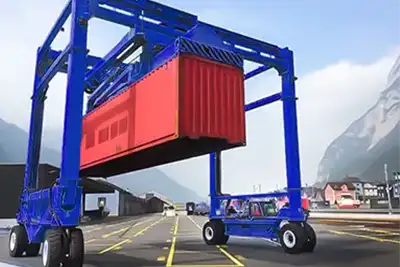
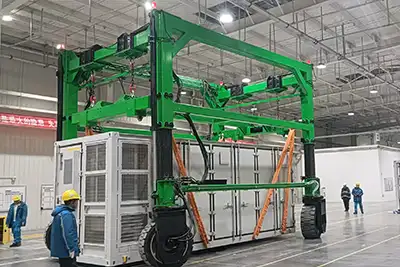
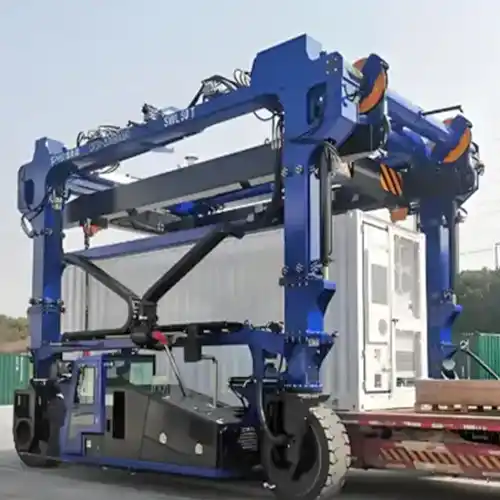
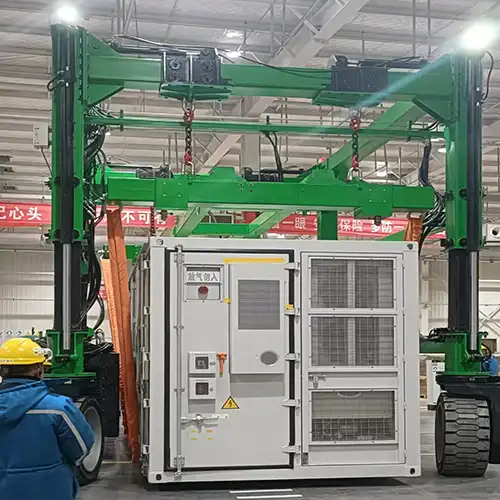
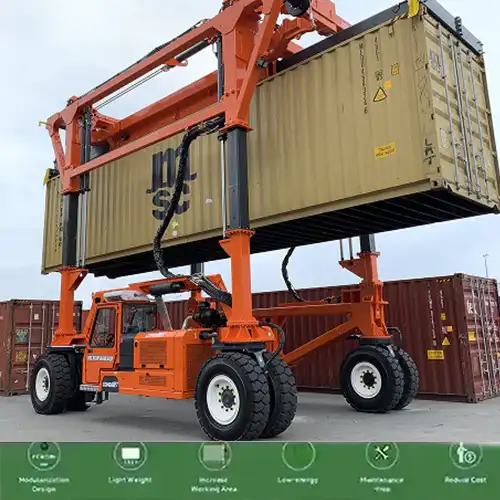
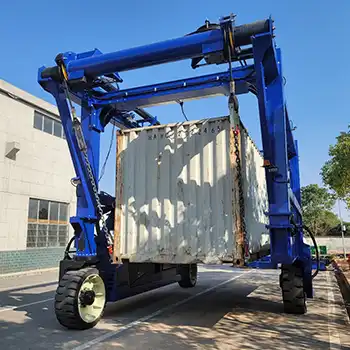
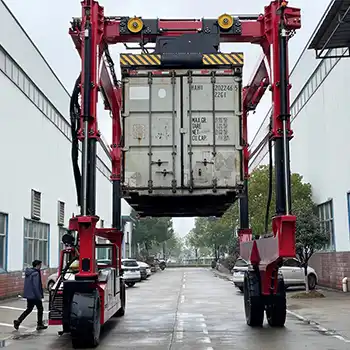
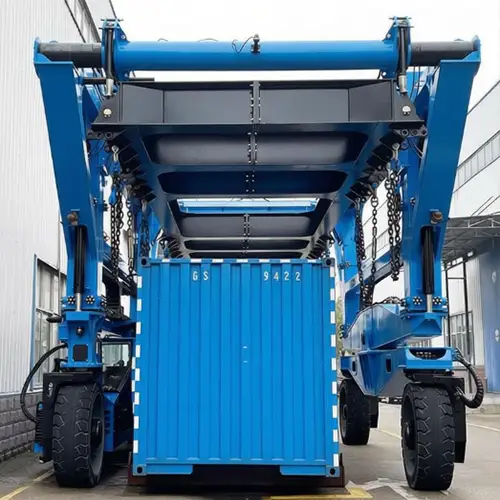
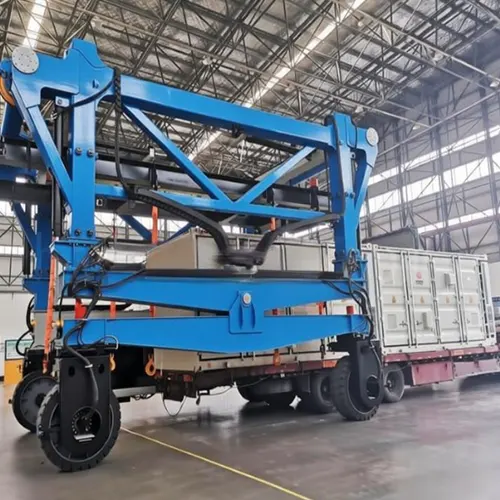
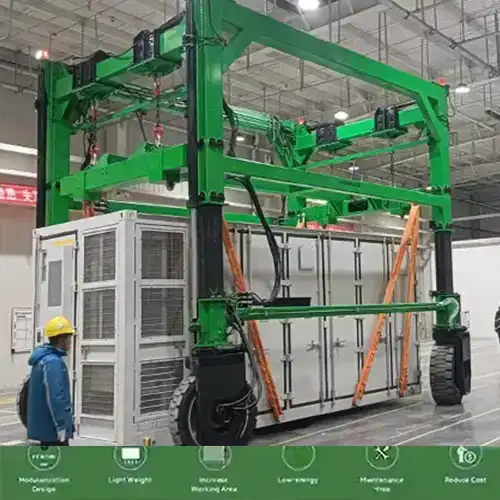
Container straddle carrier- rubber tyed wheel straddle crane for energy storage container handling, 60 ton straddle carrier project for your reference
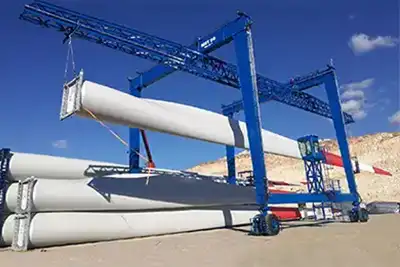
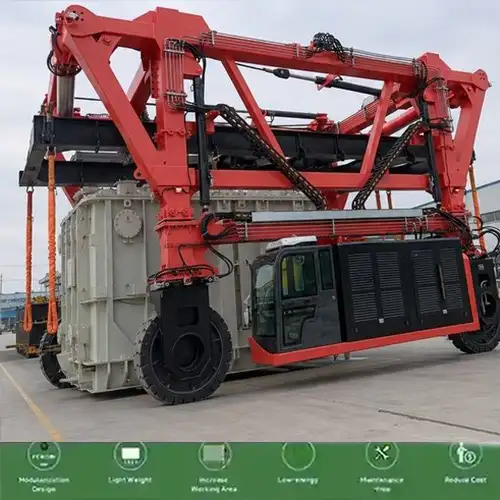
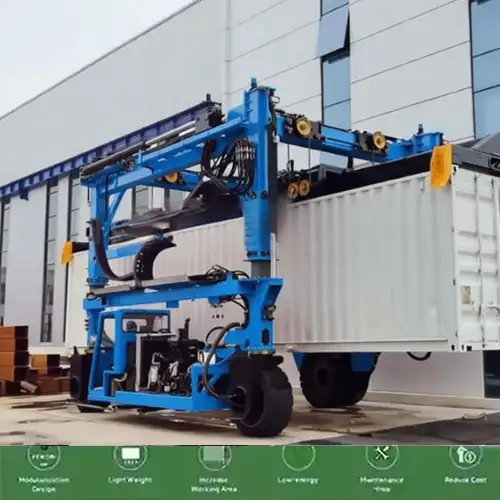
Wind energy industrial straddle crane- Rubber tyred straddle carriers for wind blade handling
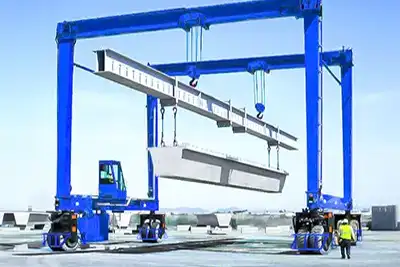
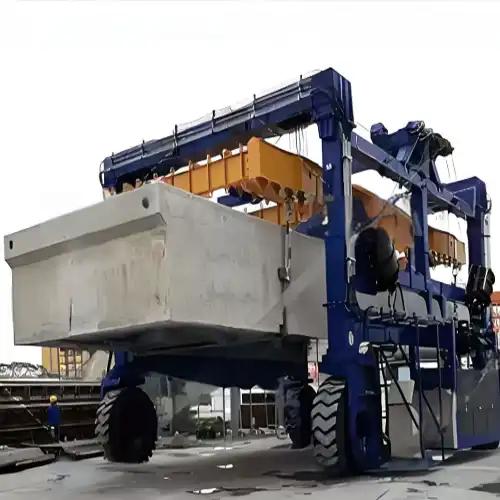
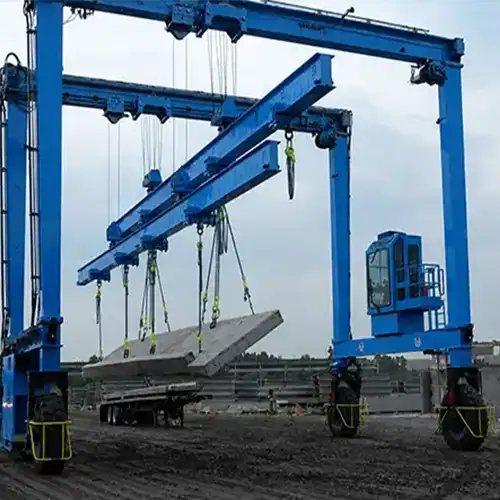
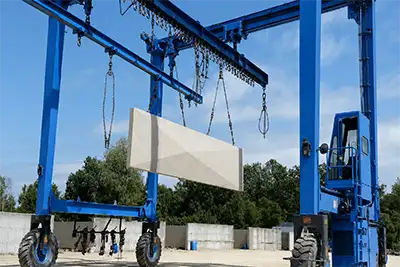
Steel industrial carrier- outdoor straddle cranes for conceret beam handling
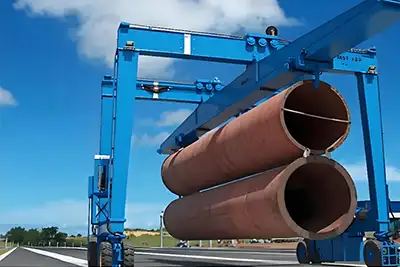
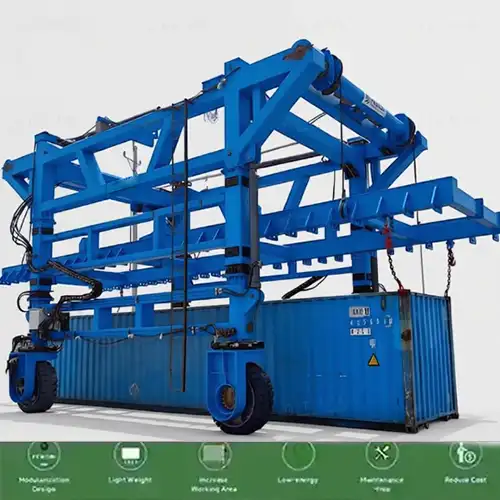
Steel indusstrial carrier crane for large steel pipe handling
Key Advantages of Heavy-Duty Straddle Carriers
High Lifting Capacity for Heavy and Oversized Industrial Cargo
Heavy-duty straddle carriers are engineered to lift and transport very heavy industrial loads, often exceeding tens of tons. Whether handling steel slabs, coils, machinery, or modular building components, these carriers manage large weights safely and efficiently, reducing the need for multiple machines.
- Load capacities: Typically range from 30 tons up to 80+ tons depending on model and industrial requirements.
- Wide lifting spans: Transport large and bulky cargo safely in a single lift.
- Reduced auxiliary equipment: Minimizes clutter, streamlines operations, and lowers operational costs.
Practical Tip: Evaluate your heaviest and largest loads to select a carrier with sufficient lifting capacity and span for your facility's requirements.
Safe Handling of Irregularly Shaped Loads and Unbalanced Weight Distributions
Not all industrial cargo is uniform or neatly stacked. Straddle carriers provide stable transport for irregular or uneven loads, using advanced weight distribution, adjustable lifting frames, and integrated stabilizers.
- Adjustable lifting frames: Adapt to long, wide, or unevenly shaped items.
- Stabilizers and support beams: Reduce tipping risk and protect both load and operators.
- Enhanced safety: Minimizes product damage and workplace hazards.
Practical Tip: Identify irregular or high-value items in your operations to choose carriers with customizable support and stabilizer options.
Increased Operational Efficiency Compared to Forklifts, Gantry Cranes, or Overhead Cranes
Straddle carriers combine lifting, moving, and positioning in a single machine, reducing the need for multiple equipment types. This allows industrial operations to run more smoothly and reduces handling time for heavy cargo.
- Faster operations: Speeds up loading and unloading in yards and warehouses.
- Reduced manpower: Cuts labor requirements and lowers operational costs.
- Simplified logistics: One machine handles multiple tasks, reducing coordination challenges.
Practical Tip: Map your workflow to determine if a single straddle carrier can replace multiple forklifts or cranes for improved efficiency.
Flexibility for Indoor and Outdoor Industrial Operations
Heavy-duty straddle carriers operate efficiently in both indoor and outdoor environments. Rubber-tyred models navigate concrete, asphalt, and slightly uneven surfaces, offering versatility across multiple locations.
- Tight space navigation: Operates in areas where cranes or forklifts may struggle.
- Indoor-outdoor adaptability: Handles storage areas, yards, and transitional spaces seamlessly.
- Multi-load capability: Handles diverse cargo types without changing equipment.
Practical Tip: Consider all areas of operation, including warehouse aisles, yard pathways, and outdoor staging zones, to select a carrier that moves efficiently across your full facility.
Typical Applications of Heavy-Duty Straddle Carriers
Ports and Container Yards
Straddle carriers efficiently move shipping containers and oversized cargo in ports and container yards.
- Typical Capacity: 30–60 tons per lift, handling 20- or 40-foot containers, including stacked units.
- Tips for Selection: Ensure sufficient lifting height, rubber-tyred mobility for uneven surfaces, and integration with yard management systems.
- Why it matters: Speeds up container handling, reduces crane dependency, and improves yard throughput.
Steel and Metal Industry
Used in steel plants and fabrication facilities to handle slabs, coils, machinery, and structural components safely.
- Typical Capacity: 30–80 tons depending on load size and type.
- Tips for Selection: Adjustable lifting frames for slabs or bundles, stabilizers for uneven loads, and indoor/outdoor suitability.
- Why it matters: Protects materials, enhances workflow, and ensures worker safety.
Construction and Modular Building Sites
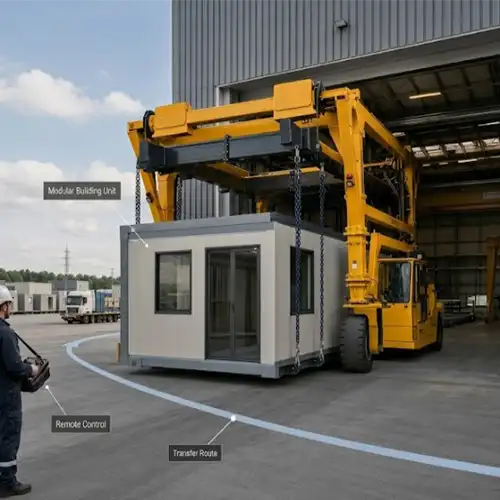
On construction sites, carriers move prefabricated modules and modular buildings with precision.
- Typical Capacity: 20–50 tons per lift; up to 70 tons for oversized units.
- Tips for Selection: Adjustable width and height, smooth suspension for rough surfaces, maneuverability for tight layouts.
- Why it matters: Reduces crane use, protects modules, and speeds up building placement.
Warehousing and Distribution
Used for bulky, oversized, or irregular inventory in warehouses and distribution centers.
- Typical Capacity: 10–50 tons depending on load.
- Tips for Selection: Compact chassis for aisles, smooth steering, and tight turning radius; software integration improves workflow.
- Why it matters: Saves space, reduces handling time, and increases safety.
Power Plants and Heavy Industry
Handles turbines, generators, boilers, and other heavy industrial equipment with precision.
- Typical Capacity: 50–80 tons, higher for specialized machinery.
- Tips for Selection: Precision control, stability, and lifting span matching equipment footprint; indoor/outdoor adaptability may be required.
- Why it matters: Prevents equipment damage, ensures precise placement, and speeds up installation.
Shipyards and Offshore Projects
Moves large ship sections, hull modules, and marine equipment safely and efficiently.
- Typical Capacity: 50–100 tons; specialized carriers lift even larger modules.
- Tips for Selection: Wide-span carriers, suspension and stabilization systems, and rubber-tyred mobility for mixed surfaces.
- Why it matters: Reduces crane use, improves safety, and accelerates shipbuilding workflow.
Other Industrial Applications
Straddle carriers can handle a wide range of industrial loads, from solar panels to railway equipment, with appropriate customization.
| Load Type | Typical Capacity | Quick Selection Tip |
|---|---|---|
| Containers | 30–80 tons | Adjustable spreaders; verify stacking height. |
| Modular Units | 20–50 tons | Protective spreaders; ensure hydraulic system supports repeated lifts. |
| Steel Structures | 30–100 tons | Multi-point lifting; confirm aisle width. |
| Precast Concrete | 25–70 tons | Smooth hydraulic lift; compatible clamps required. |
| Heavy Machinery | 30–80 tons | Match spreader footprint; plan precise placement. |
| Gas Tanks | 15–80 tons | Secure clamps; obstacle detection recommended. |
| Battery Cabinets | 5–30 tons | Adjustable frame; confirm aisle clearance. |
| Pipes & Tubes | 20–50 tons | Spreader flexibility; plan for long-path clearance. |
| Wind Turbines | 40–80 tons | Tall frame and multi-directional steering recommended. |
| Steel Coils / Timber / Ship Modules | 10–100 tons | Specialized spreaders; plan yard layout carefully. |
| Solar Panels & HVAC Units | 5–40 tons | Stable platform; ensure vertical clearance. |
| Railway Equipment | 30–80 tons | Long-frame carriers; plan yard paths for smooth operation. |
- Customization: Carriers can adapt to multiple load types through adjustable frames, spreaders, or reinforced lifting systems.
- Yard layout: Consider aisle width, stacking height, and environmental conditions.
- Operator safety: Ensure adherence to load limits and stability systems, especially for tall or uneven cargo.
Design Features That Enhance Straddle Carrier Performance
Reinforced Chassis and Heavy-Duty Frame
A robust chassis and frame are critical for lifting and transporting extremely heavy or oversized loads safely.
- Practical Details: High-strength steel construction with reinforced joints; handles 30–100+ tons depending on model; reduces stress on components and extends service life.
- Selection Tips: Ensure frame supports maximum intended load plus 20–30% safety margin; check for corrosion-resistant coatings; consider modular/reinforced frames for irregular cargo.
Adjustable Lifting Height and Width
Adjustable lifting mechanisms allow handling of different load sizes, from narrow machinery to wide modular units.
- Practical Details: Height adjustable up to 8–10 meters; width expands/contracts for containers, slabs, or prefabricated modules; supports maintain balance for irregular cargo.
- Selection Tips: Match lifting dimensions to common cargo; choose models with easy adjustment for mixed loads; verify stability at maximum height.
Rubber-Tyred All-Terrain Wheels
Rubber-tyred wheels provide indoor/outdoor mobility over concrete, paved, and slightly uneven surfaces.
- Practical Details: Shock-absorbing tires protect load; traction on wet or rough surfaces; specialized tires available for soft or extreme weather conditions.
- Selection Tips: Choose tire type based on floor and yard conditions; consider pneumatic vs solid tires for load and terrain; check long-term maintenance/replacement options.
Advanced Suspension, Steering, and Load Stabilization
Suspension, precise steering, and load stabilization ensure safe, smooth movement of heavy or irregular cargo.
- Practical Details: Suspension absorbs bumps; hydraulic/electronic steering improves maneuverability; adjustable supports or active balancing stabilize loads at full capacity.
- Selection Tips: Prioritize proven stability for irregular/high-center-of-gravity loads; check turning radius for narrow aisles; ensure suspension supports maximum load weight.
Straddle carriers with reinforced frames, adjustable lifting mechanisms, all-terrain tires, and advanced suspension/steering provide high-capacity lifting, safe load handling, and operational flexibility. Buyers should consider their typical load size, weight, and terrain conditions to select the optimal carrier for ports, steel plants, construction sites, warehouses, and other industrial environments.
Safety Considerations for Heavy-Duty Straddle Carriers
Load Balancing and Distribution Systems
Proper load distribution ensures that even heavy or irregular cargo remains stable and prevents tipping accidents.
- Practical Details: Hydraulic or mechanical supports adjust automatically for uneven loads; sensors alert if load exceeds safe limits.
- Selection Tips: Choose carriers with advanced weight distribution systems; verify support capacity for your heaviest loads.
Collision Detection and Sensor-Based Safety Systems
Sensor-based systems reduce the risk of collisions in busy yards, warehouses, or port operations.
- Practical Details: Proximity sensors and cameras detect obstacles; audible alarms alert nearby personnel; some systems slow or stop the carrier automatically.
- Selection Tips: Prioritize carriers with integrated collision avoidance; check sensor range and responsiveness for your facility layout.
Emergency Braking, Stability Controls, and Operator Alerts
Emergency features enhance safety during unexpected situations, preventing accidents and load damage.
- Practical Details: Emergency brakes stop the carrier safely; stability controls reduce tipping risk; visual/audible alerts notify operators of hazards.
- Selection Tips: Check responsiveness of braking and stability systems; ensure alerts are clear and actionable in noisy or busy environments.
Operator Training and Certified Material Handling Practices
Skilled operators are essential for safe and efficient operation of straddle carriers.
- Practical Details: Certified training programs specific to straddle carriers; instruction on maneuvering tight spaces, irregular loads, and emergency procedures; regular refresher courses.
- Selection Tips: Partner with certified training providers; maintain operator certification and track compliance for all heavy-lift personnel.
Maximizing Operational Efficiency with Heavy-Duty Straddle Carriers
Optimized Loading and Unloading Workflows
Straddle carriers streamline loading and unloading processes, reducing equipment handoffs and bottlenecks.
- Practical Details: Move large or awkward loads in one step; handle multiple items sequentially without extra forklifts or cranes.
- Selection Tips: Choose carriers with adjustable lifting frames and quick-spreader mechanisms to speed up workflow in high-volume operations.
Integration with Warehouse and Logistics Management Systems
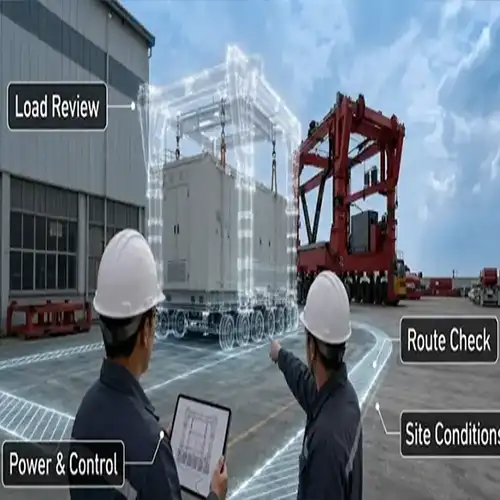
Modern straddle carriers can connect with logistics software for real-time tracking, route planning, and operational analysis.
- Practical Details: Real-time location tracking; route scheduling; data collection for inventory, productivity, and planning.
- Selection Tips: Verify software compatibility and data integration capabilities with your existing warehouse or yard management systems.
Efficient Routing for Minimal Handling Time and Labor Costs
Planning optimal paths reduces travel, handling time, and equipment wear while lowering labor costs.
- Practical Details: Use straight, obstacle-free paths; move items in single trips; coordinate with yard operations.
- Selection Tips: Select carriers with precise steering and navigation systems to ensure smooth movement in busy or tight facilities.
Reduced Downtime and Increased Productivity Through Mechanized Cargo Movement
Mechanized handling ensures continuous workflow with fewer manual interventions, protecting cargo and workers.
- Practical Details: Continuous cargo movement; reduces manual handling; minimizes equipment downtime.
- Selection Tips: Prioritize carriers capable of high-volume operations with durable hydraulic systems and reinforced frames to maintain productivity.
Customization Options for Straddle Carriers to Meet Specific Industrial Needs
Capacity Upgrades for Extremely Heavy Loads
Some operations require lifting exceptionally heavy cargo beyond standard capacities. Upgraded carriers safely handle oversized loads with stability and efficiency.
- Practical Details: Reinforced lifting frames and stronger hydraulic systems; ideal for steel slabs, turbines, heavy machinery, and oversized modular units.
- Selection Tips: Ensure capacity matches your heaviest expected load plus a safety margin; consider upgrades for fully loaded shipping containers or large ship modules to reduce crane dependency.
Specialized Attachments for Irregular, Oversized, or Delicate Cargo
Attachments adapt carriers to safely handle non-standard, delicate, or irregularly shaped loads.
- Practical Details: Adjustable lifting supports for long beams or modular sections; soft-grip clamps for glass, electronic modules, or sensitive machinery; modular cradles for offshore platforms or construction modules.
- Selection Tips: Match attachments to your specific load shapes; choose modular options for flexible handling of multiple cargo types and minimize material damage.
Indoor vs. Outdoor Configurations
Operating environments influence carrier design. Indoor and outdoor models ensure efficiency and cargo protection under different conditions.
- Practical Details: Weatherproofing for outdoor yards; corrosion-resistant coatings for coastal or chemical facilities; compact indoor models for warehouse aisles or assembly areas.
- Selection Tips: Evaluate terrain, aisle width, and environmental factors; ensure smooth movement between indoor and outdoor zones without workflow interruptions.
Explosion-Proof or Extreme-Weather Designs
Special industrial conditions require carriers that maintain safety and performance in hazardous or extreme environments.
- Practical Details: Explosion-proof designs for chemical plants, refineries, or hazardous material yards; reinforced components for high heat, freezing temperatures, or strong winds.
- Selection Tips: Choose models designed for your environmental extremes; confirm compliance with safety standards for handling large modules, turbines, or heavy machinery.
Customized straddle carriers provide flexibility, safety, and operational efficiency across industrial sectors. By selecting the right capacity, attachments, and environmental protections, buyers can ensure reliable performance in ports, steel mills, construction sites, warehouses, power plants, and shipyards, making these carriers tailored solutions for efficient and safe handling of heavy industrial cargo.
Maintenance and Longevity of Heavy-Duty Straddle Carriers
Routine Inspections and Preventive Maintenance Schedules
Regular inspections help identify wear and tear early, keeping the carrier safe and reliable under heavy industrial loads.
- Practical Details: Inspect hydraulic systems, lifting frames, tires, and suspension components regularly; check for cracks, corrosion, or loose fasteners.
- Selection Tips: Follow a preventive maintenance schedule including lubrication, oil changes, and electrical checks; log activities to anticipate parts replacement.
- Why it matters: Prevents costly breakdowns and ensures safe operation in warehouses, ports, or construction sites.
Easy Access for Replacement Parts and Service Support
Quick access to parts and reliable service minimizes downtime and keeps operations running smoothly.
- Practical Details: Look for removable panels, accessible hydraulic connections, and modular components.
- Selection Tips: Ensure local or on-site support for critical parts like tires, lifting cylinders, and control electronics; keep spares on hand in high-use environments.
- Why it matters: Fast repairs maintain productivity, reduce bottlenecks, and keep cargo moving efficiently.
Best Practices to Extend Operational Lifespan and Reduce Downtime
Beyond inspections, following operational best practices prolongs the carrier's service life and reduces maintenance costs.
- Practical Details: Train operators to avoid sudden lifts, sharp turns, or overloading; maintain tire pressure and alignment for smooth operation.
- Selection Tips: Operate within rated capacity; use upgraded carriers for repeated extreme loads; store equipment in sheltered areas when not in use.
- Why it matters: Prevents premature wear, reduces repairs, and maximizes return on investment.
Proper maintenance ensures straddle carriers continue to deliver safe, reliable, and efficient handling of heavy industrial cargo across multiple environments—from ports and warehouses to construction sites and steel mills. Investing in preventive care and operator awareness contributes directly to equipment longevity, fewer interruptions, and smoother industrial operations.
Your Trusted Straddle Carrier CraneManufacturer & Supplier