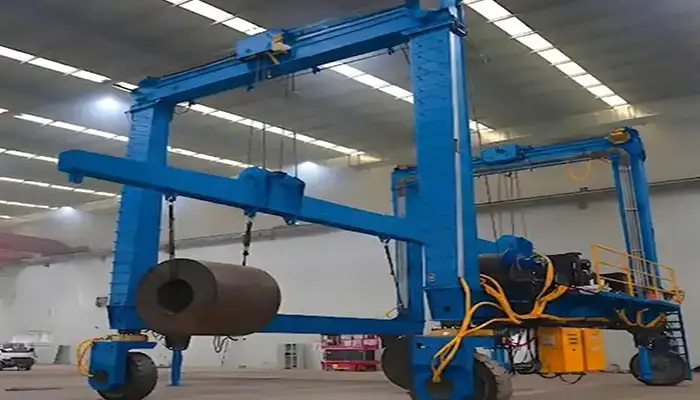
Steel Coil Yard Design Using Rubber Tyred Gantry Cranes
Content Quick Link
How to Design a Steel Coil Yard Using Rubber Tyred Gantry Cranes
Most Important Takeaways
A well-designed steel coil yard is not only about maximizing storage capacity. The real goal is to balance coil storage density, RTG crane efficiency, truck movement, safety, and future expansion while reducing unnecessary material handling and operational bottlenecks.
Key Takeaways
- How to design an efficient steel coil yard layout using rubber tyred gantry cranes
- How RTG crane span and aisle width affect storage density and truck movement
- Best practices for steel coil stacking layout and storage block planning
- How to reduce crane travel distance and unnecessary coil reshuffling
- How to design truck loading and unloading zones for faster turnaround
- Multi-block yard strategies for large steel coil handling operations
- Common mistakes that reduce yard efficiency and increase operating costs
- How to optimize material flow between storage, trucks, and production lines
- Important infrastructure factors buyers often overlook during project planning
- How to plan a scalable steel coil storage yard for future expansion
Questions Solved in This Guide
Q: What is the best layout for a steel coil yard using RTG cranes?
A: The most efficient steel coil yard layout using RTG cranes is a multi-block storage system with clearly defined working zones and direct crane travel lanes.
In real planning for a rubber tyred gantry crane steel coil yard design, the layout is usually divided into production buffer, fast dispatch, and long-term storage zones to keep coil movement organized. This structure helps when buyers search things like "RTG yard layout for steel coil handling" or "how to design steel service center storage yard with gantry crane system," because it directly improves material flow and reduces unnecessary crane travel between blocks.
Q: How wide should crane aisles and truck lanes be?
A: Crane aisles and truck lanes should be wide enough to allow safe RTG movement and full truck turning without interference between loading and storage areas.
In practical steel coil yard truck circulation design or RTG crane aisle width planning, aisle width is typically decided by truck turning radius, RTG wheelbase clearance, and safety buffer zones. Many buyers asking "minimum aisle width for coil storage yard with RTG crane" or "truck lane design in steel coil logistics yard" are mainly trying to avoid congestion and crane-truck conflict during peak loading hours.
Q: How should steel coils be stacked for efficient handling?
A: Steel coils should be stacked based on handling frequency, product type, and dispatch priority to minimize reshuffling and improve RTG accessibility.
In steel coil stacking layout optimization for gantry crane yards, fast-moving coils are placed near dispatch lanes while slow-moving inventory goes deeper in storage blocks. This approach directly responds to typical search intent like "efficient steel coil stacking method in yard" or "how to reduce coil reshuffling in RTG crane operation," helping reduce double handling and unnecessary crane cycles.
Q: How can RTG crane travel paths be optimized?
A: RTG crane travel paths are optimized by reducing turning points, shortening travel distance, and aligning storage blocks with straight-line crane movement.
In RTG crane travel route optimization in steel coil yard design, the key idea is to keep cranes working in linear motion instead of repeated cross-block movement. This is especially relevant when users look for "how to reduce RTG crane empty travel time" or "best layout for minimizing crane movement in steel yard logistics," where the goal is improving cycle efficiency and reducing idle travel.
Q: What is the best yard design for high-volume steel coil handling?
A: The best design for high-volume steel coil handling is a multi-RTG crane system operating across multiple structured storage blocks with dedicated fast-flow zones.
In large steel mill coil storage yard planning with multi-crane RTG operation, high-volume yards separate production flow, buffer storage, and dispatch lanes to maintain continuous operation. This directly matches search patterns like "high throughput steel coil yard layout with RTG cranes" or "large scale steel storage logistics yard design," where continuous material flow is the main requirement.
Q: How do you reduce truck congestion in steel storage yards?
A: Truck congestion is reduced by separating waiting, loading, and circulation zones while using structured traffic flow such as one-way or loop layouts.
In steel coil yard truck traffic management and RTG loading coordination, congestion often happens when trucks enter crane operation zones too early. This is why queries like "how to reduce truck waiting time in steel coil yard" or "best truck flow design for steel logistics storage yard" focus on staging areas, dispatch scheduling, and separation of crane and truck movement paths.
Q: What are the most common steel yard layout mistakes?
A: The most common mistakes include over-prioritizing storage density, insufficient aisle width, poor material flow design, and lack of future expansion planning.
In steel coil yard design mistakes in RTG crane operation planning, these issues often appear when layouts are designed without considering real working cycles. Many buyers searching "why steel coil yard becomes inefficient after construction" or "common mistakes in RTG yard design for steel storage" usually face problems like reshuffling, congestion, or crane interference.
Q: How do multi-block RTG yards improve operational efficiency?
A: Multi-block RTG yards improve efficiency by organizing storage into functional zones that reduce crane interference and shorten material travel distance.
In multi-block steel coil yard RTG crane operational planning, each block is assigned based on product type, shipping schedule, or customer demand. This is commonly aligned with searches like "how multi-zone storage improves steel yard efficiency" or "RTG crane block layout for better coil handling flow," where structured zoning leads to smoother operations and less crane congestion.
Q: What infrastructure conditions are required for RTG crane operation?
A: RTG crane operation requires strong ground bearing capacity, reinforced pavement, proper drainage systems, and stable power supply for continuous outdoor operation.
In RTG crane yard infrastructure requirements for steel coil handling, ground and drainage conditions directly affect long-term stability and maintenance cost. This aligns with searches such as "ground requirements for rubber tyred gantry crane yard" or "steel coil storage yard pavement design for heavy RTG loads," where durability and load distribution are key concerns.
Q: How should buyers plan future yard expansion?
A: Future expansion should be planned by reserving corridor space, designing scalable storage blocks, and ensuring crane and utility systems can support additional capacity.
In steel coil yard expansion planning with RTG crane scalability design, buyers often think about future growth after initial operation starts. This matches queries like "how to expand steel coil storage yard without redesigning RTG system" or "future-proof RTG crane yard layout planning," where flexibility and long-term scalability are essential for avoiding costly reconstruction.
Introduction to Steel Coil Yard Design
Why Yard Layout Matters in Steel Coil Handling
The layout of a steel coil yard directly controls how materials move. It is not only about where you store coils, but how quickly you can reach them, load them, and move them out.
When the layout is practical, operators do not waste time searching or repositioning coils. Cranes travel shorter distances, and trucks do not wait too long inside the yard.
- A clear layout reduces unnecessary RTG crane movement
- Proper block arrangement improves daily handling speed
- Shorter crane travel means faster loading cycles
- Organized lanes help reduce truck congestion during peak hours
In real operations, small layout mistakes often show up later as repeated delays. For example, if storage blocks are too tight or poorly aligned with crane travel direction, you will see more reshuffling work. That means extra handling, more fuel or electricity use, and higher wear on equipment.
Over time, these small inefficiencies add up. Operators may not notice it daily, but monthly operating cost differences become clear.
Why Rubber Tyred Gantry Cranes Are Used in Steel Coil Yards
Rubber tyred gantry cranes are widely used in steel coil yards mainly because they are flexible. They can move freely between storage blocks without needing fixed rails.
This flexibility is important when yard operations change over time. Steel yards rarely stay the same. Storage demand, coil size, or truck flow may all change.
- RTG cranes can move across different storage zones easily
- No need for rail installation reduces civil construction work
- Yard layout can be adjusted without rebuilding the entire system
- Better suited for irregular or expanding yard spaces
Compared with rail mounted gantry systems, RTG cranes give more freedom in layout design. Rail systems are fixed once installed, which makes them efficient but less flexible. RTG systems, on the other hand, can adapt when the yard grows or when operating patterns change.
In many steel mills and logistics yards, this flexibility is one of the main reasons for choosing RTG cranes. Especially when space planning is still evolving, or when future expansion is expected, RTG becomes easier to manage.
Typical usage scenarios include:
- Steel coil storage in production plants where output changes daily
- Yard operations in steel service centers handling mixed coil orders
- Port terminals where trucks and ships create irregular flow
- Export logistics yards needing flexible stacking arrangements
- Intermodal facilities where coils move between different transport systems
In simple terms, RTG cranes fit better where the yard is not static.
Common Steel Coil Yard Applications
Steel coil yards are used in different industries, but the basic function stays the same: store coils safely and move them efficiently.
However, the way each yard is operated can be quite different depending on the business model and flow speed.
Steel production plants
These yards are usually close to the rolling mill. Coils come directly from production lines and need temporary storage before shipment or further processing.
- High daily coil movement
- Short storage time
- Frequent crane operations throughout the day
Steel service centers
Here, coils are stored, cut, and redistributed based on customer orders. The flow is more flexible and less predictable.
- Mixed coil sizes and grades
- Frequent re-handling and sorting
- Need for organized block storage by order type
Port steel storage terminals
These yards mainly handle import and export coils. The movement depends on ship schedules.
- Bulk storage and high stacking density
- Truck and yard coordination with port operations
- Emphasis on fast loading and unloading cycles
Export logistics yards
These are temporary storage points before shipment to overseas markets. The key focus is dispatch efficiency.
- FIFO (first in first out) operation is often required
- Clear labeling and tracking system needed
- Fast truck loading zones close to storage blocks
Intermodal steel handling facilities
These yards connect different transport modes such as rail, road, and sea.
- Complex material flow paths
- Multiple handling points
- Need for flexible RTG crane movement between zones
Across all these applications, one thing is consistent: if the yard layout is clear and well planned, RTG cranes can perform smoothly without unnecessary movement or waiting time.
Planning Requirements Before Designing a Steel Coil Yard
Steel Coil Specifications
Steel coil characteristics directly affect how the yard is designed. Not all coils behave the same during lifting, stacking, and transport. The crane capacity, storage height, and even aisle width are influenced by these details.
Coil weight range
- Light coils may be below 5 tons, often used in service centers
- Medium coils commonly range between to 25 tons
- Heavy coils in steel mills can reach 30 tons or more per unit
When designing the yard, it is safer to plan with a margin above the maximum expected weight. Not just for safety, but also for future production changes that are often overlooked at early stage.
Coil diameter and width
- Larger diameter coils need more spacing between rows
- Wide coils require stable placement to avoid rolling risk
- Mixed sizes usually require flexible storage zoning instead of fixed patterns
Hot rolled vs cold rolled steel coils
- Hot rolled coils are generally less sensitive to surface marks
- Cold rolled coils require cleaner handling and more controlled stacking
- Galvanized or coated coils need protection from scratches and pressure damage
Surface-sensitive coil handling requirements
- Use of padded or protected lifting tools may be required
- Storage surfaces should be flat and clean
- Avoid stacking methods that create pressure marks
Evaluating Yard Throughput Requirements
Once coil specifications are understood, the next step is to look at how fast materials will move through the yard. This is where real operating pressure comes in.
Daily truck volume
- Low volume yards may handle a few trucks per day
- Medium operations often deal with steady daily flows
- High-volume yards may experience constant truck arrivals and departures
Storage turnover rate
- Fast turnover means frequent crane operations and tight scheduling
- Slow turnover allows more flexible stacking but requires better organization
- Mixed turnover requires zoning by coil priority or customer order
Peak loading periods
- Morning dispatch rush from trucks
- Afternoon loading from production output
- Pre-shipment rush before shipping deadlines
Production line integration
- Direct transfer from rolling line to storage yard
- Temporary buffer storage between processes
- Synchronization with cutting or processing units
Infrastructure Assessment
Before any steel coil yard layout is finalized, the ground and surrounding infrastructure must be checked carefully. This step is often less visible than crane selection or storage design, but it directly decides whether the yard can operate safely under real loads every day.
Ground bearing capacity
- Ground must support RTG crane wheel loads without long-term settlement
- Weak soil may require deep compaction or pile-supported slabs
- Uneven settlement can affect crane travel stability and safety
Pavement design
- Reinforced concrete is commonly used for heavy coil yards
- Thickness and reinforcement must match crane wheel pressure
- Joints should be designed to avoid cracking under repeated movement
Drainage system
- Poor drainage leads to water accumulation in crane travel lanes
- Standing water increases tire wear and slipping risk
- Moisture can affect coil surface quality over time
Outdoor environmental conditions
- Strong wind areas require RTG stability consideration during lifting
- Coastal environments need corrosion protection for equipment
- High temperature zones may affect tire performance and pavement expansion
Power supply requirements
- Electric RTG systems require stable power distribution layout
- Charging or cable systems must not interfere with truck lanes
- Backup power is needed for uninterrupted operation
Future Expansion Planning
A steel coil yard is rarely static. Production increases, customer demand changes, and logistics patterns evolve. A good layout is not only for today's operation but also for what may happen in the next few years.
Additional storage blocks
- Reserve land space for new coil blocks
- Keep crane travel routes flexible for extension
- Avoid blocking future access lanes with fixed structures
Additional RTG cranes
- Yard layout should allow safe movement of multiple RTG cranes
- Shared travel lanes must be planned in advance
- Electrical or fueling systems should support additional units
Future truck traffic increase
- Loading zones should be scalable
- Entry and exit roads must handle higher flow
- Waiting areas should not block storage operations
Automation upgrade possibilities
- Space should be reserved for tracking systems and sensors
- RTG cranes may be upgraded with remote or semi-automatic control
- Yard management systems require stable communication layout
A well-planned infrastructure and expansion strategy ensures that the steel coil yard does not become outdated too quickly. It keeps the operation stable today and still flexible enough for tomorrow's changes.
Steel Coil Stacking Layout Principles
Choosing the Right Coil Storage Arrangement
The storage arrangement decides how coils are organized inside each block. It affects accessibility, density, and how often coils need to be moved again before delivery.
Longitudinal stacking layout
- Easier for RTG cranes to move in a straight line
- Suitable for high-density storage areas
- Works well when crane travel direction is fixed and predictable
Crosswise stacking layout
- Faster access to individual coils
- Better visibility for operators during selection
- More flexible for mixed coil orders
Hybrid storage arrangement
- High-turnover coils placed in crosswise layout for quick access
- Bulk storage coils arranged longitudinally for space efficiency
- Flexible zoning based on coil priority or customer demand
Designing Coil Storage Blocks
Storage blocks are the basic building units of a steel coil yard. Their design affects crane movement, truck loading access, and how efficiently space is used.
Storage row configuration
- Fewer rows improve access speed but reduce storage density
- More rows increase capacity but may require extra coil repositioning
- Balanced row design reduces unnecessary lifting operations
Block dimensions
- Block width must match RTG crane working span
- Length should allow smooth crane travel without frequent stopping
- Oversized blocks may slow down access time for single coil retrieval
Maximum stacking height
- Lower stacking height improves accessibility and reduces handling risk
- Higher stacking increases capacity but requires careful load control
- Coil weight and diameter must always be considered before stacking vertically
Access clearance planning
- Clearance between coil stacks allows safe crane lifting
- Side access lanes help with inspection and maintenance
- Emergency space must remain unobstructed at all times
Safety Clearance and Coil Spacing
Steel coil yards often look like they are "just stacked tightly together," but spacing is what keeps everything workable. Good clearance design ensures smooth RTG crane operation without unnecessary adjustments.
Crane operational clearance
- Allow clearance for hook swing during lifting and lowering
- Keep safe distance between coil stacks and crane wheel path
- Avoid tight corners that force repeated crane adjustments
Emergency access lanes
- Provide clear routes for emergency vehicles or inspection access
- Keep at least one unobstructed path across storage blocks
- Avoid using emergency lanes as temporary storage space
Maintenance access areas
- Leave space for crane tire replacement and inspection
- Ensure access for electrical or hydraulic maintenance teams
- Avoid stacking coils too close to service points
Safety separation zones
- Separate truck paths from coil storage areas
- Maintain buffer space between crane travel and loading zones
- Keep pedestrian access clearly defined and protected
High-Density Coil Storage Planning
High-density storage is often requested because land cost is high and storage demand keeps increasing. But density alone does not solve the problem. Maintaining flow while keeping coils accessible is the real challenge.
Maximizing storage efficiency
- Use consistent block patterns to reduce wasted space
- Align coil orientation with crane travel direction
- Avoid irregular gaps between stacks
Balancing accessibility and density
- High-density areas are suitable for slow-moving stock
- High-access areas should be reserved for fast-moving coils
- Mixed zones can help balance both needs in one yard
Reducing reshuffling operations
- Apply FIFO (first in, first out) where required
- Group coils by dispatch priority or customer order
- Avoid stacking unrelated coils in the same deep row
Storage Planning for Different Steel Coil Types
Not all steel coils behave the same way in storage. Material type affects handling, stacking, and placement. A flexible layout that considers coil type usually performs better than a fixed uniform system.
Hot rolled coils
- Suitable for bulk storage zones
- Can tolerate standard stacking methods
- Often placed deeper in storage blocks
Stainless steel coils
- Should be stored in cleaner and more controlled areas
- Avoid direct contact with rough surfaces
- Prefer lower stacking height to reduce pressure marks
Galvanized steel coils
- Require stable and soft-contact lifting tools
- Avoid mixed stacking with rough-surface coils
- Keep in areas with better environmental protection if possible
Coated steel products
- Must be stored with maximum surface protection in mind
- Require controlled stacking pressure
- Should avoid repeated repositioning
A well-designed steel coil yard separates coils based on behavior, handling sensitivity, and movement frequency. This makes RTG crane operation predictable and reduces avoidable handling steps.
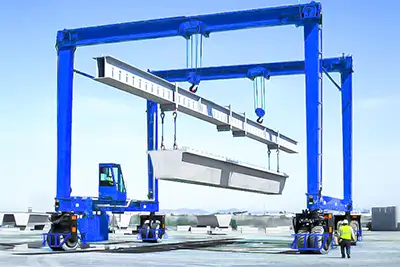
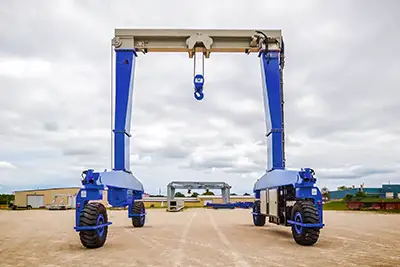
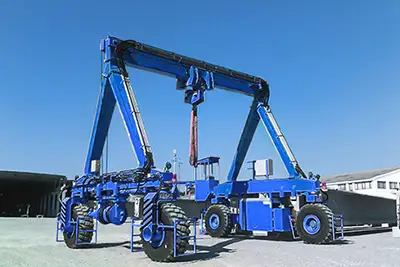
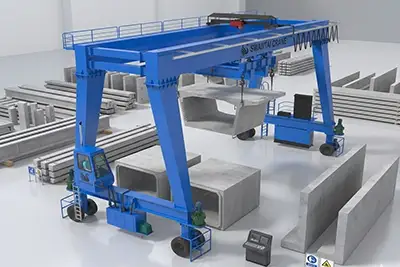
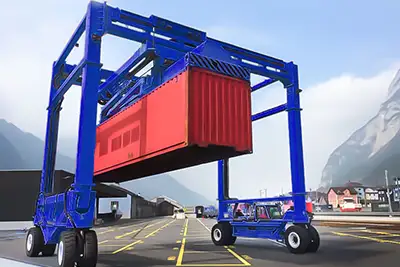
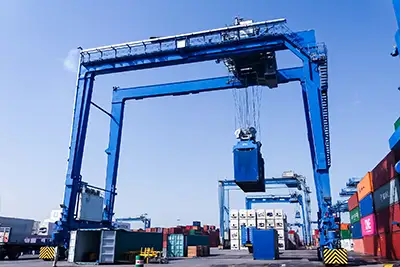
Types of Rubber Tyred Gantry Cranes for Steel Coils
In steel coil handling, different yards need different types of rubber tyred gantry cranes. The right choice depends on coil weight, working speed, yard layout, and how often the crane is used.
Rubber Tyred Gantry Crane can be built in several versions, each designed for a specific working condition.
RTG Crane Layout and Travel Planning
RTG Crane Operating Principles in Steel Coil Yards
Understanding how an RTG crane actually moves inside a steel coil yard is the first step before fixing any layout. It is not only about lifting coils. It is about how the crane travels, positions itself, and completes each cycle.
Crane movement directions
- Longitudinal movement controls how fast the crane shifts between work zones
- Lateral movement defines how many coil rows the crane can cover
- Combined movement determines total yard coverage efficiency
Gantry travel planning
- Travel lanes must remain clear and consistent
- Straight-line movement is preferred to reduce turning delay
- Intersections with truck routes should be minimized
Hoisting workflow
- Position crane above target coil
- Lower hook or lifting tool carefully
- Lift coil and stabilize swing
- Move to truck or storage position
- Place coil and release safely
Determining Proper RTG Crane Span
Crane span is one of the most critical design decisions in a steel coil yard. It directly affects how much area the crane can cover, how storage blocks are arranged, and how flexible the yard will be in the future.
Relationship between span and storage width
- Narrow span limits storage width and reduces capacity
- Excessive span increases structural cost and wheel load
- Balanced span improves both coverage and stability
Matching crane design to yard layout
- Yard block width defines required crane span
- Truck lanes and storage zones must align with crane travel path
- Storage density should match crane reach capability
Operational flexibility considerations
- Slightly wider span can support future expansion blocks
- Balanced design avoids over-specialization for one layout type
- Flexibility helps when coil size or storage method changes
Crane Travel Lane Optimization
RTG crane travel lanes decide how smoothly the whole steel coil yard runs day after day.
Straight-line travel efficiency
- Straight lanes reduce travel time between storage blocks
- Fewer direction changes improve cycle consistency
- Operators can predict movement more easily during loading
Minimizing turning points
- Reduce unnecessary intersections between crane paths
- Avoid sharp or frequent directional changes
- Align storage blocks with main travel direction
Travel distance reduction
- Place high-frequency coils closer to dispatch zones
- Avoid deep storage for fast-moving inventory
- Organize blocks based on movement frequency
Multi-RTG Crane Coordination
When a steel coil yard uses more than one RTG crane, coordination becomes critical to prevent delays.
Shared travel lanes
- Lanes must be wide enough for safe passing or waiting
- Storage blocks should not block crane movement paths
- Clear priority rules are needed during peak operation
Crane interference prevention
- Assign working zones where possible
- Separate high-frequency operation areas
- Limit overlapping tasks in the same block
Anti-collision planning
- Install distance monitoring systems where possible
- Define minimum safe spacing between cranes
- Use controlled speed zones in shared areas
RTG Crane Operational Safety
Safety in an RTG steel coil yard is closely tied to visibility, speed control, and environmental conditions.
Visibility considerations
- Keep storage layout open enough for clear sightlines
- Avoid blind spots between high stacks of coils
- Ensure lighting coverage for night operation
Speed control zones
- Faster movement in open travel lanes
- Reduced speed near loading zones
- Slow operation near storage and personnel areas
Outdoor wind operation planning
- Limit lifting operations during strong wind conditions
- Position cranes to reduce exposure in open areas when idle
- Consider wind direction in yard layout orientation
Aisle Width and Truck Traffic Planning
In a steel coil yard, trucks and RTG cranes share the same space. If this space is not planned carefully, the yard quickly becomes slow and crowded even when storage capacity is sufficient. Aisle width and traffic design are not only about vehicle movement—they directly affect loading speed, waiting time, and overall yard rhythm. A well-designed traffic system allows trucks to enter, load, and leave without disturbing crane operations. A poor one creates constant stops, repositioning, and unnecessary waiting.
Determining Proper Aisle Width
Aisle width in a steel coil yard is not a fixed number. It depends on truck size, RTG crane movement space, and how safely both systems can operate side by side.
If the aisle is too narrow, movement becomes restricted. If it is too wide, valuable storage space is wasted. The balance depends on real operational needs rather than theoretical spacing.
Truck turning radius considerations
- Larger turning radius requires wider turning zones at intersections
- Sharp turns should be avoided in loading areas
- Entry and exit points must allow smooth alignment with loading lanes
A practical approach is to design turning areas slightly larger than minimum requirement. This reduces hesitation during entry and improves flow stability.
RTG wheelbase requirements
- Sufficient clearance must be maintained for crane side movement
- Avoid interference between crane legs and truck lanes
- Ensure smooth passage when cranes and trucks operate simultaneously
Safety clearance standards
- Maintain buffer space between truck lanes and storage stacks
- Separate pedestrian access from vehicle movement areas
- Keep emergency access routes clear at all times
Truck Loading and Unloading Flow Design
Truck flow design determines how smoothly vehicles enter, load, and exit the steel coil yard. Even with good crane performance, poor traffic flow can create bottlenecks that slow down the entire operation.
The goal is simple: reduce crossing paths, avoid unnecessary waiting, and keep movement continuous.
One-way traffic systems
- Reduces traffic conflict inside the yard
- Improves predictability of truck movement
- Easier for drivers to follow without confusion
Two-way traffic systems
- More flexible for smaller or medium-sized yards
- Requires careful coordination at intersections
- Needs wider lanes for safe passing
Loop circulation layouts
- Trucks enter, circulate through loading zones, and exit without reversing
- Reduces congestion at entry and exit points
- Supports continuous movement during peak hours
Truck Waiting and Staging Areas
Truck waiting areas are often treated as "extra space," but in a steel coil yard they actually decide whether the whole system feels smooth or congested. When trucks arrive faster than loading capacity, the staging zone becomes the buffer that protects the storage and crane area from chaos.
Reducing yard congestion
- Keep waiting trucks outside main RTG operation lanes
- Separate entry queue from loading positions
- Avoid mixing waiting vehicles with active loading trucks
Peak-hour truck management
- Morning dispatch peaks from logistics schedules
- Midday peaks linked to production output
- Pre-shipment rush before deadlines
Dispatch coordination zones
- Organize trucks based on loading priority
- Separate different coil destinations or customers
- Reduce confusion during multi-order dispatch
Separating Crane and Truck Traffic
RTG cranes and trucks share the same environment, but they should not compete for the same movement space. When both systems interfere with each other, efficiency drops even if each one is performing well individually.
Safety improvement strategies
- Define fixed truck lanes away from crane travel zones
- Avoid crossing points where possible
- Use clear markings and controlled entry points
Reducing operational interference
- Keep loading zones aligned with crane reach
- Avoid truck stopping inside crane travel lanes
- Reduce overlap between waiting and active work areas
Dedicated truck operating corridors
- Prevent trucks from entering storage zones unnecessarily
- Keep movement predictable and structured
- Improve loading speed during busy hours
Improving Truck Turnaround Efficiency
Truck turnaround time is one of the most visible performance indicators in a steel coil yard. Even if storage and crane systems are efficient, slow truck turnaround creates the impression of an inefficient yard.
Fast loading zone design
- Place loading points close to high-frequency storage blocks
- Ensure RTG cranes can access trucks without extra movement
- Avoid complex alignment requirements for drivers
Multi-bay loading strategy
- Multiple loading positions under crane coverage
- Parallel loading reduces waiting time
- Flexible assignment based on coil readiness
Dispatch scheduling optimization
- Schedule truck arrivals based on crane availability
- Group similar coil orders for faster loading cycles
- Avoid random or unscheduled arrivals during peak periods
Multi-Block Steel Coil Yard Operation Strategy
In larger steel coil yards, a single open storage area often becomes difficult to manage once volume increases. Trucks start arriving in different patterns, coils come in mixed sizes, and cranes begin crossing long distances to complete basic tasks. At that point, dividing the yard into structured blocks becomes a practical way to keep the operation stable. A multi-block layout is not just a physical division. It is an operational method that helps organize movement, reduce confusion, and keep RTG cranes working within clear zones.
What Is a Multi-Block Steel Yard Layout?
A multi-block steel coil yard layout means the yard is divided into several defined storage and operation zones, each with a specific function or handling logic. Instead of treating the yard as one large space, it is organized into smaller, controlled working areas.
This approach is commonly used in medium to large steel service centers, steel mills, and port storage yards where coil flow is continuous and diverse.
Dividing yard operations into dedicated zones
- One block may be used for hot rolled coils
- Another block may handle cold rolled or coated coils
- A separate block can be reserved for fast dispatch orders
- Some blocks may be used for temporary buffer storage
In real operation, this separation reduces decision time. Operators do not need to search across the entire yard. They know exactly which block is responsible for which type of coil or order.
This also helps RTG cranes stay within defined working zones instead of moving across the full yard repeatedly.
Advantages for large steel storage operations
- Easier organization of high-volume coil inventory
- Reduced confusion during mixed order handling
- Clear separation of inbound and outbound flows
- Better control over storage density in each area
In practice, a single large yard without division tends to become slow when volume increases. Operators spend more time coordinating movement than actually handling coils.
Multi-block planning brings structure back into the system, especially when handling different coil types, customers, or delivery schedules.
Benefits of Multi-Block RTG Crane Operations
When RTG cranes operate within a multi-block system, the entire working pattern becomes more predictable. Instead of moving freely across the yard, each crane focuses on specific zones or tasks.
This change may look simple, but it has a direct impact on daily efficiency and coordination.
Reduced crane congestion
- Each crane operates within assigned blocks
- Reduced crossing of crane travel paths
- Less waiting time between crane cycles
Better operational control
- Easier assignment of cranes to specific zones
- Clear responsibility for each working area
- Faster identification of delays or bottlenecks
Higher throughput efficiency
- Shorter crane travel distance within each block
- Reduced unnecessary reshuffling between zones
- More consistent loading cycles for trucks
Block Allocation Methods
In a multi-block steel coil yard, how you assign each block is what really decides whether the system feels organized or chaotic. The physical layout may look the same, but the operational logic behind it changes everything.
Block allocation is basically the rule that tells every coil where it should go—and more importantly, why it goes there. When this logic is clear, RTG crane work becomes faster, and truck loading becomes more predictable.
By product type
- Hot rolled coils can be placed in bulk storage zones
- Cold rolled coils are grouped in more controlled handling areas
- Galvanized or coated coils are stored in protected or low-contact zones
By shipping schedule
- Near-term shipments are placed closer to loading zones
- Medium-term storage is kept in central blocks
- Long-term storage is placed in deeper or less active areas
By customer
- Each block can be assigned to a specific customer or project
- Mixed orders are reduced inside the same working area
- Loading becomes more organized and easier to track
By production line
- Coils from different rolling lines are stored in separate zones
- Production output can be tracked more easily
- Buffer storage areas can be assigned per line
Dedicated vs Shared RTG Crane Systems
Once a steel coil yard is divided into multiple blocks, the next question is how RTG cranes should be assigned. This decision affects daily flow more than many people expect. It is not only about how many cranes you have, but how they are used inside the layout.
Single crane per block strategy
- Clear responsibility for each block
- Minimal interference between cranes
- Stable and predictable working rhythm
Shared crane flexibility
- More flexible use of equipment
- Better utilization during low or uneven workload
- Lower initial investment compared to dedicated systems
Backup crane planning
- One crane should not become a single point of failure
- Maintenance downtime must be considered in layout design
- Emergency coverage between blocks should be planned
Future Scalability in Multi-Block Yards
A steel coil yard is rarely finished once it is built. Production increases, customer demand changes, and logistics patterns shift over time. A good multi-block design should be able to grow without rebuilding the entire system.
Expansion corridor planning
- Leave space between block groups for future extension
- Avoid blocking potential crane travel paths
- Plan clear directions for yard growth
Future crane additions
- Storage blocks should allow multiple crane operation
- Travel lanes must be wide enough for safe interaction
- Power or fuel systems should support future capacity
Utility expansion considerations
- Electrical capacity for additional cranes or automation systems
- Drainage upgrades for larger surface areas
- Communication and control systems for expanded operations
Material Flow Optimization in Steel Coil Yards
Material flow is where a steel coil yard either feels smooth or starts to slow down. Even with a good layout and capable RTG cranes, poor flow planning will create delays, extra handling, and unnecessary movement. In many real projects, the problem is not storage space or crane capacity, but how materials move between each step. A well-optimized flow keeps coils moving in a clear direction: in, stored, and out—with minimal interruption in between.
Understanding Steel Coil Material Flow
Before improving efficiency, it is important to understand how steel coils actually move through the yard. The flow is usually continuous, but not always balanced.
Production to storage
This is the first stage where coils enter the yard from rolling or processing lines.
- Coils are transferred directly from production output
- Temporary buffering may be needed during peak production
- RTG cranes place coils into designated storage blocks
In real operations, delays often happen here when production output is faster than crane availability. If not planned properly, coils start to accumulate near entry points, which creates congestion early in the flow.
Storage to dispatch
This is the most active part of the yard operation.
- Coils are retrieved based on shipping or order requirements
- RTG cranes move coils from storage blocks to loading zones
- Trucks are loaded and prepared for shipment
The efficiency of this stage depends heavily on storage organization. If coils are not placed in a logical order, cranes need to search and reshuffle, which slows down dispatch.
Receiving to loading operations
In some yards, coils may arrive from external suppliers or different plants.
- Incoming coils are inspected and registered
- Temporary storage is assigned before final placement
- Movement is coordinated with existing inventory
This stage requires clear separation between incoming and outgoing flows. Without it, receiving trucks and dispatch trucks interfere with each other, especially during peak hours.
Reducing Double Handling and Reshuffling
Double handling happens when a coil is moved more than once before reaching its final position. In steel coil yards, this is one of the hidden causes of inefficiency.
Smart storage assignment
Proper initial placement is the simplest way to reduce extra movement.
- Assign storage based on final dispatch priority
- Place fast-moving coils closer to loading zones
- Group similar orders or products together
In real operation, poor storage decisions often lead to unnecessary re-handling later. A coil that should be stored once may be moved two or three times before shipping.
FIFO operation planning
First In First Out (FIFO) is important for both inventory control and operational flow.
- Older coils are dispatched first
- New coils are placed in deeper or rear positions
- Clear labeling helps avoid confusion
FIFO is especially important for production-linked yards where coils are time-sensitive or part of scheduled delivery chains.
Fast-access storage positioning
Not all coils move at the same speed. Some are shipped quickly, others remain longer in storage.
- High-frequency coils placed near dispatch zones
- Low-frequency coils stored in deeper blocks
- Mixed zones used for flexible handling
This reduces crane travel time and avoids repeatedly moving the same coils during busy periods.
7Optimizing RTG Crane Travel Distance
RTG crane movement is one of the biggest cost and time factors in a steel coil yard. Reducing unnecessary travel directly improves efficiency without changing equipment.
High-turnover storage zones
Some coils move more frequently than others. These should be placed strategically.
- Position near loading or dispatch lanes
- Reduce distance between storage and crane working area
- Keep these zones easily accessible from main travel paths
In practice, separating high-turnover zones helps cranes stay focused on active work instead of long-distance travel.
Fast-moving inventory positioning
Fast-moving coils should never be stored deep inside the yard.
- Place near main crane travel lanes
- Avoid blocking with slow-moving stock
- Ensure direct access for loading operations
This reduces the time spent retrieving coils and improves consistency during peak dispatch periods.
Reducing empty travel movement
Empty travel is when the RTG crane moves without carrying a coil. This is often wasted time.
- Organize tasks to reduce back-and-forth movement
- Combine multiple nearby operations in one travel cycle
- Plan storage so return trips are not empty whenever possible
In real operations, reducing empty movement often improves efficiency more than increasing crane speed.
Coordinating Trucks and RTG Cranes
Even if cranes and storage are well planned, poor coordination with trucks can slow the entire yard. Trucks and cranes must follow a shared rhythm.
Scheduling strategies
Controlled scheduling helps balance workload across the yard.
- Assign time slots for truck arrivals
- Match crane availability with dispatch demand
- Avoid random or overlapping truck arrivals
In practice, scheduling reduces sudden peaks that overload the system and cause waiting queues.
Dispatch coordination
Dispatch is where planning becomes visible in daily operation.
- Match coils with ready trucks before arrival
- Pre-assign loading positions where possible
- Reduce last-minute adjustments
Clear coordination ensures that cranes spend more time lifting and less time waiting for instructions.
Peak traffic balancing
Every yard has peak hours. Managing them properly avoids congestion.
- Spread truck arrivals across working hours
- Prioritize urgent or time-sensitive shipments
- Adjust crane workload distribution during peak periods
Without balancing, even a well-designed yard can become slow for short periods during high demand.
7Using Smart Yard Management Systems
Modern steel coil yards increasingly use digital systems to improve accuracy and coordination. These systems do not replace cranes or operators but support better decision-making.
RFID tracking
RFID helps identify and track coils automatically.
- Real-time coil location tracking
- Faster inventory updates
- Reduced manual searching
This improves accuracy and reduces time spent locating specific coils in large storage yards.
Barcode inventory systems
Barcode systems provide a simpler tracking method.
- Easy coil identification during handling
- Supports manual and semi-automated yards
- Helps reduce dispatch errors
Although simpler than RFID, it is still widely used in many steel service centers.
RTG positioning systems
These systems help cranes understand their exact position in the yard.
- Improves precision during loading and placement
- Reduces positioning time
- Supports semi-automatic operations
In real use, positioning systems help operators work faster with fewer corrections.
Automated dispatch systems
Automated dispatch connects orders, inventory, and crane operation.
- Matches orders with available coils
- Assigns loading tasks to cranes
- Reduces manual coordination delays
This is especially useful in high-volume yards where manual coordination becomes difficult during peak operations.
Common Steel Yard Layout Mistakes
In steel coil yard projects, most problems do not come from the RTG crane itself. They come from early planning decisions that look reasonable on paper but create limitations during daily operation. These issues usually show up after the yard is already running, when changes become expensive and difficult. Understanding these common mistakes helps avoid repeating the same operational problems in real projects.
Designing Only for Maximum Storage Density
A frequent mistake is trying to fit as many steel coils as possible into the available space. At first, this looks efficient. But in real operation, density without accessibility often slows everything down.
Operational inefficiency risks
- More time spent searching and adjusting coil positions
- Increased RTG crane movement per lifting cycle
- Slower response during urgent dispatch orders
In practice, the yard may look full and efficient, but actual handling speed becomes lower than expected.
Access limitations
- Inner coils become difficult to reach
- Multiple coils must be moved to access one item
- Frequent reshuffling increases operational cost
This creates a situation where storage capacity exists, but usability is limited. Over time, this reduces overall yard efficiency.
Insufficient Aisle Width
Aisle width is often reduced to increase storage space, but this creates movement problems for both trucks and RTG cranes.
Truck maneuvering problems
- Slower turning and positioning
- Increased waiting time at entry points
- Higher risk of minor contact or misalignment
Drivers often reduce speed in narrow spaces, which affects the overall flow of the yard.
Crane and truck conflicts
- RTG crane movement becomes restricted
- Trucks may block crane working paths
- Loading operations require more coordination and waiting
In real operations, this leads to unnecessary delays even when equipment is fully functional.
Poor Material Flow Planning
Material flow determines how efficiently coils move from storage to dispatch. If flow is not planned properly, even a well-structured yard becomes inefficient.
Excessive reshuffling
- Coils placed in non-logical positions
- Frequent repositioning during dispatch
- Increased RTG crane working hours
Each additional handling step adds time and cost without adding value.
Increased handling time
- Longer cycle times per coil
- Delays during peak dispatch periods
- Reduced overall yard productivity
In many cases, the issue is not equipment capacity but layout logic.
Ignoring Future Expansion
Steel coil yards are often designed for current demand only. However, operations usually grow over time, and lack of expansion planning becomes a long-term limitation.
Limited scalability
- No space for additional storage blocks
- Restricted RTG crane movement paths
- Difficulty increasing throughput capacity
This creates a situation where the yard works well initially but becomes restrictive later.
Expensive reconstruction costs
- Relocation of existing storage blocks
- Modification of crane travel lanes
- Rebuilding of pavement and utilities
In real projects, retrofitting is often far more expensive than planning expansion corridors from the beginning.
Improper RTG Crane Selection
Choosing the wrong RTG crane specification affects both layout and long-term operation.
Incorrect crane span
- Limited coverage of storage areas
- Frequent repositioning required
- Reduced accessibility to coils
A mismatch between span and yard layout creates permanent operational limitations.
Inadequate lifting capacity
- Limited handling flexibility for heavier coils
- Reduced operational safety margin
- Possible restrictions on future coil types
This often becomes a long-term constraint as production requirements change.
Poor speed matching
- Fast yard layout but slow crane operation
- Or fast crane but congested yard layout
- Uneven cycle time across operations
Balanced design between layout and crane performance is essential for stable operation.
Inadequate Ground and Drainage Design
The foundation of a steel coil yard is its ground structure. If it is weak, even the best crane and layout cannot perform well.
Pavement settlement
- RTG crane stability issues over time
- Irregular wheel load distribution
- Increased maintenance requirement
Small ground problems gradually affect long-term alignment and safety.
RTG tire wear issues
- Faster tire wear in high-load areas
- Uneven surface causing vibration
- Higher maintenance cost for wheel systems
This is often underestimated during early planning.
Water accumulation problems
- Standing water in travel lanes
- Reduced safety during crane and truck movement
- Possible damage to coil surface quality
In outdoor yards, drainage is part of operational reliability, not just civil design.
Lack of Traffic Separation
When crane and truck movement are not clearly separated, operational efficiency and safety both decline.
Safety risks
- Trucks and cranes crossing paths frequently
- Reduced visibility in shared areas
- Higher risk during peak operations
Congestion issues
- Trucks waiting inside crane operation areas
- Blocked access to storage blocks
- Slow unloading and loading cycles
Reduced handling efficiency
- More stopping and starting for both cranes and trucks
- Longer cycle times per operation
- Less stable yard performance during peak hours
A clear separation strategy allows each system to work without interrupting the other.
Avoiding these common mistakes is often more important than adding advanced equipment. A well-planned steel coil yard is not just about capacity or machinery—it is about keeping movement simple, predictable, and easy to manage in daily operation.
Practical Steel Coil Yard Layout Examples
Steel coil yard design always becomes clearer when you look at real operating scales. A layout that works for a small service center will not handle a steel mill's daily volume. And a large yard design may feel too complex for a compact facility. Below are three practical layout scenarios based on different operating scales. Each one reflects how RTG cranes, storage blocks, and truck flow are usually organized in real projects.
Small Steel Service Center Yard Layout
A small steel service center usually focuses on flexibility rather than high volume. Coil types change frequently, and truck arrivals are irregular. The yard needs to be simple, easy to operate, and quick to adjust.
Compact RTG layout strategy
- Single RTG crane covering full yard width
- Short travel distance between storage and loading area
- Simple straight-line movement preferred
The goal here is not maximum capacity, but smooth daily handling without unnecessary complexity. Operators often prefer a layout that is easy to understand and does not require frequent coordination. In practice, a compact RTG system reduces confusion and keeps operation stable even with limited space.
Space-saving storage design
- Moderate stacking density with clear access lanes
- Mixed coil types stored in shared blocks
- Fast-moving coils placed near dispatch zone
Even in small yards, access should not be sacrificed completely for density. If coils are too tightly packed, small delays appear during retrieval, which affects the entire flow. A simple rule in small yards: keep everything reachable within a short crane cycle.
Medium-Scale Steel Coil Logistics Yard
A medium-scale yard is where operational complexity starts to increase. Coil volume is higher, truck traffic is more frequent, and storage planning becomes more structured. This is where multi-block design and coordinated RTG operation become important.
Multi-block storage planning
- Separate blocks for different coil types or customers
- Dedicated zones for fast and slow-moving inventory
- Buffer areas for temporary storage during peak flow
This structure reduces confusion during dispatch and helps RTG cranes operate within clearer boundaries. Instead of searching across the yard, each crane works within a defined zone. In real projects, this improves predictability during busy periods.
Truck circulation optimization
- One-way or loop circulation systems are commonly used
- Separate entry and exit points reduce congestion
- Dedicated loading lanes aligned with RTG working zones
At this level, truck flow is no longer random. It needs to be structured so that arrival, loading, and departure follow a controlled path. Without proper circulation planning, even sufficient storage space can feel congested during peak hours.
Large Steel Mill RTG Yard Design
Large steel mill yards operate at high and continuous volume. Coils are constantly entering and leaving, often directly linked to production lines. At this scale, efficiency depends heavily on coordination between multiple RTG cranes and well-defined material flow systems.
High-volume handling configuration
- Multiple storage blocks working in parallel
- High turnover zones near production output
- Dedicated dispatch areas for outbound logistics
The focus is on maintaining a steady flow rather than maximizing single-area density. Each section of the yard has a clear function within the overall system. In real steel mills, even small delays can affect production schedules, so flow stability is critical.
Multi-crane operational coordination
- Each crane assigned to specific blocks or zones
- Shared travel lanes with defined movement rules
- Coordination to avoid overlap or interference
Without proper planning, cranes can block each other, especially during peak dispatch hours. Therefore, clear operational boundaries are essential. In practice, coordination matters as much as crane capacity itself.
Advanced automation possibilities
- RTG positioning systems for precise handling
- Yard management systems for real-time inventory tracking
- Automated dispatch scheduling linked to production output
Automation does not replace operators, but it reduces manual coordination and improves consistency. It is especially useful when coil volume becomes too high for manual tracking alone. In real projects, automation is usually introduced step by step, starting with tracking and gradually moving toward semi-automated crane operation.
Important Technical Considerations Buyers Often Overlook
In many steel coil yard projects, the layout and RTG crane selection get most of the attention. But the real long-term performance often depends on technical details that are not obvious at the beginning. These factors do not usually cause problems on day one. They show up slowly during daily operation, when load increases and conditions change.
Ground Bearing Capacity for RTG Cranes
The ground is the actual foundation of the entire steel coil yard system. If it is not designed properly, even a well-planned RTG layout will face stability and maintenance issues later.
Wheel load distribution
- Load is uneven depending on crane position and coil weight
- Turning and stopping create dynamic load changes
- Repeated travel on the same path increases stress concentration
In real operation, this means some areas of the yard experience much higher pressure than others. If not considered, small deformation starts to appear over time.
Pavement reinforcement requirements
- Reinforced concrete is commonly required for heavy-duty yards
- Thickness must match maximum wheel load plus safety margin
- Joint design must reduce cracking under repeated RTG movement
In practice, weak pavement design often leads to maintenance interruptions. Once cracks or settlement appear, crane movement becomes less stable and more time is needed for inspection and repair.
RTG Crane Power Supply Planning
Power supply is often underestimated during early planning, but it directly affects operating continuity and flexibility.
Diesel RTG systems
- No need for fixed power lines
- High mobility across yard areas
- Suitable for changing layouts or temporary operations
However, fuel management and emissions control become operational considerations over time. In high-volume yards, fuel logistics must be well organized to avoid interruptions.
Electric RTG systems
- Lower operating emissions
- More stable long-term operating cost
- Requires cable reels or busbar systems depending on design
In real projects, electric systems work best in well-planned, fixed-layout yards where travel paths are clearly defined.
Hybrid RTG solutions
- Flexible switching between power sources
- Suitable for mixed operating conditions
- Useful during power instability or peak workload periods
This option is often chosen in yards that need both flexibility and long-term efficiency balance.
Outdoor Environmental Factors
Steel coil yards are usually exposed to natural conditions, which gradually affect both equipment and materials.
Wind conditions
- Strong wind can reduce lifting safety margins
- Crane movement may need speed reduction
- Coil handling may be temporarily suspended in extreme cases
In real operation, wind is not constant, so layout should allow safe stopping zones and stable positioning areas.
Rainwater drainage
- Standing water affects crane travel stability
- Increased risk of tire slippage on wet surfaces
- Possible long-term damage to pavement structure
Good drainage design ensures that yard operation continues even during heavy rain without major disruption.
Corrosion protection
- RTG structural parts require anti-corrosion treatment
- Electrical systems need protection from moisture
- Steel coil surface quality must be considered in storage design
In coastal or humid regions, corrosion control becomes a key factor in equipment lifespan.
Maintenance Access Planning
Maintenance is part of daily life in a steel coil yard. If access is not planned properly, even small repairs can interrupt operations.
Tire replacement access
- Space must be available for lifting and service equipment
- Crane should be able to reach maintenance zones easily
- No obstruction from stored coils or structures
In real projects, limited access often leads to longer downtime during maintenance work.
Service lane requirements
- Separate from main truck and crane paths
- Wide enough for service vehicles
- Direct access to key equipment points
Without service lanes, maintenance often interferes with normal yard operation.
Spare parts handling
- Dedicated storage for critical RTG components
- Easy transport access from storage to crane zones
- Clear organization to reduce downtime during repairs
In real operations, faster access to spare parts often means shorter equipment downtime.
Safety and Emergency Planning
Safety planning is not only about preventing accidents. It is also about ensuring that the yard can respond quickly when unexpected situations occur.
Emergency access routes
- Direct paths for rescue or repair vehicles
- No obstruction from storage or parked trucks
- Clearly marked and visible even in low visibility conditions
These routes are rarely used, but essential when needed.
Fire lane planning
- Wide enough for emergency response vehicles
- Connected to all major storage zones
- Kept free from temporary storage or blockage
Fire lanes ensure that emergency response can reach any area quickly.
Emergency shutdown zones
- Safe stopping locations for cranes during faults
- Controlled isolation of affected zones
- Clear procedures for emergency response
In practice, these zones help prevent small issues from spreading into larger operational interruptions.
These technical considerations are often not visible in early design discussions, but they play a major role in long-term performance. A steel coil yard that performs well over time is usually one where ground, power, environment, maintenance, and safety planning were considered together—not added later.
How to Select the Right Rubber Tyred Gantry Crane
Choosing an RTG crane for a steel coil yard is not only a specification decision. It is closely tied to how the yard is designed, how coils are stored, and how trucks move through the site every day. In many real projects, performance issues come not from the crane itself, but from mismatch between crane capability and yard conditions.
A practical selection approach always starts from actual handling needs, not catalog numbers.
Choosing the Correct Lifting Capacity
Lifting capacity is the most basic parameter, but it is also one of the most critical. It must reflect real coil weights, handling methods, and future production changes.
Single coil lifting
- Capacity must cover the heaviest single coil in operation
- Consider lifting tools such as C-hooks or coil grabs
- Include allowance for dynamic lifting conditions
In practice, even if average coil weight is moderate, occasional heavy coils will define the minimum safe requirement. Designing only for "average weight" often creates limitations later.
Multiple coil handling
- Requires higher rated capacity and stronger structure
- Increases demand on stability and control systems
- Must be matched with storage layout and coil spacing
This method improves efficiency, but only works well when yard layout supports organized stacking and clear movement paths.
Safety factor recommendations
- Always allow extra capacity beyond maximum expected coil weight
- Consider lifting accessories and additional dynamic load
- Avoid designing at absolute limit capacity
In real operation, conditions are never perfectly stable. Safety margin ensures that the crane can handle variation without performance loss or risk.
Matching RTG Span with Yard Layout
Span selection directly affects how the crane interacts with the storage layout. It determines whether coils are easily reachable or require frequent repositioning.
Storage width coordination
- Proper span allows full coverage of coil rows
- Incorrect span reduces access efficiency
- Overly large span increases structure load and cost
In practical yard design, storage block planning and crane span selection should be done together. If one is fixed before the other, efficiency limitations often appear later.
Crane operational efficiency
- Reduces need for repeated crane repositioning
- Improves cycle time for loading and unloading
- Supports smoother movement across storage zones
When span and layout are balanced, the crane works in a natural flow instead of frequent adjustments. This directly improves productivity during peak operations.
Selecting Suitable RTG Operating Features
Modern RTG cranes come with different operational technologies. The right selection depends on yard complexity, labor structure, and automation level.
Anti-sway systems
- Reduces coil swinging during travel
- Improves placement accuracy
- Enhances safety during high-speed operation
In real yards, this feature becomes more important when handling heavy coils or operating in windy outdoor conditions.
Remote operation
- Improves operator visibility and comfort
- Reduces exposure to outdoor conditions
- Helps coordinate multi-crane operations more effectively
This is especially useful in large yards where visibility from the cab may be limited.
Automation integration
- Supports integration with yard management systems
- Improves consistency in repetitive operations
- Reduces manual coordination workload
Automation is usually introduced step by step, starting with tracking systems and moving toward controlled crane positioning.
Tire and Travel System Selection
Since RTG cranes are rubber-tyred, their performance depends heavily on ground conditions and travel system design.
Ground condition compatibility
- Hard surfaces support higher load and smoother travel
- Soft or uneven ground increases wear and instability
- Pavement quality directly affects long-term tire performance
In real projects, poor ground compatibility often leads to uneven wear and additional maintenance cost.
Heavy-duty outdoor operation requirements
- Tires must support continuous heavy load movement
- Travel system must handle frequent start-stop cycles
- Design must consider temperature, rain, and surface variation
In practice, tire and travel system selection affects not only performance but also long-term operating cost and maintenance frequency.
Selecting the right RTG crane is not only about capacity or brand choice. It is about matching crane behavior with yard layout, material flow, and real operating conditions. When these elements are aligned, the crane becomes part of a stable system rather than a limiting factor in daily operation.
. Buyer Inquiry Checklist for Steel Coil Yard Projects
In real steel coil yard projects, the quality of the final solution depends heavily on the accuracy of the initial inquiry. Many operational issues do not come from design errors, but from missing or unclear information at the beginning. A complete checklist helps ensure that the RTG crane system, yard layout, and material flow are all planned based on real conditions—not assumptions.
This section works as a practical guide for buyers to prepare key project data before requesting design proposals or quotations.
Basic Project Information
Before any technical design starts, the foundation of the project must be clearly understood. This information defines how large the yard should be and how intense the operation will be.
Yard dimensions
- Total yard length and width
- Usable working area after setbacks or restrictions
- Space available for future expansion corridors
In practice, even small differences in dimensions can change block layout and RTG travel planning. Accurate measurement is essential for realistic design.
Coil specifications
- Maximum and minimum coil weight
- Coil diameter and width range
- Surface type (hot rolled, cold rolled, coated, etc.)
Different coil types may require different storage zones and handling rules. Without clear specification, crane capacity and lifting tools cannot be correctly selected.
Daily throughput volume
- Number of coils handled per day
- Total tonnage movement per day
- Peak vs average operational load
This information helps determine whether the yard needs single or multi-crane operation and how fast the RTG system must perform.
Truck quantity per day
- Average daily truck arrivals
- Peak-hour truck concentration
- Loading and unloading cycle expectations
In real projects, truck flow often defines how busy the yard feels, even more than storage capacity.
RTG Crane Requirements
Once basic project data is clear, the next step is defining crane specifications that match real operational needs.
Capacity
- Single coil lifting weight requirement
- Occasional heavy coil handling scenarios
- Safety margin for dynamic lifting conditions
Choosing capacity only based on average weight can create limitations during peak or special operations.
Span
- Match span with storage block width
- Ensure full reach across intended working area
- Avoid unnecessary oversizing that increases cost
Proper span selection ensures that coils can be accessed without repeated repositioning.
Lifting height
- Maximum stacking height of coils
- Clearance for truck loading operations
- Safety margin for lifting tools and spreaders
In real yards, insufficient lifting height can limit storage density and operational flexibility.
Travel distance
- Length of yard covered by RTG movement
- Distance between storage and dispatch zones
- Number of working blocks served by one crane
Shorter travel distance usually leads to faster cycle time and higher throughput efficiency.
Operational Requirements
Operational planning defines how the yard will actually run on a daily basis. Even with the right equipment, poor operational structure can reduce performance.
Shift schedule
- Single shift, double shift, or continuous operation
- Peak working hours distribution
- Maintenance time windows
A clear schedule helps design crane usage patterns and avoids unexpected overload.
Indoor or outdoor operation
- Fully outdoor RTG operation or partial shelter areas
- Exposure to wind, rain, or temperature variation
- Material protection requirements for sensitive coils
Outdoor operation usually requires stronger structural and environmental design considerations.
Automation requirements
- Manual, semi-automatic, or fully automated RTG operation
- Integration with yard management systems
- Tracking and dispatch coordination systems
Automation should match operational complexity, not just follow trends.
Future expansion plans
- Planned increase in storage capacity
- Potential addition of RTG cranes
- Expected growth in throughput volume
Clear expansion planning avoids costly redesign in the future.
Infrastructure Conditions
Infrastructure defines whether the designed system can operate safely and continuously over time.
Ground condition
- Soil bearing capacity and compaction level
- Pavement strength and reinforcement level
- Settlement risk under repeated RTG movement
Weak ground design often leads to operational issues even if crane selection is correct.
Drainage system
- Surface water discharge capacity
- Resistance to flooding during heavy rain
- Protection of working areas from water accumulation
Good drainage ensures stable operation even in adverse weather conditions.
Available power supply
- Electrical capacity for RTG systems
- Backup power or fuel supply systems
- Stability of local grid or infrastructure
Insufficient power planning can limit crane performance or expansion capability.
Existing facility layout
- Connection to production lines or warehouses
- Existing roads and logistics flow
- Space constraints and structural limitations
In real projects, integration with existing systems often defines how flexible the new layout can be.
Conclusion
Designing a steel coil yard using rubber tyred gantry cranes requires more than simply selecting a crane capacity or maximizing storage density. An efficient RTG steel yard depends on coordinated planning between storage layout, crane travel paths, truck movement, material flow, safety, and future scalability.
A well-planned steel coil storage yard can significantly improve crane productivity, reduce truck waiting time, minimize reshuffling operations, and lower long-term operating costs. Buyers at the project planning stage should focus on both current operational requirements and future expansion possibilities to ensure the yard remains efficient as throughput increases.
By combining proper steel coil stacking design, optimized aisle width, intelligent RTG crane layout, and efficient truck circulation planning, steel mills, logistics terminals, and steel service centers can build a safer, more productive, and scalable steel coil handling system.

Article by Bella ,who has been in the hoist and crane field since 2016. Bella provides overhead crane & gantry crane consultation services for clients who need a customized overhead travelling crane solution.Contact her to get free consultation.
Yuantai Cranes
Overhead Crane Manufacturer with CE, ISO, SGS, CNEX Certificates.
- Main Specifications - Capacity: 0.5–550 tons | Span: up to 40m | Speed: 0.8–12 m/min | Duty: A3–A7 | Power: 380–690V, 50/60Hz | Control: pendant/remote/cabin
- Full engineering: FEA/PLC/VFD + in-house build + global delivery + on-site support, for workshops, factories, EPC contractors, industrial projects, etc.
- Support: design, manufacturing, testing, service – end-to-end, customized lifting solutions worldwide.
How to Get an Accurate Crane Price for Your Application?
Tips: Copy the spec list, fill in your details, and paste it into the form on the right/ down-below for a quick price.
- Crane type:_____ . (e.g., overhead crane, gantry crane, jib crane)
- Max weight to lift:_____ tons. (e.g., 2t, 5t, 10t, 20t, 50t)
- Lifting height:_____ m. (How high does the hook need to reach?
- Workshop width (span):_____ m . (Distance between the two crane rails)
- Travel distance:_____ m . (How long does the crane need to move along the runway?)
- Control type:_____. (Pendant / remote / cabin Control)
- Power supply:_____. (Local voltage & frequency – e.g., 380V, 50Hz, 3-phase)
- What will it be used for?_____ (e.g., steel fabrication, concrete products, mold handling, general manufacturing, etc.)
- Any special requirements?_____ (e.g., extreme temperature, dusty or explosive environment, special paint color, etc.)
Just leave a message via the contact form and our hoist and crane engineer will contact you with in 24working hours.
Get Your Custom Quote–Quick & Easy
Fill in what you know. Skip what you don't – we'll help.Any question will be reply with 24 working hours