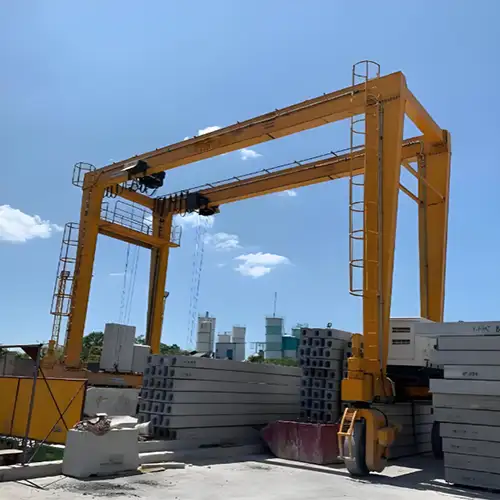
RTG Gantry Crane in Tunnel Construction: Design & Use Guide
A practical guide to RTG gantry crane design, operation, and coordination in tunnel construction, focusing on space limits, safety, and efficiency.
| Crane Type | Rubber Tyred Gantry Cranes |
| Crane Capacity | 1 Ton to 20 Ton, 3 Ton to 320 Ton |
| Span Length | Customized |
| Lifting Height | Customized |
| Coverage Area Type | Wheel travelling, 360 degree wheel rotating |
| Application | Material handling, lifting, positioning, assembly, maintenance, loading/unloading, RTG gantry cranes in tunnel construction handle segment lifting, stacking, truck loading, portal materials, and TBM logistics, enabling flexible, rail-free, high-efficiency |
| Certifications | CE / ISO / SGS / Other third-party inspection |
| Customization | Customized material handling cranes solutions available for indoor, outdoor, hazardous, corrosive, cleanroom, etc. |
Crane Manufacturer: Yuantai Cranes – 30+ Years Professional Crane Manufacturer from China
Category: Construction
Tags: Construction
Your Trusted RTG Gantry Crane Manufacturer & Supplier
RTG Gantry Crane in Tunnel Construction: Design & Use Guide
Rubber Tyred Gantry Crane for Your Industrial Needs
A practical guide to RTG gantry crane design, operation, and coordination in tunnel construction, focusing on space limits, safety, and efficiency.
In tunnel construction, an RTG gantry crane is not selected only for lifting capacity, but for its ability to operate safely in extremely confined spaces, unstable layouts, and multi-step lifting workflows, where space constraints matter more than tonnage.
Key Takeaways
- RTG gantry cranes in tunnels are defined by space adaptability, not just load capacity
- Structural design must prioritize stability under uneven ground and limited movement paths
- Complex tunnel environments often require multi-equipment coordination instead of single-crane operation
- Load safety depends on controlled movement and precise positioning, not only strength
- Engineering success relies on matching crane travel system + lifting system + site constraints
Problems This Guide Solves
- Why RTG gantry cranes fail or underperform in tunnel environments
- How to design crane movement in narrow underground spaces
- When a single RTG gantry crane is not enough for lifting operations
- How to ensure stability on uneven or restricted tunnel floors
- How to coordinate multiple lifting systems in confined construction zones
- How to avoid operational interference in underground installation work
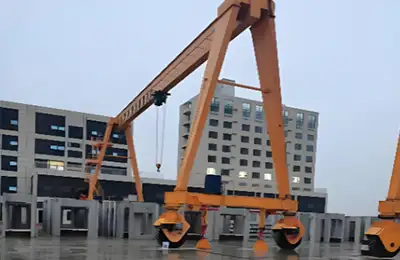
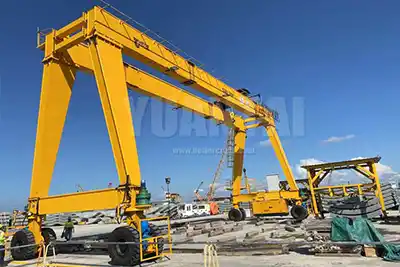
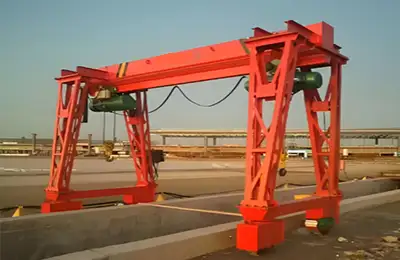
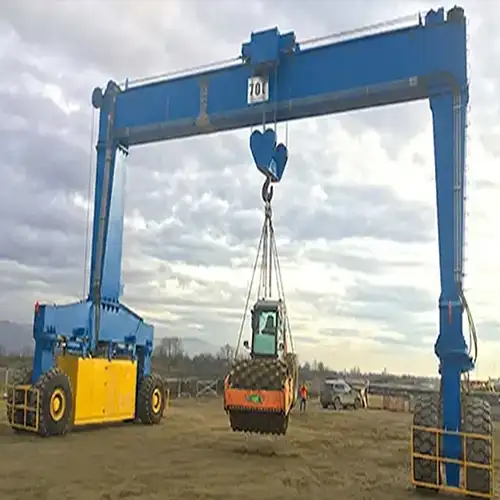
Single girder gantry crane with double hoist trolley
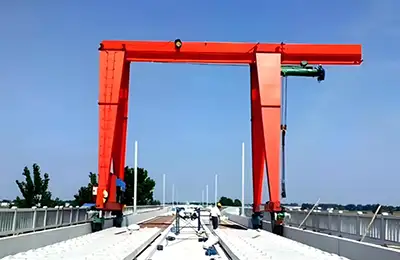
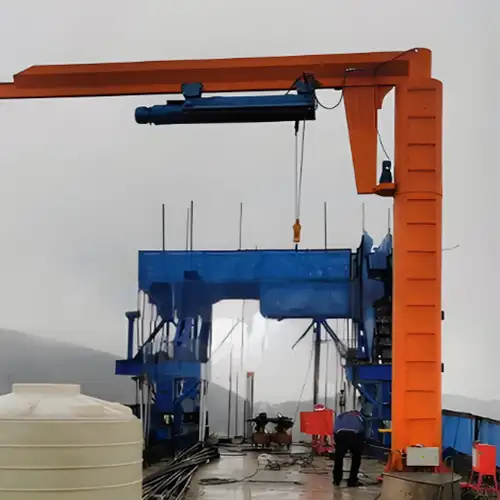
Cantilever gantry crane with rubber tyred gantry cranes
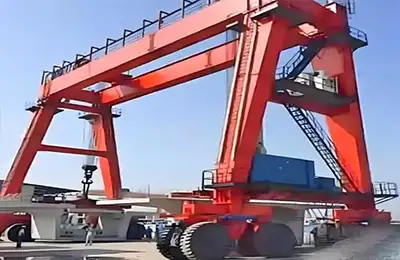
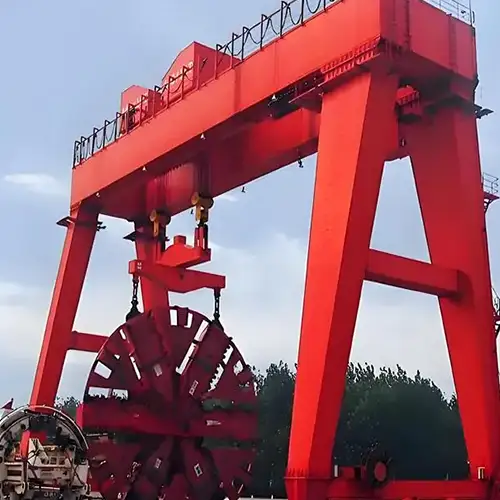
double girder rtg gantry cranes
Role of RTG Gantry Crane in Tunnel Construction
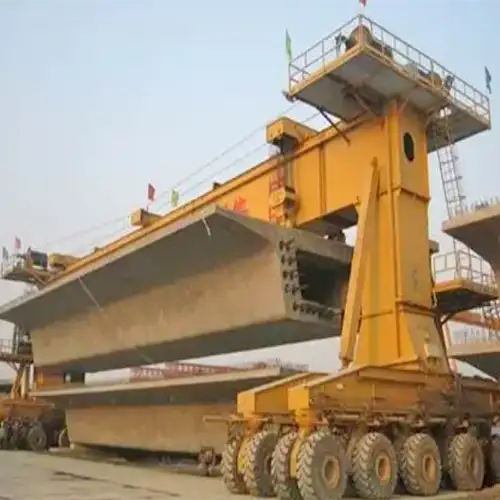
RTG gantry crane application in tunnel segment handling
RTG gantry crane application in tunnel segment handling
In tunnel construction work, an RTG gantry crane is mainly used for moving and positioning precast concrete segments, steel structures, and other heavy installation parts. The working area is usually underground or semi-enclosed, and space is always tight.
So the crane is not just "lifting and placing." It is part of a continuous installation process. One step affects the next step, and there is not much room for correction once operation starts.
Typical tasks include:
- Lifting precast tunnel segments from storage or delivery point
- Transporting heavy structural parts along limited working routes
- Positioning components for segment assembly or lining installation
- Supporting repeated lifting cycles in confined underground zones
In many tunnel jobs, the RTG crane works almost like a moving assembly platform, not a simple lifting machine.
Why tunnel conditions change the way RTG gantry cranes are used
Compared with open yard or port operations, tunnel environments force a different way of thinking. The crane is no longer working in a wide and predictable area.
Instead, operators often deal with:
- Narrow passageways where turning space is limited
- Low clearance that restricts boom or gantry movement
- Uneven or temporary ground conditions
- Continuous interference from other construction activities
Because of this, the crane must respond smoothly and predictably. No sudden movements, no unnecessary swing, and very controlled positioning.
In practice, this means:
- Movement speed is usually reduced for better control
- Travel paths are planned in advance and rarely changed on site
- Operators focus more on positioning accuracy than speed
- Every lifting step is coordinated with installation progress
It sounds simple, but in underground work, small mistakes can easily delay the whole section of construction.
Operating requirements for RTG gantry crane in confined tunnel spaces
When an RTG gantry crane is used in tunnel construction, the operating requirements are more strict than normal lifting projects. It is not only about capacity, but about how the crane behaves in limited space.
Key requirements usually include:
- Precise movement control
The crane must stop exactly at the required position, especially during segment installation. Even a small deviation can affect alignment. - Adaptation to narrow working corridors
The travel path is often fixed, and the crane must operate within a very limited width. There is little tolerance for side movement. - Flexible lifting route planning
The lifting sequence is not always linear. Sometimes materials need to be moved, rotated, and re-positioned in stages. - Stable operation under restricted travel paths
Because of confined space, any swing or instability is more noticeable and harder to correct.
In actual site operation, engineers usually say it in a simple way: the crane must "move clean and stop clean." No extra motion is acceptable.
RTG gantry crane as part of a tunnel construction system
In tunnel projects, the RTG gantry crane is rarely treated as a standalone machine. It works together with other equipment and the construction sequence itself.
It becomes part of a controlled system that includes:
- Segment supply and storage flow
- Lifting and positioning sequence
- Installation alignment process
- Coordination with other lifting or support equipment
In some cases, more than one crane or auxiliary device is used to complete a single installation cycle. One unit handles lifting, another assists with positioning or rotation, depending on space and workflow.
This is especially common when:
- The tunnel section is too narrow for full crane rotation
- The lifting path cannot be completed by one movement
- Continuous installation work must be maintained without stopping
So in practice, the RTG gantry crane is not just "doing the lift." It is working inside a planned construction rhythm.
Engineering note from field practice
In tunnel construction, most issues are not caused by insufficient lifting capacity. They usually come from mismatch between space conditions and movement planning.
That is why experienced engineers often focus more on:
- Whether the crane can move freely in the available corridor
- Whether the lifting path is realistic for the site layout
- Whether the operation sequence matches installation steps
Once these are aligned, the RTG gantry crane can operate smoothly even in tight underground environments.
Why Tunnel Environments Challenge Standard RTG Design
RTG gantry cranes face significant operational challenges when moved from open yard use into tunnel construction due to spatial limitations and changing working conditions.
RTG Gantry Crane Working Limits in Tunnel Construction Conditions
When an RTG gantry crane is moved from open yard use into tunnel construction, the working logic changes quite a lot. A design that performs normally in port or storage yards may not behave the same underground.
The reason is simple: the space is no longer open, and the working conditions are no longer uniform. Everything becomes constrained, and every movement needs to be more controlled.
In tunnel projects, engineers usually start by checking:
- How much usable headroom is actually available after support structures are installed
- Whether the crane legs can travel safely without hitting side walls or temporary supports
- How many lifting points can be reached without repositioning the crane too often
These are not theoretical concerns. They directly affect whether the RTG crane can even complete one full lifting cycle.
Limited Headroom and Side Clearance in Tunnel RTG Operation
One of the first issues in tunnel construction is limited vertical and horizontal space. Unlike port yards, there is no "extra margin" for movement.
Typical constraints include:
- Low headroom caused by tunnel arch structure or temporary supports
- Narrow side clearance that restricts gantry width adjustment
- Reduced clearance for hook lifting height and sling operation
Because of this, standard RTG designs often need adjustment before use. For example, gantry height may need to be reduced, or lifting mechanisms reconfigured to avoid interference with tunnel ceilings.
In practice, operators often describe it like this: "There is no spare space. Everything must fit exactly."
Irregular Floor Conditions and Support Instability
Another common challenge is the ground condition inside tunnels. Unlike prepared port yards with reinforced tracks, tunnel floors can be uneven or temporary.
This leads to several practical issues:
- Uneven settlement under crane wheels or rails
- Temporary support structures affecting load balance
- Limited ability to maintain perfectly straight travel paths
When the supporting surface is not stable, the RTG gantry crane must rely more on structural rigidity and load distribution design. Otherwise, small ground differences can lead to uneven stress on the crane frame.
In many cases, engineers will reinforce travel paths or adjust wheel load distribution before commissioning the crane.
Restricted Turning Radius and Travel Movement Limitations
RTG gantry cranes in tunnel construction rarely have full freedom of movement. The turning radius and travel distance are often restricted by the tunnel geometry itself.
This creates several operational limitations:
- The crane cannot freely reposition like in open yards
- Turning movements are reduced or completely eliminated
- Travel paths are usually fixed in advance and cannot be changed easily
Because of this, crane operation becomes more like "linear positioning" rather than flexible movement. Once a path is set, the crane must follow it precisely.
This also affects lifting planning. The entire lifting sequence must be designed around available travel space, not just lifting capacity.
Continuous Interference from Ongoing Construction Activities
In tunnel construction, the RTG gantry crane does not operate in isolation. Other work is always happening around it.
Common interference sources include:
- Excavation and lining installation work
- Material delivery and temporary storage zones
- Electrical, ventilation, or drainage installations
- Workers and equipment moving through the same corridor
Because of this, the crane often needs to pause, adjust, or coordinate with other operations. It is not a clean, uninterrupted working environment.
In real projects, this means:
- Operation windows must be carefully scheduled
- Communication between teams is essential
- Sudden changes in site conditions are common
Why Standard RTG Gantry Crane Design is Not Enough
Due to all the above conditions, a standard RTG gantry crane design is usually not directly suitable for tunnel construction.
Before deployment, it often requires adjustments such as:
- Structural reinforcement for uneven load conditions
- Modified gantry height or span to fit tunnel geometry
- Optimized wheel or travel system for restricted paths
- Adjusted control system for low-speed precision operation
In practice, the crane must be adapted to the tunnel, not the other way around.
That is the key point in tunnel engineering:
The equipment is selected based on working space first, and lifting capacity second.
Structural Stability Requirements in Underground RTG Applications
In tunnel construction, the structural stability of an RTG gantry crane is crucial, and it extends beyond rated lifting capacity to focus on how the structure behaves in unpredictable, unstable environments.
RTG Gantry Crane Structural Stability in Tunnel Construction Conditions
In tunnel construction, structural stability of an RTG gantry crane is not judged only by its rated lifting capacity. It is more about how the whole structure behaves when the working environment is not stable, not flat, and not fully predictable.
Underground conditions are different from open yards. The crane is often working on limited tracks or temporary foundations, and small variations in ground condition can directly affect structural stress.
So the focus shifts from "how much it can lift" to "how safely it stays stable during every movement."
Reinforced Gantry Frame for Uneven Ground Reaction Forces
In tunnel applications, one of the main structural challenges comes from uneven ground reaction forces. The supporting surface is rarely perfect, and even small settlement differences can change how loads are distributed.
To handle this, the gantry frame needs stronger rigidity and better resistance to deformation.
Typical design considerations include:
- Increasing stiffness of main beam and leg structures
- Strengthening connection points between gantry and traveling system
- Improving resistance to torsional deformation during movement
- Ensuring the structure can absorb minor ground irregularities without stress concentration
In real operation, this helps the crane remain stable even when the travel path is not perfectly level.
Optimized Load Distribution Across Legs and Beams
Load distribution becomes more critical in tunnel RTG applications because the working space limits how the crane can adjust itself during operation.
If load is not evenly distributed, it can lead to:
- Excess stress on one side of the gantry
- Uneven wheel or rail pressure
- Long-term fatigue in structural joints
To avoid this, the structure must be designed so that force is transferred smoothly from the lifting point to all supporting legs.
In practice, engineers usually pay attention to:
- Symmetry of load path during lifting
- Balance between main beam and end beam rigidity
- Even transfer of force into wheel assemblies
The goal is simple: no single point should carry more than its fair share for too long.
Reducing Stress Concentration in Traveling System Joints
The traveling system in an RTG gantry crane is often exposed to repeated stress, especially in tunnel environments where movement is slow and frequent stops are common.
Stress concentration usually appears at:
- Wheel axle connection points
- Beam-to-leg joint areas
- Transition zones in structural welds
If not properly designed, these areas can become weak points over time.
To improve durability, tunnel RTG designs typically:
- Reinforce joint transition areas to smooth stress flow
- Use more gradual structural transitions instead of sharp connections
- Improve welding and connection detailing in high-load zones
It is not about making everything thicker, but about making force transfer smoother.
Stability Control Under Low-Speed and Stop-Start Operation
Unlike open-yard RTG cranes that may operate at higher travel speeds, tunnel RTG cranes usually work in a slow and controlled manner.
This is mainly due to:
- Limited working space
- Need for precise positioning
- Safety requirements in confined environments
- Frequent coordination with other construction activities
Because of this, the crane often operates in a stop-start pattern.
This creates a different kind of structural demand:
- The crane must remain stable during repeated acceleration and deceleration
- Load swing must be minimized during frequent stops
- Structural vibration must be controlled under low-speed movement
In tunnel work, smooth control is more important than speed. Operators often prioritize "steady movement" over efficiency.
Stability Priority Over High-Speed Performance
In open-yard RTG systems, higher speed is often considered a performance advantage. But in tunnel construction, this logic changes completely.
Here, the priority is:
- Stability during lifting and travel
- Predictable movement under confined conditions
- Controlled response during every operation step
High-speed movement is not only unnecessary but sometimes risky in narrow underground spaces.
So the design philosophy becomes clear:
Tunnel RTG gantry cranes are built for controlled stability, not fast operation.
This difference is what separates standard yard RTG systems from tunnel-specific engineering designs.
Load Handling and Movement Optimization in Confined Spaces
In tunnel construction, load handling with an RTG gantry crane focuses on controlled movement due to the narrow space, where there is little room for correction once a component is lifted.
RTG Gantry Crane Load Handling in Tunnel Construction Environments
In tunnel construction, load handling with an RTG gantry crane is less about "how heavy" and more about "how controlled." The working space is narrow, and once a precast segment or structural component is lifted, there is very limited room for correction.
So the whole lifting process needs to stay predictable from start to finish. No sudden movement, no unnecessary swing, and no improvisation during positioning.
In practice, operators usually focus on one thing: keeping the load stable at every stage of movement.
Controlled Lifting and Lowering for Precast Segment Installation
During tunnel segment installation, lifting and lowering must be carefully controlled. The precast concrete segments are large, heavy, and often need to fit into very tight alignment positions.
Key operating points include:
- Slow and steady lifting to avoid sudden load impact
- Controlled lowering speed during installation into position
- Maintaining vertical alignment during descent
- Avoiding any abrupt stop that could shift the segment
Even a small deviation during lowering can affect the alignment of the tunnel lining, so the movement is usually kept steady and continuous.
In many projects, engineers prefer "slow placement with accuracy" rather than faster cycles that risk misalignment.
Smooth Horizontal Movement in Narrow Tunnel Spaces
Horizontal travel in tunnel environments is very different from open yard movement. The space is limited, and there is often no room for lateral correction once the crane starts moving.
To manage this, RTG gantry crane movement must be:
- Straight and controlled along predefined paths
- Free from sudden acceleration or braking
- Carefully coordinated with surrounding construction activity
- Adjusted to match the tunnel width and clearance
In real operation, the crane is often guided along fixed routes. Operators do not "search for position" — they follow a planned line.
This makes smooth movement more important than speed. A stable slow movement is usually safer than a fast one in confined space.
Avoiding Swing and Load Oscillation in Restricted Environments
One of the biggest risks in tunnel lifting is load swing. In narrow spaces, even a small oscillation can lead to contact with tunnel walls, temporary supports, or nearby equipment.
To reduce this risk, operation must focus on:
- Gentle acceleration and deceleration
- Keeping lifting height as low as practical during travel
- Avoiding sudden directional changes
- Ensuring balanced sling arrangement before lifting
In tunnel conditions, there is almost no tolerance for uncontrolled movement. Once the load starts to swing, it is difficult to recover safely due to space limitations.
So operators usually treat swing prevention as a primary control requirement, not an optional adjustment.
Precision Positioning During Structural Assembly
The final stage of any tunnel lifting operation is positioning. This is where RTG gantry crane performance is tested the most.
Precast segments and structural components must be placed with high accuracy to ensure correct alignment of the tunnel structure.
Key requirements include:
- Fine movement control during final placement
- Accurate alignment with previously installed segments
- Minimal adjustment after initial positioning
- Stable holding position during fixing or connection work
In practice, operators often make very small adjustments at the end stage. It is not about large movements anymore, but fine positioning within a limited range.
Practical Result in Tunnel Assembly Work
When load handling and movement are properly controlled, the RTG gantry crane supports safe and efficient tunnel construction even in tight underground spaces.
The benefits are mainly seen in:
- Reduced risk of segment misalignment
- Lower chance of structural collision or interference
- More predictable installation sequence
- Improved coordination between lifting and assembly teams
In short, success in tunnel lifting is not achieved by lifting power alone. It depends on how smoothly and precisely every movement is controlled within a restricted environment.
Multi-Crane Coordination in Tunnel Construction Projects
In tunnel construction, lifting work is rarely completed by a single RTG gantry crane alone. The reason is simple: the working space is too limited, and the lifting process is typically staged, requiring more than one machine to achieve efficiency.
RTG Gantry Crane Coordination Strategy in Tunnel Lifting Operations
In tunnel construction, lifting work is rarely completed by a single RTG gantry crane alone. The main reason is simple: the working space is too limited, and the lifting process is usually not a single-step action.
Instead, it becomes a staged operation. One piece is lifted, then adjusted, then aligned, and finally installed. Because of this, relying on one crane to complete everything often leads to slow progress or repeated repositioning.
So in many projects, engineers move toward a coordinated system instead of a single-machine approach.
One RTG Unit Handling Lifting and Primary Positioning
In a typical tunnel lifting setup, one RTG gantry crane is assigned the main lifting task. Its role is not only to lift the load but also to bring it into the general installation area.
Its main responsibilities usually include:
- Lifting precast segments or structural components from the supply point
- Transporting loads along the tunnel travel path
- Providing primary positioning close to the installation location
- Holding the load steady for secondary adjustment
At this stage, accuracy is important, but it is not the final precision step yet. The goal is to bring the load safely into the working zone.
Auxiliary Equipment for Rotation, Transfer, and Alignment
Because tunnel space is restricted, the main RTG crane often cannot complete all movements such as rotation or fine alignment on its own. That is where auxiliary equipment comes in.
Supporting systems may include:
- Smaller gantry systems or auxiliary hoists for fine adjustment
- Rotation devices for adjusting segment orientation
- Hydraulic or mechanical positioning tools for alignment correction
- Temporary lifting frames for controlled transfer between positions
These tools take over the tasks that require precision in tight space, where large crane movement is not practical.
In real operation, this division of work makes the process more manageable and reduces unnecessary crane repositioning.
Coordinated Operation for Multi-Step Installation Sequences
Tunnel construction is a step-by-step process. A single lifting action often includes multiple stages:
- Lifting from storage or delivery area
- Transporting through narrow tunnel path
- Initial placement near installation point
- Fine adjustment and alignment
- Final installation and fixing
When multiple equipment units work together, each step can be assigned to the most suitable system.
Coordination is usually based on:
- Pre-planned lifting sequence
- Clear division of responsibilities between equipment
- Communication between operators during each stage
- Controlled timing to avoid interference between machines
This reduces delays caused by repeated repositioning of a single crane and keeps installation flow more stable.
When Multi-Crane Coordination Becomes Necessary
This system-based approach is not used in every project, but it becomes necessary under specific tunnel conditions.
Typical situations include:
- Tunnel width is too narrow for full RTG gantry movement or turning
- Lifting path is interrupted by structural supports or ongoing works
- Segments require rotation or fine alignment that exceeds single-crane capability
- Continuous installation workflow must be maintained without stopping for repositioning
In these cases, trying to force a single-crane solution usually leads to inefficiency and higher operational risk.
Practical Engineering Understanding
In tunnel lifting work, coordination is often more important than individual crane capacity. A well-planned multi-crane system can perform more smoothly than a larger single machine operating alone.
The key idea is simple:
- One crane provides lifting power
- Another system provides precision adjustment
- Together they complete the full installation cycle
This approach allows RTG gantry crane systems to operate effectively even in very restricted underground environments where movement flexibility is limited.
Power System and Control Adaptation for Tunnel RTG Cranes
In tunnel construction, the performance of an RTG gantry crane depends not only on its steel structure or lifting capacity but also on the stability of the power system and the precision of the control response.
RTG Gantry Crane Power and Control Requirements in Tunnel Construction
In tunnel construction, the performance of an RTG gantry crane is not only determined by its steel structure or lifting capacity. In practice, a large part of its reliability depends on how stable the power system is and how precise the control response can be.
Underground environments are not like open yards. Power conditions can fluctuate, communication distance is limited, and operation space is tight. Because of this, the control system becomes a key factor in whether the crane can work smoothly or not.
In simple terms, if the control is not stable, even a strong crane will not perform well in tunnel work.
Low-Speed Precision Control for Accurate Installation
Tunnel lifting work requires very fine positioning, especially during segment installation or structural assembly. High speed is not useful here. What matters is controlled, slow, and accurate movement.
Key control characteristics include:
- Stable low-speed travel without jerking
- Fine adjustment capability during final positioning
- Smooth start and stop response
- Minimal overshoot during positioning
In actual tunnel operation, operators often say the crane must "move slowly but respond exactly." That reflects the real requirement — precision matters more than speed.
This type of control helps reduce alignment errors and improves installation consistency.
Stable Power Supply in Underground Working Environments
Power stability in tunnel construction is often more challenging than in surface projects. The environment can involve long cable runs, temporary electrical setups, and multiple equipment operating at the same time.
Common power-related considerations include:
- Voltage stability under varying load conditions
- Protection against sudden power fluctuation
- Reliable cable routing in narrow tunnel passages
- Resistance to dust, moisture, and construction interference
If power supply is unstable, even small fluctuations can affect lifting smoothness and braking performance. That is why tunnel RTG systems often require reinforced electrical protection and stable distribution design.
Synchronized Movement Control for Multi-Unit Coordination
In many tunnel projects, more than one lifting or auxiliary system may be operating at the same time. This makes synchronized control important, especially when multiple devices share the same working zone.
Typical coordination requirements include:
- Matching travel speed between RTG units and auxiliary equipment
- Coordinated lifting and lowering during shared load handling
- Preventing timing mismatch during multi-step installation
- Maintaining communication between different control stations
Without synchronization, equipment may interfere with each other, especially in narrow tunnel spaces where movement overlap is unavoidable.
In practice, coordination is achieved through controlled communication systems and pre-set operation sequences.
Smooth Acceleration and Deceleration for Load Stability
One of the most sensitive parts of tunnel RTG operation is how the crane starts and stops. Sudden movement can easily cause load swing, which is harder to control in confined spaces.
To improve stability, the control system must ensure:
- Gradual acceleration when starting movement
- Controlled deceleration before stopping points
- Reduced vibration during load transfer
- Stable braking behavior under loaded conditions
This is especially important when handling precast segments or structural components, where even small oscillations can affect installation accuracy.
A smooth motion profile helps maintain load stability throughout the entire travel path.
Control System Value in Confined Tunnel Environments
Advanced control systems are not just about automation. In tunnel RTG applications, their main role is to make movement predictable and safe under restricted conditions.
When properly designed, they help achieve:
- More stable lifting and positioning
- Better coordination between multiple equipment units
- Reduced operator error in tight working spaces
- Improved consistency during repeated installation cycles
In underground construction, predictability is often more valuable than speed. A stable control system allows the crane to behave in a controlled and repeatable way, which is essential for safe tunnel installation work.
Engineering Decision Logic for Tunnel RTG Crane Selection
Choosing an RTG gantry crane for tunnel construction is not a simple matter of matching lifting capacity with load weight. In real engineering work, the selection is more about whether the crane can actually fit into the working system of the tunnel.
RTG Gantry Crane Selection in Tunnel Construction Projects
Choosing an RTG gantry crane for tunnel construction is not a simple matter of matching lifting capacity with load weight. In real engineering work, the selection is more about whether the crane can actually fit into the working system of the tunnel.
The tunnel environment is restrictive, and once construction starts, there is very little flexibility to change layout or operation method. Because of this, selection decisions must be made based on the full working condition, not just equipment specifications.
In practice, engineers usually treat it as a system design decision rather than a single equipment choice.
Tunnel Geometry and Available Working Clearance
The first and most direct factor is the physical geometry of the tunnel. This includes width, height, and available movement space.
Key considerations include:
- Internal tunnel width and clearance between support structures
- Available headroom for gantry structure and lifting height
- Side clearance for crane travel and load swing safety margin
- Space for turning or repositioning, if required
If the clearance is not correctly evaluated, even a properly rated RTG crane may not operate safely in the tunnel. In many cases, the geometry alone determines whether a standard configuration can be used or a modified design is required.
Segment Size and Lifting Sequence Requirements
Tunnel construction often involves precast segments or structural components that follow a fixed installation sequence. The crane must match both the size and the workflow of these elements.
Important factors include:
- Maximum segment weight and dimensions
- Handling method (single piece lifting or staged lifting)
- Installation order and positioning sequence
- Need for rotation or alignment during installation
In real projects, lifting is not a single action. It is a sequence of steps. The crane must be able to support that entire process, not just the first lifting stage.
Ground Condition and Track or Support Design
Unlike permanent industrial yards, tunnel floors are often temporary or partially reinforced. This directly affects crane stability and travel behavior.
Engineering considerations include:
- Load-bearing capacity of tunnel floor or rail foundation
- Uneven settlement or temporary support structures
- Track alignment accuracy and long-term stability
- Vibration or deformation caused by ongoing construction activities
If the ground system is not properly matched with the crane design, even a stable structure may experience uneven load distribution during operation.
Need for Single or Multi-Equipment Coordination
Another important decision point is whether one RTG gantry crane is enough or multiple systems are required.
This depends on:
- Whether the crane can complete full lifting and positioning cycle alone
- Whether space allows full movement or only partial travel
- Whether rotation or fine alignment requires auxiliary equipment
- Whether continuous workflow must be maintained without stopping for repositioning
In tighter tunnel sections, multi-equipment coordination is often used. One unit handles lifting, while another supports positioning or adjustment. This reduces movement constraints caused by limited space.
Installation Workflow and Construction Timeline
The final selection factor is the actual construction process. The crane must fit into the project timeline and workflow structure.
Key points include:
- Daily installation speed requirements
- Sequence of excavation, lining, and segment installation
- Coordination with other construction activities in the tunnel
- Planned duration of crane usage in each tunnel section
If the crane selection does not match the construction rhythm, it can become a bottleneck even if its technical specifications are sufficient.
Engineering Conclusion for RTG Selection in Tunnel Projects
In tunnel construction, RTG gantry crane selection is not driven by rated capacity alone. It is determined by how well the equipment fits into the real working environment.
A reliable selection process always combines:
- Physical space conditions
- Structural and ground constraints
- Installation workflow requirements
- Coordination between multiple equipment systems
This approach ensures the crane is designed for actual site conditions, not just theoretical lifting data.
Conclusion
In tunnel construction, RTG gantry cranes must be treated as part of a complete underground lifting system, not just standalone lifting equipment. Their success depends on how well they adapt to confined spaces, uneven working conditions, and coordinated multi-step operations.
The most effective tunnel RTG solutions are those that combine:
- Structural stability under constrained conditions
- High-precision load control
- System-level coordination between multiple lifting units
Ultimately, in tunnel engineering, performance is defined not by how much the crane can lift, but by how reliably it can operate within extremely limited space while maintaining safety and installation precision.

Yuantai Cranes
Overhead Crane Manufacturer with CE, ISO, SGS, CNEX Certificates.
- Main Specifications - Capacity: 0.5–550 tons | Span: up to 40m | Speed: 0.8–12 m/min | Duty: A3–A7 | Power: 380–690V, 50/60Hz | Control: pendant/remote/cabin
- Full engineering: FEA/PLC/VFD + in-house build + global delivery + on-site support, for workshops, factories, EPC contractors, industrial projects, etc.
- Support: design, manufacturing, testing, service – end-to-end, customized lifting solutions worldwide.
How to Get an Accurate Crane Price for Your Application?
Tips: Copy the spec list, fill in your details, and paste it into the form on the right/ down-below for a quick price.
- Crane type:_____ . (e.g., overhead crane, gantry crane, jib crane)
- Max weight to lift:_____ tons. (e.g., 2t, 5t, 10t, 20t, 50t)
- Lifting height:_____ m. (How high does the hook need to reach?
- Workshop width (span):_____ m . (Distance between the two crane rails)
- Travel distance:_____ m . (How long does the crane need to move along the runway?)
- Control type:_____. (Pendant / remote / cabin Control)
- Power supply:_____. (Local voltage & frequency – e.g., 380V, 50Hz, 3-phase)
- What will it be used for?_____ (e.g., steel fabrication, concrete products, mold handling, general manufacturing, etc.)
- Any special requirements?_____ (e.g., extreme temperature, dusty or explosive environment, special paint color, etc.)
Just leave a message via the contact form and our hoist and crane engineer will contact you with in 24working hours.
Get Your Custom Quote–Quick & Easy
Fill in what you know. Skip what you don't – we'll help.Any question will be reply with 24 working hours