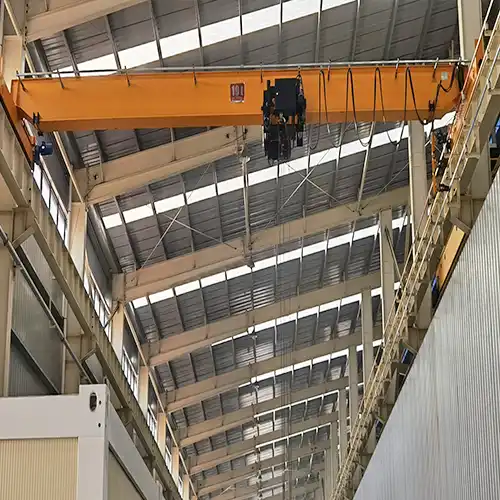
Workshop Crane 1–50 Ton for Maintenance Bays Guide
Complete guide to workshop cranes 1–50 ton for maintenance bays, covering selection, load handling, precision lifting, layouts, and crane types.
| Crane Type | High precision overhead cranes for workshop maintenance workshops -Workshop overhead/EOT crane or semi-gantry crane; single-girder for lighter loads, double-girder for heavy-duty uses,ISO A3–A6 / FEM 1Am–3M for general maintenance;380/400/415V, 50hz3ph |
| Crane Capacity | 1–50 ton rated lifting capacity; 1–20 ton commonly configured as single-girder or double-girder, while capacities above 20 ton are typically double-girder for heavier maintenance loads. |
| Span Length | 7.5–30 m span; customized according to maintenance-bay dimensions and required equipment coverage. |
| Lifting Height | 5–15 m; customized according to workshop height, machine dimensions, maintenance clearance, and required lifting path. |
| Coverage Area Type | Rectangular working area.crane-bay coverage; maintenance bays, machine areas, workshops, repair stations, assembly areas, equipment installation zones, warehouses, and loading areas. |
| Application | A 1–50 ton workshop crane is used for maintenance, repair, and installation of industrial equipment. It handles everything from small motors and pumps to heavy machinery, turbines, and generators, widely applied in factories, steel plants, shipyards, and |
| Certifications | CE / ISO / SGS / Other third-party inspection |
| Customization | Customized capacity, span, lifting height, duty class, single- or double-girder structure, overhead/EOT or semi-gantry configuration, electric chain/wire rope hoist or open winch, pendant/radio/cabin control, VFD, customized attrachment. |
Crane Manufacturer: Yuantai Cranes – 30+ Years Professional Crane Manufacturer from China
Category: Featured
Tags: workshopcrane,maintenancecrane
Your Trusted Workshop Crane Manufacturer & Supplier
Workshop Crane 1–50 Ton for Maintenance Bays Guide
Optimized Guide for Maintenance Material Handling
Maintenance bay crane selection is not defined only by lifting capacity (1–50 ton range), but by how well the crane matches load type, precision requirements, workshop layout, and duty cycle, ensuring safe, efficient, and low-downtime equipment servicing.
What This Guide Solves
- How to select 1 ton to 50 ton workshop cranes for different maintenance tasks
- Which crane type fits different maintenance bays (overhead, semi gantry, jib, portable gantry)
- How load type affects crane choice (engines vs turbines vs mining equipment)
- What precision level is required in maintenance lifting operations
- How duty class (M3–M4) applies to workshop crane usage
- How to plan crane layout for real workshop constraints
- How to avoid over-specifying or under-specifying crane systems
Quick Guide: FAQs – What This Guide Solves
Answers to common maintenance workshop crane questions, helping you choose the right semi gantry, single girder, or double girder crane for your application.
Q1: What crane capacity do I need for my maintenance workshop (1–50 ton)?
Match the crane to the heaviest component you lift and typical daily loads:
- 1–10 ton cranes handle light maintenance: motors, pumps, small engines.
- 10–50 ton cranes cover heavy equipment: turbines, steel mill components, mining machinery.
- Include a 20–30% safety margin above maximum load.
Q2: Should I choose single girder or double girder overhead crane?
Use single girder for light/medium loads and double girder for heavy-duty lifting:
- Single girder cranes are economical for 1–10 ton maintenance tasks.
- Double girder cranes provide stability and high hook height for 10–50 ton industrial lifting.
Q3: When is a semi gantry crane better than a bridge crane?
Semi gantry cranes are ideal for retrofit workshops, partial coverage, or low ceiling areas:
- They adapt to existing columns and structural constraints.
- Useful when full bridge crane installation is not feasible.
Q4: Do I need high precision lifting for heavy equipment maintenance?
It depends on the component:
- High precision: engines, turbines, gearboxes — use VFD hoists, anti-sway, and remote controls.
- Medium/low precision: steel components, mining equipment — rough placement is acceptable initially.
Q5: What duty class is suitable for maintenance bay cranes?
Most maintenance cranes operate under M3–M4 duty class:
- Intermittent lifting rather than continuous industrial cycles.
- Frequent short-duration operations are typical in maintenance bays.
Q6: How do I match crane type with machinery like engines, gearboxes, turbines, or mining equipment?
Match load, precision, and workspace:
- Engines & gearboxes: single girder or semi gantry, 1–10 ton, high precision.
- Turbines & steel components: double girder, 10–50 ton, precision for alignment.
- Mining equipment: semi gantry or double girder for heavy, irregular loads.
Q7: How do workshop space and ceiling height affect crane selection?
Clearance and span define crane type and hook travel:
- Low ceilings → low-headroom or semi gantry cranes.
- Wide spans → double girder bridge cranes for full coverage.
- Column spacing and obstructions influence layout and crane path efficiency.
Q8: What is the most cost-effective crane system for maintenance operations?
Choose based on load type, workshop layout, and duty cycle, not just price:
- Single girder cranes are economical for light maintenance.
- Semi gantry or modular cranes offer flexible retrofit solutions.
- Double girder cranes are necessary for heavy-duty operations, but modular options can reduce installation costs and allow future upgrades.
Introduction: Workshop Cranes in Maintenance Bays
Workshop cranes in the 1 ton to 50 ton range are essential lifting systems used in equipment maintenance bays where machinery is repaired, disassembled, and reassembled. These maintenance cranes directly impact safety, downtime reduction, and maintenance efficiency across industries such as mining, automotive fleets, steel plants, construction equipment repair, and power generation facilities.
Unlike production cranes, maintenance cranes are designed for intermittent lifting, irregular loads, and precision positioning, rather than continuous high-speed operation.
Core Design Requirements for Maintenance Material Handling
Selecting the right crane for a maintenance bay requires more than rated capacity. Proper design improves workflow, reduces downtime, and ensures safety. Maintenance cranes—single girder, double girder, or semi gantry—are designed around four key engineering priorities.
Load Adaptability (1–50 Ton Range)
Crane capacity must match the machinery handled in the workshop. Over- or under-specifying reduces efficiency and increases risk.
- Light maintenance (1–3 ton): Motors, pumps, small components; often handled with single girder or portable gantry cranes for flexible positioning.
- Medium maintenance (5–10 ton): Gearboxes, hydraulic systems, vehicle subassemblies; typically managed by semi gantry or small double girder bridge cranes.
- Heavy maintenance (10–50 ton): Turbines, mining equipment, steel mill components, crane booms; requires double girder overhead cranes with reinforced runway beams and slow-speed hoist control.
Practical Note: Always include a 20–30% safety margin over maximum expected load to accommodate irregular shapes or multi-part assemblies.
Precision Handling Requirement
Maintenance lifts often require more precision than production lifts. Crane type depends on the level of positioning accuracy required.
- High precision: Engines, turbines, gearboxes — anti-sway hoists, fine-speed control, sometimes remote operation.
- Medium precision: Structural components, crane booms, modular assemblies — standard industrial hoist with controlled travel.
- Low precision: Heavy assemblies like press blocks or mining components — rough placement is acceptable before final adjustment with secondary tools.
Practical Tip: Matching crane precision to the task avoids equipment damage and reduces adjustment time in maintenance workflows.
Duty Classification (Critical Factor)
Maintenance lifts are intermittent rather than continuous. Duty class affects crane lifespan, motor sizing, and maintenance requirements.
- Typically M3–M4 duty class cranes are used in maintenance bays.
- Designed for frequent, short-duration operations rather than continuous cycles.
- Even heavy loads like steel mill components or turbine sections usually fall within low to medium duty hoist specifications.
Observation: Choosing unnecessarily high duty class increases initial cost without real benefit for intermittent maintenance use.
Workshop Integration
The crane must fit the physical layout of the workshop to operate efficiently. Poor integration can limit hook travel, reduce lifting capacity, or create safety hazards.
- Ceiling height optimization: Maximizes usable hook travel for overhead and semi gantry cranes.
- Obstruction-free travel paths: Avoid collisions with ducts, pipes, lighting, or fixed equipment.
- Maintenance pit and workstation alignment: Ensures cranes can reach all critical service points safely.
Practical Tip: Consider semi gantry cranes or low-headroom overhead cranes when retrofitting older workshops with limited ceiling height.
Summary Table: Core Design Requirements for Maintenance Cranes
| Design Factor | Practical Meaning in Maintenance Workshop | Typical Crane Solution | Key Technical Keywords |
|---|---|---|---|
| Load Adaptability (1–50 ton) | Covers full range from small motors to heavy turbines and mining components Ensures correct capacity selection for safe, efficient lifting | Single girder crane (1–10t) Double girder crane (10–50t) Semi gantry crane | workshop overhead crane industrial lifting crane heavy equipment crane system |
| Precision Handling | Ensures correct alignment during installation and repair operations Critical for engines, turbines, and gearboxes | VFD hoist Anti-sway overhead crane Remote control bridge crane | precision hoist system turbine alignment crane gearbox installation crane |
| Duty Classification (M3–M4) | Intermittent lifting in maintenance bays, not continuous production use Designed for short-duration, frequent lifts | Standard workshop bridge crane Semi gantry crane system | low duty cycle crane maintenance workshop crane system intermittent lifting crane |
| Workshop Integration | Matching crane to building layout, ceiling height, and workflow constraints Ensures safe travel paths and workstation alignment | Low headroom crane Semi gantry crane Portable gantry crane | workshop crane layout design crane runway system maintenance bay crane integration |
In busy industrial maintenance workshop planning, crane selection is not only about tonnage. It is a combination of load type, precision requirement, duty cycle, and workshop structure compatibility. A correctly matched maintenance bay overhead crane system (1–50 ton range) reduces downtime, improves safety, and keeps equipment handling
FAQ: Core Design Requirements for Maintenance Material Handling 1–50 Ton
Common questions and answers for selecting the right crane for industrial maintenance bays, covering capacity, precision, duty class, and workshop integration.
Q1: How do I pick the right crane capacity for my maintenance bay?
A: Match the crane capacity to the type of equipment you handle, from light pumps to heavy turbines.
Light maintenance (1–3 ton): Motors, pumps, and small components; usually single girder overhead cranes or portable gantry cranes.
Medium maintenance (5–10 ton): Gearboxes, hydraulic systems, or vehicle subassemblies; semi gantry cranes or small double girder bridge cranes work well.
Heavy maintenance (10–50 ton): Turbines, mining equipment, or steel mill components; double girder overhead cranes with reinforced runway beams and slow-speed hoists are recommended.
Always add a 20–30% safety margin for irregular shapes or multi-part loads.
Q2: Do all maintenance lifts need the same precision as production lifts?
A: No, the required lifting precision depends on the machinery type and maintenance task.
High precision: Engines, turbines, gearboxes; requires anti-sway hoists, fine-speed control, and sometimes remote operation.
Medium precision: Crane booms, structural components; standard industrial hoists with controlled travel are sufficient.
Low precision: Press blocks, mining parts; rough positioning is acceptable, final alignment can use secondary tools.
Correctly matching crane precision to the task protects equipment and reduces adjustment time.
Q3: What duty classification do I need for maintenance cranes?
A: Most industrial maintenance lifts are intermittent, so M3–M4 duty class cranes are usually sufficient.
Designed for short-duration, frequent lifts rather than continuous cycles.
Even heavy loads like turbine sections or steel mill components generally fall within low to medium duty hoist specifications.
Using a higher duty class than needed increases cost without real benefit.
Q4: How do I ensure the crane fits my workshop layout?
A: Evaluate ceiling height, travel paths, and maintenance pit alignment before selecting a system.
Ceiling height optimization ensures maximum usable hook travel for overhead and semi gantry cranes.
Obstruction-free travel paths prevent collisions with ducts, pipes, lighting, or fixed equipment.
Maintenance pit and workstation alignment ensures all critical service points are accessible.
For retrofit workshops with limited height, consider semi gantry cranes or low-headroom overhead cranes.
Q5: What are common mistakes buyers make in maintenance crane selection?
A: Choosing a crane based solely on rated capacity or over-specifying duty class without considering workshop constraints.
Ignoring ceiling height, travel path, or workstation access can limit hook reach and reduce efficiency.
Over-specifying duty class inflates initial cost without extending crane lifespan for intermittent maintenance operations.
Properly matching load, precision, duty class, and workshop integration ensures safe and efficient material handling.
Typical Load Handling Requirements by Machinery Type (Maintenance Workshop Crane Selection Guide)
In maintenance workshops and industrial repair bays, crane selection is not based only on rated capacity. In real operation, a workshop overhead crane, bridge crane system, or semi gantry crane for maintenance bay must match the machinery being handled, the lifting geometry, and how often the equipment is moved. A 1 ton to 50 ton workshop crane system is often used across mixed maintenance tasks. Below is a structured breakdown of typical lifting scenarios, including industrial material handling crane requirements, precision hoisting needs, and heavy equipment maintenance lifting conditions.
Diesel Engines / Industrial Motors
Typical Load Range: 0.5 – 5 tons
Precision Requirement: High — precise alignment for installation and removal
Crane Application Context: Diesel engines are commonly handled in light duty overhead crane systems, single girder workshop bridge cranes, or jib crane maintenance stations inside service bays.
Key Handling Notes:
- Often uses electric wire rope hoist or chain hoist with sling rigging
- Anti-sway control improves stability during engine installation lifting operations
- Frequent short-cycle lifting in vehicle maintenance workshop crane applications
- Alignment is critical for engine mounting and coupling shaft positioning
- Best matched with low headroom overhead crane for maintenance workshop in compact bays
Gearboxes / Transmission Units
Typical Load Range: 1 – 10 tons
Precision Requirement: High — careful positioning to align shafts
Crane Application Context: Gearboxes are typical in industrial equipment maintenance cranes, especially in double girder overhead crane systems for workshop repair bays.
Key Handling Notes:
- Irregular center of gravity requires spreader beam lifting systems for overhead crane
- Load balancing is essential during precision gearbox installation and removal
- Slow speed operation using VFD controlled bridge crane hoist system improves alignment
- Common in heavy machinery repair workshop crane applications
- Often handled in maintenance bay overhead crane 5 ton to 10 ton range systems
Hydraulic Pumps / Compressors
Typical Load Range: 0.5 – 3 tons
Precision Requirement: Moderate — must avoid impact or misalignment
Crane Application Context: These are typically handled using light duty workshop jib cranes, small overhead cranes for maintenance bays, or portable gantry cranes 1–3 ton capacity.
Key Handling Notes:
- Compact lifting via electric chain hoist for workshop maintenance crane system
- Frequent lifting cycles in industrial repair workshop material handling operations
- Stable lowering required to avoid hydraulic seal or casing damage
- Suitable for low duty cycle crane system for maintenance workshop applications
Excavator Arms / Construction Components
Typical Load Range: 5 – 15 tons
Precision Requirement: Medium — rough placement with final adjustment
Crane Application Context: Common in construction equipment maintenance bay crane systems, often using semi gantry crane 10 ton workshop configuration or double girder bridge crane systems for heavy machinery repair.
Key Handling Notes:
- Long and uneven geometry requires multi-point sling lifting for overhead crane operations
- Semi gantry crane improves reach flexibility in open workshop layouts
- Used in construction machinery repair workshop lifting solutions
- Final alignment often completed manually after crane positioning
- Suitable for heavy equipment maintenance crane 10–15 ton capacity range
| Machinery Type | Typical Load Range | Precision Requirement | Crane Type / Workshop Crane Solution | Key Maintenance Handling Notes |
|---|---|---|---|---|
| Diesel Engines / Industrial Motors | 0.5 – 5 tons | High precision | Single girder overhead crane Light duty workshop bridge crane Jib crane | Engine alignment requires fine hoist control Sling or chain hoist commonly used Anti-sway helps during installation Frequent short-cycle lifts in maintenance bay crane operations |
| Gearboxes / Transmission Units | 1 – 10 tons | High precision | Double girder overhead crane Low-headroom workshop crane system | Irregular shape affects balance Spreader beam lifting systems often required Slow speed VFD hoist improves shaft alignment Used in industrial maintenance workshop crane operations |
| Hydraulic Pumps / Compressors | 0.5 – 3 tons | Moderate precision | Jib crane Portable gantry crane 1–3 ton Light overhead crane | Frequent lifting cycles in service workshops Stable lowering required to avoid casing or seal damage Suitable for low duty cycle crane systems |
| Excavator Arms / Construction Components | 5 – 15 tons | Medium precision | Semi gantry crane Mobile gantry crane Double girder overhead crane | Long and uneven loads Requires balanced slinging Flexible reach needed in construction equipment maintenance crane systems Final alignment often manual |
| Crane Booms / Large Equipment Sections | 10 – 30 tons | Medium precision | Double girder overhead crane Industrial gantry crane system | Multi-point lifting with spreader beams Slow travel and controlled hoist Stability critical for heavy machinery maintenance Used in large assembly bays |
| Steel Mill / Press Components | 10 – 50+ tons | Medium precision | Heavy duty double girder overhead crane Steel plant maintenance crane system | Large pre-aligned blocks Requires reinforced runway beams Low-speed controlled lifting Used in industrial shutdown maintenance projects |
| Generators / Turbines | 5 – 25 tons | Very high precision | Precision overhead crane Remote-controlled bridge crane with anti-sway system | Sensitive alignment work Millimeter-level positioning required Anti-sway and fine hoist essential Used in power plant maintenance crane systems |
| Mining Equipment Parts (Drills, Crushers) | 10 – 40 tons | Medium precision | Heavy duty overhead crane Modular gantry crane for maintenance workshop | Irregular heavy loads Wide coverage required Used in mining equipment overhaul and crusher maintenance Multi-point lifting often necessary |
| Vehicle / Heavy Truck Components (Axles, Frames) | 2 – 10 tons | High precision | Single girder overhead crane Low-headroom workshop crane | Precise installation in service bays Compact layout required Frequent use in automotive maintenance Low-headroom crane design improves lifting height |
FAQ: Typical Load Handling Requirements by Machinery Type – Maintenance Workshop Cranes (1–50 Ton)
Q1: What type of crane should I use for lifting diesel engines or industrial motors?
A: Use single girder overhead cranes, light-duty workshop bridge cranes, or jib cranes for high-precision engine lifting.
- Diesel engines (0.5–5 ton) require fine hoist control for alignment.
- Anti-sway systems improve stability during installation.
- Frequent short-cycle lifts make low-duty cranes suitable.
- Best for low-headroom workshop cranes in compact maintenance bays.
Q2: How do I lift gearboxes or transmission units safely?
A: Use double girder overhead cranes or low-headroom workshop cranes with spreader beams.
- Gearboxes (1–10 ton) need high precision to align shafts.
- Irregular shapes require balanced lifting and spreader beams.
- VFD-controlled slow-speed hoists improve positioning accuracy.
- Common in industrial repair and heavy machinery maintenance workshops.
Q3: Which cranes are suitable for hydraulic pumps and compressors?
A: Jib cranes, small portable gantry cranes (1–3 ton), or light overhead cranes are ideal.
- These components (0.5–3 ton) require moderate precision.
- Frequent lifting cycles in maintenance bays make low-duty crane systems sufficient.
- Stable lowering is critical to prevent seal or casing damage.
- Fits well in compact service workshops.
Q4: What is recommended for excavator arms or other construction components?
A: Semi gantry cranes, mobile gantry cranes, or double girder overhead cranes handle medium-precision, long loads.
- Excavator arms (5–15 ton) often have uneven geometry, requiring multi-point slings.
- Flexible reach is needed for maintenance bays with open layouts.
- Final alignment is often manual.
- Works in construction equipment repair crane systems.
Q5: How should I lift crane booms or large equipment sections?
A: Use double girder overhead cranes or industrial gantry cranes with spreader beams.
- Loads (10–30 ton) require controlled orientation during assembly.
- Slow travel and fine hoist control ensure stability.
- Critical for heavy machinery maintenance and large component workshops.
Q6: Which cranes handle steel mill or press components?
A: Heavy-duty double girder overhead cranes with reinforced runway beams.
- Components (10–50+ ton) require low-speed controlled lifts to prevent structural damage.
- Used in industrial shutdown maintenance operations and steel plant crane systems.
- Suitable for full-span heavy lifting in industrial maintenance workshops.
Q7: What cranes are used for generators or turbines?
A: Precision overhead cranes or remote-controlled bridge cranes with anti-sway systems.
- Loads (5–25 ton) require millimeter-level positioning.
- Anti-sway and fine hoist control are essential for safety.
- Often used in power plant maintenance workshops for generator or turbine alignment.
Q8: How do I lift mining equipment parts like drills or crushers?
A: Use heavy-duty overhead cranes or modular gantry cranes for large industrial equipment.
- Components (10–40 ton) often have irregular shapes.
- Wide-span coverage is critical for large maintenance bays.
- Multi-point lifting ensures safety during heavy equipment overhaul.
- Common in mining equipment maintenance crane systems.
Q9: Which cranes are best for vehicle or heavy truck components?
A: Single girder overhead cranes or low-headroom workshop cranes handle axles, frames, and subassemblies.
- Loads (2–10 ton) require high precision for service bays.
- Low-headroom design maximizes lifting height in compact automotive workshops.
- Frequent use in truck and vehicle maintenance bay overhead crane operations.
Q10: What general factors should I consider when matching cranes to machinery?
A: Consider precision vs. weight, duty cycle, load complexity, and workshop space.
- Small components need high-precision hoists; large components rely on heavy-duty crane capacity.
- Maintenance lifts are typically intermittent (M3–M4 duty class), not continuous cycles.
- Spreader beams, multi-point lifting, anti-sway, and remote operation improve safety and accuracy.
- Double girder cranes or semi gantry cranes provide full coverage for heavy and bulky loads, while low-headroom and portable gantry cranes support flexible workshop layouts.
Crane Types for 1–50 Ton Maintenance Workshops
In maintenance workshop crane systems (1–50 ton capacity range), the choice of crane type is closely linked to workshop structure, maintenance workflow, and the kind of equipment being handled. There is no single universal solution. Instead, most industrial maintenance bays use a combination of overhead bridge cranes, semi gantry cranes, jib cranes, and portable gantry cranes to cover different lifting conditions.
Each crane type plays a specific role in maintenance material handling, from heavy equipment overhaul to small component positioning.
Overhead Bridge Cranes (Workshop Overhead Crane System)
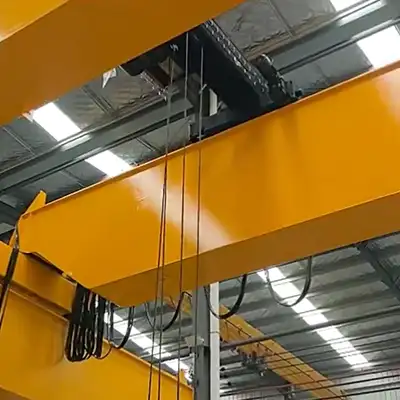
The overhead bridge crane system is the most common lifting solution in structured maintenance halls. It provides full-span coverage across the workshop and supports both light and heavy maintenance operations depending on configuration.
- Main lifting solution for full workshop coverage crane systems
- Suitable for centralized maintenance bays and long-span industrial workshops
- Provides stable and predictable load movement across fixed runways
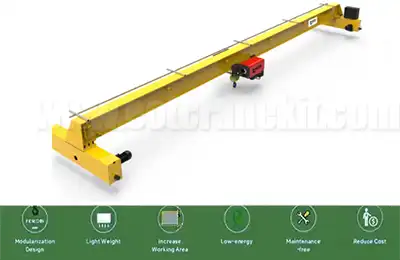
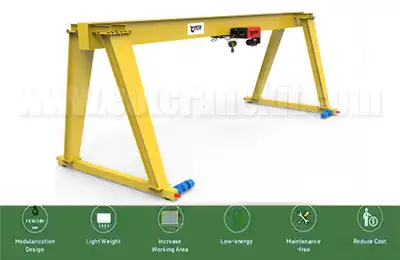
Single girder overhead crane (1–10 ton):
- Common in light to medium maintenance workshops
- Used for motors, pumps, small assemblies, and routine servicing tasks
- Lower self-weight and cost-effective design for general maintenance use
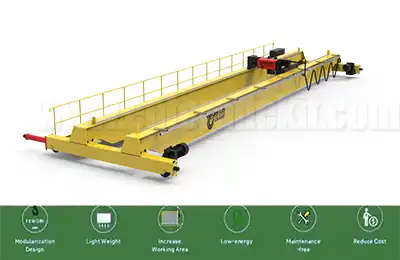
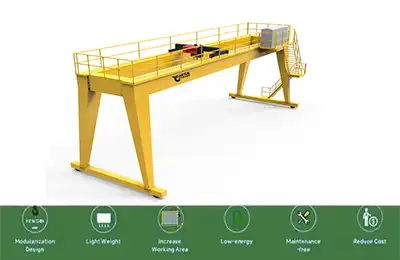
Double girder overhead crane (10–50 ton):
- Used for heavy maintenance operations in industrial plants
- Suitable for turbines, steel components, mining machinery, and large assemblies
- Higher lifting height and better structural stability for heavy-duty cycles
Practical note: Overhead bridge cranes are the standard choice for maintenance bay crane systems in fixed industrial buildings, especially where workflow is linear and fully covered lifting is required.
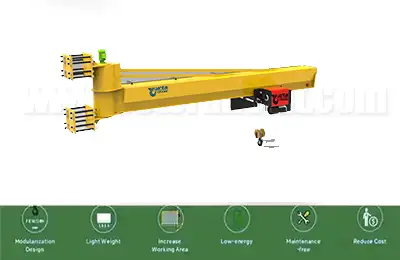
Semi Gantry Cranes (Flexible Maintenance Bay Solution)
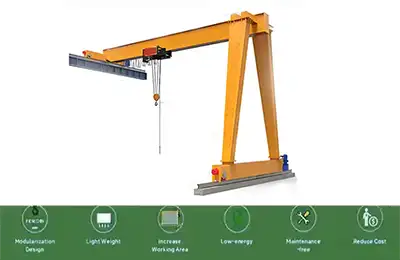
The semi gantry crane system combines overhead runway support with floor-mounted travel, making it suitable for workshops that cannot fully support overhead structures.
- Combination of overhead runway and floor-supported crane structure
- Designed for retrofit maintenance workshops and partial coverage crane layouts
- Works well in buildings with uneven structural support or limited column capacity
Key application areas:
- Maintenance bays where only one side of the building can support a runway beam
- Workshops requiring partial outdoor–indoor lifting operations
- Industrial repair zones with irregular layouts or expansion constraints
Practical note: Semi gantry cranes are often selected when installing a full double girder overhead crane system is not structurally or economically feasible.
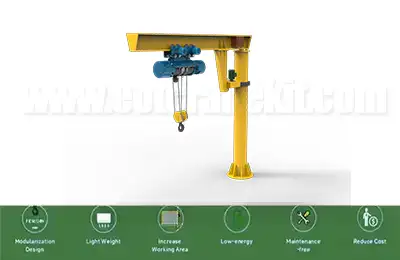
Jib Cranes (Workstation-Level Maintenance Lifting)
The jib crane system is used for localized lifting at specific maintenance stations. It does not cover the full workshop but provides efficient handling for repetitive or targeted operations.
- Localized lifting solution for workstation-based maintenance
- Ideal for repetitive lifting tasks in fixed positions
- Can be wall-mounted or pillar-mounted depending on workshop design
Typical applications:
- Component disassembly and reassembly stations
- Motor or pump servicing workbenches
- Auxiliary lifting in support of main overhead crane systems
Practical note: Jib cranes are often used as a secondary crane system in maintenance workshops, reducing load demand on the main bridge crane.
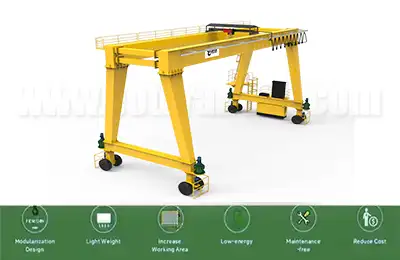
Portable Gantry Cranes (Flexible Mobile Maintenance Solution)
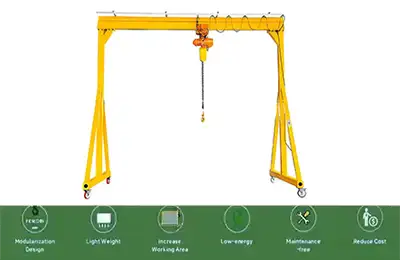
The portable gantry crane system provides mobility and flexibility for maintenance operations that do not require fixed infrastructure.
- Mobile lifting solution for flexible maintenance zones
- Common capacity range: 1–10 ton portable gantry crane systems
- Suitable for temporary lifting or multi-location maintenance work
Key applications:
- Temporary repair zones or mobile maintenance teams
- Outdoor or semi-open workshop areas
- Supplementary lifting where overhead crane coverage is not available
Practical note: Portable gantry cranes are often used as a support system in maintenance workshops, especially when equipment needs to be moved between different service zones.
Summary Insight
In practical maintenance bay crane selection (1–50 ton workshop lifting systems), each crane type serves a specific role:
- Overhead bridge cranes: main production and maintenance backbone
- Semi gantry cranes: flexible structural alternative for retrofit or partial coverage
- Jib cranes: localized workstation efficiency
- Portable gantry cranes: mobile and temporary lifting support
Together, they form a complete industrial maintenance material handling system, ensuring that different equipment types and load conditions can be handled safely, accurately, and efficiently across the workshop.
FAQ: Crane Types for 1–50 Ton Maintenance Workshops
Q1: Which crane is best for covering an entire maintenance workshop?
A: Use overhead bridge cranes for full-span coverage and predictable load handling.
- Single girder cranes (1–10 ton) are cost-effective for motors, pumps, and light assembly maintenance.
- Double girder cranes (10–50 ton) handle heavy turbines, steel components, and mining machinery.
- Ideal for linear workflows and fully structured industrial maintenance halls.
- Provides stable and controlled lifting, reducing risks during repetitive or heavy lifts.
Q2: When should I consider a semi gantry crane in a maintenance bay?
A: Choose semi gantry cranes when the workshop cannot fully support overhead runway beams.
- Combines floor-supported travel with partial overhead runway.
- Perfect for retrofit workshops, partial coverage zones, or buildings with uneven structural support.
- Commonly used in industrial repair zones and maintenance bays with one-side support only.
- Offers flexibility where double girder overhead cranes are structurally or economically infeasible.
Q3: Are jib cranes useful in maintenance workshops?
A: Yes, jib cranes provide localized lifting at specific workstations.
- Wall-mounted or pillar-mounted for component disassembly, motor or pump servicing, and repetitive tasks.
- Reduces load demand on main overhead bridge cranes.
- Ideal for workstation-level lifting where full-span cranes are unnecessary.
- Often used as a secondary lifting system to improve workflow efficiency.
Q4: When is a portable gantry crane appropriate in a maintenance bay?
A: Use portable gantry cranes for mobile and temporary lifting operations.
- Common for 1–10 ton loads in temporary repair zones or semi-open workshops.
- Supports mobile maintenance teams needing flexible lifting solutions.
- Complements fixed cranes by providing additional lifting points across multiple locations.
- Particularly useful in workshops without full overhead crane coverage.
Q5: Can multiple crane types be combined in one workshop?
A: Yes, combining overhead bridge, semi gantry, jib, and portable gantry cranes ensures full coverage.
- Overhead bridge cranes handle main lifting tasks and heavy machinery.
- Semi gantry cranes cover retrofit or partially supported zones.
- Jib cranes manage localized repetitive lifts at workstations.
- Portable gantry cranes provide temporary or flexible lifting support.
- Together, they create a complete industrial maintenance material handling system.
Q6: How do I choose the right crane type for a mixed maintenance workshop (1–50 ton)?
A: Base selection on load capacity, workshop layout, and equipment type.
- Light equipment like motors and pumps: single girder or portable gantry cranes.
- Medium equipment like gearboxes and hydraulic systems: semi gantry or small double girder cranes.
- Heavy equipment like turbines, steel mill parts, or mining machinery: double girder overhead cranes.
- Consider future workflow flexibility, retrofit constraints, and space availability when planning crane systems.
Q7: What's the main benefit of using multiple crane systems in maintenance bays?
A: Increases lifting coverage, operational flexibility, and safety.
- Ensures heavy, medium, and light loads are handled efficiently.
- Improves workshop productivity by reducing crane downtime and workflow bottlenecks.
- Supports precision lifting for delicate equipment and heavy lifting for large components simultaneously.
- Optimizes industrial material handling for maintenance workshops of all sizes.
Precision vs Heavy Lifting Balance in Maintenance Operations
| Requirement | Maintenance Tasks / Examples | Crane Solutions | Practical Insight |
|---|---|---|---|
| High Precision | • Turbine alignment in power plants or industrial facilities • Engine installation in service bays or vehicle maintenance workshops • Gearbox fitting for motors, transmissions, or industrial drive systems • Shaft alignment during overhauls | • Variable frequency drive (VFD) hoist control for smooth, adjustable speed • Anti-sway systems to minimize load movement • Remote control operation for precise positioning • Single girder overhead cranes or semi gantry cranes for smaller precision loads (1–10 ton) | Precision lifting focuses on controlled motion, anti-sway, and accurate travel rather than raw capacity. Even heavy loads can benefit from fine adjustment for delicate components. |
| Heavy Lifting | • Mining equipment dismantling (drills, crushers, conveyors) • Steel mill component replacement (press blocks, slabs, large castings) • Large structural assemblies (crane booms, machine frames, turbines) | • Double girder overhead cranes for 10–50 ton high-capacity lifting • Spreader beams or multi-point lifting tools for irregular loads • Multi-speed hoist control for controlled acceleration/deceleration • Semi gantry cranes or modular gantry cranes for flexible workshop coverage | Heavy lifting emphasizes capacity, stability, and structural integrity. Final positioning may require secondary tools or manual adjustment. |
| Engineering Solutions for Balanced Performance | • Variable frequency drive (VFD) control: Smooth start/stop and adjustable speed for both light and heavy loads • Anti-sway devices: Minimize swinging for delicate components • Multi-speed hoist control: High-speed rough moves, low-speed precision tasks • Spreader beams & multi-point lifting tools: Distribute load, stabilize irregular shapes, increase safety • Best practice: Combine precision single girder cranes for light lifts and double girder / semi gantry cranes for heavy, bulky loads; supplement with portable gantry cranes for flexibility | ||
FAQ: Precision vs Heavy Lifting Balance – Buyer & Workshop Focused
Q1: What crane should I get if I need to lift engines but also move heavy steel parts?
A: You usually need a combination of single girder cranes for precision lifts and double girder cranes for heavy loads.
- Single girder overhead cranes (1–10 ton) work for engine installation, gearbox fitting, turbine alignment.
- Double girder overhead cranes (10–50 ton) handle steel mill components, mining equipment, and large assemblies.
- A semi gantry crane or portable gantry crane can cover tricky or retrofit areas.
Q2: How do I stop delicate machinery from swinging while lifting?
A: Use cranes with anti-sway systems and VFD-controlled hoists.
- Anti-sway hoists stabilize engines, turbines, or gearboxes during positioning.
- VFD hoists give smooth, adjustable speed for millimeter-level alignment.
- Remote control operation allows operators to make precise adjustments safely.
Q3: Can one crane do both light precision lifts and heavy lifting?
A: Yes, if it has multi-speed hoists and load stabilization.
- Fast mode handles rough lifts for press blocks, machine frames, and steel components.
- Slow mode allows fine alignment for gearboxes, engines, and turbines.
- Many workshops pair single girder cranes for precision and double girder cranes for heavy loads for full coverage.
Q4: How do I pick the right crane capacity for my workshop?
A: Look at the heaviest load you handle, then choose a crane with 20–30% extra capacity.
- Light maintenance: 1–3 ton (motors, pumps)
- Medium: 5–10 ton (gearboxes, hydraulic systems)
- Heavy: 10–50 ton (turbines, steel mill parts, mining machinery)
- Safety margins prevent overload and ensure reliable industrial lifting.
Q5: How do I lift awkward or bulky equipment safely?
A: Use spreader beams, multi-point lifting slings, and reinforced cranes.
- Stabilizes large assemblies, crane booms, or press blocks.
- Works best with double girder cranes or modular gantry cranes.
- Reduces swinging and prevents damage during heavy lifting.
Q6: What cranes are best for workshops with low ceilings or partial support?
A: Semi gantry cranes or portable gantries work best in retrofit areas.
- Semi gantries combine runway and floor support for uneven workshops.
- Portable gantries provide temporary lifts for multi-bay or mobile maintenance.
- These can complement overhead bridge cranes in the main workshop.
Q7: Can I save money and still handle both precision and heavy lifting?
A: Yes, by combining precision single girder cranes and double girder cranes, possibly adding portable gantries.
- Precision tasks: use single girder or semi gantry cranes with anti-sway and fine control.
- Heavy tasks: use double girder cranes with multi-point lifting.
- Flexible planning avoids buying multiple high-capacity cranes unnecessarily.
Q8: What mistakes do most buyers make when planning maintenance cranes?
A: Not checking workshop limits or overestimating crane capability.
- Ignoring ceiling height, runway span, or column spacing reduces efficiency.
- Underestimating heavy load needs can cause safety issues.
- Skipping VFD hoists or anti-sway systems leads to poor precision lifts.
Workshop Layout and Structural Constraints
In maintenance workshop crane planning, the workshop geometry and structure directly determine which crane type can be installed, how it operates, and how efficiently it handles loads. Poor layout can reduce lifting height, limit coverage, or create unsafe operation zones.
| Factor | Practical Impact on Crane Selection | Typical Crane Solution / Notes | Keywords & Long-tail Terms |
|---|---|---|---|
| Ceiling Height | Determines maximum hook travel and lifting efficiency | Low ceiling → • low-headroom overhead crane • semi gantry crane High ceiling → • double girder bridge crane | maintenance bay crane low-headroom bridge crane workshop overhead crane height |
| Span (Distance Between Runway Beams) | Defines coverage across maintenance bays | Short span → • single girder overhead crane Long span → • double girder bridge crane for stability | long-span workshop crane overhead crane coverage industrial maintenance crane |
| Column Spacing | Influences crane runway design and travel path | Wide spacing → • gantry crane or reinforced bridge crane Narrow spacing → • conventional single girder cranes | semi gantry crane bridge crane runway maintenance workshop crane layout |
| Floor Load Capacity | Determines suitability for floor-supported gantry systems | High floor load → • semi gantry or portable gantry cranes for heavy loads Low floor → • prefer overhead bridge cranes | heavy-duty gantry crane floor-supported crane system portable maintenance crane |
| Obstructions (pipes, ducts, equipment) | Affects hook travel, safety, and crane operation | Plan interference-free paths Adjust gantry crane tracks or bridge crane runways | crane travel path obstruction-free overhead crane maintenance workshop layout |
Practical Tips for Workshop Layout
- Always measure usable ceiling height before selecting crane type.
- Match crane span to bay width to avoid under-coverage or over-specifying capacity.
- Check column spacing and structural support — critical for heavy-duty semi gantry or double girder cranes.
- Consider floor loading limits if planning semi gantry or portable gantry crane installations.
- Map all obstructions (pipes, ducts, equipment) to prevent hook interference and maximize efficiency.
Key Takeaway: A well-planned workshop layout ensures that maintenance bay cranes—from single girder 1-ton systems to 50-ton double girder bridge cranes—operate efficiently, safely, and cover the entire maintenance workflow without interference.
Practical Tips for Workshop Layout
- Always measure usable ceiling height before selecting crane type.
- Match crane span to bay width to avoid under-coverage or over-specifying capacity.
- Check column spacing and structural support—critical for heavy-duty semi gantry or double girder cranes.
- Consider floor loading limits if planning semi gantry or portable gantry crane installations.
- Map all obstructions (pipes, ducts, equipment) to prevent hook interference and maximize efficiency.
A well-planned workshop layout ensures that maintenance bay cranes—from single girder 1-ton systems to 50-ton double girder bridge cranes—operate efficiently, safely, and cover the entire maintenance workflow without interference.
FAQ: Workshop Layout and Structural Constraints for Maintenance Cranes (Buyer-Oriented Version)
Q1: My workshop has low ceiling height — what type of crane should I use?
A: If your workshop has limited ceiling height, you typically need a low-headroom overhead crane or semi gantry crane to maximize lifting space.
- Low clearance workshops often cannot use standard crane systems efficiently.
- A low-headroom bridge crane system helps recover lost lifting height in tight maintenance bays.
- For retrofit or uneven buildings, a semi gantry crane for maintenance workshop is often the more practical solution.
Q2: How do I know what crane span I need for my workshop?
A: The crane span depends on how wide your maintenance bay is and how much coverage you want across the working area.
- A smaller workshop usually works with a single girder overhead crane for light maintenance (1–10 ton).
- Wider bays or heavy equipment areas require a double girder bridge crane system (10–50 ton) for stable full-span coverage.
- Proper span selection ensures smooth industrial maintenance material handling without blind zones.
Q3: My workshop columns are uneven or widely spaced — will that affect crane installation?
A: Yes, column spacing directly affects whether you can install a standard bridge crane or need a semi gantry solution.
- Wide or irregular column spacing often requires a semi gantry crane system or customized runway design.
- Standard layouts usually support single girder overhead cranes in structured workshop buildings.
- Poor column planning can reduce safe travel zones and limit maintenance bay crane efficiency.
Q4: My workshop floor is not very strong — can I still install a gantry crane?
A: If the floor load capacity is limited, you should avoid heavy floor-supported systems and use overhead crane solutions instead.
- Semi gantry cranes and portable gantry cranes require sufficient floor strength for safe operation.
- If the floor cannot handle heavy loads, a bridge crane system that transfers load to building structure is safer.
- This is especially important for heavy maintenance lifting (10–50 ton industrial equipment).
Q5: There are pipes, ducts, and cables in my workshop — will that affect crane operation?
A: Yes, overhead obstructions can reduce hook height and block crane travel paths.
- Proper planning of crane runway systems and hook travel clearance is required.
- In many maintenance workshops, obstruction mapping is done before selecting overhead bridge crane or semi gantry crane layouts.
- A well-designed layout ensures obstruction-free maintenance crane operation and safe lifting movement.
Q6: Can I use different types of cranes in the same workshop?
A: Yes, most maintenance workshops combine multiple crane types depending on tasks and load size.
- Overhead bridge cranes handle main heavy lifting across the workshop.
- Semi gantry cranes are used for retrofit areas or partial coverage zones.
- Jib cranes support workstation-level repetitive lifting tasks.
- Portable gantry cranes provide flexible lifting for temporary or mobile maintenance jobs.
This combination improves overall workshop material handling efficiency and flexibility.
Q7: What matters most when planning a maintenance workshop crane layout?
A: The most important factor is balancing workshop structure with real lifting needs like load type, precision, and coverage.
- Key layout factors include ceiling height, crane span, column spacing, floor load capacity, and obstruction layout planning.
- A properly designed system ensures smooth operation from 1-ton single girder cranes to 50-ton double girder overhead cranes.
- Good planning supports both precision maintenance tasks (turbines, gearboxes) and heavy lifting operations (steel, mining equipment).
Q8: What is the most common mistake buyers make when designing a workshop crane system?
A: Most buyers focus only on lifting capacity and ignore workshop structure limitations.
- Ignoring ceiling height or runway constraints often reduces usable lifting height.
- Not considering maintenance workflow and crane coverage zones leads to inefficiency.
- A proper design should always combine structure evaluation + load analysis + maintenance operation requirements.
Safety and Operational Requirements
In maintenance workshop crane systems (1–50 ton capacity range), safety is not optional. It directly affects how reliably a bridge crane, semi gantry crane, or portable gantry crane operates under real industrial working conditions.
Maintenance environments are often complex—loads are irregular, space is shared with technicians, and lifting tasks involve both precision alignment and heavy-duty handling. Because of this, every industrial maintenance crane system must integrate full safety and control functions to ensure stable, controlled, and safe operation.
| Safety Feature | Description | Practical Notes |
|---|---|---|
| Overload Protection Systems | Prevents the crane from lifting beyond its rated capacity Protects crane and load from structural failure | Essential for all 1–50 ton overhead cranes Applies to single/double girder cranes and semi gantry systems |
| Emergency Stop Functions | Instantly halts crane movement Stops operation in unsafe conditions | Critical where personnel work near lifting zones Used in busy maintenance bays |
| Limit Switches | Automatically restricts crane travel Prevents overrun and collisions | Important for bridge cranes and gantry cranes Ensures safe travel in tight workshops |
| Anti-Sway Load Control | Reduces swinging of loads during lifting and travel Improves positioning accuracy | Essential for precision maintenance: engines, turbines, gearboxes Supports smooth industrial material handling |
| Operator Visibility & Remote Control | Enhances control and safety Allows operation from a safe distance | Ideal for congested workshops or frequent manual rigging Supports both light and heavy lifting operations |
Workshop Safety Considerations:
- Irregular load shapes (crane booms, press blocks, turbines) require anti-sway and stable lifting
- Personnel near lifting zones benefit from remote control and clear travel paths
- Frequent manual rigging (slings, shackles, spreader beams) must be paired with overload protection and limit switches
Practical Insight:
For any maintenance crane selection, safety systems are essential.
Single girder cranes handle light precision lifts, double girder cranes manage heavy components, and semi gantry cranes provide flexibility.
Integrated safety ensures efficient and safe operation in all industrial maintenance workshops.
FAQ: Safety and Operational Requirements for Maintenance Cranes
Q1: How do I prevent my crane from lifting too much weight?
A: Make sure your maintenance crane has a built-in overload protection system.
- Overload devices automatically stop lifting if the load exceeds capacity.
- Prevents damage to hoists, bridge cranes, and structural components.
- Especially important when handling irregular loads like press blocks, engines, or mining equipment.
Q2: What safety features should I look for in a maintenance crane?
A: Look for emergency stop functions, limit switches, anti-sway control, and operator visibility options.
- Limit switches stop the crane at safe travel points.
- Anti-sway systems stabilize irregular or bulky components during lifting.
- Operator visibility and remote control operation reduce accidents in crowded workshops.
- These features are critical for industrial maintenance crane systems (1–50 ton).
Q3: How can I make crane operation safer around workers?
A: Use remote controls, clear travel paths, and defined lifting zones.
- Remote operation allows precise positioning without personnel under the load.
- Keep workshop walkways and lifting zones clearly marked.
- Combine with anti-sway hoists and emergency stop buttons for maximum protection.
Q4: Do I need special safety considerations for irregular or awkward loads?
A: Yes, irregular shapes require anti-sway control and spreader beam usage.
- Irregular loads like gearboxes, turbine housings, or structural assemblies can shift unexpectedly.
- Use multi-point lifting slings or spreader beams to balance weight.
- Anti-sway devices reduce swinging, improving safety and precise positioning.
Q5: Are there operational features that make frequent maintenance lifts safer?
A: Yes, look for multi-speed hoists, anti-sway systems, and ergonomic operator controls.
- Multi-speed hoists allow slow precision moves or fast rough lifts.
- Anti-sway reduces load swing during repeated lifting cycles.
- Ergonomic controls and remote operation reduce fatigue and human error.
Q6: What mistakes do buyers make regarding maintenance crane safety?
A: Ignoring workshop workflow and overloading risks is the most common mistake.
- Installing a crane without emergency stops, anti-sway, or overload devices increases accidents.
- Failing to consider personnel working near lifting zones compromises safety.
- Proper planning ensures 1–50 ton maintenance cranes operate safely for both precision and heavy-duty tasks.
Installation and Retrofit Considerations
In maintenance workshop crane systems (1–50 ton capacity), installation conditions often decide the final crane type more than the load itself.
New buildings allow optimized design for overhead bridge cranes, while existing workshops often require flexible solutions like semi gantry cranes or modular crane systems.
Proper planning ensures safe integration, future expandability, and efficient industrial material handling in maintenance bays.
| Installation Scenario | Key Consideration | Recommended Solution |
|---|---|---|
| New Workshop Installations | Designed from the ground up Allows optimized crane runway layout Full structural integration possible | Best suited for overhead bridge crane systems Enables efficient single girder (1–10 ton) and double girder (10–50 ton) configurations Ideal for high-efficiency maintenance bay crane planning |
| Existing Workshop Retrofit | Limited structural modification allowed Column positions and ceiling height already fixed Installation must adapt to existing layout | Preferred use of semi gantry crane systems Or modular overhead crane systems for flexible adaptation Common in maintenance workshop retrofit crane solutions |
| Heavy Duty Systems (20–50 ton) | High structural load requirements Strong runway beam and building support needed Higher deflection control required | May require structural reinforcement of runway beams Typically uses double girder bridge cranes Essential for steel mill and heavy equipment maintenance workshops |
| Low-Headroom Workshops | Limited vertical space Reduced hook height available Clearance constraints from roof structures | Use low-headroom overhead cranes Improves usable lifting height in constrained maintenance bays Common in compact industrial maintenance workshops |
| Future Expansion Requirements | Workshop may increase capacity in future Need flexibility for higher tonnage upgrades Avoid full system replacement later | Use modular crane systems with expandable runway design Allows future upgrade from single girder to double girder cranes Suitable for long-term industrial crane investment planning |
Practical Insight:
In real maintenance workshop crane installation projects, retrofit conditions often matter more than theoretical load capacity.
Choosing between overhead bridge cranes, semi gantry cranes, and modular systems depends on structure, space limitations, and future expansion needs.
A well-planned installation ensures stable operation across all 1–50 ton industrial maintenance lifting applications.
FAQ: Installation and Retrofit Considerations for Maintenance Cranes
Q1: Should I use an overhead bridge crane or a semi gantry crane in a new maintenance workshop?
A: In a new building, an overhead bridge crane is usually the best choice because you can optimize the runway layout and lifting height.
- New workshops allow full structural integration, so single girder cranes (1–10 ton) or double girder cranes (10–50 ton) can be installed efficiently.
- Maximizes lifting efficiency and hook travel across maintenance bays.
- Ideal for industrial maintenance crane systems in high-efficiency repair or assembly environments.
Q2: My workshop is old with fixed columns and low ceiling—what crane works best?
A: A semi gantry crane or modular overhead crane system is preferred for retrofit workshops.
- Semi gantries adapt to existing column positions and ceiling height.
- Modular systems provide flexibility for unusual layouts or partial coverage zones.
- Ensures safe integration without major structural modifications.
Q3: Do heavy-duty systems need special installation considerations?
A: Yes, 20–50 ton cranes require reinforced runway beams and structural support.
- Heavy lifting tasks like steel mill components or mining equipment maintenance demand strong building support.
- Double girder bridge cranes are typical for heavy-duty installations.
- Runway reinforcement and deflection control are critical for stability and safety.
Q4: How can I handle low-headroom workshops with limited vertical space?
A: Use low-headroom overhead cranes designed for compact workshops.
- Reduced hook height improves usable lifting capacity without hitting roof structures.
- Suitable for maintenance bays with tight clearances, like vehicle workshops or small industrial repair areas.
- Allows safe operation of 1–10 ton single girder cranes in restricted vertical space.
Q5: I want to expand my workshop in the future—what crane system should I pick?
A: Consider modular crane systems with expandable runways.
- Allows future upgrade from single girder to double girder cranes.
- Supports increasing load capacities without full system replacement.
- Ideal for long-term industrial maintenance investments where flexibility and future-proofing matter.
Q6: What's the biggest mistake buyers make when installing cranes in maintenance workshops?
A: Ignoring retrofit or structural constraints and focusing only on lifting capacity.
- Many buyers select cranes purely on load rating without checking ceiling height, column spacing, or floor load.
- Poor planning can limit crane travel, reduce hook height, or require costly rework.
- Choosing the right system—overhead bridge, semi gantry, or modular cranes—based on structure and space ensures safe, reliable operation for all 1–50 ton industrial maintenance tasks.
Selection Checklist for Buyers
Selecting the right maintenance crane system (1–50 ton) requires careful evaluation of both load handling needs and workshop conditions.
This checklist helps buyers ensure they choose a crane that meets operational demands, safety standards, and future expansion goals in industrial maintenance workshops.
| Checklist Item | Key Consideration | Buyer Tip / Practical Note |
|---|---|---|
| Maximum & Average Load Weights | Determine the heaviest components to be lifted and typical daily loads | Helps select between single girder cranes (1–10 ton) or double girder / heavy-duty cranes (10–50 ton) |
| Workshop Dimensions & Clearance | Ceiling height, column spacing, span, and travel path length | Ensures cranes fit the available workshop space and operate without obstruction |
| Maintenance Workflow Zones | Identify critical lifting points and movement paths | Supports efficient layout using overhead bridge cranes, semi gantry, or jib cranes |
| Lifting Frequency / Duty Class | Intermittent vs. frequent lifts, duty classification (M3–M4) | Guides selection of hoists, VFD controls, and anti-sway systems for durability and precision |
| Structural Support Capacity | Floor strength, runway beams, and building structure | Critical for semi gantry and modular crane systems in heavy maintenance areas |
| Power Supply & Control System | Voltage availability, three-phase supply, and remote control options | Ensures smooth operation and compatibility with industrial maintenance crane systems |
| Future Expansion Requirements | Possibility to increase capacity or add additional lifting zones | Consider modular crane systems or upgradeable runway layouts to avoid costly replacements |
Before requesting a quote, confirm all 1–50 ton maintenance crane requirements including load, clearance, workflow, and future expansion.
Proper selection ensures safe, efficient, and adaptable industrial material handling in maintenance workshops.
FAQ: Selection Checklist for Buyers – Maintenance Workshop Cranes (1–50 Ton)
Q1: How do I know what crane capacity I really need?
A: Look at the heaviest components you lift and the typical daily loads in your maintenance workshop.
- Single girder cranes (1–10 ton) are best for motors, pumps, and light machinery.
- Double girder or heavy-duty cranes (10–50 ton) handle turbines, steel mill components, and mining equipment.
- Always include a safety margin of 20–30% above your maximum load.
Q2: How important is workshop size and clearance for crane selection?
A: Extremely important—ceiling height, column spacing, span, and travel paths determine which cranes will fit and operate safely.
- Low ceilings may require low-headroom overhead cranes or semi gantry cranes.
- Wide bays often need double girder bridge cranes for full coverage.
- Proper planning prevents collisions and maximizes hook travel efficiency.
Q3: How do I plan crane placement for workflow efficiency?
A: Map out critical lifting points and movement paths in your workshop.
- Helps decide whether to use overhead bridge cranes, semi gantry cranes, or jib cranes at specific zones.
- Ensures materials move safely and efficiently between maintenance bays, assembly areas, and storage.
Q4: How often will the crane be used, and how does that affect selection?
A: Consider lifting frequency and duty class when choosing hoists and controls.
- Intermittent lifts suit M3–M4 duty class cranes for most maintenance tasks.
- Frequent, repetitive lifts may require VFD-controlled hoists, anti-sway systems, and higher-duty cranes.
- Proper duty selection ensures long-term durability and consistent precision material handling.
Q5: Does the workshop structure affect what crane I can install?
A: Yes, floor strength, runway beams, and column positions are critical, especially for semi gantry or modular cranes.
- Weak floors limit the use of heavy floor-supported cranes.
- Reinforced runways or modular systems may be required for 20–50 ton industrial maintenance cranes.
- Ensures safe lifting of heavy and irregular components.
Q6: What power supply and controls should I plan for?
A: Confirm voltage availability, three-phase supply, and remote control options before buying.
- Compatible industrial maintenance crane systems operate smoothly with the available power.
- Remote controls improve operator safety and precision lifting.
- Some cranes may require VFD hoists or adjustable speed controls for sensitive equipment.
Q7: How can I prepare for future expansion without replacing my cranes?
A: Use modular crane systems or upgradeable runway layouts.
- Allows you to add lifting zones or upgrade from single girder to double girder cranes.
- Prevents costly full-system replacements as maintenance needs grow.
- Ideal for long-term planning in industrial maintenance workshops.
Q8: What's the key tip before requesting a quote from a crane supplier?
A: Confirm all your maintenance crane requirements, including load, clearance, workflow, and future expansion plans.
- A detailed checklist ensures safe, efficient, and adaptable operation.
- Proper selection covers 1–50 ton cranes, workshop layout, duty cycle, and future-proofing.
- Helps suppliers recommend the right crane system for your specific industrial maintenance needs.
Conclusion: Designing Efficient 1–50 Ton Maintenance Crane Systems
Selecting a maintenance workshop crane isn’t just about choosing the heaviest load it can lift. In real industrial projects, the right system balances load type, precision requirements, duty class, and workshop constraints.
A well-planned crane system ensures that operators can move equipment safely, efficiently, and with minimal downtime. For example, single girder cranes (1–10 ton) handle light maintenance tasks like motors and pumps, while double girder overhead cranes (10–50 ton) cover heavy-duty operations such as turbines, steel mill components, and mining machinery. Semi gantry cranes or modular systems provide flexibility for retrofit workshops or future expansion, ensuring that the facility adapts as operational needs grow.
Key Benefits of a Properly Designed Maintenance Crane System:
- Safer maintenance operations: Integrated features like anti-sway hoists, limit switches, and emergency stops protect both personnel and equipment.
- Reduced equipment downtime: Accurate, smooth lifting with VFD-controlled hoists and precision positioning reduces the risk of damage during installation or removal.
- Higher workshop efficiency: Optimized crane layouts and workflow-aligned lifting zones allow quick, unobstructed access to critical maintenance points.
- Long-term operational flexibility: Modular designs, expandable runways, and mixed crane types (overhead, semi gantry, jib, portable gantry) support future capacity upgrades without a full system replacement.
In short, industrial maintenance crane planning for 1–50 ton loads is a balance between precision, lifting capacity, and workshop integration. A carefully chosen combination of crane type, control systems, and installation design ensures that your maintenance bays are safe, productive, and future-ready.

Yuantai Cranes
Overhead Crane Manufacturer with CE, ISO, SGS, CNEX Certificates.
- Main Specifications - Capacity: 0.5–550 tons | Span: up to 40m | Speed: 0.8–12 m/min | Duty: A3–A7 | Power: 380–690V, 50/60Hz | Control: pendant/remote/cabin
- Full engineering: FEA/PLC/VFD + in-house build + global delivery + on-site support, for workshops, factories, EPC contractors, industrial projects, etc.
- Support: design, manufacturing, testing, service – end-to-end, customized lifting solutions worldwide.
How to Get an Accurate Crane Price for Your Application?
Tips: Copy the spec list, fill in your details, and paste it into the form on the right/ down-below for a quick price.
- Crane type:_____ . (e.g., overhead crane, gantry crane, jib crane)
- Max weight to lift:_____ tons. (e.g., 2t, 5t, 10t, 20t, 50t)
- Lifting height:_____ m. (How high does the hook need to reach?
- Workshop width (span):_____ m . (Distance between the two crane rails)
- Travel distance:_____ m . (How long does the crane need to move along the runway?)
- Control type:_____. (Pendant / remote / cabin Control)
- Power supply:_____. (Local voltage & frequency – e.g., 380V, 50Hz, 3-phase)
- What will it be used for?_____ (e.g., steel fabrication, concrete products, mold handling, general manufacturing, etc.)
- Any special requirements?_____ (e.g., extreme temperature, dusty or explosive environment, special paint color, etc.)
Just leave a message via the contact form and our hoist and crane engineer will contact you with in 24working hours.
Get Your Custom Quote–Quick & Easy
Fill in what you know. Skip what you don't – we'll help.Any question will be reply with 24 working hours