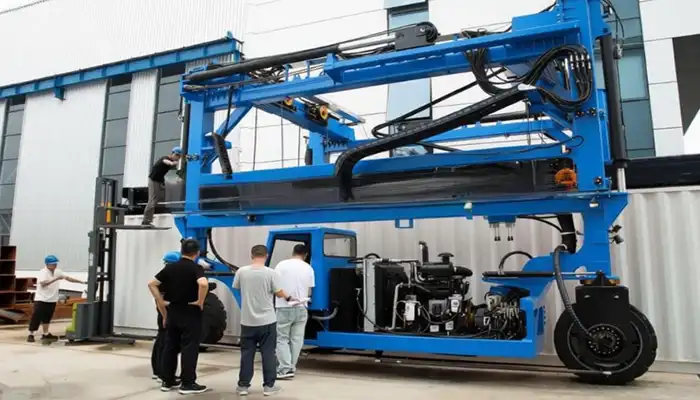
Straddle Carrier Specifications & Stacking Capacity Guide for Buyers
Content Quick Link
Most Important Takeaway
Selecting the right straddle carrier ensures maximum yard efficiency, safe container stacking, and optimal ROI, reducing operational risks and downtime.
- Understand maximum load capacity and its impact on operational safety.
- Evaluate stacking height and lane requirements to optimize yard layout.
- Check span and ground pressure for structural compatibility.
- Consider operational speed, maneuverability, and energy efficiency.
- Ask suppliers the right questions to match carrier specs to your container types.
Introduction
Why Straddle Carriers Matter
Straddle carriers are a key part of modern container yards and industrial operations. You’ll see them lifting and moving containers around ports, shuffling trucks, or handling large units in factory yards. Unlike forklifts, they don’t need rails, and unlike gantry cranes, they can navigate lanes while carrying full loads. This flexibility makes them indispensable in places where space, speed, and safety all matter.
The Importance of Straddle Carrier Technical Specifications
Choosing a straddle carrier isn’t just about picking a big machine. The numbers behind it—load capacity, stacking height, span, and ground pressure—can make or break your operation. Too small a capacity, and you risk overloading the carrier. Too high a stacking limit without proper support, and safety becomes an issue. Understanding these specs upfront helps prevent downtime, reduces maintenance costs, and keeps your containers and yard intact.
What This Guide Covers
In this guide, we’ll break down the key specifications that buyers need to consider:
- Maximum Load Capacity: How much weight the carrier can safely lift, with safety margins for heavy or stacked containers.
- Stacking Height: How many containers or units can be safely stacked, and what that means for lane width and yard layout.
- Span: The distance between the carrier’s front and rear wheels or legs, which affects maneuverability and turning radius.
- Ground Pressure: How weight is distributed on the yard surface, crucial for concrete, asphalt, or soil areas.
- Operational Parameters: Travel and lifting speed, power type, and safety features that impact efficiency.
Straddle Carrier Types & Applications
Choosing the right types of straddle carriers depends on workload, container type, stacking height, and yard conditions. Understanding the difference between standard and specialized carriers helps ensure safe, efficient, and long-term operation.
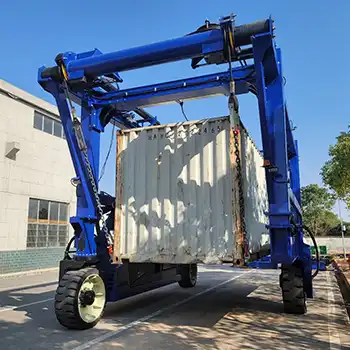
chain type container straddle carrier
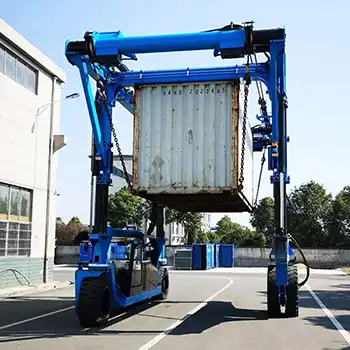
Telescopic Chain Container Straddle Carrier
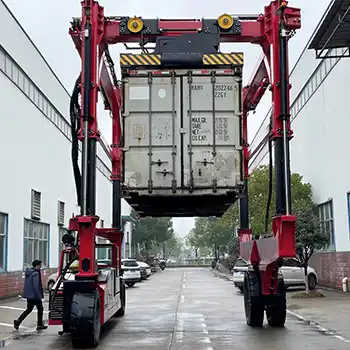
Telescopic Toplift Container Straddle Carrier
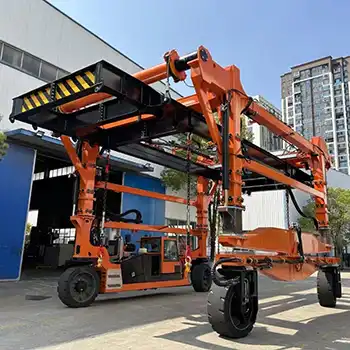
Multifunctional straddle carrier
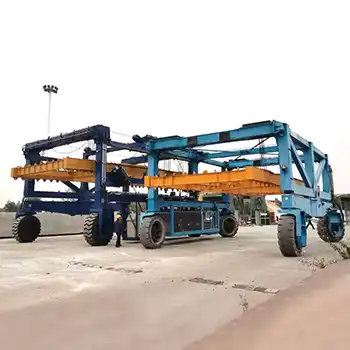
Multifunctional straddle carrier
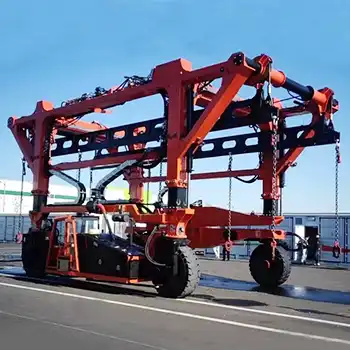
Multifunctional straddle carrier
Standard vs. Specialized Straddle Carriers
Not all straddle carriers are created equal. Standard carriers are the go-to choice for most industrial yards. They handle everyday container movements, medium loads, and general pallet handling without fuss. For operations where containers or modules fall within typical weight ranges, they get the job done reliably day in and day out.
Specialized carriers are a different story. These machines are built for specific tasks—think heavy port containers, oversized loads, or modular industrial units. Using a standard carrier for these heavy or irregular tasks isn't just inefficient—it can put unnecessary strain on the machine and create safety risks. Choosing the right type upfront saves headaches later.
Stacking Heights: 2–4 High
Stacking height is one of the most noticeable differences between carriers, and it directly affects yard design and workflow.
- 2–3-high carriers: These are common in smaller industrial yards or facilities with medium-weight modules. They're easier to maneuver, require narrower lanes, and put less pressure on the yard surface. Ideal for smaller plants or lower-volume operations.
- 4-high carriers: Found mostly in ports or high-throughput terminals. They maximize vertical space and can stack four containers high, but they need wider lanes, stronger surfaces, and precise handling systems to operate safely.
Choosing the correct stacking height isn't just about space—it affects every aspect of carrier operation, from maneuverability to safety.
Application-Specific Differences
Where you plan to use the carrier plays a big role in selecting the right model:
- Yard handling: Smaller yards often prefer compact 2–3-high carriers that can navigate tight lanes and make sharp turns without issue.
- Container terminals/ports: Heavy-duty carriers with 4-high stacking and wider spans are ideal for high-volume container handling, where efficiency and stability are key.
- Industrial load transport: Facilities moving modular units, machinery, or irregular loads need carriers with adaptable spans, moderate stacking height, and controlled ground pressure to protect the cargo and yard surface.
Impact on Performance
The carrier type you choose affects operational efficiency, safety, and yard layout:
- Stacking efficiency: Higher carriers let you stack more containers, but they require precise control and stronger yard support.
- Ground pressure: Heavy or high-stack carriers exert more pressure on the ground, so it's important to know your yard's bearing capacity.
- Maneuverability: Compact carriers can easily navigate narrow lanes, while long-span or high-stack carriers need extra space to operate safely.
Selecting the right carrier isn't just about lifting capacity. It's about finding the machine that fits your yard layout, container sizes, and operational workflow. The wrong choice can lead to bottlenecks, increased maintenance, or even damage to your yard surface.
Load Capacity Considerations
Understanding straddle carrier load capacity is essential for safe lifting, stable operation, and long-term cost control in real container handling environments.
What Maximum Load Really Means
When we look at a straddle carrier's maximum load, it's more than a number on a specification sheet. It tells you what weight the carrier can safely lift and transport without risk. Think of it like the foundation of your yard operations—if it's off, everything else can get messy.
For example, a carrier rated for 25 tons may handle a single container easily, but stacking or moving multiple containers at once could push it to the limit. That's why understanding maximum load is critical for both safety and efficiency.
Why Safety Margins Are Necessary
Even if your container weighs less than the rated capacity, it's smart to add a buffer. Operators usually add 10–20% as a safety margin to account for uneven loads, container shifts, or small weight miscalculations.
- Single container lifts: Always lift below rated capacity by 10–20%.
- Multiple or bundled lifts: Combine weights and include the safety buffer.
- Dynamic movements: Acceleration, braking, and turning can stress the carrier; factor that in.
Safety margins aren't just "extra caution"—they directly protect the carrier, the load, and the yard.
Matching Capacity to Your Operations
Maximum load isn't the only thing to consider. You also need to match the carrier to how you actually operate:
- Container weights: Heavier loads require carriers with higher rated capacities.
- Move frequency: Yards with many lifts per hour may need carriers slightly above the average container weight.
- Operating environment: Uneven ground, ramps, or outdoor weather conditions can reduce effective lifting capacity.
In short, think about the carrier's capacity in relation to real-life conditions, not just the heaviest container you have.
Impact on Operational Costs
Load capacity affects more than safety—it affects your operating cost. Running close to maximum capacity on a daily basis increases wear and energy consumption.
- Energy: Heavier loads consume more fuel or electricity.
- Wear and tear: Motors, brakes, and wheels deteriorate faster under repeated heavy loads.
- Maintenance: Overloaded carriers require more frequent inspections and repairs.
Pro Tip: Oversize your carrier slightly if your yard handles frequent heavy loads. It may cost more upfront, but it reduces downtime and keeps operations more stable over time.
35 Ton Straddle Carrier Cranes
40 Ton Straddle Carrier Cranes
<
50 Ton Straddle Carrier Cranes
60 Ton Straddle Carrier Cranes
80 Ton Straddle Carrier Cranes
Stacking Height & Yard Optimization
Stacking height plays a direct role in straddle carrier performance, yard layout design, and container handling safety. Choosing the right level helps balance space usage and operational stability.
Understanding Stacking Heights
Stacking height is a key factor when choosing a straddle carrier. It defines how many containers or units you can safely stack vertically in your yard. Most carriers are rated for 2-high, 3-high, or 4-high stacking:
- 2-high carriers: Common in smaller industrial yards. Easier to operate in tight spaces and reduce stress on the yard surface.
- 3-high carriers: Provide a balance between capacity and maneuverability. Often used in medium-sized yards with moderate throughput.
- 4-high carriers: Used in ports or high-volume terminals where maximizing vertical space is critical. Requires wider lanes and precise handling to maintain stability.
Choosing the right stacking height directly affects yard efficiency and safety. Going too high without proper infrastructure can lead to accidents or container damage.
Impact on Yard Layout
Stacking height isn't only about vertical capacity—it also shapes how your yard must be designed:
- Lane width: Higher stacks require wider lanes for safe turning and positioning.
- Turning radius: Long-span or high-stack carriers need more space to maneuver, especially under full load.
- Vertical clearance: Ensure sufficient overhead clearance for lifting operations, including lighting systems and structural beams.
Proper planning helps avoid bottlenecks and reduces collision risks with surrounding structures.
Optimizing Yard Layout for High-Stack Operations
If your operation requires 3-high or 4-high stacking, layout design becomes critical in daily performance:
- Separate loading and unloading zones from stacking areas to reduce congestion.
- Use clearly marked lanes with sufficient space for safe turning and alignment.
- Plan safety margins at row ends, ramps, and uneven ground areas.
- Consider guidance systems or sensors to support operators in high-stack environments.
A well-planned yard layout reduces delays, improves safety, and supports stable container flow throughout the day.
Tips for Mixed or Irregular Loads
Not all containers are the same size or weight. Mixed loads require more flexible handling strategies:
- Choose carriers with adjustable lifting systems or telescopic spreaders for different container types.
- Confirm maximum load limits for oversized or irregular units to maintain stability.
- For mixed stacking operations, design wider lanes to reduce collision risks during maneuvering.
Planning for mixed loads from the start helps avoid operational slowdowns and unexpected handling issues later.
Span & Ground Pressure Analysis
Understanding straddle carrier span and ground pressure is essential for safe yard operation, stable lifting, and long-term protection of your working surface.
What Carrier Span Means
Carrier span is the distance between the front and rear wheels or legs of a straddle carrier. It affects both stability and maneuverability. A wider span provides more stability when lifting heavy or stacked containers, but it also requires more lane width to operate safely.
- Narrow span carriers: Easier to maneuver in tight lanes, ideal for smaller industrial yards.
- Wide span carriers: Provide better stability for high stacks or heavy loads, often used in ports and high-throughput terminals.
- Practical consideration: Check the turning radius; wide-span carriers may need more space for safe turning and positioning.
Understanding span is critical because it directly impacts how carriers interact with your yard layout, especially in high-density stacking environments or when handling oversized containers.
Why Ground Pressure Matters
Ground pressure refers to the weight distributed by the carrier over the surface it operates on, usually measured in tons per square meter. It directly affects the long-term condition of asphalt, concrete, or soil surfaces.
- Asphalt surfaces: High ground pressure can cause cracking or rutting over time.
- Concrete surfaces: Heavy loads may chip or weaken slabs if pressure limits are exceeded.
- Soil or unpaved areas: Higher risk of sinking or uneven ground under heavy carriers.
Excessive ground pressure can reduce operational efficiency and lead to costly surface repairs. Understanding your yard's load-bearing capacity is essential before selecting a carrier.
Ensuring Yard Structural Integrity
Before purchasing a straddle carrier, the structural condition of your yard should be evaluated carefully:
- Surface bearing capacity: Confirm whether asphalt, concrete, or soil can safely support maximum loaded operations.
- Subsurface conditions: Check for weak zones, drainage issues, or uneven compaction that may affect stability.
- Long-term wear: Repeated heavy loads can gradually degrade surfaces if ground pressure is not properly managed.
Ignoring structural integrity can lead to operational downtime, equipment damage, or unexpected repair costs.
Buyer Guidance: What to Check Before Purchase
To avoid operational issues later, buyers should confirm the following before selecting a carrier:
- Carrier span vs yard lanes: Ensure the equipment fits safely within existing lane widths and turning zones.
- Ground support limits: Verify that the yard surface can handle maximum load conditions without damage.
- Load distribution: Understand how weight shifts during lifting, turning, and stacking operations.
- Future upgrades: If expansion is expected, consider reinforcing ground conditions or widening lanes in advance.
Good planning here ensures stable operations and reduces long-term infrastructure costs.
Additional Technical Specifications
Beyond lifting capacity and stacking height, straddle carrier performance is also defined by speed, maneuverability, power system, and safety features that directly affect daily yard efficiency.
Operational Speeds and Productivity
How fast a straddle carrier moves—both loaded and unloaded—directly affects yard efficiency. A carrier that moves quickly when empty but slows significantly under load can create bottlenecks during peak operations.
- Loaded speed: Important for timing container transfers between trucks, stacking zones, or shipping areas.
- Unloaded speed: Impacts repositioning or returning to pick up the next container.
- Practical tip: When comparing models, check the difference between loaded and unloaded speeds. A smaller gap usually indicates smoother productivity in real operations.
Efficient speed balance reduces waiting time, keeps workflow steady, and helps limit unnecessary wear on braking and drive systems.
Maneuverability and Lane Adaptability
Maneuverability is critical in yards with narrow lanes or high-density stacking. The ability to turn safely, align with containers, and navigate obstacles directly impacts productivity and safety.
- Turning radius: Wide-span carriers require more space, while compact models perform better in tight industrial yards.
- Lane adaptability: Some carriers support wheel alignment adjustments or guidance systems for restricted spaces.
- Practical note: Always compare your yard layout with carrier turning and lane requirements before final selection.
Good maneuverability improves operator confidence and reduces the risk of collisions in busy container yards.
Power Systems
Straddle carriers use different power systems depending on yard conditions and operational goals:
- Diesel: Reliable for continuous heavy-duty operation, but with higher fuel use and emissions.
- Hybrid: Combines diesel and electric systems to reduce fuel consumption and improve efficiency.
- Electric: Lower emissions and operating costs, but requires charging infrastructure or power supply systems.
The right power choice depends on how your yard operates and how energy infrastructure is set up.
Safety Features
Modern straddle carriers include multiple safety systems designed to protect operators, containers, and yard infrastructure:
- Load sensors: Detect overloads or uneven weight distribution to prevent unsafe lifting.
- Anti-tilt systems: Maintain stability during stacking and operation on uneven surfaces.
- Automated stacking functions: Help operators align containers accurately and reduce handling errors.
These features reduce downtime, improve safety compliance, and support smoother day-to-day operations in container yards.
Practical Buyer Comparison Table
A structured comparison of straddle carrier specifications helps buyers match technical performance with real yard conditions, improving selection accuracy and long-term operational efficiency.
Straddle Carrier Specification Comparison
When it comes to choosing the right straddle carrier, a clear comparison of technical specifications helps you make precise decisions. The table below summarizes common models, their capacities, and recommended applications:
| Model | Max Load (t) | Max Stack Height | Span (m) | Ground Pressure (t/m²) | Notes |
|---|---|---|---|---|---|
| SC-10 | 10 | 2-high | 6 | 1.2 | Small industrial yards |
| SC-20 | 20 | 3-high | 7 | 1.5 | Medium container handling |
| SC-40H | 40 | 4-high | 9 | 2.0 | Port container operations |
How to Use This Table
The table is more than a quick reference—it's a practical tool to match your yard's operational needs with the right straddle carrier:
- Assess your container weight: Compare the maximum load column with your heaviest containers. Always include a 10–20% safety margin.
- Check stacking requirements: Determine whether your yard needs 2-high, 3-high, or 4-high stacking. Higher stacks require better stability and span design.
- Evaluate lane and space constraints: Use the span column to confirm the carrier fits your yard layout and turning requirements.
- Review ground support: Ground pressure indicates whether your yard surface (concrete, asphalt, or soil) can safely support operations.
- Match operational scale: Notes help identify whether a model fits small yards, medium facilities, or high-volume port environments.
Practical Tip: Use this table as a starting point for supplier discussions. Share your yard layout, container types, stacking requirements, and throughput needs to receive a more accurate and customized recommendation. This helps ensure the selected straddle carrier matches both current operations and future expansion plans.
Practical Buyer Considerations for Straddle Carrier Selection
Choosing a straddle carrier is not only about technical specifications. It is about how those specifications fit real yard operations, container flow, and long-term working conditions. A correct match improves safety, reduces downtime, and supports stable daily productivity.
Confirm Maximum Load Against Real Operations
Before purchasing, carefully compare the carrier's rated load with the heaviest containers or modules you will actually handle in daily work. In many yards, container weight is not always consistent, so a fixed number on paper does not tell the full story.
It is standard practice to include a 10–20% safety margin. This helps manage uneven loading, minor weight variations, and dynamic forces during lifting, braking, and turning.
Evaluate Yard Layout and Space Conditions
Yard design has a direct influence on how a container straddle carrier performs. Even a high-spec machine can become inefficient if the layout is not suitable.
- Lane width: Narrow lanes restrict movement, especially when handling 40 ft or 45 ft containers.
- Turning radius: Wider-span carriers need more space, so corner design must be planned carefully.
- Vertical clearance: Overhead structures such as lighting systems, gantry cranes, or roofing must be considered during high stacking operations.
In real operations, poor layout planning often creates more delays than machine limitations.
Check Ground Conditions and Structural Support
Ground condition is often overlooked, but it directly affects safety and long-term equipment performance. A carrier operating on weak or uneven ground will face higher wear and potential stability issues.
- Surface type: Concrete, asphalt, or compacted soil each have different load-bearing limits.
- Ground pressure: Ensure the carrier's pressure per square meter is within the safe range of your yard surface.
- Long-term wear: Repeated heavy-duty operation can gradually damage weak surfaces if not properly evaluated.
Verify Maintenance and Supplier Support
A straddle carrier crane is a long-term investment, so maintenance support is as important as initial performance.
- Check spare parts availability and delivery time from the supplier.
- Confirm routine maintenance requirements and expected service intervals.
- Understand technical support response time for breakdowns or system faults.
Reliable after-sales support reduces downtime and helps maintain stable yard operations.
Customization Options Before Purchase
Many yards do not operate under standard conditions. That is why customization plays an important role in matching equipment to real needs.
- Adjustable spreaders for mixed container sizes (20 ft, 40 ft, 45 ft).
- Reinforced structures for heavier or irregular loads.
- Optional automation or positioning systems for improved stacking accuracy.
The right configuration ensures the carrier works smoothly in both current and future operational conditions.
Practical Tip: Treat this section as a real-world checklist. When straddle carrier specifications are aligned with yard layout, load requirements, and maintenance capability, the result is safer operation, smoother workflow, and lower long-term operating cost.
Conclusion
Understanding the technical specifications of straddle carriers is more than a numbers exercise—it’s the foundation for safe, efficient, and reliable operations. By carefully evaluating maximum load, stacking height, span, ground pressure, and additional operational features, buyers can select carriers that match both their yard layout and container handling requirements.
Proper planning doesn’t just improve efficiency—it prevents accidents, reduces maintenance costs, and protects your investment. A miscalculated stacking height, an overloaded carrier, or insufficient ground support can quickly turn into costly errors that slow down operations and increase downtime.
Key Takeaways:
- Accurate specification matching improves safety and operational efficiency.
- Yard layout and ground conditions must guide carrier selection.
- Choosing the right carrier reduces maintenance needs and extends equipment life.
- Consider customization and support options for specialized container handling.
Share your yard layout, container types, and operational requirements with suppliers to receive a tailored straddle carrier solution. This ensures you get a machine that fits your workflow, maximizes throughput, and keeps your operation running smoothly.

Article by Bella ,who has been in the hoist and crane field since 2016. Bella provides overhead crane & gantry crane consultation services for clients who need a customized overhead travelling crane solution.Contact her to get free consultation.
Yuantai Cranes
Overhead Crane Manufacturer with CE, ISO, SGS, CNEX Certificates.
- Main Specifications - Capacity: 0.5–550 tons | Span: up to 40m | Speed: 0.8–12 m/min | Duty: A3–A7 | Power: 380–690V, 50/60Hz | Control: pendant/remote/cabin
- Full engineering: FEA/PLC/VFD + in-house build + global delivery + on-site support, for workshops, factories, EPC contractors, industrial projects, etc.
- Support: design, manufacturing, testing, service – end-to-end, customized lifting solutions worldwide.
How to Get an Accurate Crane Price for Your Application?
Tips: Copy the spec list, fill in your details, and paste it into the form on the right/ down-below for a quick price.
- Crane type:_____ . (e.g., overhead crane, gantry crane, jib crane)
- Max weight to lift:_____ tons. (e.g., 2t, 5t, 10t, 20t, 50t)
- Lifting height:_____ m. (How high does the hook need to reach?
- Workshop width (span):_____ m . (Distance between the two crane rails)
- Travel distance:_____ m . (How long does the crane need to move along the runway?)
- Control type:_____. (Pendant / remote / cabin Control)
- Power supply:_____. (Local voltage & frequency – e.g., 380V, 50Hz, 3-phase)
- What will it be used for?_____ (e.g., steel fabrication, concrete products, mold handling, general manufacturing, etc.)
- Any special requirements?_____ (e.g., extreme temperature, dusty or explosive environment, special paint color, etc.)
Just leave a message via the contact form and our hoist and crane engineer will contact you with in 24working hours.
Get Your Custom Quote–Quick & Easy
Fill in what you know. Skip what you don't – we'll help.Any question will be reply with 24 working hours