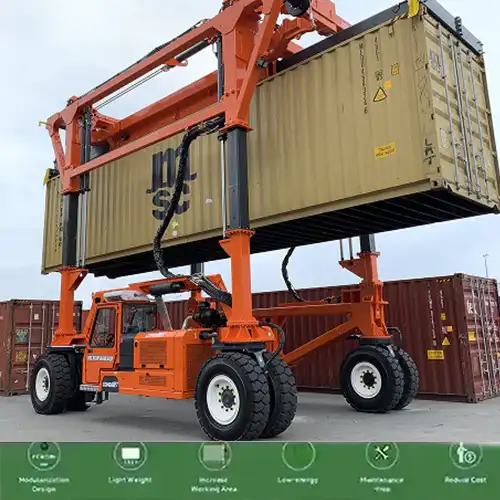
Automatic Straddle Carrier System for Container Handling
High-efficiency automatic straddle carrier system for safe and flexible container terminal operations. Improve yard productivity and reduce handling risks.
| Crane Type | Container Straddle Carrier - Automatic Rubber-Tyred Straddle Carrier System for Container Handling, and Customized Terminal Integration. |
| Crane Capacity | 30 Ton to 80 Ton (Common: 30 Ton, 40 Ton, 50 Ton, 60 Ton), 20 ft / 40 ft / 45 ft Containers with Automatic Telescopic Spreader |
| Span Length | Customized |
| Lifting Height | Customized |
| Coverage Area Type | Autonomous rubber-tyred operation across container blocks, transfer lanes, loading areas, and storage yards without fixed crane rails. |
| Application | Automated container terminals, 24/7 port yard operations, smart logistics yards, intermodal rail terminals, large distribution hubs, BESS container handling, industrial project cargo yards, bonded logistics zones, smart port automation, remote hazardous c |
| Certifications | CE / ISO / SGS / Other third-party inspection |
| Customization | Automated container handling, 20/40/45 ft spreader, automatic steering, auto lifting/positioning, PLC control, remote monitoring, anti-collision, fleet management, diesel-electric/hybrid/electric power, and terminal system integration. |
Crane Manufacturer: Yuantai Cranes – 30+ Years Professional Crane Manufacturer from China
Category: Straddle Carrier
Tags: straddlecrane
Your Trusted Straddle Carrier Manufacturer & Supplier
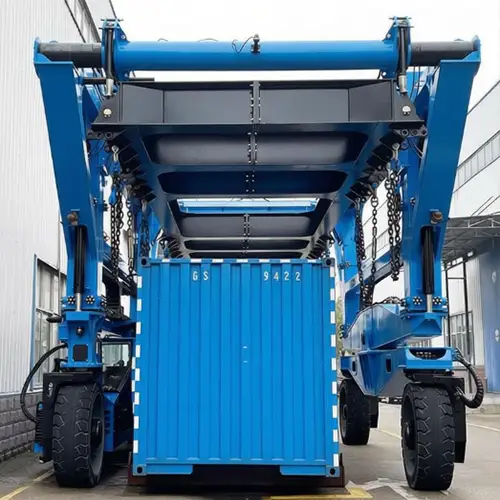
Automatic Straddle Carrier System for Container Terminal Operations
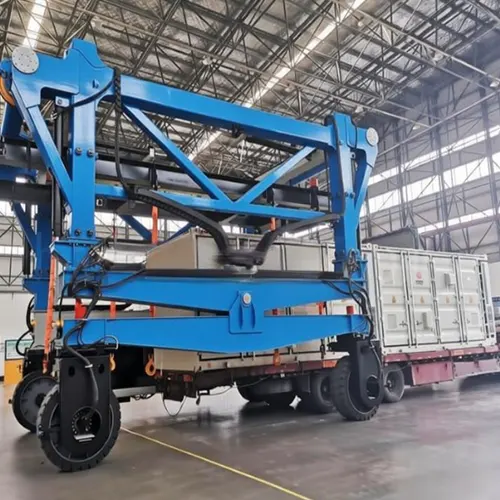
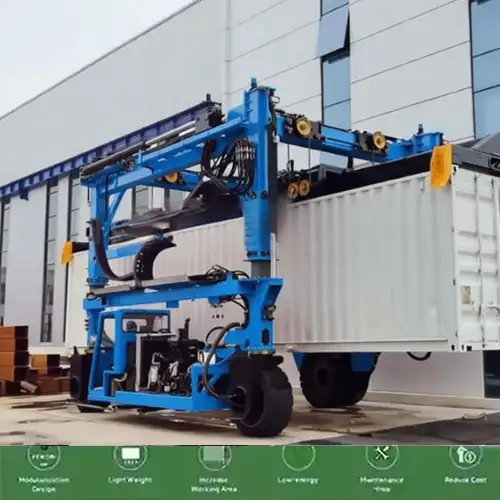
An automatic straddle carrier system is used in container terminals to move and stack containers with less manual work. It combines normal straddle carrier operation with automation control to make yard handling more organized and easier to manage in daily use.
In industrail terminal projects, most operators do not switch everything at once. They usually start with partial automation and expand step by step based on yard layout and operation needs.
- Used for container transport between quay, yard, and storage areas
- Suitable for both new terminals and existing yard systems
- Supports manual, semi-automated, and fully automated operation modes
- Reduces dependence on constant manual driving and handling decisions
Key Technical Overview - Straddle Carrier System Specifications
An automatic straddle carrier system is built with flexible configurations so it can match different terminal sizes, container volumes, and operating conditions. The technical setup is usually selected based on yard layout, lifting demand, and energy preference.
In practical port and logistics projects, operators often balance lifting capacity, power type, and automation level to fit both current workload and future expansion plans. The system is designed to support that kind of flexibility without major structural changes later.
- Stacking height: 3 or 4 containers (9'6 standard containers)
- Lifting capacity: 40 / 50 / 60 tons
- Power options: Diesel / Diesel-Hybrid / Battery-Electric
- Engine size options: ~5L / ~11L / Zero-emission configuration
- Hoisting system: Electric winch rope system
- Operation type: Manual / Semi-automated / Fully automated modes
These specifications allow the same system to be used in different terminal environments, from traditional yards to more automated container handling operations. It gives operators room to adjust the setup according to budget, energy strategy, and automation level without changing the core machine concept.
What is an Automatic Straddle Carrier System?
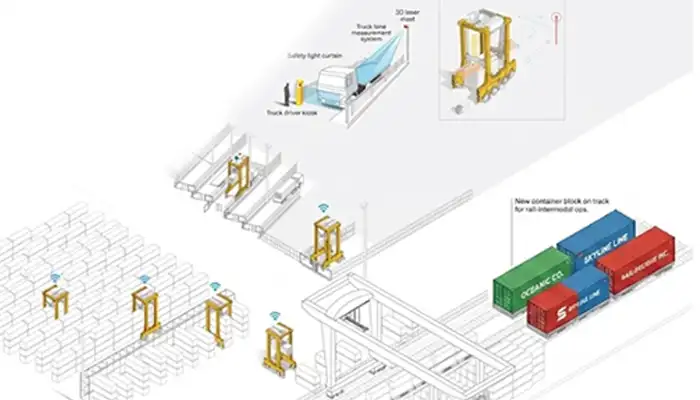
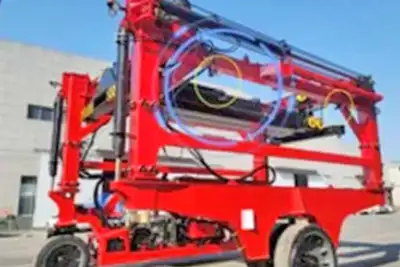
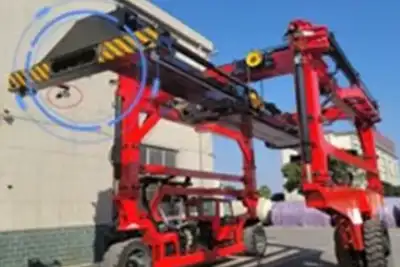
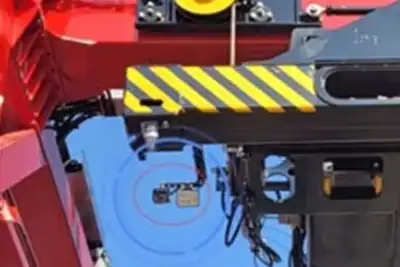
An automatic straddle carrier system is a container handling solution that combines the mobility of a straddle carrier with automation control technology. It is designed to move containers in a more controlled way, reducing the need for continuous manual driving and operation. In real terminal use, the system works as a flexible transport unit that connects different parts of the yard. It supports container flow between quay areas, storage yards, depots, and intermodal transfer zones.
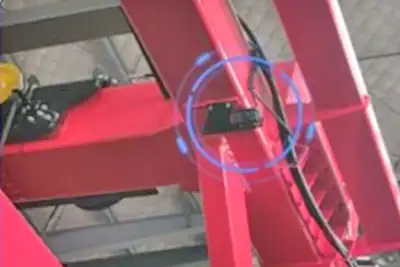
camera
camera
camera
camera
Core Value for Terminal Operators
An automatic straddle carrier system is mainly designed to make container yard operations more controlled and easier to manage. Instead of relying heavily on manual driving and constant coordination, the system follows defined operating logic to keep container movement stable. In practical terminal use, the main value is not only speed, but how smoothly the yard can handle continuous container flow without unnecessary interruptions.
- Improves yard predictability and container flow control
- Reduces human exposure in container handling and high-traffic zones
- Increases operational efficiency and reduces truck and crane turnaround time
- Supports flexible switching between manual, semi-automated, and fully automated modes
- Lowers long-term labor and operational dependency costs
- Integrates easily with existing terminal workflows and equipment systems
Overall, it helps terminals move from a reactive operating style to a more structured and controlled yard process, while still keeping room for gradual automation development.
Scalable Automation Approach (Step-by-Step Deployment)
An automatic straddle carrier system is usually not deployed as a full automation setup from day one. In most real terminal projects, operators prefer a gradual approach. This helps keep daily yard operations stable while new automation functions are introduced step by step.
- Start with assisted or semi-automated operations
- Expand gradually toward full automation
- Suitable for both new terminals (greenfield) and existing yards (brownfield)
- Can be retrofitted to existing straddle carrier fleets
- Supports phased investment with controlled operational risk
In practical use, this approach allows terminals to test automation in real working conditions first, then expand coverage once performance is stable.
Powertrain & Energy Configuration Options
An automatic straddle carrier system can be configured with different powertrain options depending on terminal conditions.
- Diesel-powered configuration for conventional terminal operations
- Diesel-hybrid option to reduce fuel consumption and improve efficiency
- Battery-electric option for zero-emission container handling
- Flexible configuration based on port infrastructure and sustainability targets
Each option supports a different operating environment.
Automation Control & System Integration
An automatic straddle carrier system relies on a central control and integration framework that connects machines, yard systems, and terminal software.
- Centralized automation control platform for yard operations
- Compatible with major Terminal Operating Systems (TOS)
- Wireless communication for real-time machine coordination
- Modular integration with yard and quay equipment
- Supports standardized automation protocols for scalable expansion
This structure allows terminals to connect different equipment types into one working system.
Core Automation Features
An automatic straddle carrier system is designed with different automation levels so terminals can operate based on their current readiness. Some yards may still rely on manual control, while others move toward full automation over time. The system supports both, without requiring a complete replacement of existing workflows.
In real operation, the focus is on stable container movement and accurate positioning rather than just automation level.
- Multiple automation levels: manual, assisted, semi-automated, and full automation
- Autonomous container pick-up and placement
- Real-time positioning and navigation control
- Integration with yard traffic and equipment coordination systems
- Retrofit capability for existing straddle carrier machines
- Scalable deployment for small, medium, and large terminals
These functions help ensure that container handling remains consistent even when workload changes or when different equipment is working in the same yard.
Safety Systems & Geo-Fencing Protection
Safety is a key part of any automated container handling system. In container yards, multiple machines and vehicles operate in close space, so clear control boundaries are necessary.
Geo-fencing is used to define virtual working zones. It helps guide equipment movement and prevents overlap between automated machines and restricted areas. In practical terms, it reduces confusion in busy yard conditions.
- Virtual geo-fenced zones for controlled equipment movement
- Separation of automated and manual operation areas
- Defined maintenance and service access zones for workers
- Reduced collision risk in mixed-equipment environments
- Physical fencing recommended for fully automated yard sections
In real terminal projects, geo-fencing is usually combined with physical barriers. This combination helps maintain safety while still allowing flexible yard operation and future expansion of automation levels.
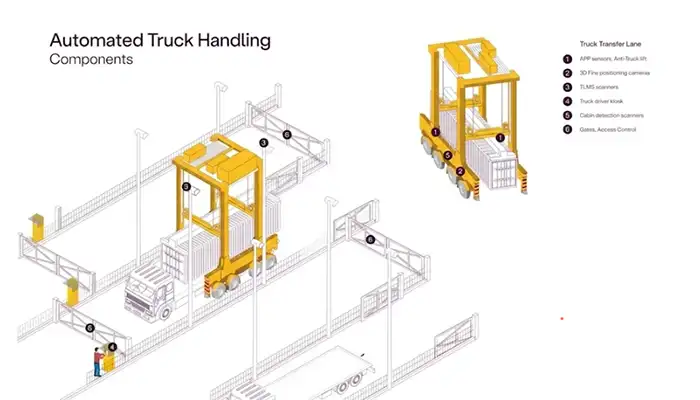
Fully Automated Truck Handling (Final Interface Automation)
The automated truck handling function is the final step in a fully automated straddle carrier system. It is used when containers need to be transferred directly between yard storage positions and road trucks without manual assistance in the interchange zone.
In practical terminal operations, this part is often the most sensitive area because trucks arrive continuously and timing is critical. Automation helps keep this process more controlled and consistent.
- Enables automated container transfer between yard and trucks
- Removes the need for personnel in truck interchange zones
- Improves coordination between yard operation and road transport
This function is usually applied in high-volume terminals where truck flow is constant and safety control is a priority.
Operating Process
The system uses a combination of detection, measurement, and visual positioning tools to handle truck loading accurately. Each step is controlled to reduce positioning errors and ensure smooth container placement.
In real use, the goal is simple: align the truck correctly, verify the position, and complete loading without manual correction.
- Truck detection and positioning system identifies vehicle alignment
- Measurement system confirms truck location and loading space
- Vision-based guidance ensures accurate container positioning
- Automated lowering and placement of containers onto trucks
This step-by-step process helps reduce misalignment issues that often occur in manual loading operations.
Operational Benefits
Automating the truck handling interface improves both safety and operational consistency. It reduces the need for workers to stay in active loading zones, especially during continuous terminal operation.
It also helps maintain stable truck turnaround times, even during peak traffic periods.
- Improves safety by removing manual work in truck zones
- Speeds up truck loading and reduces waiting time
- Ensures consistent container placement accuracy
- Reduces labor demand in high-risk operational areas
Overall, this function supports a more controlled yard-to-road transfer process, especially in terminals handling high daily truck volumes.
Ideal Application Scenarios
An automatic straddle carrier system is mainly used in container handling environments where continuous movement, space efficiency, and controlled yard operation are important. It fits well in both high-capacity ports and smaller logistics yards that want to improve operational structure step by step.
In practical deployment, the system is not limited to one type of facility. It can be adjusted based on yard size, traffic level, and container flow pattern.
- Container terminals and deep-sea ports
- Inland intermodal logistics hubs
- Container depots and storage yards
- High-volume cargo distribution centers
- Quay-to-yard automated container transfer systems
These applications usually share one common requirement: stable and predictable container movement. Whether it is port-side operation or inland logistics, the system helps organize yard flow and reduce unplanned handling delays.
Automation Transition & Support Strategy
Moving toward an automatic straddle carrier system is usually a step-by-step process. Most terminals do not change everything at once. Instead, the transition is planned based on yard conditions, equipment readiness, and daily operation pressure.
In real projects, proper planning before installation is important. It helps avoid disruption and keeps container flow stable while new automation functions are introduced.
- Engineering support for automation planning
- Yard layout assessment for automation readiness
- Phased deployment strategy to reduce operational disruption
- Training and operational transition support for staff
- Retrofit upgrade planning for existing straddle carrier fleets
This approach allows terminals to move from manual or semi-automated operation toward higher automation levels in a controlled way. It also helps ensure that both equipment performance and operator adaptation progress together, without affecting daily container handling work.

Yuantai Cranes
Overhead Crane Manufacturer with CE, ISO, SGS, CNEX Certificates.
- Main Specifications - Capacity: 0.5–550 tons | Span: up to 40m | Speed: 0.8–12 m/min | Duty: A3–A7 | Power: 380–690V, 50/60Hz | Control: pendant/remote/cabin
- Full engineering: FEA/PLC/VFD + in-house build + global delivery + on-site support, for workshops, factories, EPC contractors, industrial projects, etc.
- Support: design, manufacturing, testing, service – end-to-end, customized lifting solutions worldwide.
How to Get an Accurate Crane Price for Your Application?
Tips: Copy the spec list, fill in your details, and paste it into the form on the right/ down-below for a quick price.
- Crane type:_____ . (e.g., overhead crane, gantry crane, jib crane)
- Max weight to lift:_____ tons. (e.g., 2t, 5t, 10t, 20t, 50t)
- Lifting height:_____ m. (How high does the hook need to reach?
- Workshop width (span):_____ m . (Distance between the two crane rails)
- Travel distance:_____ m . (How long does the crane need to move along the runway?)
- Control type:_____. (Pendant / remote / cabin Control)
- Power supply:_____. (Local voltage & frequency – e.g., 380V, 50Hz, 3-phase)
- What will it be used for?_____ (e.g., steel fabrication, concrete products, mold handling, general manufacturing, etc.)
- Any special requirements?_____ (e.g., extreme temperature, dusty or explosive environment, special paint color, etc.)
Just leave a message via the contact form and our hoist and crane engineer will contact you with in 24working hours.
Get Your Custom Quote–Quick & Easy
Fill in what you know. Skip what you don't – we'll help.Any question will be reply with 24 working hours