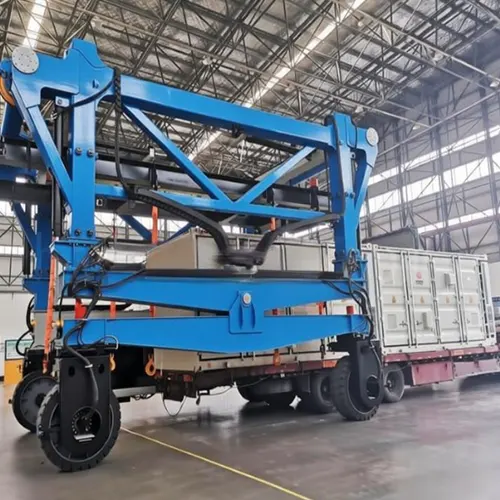
Electric Straddle Carrier |Zero Emission Electric Container Crane
Electric straddle carrier for zero-emission container handling with low noise, fast charging, high efficiency, and low maintenance.
| Crane Type | Electric Straddle Carrier - Electric Rubber-Tyred Straddle Carrier for Zero-Emission Container Handling, with Electric Travel and Lifting, Spreader, Battery Management, Regenerative Braking, PLC/Remote Control, and Customized Green Terminal Configuration |
| Crane Capacity | 30–60 Ton (Common: 30 Ton, 40 Ton, 50 Ton, 60 Ton), 20 ft / 40 ft / 45 ft Containers with Telescopic Spreader |
| Span Length | Customized |
| Lifting Height | 9–18 m (Common: 10 m, 12 m, 15 m) |
| Coverage Area Type | Rubber-tyred electric operation across container blocks, transfer lanes, storage yards, and terminal operating areas without fixed rails. |
| Application | Designed for zero-emission or low-emission container handling, stacking, transportation, and rehandling in green ports, container terminals, logistics yards, and industrial facilities. |
| Certifications | CE / ISO / SGS / Other third-party inspection |
| Customization | 30–60 ton, 20/40/45 ft spreader, battery capacity and charging system, customized lifting height, electric drive, regenerative braking, multi-wheel steering, cabin/remote/PLC control, battery monitoring, anti-collision, and automated container handling. |
Crane Manufacturer: Yuantai Cranes – 30+ Years Professional Crane Manufacturer from China
Category: Straddle Carrier
Tags: straddlecrane
Your Trusted Straddle Carrier Crane Manufacturer & Supplier
Electric Straddle Carrier Crane 10 Ton to 60 Ton for Sale
Zero Emission Electric Powered Container Handler Crane
Electric Straddle Carrier with battery-powered drive system for zero-emission container handling. Low noise, low maintenance, high efficiency, and fast charging or battery swap options. Ideal for ports, logistics yards, and urban operations requiring clean and reliable heavy-load transport.
Overview of Electric Straddle Carrier
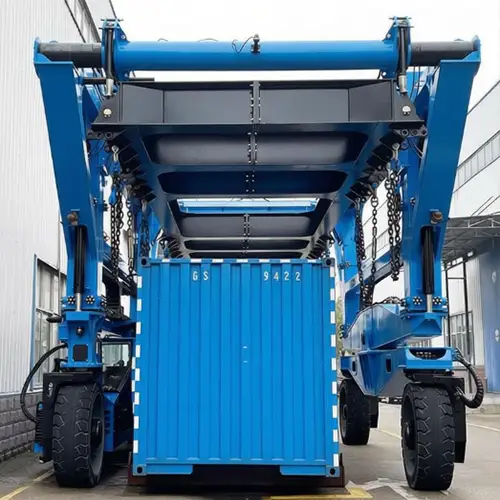
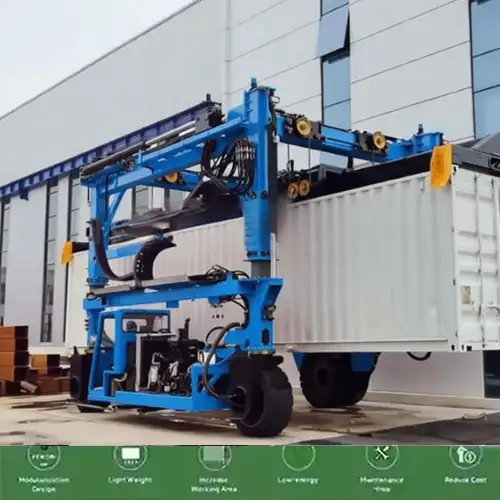
The electric straddle carrier is a container handling crane powered by a battery-driven electric system. It is used for lifting, transporting, and stacking containers and heavy loads in daily yard operations. Instead of a diesel engine, it relies on lithium battery energy to drive the motor, hydraulic pumps, and control system.
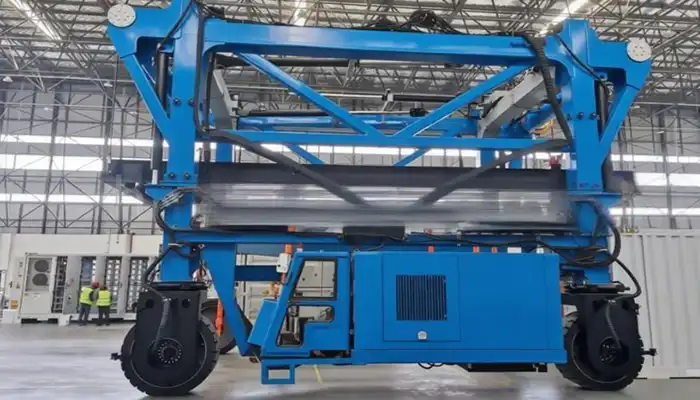
Why Operators Choose Electric Straddle Carrier
In industrial projects, the decision is usually based on emission requirements or long-term operating cost reduction. In some cases, both factors apply together.
Electric straddle carriers are chosen because they fit modern yard planning without requiring major infrastructure changes.
- Battery-powered system replaces diesel engine operation
- No exhaust emissions during lifting and transport work
- Lower daily operating cost compared to fuel-based machines
- More stable running performance in continuous shifts
- Suitable for indoor, semi-indoor, and urban logistics zones
In practice, operators often notice smoother operation, reduced vibration, and fewer maintenance interruptions compared with traditional diesel systems.
Where It Is Commonly Used
This machine is used wherever containers or heavy cargo need short-distance transport and stacking. It is not limited to one industry and is widely applied in modern logistics systems.
Typical application areas include:
- Container yards and port terminals
- Inland freight and logistics distribution centers
- Industrial storage yards and manufacturing plants
- Urban logistics hubs with emission restrictions
- Projects where low-noise operation is required
In many projects, it operates alongside other handling equipment as part of a complete yard transport system.
Practical Working Note
In real operation, planning plays an important role. Electric straddle carriers depend on charging cycles or battery swap systems, so yard layout and shift scheduling must be considered in advance.
- Charging stations or swap points should be planned in advance
- Battery management affects continuous working time
- Smooth yard layout improves efficiency in turning and stacking
It is not complicated, but it must be considered during the project design stage. Once properly arranged, the machine operates steadily in daily container handling work.
The electric straddle carrier is essentially a cleaner and quieter version of traditional container handling equipment. It is designed for modern logistics sites where efficiency, cost control, and environmental compliance are equally important in daily operations.
Key Advantages of Electric Straddle Carrier
The straddle carrier is not just a change of power source. In real yard operation, it affects how the working environment performs on a daily basis. From energy use to maintenance planning, the differences become clear during continuous container handling work.
Zero Emission Operation
This is one of the most direct changes compared to diesel equipment.
- Fully battery-powered system, no fuel combustion during work
- No exhaust gas released during container lifting or transport
- Suitable for indoor terminals, enclosed warehouses, and regulated urban zones
In practical terms, it helps sites meet environmental requirements without additional exhaust treatment systems. The operation is clean from the start.
Low Noise Performance
Noise reduction becomes very noticeable during long working shifts in busy yards.
- Electric motor runs with stable and quiet output
- Lower noise level compared with diesel engine operation
- Better working conditions for operators and nearby staff
In logistics hubs near urban areas, this allows operations to continue without disturbing surrounding environments, even during early or late shifts.
Lower Operating Cost
Cost reduction is one of the main reasons for switching to electric systems.
- Electricity replaces diesel fuel consumption
- Less exposure to fuel price fluctuations
- Higher energy efficiency during repeated lifting cycles
In long-term, multi-shift operations, savings from fuel and reduced engine servicing become more significant.
Low Maintenance Requirement
Compared with diesel systems, the maintenance structure is simpler and more predictable.
- Fewer moving engine components
- Electric motor and battery system reduce mechanical wear points
- Less routine servicing and fewer breakdown interruptions
In real operation, this results in less downtime and more stable maintenance scheduling.
Reduced Vibration & Smooth Operation
Smooth control is important when handling containers in tight yard layouts.
- Stable electric drive system during travel and lifting
- Lower vibration compared with combustion engine machines
- More precise movement when positioning containers
Operators usually notice improved stability during start-stop cycles and stacking operations at higher levels.
Clean Working Environment
This benefit goes beyond emissions and directly affects daily working conditions.
- No diesel smell during operation
- Reduced risk of fuel leakage or oil contamination
- Better air quality in enclosed or semi-enclosed terminals
In indoor logistics facilities, this improves operator comfort and overall working environment quality.
Flexible Energy System
Energy configuration can be adjusted based on project requirements and working schedules.
- Modular lithium battery system for flexible configuration
- Supports fast charging depending on site layout
- Optional battery swapping for continuous multi-shift operation
In industrial projects, this allows operators to align energy usage with operational demand instead of adjusting workflow around fuel supply.
Electric Straddle Carrier Technical Parameters
Before going into the detailed data, it is important to note that these specifications are used in real project planning. Buyers normally compare capacity, size, and performance first to confirm whether the equipment matches yard layout and daily handling requirements.
The EST series is designed to cover different container handling capacities, from medium-duty logistics yards to heavy-duty port operations.
The electric straddle carrier is available in three standard configurations under the EST series. Each model is designed for a different working load requirement.
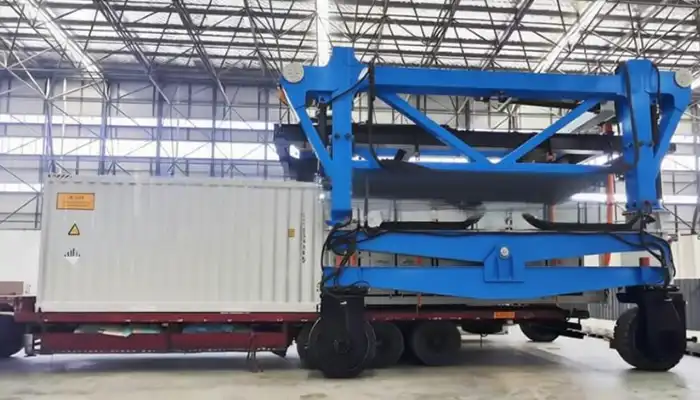
Electric Straddle Carrier Parameters
| Model | ESC-35T | ESC-60T | ESC-80T |
| Capacity | 35t | 60t | 80t |
| Length×Width×Height | 7110×5100×6100mm | 9250×5700×6350mm | 1250×6000×6350mm |
| Effective Inner Width | 3100mm | 3750mm | 3750mm |
| Wheel Base | 6010mm | 6600mm | 7400mm |
| Level 2 Lift Height | 1550mm | 1750mm | 1750mm |
| Max.Lifting Height(Below spreader) | 6150mm | 6300mm | 6300mm |
| Min.Ground Clearance | 230mm | 310mm | 310mm |
| Tire Qty | 4 | 4 | 8 |
| Dead weight(not containspreader) | 21T | 35T | 45T |
| Permanent Magnet Synchronous Motor | 85KW | 105KW | 125KW |
| Lithium Battery | Lithium Iron Phosphate | ||
| Closed Travel Pump | Hytek/Danfoss/PMP | ||
| Empty-load max.speed | 115m/min | 80m/min | 80m/min |
| full toad max.speed | 80m/min | 50m/min | 50m/min |
| Turning Radius | 6950mm | 8900mm | 13000mm |
| Empty-load/full-load Gradeability | 6%/3% | ||
| Control mode | Cab(remote control optional) | ||
| Tires | Solid tire | ||
| Lifting Tools | Automatic Spreader | Oversized Load Spreader | |
| Remarks: Optional accessory brands. | |||
These models allow operators to select equipment based on real operational demand instead of over-sizing, helping to balance investment and long-term operating efficiency.
Dimensions & Structure
Dimensions directly affect yard accessibility, turning space, and container stacking layout. Larger models provide higher stability, while compact models are better for tighter logistics sites.
| Specification | EST-30T | EST-60T | EST-80T |
|---|---|---|---|
| Length × Width × Height | 7110 × 5100 × 6100 mm | 9250 × 5700 × 6350 mm | 1250 × 6000 × 6350 mm |
| Effective Inner Width | 3100 mm | 3750 mm | 3750 mm |
| Wheel Base | 6010 mm | 6600 mm | 7400 mm |
| Min. Ground Clearance | 230 mm | 310 mm | 310 mm |
In practical use, these structural differences influence how the machine moves between container stacks and loading zones.
Lifting Performance
Lifting capacity and height determine how efficiently containers can be stacked and retrieved in yard operations.
| Specification | EST-30T | EST-60T | EST-80T |
|---|---|---|---|
| Level 2 Lift Height | 1550 mm | 1750 mm | 1750 mm |
| Max Lifting Height (below spreader) | 6150 mm | 6300 mm | 6300 mm |
| Lifting Tool | Automatic Spreader / Oversized Load Spreader |
These parameters are especially important in high-density storage yards where vertical stacking efficiency matters.
Power & Drive System
The EST series uses an electric drive system designed for stable and continuous operation in industrial environments.
| Specification | Detail |
|---|---|
| Drive Motor | Permanent Magnet Synchronous Motor |
| Motor Power | 85 kW / 105 kW / 125 kW |
| Battery Type | Lithium Iron Phosphate Battery |
| Pump System | Closed travel pump (Hytek / Danfoss / PMP optional) |
This configuration ensures smooth power delivery during lifting, travel, and positioning operations.
Performance Data
Performance parameters show how the machine behaves under working and loaded conditions, especially in real yard cycles.
| Specification | EST-30T | EST-60T | EST-80T |
|---|---|---|---|
| Empty-load Speed | 115 m/min | 80 m/min | 80 m/min |
| Full-load Speed | 80 m/min | 50 m/min | 50 m/min |
| Gradeability (Empty / Full) | 6% / 3% | 6% / 3% | 6% / 3% |
These values are directly related to yard efficiency and container transfer cycle time.
Mobility & Handling
Mobility defines how easily the equipment can move inside container yards and adjust to working conditions.
| Specification | Detail |
|---|---|
| Turning Radius | 6950 mm / 8900 mm / 13000 mm |
| Tire Type | Solid Tire |
| Tire Quantity | 4 / 4 / 8 |
| Control Mode | Cabin control (remote control optional) |
Good maneuverability reduces congestion in tight yard layouts and improves operational flow.
Weight
Machine weight affects stability, ground pressure, and transport planning before installation.
| Model | Dead Weight (excluding spreader) |
|---|---|
| EST-30T | 21 tons |
| EST-60T | 35 tons |
| EST-80T | 45 tons |
Heavier configurations are generally used in higher-capacity and more demanding working environments.
The EST series is structured to match different levels of container handling demand. In real industrial projects, selecting the correct model is not only about capacity, but also about matching site conditions, yard layout, and working cycle requirements.
Application of Electric Straddle Carrier
The electric straddle carrier is used in container and heavy-load handling environments where continuous material flow is required. In real industrial projects, it is selected not only for lifting capacity, but also for how well it fits yard layout, traffic flow, and environmental restrictions. It is widely adopted in both large port systems and inland logistics centers.
Typical working capacity ranges from 30 tons to 80 tons, depending on configuration and project requirements. In daily operations, 40-ton to 60-ton models are the most commonly used.
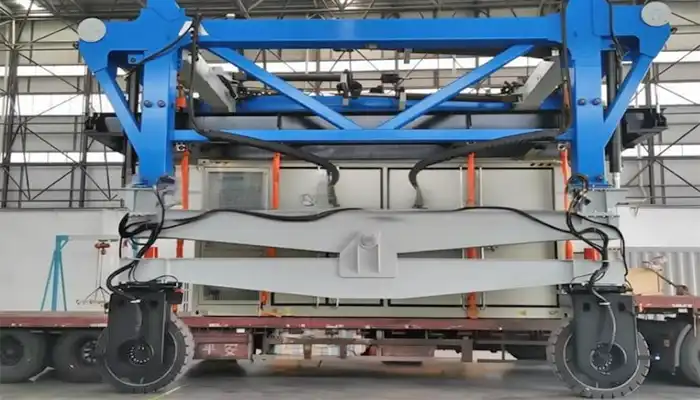
Container Terminals and Ports
Ports are the most common application environment for electric straddle carriers. These systems are increasingly used in terminals focused on reducing emissions and improving operational efficiency.
- Typical capacity: 60T – 80T for heavy container flow
- Used for container stacking, transfer, and yard repositioning
- Works in coordination with quay cranes and yard planning systems
- Suitable for high-frequency loading and unloading cycles
In real port operations, machines often run continuously in shifts. Electric systems simplify energy planning and reduce fuel handling requirements.
Inland Logistics Yards
Inland container yards are widely used for regional distribution and storage operations.
- Typical capacity: 30T – 60T
- Used for container storage, sorting, and short-distance transfer
- Ideal for rail-linked depots and dry ports
- Helps reduce truck movement inside the yard
In real projects, limited space makes direct stacking and flexible movement especially important for efficiency.
Industrial Manufacturing Plants
Manufacturing plants use electric straddle carriers for internal logistics involving heavy materials and large components.
- Typical capacity: 30T – 60T depending on material type
- Used for steel products, machinery parts, and industrial goods
- Supports movement between production and storage areas
- Reduces need for multiple handling equipment types
In practical use, it simplifies internal logistics flow and reduces handling steps in production sites.
Urban Distribution Hubs
Urban logistics centers operate under strict space and environmental constraints, making electric systems highly suitable.
- Typical capacity: 30T – 40T for medium container flow
- Short-distance container distribution and handling
- Used in city-edge logistics parks and freight stations
- Reduces noise impact on surrounding areas
In practice, noise control and emission limits are often more important than maximum capacity in these environments.
Eco-Regulated Storage Zones
These are areas where environmental compliance is mandatory, such as green logistics parks and emission-controlled zones.
- Typical capacity: 30T – 60T depending on project scale
- Zero-emission operation meets environmental regulations
- No diesel fuel handling required on site
- Suitable for sustainable logistics development
In many projects, electric straddle carriers are introduced as part of long-term infrastructure upgrades.
Indoor or Semi-Enclosed Warehouses
Some storage and logistics facilities operate in enclosed or semi-enclosed environments where diesel equipment is not suitable.
- Typical capacity: 30T – 50T for indoor-safe operation
- Used where ventilation is limited
- Eliminates exhaust gas and improves air quality
- Supports safe operation in controlled environments
In real applications, this is one of the strongest use cases for electric systems due to strict safety and air quality requirements.
The electric straddle carrier is essentially a cleaner and quieter version of traditional container handling equipment. It is designed for modern logistics sites where efficiency, cost control, and environmental compliance are equally important in daily operations.
Optional Configurations of Electric Straddle Carrier
In industrial projects, no two yards operate in exactly the same way. Some focus on fast container turnover, while others prioritize heavy cargo handling or continuous 24-hour operation. Because of this, the electric straddle carrier is configured with optional systems based on real working conditions rather than standard specifications alone.
These options are not decorative upgrades. They directly affect efficiency, safety, and operational continuity in daily container handling work.
Remote Control System
Some projects require flexible operation outside the cab, especially in busy or safety-sensitive yard conditions.
- Allows operator control from ground level or remote station
- Improves visibility during container positioning and loading
- Useful in narrow yards or restricted access zones
- Reduces operator fatigue during repetitive tasks
In practical use, remote control is often selected where precise positioning and better ground-level awareness are required.
Heavy-Duty Spreader for Oversized Cargo
Not all cargo is standard ISO containers. Some projects involve oversized or special-shaped loads.
- Designed for non-standard or heavy container handling
- Supports wider load distribution and improved stability
- Suitable for steel coils, large equipment, or special cargo
- Can be matched with automatic or manual control systems
In real industrial sites, this option is commonly used in steel plants, machinery manufacturing, and special logistics projects.
Premium Motor and Pump Brands
Power and hydraulic systems play a key role in stability and long-term reliability.
- Optional high-efficiency motor systems
- Pump system options: Hytek / Danfoss / PMP
- More stable hydraulic response under heavy load
- Improved durability in continuous working cycles
In practice, these upgrades are often selected for high-frequency port or terminal operations where downtime must be minimized.
Fast Charging System
Charging speed directly affects how the equipment fits into daily shift planning.
- Reduces charging downtime between working cycles
- Supports opportunity charging during short breaks
- Maintains continuous operation in multi-shift yards
- Suitable for high-utilization logistics terminals
In real operations, fast charging is often integrated with scheduled working cycles to avoid interruption during peak container flow.
Battery Swapping System
For high-intensity operations, battery swapping provides an alternative to charging downtime.
- Quick battery replacement instead of long charging time
- Supports continuous 24/7 operation in busy terminals
- Reduces waiting time between shifts
- Improves equipment utilization rate in high-demand sites
In practical use, this system is often selected in large ports and logistics hubs where equipment downtime must be minimized.
Optional configurations should always be selected based on real working conditions. In industrial projects, decisions are usually driven by operation frequency, site layout, and maintenance strategy. When properly matched, these options help the electric straddle carrier run more smoothly in daily container handling without unnecessary interruptions.
Summary
The Electric Straddle Carrier is designed as a practical replacement for traditional diesel-powered container handling equipment. It runs on a battery-driven system, which helps reduce fuel dependence and simplifies daily operation in real working environments.
In actual industrial use, it is not only about lower emissions. It also changes how the yard is managed—less noise, fewer maintenance interruptions, and more stable performance during continuous working cycles.
It is commonly used in ports, inland logistics yards, industrial plants, and urban freight hubs where space efficiency and environmental control are important. In these places, operators usually value consistent operation more than complex features.
- Battery-powered system for clean and stable operation
- Suitable for 30T–80T container handling requirements
- Smooth control with reduced vibration during lifting and travel
- Lower operating cost compared with diesel equipment
- Flexible charging or battery swapping options for continuous work
In industrial projects, the electric straddle carrier is often chosen as part of long-term yard upgrading. Not because it is new, but because it fits better with current operational requirements.
Send Us an Inquiry
If you are planning a new project or upgrading an existing yard, we can help you select the right electric straddle carrier model based on your actual working conditions.
- Share your container type and daily handling volume
- Provide your yard layout or working space if available
- Tell us your required capacity (30T / 60T / 80T)
- Let us know whether you prefer charging or battery swapping system
- Request a technical solution and cost comparison for your project
We will prepare a tailored configuration proposal based on your operation needs, not just standard specifications.

Yuantai Cranes
Overhead Crane Manufacturer with CE, ISO, SGS, CNEX Certificates.
- Main Specifications - Capacity: 0.5–550 tons | Span: up to 40m | Speed: 0.8–12 m/min | Duty: A3–A7 | Power: 380–690V, 50/60Hz | Control: pendant/remote/cabin
- Full engineering: FEA/PLC/VFD + in-house build + global delivery + on-site support, for workshops, factories, EPC contractors, industrial projects, etc.
- Support: design, manufacturing, testing, service – end-to-end, customized lifting solutions worldwide.
How to Get an Accurate Crane Price for Your Application?
Tips: Copy the spec list, fill in your details, and paste it into the form on the right/ down-below for a quick price.
- Crane type:_____ . (e.g., overhead crane, gantry crane, jib crane)
- Max weight to lift:_____ tons. (e.g., 2t, 5t, 10t, 20t, 50t)
- Lifting height:_____ m. (How high does the hook need to reach?
- Workshop width (span):_____ m . (Distance between the two crane rails)
- Travel distance:_____ m . (How long does the crane need to move along the runway?)
- Control type:_____. (Pendant / remote / cabin Control)
- Power supply:_____. (Local voltage & frequency – e.g., 380V, 50Hz, 3-phase)
- What will it be used for?_____ (e.g., steel fabrication, concrete products, mold handling, general manufacturing, etc.)
- Any special requirements?_____ (e.g., extreme temperature, dusty or explosive environment, special paint color, etc.)
Just leave a message via the contact form and our hoist and crane engineer will contact you with in 24working hours.
Get Your Custom Quote–Quick & Easy
Fill in what you know. Skip what you don't – we'll help.Any question will be reply with 24 working hours