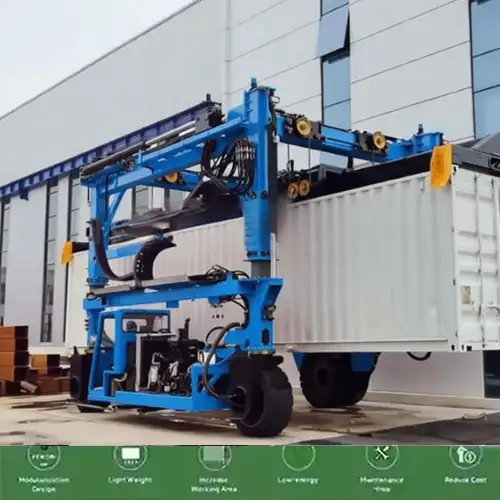
Diesel Straddle Carrier for Heavy-Duty Container Handling
Diesel straddle carrier for heavy-duty port and yard container handling. Efficient lifting, stacking, and transport of containers and oversized cargo.
| Crane Type | Diesel Straddle Carrier - Heavy-Duty Diesel Rubber-Tyred Straddle Carrier for Port and Yard Container Handling, with 20/40/45 ft Spreader, Multi-Wheel Steering, and Customized Oversized Cargo Handling Configuration. |
| Crane Capacity | 30–80 Ton (Common: 30 Ton, 40 Ton, 50 Ton, 60 Ton, 80 Ton), 20 ft / 40 ft / 45 ft Containers with Telescopic Spreader |
| Span Length | Customized |
| Lifting Height | 9–18 m (Common: 10 m, 12 m, 15 m) |
| Coverage Area Type | Rubber-tyred mobile operation across container blocks, port yards, logistics areas, and industrial storage yards without fixed rails. |
| Application | Used for container lifting, stacking, yard transfer, truck loading/unloading, oversized cargo transportation, and heavy industrial material handling in ports and outdoor yards. |
| Certifications | CE / ISO / SGS / Other third-party inspection |
| Customization | 30–80 ton capacity, 20/40/45 ft container spreader, customized lifting height, diesel powertrain, hydraulic lifting, multi-wheel steering, cabin/remote/PLC control, load monitoring, anti-collision, and oversized cargo lifting attachments. |
Crane Manufacturer: Yuantai Cranes – 30+ Years Professional Crane Manufacturer from China
Category: Straddle Carrier
Tags: straddlecrane
Your Trusted Diesel Straddle Carrier Manufacturer & Supplier
Diesel Straddle Carrier for Heavy-Duty Port & Yard Container Handling
High Capacity Straddle Carrier Manufacturer
Diesel Straddle Carrier designed for heavy-duty container handling in ports and logistics yards. Strong diesel power, hydraulic drive, high lifting efficiency, and continuous multi-shift operation. Ideal for long-distance transport and infrastructure-limited sites. Available in 35t–80t models with customizable configurations.
Introduction to Diesel Straddle Carrier
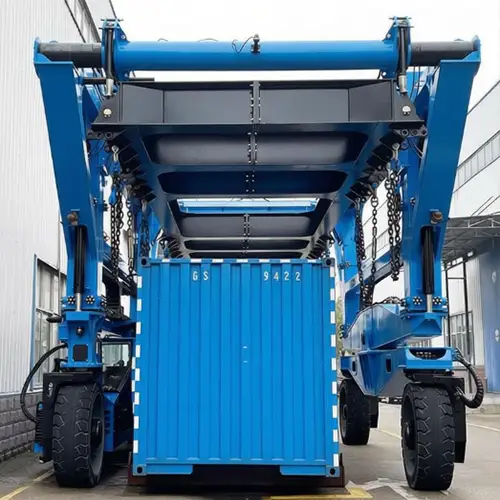
The Diesel Straddle Carrier is a heavy-duty container handling machine used in ports, logistics yards, and industrial storage areas. It is designed for continuous real-world operation where equipment must run for long hours without interruption, making it a core machine for daily container movement between stacking zones and transport points.
What the Diesel Straddle Carrier Is
The Diesel Straddle Carrier is a heavy-duty container handling machine used in ports, logistics yards, and industrial storage areas. It is built for continuous, real-world operation where equipment is expected to run for long hours without interruption. In many sites, it becomes one of the main machines moving containers between stacking areas and transport points.
It is not designed for light work. It is designed for daily heavy lifting and constant yard movement.
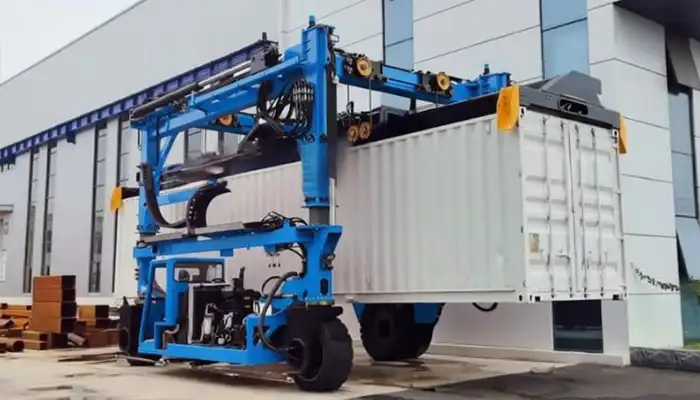
Power System and Working Principle
This machine runs on a diesel engine combined with a hydraulic drive system. In practical terms, the diesel engine provides stable and strong power, while the hydraulic system converts that power into lifting, steering, and travelling actions.
This setup gives the machine steady performance even when fully loaded. It also allows it to operate on uneven or compacted ground, which is common in real port and yard conditions.
- Diesel engine provides continuous power output for long shifts
- Hydraulic system ensures smooth lifting and controlled movement
- Stable performance under full load conditions
- Suitable for outdoor yards with non-paved surfaces
In actual operation, it is valued for being simple, strong, and dependable rather than complex.
Where It Is Commonly Used
Diesel Straddle Carriers are widely used in container terminals, inland depots, and industrial logistics yards. These are places where cargo flow is constant and timing matters.
You will often see them moving containers in repeated cycles, back and forth, without long stops. Operators usually rely on them for daily handling work rather than occasional lifting tasks.
- Container terminals and port yards
- Inland container depots (ICD)
- Steel plants and industrial storage yards
- Large logistics and freight distribution centers
When Diesel Straddle Carrier Is the Right Choice
This type of equipment is selected when working conditions are demanding and infrastructure is limited. It is especially practical where electric charging is not convenient or where operations cannot afford waiting time.
In many projects, the decision is simple: the machine must keep running.
- Long-distance container transport across large yard areas
- Multi-shift operation with continuous daily workload
- Sites without stable charging infrastructure
- Projects requiring fast refueling and immediate return to operation
In industrial use, it is often chosen because it is straightforward, reliable, and able to handle continuous work without complex support systems.
Core Function and Working Principle
The diesel straddle carrier is built around a simple but robust working system. It combines diesel power, hydraulic control, structural frame design, and a flexible spreader system to handle continuous container movement in ports, terminals, and industrial yards.
Diesel Engine as the Main Power Source
The Diesel Straddle Carrier is powered by a diesel engine that acts as the main energy source for the whole machine. In real operation, this engine runs continuously during working shifts and provides stable output for both travelling and lifting tasks.
Unlike electric systems that depend on charging cycles, diesel power allows the machine to keep working as long as fuel is available. This is why it is often used in ports and yards with heavy daily workload.
- Provides continuous and stable power for long working hours
- Supports both movement and lifting operations at the same time
- Suitable for outdoor and high-intensity working environments
In practical terms, it is a "work all day" type of power system.
Hydraulic System for Lifting and Travel
The hydraulic system is responsible for converting engine power into actual machine movement. It controls lifting, lowering, steering, and travelling functions in a smooth and controlled way.
This system is what allows the straddle carrier to handle heavy containers without sudden movement or instability.
- Drives lifting and lowering of containers
- Controls smooth travelling and acceleration
- Ensures stable operation under full load
- Improves precision during stacking and positioning
In daily operation, the hydraulic system is what makes the machine feel controlled rather than rigid.
Straddle Frame Structure for Container Handling
The straddle frame is the main structural design of the machine. It allows the carrier to "straddle" over containers and lift them from the top using a spreader system.
This structure is what makes direct container pickup possible without additional lifting equipment.
- Allows direct lifting of containers from ground or stack
- Enables movement while carrying loads underneath the frame
- Designed for high structural strength and stability
- Supports repeated heavy-duty lifting cycles
In practice, this is the core design that defines how the machine works in ports and yards.
Spreader System for Cargo Flexibility
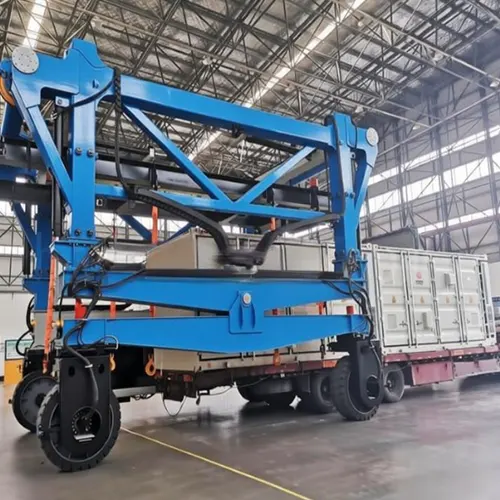
The spreader is the working tool that connects the machine to the container or cargo. It can handle standard ISO containers and also oversized or special loads depending on configuration.
Different spreader types are selected based on project requirements.
- Standard container spreader for ISO containers
- Chain and lock systems for basic lifting operations
- Optional oversized cargo spreader for special loads
- Quick attachment and release for efficient handling
In real use, operators often switch spreader types depending on the cargo mix of the yard.
Operator Control System
The Diesel Straddle Carrier can be controlled either from a cabin or through a remote control system. The cabin is the standard option and provides direct visibility and manual control.
Remote control is used in specific working conditions where better positioning or safety distance is required.
- Cabin control for standard daily operations
- Optional remote control for flexible handling
- Integrated control of travel, lifting, and steering functions
- Designed for easy operation with minimal training time
In actual projects, operators usually prefer cabin control for continuous work, while remote control is used for special handling situations or tight yard spaces.
Key Advantages of Diesel Straddle Carrier
In real container yard operations, the diesel straddle carrier is widely used because it combines endurance, strong load handling ability, flexible mobility, and relatively low infrastructure requirements. These advantages make it suitable for continuous and heavy-duty container handling environments such as ports, inland depots, and logistics yards.
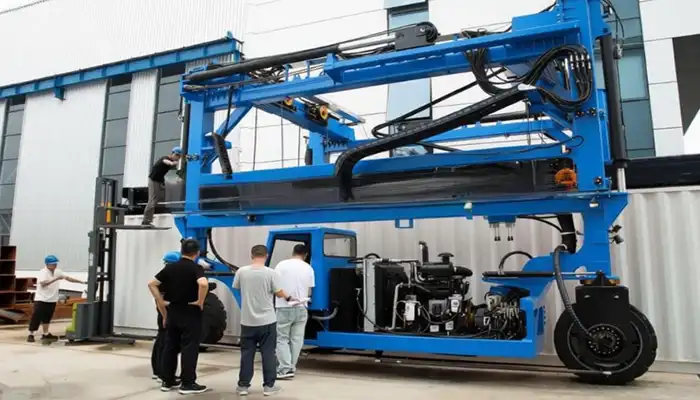
High Operational Endurance
The Diesel Straddle Carrier is built for long working hours without interruption. In many port and logistics projects, equipment is expected to run through full shifts, sometimes day and night. This is where diesel power shows its practical value.
There is no waiting for charging, no scheduled downtime in the middle of operations. As long as fuel is available, the machine can continue working in a stable cycle.
- Continuous operation without charging downtime
- Suitable for 24/7 port terminals and logistics yards
- Supports multi-shift heavy-duty working schedules
- Reliable performance in long-duration handling tasks
In real-world use, this is often the main reason operators prefer diesel systems for high-intensity container flow.
Strong Traction and Load Capacity
This machine is designed for heavy container handling under real working conditions, not controlled environments. The traction system and structural design work together to keep the machine stable even when fully loaded.
It performs consistently when lifting, carrying, and turning with heavy containers in the yard.
- Designed for heavy-duty container and cargo transport
- Stable operation under full-load working conditions
- Strong traction for movement on compacted or uneven ground
- Reliable performance during repeated loading cycles
In practical terms, it is used where load weight and operating frequency are both high.
Flexible Yard Mobility
One of the practical strengths of the Diesel Straddle Carrier is its mobility. It does not depend on fixed rails or guided tracks, which gives it freedom to move across the yard as needed.
This makes it suitable for changing layouts or expanding storage areas where flexibility is important.
- No rail system or guided track required
- Direct movement on compacted yard surfaces
- Easy adaptation to changing yard layouts
- Suitable for open and flexible working zones
In many projects, this flexibility reduces operational restrictions and improves yard efficiency.
Cost-Effective Infrastructure
Compared to rail-mounted or fixed handling systems, the Diesel Straddle Carrier requires far less ground preparation. There is no need for runway beams, embedded rails, or heavy concrete infrastructure.
This makes it a practical choice for projects that want to control installation costs or start operations quickly.
- No runway beam or rail installation required
- Works directly on prepared compacted ground
- Lower civil engineering and construction cost
- Faster deployment in new or temporary yards
In industrial planning, this often becomes a key decision factor when balancing investment and operational needs.
Diesel Straddle Carrier Features
The diesel straddle carrier is engineered with a combination of structural strength, reliable components, advanced control systems, and flexible maneuverability. These features are designed to support continuous container handling in real port and yard environments where stability, efficiency, and long operating hours are required.
FEM Standard Structural Design
The Diesel Straddle Carrier is designed according to FEM standards, which means the structure is checked and optimized using engineering calculation methods before production. In simple terms, the frame is not just built by experience, but also verified through simulation and load analysis.
This helps the machine stay stable during long-term heavy lifting work.
- Finite element analysis applied during design stage
- Structural strength verified under real load conditions
- Optimized stress distribution across main frame
- Improved resistance against fatigue from repeated cycles
In real operation, this means the frame holds up better over years of continuous use in ports and yards.
Premium Imported Components
Key systems of the Diesel Straddle Carrier use components sourced from well-known international brands. These are mainly used in hydraulic, electrical, and control systems where stability matters most.
The goal is simple: reduce unexpected breakdowns during operation.
- Hydraulic and electrical components from global suppliers
- More stable performance under continuous working load
- Lower failure rate in long-term operation
- Reduced maintenance frequency and downtime
In practical use, this is important for ports where stopping equipment is not an option.
Advanced Control System
The control system is designed to make operation smooth and predictable. It manages speed, lifting, and movement in a coordinated way, so the operator does not need to manually adjust every small action.
It also includes safety monitoring to help avoid operational mistakes.
- Intelligent control logic for precise movement
- Stable speed control during travel and lifting
- Smooth start and stop functions for loaded operation
- Built-in safety and monitoring functions
In daily use, this makes handling containers more controlled and less stressful for operators.
Excellent Maneuverability
The Diesel Straddle Carrier is designed to move flexibly in different yard conditions. It supports multiple steering modes, which helps it operate in both wide and narrow working areas.
This flexibility is especially useful in busy container yards.
- Straight, diagonal, and crab steering modes
- Cabin operation as standard, remote control optional
- Easy handling in tight or crowded yard spaces
- Smooth directional changes during loaded travel
In real projects, operators often rely on these steering modes when working between stacked containers.
Compact Turning Radius Design
The steering system and chassis layout are optimized to reduce turning radius. This allows the machine to operate in limited space without needing wide turning areas.
It also helps improve yard planning efficiency.
- Optimized steering geometry for tight turns
- Suitable for narrow working lanes and compact yards
- Improves container stacking density
- Better utilization of available storage space
In practice, this is useful when yards are fully occupied and space is limited.
Operational Cost Efficiency
The Diesel Straddle Carrier is designed to reduce dependency on external infrastructure and avoid unnecessary downtime. Since it runs on diesel, there is no need for charging systems, which simplifies site setup.
It is also optimized for fuel efficiency during operation.
- No charging station or electrical infrastructure required
- Reduced downtime caused by energy limitations
- Efficient fuel consumption system for long shifts
- Lower overall operational dependency on site facilities
Diesel Straddle Carrier Technical Parameters
Model Range Overview
The Diesel Straddle Carrier is available in different tonnage levels to match various yard and port operation requirements. Each model is designed with a balance between lifting capacity, stability, and working efficiency, so users can select based on actual handling volume and site conditions.
Diesel Straddle Carrier Parameters
| Model | DSC-35T | DSC-60T | DSC-80T | |
| Capacity | 35t | 60t | 80t | |
| Length×Width×Height | 9200×5100×5500mm/7110×5100×6100mm | 9250×5700×6350mm | 12500×6000×6350mm | |
| Effective Inner Width | 3100mm | 3750mm | 3750mm | |
| Wheel Base | 6010mm | 6600mm | 7400mm | |
| Level 2 Lift Height | N/A |1550mm | 1750mm | 1750mm | |
| Max.Lifting Height(Below spreader) | 4600mm|6150mm | 6300mm | 6300mm | |
| Min.Ground Clearance | 230mm | 310mm | 310mm | |
| Tire Qty | 4 | 4 | 8 | |
| Deadweight(not contain spreader) | 19T|21T | 35T | 45T | |
| Weichai Engine-China StageII | 103KW | 129KW | 176KW | |
| Closed Travel Pump | Hytek/Danfoss/PMP | |||
| Empty-load max.speed | 115m/min | 80m/min | 80m/min | |
| Full-load max.speed | 80m/min | 50m/min | 50m/min | |
| Turning Radius | 6950mm | 8900mm | 13000mm | |
| No-load/full-load Gradeability | 6%/3% | |||
| Control mode | Cab(remote control optional) | |||
| Tires | solid tire | |||
| Lifting Tools | Chain+Lock/Automatic Spreader | Oversized LoadSpreader | ||
| Remarks Theengine can be optionally equippedwith National IV,and optional accessorybrand | ||||
Capacity and Dimensions
This section defines the basic lifting ability and structural size range of each model. These parameters are important because they directly affect how the machine fits into the yard operation space and how efficiently it can handle containers.
| Item | Specification |
|---|---|
| Lifting capacity | 35t / 60t / 80t |
| Overall dimensions | Varies by model |
| Inner width | Optimized for container handling |
| Structure | Reinforced frame for heavy loads |
After reviewing dimensions, users typically consider aisle width, stacking space, and turning clearance. In real projects, proper matching of size and yard layout helps avoid operational bottlenecks.
Performance Specifications
Performance data reflects how the machine behaves during actual working cycles. Speed, gradeability, and turning capability all influence daily productivity in ports and logistics yards.
| Item | Specification |
|---|---|
| Empty-load max speed | 80–115 m/min |
| Full-load max speed | 50–80 m/min |
| Gradeability | 3%–6% |
| Turning radius | Varies by model design |
In real operation, these values determine how quickly containers can be moved between storage areas. A balanced speed and stability design is more important than maximum speed alone.
Structural and Mobility Design
The structural and mobility system ensures that the machine remains stable while carrying heavy loads and moving across yard surfaces. It is designed to handle uneven ground conditions commonly found in industrial sites.
| Item | Specification |
|---|---|
| Wheel configuration | 4–8 wheels depending on model |
| Tire type | Solid industrial tires |
| Ground clearance | 230–310 mm |
| Wheelbase | Designed for load stability |
After installation, this design helps reduce vibration and improve safety during loaded travel. In practical terms, it supports stable operation even on compacted or rough yard surfaces.
Lifting System
The lifting system is the core working mechanism that directly handles containers and cargo. It is designed for flexibility, allowing different lifting tools depending on the type of material being handled.
| Item | Specification |
|---|---|
| Max lifting height | Up to 6300 mm |
| Level lift stages | Optional depending on model |
| Lifting tools | Chain + lock system / Automatic spreader / Oversized spreader |
After setup, operators choose the lifting tool based on container type or cargo size. In real use, spreader selection has a direct impact on efficiency and safety during handling.
Power System
The power system is based on a diesel engine combined with a hydraulic pump system. This combination ensures stable energy output for both movement and lifting under continuous operation conditions.
| Item | Specification |
|---|---|
| Engine | Weichai diesel engine (Stage II / optional Stage IV) |
| Power range | 103 kW / 129 kW / 176 kW |
| Hydraulic pump | Hytek / Danfoss / PMP |
After installation, this system allows the machine to operate for long shifts without interruption. In practical yard conditions, fuel availability becomes the main factor for continuous work.
Control System
The control system integrates travel, steering, and lifting functions into one coordinated operation interface. It is designed to be simple for operators while still maintaining precise control during container handling.
| Item | Specification |
|---|---|
| Operation mode | Cabin control as standard |
| Remote control | Optional |
| System type | Integrated travel and lifting control |
After training, operators can handle the machine efficiently with minimal complexity. In real applications, cabin control is used for daily operation, while remote control is often reserved for special positioning tasks.
Application
The diesel straddle carrier is used in environments where container flow is continuous and equipment must operate without interruption. It is not limited to a single industry. In real projects, it is selected because it can work independently without relying on charging systems or fixed infrastructure, making it suitable for a wide range of material handling conditions.
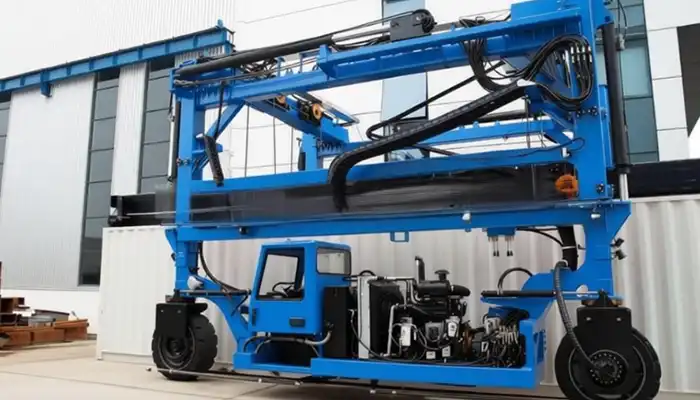
Port Terminals
Port terminals are one of the primary application areas for diesel straddle carriers. In these environments, containers are constantly arriving and leaving, so equipment must support fast and repeated handling cycles.
The machine is used for both loading and unloading operations, as well as internal yard transfer between stacking zones.
- Container loading from trucks or yard stacks
- Container unloading for shipping or storage
- Yard stacking and repositioning operations
- Continuous transfer between terminal zones
In real port operations, the key requirement is not only lifting capacity, but also consistent cycle time. Diesel straddle carriers are commonly used because they can keep working through long shifts without interruption.
Logistics and Warehousing Yards
In logistics centers and container yards, the focus is on internal movement rather than ship loading. Diesel straddle carriers are used to move containers between different storage areas efficiently.
These operations usually involve short to medium-distance transport within the same yard.
- Movement of containers between storage zones
- Short-distance heavy cargo transfer inside the yard
- Sorting and repositioning of containers based on schedule
- Supporting daily logistics flow and dispatch operations
In practice, these sites need flexible equipment that can respond quickly to changing storage layouts, especially during peak handling periods.
Industrial Facilities
Industrial facilities use diesel straddle carriers for internal material handling, especially where heavy products or bulk materials are involved. These environments often require robust equipment that can handle continuous production-related logistics.
Typical applications include steel plants and large-scale manufacturing sites.
- Steel coil and steel product handling in steel plants
- Movement of heavy components in manufacturing yards
- Bulk cargo transfer in industrial storage areas
- Internal logistics between production and storage zones
In real industrial use, the machine is valued for its ability to handle heavy loads consistently under tough working conditions.
Remote or Infrastructure-Limited Sites
In some projects, electrical infrastructure is limited or not available at all. In these cases, diesel-powered equipment becomes the practical choice. The diesel straddle carrier can operate independently without charging systems.
It is also commonly used in temporary or fast-developing logistics yards.
- Sites without charging stations or stable power supply
- Temporary logistics yards for short-term projects
- Mobile container handling operations
- Emergency or remote construction logistics support
In practice, these environments require equipment that can be deployed quickly and start working immediately without complex installation. Diesel straddle carriers fit this requirement well because they are self-powered and easy to operate in different locations.
Optional Configurations for Diesel Straddle Carrier
The Diesel Straddle Carrier is often customized according to different port container handling systems, logistics yard operations, and industrial material handling requirements. In real engineering projects, buyers usually do not choose a standard machine only. They adjust configurations based on container flow, yard layout, working shifts, and fuel cost targets.
These optional configurations help improve performance, reduce operating cost, and better match heavy-duty straddle carrier applications in ports, steel plants, and logistics terminals.
Remote Control System Upgrade for Straddle Carrier Operation
In modern container yard equipment, remote control straddle carrier systems are increasingly used for safer and more flexible operation. This option allows operators to control diesel straddle carrier movement, lifting, and steering without staying inside the cabin.
| Item | Specification |
|---|---|
| Control type | Wireless remote control system |
| Functions | Container lifting, travel, steering control |
| Application | Port terminals, narrow yard container stacking areas |
This option is commonly selected in container handling operations in tight logistics yards, where precise positioning of a diesel straddle carrier for container transfer is required. In practical use, it improves visibility during container stacking and reduces operator limitation in complex yard layouts.
Heavy-Duty and Oversized Container Spreader for Industrial Cargo Handling
For non-standard cargo and special logistics projects, a heavy-duty straddle carrier spreader is required. This includes oversized container spreaders designed for abnormal container dimensions or heavy industrial loads.
| Item | Specification |
|---|---|
| Type | Heavy-duty / oversized container spreader |
| Application | Steel coil handling, oversized cargo transport, special logistics containers |
| Feature | Reinforced structure for high-load lifting |
This configuration is widely used in steel plant material handling, heavy cargo logistics yards, and industrial straddle carrier applications where standard ISO container spreaders are not sufficient. It ensures stable lifting performance even under uneven load distribution.
Premium Diesel Engine and Hydraulic Pump System Upgrade
In long-term continuous port operations, engine reliability and hydraulic system stability directly affect diesel straddle carrier performance. Premium power system configurations improve durability under multi-shift container handling operations.
| Item | Specification |
|---|---|
| Engine | High-performance diesel engine for heavy-duty straddle carrier |
| Hydraulic system | Premium hydraulic pump system (Danfoss / Hytek / PMP optional) |
| Benefit | Stable power output for continuous container yard operation |
This option is often selected in high-frequency container terminals and 24-hour logistics straddle carrier operations, where equipment downtime directly affects port throughput efficiency.
Fast Refueling System Optimization for Continuous Straddle Carrier Operation
Diesel straddle carriers are designed for long working cycles, so reducing refueling downtime is important in real port logistics operations. A fast refueling system helps improve operational continuity in container yards.
| Item | Specification |
|---|---|
| Function | Rapid diesel refueling system for straddle carrier |
| Purpose | Reduce downtime in multi-shift container handling |
| Application | High-volume port terminals and logistics distribution centers |
This system is especially useful in continuous container transfer operations, where diesel straddle carriers operate in back-to-back shifts with minimal interruption.
Fuel Efficiency Enhancement Package for Diesel Straddle Carrier
Fuel cost is a key factor in long-term straddle carrier operating cost. This optional package is designed to optimize diesel engine performance and reduce fuel consumption per container handling cycle.
| Item | Specification |
|---|---|
| Focus | Diesel fuel efficiency optimization system |
| Result | Lower fuel consumption in container transport operations |
| Application | Long-distance yard transport and multi-shift operations |
In practical industrial use, this is commonly selected for large-scale container logistics yards and port straddle carrier fleets, where fuel consumption directly affects operational cost control.
Operator Cabin Comfort System for Long-Hour Straddle Carrier Operation
Since diesel straddle carriers are often used in 24/7 port operations, operator comfort becomes important for safe and stable performance. A cabin comfort system improves working conditions during long container handling shifts.
| Item | Specification |
|---|---|
| Feature | Air-conditioned operator cabin system |
| Benefit | Reduced operator fatigue during long-hour container handling |
| Application | Hot climate ports, heavy-duty logistics yards |
This configuration is commonly used in continuous straddle carrier operations in ports and industrial logistics terminals, where operators may work long shifts in demanding environmental conditions.
Maintenance and Operational Considerations
The Diesel Straddle Carrier is designed for heavy-duty container handling in ports, logistics yards, and industrial sites. In real operation, stable performance depends not only on design quality but also on proper maintenance during daily use. Regular checks help reduce unexpected downtime and keep the straddle carrier running smoothly in continuous working conditions.
Below are the key maintenance points commonly followed in practical diesel straddle carrier operation.
- Regular diesel engine inspection and servicing
- Hydraulic system oil level and pressure checks
- Tire wear monitoring under heavy-load container handling
- Structural weld inspection during long-term operation
- Control system calibration and diagnostic testing
In actual port and yard environments, these checks are usually carried out based on working hours and load intensity rather than fixed intervals only. This helps ensure the equipment stays reliable during multi-shift container handling operations and reduces the risk of sudden failure during critical lifting tasks.
Send us An Inquiry
The Diesel Straddle Carrier is built for real heavy-duty container handling work in ports, logistics hubs, and industrial yards. It is designed to keep running in demanding conditions where equipment must stay stable, carry heavy loads, and operate for long hours without interruption.
In practical use, it provides a balanced solution between power, flexibility, and operational reliability. It is commonly chosen where continuous container flow and multi-shift work are required, especially in environments without charging infrastructure or fixed rail systems.
- Strong diesel power system for continuous container handling operation
- Suitable for heavy-duty cargo and container transport in port terminals
- Flexible yard mobility without rail or fixed infrastructure requirements
- Stable performance in multi-shift logistics and industrial applications
- Practical solution for long-term, high-intensity working environments
If you are planning a new port project, upgrading a container yard, or looking for a reliable straddle carrier solution for industrial material handling, we can provide technical support and customized configuration based on your working conditions.
Send us an inquiry to get a tailored solution, technical recommendation, and quotation based on your port or yard operation requirements.

Yuantai Cranes
Overhead Crane Manufacturer with CE, ISO, SGS, CNEX Certificates.
- Main Specifications - Capacity: 0.5–550 tons | Span: up to 40m | Speed: 0.8–12 m/min | Duty: A3–A7 | Power: 380–690V, 50/60Hz | Control: pendant/remote/cabin
- Full engineering: FEA/PLC/VFD + in-house build + global delivery + on-site support, for workshops, factories, EPC contractors, industrial projects, etc.
- Support: design, manufacturing, testing, service – end-to-end, customized lifting solutions worldwide.
How to Get an Accurate Crane Price for Your Application?
Tips: Copy the spec list, fill in your details, and paste it into the form on the right/ down-below for a quick price.
- Crane type:_____ . (e.g., overhead crane, gantry crane, jib crane)
- Max weight to lift:_____ tons. (e.g., 2t, 5t, 10t, 20t, 50t)
- Lifting height:_____ m. (How high does the hook need to reach?
- Workshop width (span):_____ m . (Distance between the two crane rails)
- Travel distance:_____ m . (How long does the crane need to move along the runway?)
- Control type:_____. (Pendant / remote / cabin Control)
- Power supply:_____. (Local voltage & frequency – e.g., 380V, 50Hz, 3-phase)
- What will it be used for?_____ (e.g., steel fabrication, concrete products, mold handling, general manufacturing, etc.)
- Any special requirements?_____ (e.g., extreme temperature, dusty or explosive environment, special paint color, etc.)
Just leave a message via the contact form and our hoist and crane engineer will contact you with in 24working hours.
Get Your Custom Quote–Quick & Easy
Fill in what you know. Skip what you don't – we'll help.Any question will be reply with 24 working hours