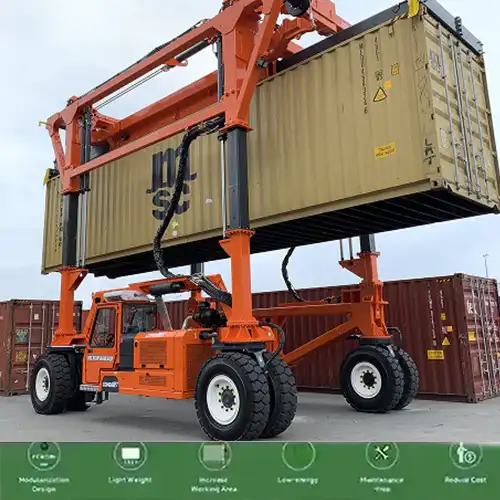
How to Choose Straddle Carrier Tonnage |30–80T Capacity Selection
Choose the right straddle carrier tonnage for 20ft, 40ft and heavy containers. Practical guide for 30T, 45T, 80T models to avoid oversizing or damage.
| Crane Type | Heavy-Duty Rubber-Tyred Straddle Carrier with Self-Propelled Travel, Hydraulic/Electric Lifting, Container Spreader, Multi-Wheel Steering, Multiple Power Options, PLC/Remote Control, and Customized Container & Industrial Cargo Handling Configuration. |
| Crane Capacity | 30–80 Ton (Common: 30 Ton, 40 Ton, 50 Ton, 60 Ton, 80 Ton), 20 ft / 40 ft / 45 ft Containers with Telescopic Spreader |
| Lifting Height | 6–18 m (Common: 8 m, 10 m, 12 m, 15 m) |
| Coverage Area Type | Flexible rubber-tyred operation across container blocks, storage yards, transfer lanes, and industrial work areas without fixed rails. |
| Application | Container terminals, port yards, logistics centers, BESS projects, industrial yards, precast plants, steel yards, and heavy equipment handling sites. |
| Certifications | CE / ISO / SGS / Other third-party inspection |
| Customization | 20/40/45 ft spreader, customized lifting height, hydraulic/electric lifting, rubber-tyred travel, multi-steering, diesel/diesel-electric/hybrid/battery-electric power, cabin/remote/PLC control, monitoring, anti-collision & BESS/oversized cargo attachments |
Crane Manufacturer: Yuantai Cranes – 30+ Years Professional Crane Manufacturer from China
Category: Straddle Carrier
Tags: straddlecrane,HowTo
Your Trusted Straddle Carrier Crane Manufacturer & Supplier
How to Choose Straddle Carrier Tonnage
30T–80T Capacity Selection Guide for Containers
Choose the right straddle carrier tonnage for 20ft, 40ft and heavy containers. Practical guide for 30T, 45T, 80T models to avoid oversizing or damage.
Don't Choose Tonnage by Guessing
So how do you actually choose the tonnage of a container straddle carrier, or a rubber tyred straddle carrier used in container handling operations? This is one of the most common questions in container yard planning. At first glance, it looks like a simple selection between 30-ton, 45-ton, or 80-ton capacity models, but in real operation, it is not a simple catalog decision. Tonnage selection directly defines safety, efficiency, and long-term operating cost.
Common buyer mistake
Many buyers do not base the selection on real operational data. Instead, they often rely on:
- Equipment price comparison only
- Guessing based on similar projects
- Experience from a different yard or different container flow
- The assumption that a higher tonnage is always safer
- Supplier recommendation without verifying real container weight conditions
A straddle carrier or rubber tyred straddle carrier must be matched to the actual container capacity requirements of the yard. Tonnage selection affects the overall material handling flow and system efficiency.
What actually happens when tonnage is not correctly selected
If the straddle carrier capacity is too low for the container workload:
- The equipment continuously operates near or above rated load
- Structural fatigue increases over time
- Hydraulic and drive systems are under constant stress
- Maintenance frequency increases significantly
- Operational downtime becomes unavoidable
- In extreme cases, safety risk increases in container lifting and transport operations
If the tonnage is too high for actual needs:
- Initial investment cost becomes unnecessarily high
- Energy or fuel consumption increases due to heavier structure
- Machine efficiency drops in normal container handling cycles
- The equipment is underutilized most of the time
- Return on investment becomes slower than expected
In both cases, the result is not optimal. Wrong tonnage selection directly affects port productivity and cost efficiency.
Core message
Wrong tonnage selection in container straddle carrier systems always leads to one of two outcomes: Either you are wasting investment on unused capacity, or you are forcing the equipment to work beyond its safe operating limit. Both result in higher long-term cost and lower operational efficiency.
Professional field logic
In real container yard operations, tonnage selection should be based on:
- Actual container weight distribution
- Frequency of 20ft and 40ft container handling
- Peak load conditions in daily operation
- Interaction with container cranes and yard workflow
- Duty cycle and continuous working requirements
A straddle carrier is a core load-bearing unit that defines how efficiently the entire yard operates.
Transition
Once this principle is understood, the next step is to analyze real tonnage selection logic for different container types, including 20ft, 40ft, and heavy-duty or special cargo operations, and how 30-ton, 45-ton, and 80-ton straddle carriers are matched to each condition.
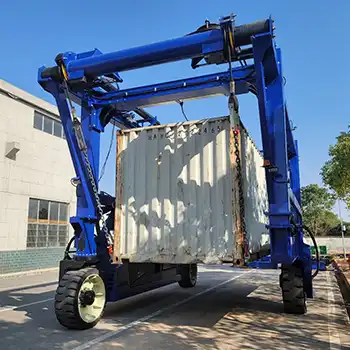
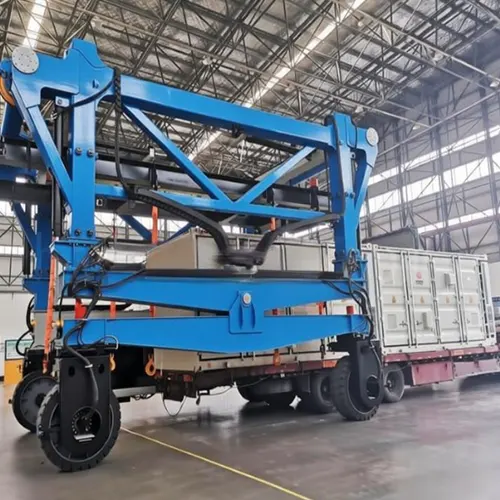
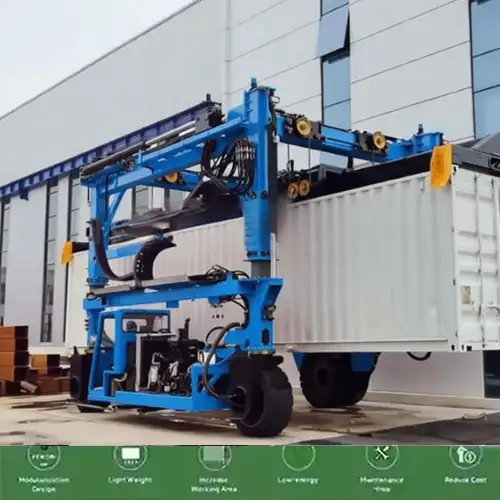
chain type container straddle carrier
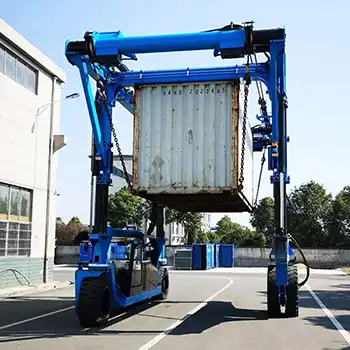
Telescopic Chain Container Straddle Carrier
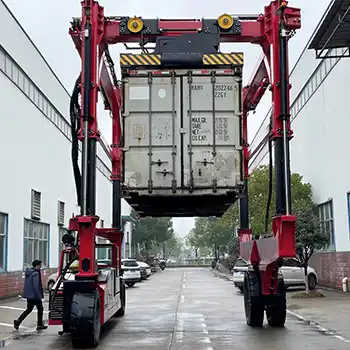
Telescopic Toplift Container Straddle Carrier
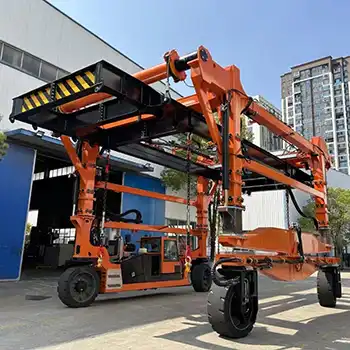
Multifunctional straddle carrier
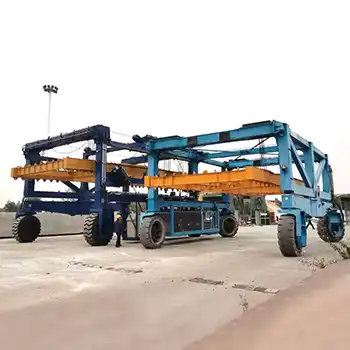
Multifunctional straddle carrier
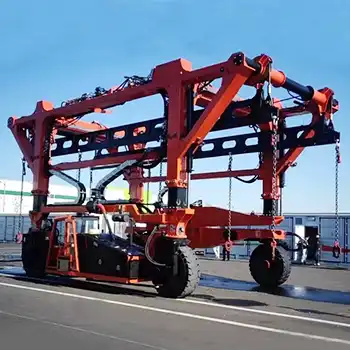
Multifunctional straddle carrier
Core Principle – Tonnage Must Match Real Container Operation
In container handling systems, whether using a straddle carrier, rubber tyred straddle carrier, or supporting container crane operations, the rated capacity must match your real container flow. Tonnage selection is not just a specification—it is a working condition match within a complete yard system.
Key idea
The capacity of a straddle carrier must be based on your actual container handling pattern, not theoretical maximums or catalog assumptions. In real yards, container weights are mixed and may include:
- 20ft standard containers
- 40ft containers
- Heavier industrial or special cargo units
- Peak-load situations during high throughput periods
The straddle carrier tonnage must be aligned with the real operational envelope, not just a single ideal case.
Two extremes to avoid
Oversized machine
- Higher initial investment cost
- Increased energy or fuel consumption
- Lower utilization efficiency in daily container handling
- Reduced return on investment over time
- Unnecessary structural weight carried in every operation
This happens when buyers overestimate future demand or choose "safer" capacity without analyzing real workflow.
Undersized machine
- Frequent overload conditions during container lifting or transport
- Increased wear on hydraulic systems and structural components
- Higher risk of breakdown in continuous operation
- Reduced safety margin in peak workload conditions
- Shortened equipment service life
This occurs when tonnage is selected only based on average container weight without considering peak or mixed container operations.
Professional takeaway
Selecting the correct straddle carrier tonnage is a lifecycle cost decision, not a one-time purchase. A properly matched carrier system will:
- Maintain stable performance under real container crane workflow conditions
- Balance load, efficiency, and energy consumption
- Reduce long-term maintenance and downtime
- Improve overall yard throughput efficiency
The right tonnage is about designing the cost structure of your entire container handling operation from day one.
20ft Standard Container → Why 30-Ton Is the Engineering Match
In container handling operations, especially with straddle carriers or rubber tyred straddle carriers coordinating with container cranes and yard transport systems, the 20ft standard container is the fundamental working unit. The 30-ton capacity class has become the most common and stable engineering match for this segment.
Real operating data
To select tonnage correctly, consider real container weights:
- Tare weight of a 20ft container: approximately 2–3 tons
- Typical loaded gross weight: around 28–30 tons
This means the working load is consistently near the upper limit of standard containers, especially in port, logistics yard, and freight transfer operations. The straddle carrier must handle dynamic forces during lifting, travel, braking, and stacking within the container crane workflow.
Engineering conclusion
Based on real operational conditions, the 30-ton straddle carrier is engineered specifically to match the full working range of a 20ft container. Key considerations include:
- Safe lifting margin above maximum container gross weight
- Structural design allowance for dynamic load during movement
- Hydraulic system capacity designed for continuous duty cycles
- Stability control under loaded travel conditions in yard operations
The 30-ton class is the designed balance point between safety, efficiency, and cost for standard 20ft container handling.
Buyer insight
From a practical purchasing and operational perspective:
- A 30-ton straddle carrier is not a general-purpose choice.
- It is a matched design point built around the real working envelope of 20ft container operations.
- It performs consistently in container yards, port terminals, and logistics hubs where 20ft containers dominate.
- Integration with container cranes and rubber tyred transport systems requires stable, repeatable performance, which this tonnage class provides.
45-Ton Straddle Carrier → The Practical "Multi-Scenario Model"
In real container handling systems, especially in ports and logistics yards where container cranes and straddle carriers work together, operations vary in container size and load. The 45-ton straddle carrier offers a practical solution for these mixed conditions.
Positioning
The 45-ton class is a balanced solution between standard container handling and heavier operational demands. It is:
- Not designed for extreme overload conditions
- Not limited to light-duty work
- A flexible capacity option adaptable to mixed container flows and variable operational requirements
This balance ensures stable yard performance even when workload conditions are not fixed.
Typical applications
The 45-ton straddle carrier is commonly deployed in:
- Mixed container sizes: 20ft and 40ft
- Ports with variable cargo types and daily throughput changes
- Logistics yards handling both standard and occasional heavy loads
- Operations where container cranes feed multiple downstream handling routes
- Medium-to-high intensity container transfer environments
In these situations, flexibility outweighs specialization.
Buyer logic
From a practical purchasing perspective, the 45-ton straddle carrier provides:
- One machine covering multiple working conditions
- Reduced operational decision complexity
- Stable buffer across different container types and workloads
This simplifies yard planning and avoids constant reevaluation of load limits or operational adjustments.
Practical tone insight
For many buyers, the mindset is:
"If you don't want to overthink every container type, this is the safe option."
- The 45-ton straddle carrier reduces uncertainty in container handling
- Maintains strength, stability, and compatibility with container crane workflows
- Supports reliable operation across mixed yard scenarios
40ft Containers → Entering the 36-Ton Operational Range
In container handling operations where straddle carriers, rubber tyred straddle carriers, and container cranes coordinate, the 40ft container introduces higher operational demands. Equipment is consistently handling heavier gross weights under continuous yard cycles.
Real case reference
A fully loaded 40ft container typically reaches approximately 36 tons total gross weight under normal operating conditions.
This reflects real working conditions in terminals, not theoretical maximums. Dynamic factors such as lifting, travel, braking, and stacking increase actual load stress beyond static weight.
Practical implication
From an equipment selection perspective, the 45-ton straddle carrier is practical:
- Provides a safety margin above the 36-ton working load
- Maintains stable performance during repeated container crane feeding cycles
- Supports mixed container operations without constant reconfiguration
This makes the 45-ton model a standard "safe coverage" option for 40ft container handling in real operations.
Important note
Even though the 45-ton straddle carrier can cover this range safely, tonnage alone is not enough. Performance depends also on:
- Operating frequency (cycles per hour/day)
- Duty cycle intensity (continuous vs intermittent operation)
- Yard conditions (ground quality, slope, turning radius)
- Integration with container cranes and internal logistics flow
Tonnage sets the foundation, but the working environment determines real long-term stability, efficiency, and equipment lifespan.
Heavy-Duty & Special Containers → Why 80-Ton Becomes Necessary
In advanced container handling systems—large ports, industrial yards, and specialized logistics terminals—operations sometimes go beyond standard container weights. Here, 80-ton straddle carriers become essential to handle oversized or heavy cargo safely.
Trigger conditions
The 80-ton capacity is required only under specific heavy-duty situations:
- Oversized containers exceeding standard weight or dimensions
- Heavy industrial modules in energy, construction, or manufacturing
- Non-standard cargo needing special lifting configurations
- Project cargo with high weight and uneven load distribution
Standard 30-ton or 45-ton carriers cannot maintain safe margins under these conditions.
Technical structure upgrade
The 80-ton carrier features reinforced engineering, including:
- Q355 high-strength steel frame for structural durability
- Strengthened chassis for continuous high-load stress
- Dual-pump hydraulic synchronization for stable lifting
- Enhanced rigidity to reduce deformation under heavy/uneven loads
These upgrades ensure stability during lifting, travel, and positioning under extreme conditions.
Core function
The 80-ton straddle carrier's primary function is stable performance under extreme load conditions:
- Controlled lifting of oversized or irregular loads
- Stable movement in yards with heavy cargo
- Reduced structural stress during repeated high-capacity cycles
- Reliable integration with container crane systems in heavy industrial workflows
It is designed for operations where failure is not acceptable and every lifting cycle involves high-value or high-risk cargo. The 80-ton carrier ensures operational stability when standard equipment reaches its engineering limit.
Container Straddle Carrier Tonnage Selection Table (30T–80T)
| Tonnage Class | Application Focus | Real Working Condition | Engineering Design Logic | Key Technical Features | Buyer Insight |
|---|---|---|---|---|---|
| 30-Ton Straddle Carrier | Standard 20ft container handling Ports / yards / logistics hubs | Typical Load Range Tare: 2–3 tons Gross: 28–30 tons | Matched Design Envelope Engineered exactly for 20ft container full working range Includes dynamic load safety margin | Stable Operation Core Balanced frame design Continuous duty capability Optimized hydraulic system | "Exact match for 20ft container operations" |
| 45-Ton Straddle Carrier | Mixed container operations Flexible yard workflows | Mixed Load Range 20ft + 40ft containers Up to ~36 tons (40ft full load) | Balanced Engineering Design Middle-ground capacity for variable operations Supports multi-scenario working conditions | Flexible Performance Core Multi-load handling Stable mixed-cycle operation Adaptable working range | "One machine for multiple container scenarios" |
| 40ft Container Operation (Reference Load) | Medium-heavy container handling Real port and yard operations | Standard Reference Load Fully loaded ≈ 36 tons | Working Boundary Condition Defines transition point between standard and heavy-duty range | Operational Requirement Stable crane-fed workflow Controlled duty cycle operation | "Tonnage must follow real working cycle, not theory" |
| 80-Ton Straddle Carrier | Heavy-duty cargo Oversized containers Industrial project handling | Extreme Load Conditions Non-standard + oversized cargo High irregular weight distribution | Reinforced Heavy-Duty Structure Designed for maximum load stability under extreme conditions | Heavy Engineering System Q355 reinforced steel frame Strengthened chassis design Dual-pump hydraulic synchronization High rigidity structure | Used only when 30T/45T reach limits Designed for extreme load stability, not general use |
35 Ton Straddle Carrier Cranes
40 Ton Straddle Carrier Cranes
50 Ton Straddle Carrier Cranes
60 Ton Straddle Carrier Cranes
80 Ton Straddle Carrier Cranes
Hidden Cost of Wrong Tonnage Selection (Critical Buyer Section)
In container handling operations, wrong tonnage selection is one of the most expensive hidden risks. It affects not just purchase price, but operational cost, safety, and yard efficiency over years of continuous use.
Oversized selection
Choosing a straddle carrier with higher capacity than required may seem safe, but hidden costs build over time:
- Higher initial investment without operational necessity
- Increased fuel or energy consumption from heavier structure
- Lower efficiency in standard container handling cycles
- Reduced ROI due to underutilized capacity
- Higher overall lifecycle cost compared to actual workload needs
Oversized equipment often operates below its optimal load range, effectively paying for unused capacity in daily container crane workflows.
Undersized selection
Undersizing poses serious risks because it directly affects safety and reliability:
- Continuous structural fatigue from repeated overloads
- Hydraulic system overload during lifting and stacking
- Accelerated wear on key mechanical components
- Increased breakdown risk during peak cycles
- Reduced safety margin in real working conditions
- Unplanned downtime impacting yard productivity
Undersized rubber tyred straddle carriers can quickly become unstable when handling mixed container weights under continuous operation.
Key message
The most expensive mistake is not buying the equipment—it is choosing the wrong tonnage. A straddle carrier is a long-term operational asset that directly impacts:
- Cost efficiency
- Safety performance
- Yard productivity
- Equipment lifecycle stability
Every working hour on incorrectly sized equipment either wastes resources or increases risk, resulting in cumulative financial loss over time.
Yard Logic – What Actually Matters in Daily Operation
In industrial container handling, straddle carriers are not showcase machines—they are core logistics tools that define yard efficiency and operational profitability.
Straddle carrier is not a showcase machine
Spec sheets or appearances don't determine value. What matters is performance in real yard conditions:
- Continuous container lifting cycles
- Coordination with container cranes and yard transport flow
- Stable operation under varying container weights
- Minimal downtime during peak periods
True value is proven in daily operations, not catalog claims.
It is a profit-driven logistics tool
Every container movement impacts cost and revenue. A properly selected straddle carrier influences:
- Operational cost per container move
- Throughput capacity of the yard
- Equipment utilization rate
- Overall terminal efficiency
Selection decisions should maximize long-term profitability, not just lifting ability.
Three core performance goals
Every straddle carrier system should be evaluated based on:
Faster container turnover: Efficient movement between vessel, yard, and transport systems improves throughput and reduces congestion.
Lower manpower dependency: Optimized operation reduces manual handling and need for extra yard vehicles.
Stable long-term operation: Reliability ensures continuous container flow under heavy workload.
Practical takeaway
In yard planning, the key question is:
"How efficiently will this straddle carrier support daily container flow in coordination with cranes and yard operations over the long term?"
Yard logic emphasizes performance, efficiency, and operational stability as the real criteria for equipment selection.
Get the Right Straddle Carrier Tonnage for Your Operation
Choosing the correct straddle carrier, rubber tyred straddle carrier, or container handling system is not just about selecting a model—it is about matching real yard conditions with the right engineering capacity.
If you want to avoid overloading risk, wasted investment, or inefficient container crane coordination, the next step is simple:
- Send your container types (20ft, 40ft, mixed, or special cargo)
- Share your yard conditions (throughput, duty cycle, operating environment)
- Get a matched technical solution for straddle carrier tonnage selection (30T, 45T, or 80T based on real working data)
A proper tonnage decision starts with real operation details—not assumptions. Once the working conditions are clear, the right capacity selection becomes straightforward, safe, and cost-efficient.
This is how you ensure your container handling system runs stable today and remains efficient for years.

Yuantai Cranes
Overhead Crane Manufacturer with CE, ISO, SGS, CNEX Certificates.
- Main Specifications - Capacity: 0.5–550 tons | Span: up to 40m | Speed: 0.8–12 m/min | Duty: A3–A7 | Power: 380–690V, 50/60Hz | Control: pendant/remote/cabin
- Full engineering: FEA/PLC/VFD + in-house build + global delivery + on-site support, for workshops, factories, EPC contractors, industrial projects, etc.
- Support: design, manufacturing, testing, service – end-to-end, customized lifting solutions worldwide.
How to Get an Accurate Crane Price for Your Application?
Tips: Copy the spec list, fill in your details, and paste it into the form on the right/ down-below for a quick price.
- Crane type:_____ . (e.g., overhead crane, gantry crane, jib crane)
- Max weight to lift:_____ tons. (e.g., 2t, 5t, 10t, 20t, 50t)
- Lifting height:_____ m. (How high does the hook need to reach?
- Workshop width (span):_____ m . (Distance between the two crane rails)
- Travel distance:_____ m . (How long does the crane need to move along the runway?)
- Control type:_____. (Pendant / remote / cabin Control)
- Power supply:_____. (Local voltage & frequency – e.g., 380V, 50Hz, 3-phase)
- What will it be used for?_____ (e.g., steel fabrication, concrete products, mold handling, general manufacturing, etc.)
- Any special requirements?_____ (e.g., extreme temperature, dusty or explosive environment, special paint color, etc.)
Just leave a message via the contact form and our hoist and crane engineer will contact you with in 24working hours.
Get Your Custom Quote–Quick & Easy
Fill in what you know. Skip what you don't – we'll help.Any question will be reply with 24 working hours