
Telescopic Girder Overhead Crane lifting Beyond Building Boundary
1 to 3 Ton single girder telescopic cantilever overhead cranes, flexible lifting beyond building boundaries for loading, unloading & space optimization.
| Crane Type | Single Girder Overhead Crane with Telescopic girder or sliding cantilever under the main girder |
| Crane Capacity | 500kg to 3 ton, hot sale 1 ton, 2 ton, 3 ton |
| Span Length | customized. |
| Lifting Height | customized. |
| Coverage Area Type | Rectangular + Linear Cantilever Extension. |
| Application | Material handling, lifting, positioning, assembly, maintenance, loading/unloading. Reaching beyond walls, columns, loading bays, machine centers, truck loading areas, and restricted-access zones. |
| Certifications | CE / ISO / SGS / Other third-party inspection |
| Customization | Customized material handling cranes solutions available for indoor, outdoor, hazardous, corrosive, etc. |
Crane Manufacturer: Yuantai Cranes – 30+ Years Professional Crane Manufacturer from China
Category: Low Built Cranes & Hoists
Tags: telescopticcrane,lowheadroomcrane
Your Trusted Low Headroom Overhead Crane Manufacturer & Supplier
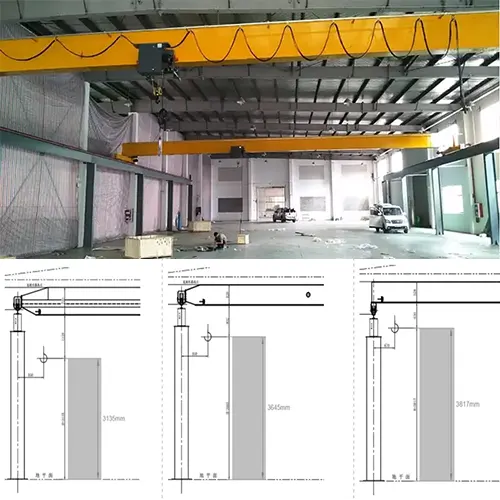
Single Girder Telescopic Cantilever Overhead Bridge Crane
Flexible Lifting Beyond Building Boundaries
Most Important Takeaway
A single girder telescopic cantilever overhead bridge crane extends the working reach of a traditional overhead crane beyond the building edge, enabling direct indoor-to-outdoor or dock-side material transfer without additional ground cranes or structural expansion.
- Extends lifting coverage beyond standard workshop runway limits
- Enables direct loading and unloading at building edges and outdoor zones
- Reduces reliance on forklifts, mobile cranes, and manual transfer
- Improves workflow efficiency in compact industrial layouts
- Integrates telescopic extension with standard overhead crane movement
- Suitable for retrofit projects and space-constrained factories
How can we load or unload materials outside the workshop without installing a gantry crane?
By using a telescopic cantilever extension that reaches beyond the building structure from an overhead runway system.
How can factories handle trucks or outdoor storage without extra lifting equipment?
The crane extends its cantilever arm outside the building to directly lift or place materials on vehicles or ground storage areas.
How can we improve space utilization inside small workshops?
By shifting loading and unloading operations outside the building boundary without occupying internal floor space.
How can we reduce forklift dependency in material handling?
The crane performs direct vertical lifting and horizontal transfer between indoor and outdoor zones.
Can existing buildings be upgraded without major structural changes?
Yes, the system integrates into existing runway beams with minimal modification.
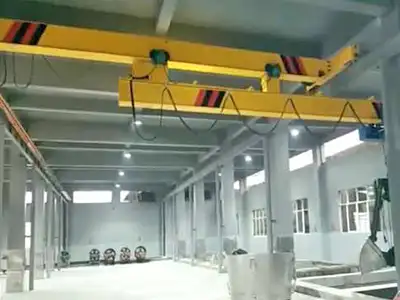
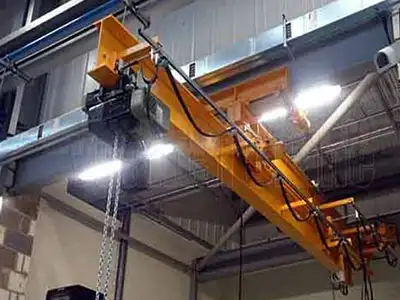
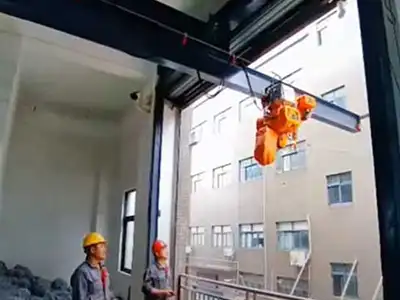
Concept Overview: Beyond Traditional Overhead Cranes
A single girder telescopic cantilever overhead bridge crane is developed to deal with a very practical limitation in many workshops: the crane can only work inside the building span. Once the load needs to go outside—toward a truck, yard, or loading dock—traditional overhead crane systems stop short. That is where the telescopic cantilever design comes in.
In simple terms, the crane keeps the normal overhead traveling structure, but one side of the main girder can extend outward like an adjustable arm. Not fixed. It moves in and out depending on the job. This allows lifting operations to continue beyond the building wall line, which is often the working boundary in factories.
In many industrial workshops, especially steel fabrication plants, machinery assembly workshops, and logistics warehouses, the loading area is not inside the building. It is outside, near trucks or storage yards. This design connects both sides without needing a separate gantry crane or forklift handling in between.
Key practical points of this concept:
- Works as a standard single girder overhead bridge crane inside the workshop
- Adds a telescopic cantilever extension for outside loading and unloading
- Supports direct transfer between indoor production line and outdoor transport area
- Reduces material re-handling, especially for heavy or long components
- Fits retrofit projects where building structure cannot be expanded
In factory operation, this is often used in a very straightforward way: the crane travels to the end of the runway, the cantilever extends outward, and the load is placed directly onto a truck bed. No extra lifting step in between. That is the main working idea.
Structural Design and Working Architecture
The structure of a single girder telescopic cantilever overhead crane is based on a conventional single girder overhead crane system, with an additional extendable cantilever section designed for outdoor reach. In practical industrial use, this configuration is selected when factories need both stable indoor lifting and flexible access to external loading or storage areas.
Main structural components – Single main girder with runway support
The single main girder runs along overhead runway beams installed on building columns or steel frame structures. It serves as the primary load-bearing element for horizontal crane movement inside the workshop.
- Main girder travels along runway beams fixed to building structure
- Handles horizontal movement across workshop span
- Common structure in single girder overhead crane systems
- Suitable for workshop and warehouse lifting operations
Main structural components – Telescopic cantilever beam section
The telescopic cantilever beam is installed on one side of the main girder and can extend outward beyond the building boundary. This allows the crane to reach outdoor working zones without installing a separate lifting system.
- Extends beyond workshop boundary for outdoor reach
- Used for truck loading, yard stacking, and external handling
- Controlled extension based on working distance requirements
- Supports indoor outdoor material transfer operations
Main structural components – Electric hoist system
The electric hoist system, available in wire rope or chain hoist configurations, is mounted on a trolley that travels along the main girder. It is responsible for vertical lifting and lowering of materials.
- Wire rope or chain hoist options available
- Mounted on trolley for horizontal positioning
- Handles vertical lifting and lowering operations
- Equipped with overload protection and limit switches
Main structural components – Motor-driven travel system
The end carriage motor system drives the crane along the runway beams, ensuring stable movement across the workshop. In many installations, this system is combined with VFD control to achieve smoother acceleration and braking.
- Motor-driven end carriages for crane travel
- Ensures stable movement along runway system
- Supports smooth operation across full workshop span
- Compatible with VFD soft start control systems
Telescopic mechanism and working principle
The telescopic cantilever section is the key working element of the system. It extends and retracts in a controlled manner depending on the loading position and operational requirement.
In practical operation:
- The crane travels along the indoor runway to the loading position
- The cantilever extends outward beyond the building wall
- The hoist lowers the load to trucks, trailers, or outdoor storage areas
- After operation, the cantilever retracts back into the safe indoor position
Mechanical locking devices are typically used when the cantilever is fully extended to maintain stability during lifting. Some systems also include electrical interlocks to prevent unsafe movement conditions.
In many industrial applications, operators simply describe it as: "a normal overhead crane inside the workshop, and when needed, it extends outward to finish the job outside."
Technical Advantages in Industrial Use
In factory and warehouse operation, the value of a single girder telescopic cantilever overhead bridge crane is not only in lifting capacity, but in how it changes the material flow between inside and outside the building.
Wider working coverage without ground infrastructure
The telescopic cantilever design allows the crane to extend its reach beyond the building wall, which removes the need for external rail tracks or a separate gantry crane setup.
- Covers both indoor workshop area and outdoor loading zone
- Works directly with truck beds, trailers, and yard stacking areas
- No requirement for floor rails or outdoor runway foundations
- Suitable for sites where ground space is already occupied or restricted
This is especially useful in older factories where outdoor expansion is not possible.
Faster material handling cycle
In many traditional setups, materials are moved step-by-step: crane to floor, then forklift to truck, or vice versa. The telescopic system reduces these steps.
- Direct lifting from production area to transport vehicle
- Fewer handover points between equipment
- Shorter waiting time during loading operations
- More consistent dispatch workflow during peak shipping periods
In daily operation, this means less idle time between lifting cycles.
Smoother indoor–outdoor logistics connection
The crane creates a continuous transfer line between workshop production and dispatch area. This is important in factories where production speed depends on how fast finished goods can leave the site.
- Aligns production output with transport loading
- Reduces congestion inside workshop floors
- Supports just-in-time loading operations
- Works well with variable truck positioning at loading docks
It is commonly used in steel fabrication yards, machinery assembly plants, and precast concrete production sites where heavy parts need direct shipping.
Lower infrastructure cost compared to yard cranes
Installing a full outdoor gantry crane or rail-mounted yard crane requires significant civil work, including foundations, tracks, and structural steel.
With a telescopic cantilever overhead crane:
- Uses existing building runway structure
- No separate outdoor rail system required
- No large civil foundation work for yard cranes
- Reduced installation time and structural modification cost
This makes it a practical choice for retrofit projects or medium-sized industrial upgrades where budget and downtime are controlled.
Better adaptation to limited factory space
Space limitation is one of the most common issues in industrial plants. Expansion is often not possible due to surrounding buildings or land restrictions.
- Extends working area without increasing building footprint
- Supports loading operations outside existing walls
- Works in narrow workshop layouts
- Allows flexible positioning of trucks and materials
In practice, it gives factories more usable handling range without changing the building structure.
Overall, the system is chosen not only for lifting capability, but for how it simplifies material flow. It connects production, storage, and dispatch into a single coordinated movement path, especially in sites where space and infrastructure are already fixed.
Safety and Control Systems Integration
A single girder telescopic cantilever overhead bridge crane introduces an additional working condition compared with a standard overhead crane: part of the operation happens outside the building line. That changes the risk profile and requires integrated safety control.
Telescopic position limit protection
The telescopic cantilever cannot extend freely without control points. Limit switches are installed to define safe extension and retraction travel.
- Controls maximum and minimum extension range of the cantilever
- Prevents over-extension beyond structural design length
- Ensures full retraction before crane travel resumes along runway beams
- Often combined with mechanical end stops for redundancy
In daily operation, this avoids "over-travel" mistakes during fast loading cycles.
Overload protection and load monitoring
Since the crane is used for direct truck loading and outdoor lifting, load conditions can vary more than indoor-only systems. Overload protection becomes essential.
- Load limiter installed on hoist system to monitor real-time lifting weight
- Automatic cut-off when rated capacity is exceeded
- Protects telescopic arm structure from bending stress
- Reduces risk during uneven lifting from trucks or stacked materials
In many workshop setups, operators rely on this system when handling unknown or mixed cargo weights.
Emergency stop and interlock system
The crane integrates emergency stop circuits across all movement functions. This includes lifting, traveling along runway beams, and telescopic extension.
- Single emergency stop can cut all crane motions instantly
- Prevents simultaneous unsafe movement combinations
- Electrical interlock ensures extension and travel cannot occur together
- Helps maintain control during abnormal operating conditions
This is especially important when working near building edges or loading docks with people and vehicles nearby.
Anti-sway control for load stability
When the cantilever is extended outside the building, load swing can increase due to longer working radius. Anti-sway control helps stabilize movement.
- Reduces pendulum motion during lifting and lowering
- Improves positioning accuracy when placing loads on trucks or ground
- Works together with VFD speed control for smooth acceleration and deceleration
- Useful in repetitive loading cycles with heavy steel or machinery parts
In practical use, it reduces operator correction time during final positioning.
Wireless remote control operation
Many installations use wireless remote control systems instead of fixed pendant stations. This improves visibility during outdoor extension work.
- Operator can move freely for better viewing angle during loading
- Improves alignment with truck beds or external storage areas
- Reduces blind-zone operation near building walls
- Common in workshops with mixed indoor–outdoor handling tasks
Some systems also combine pendant control for indoor movement and wireless control for extension zones.
Overall safety behavior in operation
In normal working conditions, these safety systems operate together rather than independently. Extension is restricted until positioning is correct, lifting is blocked if overload is detected, and travel is locked when the cantilever is extended.
This layered control approach ensures that even when the crane is operating partially outside the building structure, movement remains predictable and within defined working limits.
Application Scenarios in Modern Industry
The single girder telescopic cantilever overhead bridge crane is mainly used in factories where production happens inside the workshop, but loading and dispatch take place outside the building. This is a very common layout in industrial plants, especially where space is fixed and expanding the yard is not possible. The key idea is simple: one crane covers both indoor production flow and outdoor logistics without adding another lifting system on the ground.
Manufacturing workshops with external loading docks
In general manufacturing plants, finished products are often moved from assembly lines directly to trucks parked outside the workshop.
- Used for machine parts, metal frames, and assembled equipment
- Reduces forklift trips between workshop and loading yard
- Supports direct indoor-to-truck transfer through building opening
- Works well in compact factory layouts with limited dock space
This setup is often seen in medium-sized fabrication workshops and general production factories.
Steel structure fabrication facilities
Steel fabrication plants handle long, heavy, and irregular-shaped components. These are difficult to move using only forklifts or indoor cranes.
- Suitable for steel beams, columns, trusses, and welded assemblies
- Enables direct lifting from fabrication area to outdoor transport trucks
- Helps reduce multiple repositioning steps during loading
- Useful when outdoor storage is arranged beside workshop walls
In practice, this reduces congestion inside the fabrication hall.
Logistics and distribution warehouses
Warehouses often require fast turnover between stored goods and transport vehicles. The telescopic cantilever allows direct access to truck loading areas.
- Used for palletized goods, packaged materials, and bulk cargo
- Speeds up loading cycles during peak shipping periods
- Reduces dependency on forklift traffic near loading gates
- Improves coordination between storage zone and dispatch area
It is commonly used where loading docks are limited but throughput is high.
Precast concrete production yards
Precast plants produce heavy components that need controlled lifting and direct shipping to construction sites.
- Used for precast slabs, wall panels, culverts, and concrete beams
- Supports direct placement onto transport trailers
- Reduces ground handling damage risk for finished concrete products
- Helps manage outdoor stacking and dispatch operations
This is one of the more practical use cases because many precast yards operate partly outdoors.
Machinery assembly plants with truck-side loading
In equipment manufacturing and assembly facilities, completed machines are often large and cannot be moved easily inside tight workshop aisles.
- Suitable for industrial machines, press equipment, and packaged assemblies
- Enables final lifting directly to transport vehicles
- Reduces need for secondary lifting equipment at loading bay
- Supports customized truck positioning during dispatch
This helps when shipment size varies from job to job.
Construction material handling zones
Construction supply yards deal with irregular materials that need direct loading and unloading near storage areas.
- Used for scaffolding, formwork, steel bars, and construction modules
- Helps move materials between storage yard and delivery trucks
- Reduces manual handling in outdoor environments
- Works in sites where ground space is uneven or limited
It is often selected for temporary or semi-permanent construction logistics sites.
Shipyard auxiliary lifting operations
In shipyards, large components are often handled at the edge of workshops or near dock areas where vessels are assembled or repaired.
- Used for ship components, steel sections, and mechanical assemblies
- Supports loading between fabrication shops and dockside areas
- Works as auxiliary lifting support alongside larger gantry cranes
- Helps manage workflow between indoor workshops and outdoor docks
It is typically used as a supporting crane rather than a main lifting system.
Overall practical role across industries
Across all these applications, the working principle remains the same. The crane connects indoor production zones with outdoor logistics areas through a controlled extension system.
Instead of moving materials step-by-step using multiple machines, it allows a more direct transfer path from workshop to transport. This is why it is often chosen in facilities where layout cannot be changed easily, but handling efficiency still needs to be improved.
Design Considerations and Engineering Factors
A single girder telescopic cantilever overhead bridge crane is not just a standard overhead crane with an added extension. Once the cantilever goes beyond the building line, the design conditions change. The load behavior, wind influence, and structural stress distribution all need to be checked carefully before fabrication and installation. In industrial projects, this stage decides whether the crane will run smoothly for years or face repeated alignment and maintenance issues later.
Runway beam load capacity under dynamic movement
The runway system is the foundation of the whole crane. Even though the structure is called "single girder," the load still transfers into the building columns through the runway beams.
- Dynamic load increases during start-stop travel along the runway
- Cantilever extension shifts load center toward one side
- Wheel pressure distribution must be checked across full travel path
- Beam deflection limits must remain within safe operating range
In practice, many issues come from underestimating dynamic movement, not static load.
Structural reinforcement at cantilever extension points
The telescopic section creates a local stress concentration point on the main girder. This area needs additional reinforcement design.
- Reinforced joints between main girder and telescopic beam
- Stress distribution plates or boxed reinforcement sections
- Anti-bending design at full extension position
- Weld quality control for cyclic loading conditions
This is especially important in steel fabrication plants where the crane is used frequently for heavy components.
Wind exposure in semi-outdoor operation
Once the cantilever extends outside the building, it becomes exposed to wind. Even moderate airflow can affect load stability during lifting.
- Wind load affects suspended load swing during lifting and lowering
- Outdoor extension should be limited under high wind conditions
- Load positioning near building edges requires extra control time
- Operator visibility becomes more important in open-air zones
In workshop environments, operation procedures often restrict outdoor lifting during strong wind conditions.
Duty classification and working frequency
The crane duty level must match actual working cycles. A system used for frequent loading cycles behaves differently from occasional maintenance lifting.
- Light to medium duty classes are common for workshop use
- Continuous loading operations require higher thermal and mechanical endurance
- Telescopic mechanism wear increases with frequent extension cycles
- Motor and gearbox selection depends on expected duty cycle
In practical terms, higher frequency use needs stronger mechanical margins, not just higher lifting capacity.
Extension length optimization based on building layout
The telescopic reach is not fixed blindly. It must match the actual factory layout, truck positioning, and loading dock distance.
- Extension length must cover truck bed or trailer width safely
- Avoid overextension that increases bending stress on cantilever
- Align with workshop opening size and column spacing
- Balance between reach and structural stability
In many installations, a shorter, well-optimized extension performs better than a maximum-length design.
Electrical system synchronization for multi-motion control
The crane operates with multiple movements at the same time: travel, lifting, and telescopic extension. These need to be synchronized properly.
- Electrical interlock prevents unsafe simultaneous movements
- VFD control improves smooth acceleration and stopping
- Limit switches coordinate extension and travel sequence
- Control system ensures correct operation order during loading cycles
Without proper synchronization, even small timing errors can affect alignment during truck loading.
Engineering balance in installation projects
All these factors work together. Runway structure, cantilever strength, wind exposure, duty cycle, extension length, and control logic must be treated as one system.
In industrial installation work, the goal is not to maximize every parameter, but to balance reach, stability, and operational frequency based on how the crane will actually be used day to day.
Key Questions This Underhung Single Girder Telescopic Bridge Crane System Solves
This section explains typical industrial challenges solved by the underhung single girder telescopic bridge crane system in real workshop to yard material handling applications.
How can one crane handle both indoor and outdoor lifting easily?
One underhung single girder telescopic bridge crane can handle indoor and outdoor lifting by moving inside the workshop and extending its bridge girder outside when needed.
This is commonly used in "workshop to yard material handling" or "indoor outdoor crane system" setups. The crane lifts materials inside the workshop, then extends outward to place them in a yard or loading area without using another machine.
- One crane covers both indoor and outdoor areas
- No need to move materials between different equipment
- Faster and simpler material transfer process
What crane is best for workshop to yard transfer without stopping work?
A telescopic bridge crane is suitable because it can extend from inside the workshop to the outside yard in one smooth operation.
In many factories looking for "seamless indoor outdoor transfer crane," the problem is stopping work to move materials outside. The telescopic design removes this step and keeps material flow continuous.
- Moves materials directly from workshop to yard
- No interruption between production and loading
- Improves daily working speed
How can factories reduce forklift use between indoor and outdoor areas?
Factories can reduce forklift use by using a telescopic overhead crane to lift and move materials directly between indoor and outdoor zones.
Instead of forklifts carrying loads back and forth, the crane does the transfer in the air. This is safer and reduces traffic in busy workshop areas.
- Less forklift movement in workshop
- Safer working environment
- Fewer handling steps for materials
What crane can reach from inside workshop to outdoor loading dock?
A telescopic bridge crane can extend its working reach from inside the workshop to the outdoor loading dock.
In many "loading dock crane system" or "flexible reach overhead crane" needs, the distance between indoor and outdoor areas is different. The telescopic bridge adjusts its reach to match the loading position.
- Adjustable reach for different dock positions
- Works with changing yard layouts
- One crane fits multiple loading points
How can small workshops move materials easily between different areas?
Small workshops can use an underhung telescopic bridge crane because it saves floor space and extends only when needed.
For "space saving workshop crane" or "low headroom indoor outdoor crane" setups, space is limited. The underhung design keeps the floor open, while the telescopic part gives extra reach when required.
- Saves floor space in workshop
- Works well in compact factory layouts
- Helps move materials smoothly between zones
Send Us An Inquiry to Get Your Tailored Solutions
The single girder telescopic cantilever overhead bridge crane is a practical solution for extending lifting operations beyond building limits. By combining a lightweight single girder structure with a controlled telescopic extension system, it enables direct indoor-to-outdoor material handling, reduces dependency on auxiliary equipment, and significantly improves workflow efficiency in space-constrained industrial environments.
It is most valuable in modern factories where production and logistics must operate seamlessly across building boundaries without costly structural expansion.
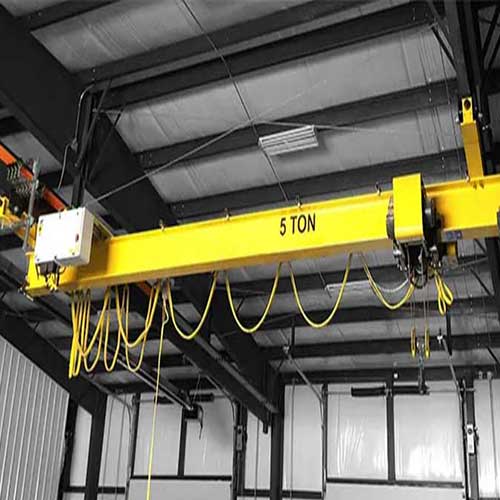

Yuantai Cranes
Overhead Crane Manufacturer with CE, ISO, SGS, CNEX Certificates.
- Main Specifications - Capacity: 0.5–550 tons | Span: up to 40m | Speed: 0.8–12 m/min | Duty: A3–A7 | Power: 380–690V, 50/60Hz | Control: pendant/remote/cabin
- Full engineering: FEA/PLC/VFD + in-house build + global delivery + on-site support, for workshops, factories, EPC contractors, industrial projects, etc.
- Support: design, manufacturing, testing, service – end-to-end, customized lifting solutions worldwide.
How to Get an Accurate Crane Price for Your Application?
Tips: Copy the spec list, fill in your details, and paste it into the form on the right/ down-below for a quick price.
- Crane type:_____ . (e.g., overhead crane, gantry crane, jib crane)
- Max weight to lift:_____ tons. (e.g., 2t, 5t, 10t, 20t, 50t)
- Lifting height:_____ m. (How high does the hook need to reach?
- Workshop width (span):_____ m . (Distance between the two crane rails)
- Travel distance:_____ m . (How long does the crane need to move along the runway?)
- Control type:_____. (Pendant / remote / cabin Control)
- Power supply:_____. (Local voltage & frequency – e.g., 380V, 50Hz, 3-phase)
- What will it be used for?_____ (e.g., steel fabrication, concrete products, mold handling, general manufacturing, etc.)
- Any special requirements?_____ (e.g., extreme temperature, dusty or explosive environment, special paint color, etc.)
Just leave a message via the contact form and our hoist and crane engineer will contact you with in 24working hours.
Get Your Custom Quote–Quick & Easy
Fill in what you know. Skip what you don't – we'll help.Any question will be reply with 24 working hours