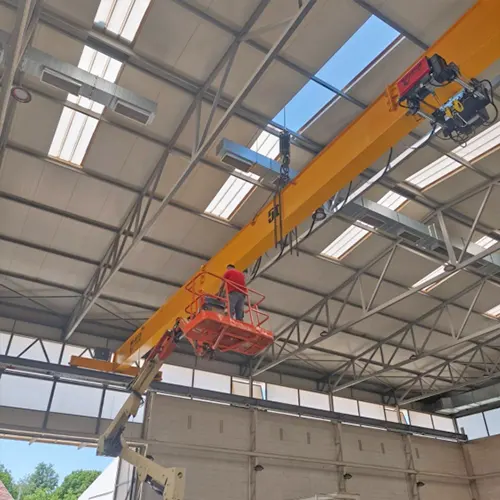
EOT Crane Singapore — Built for Your Workload, Delivered Factory Direct
Source Overhead Cranes and EOT cranes for factories, warehouses and industrial projects in Singapore. Explore customized lifting capacity, span, lifting height and crane configurations direct from Yuantai Crane.
| Crane Type | EOT / overhead bridge crane for Singapore industrial facilities; single girder for suitable light-to-medium-duty applications and double girder for heavier loads, demanding duty cycles, or higher lifting requirements; ; pendant, radio remote, cabin, PLC, |
| Crane Capacity | Typically 0.5–100 ton+; selected according to the maximum suspended load, lifting attachments, duty cycle, and operating requirements. |
| Span Length | Typically 7.5–35 m+ span; customized according to workshop width, runway layout, building structure, and required coverage. |
| Lifting Height | Typically 3–30 m; customized according to building clearance, hook height, equipment dimensions, and lifting requirements. |
| Coverage Area Type | Rectangular crane-bay coverage across production lines, storage areas, equipment maintenance zones, assembly stations, loading areas, and designated material handling areas. |
| Application | Shipyards, warehouses, manufacturing plants, machinery workshops, assembly lines, maintenance bays, logistics facilities, and industrial production areas. |
| Certifications | CE / ISO / SGS / Other third-party inspection |
| Customization | Capacity: 0.5–100 ton+; Girder: Single / Double; Type: Top-Running / Underhung / Low-Headroom; Hoist: Electric Chain / Wire Rope / Open Winch; Span: 7.5–35 m+; Lift: 3–30 m+; Duty: ISO A3–A7 / FEM 1Am–4M; Control: Pendant / Radio / Cabin / PLC; Speed: 1-S |
Crane Manufacturer: Yuantai Cranes – 30+ Years Professional Crane Manufacturer from China
Category: Southeast Asia
Tags: singapore,10tonoverheadcrane
Your Trusted Overhead Crane Manufacturer & Supplier
EOT Crane Singapore — Built for Your Workload, Delivered Factory Direct
Single Girder, Double Girder & Low-Headroom Cranes for Singapore's Shipyards and Warehouses
From shipyards to warehouses, Yuantai Cranes delivers reliable single girder, double girder, and low-headroom EOT cranes tailored to Singapore's toughest industrial environments. Tell us your capacity, span, and lifting height — we'll engineer the rest.
What Affects EOT Crane Selection in Singapore
Singapore runs a tight industrial sector. Space is limited, labor isn't cheap, and plants tend to run on strict schedules. That means crane buyers here usually care less about getting the cheapest unit and more about whether the crane will actually fit the building, hold up under real working conditions, and stay easy to maintain over a 10–15 year service life. EOT cranes show up in shipyards, marine workshops, electronics plants, precision machining shops, warehouses, and general factory floors. When we work on a Singapore enquiry, we don't just ask "how many tons?" We look at the full picture: available headroom, how close the hook needs to get to the wall, how often the crane actually runs per shift, how precise the positioning needs to be, what the building steel can carry, what power is available, and whether maintenance crews can safely reach the crane for routine service.
Singapore EOT Crane Selection Guide
This is a quick reference table we use for initial discussions. It's not a final selection—just a starting point.
| Application | Capacity | Recommended Crane | Key Technical Focus |
|---|---|---|---|
| Electronics | 1–10 t | Compact EOT | Smooth travel, compact design |
| Precision manufacturing | 1–10 t | Precision EOT | VFD, positioning accuracy |
| Logistics | 1–10 t | Single Girder EOT | Economy, reliability |
| General workshop | 1–20 t | Single Girder EOT | General-duty operation |
| Machinery maintenance | 2–20 t | Single/Double Girder | Hook approach, ease of maintenance |
| Marine engineering | 3–30 t | Single/Double Girder | Duty class, corrosion protection |
| Shipyard | 10–100+ t | Double Girder EOT | Heavy-duty lifting, wheel loads |
| Low building | 1–20 t | Low-headroom EOT | Hook height, available headroom |
| Heavy industrial workshop | 20–100+ t | Double Girder EOT | Wheel loads, duty class, structural checks |
Singapore China Import Data — HS 842611
Looking at 2024 WITS/UN Comtrade data, Singapore imported about US$8.33 million of HS 842611 products from all countries. China's share was roughly US$2.15 million across 2,725 reported items. Malaysia was the largest single supplier by value at about US$4.12 million.
China's own export data shows about US$1.89 million and 56 items shipped to Singapore in 2024. The gap between what Singapore reports importing and what China reports exporting is normal—different countries record trade data at different times, with different valuation methods, and often under different product descriptions. This is why trade statistics should be read as directional evidence, not exact accounting.
HS 842611 covers gantry and overhead travelling cranes on fixed support. It's not a perfect match for "EOT cranes only," but it's a reasonable proxy for the overhead crane sector.
What the data tells us:
- Singapore already imports overhead crane equipment from multiple international suppliers.
- China is an established supplier to Singapore, but not the dominant one.
- There's room for Chinese manufacturers to compete, provided the product quality, documentation, and support match what the market expects.
Where EOT Cranes Get Used in Singapore
Different industries in Singapore have different expectations from an EOT crane. A shipyard isn't looking for the same thing as an electronics plant, and a maintenance bay has different priorities than a logistics warehouse. What they all share is a need for equipment that fits the building, runs reliably, and doesn't create headaches for the maintenance team. Below is a breakdown of the main application areas and what we typically discuss with customers in each sector.
Marine Engineering
Marine workshops handle a lot of heavy, awkward components. Typical lifts include:
- Marine engines and propulsion equipment
- Pumps, motors, and gearboxes
- Fabricated steel sections and sub-assemblies
- Maintenance tooling and rigging gear
What matters here isn't just capacity. The crane needs to move loads smoothly without jerking, and the hook needs to reach into tight spots around machinery. Corrosion resistance also gets attention because the air in marine workshops often carries salt and moisture.
Common configuration we'd discuss:
| Parameter | Typical Range / Option |
|---|---|
| Capacity | 3–30 t |
| Span | 10–30 m |
| Lifting Height | 6–15 m |
| Duty Class | ISO A5–A6 / FEM 2M–3M |
| Hoist Type | Electric wire rope hoist |
| Control | Pendant or radio remote |
| Travel Control | VFD optional, two-speed minimum on heavier units |
| Installation | Indoor or covered workshop |
For larger marine jobs, we'd go with a double girder crane and an open winch trolley. That layout handles higher capacities better and gives maintenance crews easier access to the hoist machinery.
Shipyards
Shipyard work is heavy, repetitive, and hard on equipment. Cranes here handle steel plate, fabricated modules, engines, pumps, and all the supporting equipment that goes into a vessel before it hits the water.
Typical lifting jobs include:
- Steel plate and structural section handling
- Machinery installation inside hull sections
- Engine and auxiliary equipment maintenance
- Moving fabricated blocks between workstations
What we usually propose:
- Single girder EOT: roughly 3–20 t for smaller fab shops and auxiliary bays
- Double girder EOT: roughly 20–100+ t for main assembly halls
- Heavier units are possible, but the runway steel and building columns need to be checked first
- Duty class ISO A6–A8 / FEM 3M–5M for high-cycle work
- Radio remote or cabin control on bigger cranes
- VFD on hoist and travel for smoother load handling
One thing we always remind shipyard buyers: don't size the crane for the absolute heaviest lift you can imagine. Size it for what actually moves every day, then add margin. A crane that's too big costs more upfront, puts more load on the building, and runs less efficiently at partial load.
Precision Manufacturing
Precision shops don't need a crane that yanks a load off the floor. They need controlled movement. Think CNC machine tool changes, mold and die handling, installing a spindle or a gearbox without banging it into a machine frame.
Typical jobs:
- Loading and unloading CNC machines
- Mold and die changes
- Installing production equipment
- Machine maintenance and component swaps
- Handling precision tooling and fixtures
Features that matter here:
- VFD on hoist, trolley, and bridge travel
- Two-speed or fully variable speed control
- Creep speed for final positioning
- Adjustable acceleration and deceleration ramps
- Minimal load swing when starting or stopping
- Radio remote where the operator needs to stand close to the load
Duty class should be based on actual operating cycles, not just tonnage. A 5 t crane that runs 20 times an hour needs a different build than a 5 t crane that runs 20 times a day.
Electronics Manufacturing
Electronics plants are usually cleaner, tighter, and more sensitive to dust and vibration. Cranes here mostly handle maintenance work—pulling a compressor, swapping a machine module, moving tooling carts.
Typical lifts:
- Production equipment maintenance
- Machine component changeouts
- Tooling and fixture moves
- Occasional equipment installation or relocation
Common setup:
| Parameter | Typical Configuration |
|---|---|
| Capacity | 1–10 t |
| Span | 7.5–20 m |
| Lift Height | 4–12 m |
| Duty | ISO A3–A5 |
| Hoist | Compact electric wire rope hoist |
| Control | Pendant or radio remote |
| Travel | VFD optional, smooth start preferred |
| Environment | Indoor, often air-conditioned |
If the plant has strict cleanliness requirements, we'll talk about sealed electrical enclosures, non-shedding lubricants, and surface treatments. But we don't call a crane "cleanroom-certified" unless the customer gives us a specific classification to meet. That word gets thrown around too loosely.
Logistics and Warehousing
EOT cranes in logistics settings usually handle machinery, heavy palletized goods, maintenance operations, and moving equipment between storage and workshop areas. The loads aren't always heavy, but the crane needs to be reliable and simple to operate.
For a typical warehouse, a 1–10 t single girder EOT crane is usually the most cost-effective option.
Typical parameters:
- Capacity: 1–10 t
- Span: 8–25 m
- Lift: 6–12 m
- Duty: ISO A3–A5
- Hoist: electric wire rope hoist
- Control: pendant or radio remote
- VFD travel optional
Final capacity should be set by the heaviest regular load plus a safety margin—not by the size of the building. A big warehouse with light loads doesn't need a 20 t crane.
Machinery Maintenance
Maintenance bays don't run cranes all day, but when they do run, the lift has to be smooth and predictable. Hook approach also matters a lot—maintenance crews often need to get close to walls or columns to pull a motor or gearbox.
Typical loads:
- Electric motors
- Gearboxes
- Pumps and compressors
- Machine tools and spindles
- General industrial equipment
What we recommend:
- Capacity: 2–20 t
- Single girder for lighter loads, double girder for heavier or wider spans
- Low-headroom hoist if the building height is tight
- Pendant or radio remote
- VFD optional but useful for positioning
- Electrical cabinet positioned for easy access
- Wear parts that can be replaced without stripping the whole crane
General Industrial Workshops
For a general workshop, the crane has to match the existing runway system and the building structure. We usually start by asking for the runway gauge, rail elevation, column spacing, and available headroom.
Typical range:
- Capacity: 1–20 t
- Span: 7.5–28 m
- Lift height: 6–20 m
- Duty class: ISO A3–A6
- Power supply: 380/400/415 V, 50 Hz, 3 Ph (Singapore standard)
- Hoisting: electric wire rope hoist
- Control: pendant or radio remote
- Travel: VFD or two-speed control
- Indoor as standard; outdoor units get weather protection and better corrosion treatment
EOT Crane Solutions Yuantai Cranes for Singapore
Not every Singapore workshop needs the same crane. Some buildings are tight on headroom, some need precise positioning, and some are retrofit jobs where the runway was installed years ago. The three solutions below cover most of the situations we run into—compact cranes for space-constrained buildings, low-headroom cranes for maximum lift height, and precision-controlled cranes for shops where smooth movement matters more than raw speed.
Compact EOT Crane
Some Singapore workshops are tight. The runway is already there, the columns are close, and the roof isn't high. A compact EOT crane helps in these situations because it's built to keep the overall height and wheel loads down while still doing the job.
Typical Technical Data
| Parameter | Typical Specification |
|---|---|
| Capacity | 1–10 t |
| Span | 7.5–20 m |
| Lifting Height | 4–12 m |
| Duty Class | ISO A3–A5 |
| Hoist | Compact electric wire rope hoist |
| Hoisting Speed | About 4–8 m/min, depends on the project |
| Crane Speed | About 20–30 m/min |
| Trolley Speed | About 20–30 m/min |
| Control | Pendant or radio remote |
| Power Supply | 380/400/415 V, 50 Hz, 3 Ph |
| Motor Control | DOL, two-speed, or VFD |
| Protection | Usually IP54–IP65 depending on the component |
Design Features
- Compact end carriages that don't waste runway space
- Lighter crane dead weight, which helps existing buildings
- Lower wheel loads on the runway beams
- Hoist tucked in tight to keep overall height down
- Good fit for retrofit jobs where the building wasn't designed for a crane
The actual dimensions come from the customer's runway gauge, span, top-of-rail height, building headroom, and required hook approach. There's no point guessing these numbers—we'd rather work from a site survey.
Low Headroom EOT Crane
Low-headroom cranes solve a specific problem: the building is already there, the roof is fixed, and the customer still needs maximum lift height. In these cases, every 50 mm matters.
What We Focus On
Keeping the overall crane height down. The structure and hoist arrangement get optimized so the distance between the runway rail and the hook is as short as practical.
Maximizing hook approach. The trolley and hoist positioning should let the hook get as close to the columns and runway ends as possible. That matters more than people think, especially in maintenance bays.
Hoist position relative to the girder. We look at:
- Available headroom
- Required lift height
- Hook approach on both sides
- Girder depth
- Runway elevation
- Clearance for maintenance access
Typical Technical Data
| Parameter | Typical Range |
|---|---|
| Capacity | 1–20 t |
| Span | 8–25 m |
| Lift Height | 5–15 m |
| Duty Class | ISO A3–A6 |
| Hoist | Low-headroom electric wire rope hoist |
| Control | Pendant or radio remote |
| Travel | Two-speed or VFD |
| Application | Retrofit jobs and low buildings |
For an existing Singapore factory, the crane should be designed from an actual building survey. The important inputs are runway rail elevation, roof height, column spacing, runway beam size, available headroom, required hook height, required end approach, and the existing power supply. If the customer can't provide these, the design is just a guess.
Precision / Controlled Workshop EOT Crane
Some plants care less about speed and more about control. A crane that starts smoothly, stops without swinging the load, and can creep into position makes a big difference when you're setting a mold into a press or aligning a machine component.
Recommended Technical Features
Variable-Frequency Drive
VFDs on hoist, trolley, and bridge travel give smoother starts and stops. They also reduce mechanical shock on the crane structure and the load.
Adjustable Acceleration and Deceleration
This helps reduce:
- Load swing
- Mechanical shock to the crane
- Sudden jerks when starting or stopping
- Operator fatigue
Low-Speed Positioning
Two-speed or VFD operation lets the operator run at normal speed for travel, then drop to a creep speed for the final positioning. This is essential for mold handling and machine installation.
Reduced Load Swing
Load swing comes from bad acceleration, bad deceleration, excessive travel speed, or operator inexperience. We can address the first three through control settings. For advanced cases, anti-sway control is available, but it adds cost and complexity—most shops don't need it if the crane is set up properly.
Controlled Travel
VFD travel lets the operating speed match the job. A 20 t crane moving a large mold shouldn't be running at 30 m/min.
Compact Electrical Equipment
The electrical panel should be compact but still accessible. In precision shops, floor space is valuable, but hiding the panel where nobody can service it creates a bigger problem later.
Typical Technical Data
| Parameter | Typical Configuration |
|---|---|
| Capacity | 1–10 t |
| Span | 7.5–20 m |
| Lift Height | 4–12 m |
| Duty Class | ISO A3–A5 |
| Hoist | Electric wire rope hoist |
| Hoisting Control | VFD |
| Trolley Control | VFD |
| Crane Travel | VFD |
| Control | Pendant or radio remote |
| Power Supply | 380/400/415 V, 50 Hz, 3 Ph |
| Electrical Protection | Project-specific |
| Workshop Type | Precision or controlled manufacturing |
One note: "clean workshop" and "cleanroom" are not the same thing. If the customer needs a formal cleanroom classification, we need to specify the lubrication, materials, surface treatment, electrical components, and particle emission limits against the actual cleanroom standard. We don't use the word "cleanroom" on a standard crane.
FAQ: EOT Crane Singapore
Find answers to the most common questions about EOT cranes for Singapore factories, workshops, warehouses, shipyards and heavy industry. From capacity and cost to low-headroom designs and supplier support, this FAQ covers the key points for Singapore buyers.
What type of EOT crane is best for Singapore factories, workshops and warehouses?
For most general applications, Yuantai recommends a 1–20 t single-girder EOT crane. Low-headroom models suit buildings with limited clearance, while double-girder cranes are better for heavy loads.
- 1–20 t: General manufacturing and warehouses
- Low-headroom: Existing or low-clearance buildings
- 20–100+ t: Heavy industry, shipyards and steel fabrication
- VFD: Precision and frequent production handling
Yuantai Cranes Experience: Yuantai supplies customized single- and double-girder EOT cranes based on the customer's load, span, lifting height and workshop conditions.
What EOT crane capacity do I need for my Singapore industrial application?
Choose the capacity based on the heaviest load to be lifted, lifting frequency and duty class.
Typical ranges:
| Application | Capacity |
|---|---|
| Warehouse / Workshop | 1–5 t |
| Manufacturing | 5–20 t |
| Maintenance | 2–20 t |
| Shipyard / Marine | 10–100+ t |
| Steel / Heavy Industry | 20–100+ t |
Yuantai Cranes Experience: Yuantai engineers calculate capacity together with load spectrum, hoisting cycles, span, lift and duty classification before finalizing the crane.
How much does an EOT crane cost in Singapore?
There is no fixed price because EOT crane cost depends on capacity, span, lifting height, duty class, hoist, controls and installation scope.
For a quotation, provide:
Capacity + Span + Lift + Duty + Runway Length + Power Supply + Control Mode.
Yuantai Cranes Experience: Yuantai can provide an equipment quotation and separate the costs for crane supply, shipping, installation support and related project requirements.
Should I choose a low-headroom EOT crane for an existing Singapore factory?
Yes, if building clearance is limited. A low-headroom design can maximize usable hook height without major building modification.
Typical range:
1–20 t | 7.5–25 m span | 5–15 m lift | ISO A3–A6
Yuantai Cranes Experience: Yuantai can optimize the hoist position, end carriage and crane dimensions according to the existing runway and building clearance.
What technical specifications are required for an EOT crane in Singapore?
The key specifications are capacity, span, lift, duty class, hoist, power supply and control system.
Typical configuration:
- Capacity: 1–550 t
- Span: 7.5–35 m+
- Lift: 6–30 m+
- Duty: ISO A3–A8
- Power: 380/400/415 V, 50 Hz, 3 Ph
- Control: Pendant / Radio / Cabin
- Travel: Two-speed / VFD
Yuantai Cranes Experience: Yuantai designs the electrical and mechanical system according to the customer's load spectrum, operating environment and building conditions.
Can a Chinese EOT crane manufacturer supply and support a crane project in Singapore?
Yes. Yuantai can support the project from engineering and manufacturing through FAT, export and commissioning support.
Typical process:
Design → Manufacturing → Inspection → FAT → Load Test → Shipping → Installation Guidance → Commissioning Support
Yuantai can supply single/double-girder EOT cranes, low-headroom cranes, heavy-duty cranes, wire rope hoists, EOT crane kits and electrical systems.
Yuantai Cranes Experience: The company provides project documentation including drawings, FAT records, load-test reports, manuals and spare-parts lists, helping Singapore customers coordinate equipment supply with local installation teams.

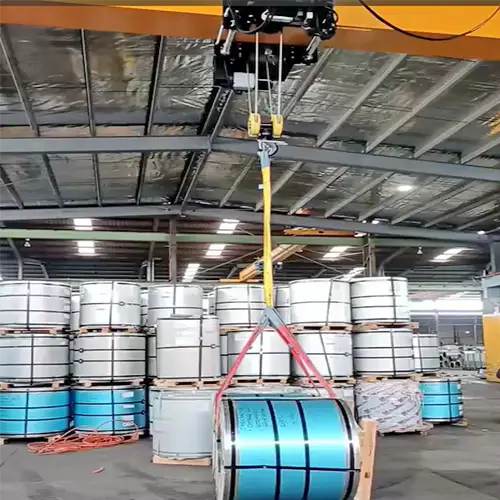
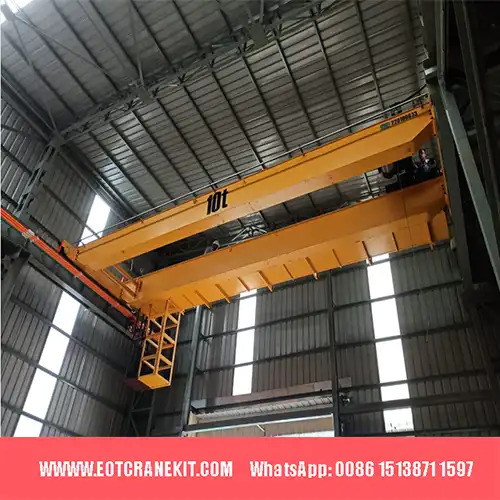
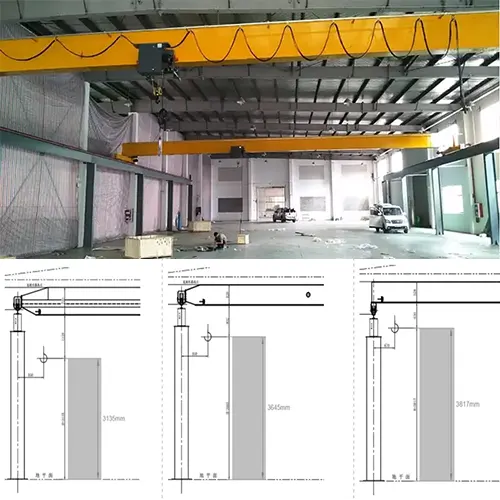


Yuantai Cranes
Overhead Crane Manufacturer with CE, ISO, SGS, CNEX Certificates.
- Main Specifications - Capacity: 0.5–550 tons | Span: up to 40m | Speed: 0.8–12 m/min | Duty: A3–A7 | Power: 380–690V, 50/60Hz | Control: pendant/remote/cabin
- Full engineering: FEA/PLC/VFD + in-house build + global delivery + on-site support, for workshops, factories, EPC contractors, industrial projects, etc.
- Support: design, manufacturing, testing, service – end-to-end, customized lifting solutions worldwide.
How to Get an Accurate Crane Price for Your Application?
Tips: Copy the spec list, fill in your details, and paste it into the form on the right/ down-below for a quick price.
- Crane type:_____ . (e.g., overhead crane, gantry crane, jib crane)
- Max weight to lift:_____ tons. (e.g., 2t, 5t, 10t, 20t, 50t)
- Lifting height:_____ m. (How high does the hook need to reach?
- Workshop width (span):_____ m . (Distance between the two crane rails)
- Travel distance:_____ m . (How long does the crane need to move along the runway?)
- Control type:_____. (Pendant / remote / cabin Control)
- Power supply:_____. (Local voltage & frequency – e.g., 380V, 50Hz, 3-phase)
- What will it be used for?_____ (e.g., steel fabrication, concrete products, mold handling, general manufacturing, etc.)
- Any special requirements?_____ (e.g., extreme temperature, dusty or explosive environment, special paint color, etc.)
Just leave a message via the contact form and our hoist and crane engineer will contact you with in 24working hours.
Get Your Custom Quote–Quick & Easy
Fill in what you know. Skip what you don't – we'll help.Any question will be reply with 24 working hours