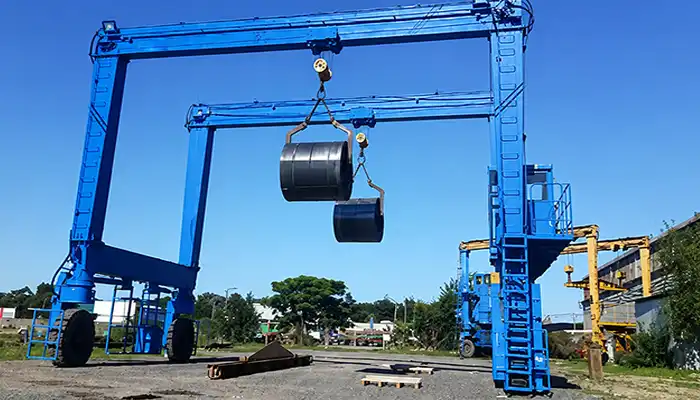
How to Select the Right RTG Crane for Steel Coil Handling
Content Quick Link
Most Important Takeaway
Choosing the right RTG crane for steel coil handling ensures maximum yard efficiency, safe material handling, and long-term operational reliability while minimizing costly mistakes.
FAQ – How to Select the Right RTG Crane for Steel Coil Handling
Key Takeaways (Questions Solved Here)
- How to accurately define coil weights and dimensions for crane sizing.
- How yard layout and travel lanes impact RTG crane selection.
- How duty cycle and handling frequency determine crane durability.
- How to decide the right level of automation for operational efficiency.
- How to apply capacity safety margins to prevent overload risks.
- Common buyer mistakes to avoid in final RTG crane purchase.
Q1: How do I accurately define coil weights and dimensions for crane sizing?
A: Measure the lightest, heaviest, and average coil weights, and note any non-standard widths, diameters, or bundles.
- Coil dimensions determine which lifting tools (C-hooks, clamps) are compatible.
- Weight ranges affect crane capacity and wheel load calculations.
- Consider future product changes to ensure the crane can handle upcoming variations.
Q2: How does yard layout and travel lanes impact RTG crane selection?
A: The crane must fit the aisle widths, turning radii, and stacking zones without interference from other equipment.
- Narrow lanes or tight corners can slow operations and increase collision risk.
- Mapping high-frequency travel paths improves efficiency.
- Ground strength and pavement quality affect crane stability and safety.
Q3: How do duty cycle and handling frequency determine crane durability?
A: Match the crane's motor and hoist capacity to the number of lifts per day and peak operational periods.
- Continuous high-frequency lifting requires cranes rated for sustained operation.
- Multi-lift or bundled handling increases motor load and heat generation.
- Choosing a crane without adequate duty cycle may lead to premature wear and downtime.
Q4: How do I decide the right level of automation for operational efficiency?
A: Select between manual, semi-automated, or fully automated systems based on yard size, handling volume, and workflow complexity.
- Manual: Lower cost, flexible, operator-dependent.
- Semi-Automated: Guidance systems and collision avoidance improve efficiency.
- Fully Automated: Remote operation and yard management integration maximize throughput.
- Consider future growth and labor availability when choosing automation.
Q5: How do I apply capacity safety margins to prevent overload risks?
A: Always add a 10–30% margin above the heaviest coil when specifying crane and attachment capacities.
- Safety margins cover unexpected weight variations, bundled coils, and environmental factors like wind.
- Hoists, hooks, and trolleys should be rated for the same margin.
- Proper margins reduce wear, maintenance, and the risk of accidents.
Q6: What are common buyer mistakes to avoid in final RTG crane purchase?
A: Avoid overlooking coil variation, yard layout, duty cycle, automation, capacity margins, and integration with existing workflows.
- Neglecting coil size variations or future products leads to underpowered cranes.
- Misjudged aisle widths or turning radii create operational bottlenecks.
- Failing to match duty cycle and automation to actual operations increases downtime.
- Skipping safety margins or ignoring workflow integration can compromise safety and efficiency.
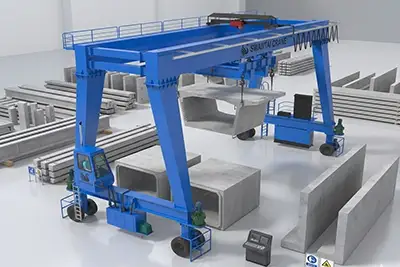
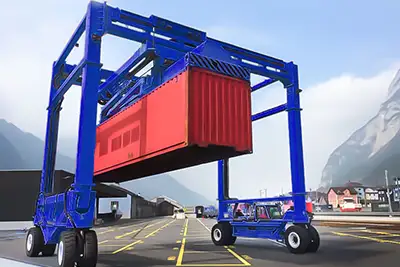
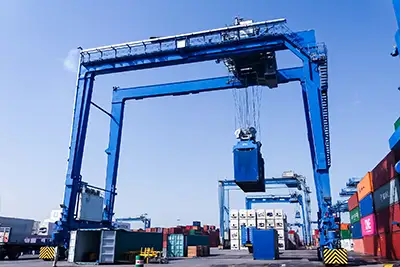
Types of Rubber Tyred Gantry Cranes for Steel Coils
In steel coil handling, different yards need different types of rubber tyred gantry cranes. The right choice depends on coil weight, working speed, yard layout, and how often the crane is used.
Rubber Tyred Gantry Crane can be built in several versions, each designed for a specific working condition.
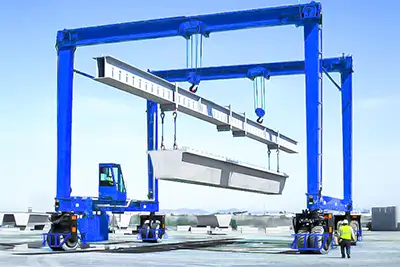
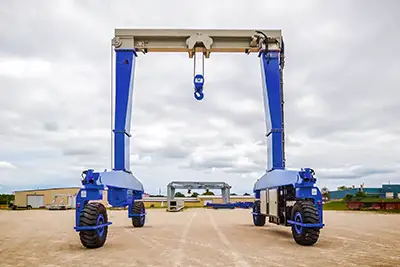
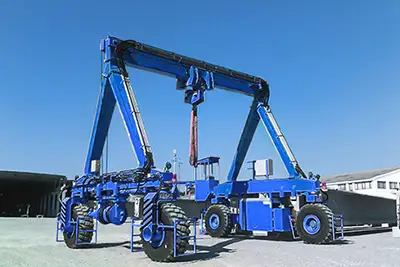
Steel Coil Specifications
Before choosing an RTG crane, you need a clear picture of the steel coils you'll be moving. Size, weight, and surface conditions directly affect crane selection, lifting tools, and safety. Getting this right early saves time, money, and headaches later.
Coil Weight and Dimensions
Knowing the weight and size of your coils is critical. Even small differences can change which crane is safe and effective for your yard.
- Weight Range: Identify the lightest, heaviest, and average coil you handle. Always plan for the heaviest coil with a safety margin.
- Non-Standard Sizes: Some coils may be wider, thicker, or longer than standard specs. Make note of any bundles or irregular shapes.
- Impact on Lifting Tools: The size of the coil determines whether you use a C-hook, clamp, or custom attachment. Incorrect sizing slows operations and increases risk.
Material Type and Surface Conditions
Different steel types and surface conditions influence how safely and efficiently coils can be lifted.
- Hot-rolled: heavier, softer surface.
- Cold-rolled: smoother, tighter tolerances.
- Coated or painted: requires non-marking attachments to avoid damage.
Surface Considerations:
- Slick or oily surfaces may require specialized clamps or anti-slip attachments.
- Scale or rough surfaces can affect gripping and stability during lifts.
Handling Requirements
How you move the coils matters as much as what you lift. Plan carefully to reduce downtime and maintain safety.
Single-Lift vs. Multi-Lift:
- Single-lift: simpler, slower for high volumes.
- Multi-lift: faster for large operations but needs stronger trolleys and precise crane control.
Safety Considerations:
- Ensure attachments and hoists exceed your maximum coil weight.
- Maintain proper clearance when stacking coils.
- Consider environmental factors like wind or uneven ground affecting stability.
Practical Tip
Always document coil weights, dimensions, and surface conditions before evaluating RTG cranes. This creates a clear reference for crane capacity, lifting tools, and yard planning.
Yard Space and Layout Considerations
The layout of your steel coil yard plays a huge role in RTG crane efficiency. Even a powerful crane can become a bottleneck if the space isn't planned properly. Paying attention to lane widths, turning space, ground conditions, and existing equipment can save both time and money.
Yard Size and Crane Travel
Before picking a crane, you need to map out the yard and understand how the RTG will move.
- Lane Widths: Make sure lanes are wide enough for safe travel without scraping stacks or other equipment.
- Turning Radii: RTG cranes need space to pivot safely, especially at the ends of aisles or near stack zones.
- Stacking Zones: Position coil stacks so the crane can reach all coils without unnecessary travel.
Practical Tip: Mark high-traffic lanes and consider future expansion when planning aisle widths and crane travel paths.
Ground and Pavement
A crane is only as stable as the surface it moves on. Poor ground conditions can lead to misalignment, uneven lifting, and even accidents.
- Soil Bearing Capacity: Check the soil strength to ensure it can support the crane's wheel loads, especially under heavy coil lifts.
- Concrete Pavement Strength: Pavement should resist cracking or settling over time. Reinforced concrete often works best.
- Maintenance Considerations: Regular inspections prevent pavement damage from turning or frequent travel.
Interference With Existing Equipment
Crane movement doesn't happen in isolation. Consider all other equipment in the yard.
- Forklifts and Conveyor Systems: Ensure cranes do not block these paths or create collision hazards.
- Other Gantries or Cranes: Plan travel paths to avoid overlapping or crossing operations.
- Safety Zones: Keep sufficient buffer zones around high-traffic areas for operator visibility and accident prevention.
Optimizing Material Flow
Even the most powerful RTG crane can underperform if coils aren't placed strategically. Material flow planning improves speed and reduces handling errors.
- Align Travel Paths: High-frequency handling zones should be easy for the crane to access without reversing or tight turns.
- Minimize Travel Distance: Position incoming and outgoing coil areas to reduce unnecessary movement.
- Stacking Strategy: Group coils by weight, size, or delivery schedule to streamline operations.
Practical Tip: Simulate daily operations on paper or using CAD tools before finalizing crane placement and aisle width. This helps identify bottlenecks and reduces trial-and-error adjustments later.
Duty Cycle Requirements
The duty cycle is critical when selecting an RTG crane. It's not just about lifting the heaviest coil once—you need a crane that can handle daily operations without frequent breakdowns. The duty cycle directly influences motor sizing, hoist durability, and overall crane reliability.
Frequency of Lifts
The number of lifts per day or per shift affects how robust your crane needs to be.
- Daily Handling Volume: Determine how many coils are lifted and moved each day. High-frequency operations require cranes with stronger motors and more durable hoists.
- Peak Handling Periods: Some yards have peak times with rapid lifting and movement. Ensure the crane can handle these spikes without overheating or slowing down.
- Continuous Operation: For yards running 24/7, consider cranes with longer duty ratings and redundant systems to prevent downtime.
Practical Tip: Track historical handling data or consult with operators to estimate realistic daily and peak lifts before finalizing crane specifications.
Load Handling Patterns
Not all lifts are the same. The way you handle coils affects crane selection and long-term maintenance.
- Single Coil Lifts: Easier on the crane, simpler hoist requirements, but slower for large volumes.
- Multi-Coil or Bundled Lifts: Faster for bulk handling, but requires stronger hoists, trolleys, and precise crane control.
- Hoist and Motor Impact: Higher frequency or bundled lifting increases motor load and heat generation, so select equipment rated for continuous heavy use.
Practical Tip: Match the crane's lifting pattern to your yard's typical workflow rather than just the maximum coil weight. This prevents premature wear.
Reliability Expectations
A crane is an investment. Choosing one that can handle your duty cycle reliably protects both productivity and safety.
- Long-Term Operation: Select cranes designed for your expected operational lifespan, including high-frequency or 24/7 operations.
- Component Durability: Ensure hoists, brakes, and wheels are rated for your specific duty cycle.
- Maintenance Planning: Factor in easy access for inspections and replacement of high-wear components to keep downtime low.
Practical Tip: Even if two cranes have similar lifting capacity, the one designed for higher duty cycles will last longer and reduce operational headaches.
Automation Level Selection
Automation can make a big difference in how smoothly your RTG crane operates, but the right choice depends on your yard size, handling volume, and budget. Understanding the options ensures you get a system that meets both current and future needs.
Manual Operation
Manual RTG cranes are still widely used in many yards, especially smaller operations.
- Flexibility: Operators can adjust quickly to changes in yard layout or coil handling priorities.
- Lower Upfront Cost: Less investment in control systems compared with automated solutions.
- Operator Dependence: Productivity depends on skill and experience; errors can slow operations or increase risk.
Practical Tip: Manual cranes work well for yards with low daily volume or frequent layout changes where flexibility is more important than speed.
Semi-Automated RTG
Semi-automated systems add technology to assist operators, improving safety and efficiency without full automation.
- Guidance Systems: Cranes are partially guided along lanes, reducing operator error and improving travel speed.
- Collision Avoidance: Sensors detect obstacles, other cranes, or yard equipment, enhancing safety.
- Operational Efficiency: Reduces repetitive strain on operators and improves throughput during peak periods.
Practical Tip: Semi-automated RTGs are ideal for medium-sized yards or those transitioning from fully manual operations. They strike a balance between cost and performance.
Fully Automated RTG
Fully automated RTG cranes offer the highest efficiency but come with higher initial investment.
- Remote Operation: Operators can control cranes from a central station or control room, reducing on-site risk.
- Yard Management Integration: Automated cranes can communicate with scheduling software, optimizing coil movement and reducing idle time.
- Optimized Throughput: Continuous, precise movements reduce cycle times and maximize handling capacity.
Practical Tip: Fully automated RTGs are most beneficial in large yards with high throughput or complex stacking requirements where every minute counts.
Buyer Considerations
When choosing the automation level, weigh both cost and operational impact.
- Initial Investment vs. Long-Term Efficiency: Higher automation reduces labor dependency and improves reliability but requires more upfront capital.
- Scalability: Consider whether your yard may expand in the future and if automation can be upgraded without replacing the entire system.
- Maintenance and Support: Automated systems require skilled technicians and reliable software support.
Practical Tip: Select the automation level that fits your current handling needs, but also think ahead to growth, labor availability, and safety improvements.
Capacity Safety Margins
Even if a crane technically matches the maximum coil weight, you need to include safety margins to protect both people and equipment. Lifting steel coils is not just about meeting numbers—it's about handling unexpected loads, environmental factors, and long-term wear.
Defining Safe Load Limits
A crane's rated capacity is the starting point, not the finish line. Always build in a buffer for safety.
- 10–30% Margin: Plan for the heaviest coil plus an additional 10–30% to account for miscalculations, uneven loads, or bundled coils.
- Unexpected Variations: Coils can vary slightly in weight or shift during lifting; the margin ensures the crane can handle it safely.
- Operational Confidence: Operators can lift without constantly worrying about overloading the system.
Practical Tip: Always check the maximum coil weight your yard expects and apply the margin before evaluating crane options.
Hoist and Hook Considerations
Attachments are only as strong as their rated capacity. Even small misalignments or wear can turn a heavy lift into a safety issue.
- Rated Capacity Compliance: Hoists, hooks, and trolleys must meet or exceed the maximum load plus safety margin.
- Attachment Wear: Regular inspection of hooks and clamps prevents fatigue failures.
- Lifting Tool Selection: Match C-hooks, clamps, or spreaders to both coil size and weight for stable lifting.
Practical Tip: Don't assume a crane rated for a load can safely lift the coil without checking that attachments are rated for the same or higher weight.
Environmental Factors
Outdoor conditions affect lifting safety and crane performance.
- Wind: High winds can sway coils, making lifts unstable.
- Heat and Cold: Extreme temperatures can impact cable strength, hydraulics, and motor efficiency.
- Exposure: Outdoor RTG cranes may face rain, snow, or debris, which can reduce friction and affect stability.
Practical Tip: Incorporate environmental conditions into your load calculations, and use weather monitoring for heavy lifts.
Maintenance and Wear
Over time, even the best cranes experience wear. Safety margins protect both equipment and operations.
- Component Degradation: Motors, brakes, and hoists lose efficiency with use; safety margins prevent overload.
- Routine Inspection: Regular checks help ensure long-term reliability under repeated heavy lifting.
- Downtime Reduction: Proper margins reduce emergency stops or accidents caused by overloading worn components.
Practical Tip: Treat safety margins as part of your preventive maintenance strategy—it's cheaper than repairing damage from overloading.
Common Buyer Mistakes
Even experienced buyers can make costly errors when selecting an RTG crane for steel coil handling. Most issues don't come from the crane itself—they stem from overlooked details during planning. Knowing these common mistakes helps you avoid delays, extra costs, and operational headaches.
Ignoring Variation in Coil Dimensions or Future Product Changes
Many buyers focus only on current coil sizes. This can be risky.
- Coils may vary slightly in width, diameter, or weight; a crane designed for only one size may struggle with outliers.
- New product lines or changes in steel thickness can exceed initial crane capacity if not anticipated.
- Plan for both current and future handling requirements to avoid underpowered equipment.
Underestimating Yard Layout Constraints and Turning Radii
Crane performance is tightly linked to how much space it has to move.
- Narrow aisles or tight corners can slow down travel or cause collisions.
- Misjudging turning radii can limit the crane's reach or create unsafe maneuvers.
- Simulate crane travel paths in the yard before purchase to identify potential bottlenecks.
Selecting Cranes with Insufficient Duty Cycle or Automation Features
Some buyers choose based on maximum load alone, ignoring daily operation requirements.
- Cranes rated for occasional heavy lifts may overheat or fail under continuous operation.
- Lack of automation may slow high-volume yards or increase operator errors.
- Match crane duty cycle and automation level to actual yard workflow, not theoretical maximums.
Overlooking Capacity Safety Margins for Peak Operations
Even a crane that handles the average coil may struggle with occasional heavy lifts.
- Not adding a safety margin increases risk of overload and equipment damage.
- Peaks in production or bundled lifting can exceed nominal crane capacity.
- Always plan for maximum expected weight plus an extra 10–30% margin.
Neglecting Integration with Existing Systems and Operational Workflows
A new crane does not operate in isolation; it must fit your current processes.
- Ignoring material flow patterns can slow down overall yard efficiency.
- Failing to integrate with yard management software or conveyors reduces automation benefits.
- Proper planning ensures the crane complements existing operations rather than creating bottlenecks.
Practical Tip: Review each of these common mistakes during the final purchase stage. A checklist that addresses coil size, yard layout, duty cycle, safety margin, and system integration dramatically reduces the risk of unexpected downtime or costly modifications.
Final Decision Checklist
At this stage, all the planning comes together. A clear checklist ensures nothing is overlooked before making the final RTG crane purchase. Following this step-by-step guide helps avoid costly mistakes, reduces downtime, and ensures safe, efficient steel coil handling.
Confirm Coil Weights and Dimensions
Start with the core of your operation: the coils themselves.
- Verify minimum, maximum, and average coil weights to match crane capacity.
- Note any non-standard diameters, widths, or bundled loads.
- Make sure lifting tools like hooks or clamps are compatible with all coil types.
Practical Tip: Documenting coil specs now saves headaches during installation and operation.
Map Yard Layout, Aisle Widths, and Travel Paths
Ensure the crane can move safely and efficiently through your yard.
- Measure aisle widths and turning radii to prevent collisions.
- Identify stacking zones and high-frequency handling areas.
- Check for interference with conveyors, forklifts, or other cranes.
Practical Tip: Use diagrams or CAD simulations to visualize crane movement before finalizing the layout.
Evaluate Duty Cycle Requirements for Peak Handling Periods
The crane should handle both average and peak workloads without strain.
- Assess daily lifting frequency and peak period demands.
- Determine if operations are single-lift or multi-lift.
- Match motor and hoist specifications to expected workload.
Practical Tip: Select cranes rated for continuous operation if your yard runs multiple shifts or 24/7.
Decide on Automation Level
Choose the level of automation that suits your yard's size, volume, and workflow.
- Manual: Flexible, lower cost, operator-dependent.
- Semi-Automated: Guidance systems and collision avoidance enhance efficiency.
- Fully Automated: Remote operation, integration with yard management, and optimized throughput.
- Consider future expansion and labor availability when making the choice.
Apply Safety Margins to Crane and Attachments
Never rely on just the maximum rated capacity.
- Add 10–30% above the heaviest expected load.
- Ensure hoists, hooks, and trolleys can handle the same margin.
- Factor in environmental conditions like wind, rain, and temperature extremes.
Practical Tip: Safety margins protect your investment and reduce the risk of unexpected downtime.
Review Common Mistakes to Avoid Operational Risks
Double-check that you're not repeating typical buyer errors.
- Account for variations in coil sizes and future product changes.
- Confirm yard layout and turning space are sufficient.
- Ensure duty cycle and automation meet operational needs.
- Avoid ignoring integration with existing workflows.
Practical Tip: Running through this checklist with your team before ordering ensures alignment and avoids costly surprises.
Conclusion
Selecting the right RTG crane for steel coil handling is a critical final-stage decision that affects safety, productivity, and ROI. By systematically assessing coil specifications, yard layout, duty cycles, automation needs, and safety margins—and avoiding common pitfalls—buyers ensure a crane solution that performs reliably for years. Documenting these decisions provides a clear, auditable roadmap for successful steel coil yard operations.

Article by Bella ,who has been in the hoist and crane field since 2016. Bella provides overhead crane & gantry crane consultation services for clients who need a customized overhead travelling crane solution.Contact her to get free consultation.
Yuantai Cranes
Overhead Crane Manufacturer with CE, ISO, SGS, CNEX Certificates.
- Main Specifications - Capacity: 0.5–550 tons | Span: up to 40m | Speed: 0.8–12 m/min | Duty: A3–A7 | Power: 380–690V, 50/60Hz | Control: pendant/remote/cabin
- Full engineering: FEA/PLC/VFD + in-house build + global delivery + on-site support, for workshops, factories, EPC contractors, industrial projects, etc.
- Support: design, manufacturing, testing, service – end-to-end, customized lifting solutions worldwide.
How to Get an Accurate Crane Price for Your Application?
Tips: Copy the spec list, fill in your details, and paste it into the form on the right/ down-below for a quick price.
- Crane type:_____ . (e.g., overhead crane, gantry crane, jib crane)
- Max weight to lift:_____ tons. (e.g., 2t, 5t, 10t, 20t, 50t)
- Lifting height:_____ m. (How high does the hook need to reach?
- Workshop width (span):_____ m . (Distance between the two crane rails)
- Travel distance:_____ m . (How long does the crane need to move along the runway?)
- Control type:_____. (Pendant / remote / cabin Control)
- Power supply:_____. (Local voltage & frequency – e.g., 380V, 50Hz, 3-phase)
- What will it be used for?_____ (e.g., steel fabrication, concrete products, mold handling, general manufacturing, etc.)
- Any special requirements?_____ (e.g., extreme temperature, dusty or explosive environment, special paint color, etc.)
Just leave a message via the contact form and our hoist and crane engineer will contact you with in 24working hours.
Get Your Custom Quote–Quick & Easy
Fill in what you know. Skip what you don't – we'll help.Any question will be reply with 24 working hours