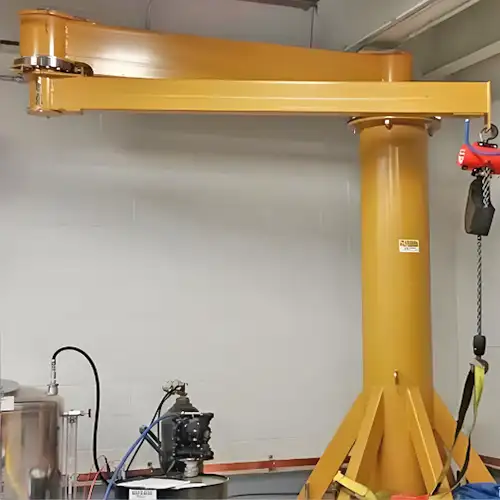
Articulating Jib Crane for Narrow Spaces - Folding Arm Jib Cranes
Articulating jib cranes for narrow workspaces. Compare low headroom jib crane types, capacities, applications, installation & buying tips for safe lifting.
| Crane Type | Articulating jib crane with foldable arm for limited space workshops and facilities |
| Crane Capacity | 0.25 ton to 1 ton, hot sale 500kg |
| Span Length | Customized |
| Lifting Height | Customized |
| Coverage Area Type | The articulating jib crane provides a flexible multi-segment circular coverage area. |
| Application | Material handling, lifting, positioning, assembly, maintenance, loading/unloading. The knuckle-arm design allows operators to reach around machinery, workstations, and obstacles, making it ideal for limited-space workshops, assembly lines, maintenance fac |
| Certifications | CE / ISO / SGS / Other third-party inspection |
| Customization | Customized material handling cranes solutions available for indoor, outdoor, hazardous, corrosive, c |
Crane Manufacturer: Yuantai Cranes – 30+ Years Professional Crane Manufacturer from China
Category: Low Built Cranes & Hoists
Tags:
Your Trusted Low Headroom Articulating Jib Crane Manufacturer & Supplier
Articulating Jib Crane for Narrow Spaces:
Complete Buyer's Guide for Confined Workstation Lifting
Why Narrow Workstations Create Material Handling Challenges
Narrow workstations are common in machining shops, welding areas, repair bays, assembly lines, and small production cells. These work areas are often designed around fixed equipment first, while lifting and material movement are added later. As production grows, workers may need to lift motors, steel plates, molds, fixtures, fabricated parts, or machine components in spaces that were never planned for a forklift or a full overhead crane system. The result is usually a tight lifting path where loads must move between machines, around columns, above worktables, or into assembly positions with limited clearance.
Common Problems Found in Small Work Areas
Small industrial work areas often have several obstacles operating at the same time. The issue is not only the available floor area, but also the lifting radius, hook coverage, headroom, load travel path, and operator control during lifting operations.
Typical challenges include:
- Limited space between machines and production equipment
- Restricted lifting paths above workstations
- Narrow aisles that cannot support forklift movement
- Columns, walls, pipes, and electrical cabinets near the lifting zone
- Worktables, fixtures, and stored materials blocking the load path
- Limited room for workers to stand clear during lifting operations
- Difficulty positioning heavy parts accurately during assembly or repair
For these applications, lifting equipment must be selected based on the actual workstation layout rather than lifting capacity alone. A crane may be rated for sufficient load, but still be unsuitable if it cannot reach or bypass obstacles.
Machinery Blocks Lifting Paths
Production machinery is often the main reason why lifting becomes difficult in compact workshops. Machines are installed close together to save space and reduce material travel distance, but this limits lifting access.
Common equipment that blocks lifting paths includes:
- CNC machining centers
- CNC lathes
- Milling machines
- Press brakes
- Hydraulic presses
- Welding stations
- Robotic welding cells
- Assembly fixtures
- Test benches
- Packaging equipment
- Material racks and tool cabinets
In many cases, loads must be lifted from a pallet, moved around machinery, and placed into fixtures. If the crane cannot bypass obstacles, manual intervention is still required, increasing safety risks. Articulating or knuckle-type jib cranes are often used to improve reach and obstacle avoidance in such layouts.
Limited Floor Space
Floor space constraints are a primary limitation in small workshops. Forklifts require turning radius, aisle clearance, and unobstructed travel paths, which are often unavailable in dense layouts.
Narrow work areas may include:
- Tight aisles between production lines
- Congested welding and fabrication stations
- Small maintenance bays
- Existing assembly lines
- Workstations located close to walls
- Material storage placed beside machinery
- Shared operating areas used by multiple workers
In such conditions, floor-mounted cranes must be carefully positioned. Wall-mounted or column-mounted jib cranes are often used to avoid occupying valuable floor area while still providing local lifting capability.
Structural Obstacles
Many workstations are installed in existing buildings where structural elements restrict crane movement and installation options.
Typical obstacles include:
- Building columns
- Concrete walls
- Steel support beams
- Low ceilings
- Pipe systems
- Ventilation ducts
- Electrical cabinets
- Fire protection lines
- Cable trays
- Doors and access routes
These obstacles can limit rotation and reduce usable working radius. Proper layout evaluation is required before selecting between wall-mounted, pillar-mounted, or articulating jib crane configurations.
Manual Handling Risks
When lifting equipment cannot fully reach the working point, manual handling is often used to complete positioning tasks. This introduces operational risks in daily production.
Common risks include:
- Worker injuries from lifting, pulling, or twisting
- Hand and finger injuries during load positioning
- Product damage from collision with equipment
- Load swing caused by manual guidance
- Fatigue from repetitive lifting tasks
- Slow assembly and maintenance operations
- Inconsistent positioning accuracy
- Higher risk with irregular or unbalanced loads
A workstation crane reduces these risks by allowing vertical lifting, controlled rotation, and accurate placement directly over the target position.
Why Conventional Lifting Equipment Often Fails
Conventional lifting systems are often designed for general material transport rather than confined workstation operation. The limitation is usually not capacity, but accessibility and control.
Common limitations include:
- Standard jib cranes cannot bypass obstacles
- Straight booms provide fixed circular coverage only
- Forklifts require clear aisles and turning space
- Forklifts lack precise vertical positioning control
- Overhead cranes may be excessive for single stations
- Bridge cranes require runway systems and building support
- Gantry cranes need clear floor travel paths
- Manual tools still require physical load guidance
For single-station lifting tasks, compact solutions such as articulating jib cranes, wall-mounted jib cranes, or column-mounted systems are often more practical. The correct selection depends on analyzing the full load path, obstacle layout, and workstation geometry before equipment specification.
What Is an Articulating Jib Crane?
An articulating jib crane is a workstation lifting crane with two connected rotating arms. Unlike a standard jib crane with one straight boom, it uses a primary boom and a secondary articulated boom to move loads around obstacles, machinery, worktables, and production fixtures. It is widely used in CNC machining, welding stations, assembly lines, maintenance areas, and compact material handling cells where conventional cranes cannot provide sufficient coverage.
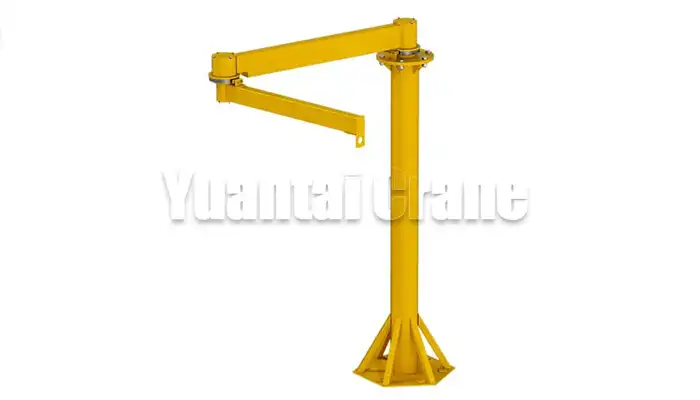
Pillar mounted articulating jib crane
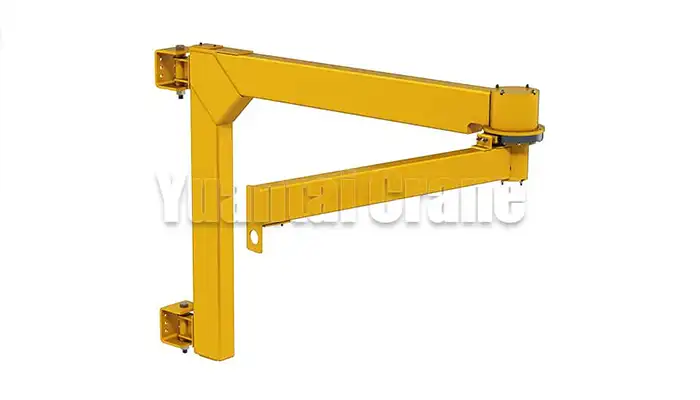
wall mounted articulating jib crane or column mounted articulating jib crane
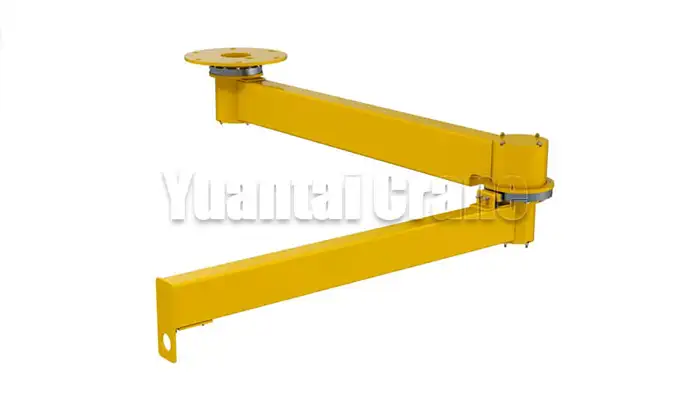
ceiling mounted articulating jib cranes
Definition and Working Principle
The crane lifts the load using a hoist and moves it through two rotating boom sections instead of one fixed boom.
The first arm is connected to the support structure, and the second arm is connected to the end of the first arm through an articulated joint. Both arms can rotate independently, allowing the operator to move loads around corners or into restricted spaces.
In practice, this allows a load to be lifted from one position, moved around machinery or walls, and placed accurately at a target location that would be inaccessible to a standard jib crane.
The system can be operated manually for lighter loads or electrically for frequent lifting tasks, depending on configuration.
Main Components
An articulating jib crane consists of multiple mechanical and electrical components that determine its performance and working range.
- Support structure
- Primary boom
- Secondary articulated boom
- Hoist system
- Trolley system
- Control system
- Rotation bearings or pivot joints
- Electrical power supply system
- Limit stops and safety devices
Each component directly affects lifting capacity, rotation range, stability, and service life.
Support Structure
The support structure carries the full crane load, including self-weight, hoist weight, lifted load, and dynamic forces during operation.
Common installation types include:
- Floor-mounted column
- Freestanding pillar
- Wall-mounted bracket
- Building column-mounted support
- Ceiling-mounted support
- Existing steel structure support
- Machine frame-mounted support for light-duty lifting
Freestanding designs use a steel column fixed to a reinforced concrete foundation, while wall-mounted systems rely on building or structural steel support.
Primary Boom
The primary boom is the first arm connected to the support structure and defines the main working radius.
It rotates around the column or wall pivot point and may have a limited angle depending on nearby obstacles.
- Steel box beam or structural steel arm
- Manual or motorized rotation
- Rotation range typically 180° to 360°
- Reinforced pivot connection
- Adjustable mechanical rotation stops
- Internal or external cable routing
Its length directly influences coverage area and structural load requirements.
Secondary Articulated Boom
The secondary boom provides flexible movement and allows the crane to reach into restricted or irregular spaces.
- Independent rotation from primary boom
- Folding movement around obstacles
- Hoist trolley travel path
- Compact profile for narrow work areas
- Mechanical collision stops
- Reinforced articulated joint
This dual-arm configuration enables operation in L-shaped, congested, or obstacle-filled workstations.
Hoist System
The hoist system is responsible for lifting and lowering loads and is selected based on duty cycle, capacity, and working environment.
- Manual chain hoist
- Electric chain hoist
- Electric wire rope hoist
- Low headroom electric chain hoist
- Variable speed electric hoist
- Explosion-proof hoist for hazardous areas
Electric chain hoists are commonly used due to compact design and suitability for workstation lifting tasks in CNC and fabrication environments.
Trolley System
The trolley system enables horizontal movement of the hoist along the boom, extending the crane's working range.
- Manual push trolley
- Geared manual trolley
- Electric traveling trolley
- Low headroom trolley
- Fixed hoist position at boom end
Electric trolley systems are preferred for frequent lifting or heavier loads, while manual systems are suitable for light-duty use.
Control System
The control system manages lifting, lowering, and movement operations.
- Pendant push-button control
- Wireless remote control
- Manual chain control
- Hoist-mounted control station
- Variable speed control
- Emergency stop system
Pendant controls are commonly used for visibility during operation, while wireless systems provide greater operator flexibility in confined spaces.
How the Dual-Arm Design Works
The dual-arm system allows the crane to move loads around obstacles instead of following a fixed circular path.
- Primary boom rotates around the support point
- Secondary boom rotates at the joint connection
- Arms can extend, fold, and reposition independently
- Load can bypass machines, walls, and fixtures
- Suitable for movement between tightly spaced workstations
This makes the system especially suitable for CNC machine loading, welding stations, and confined assembly environments where access paths are irregular.
Difference Between Articulating and Standard Jib Cranes
- Standard jib crane uses one straight boom; articulating jib crane uses two connected arms
- Standard cranes require clear circular working space
- Articulating cranes can navigate around obstacles
- Standard cranes are simpler and lower cost
- Articulating cranes provide higher positioning flexibility
- Articulating systems are preferred for CNC, assembly, and maintenance workstations
Selection depends on whether the workspace is open or obstructed by machinery and structural elements.
Why It Has Multiple Names
This crane design is referred to by different names depending on industry usage, but the structure remains the same.
- Folding jib crane
- Knuckle jib crane
- Articulated arm jib crane
- Jointed arm jib crane
- Flexible jib crane
- Two-arm jib crane
All variants describe a dual-arm articulated system designed for confined space lifting and obstacle avoidance.
Working Principle of Articulating Jib Crane
A 500kg articulating jib crane works through a dual-arm mechanical structure designed for controlled movement in restricted spaces. In industrial workshop conditions, it is used where straight-line lifting is not possible due to machines, walls, or fixtures blocking the path. The system focuses on flexible positioning rather than long-distance travel. It allows operators to move loads step by step inside a confined workstation.
How the Dual-Arm Structure Works
The crane consists of two connected arms working together to extend the lifting range.
- The first arm is fixed to the support column or wall bracket
- The second arm is connected to the end of the first arm
- The hoist is mounted at the end of the second arm
This structure allows the crane to "fold" and "extend" inside the workspace. In practical use, it behaves more like an articulated mechanical arm than a rigid boom.
Primary Arm Rotation vs Secondary Arm Movement
The movement of the crane is divided into two levels.
The primary arm rotation controls the main swing around the support point. It defines the general working direction and coverage area of the workstation.
The secondary arm movement provides additional reach inside that area. It helps the operator adjust the position of the load more precisely, especially near machines or fixtures.
- Primary arm = broad movement direction
- Secondary arm = fine positioning inside the workspace
Load Movement Path in Confined Spaces
In narrow workshops, the load does not move in a straight line. Instead, it follows a controlled path guided by the two arms.
- Lift the load vertically from pickup point
- Rotate primary arm to correct working direction
- Adjust secondary arm to bypass obstacles
- Position load at final installation point
Why It Can Bypass Machines and Obstacles
The key advantage of an articulating jib crane is its ability to move around physical barriers.
Instead of forcing a straight path, the dual-arm design allows the crane to change direction mid-movement.
- CNC machine guards
- Welding tables
- Structural columns
- Electrical cabinets
- Pipe systems
Simple Explanation of Workstation Coverage
The crane does not cover a full workshop like an overhead crane. Instead, it serves a defined workstation area.
- The load can be picked up from one side
- Moved around obstacles
- And placed accurately at the required point
Why Choose an Articulating Jib Crane for Confined Spaces?
An articulating jib crane is designed for lifting work where space is limited and the load cannot move in a simple straight or circular path. In a compact workstation, there may be machines, workbenches, safety guards, columns, and production fixtures between the lifting point and the final placement position. A standard jib crane can lift the load, but its straight boom may be blocked by equipment. An articulating jib crane uses two rotating arms, so the load can move around obstacles and reach into tighter areas. This is useful when the crane must serve one specific machine, assembly cell, maintenance bay, or production station. For many small workshops, the main benefit is not a larger lifting capacity. It is better usable coverage.
Reach Around Obstacles
The two-arm structure allows the crane to move loads around objects that would block a standard straight boom jib crane. The primary arm rotates from the support structure, while the secondary arm rotates from the end of the primary arm.
This gives the operator more control over the lifting path.
Instead of moving the load only in a fixed circular area, the operator can fold the arm inward, extend it outward, or guide the hoist around equipment. The crane can reach behind machinery, beside worktables, or into a corner workstation.
Typical obstacles that can affect lifting paths include:
- Machine guards
- Workbenches
- Production equipment
- Structural columns
- Welding screens
- Assembly fixtures
- Tool cabinets
- Storage racks
- Electrical cabinets
- Pipe systems
- Safety barriers
- Material bins
For example, a worker may need to lift a gearbox from a service cart and place it inside a machine maintenance area. A machine guard or control cabinet may block the direct path. With an articulating jib crane, the boom arms can move around the obstacle while keeping the hoist close to the required lifting point.
This reduces the need to drag, push, or manually pull the load into position.
Better Coverage in Small Areas
Small work areas are rarely open squares. They are often shaped by machine placement, walls, production lines, and storage locations. A conventional jib crane works best when it has a clear rotating area. In a crowded workstation, that clear area may not exist.
An articulating jib crane provides flexible coverage because the two arms can work in different positions. The crane can reach close to the support column, extend toward the outer working area, or fold around equipment.
This makes it suitable for workstations where the lifting area is irregular rather than circular.
Common small-area applications include:
- L-shaped workstations
- Corner workstations
- Machine service areas
- Assembly cells
- Repair stations
- Welding stations
- CNC machine loading areas
- Tooling and mold handling areas
- Inspection stations
- Packing and palletizing points
The crane does not need to cover the entire workshop. It can be designed to serve the exact lifting zone where workers handle parts every day.
L-Shaped Workstations
L-shaped workstations are common in fabrication, machining, and assembly work. One side may contain a machine or workbench, while the other side is used for parts storage, inspection, or assembly.
A standard jib crane may cover only one side of the L-shaped area because its boom cannot move around the corner. An articulating jib crane can fold its secondary arm and bring the hoist into both sections of the workstation.
This can support tasks such as:
- Lifting parts from a storage rack to an assembly table
- Moving machine components from a pallet to a repair bench
- Loading fixtures from one side of a workstation
- Transferring welded parts to an inspection area
- Positioning motors, gearboxes, valves, or fabricated components
For this type of application, the arm lengths should be selected based on the actual layout. The crane supplier should confirm the distance from the support point to each lifting position, as well as the location of machines and walls.
Corner Workstations
Corner workstations are often difficult to serve with standard lifting equipment. The work area may be located between two walls, beside a large machine, or near a building column.
A straight boom jib crane may have limited rotation because the boom can hit the wall or equipment. An articulating jib crane can work more effectively because the arms can fold and change direction.
Typical corner workstation lifting tasks include:
- Machine maintenance and part replacement
- Assembly of pumps, motors, and gear units
- Loading parts onto worktables
- Handling molds and tooling
- Moving fabricated components for welding or inspection
- Lifting heavy components from floor-level storage
A wall-mounted articulating jib crane can be a suitable option for corner workstations when the wall or building column has enough structural strength. This design keeps the floor clear and avoids installing a freestanding crane column in a narrow aisle.
Machine Service Areas
Machine service areas often have limited space around the equipment. Operators may need to remove a motor, gearbox, chuck, fixture, tool holder, hydraulic component, or machine cover during maintenance.
These parts may not be extremely heavy, but they can be difficult to handle because there is little room around the machine. Workers may need to lift the component upward first, then move it sideways to clear the machine body.
An articulating jib crane can help with this type of maintenance work because it can position the hoist close to the machine access point.
It is commonly used for:
- CNC machine maintenance
- Lathe chuck replacement
- Gearbox removal
- Motor replacement
- Hydraulic cylinder handling
- Pump and valve maintenance
- Fixture installation
- Mold change operations
- Tooling replacement
The crane can be installed beside the machine, on a nearby wall, or on a freestanding column. The best installation method depends on the available floor space, machine location, and required lifting radius.
For maintenance work, a variable speed electric chain hoist can be useful. Slow lifting and lowering speed helps operators position parts more accurately and reduces the risk of collision with machine surfaces.
Assembly Cells
Assembly cells often include worktables, fixtures, conveyors, parts bins, tools, and inspection equipment. Workers may need to lift the same type of component many times during one shift.
Without lifting equipment, workers may manually lift, turn, and position parts. This can slow down assembly work and increase fatigue, especially when parts are awkward, unbalanced, or repeatedly handled.
An articulating jib crane can support assembly cells by bringing the hoist directly above the fixture or worktable. The crane can move parts from a pallet, rack, or transfer cart into the assembly position.
Typical assembly cell applications include:
- Motor assembly
- Pump assembly
- Gearbox assembly
- Valve assembly
- Electrical cabinet assembly
- Steel component fitting
- Machinery subassembly
- Automotive parts assembly
- Agricultural equipment assembly
- Industrial equipment repair
For repetitive work, the crane can be combined with a lifting fixture, vacuum lifter, mechanical gripper, or customized lifting beam. This helps keep the load stable and reduces the need for workers to manually adjust the part.
Improved Ergonomics
Ergonomics is an important reason for installing a workstation jib crane. Even when a load is below the maximum weight that a worker can move with assistance, repeated lifting, pushing, and twisting can create long-term strain.
An articulating jib crane reduces the amount of manual force required to move heavy or awkward parts. The operator can lift the load vertically, guide it through the workstation, and lower it into position with controlled movement.
Ergonomic benefits include:
- Reduced manual lifting
- Less pulling and pushing of heavy parts
- Reduced bending and twisting
- Less repetitive lifting fatigue
- Better working posture
- Easier handling of awkward-shaped components
- Improved control when placing parts on fixtures
- Reduced need for two-person lifting
The crane does not remove the need for proper operator training. Workers should still keep clear of suspended loads, use correct lifting points, and avoid placing hands between the load and fixed equipment.
Reduced Manual Lifting
Manual lifting is still common in small workshops, especially when the load is too heavy for one worker but too light to justify a large crane system. Workers may use carts, rollers, hand chain blocks, or simple lifting tools.
These methods can work for occasional handling, but they are less suitable for repeated production tasks.
An articulating jib crane can reduce manual lifting during:
- Machine loading and unloading
- Part transfer between workstations
- Fixture loading
- Maintenance work
- Mold handling
- Component assembly
- Pallet-to-bench lifting
- Repair and refurbishment work
For light and medium loads, an electric chain hoist is often the preferred choice. It is compact, easy to control, and suitable for frequent lifting. A manual chain hoist may be enough for occasional maintenance lifting.
The correct hoist capacity should be selected with a safety margin. The rated load should cover the heaviest lifted part, lifting fixture, hook attachment, and any additional handling tool.
Better Load Positioning
In confined spaces, lifting a load is only part of the job. The more difficult part is placing it accurately.
A load may need to be lowered onto a fixture, aligned with bolt holes, placed inside a machine, or positioned on a workbench without damaging nearby equipment. A forklift or portable gantry crane may lift the load, but it may not provide enough positioning flexibility.
An articulating jib crane allows the operator to move the load closer to the required position before lowering it. The two rotating arms help the operator adjust the lifting path around obstacles.
Better load positioning can help with:
- Aligning parts with assembly fixtures
- Placing components inside CNC machines
- Positioning molds and dies
- Installing motors and gearboxes
- Loading welding fixtures
- Handling fragile or finished products
- Reducing collision risk with machinery
- Improving repeatability during assembly work
For precise lifting work, a variable speed hoist and low-speed trolley can provide better control. A tag line may also be used for longer or irregular loads, provided that operators stay clear of pinch points and suspended load areas.
Increased Workplace Safety
A well-designed articulating jib crane can improve workplace safety by reducing manual handling and providing a more controlled lifting method.
When workers rely on manual lifting or improvised handling methods, the risk of injury and product damage increases. Loads may swing, slip, or collide with equipment. Workers may also need to work too close to the load because there is no clear lifting path.
A workstation articulating jib crane can improve safety by providing:
- Controlled vertical lifting
- More predictable load movement
- Reduced manual pulling and pushing
- Less need for workers to lift heavy components by hand
- Better access to difficult lifting points
- Reduced risk of collision with machinery
- Improved operator visibility during positioning
- Defined lifting area for regular handling tasks
Standard safety features should include overload protection, upper and lower limit switches, emergency stop control, hook safety latch, and mechanical rotation stops where required.
The crane should also be inspected regularly. Pivot joints, bolts, hoist chains, hooks, trolley wheels, electrical cables, and support connections should be checked according to the maintenance schedule.
Lower Investment Than Larger Crane Systems
For one workstation or one machine service area, an articulating jib crane can often provide a lower-cost lifting solution than a full overhead crane system.
A bridge crane may require runway beams, runway rails, electrification, end carriages, building support evaluation, and a larger installation area. This makes sense when the crane must cover a full workshop or serve several production lines.
However, if the lifting requirement is limited to one compact area, a workstation jib crane may be more practical.
Typical cost-saving factors include:
- No full-length runway beam system
- No crane rail installation across the workshop
- Lower electrical installation requirements
- Smaller installation area
- Faster installation time
- Less impact on existing production layout
- Lower maintenance scope than a full overhead crane system
- Targeted lifting coverage for one workstation
The final cost depends on capacity, arm length, hoist type, installation method, electrical requirements, and structural support condition. Still, for a single lifting point or compact work cell, an articulating jib crane is often easier to justify than a larger crane system.
Compared with Overhead Cranes
An overhead crane is designed to cover a larger area. It is suitable for workshops where loads must travel across multiple bays, production lines, or storage zones.
An articulating jib crane is designed for local lifting. It serves a defined workstation, machine, or assembly cell.
Compared with an overhead crane, an articulating jib crane usually offers:
- Lower initial investment for one workstation
- Faster installation
- Less building modification
- Better movement around local obstacles
- More flexible positioning near machines and worktables
- Lower structural requirements in many applications
- Easier operation for repetitive workstation lifting
An overhead crane may still be necessary when loads must travel long distances, serve multiple workstations, or cover a wide production area. The two systems can also work together. For example, an overhead crane can move raw material into the workshop, while an articulating jib crane handles final positioning at the machine or assembly station.
Compared with Multiple Workstation Lifting Devices
Some workshops use several separate lifting devices, such as chain blocks, portable gantry cranes, small jib cranes, or lifting carts. This can solve individual handling problems, but it may create a complicated work area with multiple pieces of equipment.
An articulating jib crane can sometimes replace several small lifting tools within one compact workstation. Its flexible arm movement allows one crane to cover more than one lifting point.
Compared with multiple separate lifting devices, it can provide:
- One defined lifting system for the workstation
- Less equipment stored on the floor
- Reduced need to move portable lifting equipment
- Better access around machines and fixtures
- More consistent lifting procedures
- Easier operator training
- Reduced setup time for repeated lifting tasks
- Cleaner and more organized work areas
Before selecting the crane, the lifting points should be mapped clearly. The buyer should identify the heaviest load, required lifting height, maximum reach, arm rotation area, obstacle locations, lifting frequency, and power supply.
This information helps determine whether an articulating jib crane can cover the full workstation or whether additional lifting equipment is still required.
Applicaiton Videos of Articulating Jib Cranes
Knuckle Jib Crane 500kg 1 Ton , Floor Mounted Ariticulating Jib Crane for Limited Space Workshops
Portable Jib Crane 500kg for Sale , Articulating Cantilever, 360 Rotating, Castor Wheel Travelling
Typical Applications of Articulating Jib Cranes
An articulating jib crane is mainly used in workstation-based lifting. It is not designed for long-distance transport like a bridge crane. Instead, it focuses on local handling inside a defined area where space is limited and movement paths are blocked by machines, walls, or fixtures. In industrial industrial use, it appears most often in machining shops, fabrication areas, maintenance workshops, and assembly cells. The key reason is simple: it can move loads around obstacles and still keep the operator close to the work point.
CNC Machine Loading and Unloading
CNC workshops are one of the most common users of articulating jib cranes. The crane is usually installed beside machining centers, lathes, or milling machines to handle daily loading and unloading tasks.
The work area is often tight. Machines are placed close together, and operators need to move parts quickly between pallet, machine table, and inspection bench.
Typical Loads
- Castings
- Machined parts
- Tooling systems
- Machine fixtures
- Vises and clamps
- Gear housings
- Shafts and housings
These parts may not always be extremely heavy, but they are often bulky, awkward, or require precise placement.
Typical Capacities
- 250 kg
- 500 kg
- 1 ton
Most CNC workstation cranes stay within this range. The goal is smooth handling, not heavy lifting.
Why Buyers Choose This Solution
In CNC environments, time and positioning accuracy matter. Workers need to place parts directly into machine fixtures without dragging or manual adjustment.
An articulating jib crane is chosen because:
- It can reach around CNC machine guards and doors
- It allows precise positioning inside tight machine openings
- It reduces setup time during part changeover
- It avoids forklift movement inside machining aisles
- It supports repeated lifting cycles during production shifts
In many cases, one crane is dedicated to one or two machines. It becomes part of the machining workflow rather than general workshop equipment.
Welding and Fabrication Workshops
Fabrication shops deal with irregular shapes, long components, and heavy steel parts. Space is often occupied by welding tables, cutting machines, and storage racks, leaving limited clear lifting paths.
An articulating jib crane helps move steel parts safely between cutting, welding, and assembly stages.
Typical Loads
- Steel plates
- Pipe sections
- Fabricated steel assemblies
- Frames and brackets
- Welded structures
- Structural components
- Small beams and channels
These loads are often uneven in shape, which makes manual handling difficult and unsafe.
Typical Capacities
- 250 kg to 1 ton
The capacity depends on whether the crane is used for light fabrication work or heavier structural steel handling.
Application Benefits
In fabrication environments, the crane helps reduce manual handling during repetitive welding and assembly tasks.
- Easier movement of steel parts between workstations
- Safer handling of hot or recently welded components
- Better control when positioning plates on welding tables
- Reduced dependence on forklifts inside production zones
- Improved workflow between cutting, welding, and inspection areas
It is also commonly used to support welding fixtures and rotate parts during assembly. In practical terms, it keeps work moving without constant manual lifting.
Equipment Maintenance Workshops
Maintenance workshops handle repair and replacement of industrial equipment. The space is usually tight, with machines, spare parts, and tools stored in the same area.
An articulating jib crane is useful here because maintenance work often requires lifting parts directly out of machines and placing them on benches or repair stands.
Typical Loads
- Electric motors
- Pumps
- Gearboxes
- Speed reducers
- Hydraulic units
- Valves
- Machine subassemblies
- Bearings and housings
These components are often heavy enough to require mechanical lifting, but still small enough to be handled within a workstation crane capacity.
Typical Capacities
- 500 kg to 1 ton
The exact selection depends on the heaviest maintenance component in the facility.
Application Benefits
Maintenance work is not repetitive like production, but it is unpredictable. One day it may be a small motor replacement, another day a full gearbox removal.
- Allowing safe removal of components from machines
- Reaching into restricted machine service areas
- Reducing manual pulling and lifting during repair work
- Helping align parts during reinstallation
- Improving safety during heavy component replacement
It is especially useful in CNC maintenance bays, pump stations, compressor rooms, and industrial repair workshops.
Assembly Lines
Assembly lines require repeated lifting of small to medium components. The workflow is continuous, and operators perform the same lifting action many times per shift.
An articulating jib crane helps maintain steady production speed while reducing physical strain on workers.
Typical Loads
- Mechanical assemblies
- Electrical cabinets
- Automotive components
- Sub-assemblies
- Gear units
- Small machine modules
- Structural fittings
These loads are often handled repeatedly, not just once.
Typical Capacities
- 125 kg to 500 kg
Assembly applications usually focus on lighter loads to ensure fast and frequent movement.
Application Benefits
Assembly work requires accuracy more than brute lifting force. Parts must be placed in correct positions, often aligned with bolts, connectors, or fixtures.
- Providing quick and repeatable lifting cycles
- Reducing fatigue from continuous manual handling
- Improving alignment accuracy during assembly
- Allowing smooth transfer between stations
- Supporting ergonomic working height and posture
It also helps reduce errors during installation because the load can be controlled slowly and positioned more precisely compared with manual lifting.
Warehousing and Packaging Stations
Warehousing and packaging areas often involve lighter loads, but the lifting frequency can be high. Operators may move cartons, small equipment, or packaged goods between shelves, tables, and pallets.
An articulating jib crane is used in these spaces when forklifts are too large or not suitable for fine positioning.
Typical Loads
- Cartons
- Spare parts boxes
- Small equipment
- Packaged components
- Tools and accessories
- Material bins
- Lightweight assemblies
The loads are usually standardized but handled frequently.
Typical Capacities
- 50 kg to 500 kg
These applications typically focus on light-duty lifting with fast operation cycles.
Application Benefits
In packaging and warehouse stations, the main goal is speed and consistency. The crane helps reduce repetitive lifting and improves handling flow.
- Faster movement of goods between packing and storage areas
- Reduced manual lifting during order processing
- Better handling of stacked or fragile cartons
- Improved ergonomics for repetitive tasks
- More controlled placement on pallets and shelves
In many cases, the crane is installed at packing benches or dispatch stations. It becomes part of the daily workflow for order preparation and material handling.
Articulating Jib Crane Types
Articulating jib cranes are not a single fixed structure. They are built in different mounting forms depending on workshop layout, available space, and load conditions. The core lifting mechanism stays the same, but the installation method changes how the crane performs in industrial production environments.
In practice, the selection is mainly about where the crane is fixed, how much floor space is available, and whether the building structure can support the load.
Pillar-Mounted Articulating Jib Crane
A pillar-mounted articulating jib crane is one of the most common configurations used in independent workstations. It is installed on a vertical steel column that is fixed directly to a reinforced concrete foundation. This type is widely used when there is no suitable building wall or existing column for mounting, or when a dedicated lifting station is required.
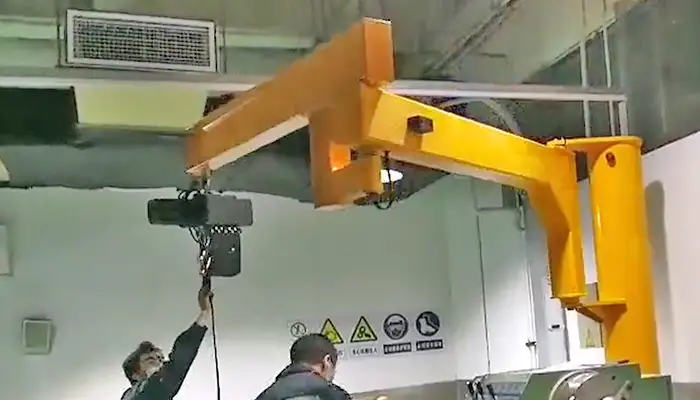
How It Is Installed
The crane column is anchored to a concrete foundation using embedded bolts or chemical anchors. The column must be vertical and structurally stable because it carries both lifting load and rotational force.
Once the pillar is fixed, the articulating arms are installed on top of the column. Electrical supply is routed either internally through the column or externally via cable systems depending on design.
Advantages
- Independent structure, no reliance on building walls
- Flexible positioning anywhere in the workshop
- Full working rotation range in most cases
- Suitable for new or existing workshops
- Stable lifting performance for repetitive operations
- Can serve a single dedicated workstation or machine
In industrial use, this type is often chosen when a production line needs its own lifting point without interfering with surrounding equipment.
Typical Capacity Range
125 kg to 1 ton
Common industrial range: 250 kg, 500 kg, 1 ton
The final capacity depends on boom length and foundation design. Longer arms require stronger base reinforcement.
Best Applications
- CNC machining stations
- Fabrication and welding workstations
- Maintenance and repair bays
- Assembly cells
- Equipment loading zones
- Standalone production stations
Facility Requirements
- Reinforced concrete foundation required
- Sufficient floor space for column installation
- No obstruction in crane rotation area
- Electrical power supply near installation point
- Adequate headroom for boom movement
A site survey is usually recommended before installation to confirm soil strength and foundation depth.
Wall-Mounted Articulating Jib Crane
A wall-mounted articulating jib crane is installed directly onto a building structure such as a wall column, steel beam, or reinforced concrete support. It does not require a floor-mounted column, which helps save workspace on the ground. This type is commonly used in tight workshops where floor space must remain clear for material flow, machines, or personnel movement.
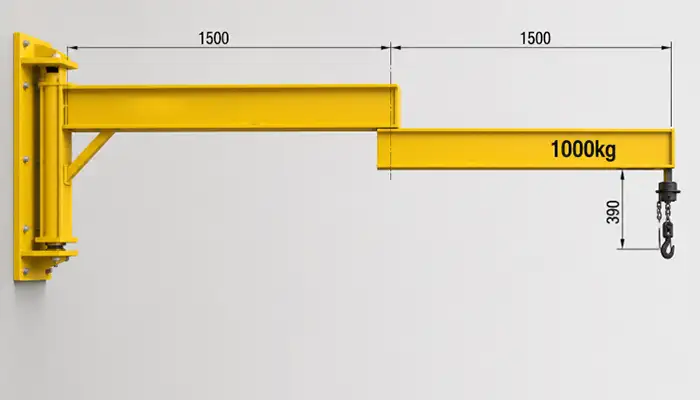
How It Is Installed
The crane bracket is fixed to a structural wall or building column using high-strength bolts. The mounting height depends on available clearance and required lifting height.
The articulating arms are then attached to the wall bracket. The crane rotates around the fixed mounting point, and the secondary arm provides additional reach into the workspace.
Advantages
- No floor occupation, keeps workspace clear
- Suitable for narrow aisles and congested workshops
- Can be installed close to machines or workbenches
- Reduces interference with forklifts and carts
- Cost-effective when building structure is available
- Ideal for workstation-specific lifting tasks
In many factories, wall-mounted designs are chosen when production layout cannot be changed but lifting support is still required.
Typical Capacity Range
50 kg to 1 ton
Most common: 125 kg, 250 kg, 500 kg
Capacity is limited by wall strength and bracket design. Structural verification is important before installation.
Best Applications
- CNC machine side lifting
- Welding stations along workshop walls
- Assembly benches near building structure
- Maintenance areas with fixed machine rows
- Packaging and inspection stations
- Light manufacturing workcells
Facility Requirements
- Strong structural wall or steel column required
- Load-bearing capacity must be verified
- No obstruction in crane swing area
- Adequate installation height for arm rotation
- Electrical supply accessible at wall position
If the building structure is weak or uncertain, a pillar-mounted design is usually preferred instead.
Articulating Jib Crane vs Standard Jib Crane vs Overhead Crane
Choosing between an articulating jib crane, a standard jib crane, and an overhead crane depends mainly on workspace layout, obstacle density, lifting path complexity, and how often materials need to be moved. In practical workshop conditions, these three systems do not compete directly. They solve different material handling problems. An articulating jib crane focuses on confined, obstacle-heavy workstations. A standard jib crane works in open circular areas. An overhead crane covers large workshop spans.
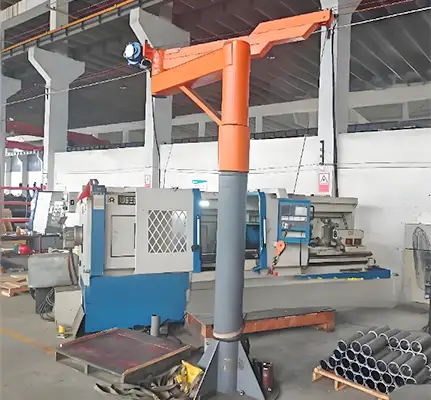
articulating jib crane for sale
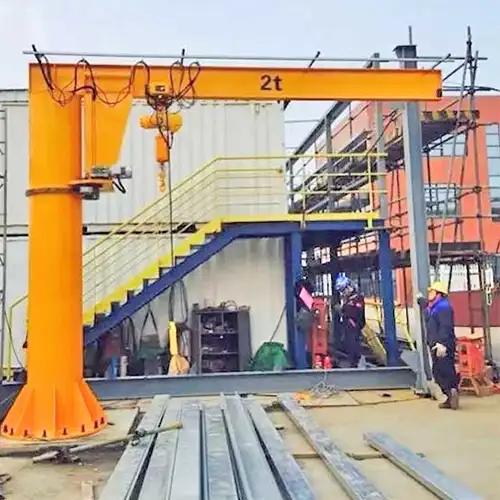
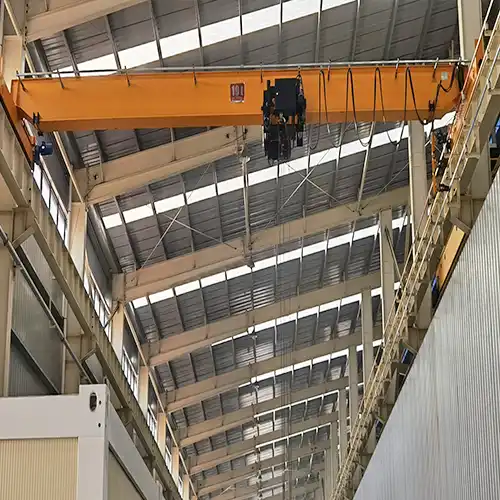
| Feature | Articulating Jib Crane | Standard Jib Crane | Overhead Crane |
|---|---|---|---|
| Working principle | Two-arm folding movement | Single rotating boom | Bridge + runway system |
| Working area | Irregular, obstacle-rich zones | Circular area around column | Full workshop coverage |
| Installation complexity | Medium | Low to medium | High |
| Space requirement | Very low floor use | Requires rotation clearance | Requires building runway space |
| Flexibility | Very high (around obstacles) | Moderate | High (horizontal travel) |
| Cost level | Low to medium | Low | High |
| Best use scale | Single workstation | Single workstation or bay | Entire workshop |
| Operator control | High precision positioning | Simple rotation + lift | Multi-directional travel |
Working Area Coverage
Articulating Jib Crane
Covers irregular shapes, corners, and blocked work areas. It does not need a perfect circular space because the arm can fold and extend.
- Around machines
- Into corners
- Behind obstacles
- Between tight workstations
Standard Jib Crane
Covers a circular area around a fixed point. The lifting radius is predictable but limited by obstacles.
- One workstation zone
- Open machining or welding area
- Single production point
Overhead Crane
Covers the entire rectangular area of a workshop. It moves along X and Y axes using runway beams.
- Full shop floor
- Multiple production lines
- Material storage to production transfer
Installation Cost
Articulating Jib Crane
Lower installation cost compared to overhead cranes. Requires only a local support structure (pillar or wall).
- No runway beams
- No long-span structural steel
- Localized electrical setup
- Fast installation time
Standard Jib Crane
Usually the lowest cost system.
- Simple structure
- Minimal foundation or wall support
- Quick installation
- Low electrical requirement
Overhead Crane
Highest installation cost.
- Requires runway beams and rails
- Structural engineering evaluation
- Electrical busbar or cable system
- Longer installation period
- Building modification often required
Capacity Range
Articulating Jib Crane
- 50 kg to 1 ton
- Most common: 250 kg to 1 ton
Used for workstation lifting, not heavy bulk transport.
Standard Jib Crane
- 125 kg to 5 ton (typical industrial range)
- Can go higher depending on structure
Suitable for general lifting tasks in open areas.
Overhead Crane
- 1 ton to 500+ ton (depending on design)
Designed for heavy-duty industrial transport and large material handling.
Space Requirements
Articulating Jib Crane
- Minimal floor interference
- Works in narrow aisles
- Can operate beside machines and walls
- No requirement for large open turning radius
Standard Jib Crane
- Requires clear circular rotation space
- Obstructions can limit performance
- Needs defined workstation area
Overhead Crane
- Requires full building span clearance
- Needs runway structure along workshop length
- Ceiling height becomes a key limitation factor
Flexibility Around Obstacles
Articulating Jib Crane
Very high flexibility.
- Can fold around CNC machines
- Works around guards, pipes, and columns
- Suitable for L-shaped and corner layouts
- Moves into restricted zones
Standard Jib Crane
Limited flexibility.
- Boom rotation can be blocked by obstacles
- Fixed circular movement path
- Cannot easily reach behind equipment
Overhead Crane
High flexibility in open space.
- Moves in two directions across workshop
- Limited only by runway coverage
- Not suitable for tight workstation-level positioning
Best Use Cases
Articulating Jib Crane
- CNC machine loading and unloading
- Maintenance and repair stations
- Welding and fabrication cells
- Assembly workstations
- Corner and confined work areas
Standard Jib Crane
- Open machining workshops
- Simple loading/unloading stations
- Single machine service points
- Light to medium production support
Overhead Crane
- Large manufacturing plants
- Steel fabrication yards
- Warehouses and logistics centers
- Multi-bay production workshops
- Heavy component handling
When an Articulating Jib Crane Is the Best Choice
- The workspace is narrow or irregular
- Machines or structures block lifting paths
- Operators need to move loads around obstacles
- Work is concentrated in one workstation
- Precision placement is required in tight areas
- Forklift access is limited or impractical
In industrial use, it is often selected for CNC machining zones, maintenance corners, and compact assembly cells where movement flexibility matters more than lifting range.
When a Standard Jib Crane Is More Suitable
- The workspace is open and unobstructed
- Loads move in a simple circular path
- Lifting points are consistent and predictable
- Cost needs to be kept low
- One machine or one station is served
It is a practical solution when the lifting environment is simple and does not require obstacle navigation.
When an Overhead Crane Is More Suitable
- Materials must travel across a large workshop
- Multiple production areas need coverage
- Heavy loads require long-distance transport
- High lifting capacity is required
- Workflow depends on full-floor material movement
It is commonly used in steel plants, heavy fabrication shops, warehouses, and large assembly facilities.
Hybrid Use in industrial Workshops
In practice, many workshops use a combination: an overhead crane for bulk movement, and jib cranes—standard or articulating—for workstation-level handling.
This mixed approach usually gives the most practical material flow in industrial production environments.
How to Select the Right Articulating Jib Crane
Selecting an articulating jib crane is not only about choosing a lifting capacity. In industrial industrial use, the correct selection depends on load conditions, workstation layout, obstacles, lifting height, and daily operating frequency.
Step 1: Determine Actual Load Weight
The first step is to calculate the industrial working load, not just the product weight. Many errors happen when only the item weight is considered.
The rated capacity must include all lifting components used during operation.
Include:
- Product weight
- Lifting attachments
- Slings and shackles
- Hooks and lifting beams
- Special fixtures or clamps
- Any additional handling tools
For example, a 300 kg machine part may require a 20–50 kg lifting fixture. In this case, a 500 kg crane is usually a safer and more practical choice than a 300 kg rated system.
It is also important to consider future use. If heavier parts may be handled later, selecting a higher capacity in advance can avoid replacement or upgrade costs.
Step 2: Determine Working Radius
The working radius defines how far the crane must reach from its support point to complete lifting tasks.
This step is critical for articulating jib cranes because the dual-arm structure depends heavily on correct reach calculation.
You should define:
- Pickup position (where the load starts)
- Placement position (where the load is installed)
- Required coverage area inside the workstation
- Obstacle locations between pickup and placement points
In narrow workshops, the path is often not a straight line. The load may need to move around machines, tables, or structural columns.
A simple layout drawing is usually enough. Mark the support point, then draw both arm reach directions. This helps confirm whether the crane can physically reach all required positions without interference.
If the radius is underestimated, the crane may not reach the farthest work position. If overestimated, the structure may become unnecessarily large and expensive.
Step 3: Determine Required Lifting Height
Lifting height is often overlooked, but it is very important in confined spaces. Low ceilings, machine tops, pipe systems, and electrical trays can all reduce available lifting space.
You need to check:
- Available headroom in the workshop
- Hook travel distance required
- Height of machines or workbenches
- Obstructions above the workstation
- Maximum lifting and lowering points
In many CNC and assembly workshops, headroom is limited. This makes low-headroom hoist selection important. A compact electric chain hoist can help maximize usable lifting height.
The goal is simple: the hook must reach the load on the ground and also place it safely into the machine or fixture without obstruction.
Step 4: Choose the Installation Method
The installation method depends on building structure, available floor space, and workstation layout.
Main options include:
- Pillar Mounted
- Wall Mounted
- Column Mounted
Pillar Mounted
Used when no structural wall or column is available. It requires a concrete foundation and provides full independent support.
Wall Mounted
Used when a strong building wall or steel structure exists. It saves floor space and is common in narrow workshops.
Column Mounted
Used when an existing structural column can support the crane. This is often used in retrofit or upgrade projects.
Each method affects crane rotation, working range, and installation cost. A structural check is usually required before final selection.
Step 5: Select Hoist Type
The hoist is the main lifting component of the crane system. It directly affects lifting speed, control accuracy, and operation efficiency.
Common hoist options include:
- Electric Chain Hoist
- Manual Chain Hoist
- Pneumatic Hoist
Electric Chain Hoist
Most commonly used option. Suitable for frequent lifting and workstation production. It provides smooth operation and good control.
Manual Chain Hoist
Used for occasional lifting or maintenance tasks. Lower cost but slower operation. Suitable for light-duty or low-frequency use.
Pneumatic Hoist
Used in special environments where electricity is not preferred, such as explosive or high-humidity areas. It requires compressed air supply.
In most industrial workshops, electric chain hoists are the standard choice because they balance cost, efficiency, and control.
Step 6: Select Control Method
The control system affects how easily the operator can handle the load during lifting and positioning.
Common control methods include:
- Pendant Control
- Wireless Remote Control
Pendant Control
A wired control hanging from the hoist. It is simple and reliable. The operator usually stands near the load and controls movement directly.
Wireless Remote Control
Provides more flexibility. The operator can move freely around the workstation and maintain better visibility of the lifting path.
This is especially useful in confined spaces where standing too close to the load may not be safe or practical.
Final Selection Note
After completing all steps, the final crane configuration should match the actual workstation conditions rather than theoretical design values.
A proper selection should ensure:
- The crane can reach all required lifting points
- The load can move without interference from machines or structures
- The lifting height is sufficient for safe operation
- The installation method matches building conditions
- The hoist and control system fit the working frequency
In industrial projects, a simple layout drawing or site photo is often enough for final confirmation. This reduces installation risk and ensures the crane performs correctly in daily operation.
Facility Considerations Before Buying
Before selecting an articulating jib crane, the workshop conditions must be checked carefully. In practice, most installation problems do not come from the crane itself, but from mismatched site conditions. A proper site check helps avoid redesign, reinforcement work, or limited crane performance after installation.
Floor and Foundation Requirements
The foundation is the base of the crane system. If it is not strong enough, the crane will lose stability during lifting or rotation.
For pillar-mounted articulating jib cranes, a reinforced concrete foundation is required. The load is not only vertical. It also includes bending force and rotation force during arm movement.
Key points to check:
- Concrete strength and thickness
- Anchor bolt layout and depth
- Soil condition under the foundation
- Vibration impact from nearby machines
- Load distribution area of the base plate
In many industrial workshops, a simple floor slab is not enough. A dedicated foundation block is often needed, especially for 1 ton capacity or longer arm designs.
For wall-mounted or column-mounted types, the floor load is lower, but the surrounding structure still needs verification.
Building Structure Requirements
The building structure determines whether the crane can be safely supported.
For wall-mounted and column-mounted articulating jib cranes, structural strength is the most critical factor.
Important checks include:
- Steel column size and thickness
- Concrete wall reinforcement condition
- Connection points between structure and crane bracket
- Load direction during rotation and lifting
- Distance between crane and structural support points
Older buildings may require reinforcement plates or additional steel frames before installation. This is common in retrofit workshops where cranes are added after production has already started.
A structural review is recommended before final confirmation. In many cases, a simple drawing check or onsite inspection is enough.
Headroom Limitations
Headroom directly affects lifting height and crane usability. In confined workshops, ceiling height is often limited by pipes, cable trays, lighting systems, or ventilation ducts.
Key factors include:
- Distance from floor to ceiling
- Height of machines and worktables
- Space needed for hoist and hook travel
- Position of overhead obstacles
- Required lifting height for maintenance or assembly
If headroom is too low, the crane may still lift the load but cannot reach full installation height inside machines or fixtures.
Low-headroom electric chain hoists are commonly used in such cases. They help maximize vertical lifting space without changing building structure.
Nearby Equipment and Obstacles
Workstation cranes operate in environments where machines and equipment are already installed. This makes obstacle planning very important.
Common nearby obstacles include:
- CNC machines and machining centers
- Welding stations and fixtures
- Assembly benches
- Structural columns and beams
- Electrical cabinets and control panels
- Pipe systems and cable trays
- Material racks and storage zones
The crane must be able to move the load without collision risk. This includes both horizontal swing movement and vertical lifting path.
A simple layout drawing is usually enough to identify possible interference points before installation.
Power Supply Requirements
Articulating jib cranes require a stable power source for the hoist and, in some cases, electric trolley or rotation systems.
Typical requirements include:
- Three-phase industrial power supply (commonly used in factories)
- Stable voltage without frequent fluctuation
- Proper grounding system
- Power access near installation point
In some workshops, power is already available near machines. In others, a new power line must be added.
For outdoor or mobile applications, additional protection such as waterproof cables or sealed control boxes may be required.
It is also important to confirm local power standards early to avoid mismatched hoist motors or control systems.
Indoor vs Outdoor Installation
Indoor Installation
Most common use case. Suitable for CNC workshops, fabrication shops, assembly lines, and maintenance areas.
Advantages:
- Stable working environment
- No weather impact
- Easier electrical installation
- Longer equipment life
Outdoor Installation
Used in shipyards, loading areas, or storage yards.
Additional requirements:
- Weather protection for hoist and electrical components
- Anti-rust treatment or galvanized structure
- Waterproof control system
- Drainage planning at foundation area
- Wind load consideration for long arms
Outdoor use requires more maintenance and careful design selection.
Future Expansion Considerations
A workshop is rarely static. Production often changes over time, and lifting needs may increase. Planning for future expansion helps avoid early replacement or redesign.
Key planning points include:
- Possible increase in load weight
- Future addition of machines or workstations
- Expansion of production line layout
- Potential need for longer arm reach
- Upgrading from manual to electric hoist system
- Integration with other lifting equipment
In some cases, a crane is selected slightly above current requirements to allow flexibility for future use. This is common in growing fabrication and machining facilities.
It is also useful to consider whether multiple cranes will be installed in the same workshop. Coordination between lifting systems can improve workflow efficiency and reduce congestion in shared work areas.
A proper facility review before purchase ensures the articulating jib crane fits the industrial working environment. It also reduces installation adjustments later and helps the crane operate smoothly in daily production.
Common Buyer Mistakes
In industrial projects, most problems with articulating jib cranes do not come from manufacturing defects. They come from selection mistakes made before purchase. These mistakes usually appear when the crane is chosen based on assumptions instead of actual workshop conditions.
Choosing Capacity Based Only on Product Weight
This is the most frequent mistake.
Many buyers only look at the weight of the product and ignore the full lifting system.
In practice, the industrial load includes more than the workpiece itself.
Common overlooked items include:
- Lifting hooks
- Slings and shackles
- Spreader beams
- Lifting fixtures or clamps
- Magnetic or vacuum tools
- Unbalanced load conditions during lifting
For example, a 400 kg machine part may require a 50–100 kg fixture. If the crane is selected only as 400 kg, it will be overloaded in industrial use.
A safe selection usually includes a margin above the actual working load. This avoids frequent overload situations and improves service life.
Ordering Excessive Boom Length
Longer boom length is often seen as better coverage, but this is not always correct.
An excessively long arm can create new problems:
- Higher bending stress on the structure
- Reduced lifting stability at full reach
- Increased deflection during load movement
- Larger installation space requirement
- Possible interference with nearby equipment
In narrow workshops, a long boom may even block other machines or reduce usable working space.
The correct approach is to design the arm length based on actual pickup and placement points, not maximum theoretical reach.
Ignoring Foundation Requirements
For pillar-mounted articulating jib cranes, the foundation is critical. Some buyers assume a simple concrete floor is enough, which is not correct in many cases.
Problems caused by weak foundations include:
- Column tilt during operation
- Excessive vibration during lifting
- Reduced rotation smoothness
- Long-term structural damage
- Safety risk under full load
Heavier capacity cranes, especially 1 ton and above, require proper reinforced concrete foundations with correct anchor bolt design.
Skipping this step can lead to expensive rework after installation.
Ignoring Headroom Restrictions
Headroom is often underestimated during planning.
In workshops with low ceilings, pipes, lighting systems, or cable trays, the actual lifting height may be much lower than expected.
Common issues include:
- Hook cannot reach machine fixture height
- Load cannot be lifted high enough for installation
- Crane arm interferes with overhead structures
- Reduced usable lifting range
Even if the crane capacity is correct, insufficient headroom can make it unusable for industrial work.
Low-headroom hoists and compact trolley systems should be considered early in the selection stage.
Not Providing Layout Drawings
A surprising number of crane orders are made without proper layout information.
Without a drawing or clear layout, the supplier cannot accurately evaluate:
- Working radius
- Obstacle positions
- Machine spacing
- Load movement path
- Installation location
This often leads to mismatched crane size or limited functionality after installation.
Even a simple sketch with key dimensions is usually enough. Photos of the workstation also help greatly during design confirmation.
Selecting the Wrong Mounting Method
The mounting method determines how the crane interacts with the workshop structure. Choosing the wrong type can limit performance or increase installation cost.
Common mistakes include:
- Choosing wall-mounted type on weak walls
- Using pillar-mounted crane where floor space is not available
- Selecting column-mounted crane without checking column strength
- Ignoring rotation clearance when fixing to existing structures
Each mounting type has specific structural requirements. If these are not checked, the crane may not operate at full range or may require expensive reinforcement later.
Summary
Most articulating jib crane problems are avoidable. They usually come from missing site data rather than technical limitations.
A correct selection process should always include:
- industrial load calculation (including tools and fixtures)
- Accurate working radius and layout confirmation
- Headroom verification
- Structural evaluation for installation method
- Clear communication with supplier using drawings or photos
When these factors are considered early, the crane performs reliably in daily production without adjustment or redesign after installation.
Articulating Jib Crane Safety Considerations
Safety is a core part of articulating jib crane operation, especially in confined workstations where machines, structures, and workers are located close together. Because the crane operates in tight spaces with frequent load positioning, proper safety devices and operating discipline are essential. A safe system is not only about equipment design. It also depends on correct operation, regular inspection, and controlled working habits.
Overload Protection
Overload protection is the first line of safety for any lifting system. It prevents the crane from lifting loads beyond its rated capacity.
In an articulating jib crane system, overload protection is usually integrated into the electric hoist.
Key functions include:
- Automatic shutdown when load exceeds rated capacity
- Warning signal during overload condition
- Prevention of motor burnout and structural stress
- Protection of hook, chain, and gearbox components
This is especially important in workstation environments where operators may frequently lift different types of loads without precise weighing.
A small overload in a confined space can quickly lead to equipment damage or unsafe load movement.
Emergency Stop Systems
Emergency stop systems allow the operator to immediately stop crane movement in abnormal or dangerous situations.
This function is critical when working near machines, workers, or sensitive equipment.
Typical emergency stop features include:
- Red mushroom-style stop button on pendant control
- Emergency stop on wireless remote control
- Immediate power cut to hoist and travel system
- Reset function requiring manual restart after activation
In practical use, emergency stop is used when:
- Load swing becomes uncontrollable
- Obstruction is detected in movement path
- Operator loses visibility of load
- Equipment abnormal noise or vibration occurs
It provides a fast response method to prevent further risk escalation.
Rotation Stops
Rotation stops control the movement range of the crane arms. In articulating jib cranes, both the primary and secondary arms may rotate.
Without rotation limits, the arm could hit nearby machines, walls, or structural columns.
Rotation stops help to:
- Define safe working boundaries
- Prevent collision with surrounding equipment
- Protect crane joints and bearings from over-rotation
- Maintain consistent workstation coverage area
Mechanical stops are often adjustable, allowing the installer to set safe rotation angles based on site conditions.
In narrow workshops, this function is particularly important because obstacles are often very close to the crane operating zone.
Limit Switches
Limit switches control lifting height and movement. They prevent the hoist from moving beyond safe operating positions.
Common types include:
- Upper limit switch (prevents over-lifting)
- Lower limit switch (prevents over-lowering)
- Travel limit switch for trolley movement (if equipped)
These switches help protect:
- Hoist motor and gearbox
- Load chain or wire rope
- Hook block and pulley system
- Machine or fixture being loaded
For example, when lifting a heavy component into a CNC machine, the upper limit switch ensures the hook does not collide with the hoist body or overhead structure.
Limit switches are simple but essential for daily safe operation.
Safe Operating Practices
Even with safety devices installed, correct operator behavior remains critical. Most crane incidents are caused by improper use rather than equipment failure.
Safe operating practices include:
- Never exceed rated load capacity
- Avoid sudden lifting or stopping of loads
- Keep clear of suspended loads at all times
- Do not use crane for side pulling or dragging loads
- Ensure load is properly balanced before lifting
- Use correct lifting points and certified slings
- Maintain clear visibility of the load path
- Avoid standing under moving loads
In confined spaces, additional care is required because the margin for movement is smaller. Operators should move loads slowly when approaching machines, fixtures, or narrow gaps.
Simple and controlled operation is always safer than fast handling.
Maintenance and Inspection Requirements
Regular maintenance is essential to ensure long-term safe operation of an articulating jib crane. Because the crane has multiple joints and moving arms, wear and stress can occur over time.
Key inspection areas include:
- Boom connection joints and pivot points
- Rotation bearings and bolts
- Hoist chain or wire rope condition
- Hook latch and deformation checks
- Trolley wheel movement and alignment
- Electrical cables and control wiring
- Limit switch functionality
- Foundation bolts and structural stability
Recommended inspection routine:
- Daily visual check before operation
- Weekly functional test of hoist and controls
- Monthly inspection of mechanical joints and fasteners
- Periodic load testing based on usage intensity
Lubrication of moving parts is also important. Proper lubrication reduces friction, improves rotation smoothness, and extends service life.
If abnormal noise, vibration, or uneven movement is detected, the crane should be stopped immediately and inspected before further use.
Summary
Safety in articulating jib crane operation depends on three key factors:
- Proper built-in safety devices (overload protection, limit switches, emergency stop)
- Correct structural design (rotation stops, stable mounting, suitable support)
- Responsible operation and regular maintenance
When these three elements work together, the crane can operate reliably in narrow and complex workstations without unnecessary risk.
Information Required for a Crane Quotation
A clear and accurate quotation for an articulating jib crane depends on the quality of technical information provided by the buyer. In practical projects, incomplete data is the main reason for wrong sizing, delayed pricing, or redesign during installation. To prepare a correct solution, the supplier needs to understand not only the load, but also the workspace layout, installation condition, and operating method.
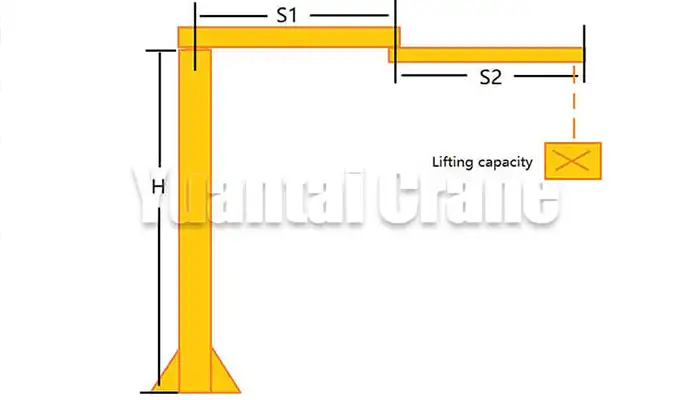
Capacity Requirements
Capacity is the first and most important parameter. It defines the maximum safe working load of the crane system.
The buyer should clearly indicate:
- Maximum lifting weight of the product
- Frequency of lifting operations
- Whether the load is constant or varies
- Any future increase in load requirement
It is important to include all lifting accessories in the calculation, not only the product weight. These may include slings, hooks, fixtures, magnets, or lifting beams.
Example: A 400 kg part with a 100 kg fixture requires at least a 500 kg rated crane.
Boom Length
Boom length determines the working coverage of the crane inside the workstation.
The supplier needs:
- Primary arm length
- Secondary arm length (for articulating type)
- Required reach from support point to lifting positions
- Any directional limitations caused by machines or walls
Boom length must be based on industrial pickup and placement points, not estimated workshop size. Incorrect boom length can result in either insufficient reach or unnecessary structural cost.
Lifting Height
Lifting height defines how high the crane must lift the load from ground level to installation or handling position.
Required data includes:
- Distance from floor to hook lifting point
- Height of machines, benches, or fixtures
- Ceiling height and available headroom
- Any overhead obstacles such as pipes or cable trays
This information ensures the hoist and trolley system are correctly selected, especially in low-headroom environments.
Rotation Requirement
Rotation defines how far the crane arm must move during operation.
The buyer should specify:
- Required rotation angle (e.g., 180°, 270°, 360°)
- Presence of physical obstacles limiting movement
- Direction of working zones around the crane
In articulating jib cranes, both primary and secondary arm rotation must be considered. If rotation is not correctly defined, the crane may not reach all required working positions or may interfere with nearby equipment.
Installation Method
The installation method determines the structural design of the crane.
- Pillar-mounted (freestanding with foundation)
- Wall-mounted (fixed to building structure)
- Column-mounted (attached to existing column)
To select the correct method, the supplier needs to know available installation location, structural strength of walls or columns, floor space availability, and whether foundation work is possible.
Incorrect installation selection may lead to structural reinforcement work or reduced crane performance.
Power Supply
Power supply information is necessary for hoist and control system configuration.
- Voltage (e.g., 220V, 380V, 415V)
- Frequency (50Hz or 60Hz)
- Phase type (single-phase or three-phase)
- Power access location in workshop
- Outdoor or indoor electrical conditions
This ensures the correct motor, control panel, and electrical components are selected for local standards.
Operating Environment
The working environment directly affects crane design, material selection, and safety protection level.
- Indoor or outdoor installation
- Temperature range
- Dust, humidity, or corrosion level
- Presence of chemicals or welding fumes
- Explosion-proof or special safety requirements
- Working intensity and duty cycle
For example, a humid coastal workshop may require anti-corrosion coating, while a chemical plant may require explosion-proof configuration.
Workshop Drawings
A workshop layout drawing is one of the most important documents for correct crane design.
- Machine layout and positions
- Walls, columns, and structural elements
- Workstation boundaries
- Material flow direction
- Electrical and pipe routing (if possible)
- Proposed crane installation point
Even a simple hand-drawn sketch can significantly improve quotation accuracy. Without drawings, the supplier must estimate conditions, which increases design risk.
Application Photos
Photos provide industrial visual context that drawings often cannot show.
- Overall workshop layout
- Close-up of working area
- Machines and equipment around the lifting zone
- Ceiling structure and obstacles
- Proposed crane installation location
- Load handling process (if existing method is used)
Photos help confirm space constraints, access paths, and installation feasibility. In many cases, photos combined with basic dimensions are enough to finalize a practical crane solution without site visit.
Frequently Asked Questions
This section covers the most common questions from buyers before selecting an articulating jib crane. In most cases, the questions are related to capacity, installation conditions, and whether the crane fits existing workshop layouts.
What capacity is most common?
The most commonly used capacities are designed for workstation-level lifting rather than heavy industrial transport.
Typical ranges include:
- 125 kg
- 250 kg
- 500 kg
- 1 ton
In some heavy workshop applications, capacities can reach up to 1 tons, but this depends on boom length, mounting method, and structural strength. In industrial production environments, 500 kg is often the most balanced option for CNC loading, assembly, and maintenance work.
Can an articulating jib crane be installed in an existing workshop?
Yes, it is widely used in retrofit and existing facilities.
It is often installed in workshops that already have:
- CNC machines
- Welding stations
- Assembly lines
- Maintenance areas
- Limited floor space
The key requirement is structural verification. Depending on the design, the crane may be floor-mounted with new foundation, wall-mounted on existing structure, or column-mounted on existing steel columns. Even in older workshops, installation is usually possible with correct structural assessment.
Can it be used outdoors?
Yes, but outdoor use requires additional protection.
Outdoor installations need:
- Anti-corrosion surface treatment
- Waterproof electrical components
- Sealed control systems
- Wind load consideration for long boom designs
- Proper drainage at foundation area
Common outdoor applications include shipyards, loading yards, storage areas, and maintenance zones. However, indoor installation remains the most common due to better working conditions and lower maintenance requirements.
What is the maximum boom length available?
Boom length depends on design type, load capacity, and structural strength.
Typical ranges are:
- Primary boom: 2 m to 6 m
- Secondary (articulated) boom: 1.5 m to 5 m
- Total working reach: up to around 6 m to 10 m (application dependent)
Longer boom lengths are possible, but they require stronger structure and reduced load capacity. In practice, most workstation applications use medium-length arms to balance reach and stability.
Is a wall-mounted or pillar-mounted design better?
There is no single best option. The correct choice depends on workshop structure.
Wall-mounted is better when:
- Strong building wall or steel column is available
- Floor space must be kept clear
- Workstation is located along a wall
- Load capacity is light to medium
Pillar-mounted is better when:
- No suitable wall structure exists
- A dedicated lifting station is required
- Full rotation flexibility is needed
- Higher load capacity is required
In new workshop planning, pillar-mounted is often preferred for flexibility. In retrofit projects, wall-mounted is commonly used.
Can it use an electric chain hoist?
Yes, electric chain hoists are the most commonly used lifting device for articulating jib cranes.
Advantages include:
- Smooth lifting and lowering
- Suitable for frequent operation
- Compact structure for tight spaces
- Good control accuracy
- Compatible with pendant or wireless control
Manual chain hoists are also available for light-duty or low-frequency applications, but electric hoists are the standard choice in most industrial workshops.
Can it replace an overhead crane?
Not fully, because both systems serve different purposes.
An articulating jib crane is designed for single workstation lifting, confined or obstacle-heavy areas, and localized material handling.
An overhead crane is designed for full workshop coverage, long-distance load movement, and heavy and large-scale material handling.
However, in many workshops, an articulating jib crane can replace the need for an overhead crane at individual workstations. It is often used alongside overhead cranes rather than replacing them completely.
How much does an articulating jib crane cost?
The cost depends on several factors:
- Load capacity
- Boom length
- Installation method (wall, pillar, column)
- Hoist type (manual, electric, pneumatic)
- Control system (pendant or wireless)
- Working environment (standard or special conditions)
In general:
- Small workstation cranes (125–250 kg): lower cost range
- Medium cranes (500 kg–1 ton): mid-range
- Heavy-duty or long-reach systems: higher cost due to structural requirements
Installation cost also varies depending on whether foundation work or structural reinforcement is required. For accurate pricing, suppliers usually require workshop drawings, load details, and installation conditions.
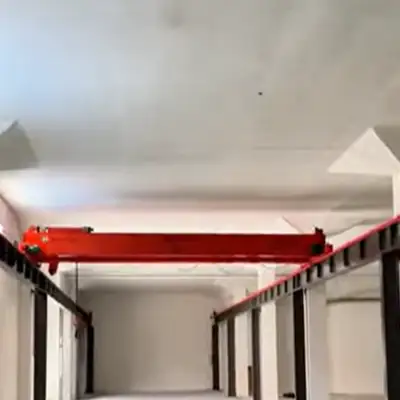

Yuantai Cranes
Overhead Crane Manufacturer with CE, ISO, SGS, CNEX Certificates.
- Main Specifications - Capacity: 0.5–550 tons | Span: up to 40m | Speed: 0.8–12 m/min | Duty: A3–A7 | Power: 380–690V, 50/60Hz | Control: pendant/remote/cabin
- Full engineering: FEA/PLC/VFD + in-house build + global delivery + on-site support, for workshops, factories, EPC contractors, industrial projects, etc.
- Support: design, manufacturing, testing, service – end-to-end, customized lifting solutions worldwide.
How to Get an Accurate Crane Price for Your Application?
Tips: Copy the spec list, fill in your details, and paste it into the form on the right/ down-below for a quick price.
- Crane type:_____ . (e.g., overhead crane, gantry crane, jib crane)
- Max weight to lift:_____ tons. (e.g., 2t, 5t, 10t, 20t, 50t)
- Lifting height:_____ m. (How high does the hook need to reach?
- Workshop width (span):_____ m . (Distance between the two crane rails)
- Travel distance:_____ m . (How long does the crane need to move along the runway?)
- Control type:_____. (Pendant / remote / cabin Control)
- Power supply:_____. (Local voltage & frequency – e.g., 380V, 50Hz, 3-phase)
- What will it be used for?_____ (e.g., steel fabrication, concrete products, mold handling, general manufacturing, etc.)
- Any special requirements?_____ (e.g., extreme temperature, dusty or explosive environment, special paint color, etc.)
Just leave a message via the contact form and our hoist and crane engineer will contact you with in 24working hours.
Get Your Custom Quote–Quick & Easy
Fill in what you know. Skip what you don't – we'll help.Any question will be reply with 24 working hours