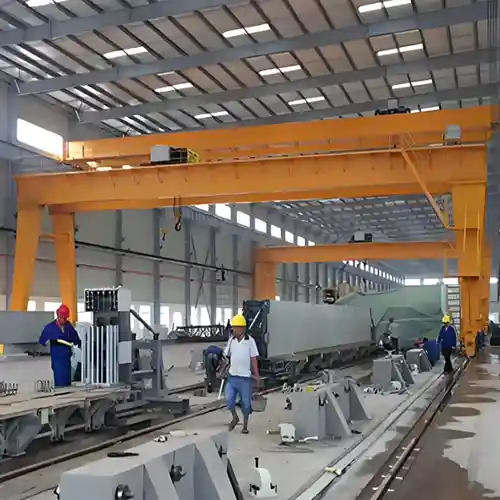
Portal Cranes for Column Beam & Beam Form Work at Precasting Yard
Portal crane 25 ton to 100 ton for sale. Optimize mold handling with efficient, precise portal cranes for column beam & beam form work in precasting yards.
| Crane Type | 25–100 Ton Double Girder Portal Crane available with Box Girder or Truss Girder, Goliath/Portal Crane, Rail-Mounted Gantry Crane, or other customized precast handling systems, with electric hoist or open winch, |
| Crane Capacity | 25–100 Ton (25,000–100,000 kg) for precast columns, concrete beams, bridge girders, beam molds, formwork, reinforcement structures, and oversized precast components. |
| Span Length | Typically 20–40 m; customized according to precasting yard width, production layout, and required lifting coverage. |
| Lifting Height | Typically 8–20 m; customized according to column/beam dimensions, formwork height, stacking requirements, and yard layout. |
| Coverage Area Type | Precasting yards, concrete production lines, formwork areas, casting bays, curing zones, component storage yards, loading areas, and large outdoor material handling zones. |
| Application | Precast column handling, concrete beam lifting, beam formwork installation, mold positioning, demolding, precast component transfer, stacking, loading/unloading, and bridge component production. |
| Certifications | CE / ISO / SGS / Other third-party inspection |
| Customization | 25–100 Ton; Double Girder; Box/Truss Girder; Electric Hoist/Open Winch; Customized Span & Lift; Pendant/Remote/Cabin Control; Synchronized Lifting. ISO A3–A5 / FEM 1Am–3M duty classification, and 380V/400V/415V, 50Hz/60Hz, 3Ph power supply. |
Crane Manufacturer: Yuantai Cranes – 30+ Years Professional Crane Manufacturer from China
Category: Construction
Tags: precast
Your Trusted Overhead Portal Crane Manufacturer & Supplier
Portal Cranes 25 Ton to 100 Ton for Column Beam and Beam Form Work at Precasting Yard
Optimizing Mold Handling for Efficiency and Precision
Optimizing mold handling with efficient, precise portal cranes for column beam and beam form work in precasting yards.
Portal Cranes in Precasting Yards
Portal cranes are indispensable in precasting yards, where they are used to handle heavy concrete molds. These cranes are designed to lift and move large, bulky molds—such as those used for beams and columns—effectively and safely. Their versatility allows them to work across multiple stations in the yard, such as mold assembly, curing, and storage.
The design of portal cranes enables them to move both horizontally and vertically, offering unmatched flexibility in the handling of large molds. This makes them ideal for busy precasting yards, where molds must be moved quickly and efficiently between different work areas. With the ability to carry heavy loads safely, these cranes help ensure that the entire mold handling process is seamless, reducing the need for manual labor and improving overall safety.
For precast concrete manufacturers, portal cranes are an essential tool, ensuring the reliable and efficient movement of molds in the production process. Whether it's lifting smaller column molds or large, complex beam molds, these cranes are built to manage the heavy lifting required in precast construction.
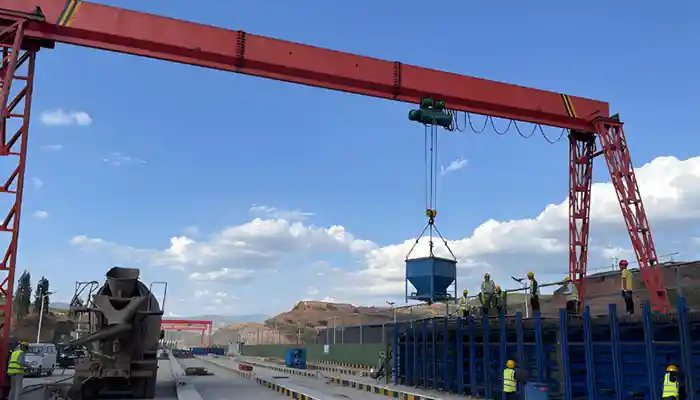
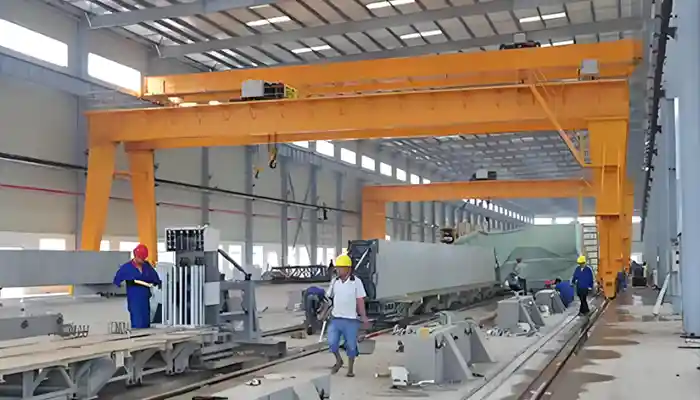
Why the 25 Ton to 100 Ton Range Matters
The 25 Ton to 100 Ton range is highly suitable for the wide variety of molds used in precast concrete production. Molds can vary significantly in size and weight, depending on the type of structure being built. For instance:
- Smaller Column Molds: Often weighing between 25 and 50 tons, these molds are typically used for residential or commercial buildings and can be handled by cranes at the lower end of this capacity range.
- Larger Beam Molds: Used in infrastructure projects like bridges, highways, and multi-story buildings, these molds can weigh up to 100 tons or more. Cranes in the higher end of the range are needed to lift these larger molds with the required precision and safety.
Crane capacities in the 25 Ton to 100 Ton range offer an ideal balance for handling both smaller and larger molds commonly used in precasting yards. Here's why:
- Versatility: Cranes in this range can handle molds of different sizes, ensuring they are adaptable to a wide range of precast applications. Smaller column molds can be easily lifted with cranes in the lower capacity range (25–50 tons), while larger beam molds can be efficiently managed by cranes on the higher end (50–100 tons).
- Efficiency: These cranes provide enough power to manage large, heavy molds, but they are not as costly or as difficult to maintain as oversized cranes. For many precasting yards, this range offers an excellent balance between capacity and operational cost.
- Safety and Stability: Cranes with capacities in this range are specifically designed to handle heavy-duty lifting tasks with great stability, ensuring safe operations even when lifting the heaviest molds.
- Cost-Effectiveness: Investing in cranes with 25 Ton to 100 Ton capacities ensures that precast manufacturers can meet their lifting requirements without over-investing in equipment that might be too large for many of their tasks.
In conclusion, the 25 Ton to 100 Ton portal crane range offers the perfect balance between lifting power and operational efficiency for precasting yards. These cranes are versatile, cost-effective, and capable of safely handling a wide variety of beam and column molds, making them an essential asset in the precast concrete industry.
Types of Beam and Column Molds in Precasting
Single Beam and Column Molds
Single beam and column molds are designed to produce individual concrete columns or beams, which are essential components in many construction projects, including residential, commercial, and infrastructure developments. These molds are typically used when precise shaping and placement are necessary.
- Application: These molds are often used for smaller to medium-sized precast elements.
- Crane Requirements: Depending on the size and material of the mold, cranes with a 25–50 ton lifting capacity are typically required. This range offers enough lifting power for the precise handling of individual molds, ensuring accurate placement during the production process.
- Usage: These molds are crucial for projects that need individually tailored precast beams or columns. They are frequently used in smaller-scale construction sites, such as residential buildings, or in the early stages of larger commercial projects.
Group Beam and Column Molds
Group beam and column molds are used for producing multiple beams or columns at once. This grouping of molds helps to optimize space and increase the production capacity in precasting yards, making it an effective solution for larger-scale projects.
- Application: These molds are particularly useful when producing multiple beams or columns of the same design, typically for commercial, industrial, or infrastructural projects.
- Crane Requirements: To lift multiple grouped molds, cranes with 50–100 ton capacities are typically required. These cranes provide the necessary strength to handle larger and heavier groups of molds, which may also require additional lifting accessories like spreader beams for even load distribution.
- Usage: Group molds are ideal for mass production where efficiency is key. They allow precast manufacturers to streamline operations by handling multiple molds at once, making them ideal for large-scale construction projects like bridges, highways, and large buildings.
Long-Line Beam and Column Molds
Long-line beam and column molds are used for manufacturing long-span beams and columns, which are required for larger structures such as bridges, highways, or multi-story buildings. These molds are much longer and heavier than standard molds, demanding higher crane capacities for safe and efficient handling.
- Application: Long-line molds are critical for producing long, heavy precast elements, commonly found in large infrastructure projects.
- Crane Requirements: These molds often require cranes with capacities exceeding 100 tons, due to the substantial weight and size of the molds. These cranes must provide high lifting power, stability, and precision to handle the significant load and to ensure the safe movement of these large structures.
- Usage: Long-line molds are used in high-demand sectors, such as highway construction, large bridge projects, and industrial facilities, where long-span concrete elements are required for structural support.
In summary, the types of beam and column molds in precasting vary in terms of size, load capacity, and application. From individual molds that require smaller cranes to heavy-duty cranes needed for group and long-line molds, each type of mold has specific crane requirements that ensure efficiency and safety in the precasting process. The 25–100 ton range of portal cranes plays a pivotal role in handling these diverse mold types, providing flexibility for various production scales.
Portal Cranes: Essential Features for Mold Handling
When selecting a portal crane for beam and column mold handling in precasting yards, it's crucial to consider several key features that contribute to efficient, safe, and precise operations. These features ensure that molds of varying sizes, weights, and designs are managed properly, optimizing mold handling in the yard.
Key Design Features for Beam and Column Mold Handling
Single Girder vs. Double Girder Cranes
- Single Girder Cranes (25–50 tons): These cranes are ideal for handling smaller molds. They provide a cost-effective solution for light to medium-duty tasks, offering the perfect balance between capacity, efficiency, and cost. They are well-suited for handling individual or smaller groups of beam and column molds.
- Double Girder Cranes (50–100 tons): Essential for handling larger and heavier molds, these cranes offer superior stability and load-bearing capacity. They are designed for heavy-duty operations, such as lifting and transporting larger group molds or long-line molds, ensuring efficiency and safety when handling molds weighing 50 tons or more.
Customized Crane Designs
- Tailored Designs: Portal cranes can be customized to meet the specific needs of different mold types and manufacturing processes. Features such as specialized hooks, spreader beams, and adjustable lifting mechanisms help ensure safe and efficient handling of molds with irregular shapes or sizes. These designs allow for better integration with existing equipment and workflows, improving overall operational efficiency in precasting yards.
Mobility and Flexibility
- Rail-less Portal Cranes:Flexible and Adaptable: Rail-less portal cranes offer significant flexibility, particularly in environments where fixed rail systems aren't feasible. These cranes are equipped with polyurethane tires and guide rollers, enabling them to move freely across the yard without the need for permanent tracks. Rail-less systems are especially useful in yards with limited space or where molds need to be frequently repositioned between workstations.
- Cantilevered Beam Construction : Extended Reach: Cantilevered beams allow portal cranes to transport molds beyond the rail center. This feature is useful for transporting molds to locations like roadside loading bays or when transferring molds between cranes. It enhances the versatility of cranes in handling oversized or long-span molds, ensuring efficient material movement across the precasting yard.
Control and Precision Features
- Anti-Sway and Load-Sensing Technology:Enhanced Precision: Anti-sway technology minimizes the swinging or swaying of large, heavy molds during lifting, ensuring smoother and safer operations. Load-sensing technology monitors the load's weight in real-time, providing operators with feedback to prevent overloading and maintain safety. This ensures the crane operates within its safe capacity limits, optimizing both precision and safety.
- Remote and Pendant Controls:Improved Operator Control: Remote and pendant controls enhance operator flexibility and safety. By allowing operators to control cranes from a safe distance, these systems reduce the risk of accidents, particularly in high-risk areas or tight spaces. They improve overall safety and provide more freedom for the operator to make adjustments while keeping a safe distance from the load.
The combination of key features, such as crane type (single or double girder), rail-less systems, and precision control technologies, ensures portal cranes can effectively handle beam and column molds in precasting yards. Custom crane designs tailored to specific mold types and enhanced safety features like anti-sway technology and load-sensing systems optimize mold handling efficiency, reduce risks, and improve overall operational precision. These features make portal cranes an indispensable tool for efficient precasting operations.
Crane Capacity Considerations for Beam and Column Molds
Selecting the right crane capacity for handling beam and column molds is essential to ensure optimal performance, safety, and efficiency in a precasting yard. Crane capacity directly affects lifting precision, stability, and the ability to handle various mold types, from smaller column molds to larger, more complex long-line molds.
Choosing the Right Crane for Different Mold Types
- Smaller Column Molds (25–50 Ton Range):Ideal Capacity: Cranes in the 25–50 ton range are perfect for handling individual column molds or smaller beam molds. These molds are typically lighter and more compact, so the crane doesn't need excessive capacity. This capacity range offers an efficient, cost-effective solution for handling smaller, lighter molds commonly used in residential or low-rise commercial projects.
- Grouped Molds and Larger Beam Forms (50–100 Ton Range):Ideal Capacity: For larger beam molds or multiple grouped molds, a crane with a capacity of 50–100 tons is necessary. Grouped molds, used to maximize space and production efficiency, often require more lifting power for safe and stable operation. Larger beam forms, such as those used in high-rise buildings or infrastructure projects, also need more lifting capacity for efficient handling.
- Long-Line Molds (100 Ton or More):Ideal Capacity: Long-line molds, typically the largest and heaviest in precasting yards, require cranes with capacities of 100 tons or more. These molds are often used for structural beams for bridges, highways, or large buildings, and their extended length and weight demand specialized cranes designed for high-capacity lifting and handling.
Impact of Mold Complexity
- Complex Mold Designs: Increased Crane Requirements: Molds with intricate designs or multiple sections, such as long-line beams or column molds, require cranes with greater capacity. These complex molds are harder to balance, making it essential to use higher-capacity cranes that ensure stability and precise handling throughout the lifting and transport process.
- Precision Lifting:Cranes equipped with enhanced features such as anti-sway technology, load-sensing systems, and variable speed control are essential for lifting complex molds. These features help to prevent mold damage, reduce risk, and improve safety, ensuring each section of the mold is lifted smoothly and precisely.
Additional Considerations
- Stability and Safety:Molds that are large, heavy, or have complex shapes need cranes that can handle the shifting weight and maintain load stability. Cranes with higher lifting capacities offer better stability, reducing the risk of tipping or swaying during transport.
- Custom Solutions: For particularly challenging molds, custom lifting attachments or spread beams can be designed to distribute the load evenly, ensuring that even large, complex molds remain stable and secure during the lifting and transport process.
Selecting the right crane capacity is critical for ensuring safe and efficient handling of beam and column molds in precasting yards. Cranes in the 25–50 ton range are ideal for smaller molds, while those in the 50–100 ton range are better suited for grouped molds and larger beam forms. Long-line molds require cranes with capacities of 100 tons or more for safe lifting and handling. By considering mold size, weight, complexity, and stability requirements, precasting yards can choose the right crane capacity to optimize efficiency, improve safety, and enhance production outcomes.
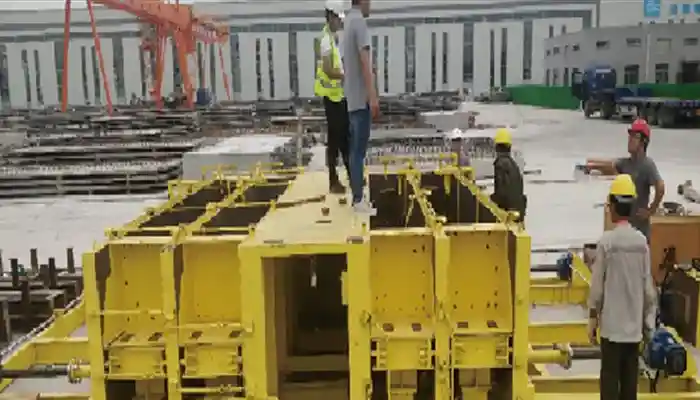
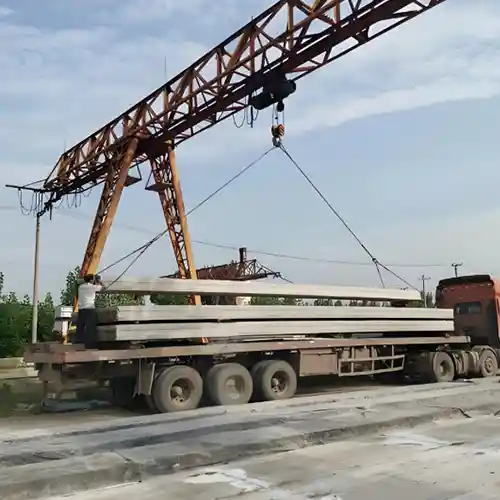
Portal crane for precasting concrete column and beam
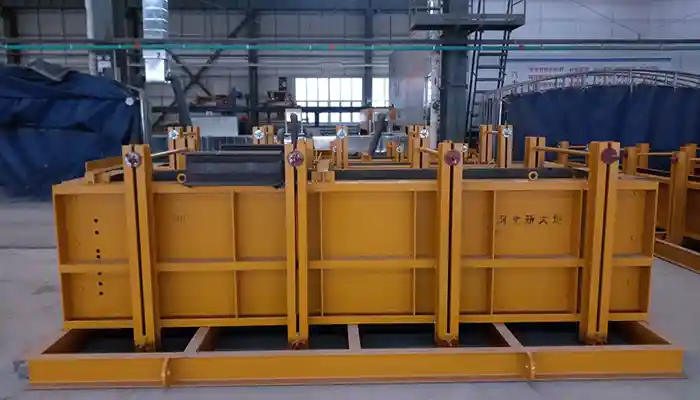
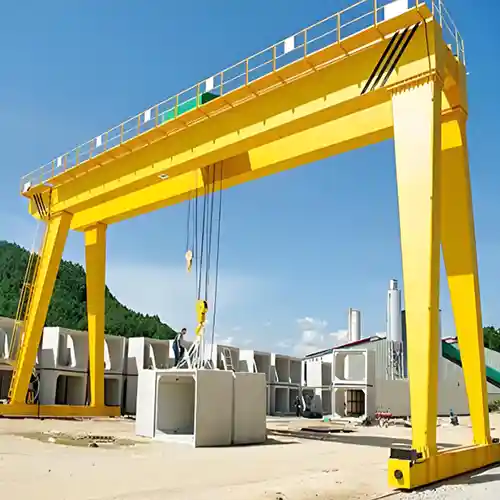
Portal crane for column and beam mold handling
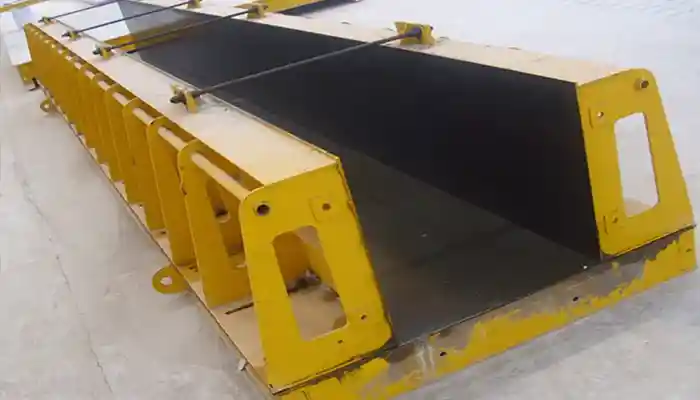
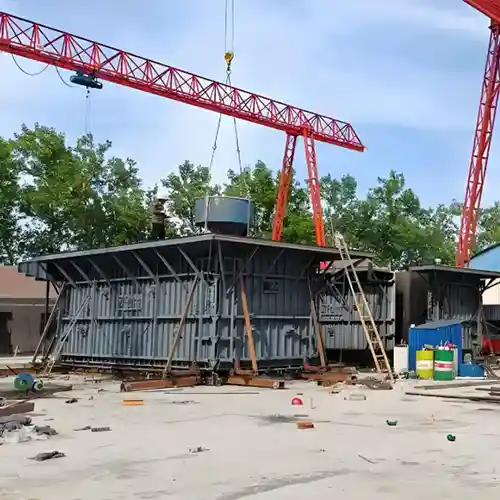
Portal crane for precasting beam mould handling

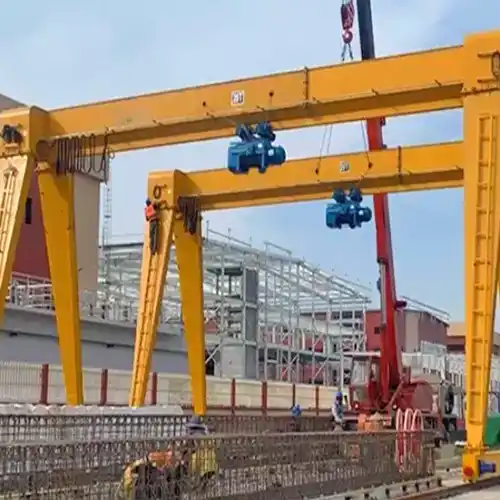
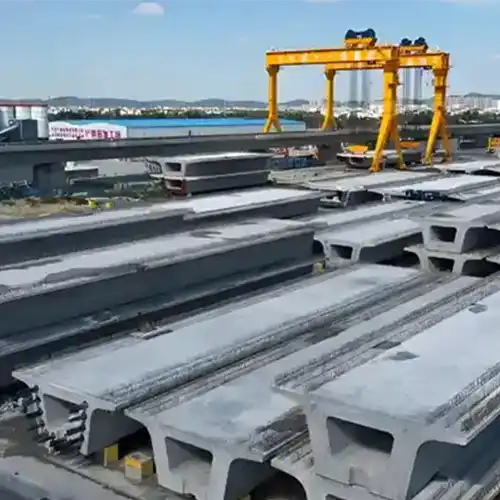
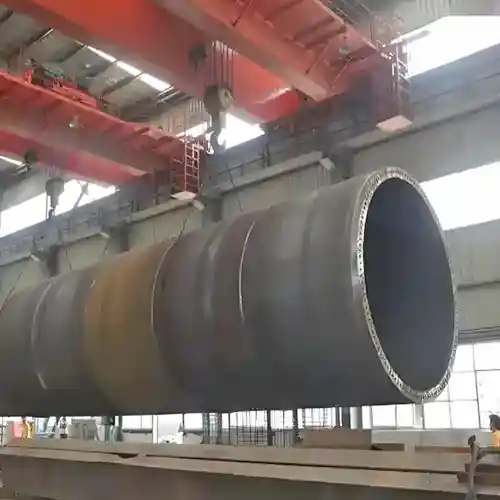
Portal gantry crane for precasting yard material handling
Optimizing Crane Operation in Precasting Yards
Efficient crane operation is critical to ensuring smooth workflow, reducing production time, and enhancing the safety and reliability of precasting operations. By incorporating advanced technology such as automation and precise control features, precasting yards can significantly improve their mold handling processes.
Increasing Efficiency with Automation
Automated portal cranes are transforming mold handling in precasting yards by integrating advanced systems that enhance operational efficiency. These cranes can be equipped with load-sensing systems and speed control features to optimize performance, making them ideal for handling a variety of mold types.
- Load-sensing systems enable precise adjustments in lifting capacity to match the specific weight of the mold, ensuring safe and efficient lifting.
- Speed control systems allow for variable crane speeds, providing smoother operation, especially when positioning large and heavy molds.
Typical Automated Systems:
Cranes in the 25–50 ton range are ideal for integration with automation. These systems can handle repetitive tasks, such as moving molds between various production stages (assembly, casting, curing). Automation helps reduce manual labor and increases throughput by streamlining these operations.
Reducing Cycle Times
The integration of automation and precise control features leads to faster load handling and more accurate positioning, which results in reduced cycle times and enhanced productivity.
- Faster Load Handling: Automation reduces the time required to move molds between workstations, ensuring that materials are processed quickly and efficiently.
- Precise Positioning: Automated cranes can position molds with greater accuracy, reducing errors and the need for rework.
Case Example: A 50-ton portal crane equipped with automation technology has shown to reduce mold handling times by up to 30% in a large precasting facility. By streamlining operations and minimizing delays, the facility is able to increase throughput, handle more molds in a shorter period, and improve overall production efficiency.
Automating crane operations in precasting yards brings significant benefits in speed, precision, and efficiency. Automated portal cranes improve mold handling by reducing cycle times and ensuring accurate transport between production stages. This leads to faster workflows and increased production throughput. By minimizing downtime and maximizing output, automation enhances the overall efficiency of the precasting process, making operations smoother and more reliable.
Safety Features and Compliance
Safety Systems for Heavy Lifting
Cranes used in precasting yards are equipped with several safety features to ensure safe operations:
- Overload Protection: This system prevents cranes from exceeding their maximum load capacities, safeguarding both the crane and the mold. It is an essential safety measure to avoid equipment failure and ensure safe lifting.
- Anti-Collision Systems: In busy precasting environments where multiple cranes operate, anti-collision systems are crucial. These systems detect potential obstacles and adjust crane movements to prevent accidents, improving operational safety.
Environmental Considerations
Cranes working in outdoor or challenging environments require additional safety measures:
- Corrosion-Resistant Coatings: For cranes exposed to harsh weather conditions, such as those in coastal or outdoor precasting yards, corrosion-resistant coatings protect critical components from wear and tear, extending crane longevity and reducing maintenance costs.
- Wind Speed Monitoring: Cranes handling large, elevated molds outdoors must be equipped with wind speed monitoring systems, such as anemometers. These systems help monitor weather conditions and ensure safe lifting operations in windy or stormy conditions.
Case Studies: Real-World Applications of 25 Ton to 100 Ton Portal Cranes in Precasting Yards
Case Study 1: Maximizing Efficiency in Beam and Column Mold Handling
A large precasting facility implemented 50-ton portal cranes with integrated automation to optimize beam and column mold handling. The system streamlined operations, improving efficiency by 40% while significantly reducing labor costs.
- Automation Integration: The cranes were equipped with advanced load-sensing systems and speed control to ensure faster, more precise mold handling.
- Key Outcomes: The automated system minimized manual intervention, reduced cycle times, and increased overall production throughput.
This case highlights how combining automation with portal cranes can enhance efficiency, reduce labor costs, and improve operational flow in a precasting yard.
Case Study 2: Semi-Goliath Cranes for Flexible Mold Transport
In a different precasting yard, a 50-ton rail-less semi-goliath crane was introduced to provide greater flexibility in mold transport across various areas. The crane operated without a fixed rail system, offering enhanced mobility and reducing the need for costly floor installations.
- Rail-Less Design: The crane used polyurethane tires for mobility, allowing it to easily move between different workstations.
- Cost Efficiency: The lack of a fixed rail system not only lowered installation and maintenance costs but also provided greater operational flexibility for mold transport.
This case demonstrates the benefits of semi-goliath cranes in enhancing flexibility and reducing infrastructure costs while maintaining efficient mold handling in the yard.
Conclusion
Portal cranes in the 25–100 ton capacity range strike the perfect balance between power, precision, and flexibility, making them ideal for handling beam and column molds in precasting yards. Whether using single girder cranes for lighter molds or double girder cranes for heavy-duty lifting, portal cranes are essential for ensuring safe, efficient, and precise mold handling. These cranes significantly contribute to the smooth flow of production in precasting facilities, optimizing workflow and minimizing downtime.

Yuantai Cranes
Overhead Crane Manufacturer with CE, ISO, SGS, CNEX Certificates.
- Main Specifications - Capacity: 0.5–550 tons | Span: up to 40m | Speed: 0.8–12 m/min | Duty: A3–A7 | Power: 380–690V, 50/60Hz | Control: pendant/remote/cabin
- Full engineering: FEA/PLC/VFD + in-house build + global delivery + on-site support, for workshops, factories, EPC contractors, industrial projects, etc.
- Support: design, manufacturing, testing, service – end-to-end, customized lifting solutions worldwide.
How to Get an Accurate Crane Price for Your Application?
Tips: Copy the spec list, fill in your details, and paste it into the form on the right/ down-below for a quick price.
- Crane type:_____ . (e.g., overhead crane, gantry crane, jib crane)
- Max weight to lift:_____ tons. (e.g., 2t, 5t, 10t, 20t, 50t)
- Lifting height:_____ m. (How high does the hook need to reach?
- Workshop width (span):_____ m . (Distance between the two crane rails)
- Travel distance:_____ m . (How long does the crane need to move along the runway?)
- Control type:_____. (Pendant / remote / cabin Control)
- Power supply:_____. (Local voltage & frequency – e.g., 380V, 50Hz, 3-phase)
- What will it be used for?_____ (e.g., steel fabrication, concrete products, mold handling, general manufacturing, etc.)
- Any special requirements?_____ (e.g., extreme temperature, dusty or explosive environment, special paint color, etc.)
Just leave a message via the contact form and our hoist and crane engineer will contact you with in 24working hours.
Get Your Custom Quote–Quick & Easy
Fill in what you know. Skip what you don't – we'll help.Any question will be reply with 24 working hours