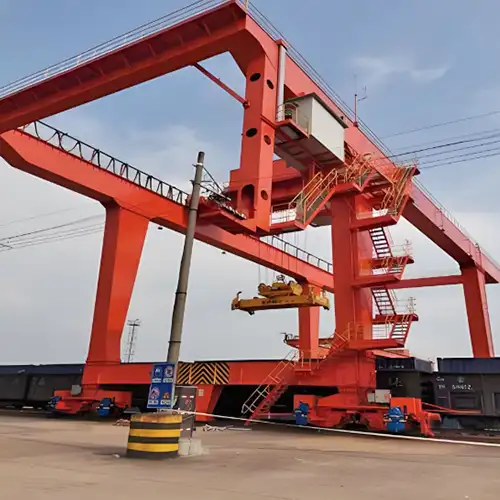
Railroad Gantry Crane & Railway Gantry Crane for Container Lifting
Railroad gantry crane & railway gantry crane for container lifting at rail-road container terminals. Get railroad gantry crane at cost-effective price.
| Crane Type | Rail Mounted Gantry Crane Container Terminals. - Railroad Gantry Crane / Railway Container Gantry Crane (RMG) for Rail-Road Terminals |
| Crane Capacity | 20–100 Ton, (Common: 30 Ton, 40 Ton, 45 Ton, 50 Ton, 65 Ton, 80 Ton) |
| Span Length | 25–45 m (Common: 30 m, 35 m, 40 m) or customized. |
| Lifting Height | 8–18 m (Common: 9 m, 12 m, 15 m) or customized. |
| Coverage Area Type | Rectangular coverage for railway container yards, rail loading zones & storage areas. Installed on fixed rails with steel runway foundations for accurate container positioning and efficient rail terminal operation. |
| Application | Designed for rail-road container terminals, railway freight yards, intermodal logistics centers & inland container depots. Used for container lifting, rail-to-truck transfer, container stacking & terminal handling operations. |
| Certifications | CE / ISO / SGS / Other third-party inspection |
| Customization | Options- rail-mounted gantry crane (RMG), container spreader, 20ft/40ft/45ft container handling, PLC, remote operation, driver cabin control, anti-sway, VFD drive, automatic positioning, Siemens/Schneider electricals & customized rail terminal solutions. |
Crane Manufacturer: Yuantai Cranes – 30+ Years Professional Crane Manufacturer from China
Category: Container Crane
Tags: containercrane
Your Trusted Heavy Duty Gantry Crane Manufacturer & Supplier
Railroad Gantry Crane & Railway Gantry Crane for Container Lifting
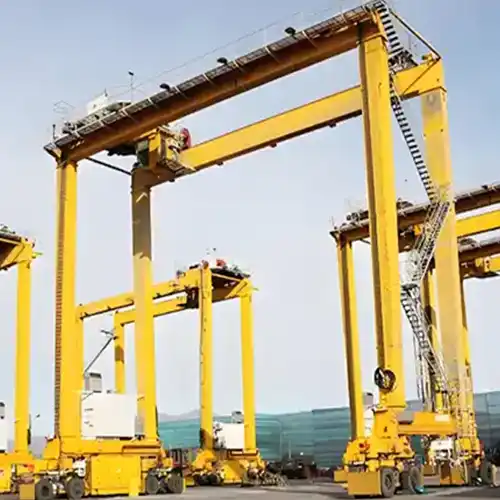
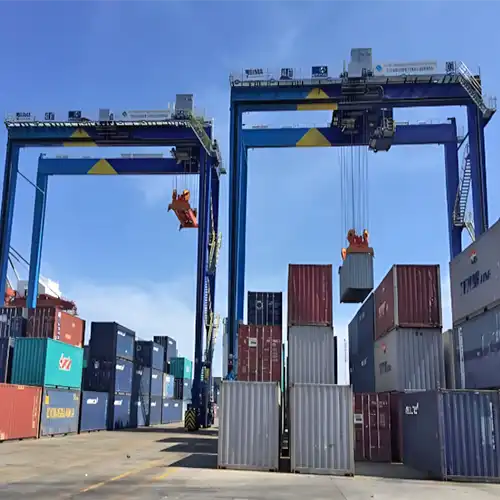
Railroad gantry crane & railway gantry crane for container lifting at rail-road container terminals. Get railroad gantry crane at cost-effective price. The railroad gantry crane is a double girder gantry crane with a U-type gantry frame, double cantilever with rod, sturdy structure, and light weight. Container loading and unloading are possible due to the gantry span and breadth space. The container spreader is a 360-degree rotating spreader that is extremely adaptable and efficient. The railroad gantry crane is commonly used for container handling in railway container logistics transport.
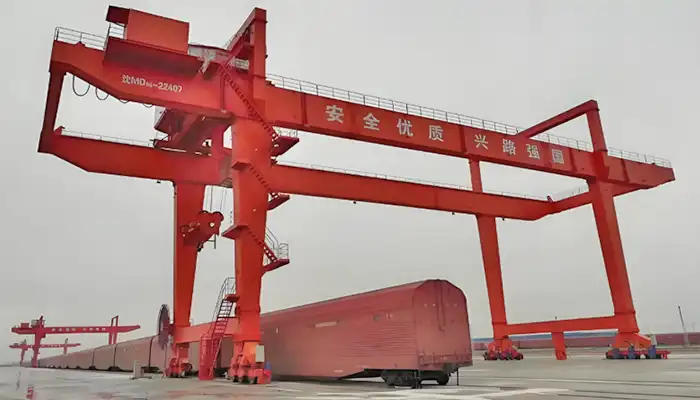
Railroad Gantry Crane

Drawing Railroad Gantry Crane
Main Specifications of Railroad Gantry Crane
- Container crane Type: rail mounted gantry crane container terminals.
- Crane Capacity of Railroad Gantry Crane: 30 ton -50 ton
- Crane Span of Rail mounted Gantry Crane:18-35m
- Lifting Heightof Container Gantry Crane: 12.3-21m
- Working Classof railway gantry crane: A6-A8
Electrical control system of rail mounted gantry crane for railroad container lifting :
- PCL control and digital frequency conversion technology;
- Sensor Data Acquisition Technology with High Precision;
- Data analysis and processing system for industrial computers.
Operationof railroad gantry crane for container lifting
- The container operation instructions of the railroad crane are sent from the central control room to the working crane.
- The central control room sends job instructions to the driver room.
- The crane operator uses the touch screen on the linkage table to initiate the loading and unloading process.
- A touch screen on the linkage table displays the spreader, crane, and trolley location in real time.
- Accept temporary plug-in jobs while prioritizing the ongoing job. After the current work is finished, start the plug-in job.
- Accurate container positioning technology for precise container placement. Machine vision technology will assist in properly identifying the location of the container keyhole and container number, after which an intelligent control system will manage crane operation, modify the spreader position and deflection angle, and accomplish precision container stacking.
- The spreader, crane, and trolley positions are displayed on the linkage table's touch screen in real time.
- If the crane running position does not correspond to the PDS system's indication position, the driver must lower the rocker, and the crane will not execute the command and will send out the alert information. Until the crane is moved to the system indication position, the crane continues to execute the handling command.
- Technology that optimizes path and obstacle avoidance by programmed path planning and obstacle avoidance.
- Using infrared space scanning technology to scan the yard container storage situation in real time and update the yard stacking 3d database. To ensure safe operation, the spreader is controlled by an intelligent algorithm that runs along the best path for intelligent obstacle avoidance.
- The railroad gantry crane's completion information feedback is received by the central control room and entered into the database.
More on specifications of railroad gantry crane
Railroad gantry crane for container handling - Rail mounted container gantry crane
Currently, the rail distance of a railroad gantry crane is generally within the range of 15-60m, extended distance is generally not more than 10m, and the majority of lifting heights are around 15m. For heavy containers, stacking 3 over 4, stacking 4 over 5, stacking 5 over 6, and even stacking 9 over 10 are the most common. The speed needs of cranes are increasing as the economy and science and technology levels continue to grow. Full load lifting speed is 45 m/min, no load lifting speed is 90 m/min, trolley maximum running speed is 150 m/min, and running bridge running speed is 270 m/min.
According to statistics, the proportions of railroad gantry cranes with various rail distances are as follows: rail distance of 20.80m accounts for 20.80%; rail distance of 2630m accounts for 32.12%; rail distance of 3135m accounts for 28.47 percent; rail distance of 3640m accounts for 5.84 percent; rail distance of 4550m accounts for 21.82 percent. The most often utilized railroad gantry crane has a rail distance of 26 to 35 meters. However, with the rapid growth of the worldwide container transportation industry, the demand for rail-type container gantry cranes is increasing, and rail distances of 35 to 40 meters are becoming increasingly popular.
Standardization of rail mounted gantry crane
Rail distance, extended distance, lifting height, and base distance are the main specifications of a railroad gantry crane. Lifting height is governed by the stacking layer, and base distance is determined by whether the container is 40 feet long. Only the standardization of rail distance and extended distance is discussed in this paragraph.
Rail distance
At the moment, the minimum rail distance for a railroad gantry crane is 15 meters, while the maximum is more than 60 meters, which is governed mostly by the site conditions. The span of a rail mounted gantry crane is less than that of a rubber tyred gantry crane, but the initial investment is higher, resulting in resource waste. On the other hand, a big rail distance will result in a high rate of container overturning and low loading and unloading efficiency. As a result, the rail distance of a railroad gantry crane should be between 25 and 60 meters.
The rationality of rail distance is investigated here primarily from the perspective of loading and unloading technology. The railroad gantry crane's loading and unloading track is located outside the span, whereas the crane without an outside extension is located inside the span, near to the door leg. For handling operations, trucks can travel via the loading and unloading area, which is easily connected to the external rail.
The distance between yard containers is usually 0.30.4m, and the width of the loading and unloading rail for each container is not less than 3.5m. It is safe to stack containers 1.52m away from the rail of the railroad gantry crane in order to obtain the estimated and suggested rail range for the railroad gantry crane.
Overveiw of Types of Railroad Gantry Cranes
Railroad gantry cranes stand as monumental engineering solutions within the intricate web of railway infrastructure. They serve as indispensable assets in the transportation and logistics industry, contributing significantly to the efficient movement of goods and materials across vast railway networks.
At their core, railroad gantry cranes are sophisticated material handling machines specifically designed for use in railway-related applications. These cranes feature a bridge-like structure spanning multiple railway tracks, allowing for the versatile and strategic handling of various loads. Their primary purpose revolves around the safe and efficient loading, unloading, and movement of cargo within railway environments.
Importance in Railway Operations
In the landscape of railway operations, gantry cranes play an integral role in streamlining logistics, ensuring the seamless transfer of goods between different modes of transportation. Their significance extends across multiple sectors, from industrial facilities to port terminals and rail yards, offering crucial support in the handling of diverse cargo.
These cranes epitomize adaptability and functionality, enabling the swift transfer of goods between trains, ships, and trucks in intermodal terminals. Their utilization significantly enhances the speed and efficiency of loading and unloading activities, bolstering the overall productivity of railway operations.
Moreover, gantry cranes are not solely confined to cargo handling; they are also instrumental in railway maintenance and repair. Equipped with specialized attachments, some gantry crane types facilitate track maintenance, ensuring the structural integrity and safety of railway tracks, bridges, and overhead lines.
In essence, the presence of gantry cranes within railway infrastructure is synonymous with operational efficiency, safety, and the facilitation of seamless logistical movements crucial for the functioning of modern transportation systems.
Railroad Gantry Cranes for Different Railroad Material Handling
Railroad gantry cranes are versatile material handling machines designed specifically for use in railroad-related applications. They are commonly employed in various railroad operations for efficiently lifting, loading, unloading, and moving heavy cargo or materials. These cranes are instrumental in streamlining the logistics and operations within railway yards, ports, intermodal facilities, and industrial sites dealing with railroad freight.
Here are some specific railroad uses of gantry cranes for material handling:
- Loading and Unloading Freight Cars:Gantry cranes are utilized for loading and unloading cargo onto and off of railroad cars. They handle diverse types of freight, including containers, bulk goods, heavy machinery, and other materials.
- Intermodal Operations:They facilitate the transfer of cargo between different modes of transport, such as loading or unloading containers from trains to trucks or ships, and vice versa, enabling efficient intermodal transportation.
- Port Operations:In port facilities, gantry cranes play a crucial role in handling cargo from ships, placing containers or goods onto railcars for distribution via rail networks or transferring cargo from railcars to ships for export.
- Rail Yard Operations:Gantry cranes are integral in rail yards for marshaling and sorting freight, positioning railcars for loading, and managing the organization of cargo for efficient transportation.
- Versatile Cargo Handling:Due to their adaptability and different lifting attachments, gantry cranes can handle various types of cargo, ranging from heavy machinery to perishable goods, catering to diverse industry needs.
- Efficient Material Handling:Gantry cranes facilitate quick and efficient material handling operations, reducing loading/unloading times and enhancing overall logistical efficiency within railroad operations.
- Maintenance and Repair:In some instances, railroad gantry cranes are utilized for maintenance and repair work on railway tracks, bridges, or other infrastructure within rail yards, aiding in upkeep and ensuring operational safety.
Railroad gantry cranes are crucial equipment in the railway industry, significantly contributing to the smooth movement of goods, optimizing logistical operations, and supporting various industries' supply chains by ensuring efficient and timely cargo handling within railroad networks.
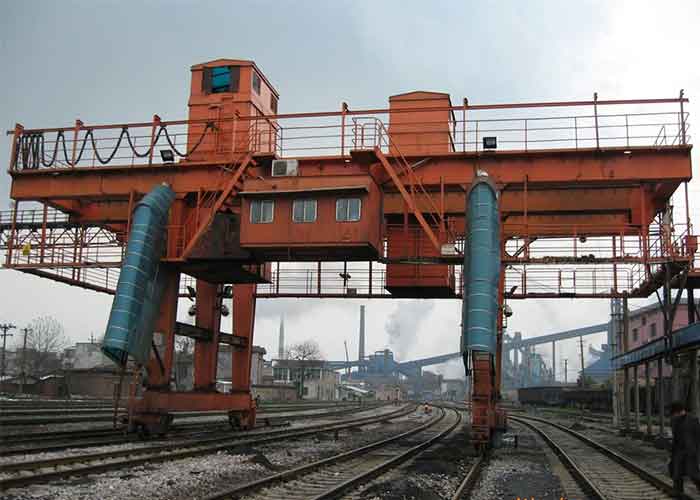
Railroad gantry crane with full gantry crane design
Full gantry cranes
Full gantry cranes, with their complete bridge-like structure spanning multiple railway tracks, offer several functions and are employed in various applications within railroad operations. These cranes are versatile and play crucial roles in material handling, particularly in rail yards, ports, intermodal facilities, and industrial sites connected to railroad transportation.
Here are the main functions, typical applications, and loads handled by full gantry cranes used on railroads:
- Loading and Unloading Operations:Full gantry cranes are primarily utilized for loading and unloading cargo onto and off of railroad cars. They handle diverse types of freight, including containers, bulk goods, heavy machinery, and other materials.
- Intermodal Operations:These cranes facilitate the transfer of cargo between different modes of transport, such as loading or unloading containers from trains to trucks or ships, and vice versa. They play a crucial role in intermodal transportation by efficiently handling containerized freight.
- Port Operations:In port facilities, full gantry cranes handle cargo from ships, placing containers or goods onto railcars for distribution via rail networks or transferring cargo from railcars to ships for export.
- Rail Yard Operations:Full gantry cranes are integral in rail yards for marshaling and sorting freight, positioning railcars for loading, and managing the organization of cargo for efficient transportation.
- Versatile Cargo Handling:Due to their large span and capacity, full gantry cranes can handle various types of cargo, ranging from heavy machinery to bulk commodities, providing flexibility in handling different materials and goods.
- Efficient Material Handling:Full gantry cranes enable quick and efficient material handling operations, reducing loading/unloading times and enhancing overall logistical efficiency within railroad operations.
- Maintenance and Repair:In some instances, full gantry cranes are also used for maintenance and repair work on railway tracks, bridges, or other infrastructure within rail yards, aiding in upkeep and ensuring operational safety.
Full gantry cranes serve as pivotal equipment in the railway industry, facilitating the smooth movement of goods, optimizing logistical operations, and supporting various industries' supply chains by ensuring efficient and timely cargo handling within railroad networks. Their ability to span multiple tracks and handle diverse loads makes them indispensable in handling various materials and goods in railway-related applications.

Railroad gantry crane with semi gantry design
Semi Gantry Cranes
Semi-gantry cranes are designed specifically to operate in environments where there might be constraints or limitations on one side of the track or where space is restricted. While traditional full gantry cranes operate with both ends supported by elevated tracks or support structures, semi-gantry cranes function effectively in situations where there might be obstacles or buildings on one side of the railroad track.
Here are ways in which semi-gantry cranes can be used effectively in a railroad setting despite the open-air construction of railroads:
- Adjacent to Structures or Obstacles:In scenarios where there are structures or buildings alongside the railway track, a semi-gantry crane can be installed with its supported end on the open side of the track while the traveling end operates along the track, allowing for effective loading and unloading without hindrance from the adjacent structures.
- Limited Clearances:Semi-gantry cranes are adaptable to situations where there might be limited clearance on one side of the rail track due to factors such as buildings, platforms, or other infrastructure. They can operate in areas where a full gantry crane might not have sufficient space or clearance.
- Flexible Deployment:These cranes offer versatility in their deployment, making them suitable for rail yards or locations where full gantry cranes may not be feasible due to spatial limitations or specific operational requirements.
- Efficient Utilization of Space:By utilizing a support structure on one side and traveling on the open track, semi-gantry cranes optimize the available space and offer a solution for material handling operations along the railroad without needing a complete gantry structure across the entire track width.
Semi-gantry cranes are engineered to address spatial constraints or specific operational needs while still ensuring efficient material handling along railroads. Their design allows them to operate effectively in open-air railroad environments, even when faced with obstacles or limited clearance on one side of the tracks.
In a railway setting, adjacent structures or buildings alongside the tracks can vary significantly depending on the specific location and environment. These structures or buildings could include:
- Warehouses or Storage Facilities:Buildings used for storing goods or materials that might be located near railway tracks for easy access to transportation.
- Manufacturing Plants or Industrial Facilities:Factories or industrial complexes situated close to railway lines to facilitate the transportation of raw materials or finished products.
- Commercial or Residential Buildings:Areas with commercial establishments or residential buildings bordering the railway tracks, particularly in urban or suburban areas.
- Station Platforms or Depots:Railway stations, platforms, or depots that might be adjacent to the tracks, where passengers embark or disembark from trains, and cargo might be loaded or unloaded.
- Infrastructure Installations:This can include structures such as bridges, overpasses, tunnels, or other infrastructure elements that might be present near the tracks.
- Utility Installations:Electrical substations, signal towers, or other utility installations situated alongside railways for maintaining and operating the rail network.
In situations where these structures or buildings are in close proximity to the railway tracks, a semi-gantry crane could be deployed effectively by positioning its supported end on the side where there is more space available, away from these adjacent structures. The traveling end of the crane can then operate along the track, providing efficient loading and unloading operations without being hindered by the nearby buildings or infrastructure.
This arrangement allows the semi-gantry crane to navigate and perform material handling tasks within the railway environment despite the constraints posed by adjacent structures, ensuring that the crane's operations remain unobstructed and efficient.
Types of Railroad Gantry Cranes Based on Applications
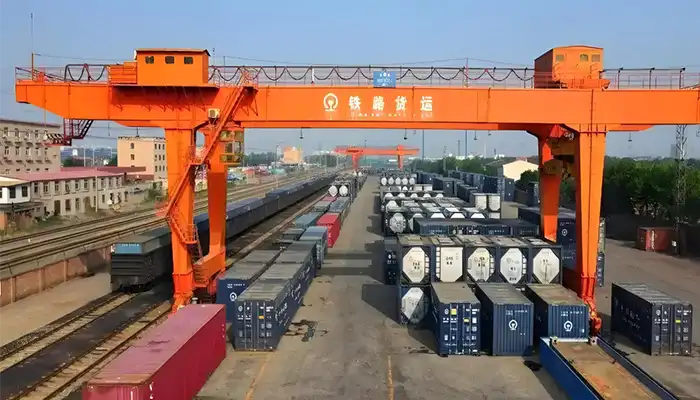
- Function and Application:Container gantry cranes are vital in ports and intermodal terminals for handling standardized shipping containers. They are designed to efficiently load and unload containers onto and off trains, ships, and trucks, facilitating the transfer of goods between different modes of transportation.
- Typical Loads and Materials Handled:These cranes handle various sizes of shipping containers commonly used in global trade. They manage containers carrying a wide array of goods, including consumer products, electronics, machinery, and other manufactured items destined for distribution.
Bulk Handling Gantry Crane with Grab Buck :
- Function and Application:Bulk handling gantry cranes are specialized for managing loose bulk materials frequently transported by rail. Their primary purpose is to handle commodities like coal, ores, grains, minerals, and aggregates using specialized grabs or attachments for efficient bulk material handling.
- Typical Loads and Materials Handled:These cranes handle diverse loose bulk materials transported by rail. They cater to commodities like coal, ores for mining, grains for agricultural transport, and aggregates used in construction, providing an effective means of handling bulk goods in the railway logistics chain.
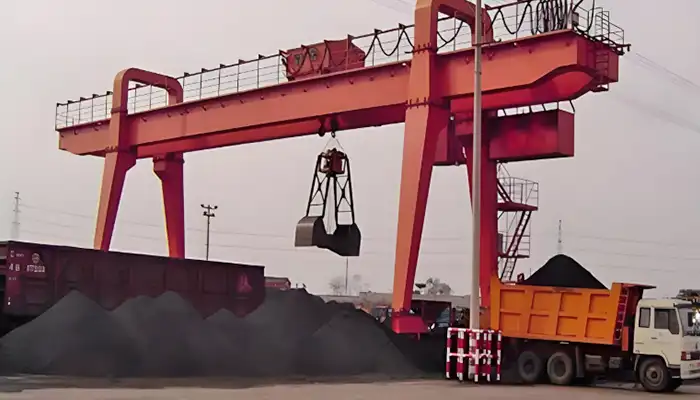
Railway Maintenance Crane:
- Function and Application:Railway maintenance cranes are crucial for maintaining and repairing railway infrastructure. They are equipped with specialized tools and attachments for various maintenance tasks such as track repair, replacement of rail sections, sleeper installation, ballast handling, and other infrastructure maintenance.
- Typical Loads and Materials Handled:Maintenance cranes handle equipment and materials necessary for maintaining railway tracks and infrastructure. This includes rail sections, sleepers (ties), ballast for track stability, switches, and other tools required for maintenance and repair work on railway tracks, bridges, and overhead lines.
These types of gantry cranes serve specific functions within railroad operations, catering to the unique demands of handling different types of cargo, whether it's containers for global trade, loose bulk materials commonly transported via rail, or specialized equipment for maintaining railway infrastructure. Their design, attachments, and capabilities are tailored to ensure efficiency, safety, and reliability within their specific applications in the railway transportation network.
Below Hook Devices for Different Loads Handling at Railroad
Underhook devices used for different types of railroad gantry cranes vary based on the specific function, application, and the type of cargo or materials being handled. These devices are attached to the crane's hook and are essential for safely and efficiently lifting, handling, and transferring various types of loads. Here's an overview of underhook devices commonly used for different types of railroad gantry cranes:
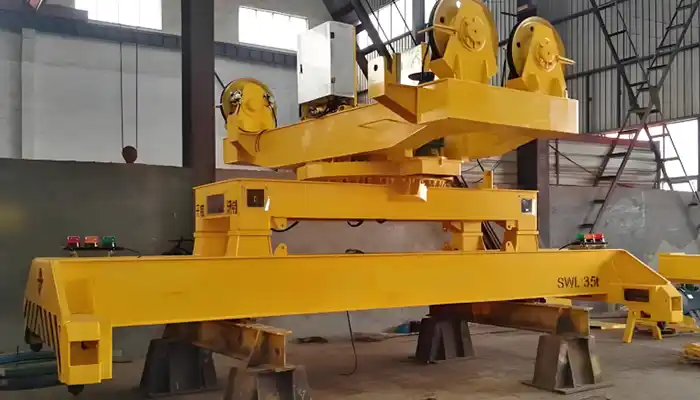
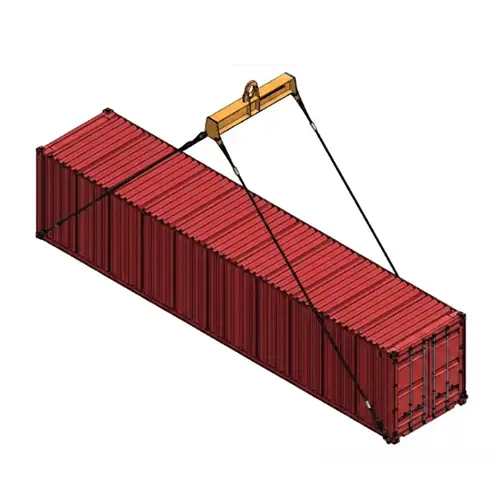
Container Gantry Crane:
- Container Spreader Beams:Specifically designed to lift and handle shipping containers of different sizes. They provide multiple attachment points to securely lift and transport containers.
- Twistlocks or Container Locks:These devices secure containers to the spreader beam, ensuring they are safely locked in place during lifting and movement operations.
Bulk Handling Gantry Crane:
- Bulk Material Grabs:Specialized grabs or clamshell attachments designed to efficiently handle loose bulk materials like coal, ores, grains, and aggregates. These grabs come in various configurations to suit different types of bulk cargo.
- Magnets:For handling ferrous materials such as iron ore or scrap metal, electromagnets or permanent magnets attached to the crane's hook securely lift and transport these materials.

Railway Maintenance Crane:
- Rail Grabs or Clamps:Designed to lift and move rail sections or tracks securely. These devices provide a firm grip on rails during maintenance or replacement operations.
- Ballast Handling Attachments:Specifically designed devices for handling ballast used for track stability. They facilitate the efficient movement and placement of ballast during track maintenance.
In addition to these specific underhook devices, other general attachments or accessories may be used across different types of gantry cranes for certain lifting operations:
- Lifting Hooks:Standard hooks used for connecting to various loads, often used with slings, chains, or straps for securing the load.
- Spreader Beams:Used for lifting and spreading loads by providing multiple attachment points for even weight distribution, not limited to containers.
- Slings or Chains:Used in conjunction with hooks for securing different types of loads, offering flexibility in lifting various materials.
- C-hooks or Clamps:Designed for securely lifting and handling items like pipes, tubes, or other cylindrical objects.
The choice of underhook devices for railroad gantry cranes depends on the specific requirements of the operation, the type of cargo being handled, and the safety considerations necessary for efficient and secure material handling within the railway environment.
Based on Lifting Capacity:
Here's a detailed overview of the typical functions, applications, objects handled, and below hook devices commonly used for different types of railroad gantry cranes based on their lifting capacity:
Light Capacity Gantry Crane:
- Functions and Applications:Light capacity gantry cranes are suitable for handling lighter loads and are commonly used in smaller rail yards or for tasks that do not require heavy lifting. They are versatile and agile, often employed in tasks such as minor maintenance, parts assembly, or handling smaller materials in railway operations.
- Typical Objects Handled:Smaller components, spare parts, tools, lighter machinery, or materials used in railway maintenance and assembly.
- Below Hook Devices:These cranes may use various below hook devices such as smaller lifting hooks, specialized attachments for handling smaller components, and custom-designed accessories for specific light-duty lifting tasks.
Medium Capacity Gantry Crane:
- Functions and Applications:Medium capacity gantry cranes are designed for moderate lifting tasks that require higher load capacities than light capacity cranes but aren't as heavy-duty as high-capacity cranes. They find applications in mid-sized rail yards, workshops, or facilities requiring moderate lifting capabilities.
- Typical Objects Handled:Components, machinery parts, medium-sized machinery, equipment, and materials used in railway maintenance, assembly, or general cargo handling.
- Below Hook Devices:These cranes may be equipped with standard lifting hooks, spreader beams for moderate loads, and various attachments designed for lifting and moving medium-sized loads efficiently.
Heavy-Duty Gantry Crane:
- Functions and Applications:Heavy-duty gantry cranes are capable of handling substantial loads and are commonly used in industrial settings or large rail yards requiring robust lifting capabilities. They excel in lifting heavy machinery, bulk materials, oversized items, and other heavy loads.
- Typical Objects Handled:Heavy machinery, large components, oversized industrial equipment, bulk materials such as steel, concrete elements, or other substantial loads used in industrial and railway construction or operations.
- Below Hook Devices:These cranes are equipped with heavy-duty lifting hooks, specialized spreader beams, grabs, magnets, or other heavy-duty attachments tailored for handling massive loads safely and efficiently.
The choice of below hook devices for these gantry cranes is determined by the nature of the loads, their weight, shape, and specific requirements of the lifting tasks. These devices are selected to ensure safe and efficient material handling within the lifting capacity range of each type of gantry crane.
Other Classifications of Railroad Gantry Cranes
- Characteristics:This type of gantry crane features a single bridge girder that supports the hoist trolley. It is lightweight and more economical compared to double girder cranes, suitable for lighter lifting applications.
- Applications:Single girder gantry cranes are commonly used in situations requiring lighter lifting capacities, such as small to medium-sized rail yards, workshops, and facilities where handling smaller loads or parts is necessary.
- Typical Loads Handled:Components, parts, smaller machinery, and materials used in maintenance, assembly, or general cargo handling within railway operations.
- Below Hook Devices:These cranes typically use standard lifting hooks, smaller lifting attachments, or spreader beams designed for lighter loads and versatile handling.
- Characteristics:Equipped with two bridge girders supporting the hoist trolley, providing higher stability and increased lifting capacities compared to single girder cranes. They are heavier and offer greater lifting heights and capacities.
- Applications:Double girder gantry cranes are utilized in heavy-duty operations, large rail yards, industrial sites, or applications requiring robust lifting capabilities for heavier loads.
- Typical Loads Handled:Heavier machinery, larger components, industrial equipment, and materials used in railway construction, maintenance, and heavy cargo handling.
- Below Hook Devices:These cranes are fitted with heavy-duty lifting hooks, specialized spreader beams, grabs, or other attachments suitable for handling heavier loads safely and efficiently.
Rail-Mounted Gantry Crane (RMG):
- Characteristics:These gantry cranes run on railway tracks and are commonly found in container terminals. They are specifically designed for handling containers between ships and trains, providing efficient container transfer.
- Applications:RMGCs are essential in container terminals, loading and unloading containers between ships and trains, aiding in efficient cargo handling in intermodal transportation.
- Typical Loads Handled:Standardized shipping containers for import/export, consumer goods, machinery, electronics, and various products transported via intermodal transport.
- Below Hook Devices:These cranes use container spreader beams or twistlocks for securely lifting and moving shipping containers between different modes of transport.
Each classification of gantry crane serves specific purposes within the railroad and transportation industry, offering different lifting capacities, functionalities, and suitability for handling various types of loads and materials in different operational environments.
Loads or Bjects Handled by Railroad Gantry Cranes
Railroad transportation handles a wide range of loads and materials, depending on the industry, logistics needs, and the type of goods being transported. Some typical loads and materials commonly handled by railroad transportation include:
- Containers:Railways are frequently used to transport standardized shipping containers carrying various goods such as consumer products, electronics, machinery, and more.
- Bulk Goods:Commodities like coal, ores, grains, minerals, aggregates, and other bulk materials are often transported via rail due to its capacity for carrying large quantities efficiently.
- Liquid Bulk:Rail tank cars are utilized for transporting liquids such as petroleum products, chemicals, and other liquid bulk commodities.
- Intermodal Freight:Besides containers, railroads handle intermodal freight units that include trailers and other specialized containers for transporting goods.
- Heavy Machinery and Equipment:Rail transportation is employed for moving heavy machinery, construction equipment, and oversized industrial components.
Railroad gantry cranes are versatile material handling machines designed specifically for use in railroad-related applications. These cranes can handle various loads and objects in the railway industry, including:
- Containers:Gantry cranes are particularly adept at handling shipping containers, efficiently loading and unloading them onto and off of railcars.
- Bulk Materials:They are equipped to handle loose bulk materials like coal, grains, ores, and aggregates using specialized grabs or other attachments for efficient bulk material handling.
- Heavy Equipment:Gantry cranes can lift and transport heavy machinery, oversized items, and industrial equipment onto railcars.
The typical loads handling devices attached under the hook of railroad gantry cranes can include:
- Spreader Beams:Used for lifting and spreading the load by providing multiple attachment points for even weight distribution.
- Lifting Hooks:Standard hooks used for connecting to the load, often used with slings or chains.
- Grabs:Specialized attachments for handling bulk materials such as coal, grains, or ores. These grabs have mechanisms to grip and release the material efficiently.
- Magnets:Used for lifting ferrous materials such as steel, scrap metal, or iron ore by employing magnetic force.
- Clamps or C-hooks:Designed for lifting and handling items like pipes, tubes, or other cylindrical objects securely.
The choice of the handling device or attachment depends on the type of cargo being lifted, its weight, shape, and the specific requirements of the material handling operation within the railroad environment.
Significance and Impact in Railroad Industry
Importance in Streamlining Operations
Railroad gantry cranes stand as pivotal components within the railway industry, contributing significantly to the streamlining of operations. Their multifaceted functionalities and diverse applications play a crucial role in optimizing logistics and cargo handling. These cranes serve as indispensable assets, facilitating the smooth and seamless transfer of goods between different transportation modes, including trains, ships, and trucks.
Their presence within rail yards, ports, and intermodal terminals ensures swift and efficient loading, unloading, and marshaling of diverse cargo types, supporting the continuous flow of goods within the logistics chain. By expediting the transfer of containers, bulk materials, and other commodities, gantry cranes play a fundamental role in reducing dwell times and expediting the movement of goods through various transportation networks.
Contribution to Efficiency and Safety in Railway Transport
The integration of railroad gantry cranes in railway operations significantly enhances efficiency and safety. Their specialized design and lifting capacities allow for the swift handling of different loads, contributing to increased operational efficiency and throughput. Moreover, their precise handling capabilities minimize the risk of damage to goods during loading, unloading, and transportation.
Furthermore, these cranes contribute to safety measures within the railway industry. Gantry cranes equipped with specialized maintenance tools aid in ensuring the upkeep and structural integrity of railway tracks, bridges, and overhead lines. This proactive approach to infrastructure maintenance enhances safety standards, reducing the likelihood of accidents and ensuring smoother operations.
Their role in maintaining and optimizing railway infrastructure demonstrates their critical contribution to overall safety protocols, ensuring the reliability and safety of railway transport.
Railroad gantry cranes, with their versatility, functionality, and specialized applications, play a pivotal role in the efficient movement of goods and maintenance of railway infrastructure. Their multifaceted impact on streamlining operations, enhancing efficiency, and contributing to safety underscores their significance within the railway industry.
Custom Railroad Gantry Crane for Sale, Get Your Gantry Crane Design
Railroad gantry cranes stand as indispensable assets within the intricate framework of railway logistics. Their versatility, specialized functionalities, and diverse applications underscore their pivotal role in the efficient functioning of railway operations.
Recap of the Versatility and Importance of Railroad Gantry Cranes
These cranes, with their distinct classifications based on structure, application, lifting capacity, and other parameters, serve as vital tools for various tasks within railway environments. From the full gantry cranes spanning multiple tracks to the specialized container, bulk handling, and maintenance cranes, each type plays a unique role in cargo handling and infrastructure maintenance.
Their significance extends beyond mere material handling; they are instrumental in ensuring the smooth transfer of goods between trains, ships, and trucks, optimizing intermodal transportation and expediting cargo movements. Moreover, their contributions to infrastructure maintenance and safety protocols demonstrate their comprehensive importance within railway logistics.
Summary of their Varied Applications and Essential Role in Railway Logistics
In summary, railroad gantry cranes play an essential role in the efficient movement of goods and materials within railway networks. They streamline operations, enhance efficiency, and contribute significantly to safety standards in railway transport. Whether in container terminals, rail yards, or maintenance tasks, these cranes epitomize adaptability and reliability, making them integral components of the modern railway industry.
Their ability to handle diverse loads, facilitate intermodal transfers, and maintain railway infrastructure underscores their critical role in ensuring the smooth functioning of the railway logistics chain.

Yuantai Cranes
Overhead Crane Manufacturer with CE, ISO, SGS, CNEX Certificates.
- Main Specifications - Capacity: 0.5–550 tons | Span: up to 40m | Speed: 0.8–12 m/min | Duty: A3–A7 | Power: 380–690V, 50/60Hz | Control: pendant/remote/cabin
- Full engineering: FEA/PLC/VFD + in-house build + global delivery + on-site support, for workshops, factories, EPC contractors, industrial projects, etc.
- Support: design, manufacturing, testing, service – end-to-end, customized lifting solutions worldwide.
How to Get an Accurate Crane Price for Your Application?
Tips: Copy the spec list, fill in your details, and paste it into the form on the right/ down-below for a quick price.
- Crane type:_____ . (e.g., overhead crane, gantry crane, jib crane)
- Max weight to lift:_____ tons. (e.g., 2t, 5t, 10t, 20t, 50t)
- Lifting height:_____ m. (How high does the hook need to reach?
- Workshop width (span):_____ m . (Distance between the two crane rails)
- Travel distance:_____ m . (How long does the crane need to move along the runway?)
- Control type:_____. (Pendant / remote / cabin Control)
- Power supply:_____. (Local voltage & frequency – e.g., 380V, 50Hz, 3-phase)
- What will it be used for?_____ (e.g., steel fabrication, concrete products, mold handling, general manufacturing, etc.)
- Any special requirements?_____ (e.g., extreme temperature, dusty or explosive environment, special paint color, etc.)
Just leave a message via the contact form and our hoist and crane engineer will contact you with in 24working hours.
Get Your Custom Quote–Quick & Easy
Fill in what you know. Skip what you don't – we'll help.Any question will be reply with 24 working hours