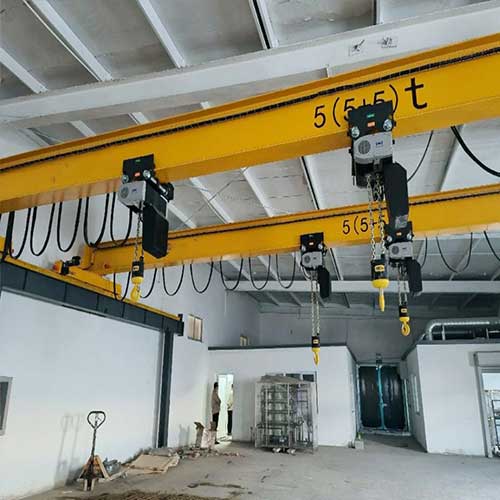
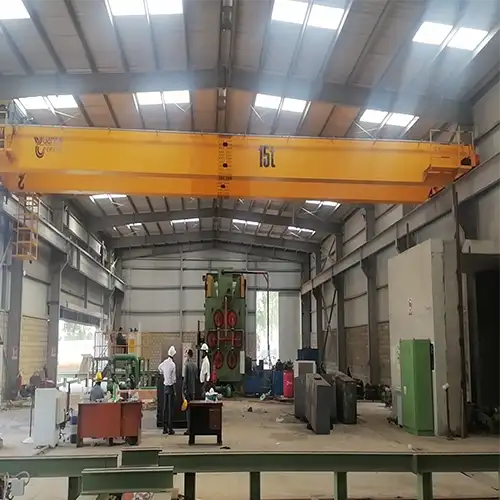
Overhead Shop Crane & Overhead Shop Bridge Crane 5 T, 10 T, 20 T
Overhead shop cranes for sale. Types of overhead shop cranes, i.e, overhead shop bridge cranes, gantry cranes, jib cranes & overhead shop hoists for sale.
| Crane Type | Overhead Shop Crane & Overhead Shop Bridge Crane with Electric Wire Rope Hoist / Open Winch Trolley, Single Girder & Double Girder Design, ISO A3–A5 / FEM 1Am–3M, 380/400/415V, 50Hz, 3Ph |
| Crane Capacity | 5–20 Ton (Common: 5 Ton, 10 Ton, 20 Ton) |
| Span Length | 7.5–30 m (Common: 10 m, 15 m, 20 m, 25 m) |
| Lifting Height | 6–18 m (Common: 6 m, 9 m, 12 m, 15 m) |
| Coverage Area Type | Designed for rectangular workshop areas with overhead runway systems, providing efficient lifting coverage across production bays and working stations. |
| Application | Used for workshop lifting, machinery handling, equipment assembly, maintenance, fabrication, loading and unloading, and production material transfer. |
| Certifications | CE / ISO / SGS / Other third-party inspection |
| Customization | Customized shop crane solutions for machine shops, fabrication shops, repair workshops, assembly lines, and production areas with suitable crane type, capacity, span, lifting height, hoist system, and controls. |
Crane Manufacturer: Yuantai Cranes – 30+ Years Professional Crane Manufacturer from China
Category: Indoor Crane
Tags: indoorcrane
Your Trusted Overhead Travelling Crane Manufacturer & Supplier
Overhead Shop Crane & Overhead Shop Bridge Crane 5 T, 10 T, 20 T
Custom Overhead Shop Cranes for Your Indoor Material Handling
Overhead shop cranes for sale. Types of overhead shop cranes, i.e, overhead shop bridge cranes, gantry cranes, jib cranes & overhead shop hoists for sale.
Overhead shop cranes, often referred to as industrial or workshop cranes, are essential material handling equipment used in various industries and workshops. These cranes are designed to lift, move, and position heavy loads within a workspace, providing a practical solution for efficient material handling tasks. They are typically mounted on beams or tracks installed on the ceiling or elevated structures, allowing them to traverse the length and breadth of the workspace.
These cranes come in various types, including bridge cranes, gantry cranes, jib cranes, and hoists, each catering to specific lifting needs and workspace configurations. Overhead shop cranes offer distinct advantages such as enhanced safety, increased productivity, optimized material handling, and adaptability to diverse operational requirements.
The practical applications of overhead shop cranes span a myriad of industries, including manufacturing, automotive, construction, warehousing, and shipbuilding. These cranes streamline operations by efficiently transferring materials from one location to another, contributing significantly to the optimization of production processes.
The evolution of overhead shop cranes mirrors the advancement of industrial technology. From rudimentary manual systems to the contemporary automated and computer-controlled variants, these cranes have undergone remarkable transformations, enhancing precision, efficiency, and safety in material handling.
Their significance in industrial productivity cannot be overstate Overhead shop cranes have become integral to the modern workspace, providing a seamless means to transport heavy components, raw materials, and finished products across various production stages. This evolution has spurred heightened efficiency, allowing businesses to achieve higher output levels while maintaining stringent safety standards.
Advantages Over Conventional Lifting Equipment for Buyers
One of the defining advantages of overhead shop cranes is their superiority over traditional lifting equipment. Compared to forklifts, manual hoists, or conveyor systems, these cranes offer unmatched flexibility, precision, and load-bearing capacities. By operating overhead, they utilize space more effectively, enabling increased maneuverability and maximizing floor space for other essential activities.
Moreover, overhead shop cranes enhance safety by minimizing the risk of accidents associated with manual handling or reliance on less sophisticated lifting equipment. Their ability to navigate through varying heights and distances makes them ideal for handling materials in complex or confined spaces, thereby reducing the likelihood of workplace mishaps.
In summary, the introduction of overhead shop cranes has revolutionized material handling practices, providing a robust and adaptable solution that significantly elevates productivity and safety standards in diverse industrial settings.
Your Trusted Overhead Shop Crane Manufacturer & Supplier
Overhead Shop Bridge Crane
Bridge cranes, known for their versatility, come in various configurations, primarily categorized as single-girder or double-girder designs. Single-girder cranes offer cost-effective solutions for light to moderate lifting, suitable for smaller workshops or low headroom spaces. Conversely, double-girder cranes provide robustness and higher lifting capacities, making them ideal for heavier loads and larger workspaces.
The adaptability of bridge cranes to different workshop layouts and lifting requirements remains one of their primary advantages. They optimize floor space utilization by operating overhead, freeing up the ground for other essential operations. Their ability to travel along a fixed track system enhances precision in material handling, reducing human error and enhancing workflow efficiency.
Types of overhead shop bridge cranes
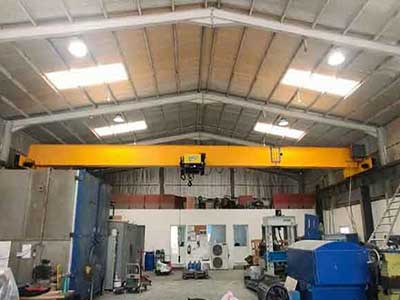
Single Girder Overhead Shop Bridge Cranes: Utilize a single horizontal beam for support, suitable for lighter loads and smaller workshops.
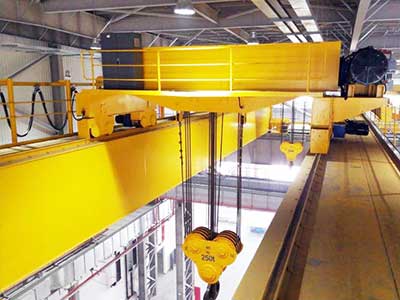
Double Girder Overhead Shop Bridge Cranes: Feature two parallel horizontal beams for increased stability and higher lifting capacities, suitable for heavy-duty applications.

Top Running Overhead Shop Bridge Cranes: Run on rails mounted on the top of the runway beams, commonly used for heavy loads and longer spans.
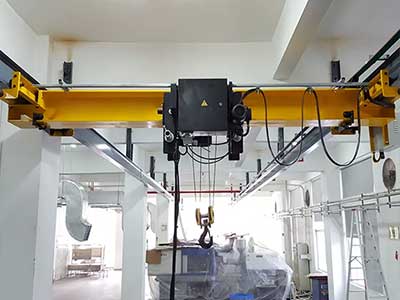
Under Running (Underhung) Overhead Shop Bridge Cranes: Operate on rails mounted underneath the runway beam, ideal for facilities with limited headroom.
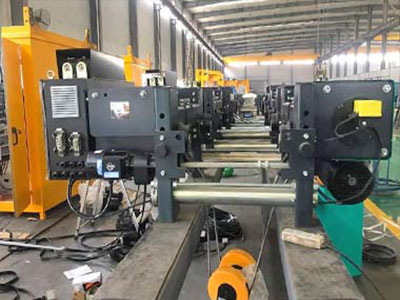
Electric Wire Rope Hoist Overhead Shop Bridge Cranes: Utilize wire rope hoists powered by an electric motor for lifting heavy loads.
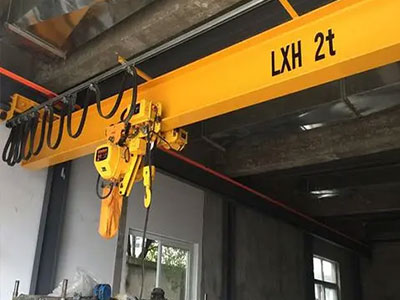
Electric Chain Hoist Overhead Shop Bridge Cranes: Use a chain hoist system powered by an electric motor for lifting, suitable for lighter loads.
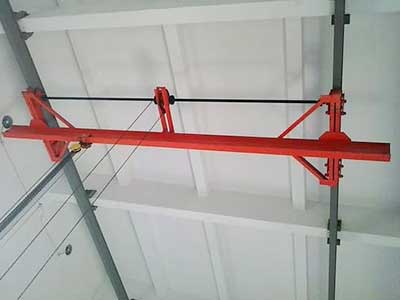
Manual Overhead Shop Bridge Cranes: Operated manually by an operator, suitable for smaller loads and occasional use.
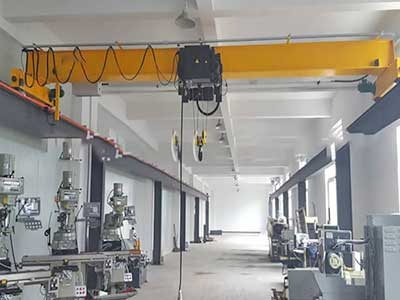
Electrically-Operated Overhead Shop Bridge Cranes: Controlled through electrical mechanisms, offering automated or semi-automated functionality for increased efficiency and precise load handling.
These classifications provide insights into the diverse types of overhead shop bridge cranes, emphasizing their structural design, lifting mechanisms, control methods, and specific applications within industrial settings.
Based on mounting configurations within a workspace:
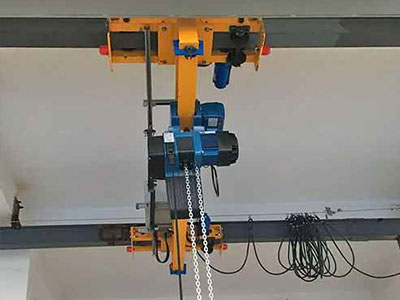
Ceiling-Mounted Overhead Workshop Bridge Cranes:
- Configuration: Ceiling-mounted bridge cranes, also known as overhead cranes, are attached directly to the ceiling structure of a building. They typically consist of a horizontal beam (bridge) supported by end trucks that move along elevated runways or tracks installed on the ceiling.
- Advantages: These cranes maximize floor space utilization as they do not occupy ground spac They provide full coverage of the floor area for material handling, making them suitable for various industrial applications.
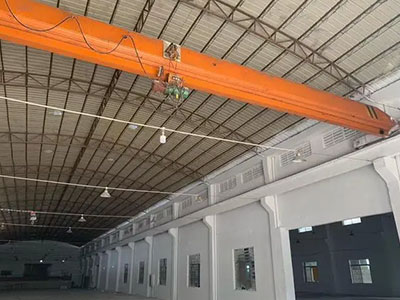
- Configuration: Wall-mounted bridge cranes are fixed to the walls of a building or structure using brackets or supports. They have a similar design to overhead cranes but operate along runways attached to the walls instead of the ceiling.
- Advantages: Wall-mounted cranes offer lateral movement and are useful when space under the crane is required for other activities or when there is limited headroom in the building.
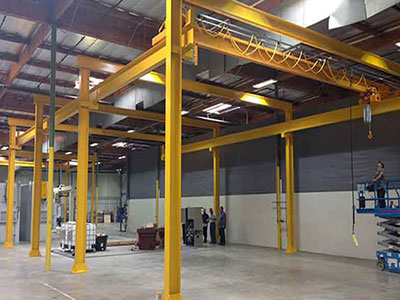
- Configuration: Floor-mounted bridge cranes are installed on the floor using a set of columns or posts. They consist of a bridge with a hoist and trolley assembly that moves along runways placed at ground level.
- Advantages: These cranes offer ease of installation and are suitable for buildings or structures where ceiling or wall mounting isn't feasibl They provide efficient lifting and movement of heavy loads within the designated floor are
Each type of bridge crane mounting—ceiling, wall, or floor—offers distinct advantages and is chosen based on the specific requirements, available space, and structural considerations within the workspace or industrial facility.
Features, Configurations, and Customization Options
These cranes typically consist of end trucks, hoisting mechanisms, and bridge girders. End trucks facilitate horizontal movement along the crane runway, while the hoisting mechanism handles vertical lifting. Customization options include adding festooning systems for power supply, radio controls for remote operation, or anti-sway technology for enhanced load stability.
Features of Bridge Cranes:
- End Trucks: These are the wheel-mounted assemblies located at each end of the bridge that facilitate the horizontal movement of the crane along the runway beams or tracks.
- Hoisting Mechanism: It includes a hoist unit connected to a trolley that moves along the bridge girder. The hoist performs the vertical lifting of loads.
- Bridge Girders: The horizontal beams that support the trolley and hoist, providing the structure for the crane's horizontal movement.
Customization Options:
Bridge cranes can be tailored to specific workshop needs, including span length, lifting height, and control systems. They can also integrate additional features like sensors for load monitoring, automated positioning, or specialized lifting attachments to accommodate diverse materials.
- Span Length and Lifting Height: Bridge cranes can be customized concerning the span length (distance between runway rails) and lifting height to suit specific workshop dimensions and lifting requirements.
- Control Systems: Advanced control systems allow customization for various control methods, such as pendant controls, radio remote controls, or cabin-operated controls, providing flexibility in operation.
- Festooning Systems: Additional festooning systems are installed for the power supply, managing cables and wires needed for crane operation.
- Anti-Sway Technology: Some bridge cranes incorporate anti-sway technology to minimize load swinging or swaying during lifting and movement, ensuring enhanced load stability and precision in material handling.
- Load Monitoring Sensors: Integration of load monitoring sensors enhances safety by providing real-time data on the load weight and distribution, enabling more precise control during lifting and movement.
- Automated Positioning: Customized features include automation for positioning, allowing the crane to move and stop precisely at predetermined points within the workshop.
Specialized Lifting Attachments:
Bridge cranes can accommodate various specialized lifting attachments, such as magnets, hooks, grabs, or slings, to suit different types of materials or goods being handle
Customization in bridge crane configurations and features allows for tailored solutions that meet specific workshop requirements, ensuring efficient material handling, enhanced safety, and optimized workflow within industrial settings.
Overhead shop bridge cranes for hazardous use
Overhead shop bridge cranes designed for hazardous environments are engineered to operate safely in challenging or potentially dangerous conditions. These cranes are specifically built to comply with stringent safety standards and regulations to ensure the protection of both personnel and equipment. Here's more information about overhead shop bridge cranes for hazardous use:
Features and Characteristics:
- Explosion-Proof Components: Cranes used in hazardous environments often feature explosion-proof components, such as motors, electrical systems, and control panels. These components are designed to prevent the risk of ignition in areas with flammable gases or vapors.
- Corrosion Resistance: Cranes operating in corrosive environments, such as chemical processing plants or offshore facilities, are constructed using materials that resist corrosion, ensuring prolonged durability in aggressive settings.
- Sealed Components: The critical electrical and mechanical parts of these cranes are often sealed to prevent the intrusion of dust, moisture, or other contaminants, maintaining the crane's performance and reliability.
- Safety Devices: Hazardous environment cranes are equipped with safety devices like limit switches, emergency stop systems, and overload protection to prevent accidents and protect against overloading.
- Certifications and Compliance: These cranes comply with various industry-specific standards and certifications, such as ATEX directives in Europe or NEC and NEMA standards in the United States, ensuring adherence to safety guidelines in hazardous locations.
Applications:
- Chemical and Petrochemical Industries: Overhead shop bridge cranes in these sectors handle materials in hazardous environments where flammable or reactive substances are present.
- Oil and Gas Industry: Cranes used in refineries, offshore platforms, or drilling rigs are designed for hazardous zones due to the presence of combustible materials and potentially explosive atmospheres.
- Mining and Metal Processing: Hazardous areas within mines or metal processing facilities often require cranes designed to withstand harsh conditions and hazardous materials.
- Pharmaceutical and Biotech Facilities: Facilities producing pharmaceuticals or working with biological materials often require cranes capable of operating in cleanrooms or areas with specific safety requirements.
Considerations:
- Customization: Hazardous environment cranes might need customization to meet specific safety regulations and environmental challenges present in different industries.
- Maintenance and Inspection: Strict maintenance schedules and regular inspections are crucial to ensure the continued safety and reliability of these cranes.
- Operator Training: Operators working with hazardous environment cranes require specialized training to understand safety protocols and emergency procedures.
These overhead shop bridge cranes designed for hazardous use are critical in industries where safety, reliability, and compliance with safety standards are paramount to prevent accidents and maintain efficient operations within hazardous locations.
Practical Applications and Buyer-Oriented Advantages
Bridge cranes find extensive use in industries requiring precise and consistent material movement. They excel in manufacturing plants, assembly lines, and warehouses, facilitating the smooth transfer of heavy components, machinery, or raw materials throughout various stages of production.
- Manufacturing and Assembly Lines: - Bridge cranes are integral in manufacturing facilities, aiding in the movement of heavy machinery, components, and materials along assembly lines. They provide precise positioning and movement, contributing to streamlined production processes.
- Warehousing and Logistics: - In warehouses, bridge cranes efficiently handle the loading and unloading of goods, facilitating the storage and retrieval of heavy items. They optimize space utilization and enhance inventory management.
- Construction and Infrastructure Projects: - Bridge cranes are utilized in construction sites for lifting and transporting construction materials. They support tasks such as loading/unloading materials, aiding in the construction of structures, and facilitating efficient project completion.
- Automotive and Aerospace Industries: - Within these industries, bridge cranes assist in handling heavy vehicle components, engines, or aircraft parts, ensuring precision and safety in assembly processes.
Buyer-Oriented Advantages:
For buyers, investing in bridge cranes assures enhanced productivity, reduced operational downtime, and increased safety measures. These cranes streamline workflow, enabling faster material handling, minimizing manual labor, and ultimately leading to improved bottom-line results.
- Enhanced Productivity: - Bridge cranes optimize material handling processes, reducing the time required for lifting and transporting heavy loads. This efficiency directly translates to increased productivity and quicker turnaround times.
- Reduced Operational Downtime: - By minimizing manual labor and providing swift and precise material movement, bridge cranes decrease operational downtim This results in smoother workflows and continuous production processes.
- Improved Safety Measures: - The use of bridge cranes promotes a safer working environment by minimizing the risks associated with manual lifting and handling of heavy loads. Safety features incorporated into these cranes ensure accident prevention and mitigate workplace hazards.
- Cost-Efficiency and ROI: - The enhanced efficiency and minimized downtime associated with bridge cranes contribute to cost savings and improved return on investment (ROI) for buyers. Efficient material handling and streamlined operations lead to better cost management.
In summary, the diverse applications of bridge cranes across multiple industries showcase their versatility in facilitating material movement and their critical role in enhancing productivity, ensuring safety, and contributing to cost-effective operations, making them an indispensable asset for buyers seeking efficient overhead shop solutions.
Your Trusted Overhead Shop Crane Manufacturer & Supplier
Overhead Shop Gantry Crane
Gantry cranes, recognized for their mobility and adaptability, comprise a horizontal beam supported by two legs that run on wheels or rails. This structural design allows for straightforward installation and movement across workshop spaces without the need for permanent installation on the building structur
Gantry cranes offer remarkable adaptability to various workshop layouts, accommodating different floor structures, irregular spaces, or outdoor settings. Their portability allows for easy relocation to address changing operational requirements or to serve multiple workstations within the same facility.
Main types of Overhead Shop Gantry Cranes
The main types of overhead shop gantry cranes are categorized based on their structural configurations, lifting capacities, and operational features. Here are the primary types:
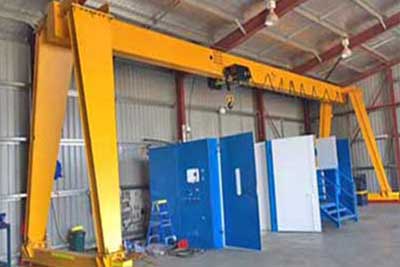
Single Girder Gantry Cranes: - These gantry cranes feature a single horizontal girder for lifting, supported by A-shaped legs at each en They are suitable for light to moderate lifting capacities and offer cost-effective solutions for smaller workshops or facilities with limited space.
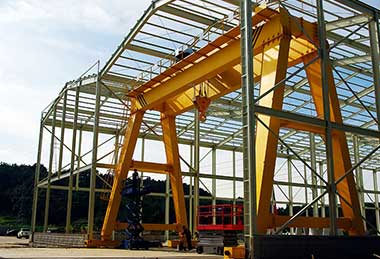
Double Girder Gantry Cranes: - Double girder gantry cranes utilize two parallel horizontal girders for increased stability and higher lifting capacities compared to single girder models. They are ideal for heavy-duty applications and larger spans, commonly found in heavy manufacturing environments.

Adjustable Height Gantry Cranes: - These gantry cranes have adjustable height features, allowing the vertical adjustment of the lifting beam or trolley. This versatility enables them to adapt to various load sizes and configurations, providing flexibility in material handling.
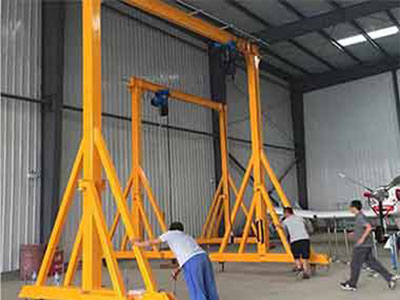
Portable or Mobile Gantry Cranes: - These gantry cranes are designed with portability in min They are equipped with wheels or casters, allowing for easy relocation within a workspace, making them suitable for temporary lifting needs or changing work environments.

Adjustable Span Gantry Cranes: - Adjustable span gantry cranes have variable span widths, offering adaptability in handling different load sizes. They can be adjusted to accommodate various work areas or load configurations.
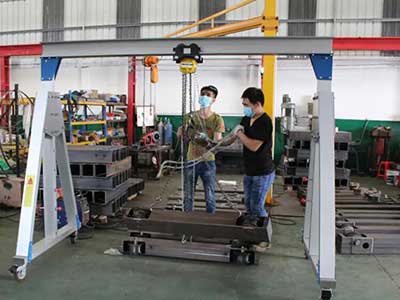
Aluminum Gantry Crane: -Aluminum Portable Indoor Crane are made of light weighted aluminum for lighter loads handling , with the features of anti-corrosion, dust-free, and light weighted, which are widely used for cleanroom, lab and others, etc.
Each type of overhead shop gantry crane serves specific purposes and comes with its unique features, making it essential to consider the specific lifting requirements, workspace constraints, and operational needs when selecting the most suitable type for a particular application or industry.
Key Features, Customization, and Mobility Aspects
These cranes boast features such as adjustable height, span, and lifting capacities, providing buyers with customizable solutions. Gantry cranes can integrate advanced control systems for precise load handling, safety mechanisms for overload protection, and different hoisting mechanisms tailored to specific applications.
The ability to move along fixed tracks or wheels enables gantry cranes to cover extensive areas within a workshop. Their mobility ensures efficient material handling across diverse workspaces, offering flexibility in maneuvering heavy loads and reducing the need for multiple fixed-position cranes.
Applications and Buyer-Centric Benefits
Gantry cranes find applications in various industries, including shipyards, construction sites, and maintenance facilities, where their portability and adaptability cater to dynamic operational needs. They excel in tasks involving the movement of bulky objects or materials in outdoor environments or within workshops with expansive layouts.
- Shipbuilding and Repair Yards: - Gantry cranes are vital in shipyards for lifting heavy ship components and transporting materials during construction, repair, or maintenance of ships and vessels.
- Construction Sites: - They're used in construction for lifting and placing heavy building materials, structural components, and equipment, facilitating efficient building processes and site logistics.
- Maintenance and Repair Facilities: - Gantry cranes support maintenance tasks in facilities, enabling the lifting and movement of machinery, engines, or large parts for repairs, overhauls, or installations.
- Warehousing and Storage Yards: - These cranes are employed in warehouses or storage yards to handle bulk materials, large containers, or heavy goods, ensuring efficient storage and retrieval operations.
- Manufacturing and Assembly Lines: - Gantry cranes are integral in manufacturing plants, providing overhead lifting for various stages of production, facilitating the movement of heavy equipment or materials.
Buyer-Centric Benefits:
For buyers, investing in gantry cranes translates into enhanced flexibility, increased operational efficiency, and cost-effective solutions. These cranes streamline material handling processes, improve workflow dynamics, and offer the flexibility to cover a broader range of work areas within a single facility.
- Enhanced Flexibility: - Gantry cranes offer flexibility in material handling by providing adaptable lifting solutions that can reach various areas within a workspace, adjusting to diverse load sizes and weights.
- Increased Operational Efficiency: - Their ability to swiftly move heavy loads improves workflow dynamics, reducing time spent on material handling tasks and enhancing overall operational efficiency.
- Cost-effective Solutions: - Buyers benefit from cost-effective solutions as gantry cranes streamline material handling processes, reducing labor costs, minimizing operational downtime, and optimizing resource utilization.
- Versatility and Mobility: - Gantry cranes' portability and adaptability enable them to cover a broader range of work areas within a single facility, providing versatility in handling materials across different sections of a workshop or sit
In summary, gantry cranes serve diverse applications across industries, enabling efficient material handling and providing buyers with increased operational flexibility, cost-effective solutions, enhanced efficiency, and versatile lifting capabilities. Their adaptability and mobility make them indispensable assets in modern workshops, contributing significantly to streamlined operations and optimized workflow efficiency.
When using gantry cranes designed for outdoor applications within indoor workshops, several considerations are essential to ensure their safe and effective operation while adapting them to an indoor environment:
Your Trusted Overhead Shop Crane Manufacturer & Supplier
Overhead Shop Jib Crane
Jib cranes possess a single horizontal boom that rotates around a vertical axis, providing lifting capabilities within a specific radius. Their design allows for easy maneuverability and precise load placement in designated areas without the need for extensive floor space or complex structural installations.
Jib cranes are highly applicable in workshops with limited space or confined work areas where maneuvering larger lifting equipment becomes impractical. Their compact design enables them to reach otherwise challenging spots, facilitating efficient material handling in constrained environments.
Main types of overhead shop jib cranes
Overhead shop jib cranes come in various types, each designed to cater to specific lifting requirements, workspace limitations, and operational needs. The main types of overhead shop jib cranes include:
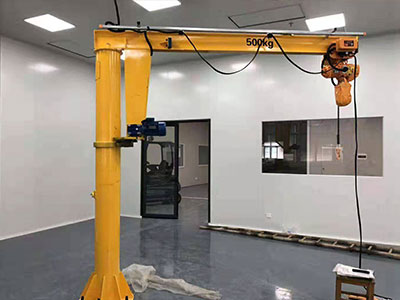
Free Standing Jib Cranes: - These cranes are standalone units mounted on a freestanding vertical column, providing 360-degree rotation for efficient material handling within a specific radius. They offer versatility and can be installed in areas without existing support structures.
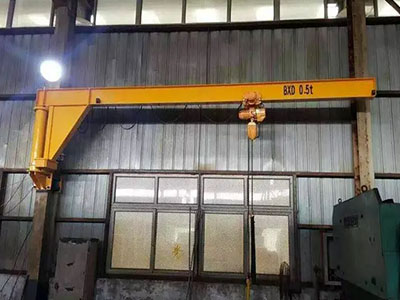
Wall-Mounted Jib Cranes: - Wall-mounted jib cranes are fixed to a vertical wall or existing support structure, saving floor space and allowing 180-degree rotation. They are ideal for confined work areas or where floor space is limited.
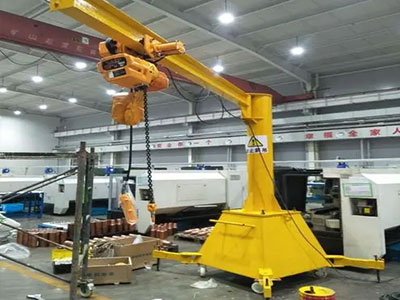
Portable Jib Cranes: - Portable jib cranes are smaller-scale cranes designed for individual workstations or assembly lines. They are typically mounted on portable jib crane base with rollers or wheels , which provide high flexibility for material handling indoor or outdoors.
Each type of overhead shop jib crane has its unique characteristics, such as rotation range, lifting capacity, installation requirements, and suitability for specific work environments. Selecting the appropriate type depends on factors like the available space, lifting needs, operational requirements, and the layout of the workshop or workspac
Distinct Features, Capacity, and Adaptation
These cranes offer diverse configurations, including wall-mounted or free-standing options, each with distinct load capacities and reach capabilities. Wall-mounted jib cranes pivot from a fixed point on a wall, while free-standing variants pivot from a floor-mounted column, providing flexibility in lifting heavy loads within their defined radius.
Jib cranes can adapt to various workshop layouts and operational requirements. They offer flexibility through customizable features such as manual or motorized rotation, hoisting mechanisms suited for specific loads, and optional accessories like tool balancers or specialized hooks for varied material handling needs.
Practical Environments and Applications:
Jib cranes prove beneficial in workshops requiring localized material handling, including machine shops, assembly lines, or maintenance areas. Their ability to precisely position loads within a limited radius enhances workflow efficiency, allowing for streamlined processes and increased productivity.
- Machine Shops and Manufacturing Facilities: - Jib cranes are highly beneficial in machine shops and manufacturing facilities where localized material handling is require They facilitate the lifting and precise positioning of heavy parts or equipment during machining processes.
- Assembly Lines and Production Areas: - In assembly lines, jib cranes aid in lifting and maneuvering components, subassemblies, or tools, optimizing workflow efficiency and ensuring seamless assembly processes.
- Maintenance and Repair Workstations: - Jib cranes are indispensable in maintenance areas, enabling the safe and efficient lifting of machinery, parts, or tools for repairs, inspections, or servicing tasks.
- Warehousing and Storage: - Within warehouses or storage areas, jib cranes assist in handling items within specific zones or loading/unloading goods, contributing to efficient inventory management.
Usefulness and Efficiency for Buyers:
For buyers seeking optimal material handling solutions, investing in jib cranes ensures cost-effectiveness, space optimization, and targeted load handling capabilities. These cranes simplify operations, reduce manual handling, and enhance safety measures within specific workstations, contributing to improved overall operational efficiency.
- Cost-Effectiveness and Space Optimization: - Investing in jib cranes offers cost-effective solutions, optimizing space utilization within the workshop by providing targeted material handling without occupying excessive floor spac
- Targeted Load Handling Capabilities: - Jib cranes are tailored for specific workstations, offering precise load positioning and maneuverability within a limited radius, ensuring efficient handling of materials in confined spaces.
- Simplified Operations and Reduced Manual Handling: - These cranes simplify operations by reducing the need for manual lifting and handling of heavy loads, minimizing physical strain on workers and improving overall workplace safety.
- Enhanced Safety Measures: - Jib cranes contribute to enhanced safety by providing controlled and precise lifting within a confined area, reducing the risk of accidents associated with manual material handling.
In summary, the functional design and efficiency of jib cranes cater to workshops where localized and targeted material handling is essential. Their ability to optimize space, streamline processes, and enhance safety measures make them indispensable tools in facilitating smooth and efficient workshop operations, especially in areas with space constraints or where precise load handling within limited areas is paramount.
Your Trusted Overhead Shop Crane Manufacturer & Supplier
Overhead Shop Hoist
Overhead shop hoists encompass a diverse range of mechanisms designed for lifting and lowering heavy loads vertically. These mechanisms can vary from wire rope hoists to chain hoists, each with distinct operational characteristics suited for specific applications and load capacities.
Wire rope hoists utilize wire ropes wound around a drum driven by a motor, offering efficient lifting for heavier loads. Chain hoists, on the other hand, employ a lifting chain wrapped around a sprocket or pulley, excelling in smaller load capacities and providing robustness and simplicity in operation.
Types of overhead shop hoists
Overhead shop hoists come in various types, each designed to accommodate different lifting capacities, workspace configurations, and specific applications. Here are the main types of overhead shop hoists:
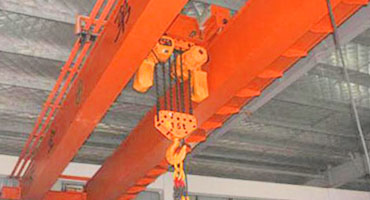
Electric Chain Hoists: - Electric chain hoists use an electric motor to power a chain mechanism for lifting. They are versatile, offering various lifting capacities and speeds. They're commonly used in manufacturing, assembly lines, and warehouses.
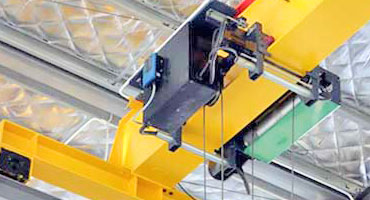
Wire Rope Hoists: - Wire rope hoists use wire ropes wound around a drum for lifting heavy loads. They are suitable for heavy-duty applications and larger lifting capacities, often found in construction, mining, or heavy manufacturing settings.
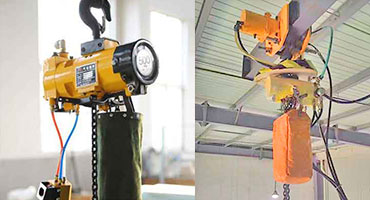
Air Hoists (Pneumatic Hoists): - Air hoists utilize compressed air to power the lifting mechanism. They are suitable for environments where electrical systems are impractical or where explosion-proof features are needed, such as in chemical plants or hazardous locations.
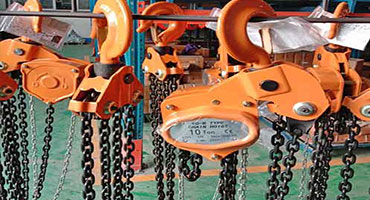
Manual Chain Hoists (Hand Chain Hoists): - Manual chain hoists rely on human effort to lift loads using a hand chain that operates a lifting mechanism. They are portable and ideal for lighter loads or applications where power sources are unavailable or impractical.
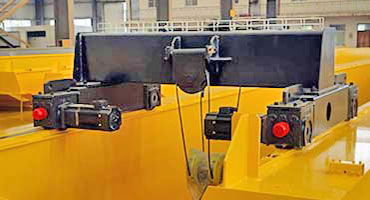
Trolley Hoists: - Trolley hoists are designed with integrated trolleys that move along beams or tracks, allowing horizontal movement in addition to vertical lifting. They provide flexibility in load positioning and are commonly used in workshops and warehouses.
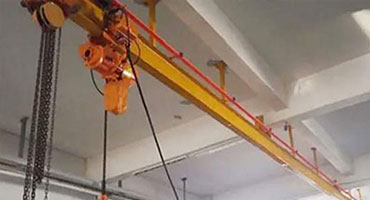
Monorail Hoists: - Monorail hoists operate on a single beam or track, offering a simple and cost-effective solution for lifting and transporting loads in a straight line within a workshop or manufacturing environment.
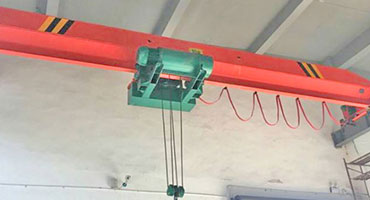
Low Headroom Hoists: - Low headroom hoists are specifically designed to operate in areas with limited vertical spac They feature a compact design, allowing for optimal use of available headroom.
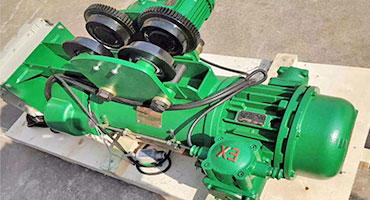
Explosion-Proof Hoists: - Explosion-proof hoists are engineered with specialized components to operate safely in hazardous environments where there is a risk of explosive gases or vapors. They comply with stringent safety standards.
These different types of overhead shop hoists offer varying features, lifting capacities, and functionalities, allowing businesses to choose the most suitable hoist based on their specific lifting needs, available space, and operational requirements.
Load Capacities, Features, and Material Handling
Overhead shop hoists come in a wide range of load capacities, from lighter ones suitable for smaller workshops to heavy-duty hoists capable of lifting substantial weights. They often feature adjustable lifting speeds, overload protection mechanisms, and ergonomic controls to enhance safety and efficiency.
These hoists excel in the efficient handling of materials, providing precise control over load movement, positioning, and placement. They are instrumental in tasks requiring intricate load manipulation, offering buyers the capability to handle materials with accuracy and safety.
Industrial Use and Buyer Insights
In various industries like manufacturing, construction, or warehousing, overhead shop hoists prove invaluable for their ability to facilitate smooth material movement. They optimize workflows, expedite production processes, and ensure timely material handling, contributing significantly to operational efficiency.
- Manufacturing Industry: - Overhead shop hoists play a pivotal role in manufacturing, aiding in the movement of raw materials, parts, and finished products along assembly lines. They ensure efficient material flow, contributing to streamlined production processes.
- Construction Sector: - In construction, hoists are essential for lifting heavy construction materials, tools, and equipment to different heights within construction sites. They expedite building processes and support timely project completion.
- Warehousing and Logistics: - Within warehouses, hoists facilitate the loading and unloading of goods, optimizing storage space and expediting logistics operations. They ensure smooth material flow for efficient inventory management.
- Automotive and Aerospace Industries: - These industries benefit from hoists for lifting heavy vehicle components, engines, or aircraft parts during manufacturing or assembly, ensuring precision handling and efficient assembly processes.
Buyer Insights and Efficiency:
Buyers opting for overhead shop hoists gain a competitive edge through improved operational efficiency and minimized downtim The versatility and precision offered by these hoists lead to increased productivity, reduced manual labor, and a safer working environment, thereby impacting the bottom line positively.
- Improved Operational Efficiency: - Buyers investing in overhead shop hoists witness improved operational efficiency due to faster material handling, reduced handling time, and optimized workflow processes. This translates to increased productivity and faster project turnaround times.
- Reduction in Manual Labor: - The precision and versatility offered by hoists minimize the need for manual lifting and handling of heavy loads, reducing physical strain on workers. This leads to a more ergonomic and safer working environment.
- Safety and Risk Mitigation: - Overhead shop hoists contribute to a safer workplace by reducing the risk of accidents associated with manual material handling. Safety features and precise load control mechanisms enhance workplace safety standards.
- Impact on Bottom Line: - The overall impact of overhead shop hoists on the bottom line is positive, as their efficiency and effectiveness result in cost savings, improved resource utilization, and enhanced operational output.
In conclusion, the versatile mechanisms, varying load capacities, and efficiency displayed by overhead shop hoists make them indispensable assets in diverse industrial settings. Their crucial role in optimizing material handling, enhancing operational productivity, ensuring workplace safety, and positively impacting the bottom line underlines their significance as fundamental components in modern workshop setups.
Your Trusted Overhead Shop Crane Manufacturer & Supplier
In-depth Features, Benefits, and Buyer-Centric Applications of Each Overhead Shop Crane Type
Overhead Shop Bridge Cranes Insigts for Buyers
Safety, Efficiency, and Buyer-oriented Features
- Prioritizing Safety: Bridge cranes are designed with safety at the forefront, integrating features such as overload protection, emergency stop systems, and collision avoidance mechanisms. Buyers benefit from a safer work environment, minimizing risks associated with material handling.
- Efficiency-driven Features: Buyer-oriented features of bridge cranes encompass streamlined controls, ergonomic designs for ease of operation, and advanced automation options. These enhance operational efficiency, reducing human error and optimizing material handling processes.
Precision Handling, Cost Savings, and ROI Perspectives
- Precision Handling and Accuracy: Bridge cranes offer precision in load handling, ensuring accurate positioning and smooth material transitions. This precision reduces product damage and enhances overall workflow efficiency.
- Cost Savings and ROI: Buyers witness cost savings through reduced labor requirements, minimized downtime, and optimized space utilization. The return on investment (ROI) perspective is promising due to increased productivity and operational streamlining.
Practical Industrial Applications and Productivity Benefits
- Practical Applications: Bridge cranes find extensive use in various industrial applications such as assembly lines, manufacturing plants, and storage facilities. Their adaptability to diverse tasks, from heavy component handling to bulk material transport, makes them indispensable across multiple industries.
- Productivity Benefits: Buyers leveraging bridge cranes experience heightened productivity by streamlining material flow, facilitating faster load movements, and enhancing production rates. These cranes optimize workflows, contributing to increased output and reduced lead times.
In essence, bridge cranes offer a blend of safety, efficiency, and precision tailored to meet buyer requirements. Their versatility in industrial applications and significant productivity benefits make them a strategic investment for businesses aiming to optimize their material handling operations.
Gantry Crane Focus on Buyer's Needs
Versatility, Portability, and Adaptation for Buyers
- Versatile Solutions: Gantry cranes provide buyers with versatile solutions for material handling, adapting effortlessly to different workshop layouts and operational demands. Their adaptability allows for seamless integration into various industries and settings.
- Portability Features: Buyers benefit from the portability of gantry cranes, which can be moved to different locations within the workshop or between workstations. This mobility ensures optimal utilization of space and resources.
Accessibility, Flexibility, and Buyer-Centric Benefits
- Enhanced Accessibility: Gantry cranes offer enhanced accessibility to materials, providing buyers with the flexibility to access loads from multiple angles. Their design allows for convenient maneuvering and positioning of heavy items.
- Flexibility in Use: Buyers appreciate the flexibility gantry cranes provide in terms of load handling. With adjustable heights, spans, and capacities, these cranes cater to diverse material handling needs, offering flexibility in operation.
Jib Crane Considerations for Practical Buyers
Specialized Features and Buyer-Oriented Operations
- Specialized Features: Jib cranes are equipped with specialized features catering to specific buyer needs. These features may include rotation limits, various mounting options, and adaptable jib arm lengths, ensuring alignment with diverse operational requirements.
- Buyer-Oriented Operations: Tailored to buyer needs, jib cranes offer user-friendly operations. Their controls, whether manual or motorized, provide ease of use and precise load positioning, aligning with buyer preferences and facilitating efficient handling.
Compactness, Swiftness, and Space Efficiency
- Compact Design and Swift Operations: The compactness of jib cranes allows for swift load handling within confined spaces. Their swift operations streamline material movement, ensuring rapid load transfers and reducing idle time.
- Space Efficiency Benefits: Buyers benefit from the space-efficient design of jib cranes, maximizing floor space utilization. These cranes operate within limited spaces without compromising on load-handling efficiency.
Task-specific Applications and Buyer Productivity Insights
- Task-specific Applications: Jib cranes excel in task-specific applications, offering precision handling for focused operations. Their adaptability to specific tasks, such as machine tool loading or assembly line workstations, enhances operational efficiency.
- Buyer Productivity Insights: Practical buyers leveraging jib cranes witness improved productivity due to targeted load handling and quick access to materials. The task-oriented nature of these cranes contributes to increased efficiency within designated work areas.
To sum up, jib cranes present specialized features, compactness, and task-oriented efficiency that align with the needs of practical buyers. Their ability to address specific operational requirements and enhance productivity in confined spaces underscores their value as strategic assets in material handling solutions.
Hoist Advantages for Practical Use
Load Management, Ergonomics, and Buyer-oriented Features
- Load Management and Ergonomics: Hoists excel in effective load management, ensuring seamless lifting and lowering of materials. These devices integrate ergonomic features like adjustable controls and lifting aids, minimizing strain on operators and optimizing work efficiency.
- Buyer-oriented Features: Hoists encompass buyer-oriented features such as variable lifting speeds, precise load controls, and safety mechanisms. These features align with buyer needs, enhancing operational safety and facilitating smooth material handling.
Material Handling Efficiency and Operational Advantages
- Material Handling Efficiency: Hoists exhibit exceptional material handling efficiency, enabling precise control over load positioning and movement. Their operational agility reduces turnaround times and ensures swift handling of goods.
- Operational Advantages: Buyers benefit from the operational advantages offered by hoists, which streamline production processes and reduce manual labor requirements. These advantages include improved workflow dynamics and reduced downtime, contributing to enhanced operational efficiency.
Industrial Utilization and Cost-Effectiveness for Buyers
- Industrial Utilization: Hoists find extensive utilization across diverse industries due to their adaptability and load-handling capabilities. From manufacturing plants to construction sites, their versatility makes them indispensable in various industrial settings.
- Cost-Effectiveness for Buyers:* Investing in hoists ensures cost-effectiveness for buyers through increased productivity and minimized operational costs. Their ability to optimize material handling processes and reduce manual intervention leads to improved cost management and higher returns on investment.
In summary, hoists offer significant advantages for practical use by focusing on efficient load management, ergonomic designs, and tailored buyer-oriented features. Their contribution to material handling efficiency, operational advantages, and cost-effectiveness underscores their importance as integral components of a productive industrial setup.
Considerations of Types of Overhead Shop Cranes for Indoor Uses
When considering different types of overhead shop cranes for indoor use—overhead bridge cranes, overhead gantry cranes, floor jib cranes, and wall jib cranes—several specific factors should be taken into account:
Overhead Bridge Crane for Indoor Use:
- Ceiling Height and Space Requirements: - Confirm sufficient ceiling height and space to accommodate the bridge crane's runway, hook height, and load clearanc Ensure no obstructions hinder its movement.
- Load-Bearing Capacity of the Structure: - Verify the building's structure to support the weight of the bridge crane, runway beams, and the maximum load it will lift. Ensure structural integrity for safe operation.
- Electrical and Power Requirements: - Assess power source compatibility and installation of electrical systems suitable for indoor us Consider modifications for safe and efficient electrical connections.
- Environmental Adaptation: - Implement protective measures like dust covers or shields to safeguard the crane components from indoor environmental elements.
Overhead Gantry Crane for Indoor Use:
- Floor Load Capacity: - Evaluate the floor's load-bearing capacity to sustain the weight of the gantry crane and the loads it will lift. Ensure the floor can withstand the concentrated loads from the crane legs.
- Space Configuration and Clearances: - Plan the layout to allow unobstructed movement of the gantry cran Ensure adequate space for the crane's travel path without interfering with other work areas or equipment.
Floor Jib Crane for Indoor Use:
- Space Efficiency and Floor Layout: - Optimize the floor layout to position floor jib cranes strategically. Ensure they cover the required work area without obstructing other operations or pathways.
- Floor Load Capacity and Fixing: - Check the floor's load-bearing capacity where the floor jib crane will be anchored or installe Confirm the stability and fixation of the crane for safe operation.
Wall Jib Crane for Indoor Use:
- Wall Structure and Mounting: - Verify the wall's structural integrity and suitability for mounting the wall jib cran Ensure it can support the crane's weight and the loads it will lift.
- Space Optimization and Clearances: - Plan the crane's mounting location to optimize space and ensure adequate clearance for rotation and movement without interfering with other operations.
In summary, considerations for indoor use of various overhead shop cranes involve assessing space, structural support, floor capacity, power requirements, environmental adaptation, and safety measures. Adhering to these considerations ensures safe and efficient operation of overhead shop cranes within indoor workspaces.
Tailoring Overhead Shop Crane Selection to Different Workshop Types
Selection Based on Workshop Size and Configuration:
Workshop Size Considerations:
For smaller workshops, compact crane options like jib cranes might be more suitable due to space limitations. Larger workshops might benefit from the versatility of bridge cranes, offering wider coverage for material movement.
In workshops with varying sizes, selecting the appropriate crane type is crucial for optimized material handling:
- Smaller Workshops: - Compact Crane Options (g., Jib Cranes): Limited space in smaller workshops may favor the installation of jib cranes. These cranes take up less space and are ideal for localized lifting within constrained areas. Their maneuverability and ability to cover specific workstations suit smaller workshop layouts.
- Larger Workshops: - Versatile Options (g., Bridge Cranes): Larger workshops benefit from the versatility of bridge cranes. These cranes offer wider coverage and can efficiently handle material movement across expansive areas. Their ability to cover larger distances and lift heavier loads makes them suitable for spacious workshop layouts.
Adapting Crane Types to Specific Workshop Environments:
Diverse workshop layouts may require different crane types. Gantry cranes suit outdoor or irregularly shaped workshops, while bridge cranes are suitable for linear or rectangular layouts. Adapting the crane type ensures seamless integration within the workshop spac
Specific Workshop Environments:
Different workshop layouts and environmental factors influence the suitability of crane types:
- Irregularly Shaped Workshops or Outdoor Settings: - Gantry Cranes: Workshops with irregular layouts or those requiring outdoor material handling benefit from gantry cranes. These cranes offer portability and adaptability to handle various shapes and sizes of workpieces across non-linear or outdoor spaces.
- Linear or Rectangular Workshop Layouts: - Bridge Cranes: Workshops with linear or rectangular configurations find bridge cranes well-suite Their ability to travel along fixed runways and cover straight paths efficiently supports material movement in linear workshop layouts.
By considering workshop size, layout, and specific environmental conditions, businesses can strategically select and adapt crane types, ensuring seamless integration and efficient material handling within their distinct workshop environments. Tailoring crane selection based on these considerations maximizes productivity and optimizes space utilization in various workshop settings.
Safety Measures Tailored for Different Workshop Settings
Tailored Safety Measures:
Workshops with varying safety concerns demand different safety features. Smaller workshops might require additional proximity sensors, while larger workshops benefit from automated collision avoidance systems. Tailoring safety measures aligns with workshop-specific needs.
- Smaller Workshops: - Proximity Sensors and Safety Guards: In compact workshops where space is limited, the installation of proximity sensors and safety guards around crane movement paths is crucial. These sensors can detect nearby objects or personnel, triggering automatic slowdowns or stops to prevent collisions and ensure worker safety.
- Larger Workshops: - Automated Collision Avoidance Systems: Larger workshops handling higher traffic or multiple simultaneous operations benefit from sophisticated collision avoidance systems. These systems utilize advanced sensors, cameras, or radar technology to monitor crane movements comprehensively. They automatically adjust crane speeds or alter paths to prevent collisions across expansive spaces, enhancing overall safety.
- Specific Hazardous Environments: - Specialized Safety Features: Workshops operating in hazardous environments, such as those dealing with chemicals or combustible materials, require specialized safety features. Explosion-proof components, fire suppression systems, or spark-resistant materials used in crane construction help mitigate potential risks.
- Adherence to Safety Standards: - Compliance with Industry Regulations: Regardless of workshop size, ensuring compliance with industry safety standards and regulations is paramount. Conducting regular safety assessments, providing adequate operator training, and maintaining equipment in accordance with safety guidelines are essential practices.
- Operator Training and Safety Protocols: - Workshop-specific Training Programs: Tailoring operator training programs to address workshop-specific hazards and crane operations is essential. Training personnel on proper crane handling, emergency procedures, and workshop-specific safety protocols enhances overall safety measures.
- Continuous Safety Evaluation and Improvement: - Regular Safety Audits and Updates: Continuously evaluating and updating safety measures based on workshop-specific needs is crucial. Regular safety audits help identify potential hazards and allow for the implementation of improved safety protocols and technologies.
By customizing safety measures to address the specific needs and challenges of different workshop settings, businesses can effectively mitigate potential risks and ensure a safer working environment for their personnel and equipment. Adapting safety features based on workshop size, layout, and potential hazards fosters a proactive approach towards maintaining a secure workplace.
Maintenance Frequency Based on Workshop Demands
High-demand workshops might necessitate more frequent crane maintenance to ensure continuous operations. Smaller workshops with less frequent use might follow a less rigorous maintenance schedul Adjusting maintenance frequency maintains crane reliability aligned with workshop demands.
Workshop Demand and Maintenance:
- High-Demand Workshops: - Frequent Maintenance Schedules: Workshops with intensive crane usage, operating in high-demand environments such as manufacturing plants or busy warehouses, require more frequent maintenanc Regular inspections, lubrication, and component checks become essential to ensure optimal crane performance and reliability.
- Regular Preventive Maintenance: - Scheduled Inspections and Servicing: High-demand workshops benefit from a proactive approach to maintenanc Implementing a robust preventive maintenance schedule, including regular checks of critical components, structural inspections, and addressing wear-and-tear issues promptly, is crucial to prevent unexpected breakdowns.
- Monitoring Crane Usage Patterns: - Usage-based Maintenance: Tracking crane usage hours or cycles helps in planning maintenanc Utilizing condition monitoring systems or maintenance software to monitor usage patterns aids in determining maintenance intervals. Components subjected to heavy usage can be serviced or replaced before failur
- Less Frequent Use in Smaller Workshops: - Adjusting Maintenance Schedules: Workshops with intermittent crane usage, like smaller operations or workshops with occasional lifting needs, may follow less frequent maintenance schedules. Periodic checks and maintenance, albeit less frequent, are still necessary to ensure safety and operational reliability.
- Tailored Maintenance Plans: - Adapting Maintenance Frequency: Tailoring maintenance plans based on the crane's age, manufacturer recommendations, environmental conditions, and historical performance data is essential. Adjusting maintenance schedules based on these factors ensures that maintenance aligns with the crane's specific needs and usage patterns.
- Compliance with Manufacturer Recommendations: - Following Manufacturer Guidelines: Adhering to the manufacturer's recommended maintenance intervals and procedures remains crucial. Manufacturers provide guidelines for routine maintenance, inspections, and component replacements based on the crane's design and expected usage.
- Continuous Monitoring and Evaluation: - Regular Performance Assessments: Conducting periodic performance evaluations allows for adjustments to maintenance schedules as the workshop's demands chang Continuous monitoring helps identify any changes in crane behavior that may necessitate more immediate maintenance.
By aligning maintenance frequency with workshop demands and usage patterns, businesses can uphold the reliability and operational efficiency of overhead cranes. Adapting maintenance schedules to match the specific needs of the workshop ensures optimal crane performance, minimizes downtime, and enhances overall safety and productivity.
Workshop-specific Factors Influencing Crane Pricing
Workshop-specific factors such as available infrastructure, power supply, or installation complexity influence crane pricing. Customizations, like specific load-handling requirements or additional safety features, may also impact the overall cost.
By tailoring overhead shop crane selection to different workshop types, considering size, configuration, safety measures, maintenance needs, and workshop-specific factors influencing pricing, businesses can ensure optimal crane performance tailored to their specific operational requirements.
Influential Workshop Factors on Crane Pricing:
- Available Infrastructure and Structural Requirements: - Building Structural Support: The existing infrastructure's ability to support crane installation significantly impacts pricing. Strengthening or modifying the building structure to accommodate the crane's load-bearing requirements may add to the overall cost.
- Power Supply and Electrical Requirements: - Electrical System Compatibility: Adapting the crane's electrical requirements to the workshop's power supply involves additional costs. Customizing electrical systems or installing power sources compatible with the crane's needs affects pricing.
- Installation Complexity and Customizations: - Installation Challenges: Workshop layouts or specific installation requirements, such as confined spaces or complex configurations, can affect installation complexity, potentially raising the installation cost.
- Customization and Special Features: Tailoring cranes to meet specific load-handling requirements or incorporating additional safety features involves customization, impacting the overall crane price.
- Safety Features and Compliance Needs: - Safety Standards and Compliance: Compliance with industry safety standards and the inclusion of specialized safety features influence crane pricing. Enhanced safety features or compliance with specific safety regulations may result in higher costs.
- Maintenance and Service Contract Considerations: - Long-term Maintenance Agreements: Some crane suppliers offer maintenance contracts or long-term service agreements. These considerations can influence initial pricing based on the level of support and service provided.
- Load-handling Capacity and Custom Requirements: - Specific Load-handling Requirements: Cranes designed for heavier loads or specialized materials incur higher costs. Tailoring crane specifications to meet unique load-handling needs may impact pricing.
- Technology and Automation Integration: - Advanced Control Systems or Automation: Integration of advanced control systems, automation, or smart features into crane operations can raise pricing due to the implementation of sophisticated technology.
- Geographical Location and Installation Logistics: - Location-related Factors: Geographical location and installation logistics, such as transportation costs or accessibility challenges, may affect pricing variations based on the workshop's location.
By considering these workshop-specific factors, businesses can anticipate the various aspects influencing overhead shop crane pricing. Tailoring crane selection based on these factors ensures that the chosen crane meets specific operational requirements while staying within budget constraints and optimizing overall workshop efficiency.
Key Buyer Concerns and Practical Considerations with Overhead Shop Cranes
Safety Standards, Compliance, and Buyer-centric Solutions
- Safety Standards and Compliance: Buyers prioritize overhead shop cranes complying with industry safety standards. Ensuring crane safety features and adherence to regulations becomes a critical aspect of their investment.
- Buyer-centric Solutions: Investing in cranes equipped with additional safety features, like overload protection systems or advanced control mechanisms, aligns with buyer-centric safety concerns.
Maintenance Practices for Longevity: Buyer's Perspective
- Longevity-oriented Maintenance: Buyers emphasize maintenance practices ensuring crane longevity. Regular inspections, lubrication schedules, and prompt repair interventions are crucial for prolonging crane lifespan.
- Buyer's Perspective on Maintenance Contracts: Some buyers opt for maintenance contracts or service agreements with suppliers to ensure timely and expert maintenance, reducing downtime and extending crane durability.
Operator Training and Skill Requirements: Buyer Insights
- Operator Training Programs: Buyers value comprehensive operator training programs. Ensuring operators possess adequate skills in crane operation and safety protocols minimizes accidents and maximizes operational efficiency.
- Buyer Insights on Skill Development: Some buyers invest in continuous skill development programs for their crane operators to keep up with technological advancements and safety protocols.
Cost Efficiency and ROI: Practical Approach for Buyers
- Cost Efficiency Analysis: Buyers conduct cost-benefit analyses considering initial investment, operational costs, and long-term returns. Assessing the total cost of ownership helps in making informed decisions.
- Practical Approach for ROI: Buyers focus on practical aspects influencing return on investment (ROI), including increased productivity, reduced downtime, and minimized operational costs. This approach ensures a balanced investment strategy.
In summary, addressing buyer concerns through safety standards, maintenance practices, operator training, and a practical cost-benefit analysis ensures a holistic approach to overhead shop crane procurement. Aligning with buyer-centric solutions and practical considerations maximizes crane performance and investment value.
FAQs Addressed for Practical Overhead Shop Crane Buyers
Essential Advantages of Overhead Shop Cranes for Buyers
Advantages Summary:
Overhead shop cranes offer indispensable benefits, including:
- Enhanced Safety: They contribute to a safer work environment by minimizing manual handling risks and providing precise load control.
- Increased Productivity: Improved workflow efficiency results from faster material movement and reduced downtime.
- Optimized Material Handling: Cranes streamline material handling processes, resulting in better load positioning and handling capabilities.
- Versatile Operational Capabilities: Adaptability to various tasks and environments enhances operational flexibility.
Buyers experience cost-effective material movement and improved operational efficiency with overhead shop cranes.
Choosing the Right Crane Type: Practical Guidelines
Guidelines for Crane Selection:
Selecting the suitable crane type involves assessing several factors:
- Workshop Layout Analysis: Understanding the workshop's layout and available space guides the choice between bridge cranes, gantry cranes, jib cranes, or hoists.
- Load Capacity Consideration: Identifying the load capacities required for specific lifting needs assists in determining the most suitable crane type.
- Environmental Adaptability: Assessing if the workshop requires indoor or outdoor crane operation influences the choice of crane type.
Prioritizing Safety Measures in Crane Operations: Buyer's Approach
Safety Prioritization:
Buyers prioritize safety through:
- Compliance with Standards: Ensuring adherence to industry safety standards and regulations.
- Investment in Safety Features: Incorporating additional safety features such as limit switches, overload protection, emergency stop buttons, and operator training.
- Comprehensive Operator Training: Providing thorough training to crane operators on safe operating practices and emergency procedures to prevent accidents.
Maintenance Frequency: Practical Recommendations for Buyers
Recommended Maintenance Frequency:
Practical maintenance schedules include:
- Regular Inspections: Scheduled checks for wear, tear, and proper functioning.
- Lubrication Routine: Applying lubricants as recommended by the manufacturer to ensure smooth crane operation.
- Prompt Repairs: Addressing identified issues promptly to prevent potential breakdowns.
Buyers adjust maintenance frequency based on crane usage, operational demands, and manufacturer guidelines for optimal performance.
Factors Impacting Overhead Shop Crane Pricing: Buyer Insights
Pricing Influences:
Factors affecting crane pricing encompass:
- Load Capacities: Higher load capacities or specialized lifting requirements impact overall costs.
- Customization Requirements: Tailoring cranes to meet specific operational needs incurs additional expenses.
- Additional Safety Features: Investing in advanced safety measures adds to the overall cost.
- Installation Complexity: Challenges in installation, modifications, or site-specific requirements affect pricing.
- Maintenance Contracts: Long-term service agreements or maintenance contracts may influence initial pricing.
Buyers evaluate these factors to comprehend the overall pricing structure before making purchasing decisions.
By addressing these frequently asked questions comprehensively, practical overhead shop crane buyers gain valuable insights into the advantages, guidelines for selection, safety prioritization, maintenance recommendations, and pricing factors. This knowledge empowers informed decision-making and facilitates the efficient procurement of overhead shop cranes tailored to specific buyer needs and operational requirements.

Yuantai Cranes
Overhead Crane Manufacturer with CE, ISO, SGS, CNEX Certificates.
- Main Specifications - Capacity: 0.5–550 tons | Span: up to 40m | Speed: 0.8–12 m/min | Duty: A3–A7 | Power: 380–690V, 50/60Hz | Control: pendant/remote/cabin
- Full engineering: FEA/PLC/VFD + in-house build + global delivery + on-site support, for workshops, factories, EPC contractors, industrial projects, etc.
- Support: design, manufacturing, testing, service – end-to-end, customized lifting solutions worldwide.
How to Get an Accurate Crane Price for Your Application?
Tips: Copy the spec list, fill in your details, and paste it into the form on the right/ down-below for a quick price.
- Crane type:_____ . (e.g., overhead crane, gantry crane, jib crane)
- Max weight to lift:_____ tons. (e.g., 2t, 5t, 10t, 20t, 50t)
- Lifting height:_____ m. (How high does the hook need to reach?
- Workshop width (span):_____ m . (Distance between the two crane rails)
- Travel distance:_____ m . (How long does the crane need to move along the runway?)
- Control type:_____. (Pendant / remote / cabin Control)
- Power supply:_____. (Local voltage & frequency – e.g., 380V, 50Hz, 3-phase)
- What will it be used for?_____ (e.g., steel fabrication, concrete products, mold handling, general manufacturing, etc.)
- Any special requirements?_____ (e.g., extreme temperature, dusty or explosive environment, special paint color, etc.)
Just leave a message via the contact form and our hoist and crane engineer will contact you with in 24working hours.
Get Your Custom Quote–Quick & Easy
Fill in what you know. Skip what you don't – we'll help.Any question will be reply with 24 working hours