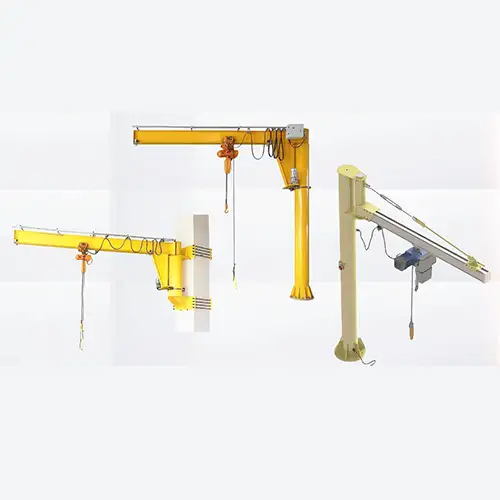
Small Jib Crane for Sale 500kg, 1T, 2 T, Wall & Floor Mounted Small Cranes in Tight Space
Small jib cranes, especially wall-mounted jib crane & freestanding small pedestal crane, enhance operations in tight spaces like workshops or garages.
| Crane Type | Wall-Mounted: space-saving 180° lifting; Floor/Pillar-Mounted: 360° coverage; Manual: economical; Electric: frequent handling; 500kg–2 Ton: ideal for tight-space workstation lifting. |
| Crane Capacity | 500 kg, 1 Ton & 2 Ton (500–2,000 kg). |
| Span Length | Jib Length / Working Range-Typically 2–6 m, |
| Lifting Height | Lifting Height-Typically 2–6 m, |
| Coverage Area Type | Machine areas, workstations, assembly points, maintenance zones, and localized lifting areas in tight spaces. |
| Application | Workstations, machine loading, assembly, maintenance, workshops, production lines, warehouses, and light material handling. |
| Certifications | CE / ISO / SGS / Other third-party inspection |
| Customization | 500kg/1/2 Ton; Wall/Floor Mounted; Cantilever/Tie-Rod; Electric Chain Hoist/Manual Hoist; Manual/Electric Trolley; 180°/360° Slewing; 2–6 m Jib Length; 2–6 m Hook Height; Pendant/Radio Remote; |
Crane Manufacturer: Yuantai Cranes – 30+ Years Professional Crane Manufacturer from China
Category: Low Built Cranes & Hoists
Tags: smallcrane,lowheadroomcrane,LowheadroomJibCrane
Your Trusted Small Jib Crane Manufacturer & Supplier
Small Jib Crane for Sale 500kg, 1T, 2 T, Wall & Floor Mounted Small Cranes
Wall-mounted Small Jib Crane & Freestanding Small Pedestal Crane in Confined Spaces
Small jib cranes, especially wall-mounted jib crane & freestanding small pedestal crane, enhance operations in tight spaces like workshops or garages.
Overview of Confined Spaces in Industrial Settings
In many industrial environments, confined spaces are common, particularly in workshops and garages. These areas are characterized by limited floor space and often restrictive heights, which can pose significant challenges for operations. Examples of confined spaces include small machine shops, vehicle maintenance garages, and assembly lines where every inch counts. The constraints of these spaces can lead to inefficiencies and difficulties in managing materials and equipment.
Common Challenges Faced in These Environments
Working in confined spaces presents several challenges. Limited room can hinder the movement of larger machinery and make it difficult to maneuver heavy loads. Operators may struggle to position equipment effectively, leading to wasted time and potential safety hazards. Additionally, the close quarters can increase the risk of accidents, as workers may have to navigate around obstacles or work in awkward positions. This environment also makes it harder to implement conventional lifting solutions, which often require more space than what is available.
Importance of Efficient Lifting Solutions
Given these challenges, having efficient lifting solutions is crucial for maintaining productivity in confined spaces. The ability to lift and maneuver heavy materials without consuming excessive time or space directly impacts the overall efficiency of operations. When lifting solutions are streamlined, workers can focus more on their tasks rather than struggling with equipment or dealing with safety concerns.
Small jib cranes, particularly wall-mounted models, play a vital role in enhancing workflow in these environments. Their compact design allows them to fit into tight spaces, providing precise lifting capabilities without requiring much floor space. By utilizing small jib cranes, businesses can optimize their operations, increase lifting efficiency, and ultimately improve productivity. These cranes allow for quick and safe handling of materials, enabling workers to perform their tasks with greater ease and efficiency, which is essential in fast-paced industrial settings.
Overview of Small Jib Cranes
What Are Small Jib Cranes?
Small jib cranes are compact lifting devices or a types of small cranes, designed to facilitate the movement of materials in confined spaces. These cranes typically feature a horizontal arm (or boom) that extends from a vertical support structure, allowing for rotational movement around the support point. The small size and maneuverability of jib cranes make them ideal for environments where space is limited, such as workshops, garages, and manufacturing facilities.
Types of Small Jib Cranes
- Wall-Mounted Jib Cranes: These cranes are anchored directly to a wall, maximizing floor space while providing overhead lifting capabilities. They are particularly beneficial in tight areas where floor-mounted options would be impractical.
- Floor-Mounted Jib Cranes: These are freestanding structures supported by a base that allows for greater height and flexibility in operation. Floor-mounted models are suitable for slightly larger areas where they can be positioned for optimal reach.
- Articulating Jib Cranes: Some small jib cranes feature articulating arms that can pivot at multiple points, allowing for increased flexibility in lifting operations. This design helps operators access hard-to-reach areas without moving the entire crane.
Key Features That Differentiate Them from Larger Cranes
Small jib cranes offer several key features that set them apart from larger cranes:
- Compact Design: Their smaller size enables them to fit into tight spaces without requiring extensive installation areas, making them an excellent choice for confined environments.
- Lightweight Construction: Many small jib cranes are constructed from lighter materials, allowing for easy installation and mobility without compromising strength.
- Precision Control: Small jib cranes provide operators with greater control over lifting operations, making them ideal for tasks that require accurate positioning of materials.
- Lower Load Capacities: While smaller than traditional cranes, small jib cranes still offer substantial lifting capabilities, typically ranging from 250 pounds to 2 tons, which suits the needs of many industrial applications.
Applications of Small Jib Cranes
Small jib cranes find utility across various industries, thanks to their versatility and efficiency. Some common applications include:
- Automotive Industry: In automotive workshops, small jib cranes are used to lift engine parts, tools, and other heavy components, allowing mechanics to work more effectively in limited space.
- Manufacturing: In manufacturing plants, these cranes assist in moving materials along production lines, facilitating assembly tasks and improving overall workflow.
- Maintenance Operations: Small jib cranes are ideal for maintenance tasks, such as lifting machinery components for repair or facilitating the movement of equipment and supplies in tight areas.
- Construction: These cranes are often employed in small construction projects, helping to lift and position materials without the need for larger, more cumbersome lifting equipment.
By adapting to the specific needs of different sectors, small jib cranes enhance operational efficiency and safety, proving invaluable in confined spaces.
Benefits of Small Jib Cranes in Confined Spaces
Optimizing Floor Space
Compact Design and Its Advantages
The compact design of small jib cranes allows them to fit seamlessly into confined spaces, which is crucial for maximizing floor area in workshops and garages. Unlike larger cranes that require significant room for maneuvering and operation, small jib cranes can be mounted on walls or positioned in corners, freeing up valuable floor space for other activities. This efficient use of space enables businesses to utilize every inch of their working environment, leading to better organization and workflow.
Case Studies Showcasing Space Optimization
Several case studies highlight the effectiveness of small jib cranes in optimizing floor space. For example, a local automotive repair shop implemented a wall-mounted jib crane to handle heavy engine parts. This installation allowed mechanics to free up floor space previously occupied by larger lifting equipment. The shop reported a 30% increase in operational efficiency, as mechanics could now navigate the workspace more freely and access tools without obstruction.
In another instance, a manufacturing facility integrated small jib cranes into their assembly lines. By using floor-mounted jib cranes at strategic points, they could reduce the need for additional forklifts and large hoisting systems. This resulted in a more streamlined process, enabling workers to move materials quickly and safely within tight workstations.
Enhanced Precision and Control
Mechanisms That Allow for Precise Lifting and Positioning
Small jib cranes are designed to offer exceptional precision in lifting and positioning. Their construction typically includes features such as adjustable boom lengths and swivel bases, allowing operators to maneuver loads with accuracy. The ability to control the lifting height and angle ensures that materials can be placed exactly where needed, minimizing the risk of accidents or damage to surrounding equipment.
Benefits for Delicate Tasks and Intricate Assembly
The precision provided by small jib cranes is particularly beneficial for delicate tasks and intricate assembly work. For instance, in electronic manufacturing, small components require careful handling to avoid damage. Using a small jib crane allows operators to lift and position these components with care, ensuring that they are placed accurately without the risk of dropping or mishandling them. This level of control also supports quality assurance processes, as workers can perform assembly tasks more efficiently and with greater confidence.
Improved Safety in Tight Areas
Safety Features Inherent to Small Jib Cranes
Safety is a critical concern in confined spaces, and small jib cranes come equipped with various features designed to enhance operational safety. These include limit switches that prevent over-lifting, emergency stop buttons, and fail-safe mechanisms that ensure loads are secured during lifting. Additionally, many models feature lightweight construction that allows operators to handle loads without excessive strain, reducing the risk of injuries.
Comparison of Accident Rates With and Without Jib Cranes
The implementation of small jib cranes in confined spaces has shown a significant reduction in accident rates. For example, a study conducted in a manufacturing facility found that after introducing small jib cranes, the frequency of lifting-related injuries dropped by 40%. In environments where traditional lifting methods were used, workers often struggled to maneuver heavy loads in tight spaces, increasing the likelihood of accidents. With small jib cranes, operators can perform lifts more safely and efficiently, contributing to a culture of safety within the workplace.
Overall, the benefits of small jib cranes in confined spaces are clear. They optimize floor space, enhance precision and control during lifting tasks, and significantly improve safety, making them invaluable assets in various industrial settings.
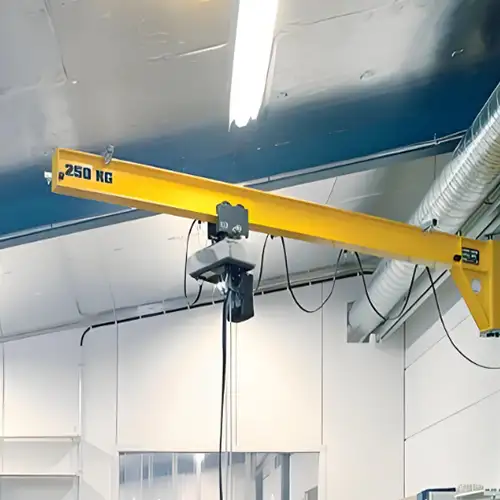
Wall-Mounted Small Jib Crane: Save Your Floor Space in Confined Workshops
Design Considerations
Types of Wall Mounts and Installation Requirements
Wall-mounted jib cranes are engineered to anchor securely to walls, utilizing vertical space efficiently without compromising floor area. There are primarily two types of wall mounts: fixed and articulated.
- Fixed Wall-Mounted Jib Cranes: These cranes are directly attached to the wall, providing a stable lifting point with a defined range of motion. They are ideal for operations where a consistent lifting angle is needed, such as in assembly lines or workshops where repetitive tasks are performed.
- Articulated Wall-Mounted Jib Cranes: Featuring a pivoting arm, these cranes offer greater reach and flexibility for lifting tasks in confined areas. The articulated design allows operators to maneuver loads more effectively, making them suitable for environments with numerous obstacles.
When installing a wall-mounted jib crane, consider the following requirements:
- Wall Material: The wall must be constructed from materials that can support the crane's load capacity. Common materials include concrete, steel, and brick, each requiring specific mounting techniques.
- Installation Height: The installation height should allow for sufficient lifting height while maintaining operator safety. The crane should be positioned so that operators can work comfortably without excessive bending or stretching.
- Load Dynamics: Understanding the dynamic forces exerted during lifting is essential for safe operation. This includes accounting for potential swaying or shifting of the load.
Structural Integrity and Load Capacity Factors
The load capacity of wall-mounted jib cranes is determined by both their design and the structural integrity of the wall. Here are key considerations:
- Load Capacity: Most wall-mounted jib cranes have a load capacity ranging from 250 pounds to 2 tons. Always adhere to the manufacturer’s specified limits to prevent overloading.
- Distribution of Weight: Effective load distribution is critical, especially in confined spaces where uneven weight can lead to instability. Operators should be trained to assess load balance before lifting.
- Regular Inspections: Conduct routine inspections of the crane, wall mounts, and hardware to identify any signs of wear or potential failure points. This proactive maintenance approach enhances safety and performance.
Flexibility and Adaptability
Ability to Maneuver in Tight Spaces
One of the primary advantages of wall-mounted jib cranes is their ability to operate efficiently in confined spaces. This flexibility offers several practical benefits:
- Maximized Workspace: By attaching to a wall, these cranes do not occupy valuable floor space, allowing for greater freedom of movement within the workshop or garage.
- Rotational Movement: The boom's ability to rotate around the wall mount provides precise maneuvering of loads, which is especially beneficial in tight areas where traditional cranes would be impractical.
- Enhanced Workflow: Operators can lift and place materials quickly and accurately, reducing time spent maneuvering loads and increasing overall productivity.
Customization Options to Fit Specific Operational Needs
Wall-mounted jib cranes can be customized to meet the unique requirements of different industries, enhancing their effectiveness and integration into existing workflows. Consider the following customization options:
- Boom Length and Configuration: Choose from adjustable boom lengths to fit specific workspace dimensions. Straight or curved boom designs can be tailored to navigate around obstacles effectively.
- Lifting Mechanisms: Operators can select between manual or electric hoists based on their lifting needs. Electric hoists are ideal for heavier loads, while manual hoists provide flexibility in lighter operations.
- Specialized Attachments: Different industries may require specialized attachments, such as clamps, hooks, or magnet systems, to handle various materials safely. Custom attachments ensure that the crane can perform specific tasks without risking damage to the load.
- Safety Features: Customization can also include additional safety features, such as limit switches, emergency stop buttons, and anti-sway mechanisms, to enhance operational safety in confined spaces.
In conclusion, the design considerations and flexible adaptability of wall-mounted jib cranes make them an excellent solution for confined spaces. Their ability to maximize workspace, combined with tailored customization options, ensures that businesses can implement effective lifting solutions that enhance productivity and safety in their operations.
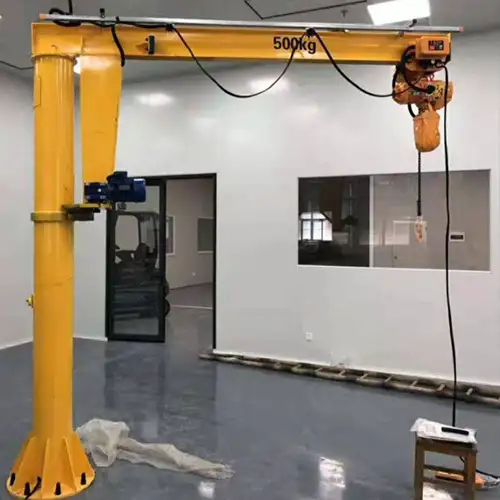
Freestanding Jib Cranes: The Small Pedestal Crane
Freestanding jib cranes, particularly small pedestal cranes, are designed to provide effective lifting solutions in various industrial applications. Freestanding jib cranes, also known as small pedestal cranes, are versatile lifting solutions designed for efficient material handling in various industrial environments. These cranes feature a stable base that allows for independent operation without the need for wall mounting. Ideal for lifting lighter loads, they provide a rotating arm that offers a wide range of motion, enhancing accessibility in tight spaces. Their compact design makes them perfect for workshops, assembly lines, and maintenance areas, ensuring maximum productivity with minimal footprint.
Here are the key features that make these cranes valuable assets in any operation:
Compact Design
- Space Efficiency: Small pedestal cranes are designed to occupy minimal floor space while providing effective lifting capabilities. Their compact size makes them ideal for workshops, garages, and small manufacturing areas where space is limited.
- Lightweight Construction: These cranes often feature lightweight materials that make them easier to handle and relocate, enhancing their versatility in various settings.
Robust Load Capacity
- Varied Lifting Capacities: Freestanding jib cranes come in a range of lifting capacities, often from 500 pounds up to 2 tons, allowing for flexibility based on specific operational needs.
- Sturdy Base Design: The pedestal base is engineered for stability, providing a solid foundation that supports the crane’s load while minimizing the risk of tipping or swaying during operations.
360-Degree Rotation
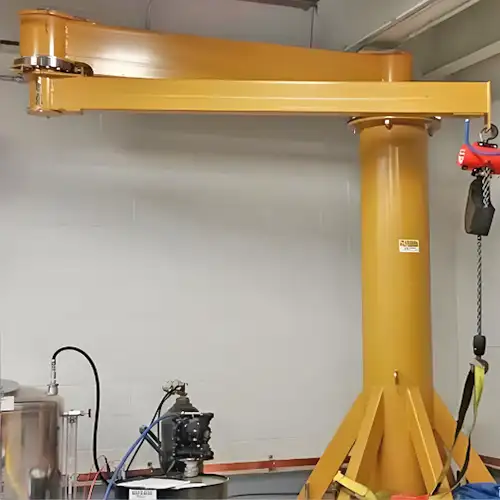
- Enhanced Maneuverability: Many small pedestal cranes feature a boom that rotates 360 degrees, allowing operators to position loads with precision and access various parts of the workspace without moving the crane.
- Improved Workflow: This rotational capability facilitates smoother transitions between tasks, ultimately enhancing productivity and reducing downtime.
Easy Installation
- Simple Setup Process: Freestanding jib cranes typically require minimal assembly and can be set up quickly without extensive modifications to existing infrastructure.
- Customizable Mounting Options: These cranes can be bolted to the floor or used as mobile units, depending on the specific requirements of the workspace.
Versatile Applications
- Diverse Use Cases: Small pedestal cranes are suitable for a variety of applications, including assembly lines, maintenance operations, and material handling tasks across different industries such as automotive, manufacturing, and construction.
- Adaptable Configurations: These cranes can be configured for specific tasks, allowing businesses to optimize their operations based on unique lifting needs.
Safety Features
- Built-in Safety Mechanisms: Small pedestal cranes often come equipped with safety features such as overload protection, limit switches, and anti-collision devices to ensure safe lifting practices.
- User-Friendly Controls: Many models include intuitive controls that allow operators to lift and lower loads smoothly, reducing the risk of accidents or injuries.
Durable Construction
- High-Quality Materials: Freestanding jib cranes are typically constructed from high-strength steel or other durable materials designed to withstand heavy use in demanding environments.
- Corrosion Resistance: Many models feature protective coatings that enhance their resistance to corrosion, especially in environments where moisture or chemicals may be present.
Maintenance-Friendly Design
- Ease of Maintenance: Small pedestal cranes are designed for easy access to key components, facilitating routine inspections and maintenance tasks.
- Longevity of Use: Regular maintenance practices can extend the lifespan of these cranes, ensuring reliable performance over time.
In summary, small pedestal cranes offer a range of key features that enhance their effectiveness in confined spaces and various industrial applications. Their compact design, robust load capacity, and safety features make them an ideal choice for businesses seeking to improve their lifting capabilities while optimizing their workspace. Click here to check light duty kbk jib cranes and small portable jib cranes for for sale.
Operational Efficiency and Cost-Effectiveness
Reducing Downtime
How Small Jib Cranes Minimize Workflow Interruptions
Small jib cranes are essential tools for improving operational efficiency, particularly in environments where workflow is often interrupted by heavy lifting tasks. By integrating these cranes into daily operations, businesses can significantly reduce downtime associated with moving materials and handling loads.
- Streamlined Operations: Small jib cranes allow for quick and efficient lifting, which minimizes the time spent waiting for equipment to arrive or set up. With the ability to lift and position loads precisely, workers can maintain a steady workflow without unnecessary delays.
- Enhanced Accessibility: Their compact design means small jib cranes can be positioned close to workstations, enabling operators to access lifting equipment without having to navigate around larger machinery. This accessibility reduces the time taken to prepare for lifting tasks.
- Continuous Operation: With minimal setup required, small jib cranes can be used continuously throughout the day. Workers can quickly switch tasks or lift different materials without needing to pause operations, further enhancing productivity.
Examples of Reduced Cycle Times
Implementing small jib cranes can lead to substantial reductions in cycle times. For instance:
- In an automotive workshop, the introduction of a wall-mounted jib crane reduced the time taken to lift and position engine components by approximately 50%. Tasks that previously took several minutes could now be completed in just a few seconds, enabling mechanics to focus on their core responsibilities.
- In a manufacturing facility, small jib cranes used for material handling resulted in a 30% decrease in overall production cycle time. Workers could efficiently transfer materials between stations without interrupting the workflow, leading to faster completion rates.
Cost-Benefit Analysis
Initial Investment vs. Long-Term Savings
While the initial investment in small jib cranes may vary based on design and features, the long-term savings and benefits often outweigh these costs. Here are key points to consider:
- Affordable Upfront Costs: Small jib cranes are generally less expensive than larger cranes and other lifting equipment, making them an accessible option for many businesses. This lower upfront cost allows for easier budget management, especially for smaller operations.
- Reduction in Operational Costs: The efficiency gained from using small jib cranes translates to significant operational savings. By minimizing downtime and increasing productivity, businesses can achieve higher output levels without needing to hire additional labor or invest in larger machinery.
- Longevity of Equipment: Small jib cranes are designed to withstand the rigors of daily use, leading to lower maintenance costs and longer operational lifespans. Properly maintained, these cranes can last for years, providing ongoing value and reducing the need for frequent replacements.
Impact on Labor Costs and Equipment Longevity
The impact of small jib cranes extends beyond immediate savings to long-term improvements in labor efficiency and equipment lifespan:
- Labor Cost Savings: With reduced manual handling of heavy loads, employees can allocate their time to more skilled tasks, enhancing overall labor productivity. This can result in lower labor costs per unit of output, as fewer workers are needed for lifting and moving materials.
- Increased Equipment Lifespan: By utilizing small jib cranes, businesses can minimize the wear and tear on other equipment such as forklifts or larger cranes, extending their operational lifespan. This prolongation reduces capital expenditure and improves return on investment (ROI).
In summary, small jib cranes play a vital role in enhancing operational efficiency and cost-effectiveness in various industrial settings. By reducing downtime and offering significant long-term savings, these cranes provide a compelling case for their integration into workflows, leading to improved productivity and reduced operational costs.
Installation and Maintenance Best Practices
Guidelines for Installation
Key Considerations for Selecting Installation Sites
Choosing the right location for installing small jib cranes is crucial for optimizing their performance and ensuring safety. Here are essential considerations:
- Space Availability: Assess the workspace dimensions to ensure there is sufficient room for the jib crane to operate effectively. Consider the reach of the boom and the clearance needed for lifting materials without obstruction.
- Wall Strength and Structure: Evaluate the strength and integrity of the wall where the crane will be mounted. The wall should be able to support the crane’s load capacity, accounting for dynamic forces during lifting operations.
- Accessibility: Install the crane in a location that allows easy access for operators while minimizing interference with other equipment and workflows. Ensuring that the crane is positioned near workstations can improve efficiency and safety.
- Environmental Conditions: Take into account environmental factors such as temperature, humidity, and exposure to corrosive substances. These factors can affect the crane's performance and longevity, so choose materials and coatings suitable for the specific environment.
Steps to Ensure Proper Setup and Compliance with Safety Standards
Proper installation is vital for the safe operation of wall-mounted jib cranes. Follow these steps to ensure compliance with safety standards:
- Review Manufacturer Specifications: Before installation, carefully read the manufacturer’s guidelines and specifications for the crane model to understand the installation requirements and safety limits.
- Conduct Structural Assessments: Consult with a structural engineer to evaluate the mounting wall’s capacity and make any necessary reinforcements to ensure it can handle the crane's load.
- Use Quality Mounting Hardware: Select high-quality bolts and anchors that are rated for the intended load. This hardware should be resistant to corrosion and compatible with the wall material.
- Follow Local Regulations: Ensure compliance with local safety regulations and building codes. This may include obtaining necessary permits and conducting inspections.
- Test the Installation: After setup, conduct load tests to verify that the crane operates safely within its specified limits. Ensure all safety mechanisms are functioning correctly.
Maintenance Strategies
Regular Inspection Protocols
Establishing a routine inspection schedule is critical to maintaining the safety and functionality of small jib cranes. Implement the following protocols:
- Daily Visual Inspections: Before each use, operators should perform a quick visual inspection of the crane for any signs of wear, damage, or unusual conditions. Check for loose bolts, frayed cables, or signs of rust.
- Monthly Detailed Inspections: Conduct more thorough monthly inspections to assess the integrity of the crane, including the wall mount, boom, and lifting mechanisms. Inspect all moving parts and lubricate them as needed to ensure smooth operation.
- Annual Professional Inspections: Schedule professional inspections at least once a year to evaluate the overall condition of the crane and to comply with safety standards. This should be performed by qualified personnel who can identify potential issues that may go unnoticed.
Common Issues and Troubleshooting Tips
Understanding common issues that may arise with small jib cranes allows for proactive maintenance and quick resolution of problems. Here are some frequent concerns and their solutions:
- Worn or Damaged Cables: If the lifting cable shows signs of fraying or damage, it should be replaced immediately to prevent accidents. Regularly check cable tension and adjust as needed to avoid excessive wear.
- Unresponsive Hoist Mechanism: If the hoist is not functioning correctly, check the power supply and ensure the controls are operational. Inspect for any mechanical blockages or wear in the lifting mechanism.
- Noise During Operation: Unusual noises, such as grinding or squeaking, can indicate a need for lubrication or a problem with bearings. Perform lubrication and inspect moving parts to identify any needed repairs.
- Tilt or Sway: If the crane is tilting or swaying excessively during operation, it may not be installed correctly, or the load may be uneven. Reassess the load distribution and check the installation integrity.
In conclusion, adhering to installation and maintenance best practices for small jib cranes not only enhances their operational effectiveness but also ensures the safety of all personnel involved. By following established guidelines and conducting regular inspections, businesses can maintain a safe and efficient lifting environment in confined spaces.
Conclusion
In summary, small jib cranes, particularly wall-mounted models, play a vital role in enhancing operational efficiency within confined spaces like workshops and garages. The key benefits discussed throughout this guide include:
- Optimized Space Utilization: Small jib cranes are designed to maximize limited floor space while providing essential lifting capabilities. Their compact design allows for efficient maneuverability, making them ideal for tight environments.
- Enhanced Precision and Control: These cranes facilitate precise lifting and positioning, essential for delicate tasks and intricate assembly processes, ultimately improving the quality of work.
- Improved Safety: The built-in safety features of small jib cranes contribute to a safer working environment. By reducing manual handling of heavy loads, they help minimize the risk of accidents and injuries.
- Operational Efficiency and Cost-Effectiveness: The implementation of small jib cranes significantly reduces downtime and labor costs, while their long-lasting design ensures that they remain a cost-effective investment over time.
For businesses operating in confined spaces, assessing your lifting needs is crucial for maximizing productivity and ensuring safety. Small jib cranes offer a practical solution to enhance workflow, optimize space, and improve operational efficiency. If you are looking to improve your lifting capabilities, consider the advantages of small jib cranes. Evaluate your workspace, explore available options, and make the investment that can transform your operations for the better. Take action today to enhance your lifting solutions and support your team’s success!


Yuantai Cranes
Overhead Crane Manufacturer with CE, ISO, SGS, CNEX Certificates.
- Main Specifications - Capacity: 0.5–550 tons | Span: up to 40m | Speed: 0.8–12 m/min | Duty: A3–A7 | Power: 380–690V, 50/60Hz | Control: pendant/remote/cabin
- Full engineering: FEA/PLC/VFD + in-house build + global delivery + on-site support, for workshops, factories, EPC contractors, industrial projects, etc.
- Support: design, manufacturing, testing, service – end-to-end, customized lifting solutions worldwide.
How to Get an Accurate Crane Price for Your Application?
Tips: Copy the spec list, fill in your details, and paste it into the form on the right/ down-below for a quick price.
- Crane type:_____ . (e.g., overhead crane, gantry crane, jib crane)
- Max weight to lift:_____ tons. (e.g., 2t, 5t, 10t, 20t, 50t)
- Lifting height:_____ m. (How high does the hook need to reach?
- Workshop width (span):_____ m . (Distance between the two crane rails)
- Travel distance:_____ m . (How long does the crane need to move along the runway?)
- Control type:_____. (Pendant / remote / cabin Control)
- Power supply:_____. (Local voltage & frequency – e.g., 380V, 50Hz, 3-phase)
- What will it be used for?_____ (e.g., steel fabrication, concrete products, mold handling, general manufacturing, etc.)
- Any special requirements?_____ (e.g., extreme temperature, dusty or explosive environment, special paint color, etc.)
Just leave a message via the contact form and our hoist and crane engineer will contact you with in 24working hours.
Get Your Custom Quote–Quick & Easy
Fill in what you know. Skip what you don't – we'll help.Any question will be reply with 24 working hours