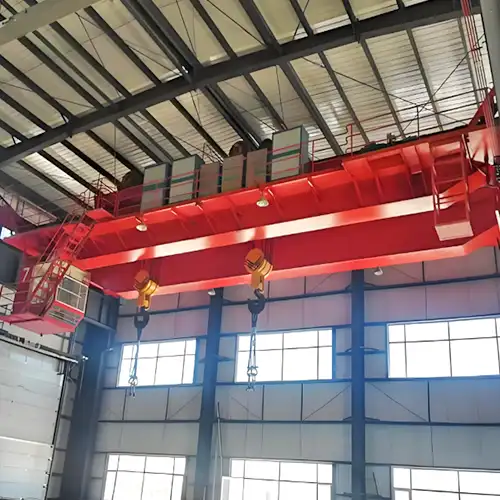
Overhead Cranes for Jazan’s Industrial Sector, Saudi Arabia
Overhead cranes for Jazan’s growing industrial sector, Saudi Arabia . Choosing eot Crane for Petrochemical, Logistics & Construction Indutrial uses.
| Crane Type | Jazan Industrial Crane Systems: Single / Double Girder Overhead Crane, Explosion-Proof Crane, RMG, RTG, Gantry and Jib Crane; Working Duty: ISO A3–A8 / M3–M8; Power Supply: 380/400/415/440/480V, 3 Ph, 50/60Hz or customized |
| Crane Capacity | 0.5–150+ ton depending on application; petrochemical 5–150 ton, port cranes 35–100+ ton, construction 5–50 ton and agro-processing 0.5–10 ton |
| Span Length | 6–35 m+ typical; project-specific according to workshop width, runway arrangement, yard layout and required coverage |
| Lifting Height | 3–30 m+ typical; project-specific according to equipment, building clearance, process route and site layout |
| Coverage Area Type | Refineries, process workshops, ports, container yards, construction sites, precast yards, factories, warehouses and production areas |
| Application | Petrochemical maintenance, port logistics, container handling, construction, precast production, steel handling, agro-processing and industrial equipment maintenance |
| Certifications | CE / ISO / SGS / Other third-party inspection |
| Customization | Industry: Petrochemical / Port / Construction / Agro-Processing · Handling: Equipment / Containers / Steel / Precast / Machinery · Type: Overhead / Gantry / Jib / RMG / RTG · Environment: Hazardous / Coastal / Heat / Dust · Special: Anti-Sway / Automation |
Crane Manufacturer: Yuantai Cranes – 30+ Years Professional Crane Manufacturer from China
Category: Saudi Arabia
Tags: Saudi
Your Trusted Overhead EOT Crane Manufacturer & Supplier
Overhead Cranes for Jazan’s Growing Industrial Sector, Saudi Arabia
Choosing Overhead Crane for Petrochemical, Logistics & Construction Indutries
Introduction: Jazan’s Economic Transformation
Jazan, once known primarily for its agricultural richness and coastal fishing villages, is now turning into one of Saudi Arabia’s fastest-developing industrial provinces. This shift is not just on paper—it’s happening on the ground with real infrastructure, real companies, and real production lines taking shape.
Jazan Economic City: A New Industrial Base
The development of Jazan Economic City (JEC), located along the Red Sea coast, is a central piece in Saudi Arabia’s Vision 2030 plan to diversify the economy. It’s more than just a name—it includes oil refineries, gas processing plants, logistics hubs, and industrial zones that are already seeing construction activity and equipment installations.
- Location advantage: Close to international shipping lanes and the Yemeni border, which opens up trade opportunities with Africa and Asia.
- Key sectors: Oil refining, petrochemicals, heavy transport, steel fabrication, energy, and construction materials.
- Current and future developments: A refinery with a capacity of over 400,000 barrels per day, a massive power generation facility, and container handling terminals.
Why Industrial Cranes Matter in Jazan
As these facilities are being built and begin operation, the demand for dependable lifting and material handling systems is increasing. Cranes aren’t just part of the construction phase—they become a permanent part of the operation in many of these facilities.
- In construction, cranes handle precast concrete blocks, rebar bundles, and heavy steel beams.
- In oil and gas, cranes move valves, heat exchangers, pipe sections, and skid modules during both installation and ongoing maintenance.
- In logistics, container gantry cranes and RTGs are essential for moving goods efficiently across terminals.
Without properly designed crane systems, even a well-funded industrial site will face delays, higher labor costs, and safety issues.
Jazan is growing. And with that growth comes the need to think carefully about what kind of cranes each facility needs—whether it’s a small indoor hoist for an agro-processing plant or a 100-ton overhead crane for a modular refinery.
Main Industries in Jazan and Their Overhead Crane Needs
Jazan's downstream oil and gas industry is a core part of the region's transformation. The refinery and petrochemical plants being built in the Jazan Economic City aren't just steel structures—they're complex operations that depend on heavy equipment, tight maintenance schedules, and strict safety standards. Cranes in these environments must handle not only weight but also explosive atmospheres, frequent use, and precise positioning.
Oil Refining and Petrochemicals
Crane Types Commonly Used
In this industry, equipment reliability isn't a luxury—it's a requirement. The cranes used are selected based on safety ratings, lifting performance, and integration with facility layouts.
- Explosion-proof overhead cranes: Designed for hazardous zones where flammable gas or vapor might be present.
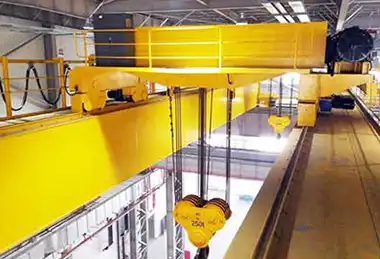
- Double girder EOT cranes: Used in process halls and maintenance workshops for heavy loads and long spans.
- Maintenance hoists: Often single-speed or variable-speed electric wire rope hoists, mounted on monorails or fixed structures.
Typical Load Types
The materials handled are heavy and often awkwardly shaped. Rigging and precise control matter just as much as lifting capacity.
- Pumps and compressors: Range from 2 to 20 tons, often handled during shutdowns or major overhauls.
- Piping modules and skids: Pre-assembled pipe racks and skid-mounted systems weighing between 10 and 30 tons.
- Electrical control units and valve assemblies: Moderate weight but require delicate handling and accurate placement.
- Heat exchangers, columns, and reactors: These massive components can weigh up to 150 tons and require synchronized lifting systems.
Typical Crane Capacities
Here's a breakdown of lifting capacities commonly found in refinery applications:
- Workshop maintenance hoists5–10 tons- Daily maintenance lifting, small equipment, or spare parts.
- Pipe and skid handling10–30 tons- Lifting modular pipe assemblies or structural components.
- Process module and equipment installation50–100 tons Used during plant installation or upgrades.
- Heavy-duty lifts for vessels and reactorsUp to 150 tons -Cranes in this range are typically custom-engineered with dual trolleys or synchronized systems.
Special Design Features
Cranes for oil and gas facilities in Jazan need more than just lifting power. The design must account for explosive gases, fine dust, humidity, and operational risks.
- Explosion-proof electricals: Motors, control panels, and limit switches built to ATEX or IECEx standards.
- Anti-sparking components: Bronze-coated hooks and stainless-steel wheels to reduce ignition risks.
- Redundant safety systems: Dual brakes, overload limiters, and secondary hoisting mechanisms for critical lifts.
- Corrosion-resistant finishes: Especially important in coastal Jazan, where salty air can damage standard paint and materials.
Cranes in this industry are not one-size-fits-all. Each lift must be considered based on both the weight and the risk involved. That's why detailed planning and technical consultation with a qualified crane supplier is not optional—it's necessary
Heavy Logistics and Port Operations
Jazan's strategic coastal location along the Red Sea makes it a critical gateway for cargo movement in and out of Saudi Arabia. The port facilities—both existing and under development—support bulk shipping, container transport, and industrial goods handling. Cranes are central to this flow of goods. Without them, the port stalls, and the supply chain suffers.
Crane Types Commonly Used
The crane systems used in Jazan's logistics and maritime zones are built for high throughput and reliable performance. Speed, automation, and safety are the priorities here, especially when working in tight terminal spaces or under time pressure from ship schedules.
- Rail-Mounted Gantry Cranes (RMG): Fixed on rails and typically used in container yards or intermodal terminals. They offer high precision and large span widths.
- Rubber-Tyred Gantry Cranes (RTG): Mobile gantry cranes capable of moving between stacks without needing fixed rails. They provide flexibility for smaller or dynamic container yards.
- Ship-to-Shore (STS) Cranes: These massive cranes unload containers directly from cargo ships and are essential for container terminals handling international shipping.
Typical Loads Handled
Port cranes in Jazan are designed to move standardized and heavy industrial cargo. The loads may be uniform, like containers, or irregular and dense, like steel coils or machines.
- ISO containers: Standard 20 ft and 40 ft units weighing up to 30 tons loaded.
- Steel coils and wire bundles: Can exceed 20 tons each and may require specialized coil grabs.
- Palletized industrial cargo: Pallets of construction materials, spare parts, or supplies weighing 1 to 5 tons.
- Oversized machinery or transformers: Often loaded and unloaded using general-purpose gantries or mobile cranes.
- Bulk materials: Handled with clamshell grabs or hoppers—like grains, ore, or minerals depending on density.
Typical Crane Capacities
Cranes in logistics zones must balance reach, lift height, and capacity. Here's a breakdown of what's typically used:
- Container handling cranes (RMG, RTG, STS)35–65 tons under spreader . Lifting one full container or two empty containers (twin-lift). Some cranes include a second hoist for tandem lifting.
- General cargo gantry cranes30–100 tons . For bulkier or irregular loads not handled in standard containers.
- Bulk material grabs20–50 tons, depending on material density. Loading/unloading coal, aggregates, fertilizer, or grain from vessels.
Performance and Design Features
Jazan's port cranes are increasingly modern, integrating digital control and automation features to meet growing throughput targets.
- Spreader beam systems: Standard or telescopic for adjusting to 20 ft or 40 ft containers.
- Alignment sensors and anti-sway systems: Improve operational accuracy and safety during fast stacking or offloading.
- High-speed hoisting: Essential for reducing vessel turnaround time.
- PLC and wireless automation: Integrated systems to track loads, control cranes remotely, and log operational data.
Practical Considerations for Crane Buyers
- Ground conditions: For RMGs and STS cranes, ensure proper foundation and rail alignment.
- Power supply: RTGs can be diesel-powered or electric; hybrid systems are also available for reduced emissions.
- Wind conditions: Cranes in coastal Jazan must be designed with wind-resistance features and emergency securing systems.
Whether handling containers or steel coils, port cranes in Jazan must meet the demands of continuous operation and high-volume cargo. Selecting the right crane isn't just about capacity—it's about cycle time, layout compatibility, and long-term maintenance support.
Construction and Prefabrication
In Jazan, construction activity has been rising quickly to meet the needs of infrastructure development, industrial plant setup, and worker housing. Prefabrication, in particular, plays a major role in speeding up project timelines while improving quality control. Cranes used in this sector must be flexible, rugged, and easy to relocate or adjust depending on the site layout and changing demands.
Crane Types Commonly Used
Construction and prefab yards require different crane setups depending on whether the job is taking place in a fixed production yard, an open field, or an active building site. Mobility and span flexibility are key.
- Tower cranes: Common for vertical construction. These are used in high-rise buildings or where materials need to be lifted across long horizontal distances.
- Semi-gantry cranes: One side runs on a rail while the other uses a ground-mounted leg. Suitable for workshops with partial coverage.
- Portal cranes (full gantry cranes): Ideal for lifting and moving heavy precast elements outdoors. Used in precast yards or steel structure assembly lines.
- Mobile gantry cranes: Used for more flexible lifting needs across different areas of a yard or construction site. Often on rubber wheels with adjustable height.
Typical Loads Handled
The construction and prefabrication sector in Jazan deals with a variety of medium to heavy elements. Lifts need to be stable and sometimes spread across large spans, depending on the size of the component.
- Structural steel components: I-beams, trusses, and columns ranging from 5 to 20 tons depending on size and thickness.
- Precast concrete panels: Wall panels, stairs, and slabs can weigh anywhere between 10 and 30 tons.
- Prefabricated wall elements: Lightweight steel frames or concrete wall sections, often handled in multiples during assembly.
- Rebar cages and bundles: Often between 1 to 10 tons, these are awkward to handle and require lifting devices that prevent deformation.
- Site installation modules: Lifting steel frames or equipment into position during final installation phases.
Typical Crane Capacities
Cranes in this sector are selected based on the scale of the project and the weight of the prefabricated elements. Here's what's typically seen:
- Precast lifting10–30 tons . Application: Moving full wall sections, beams, staircases, or slab panels from casting areas to trucks or stacking zones.
- Rebar and steel handling5–15 tons. Application: Bundles of reinforcing steel or structural parts, often moved multiple times per day.
- Site installation work25–50 tons. Application: Lifting prefabricated units, pipe racks, or assembled frames into final position on-site.
Practical Design Features
The cranes used in Jazan's construction and prefab yards face outdoor exposure and must work efficiently in dusty, windy, or hot environments.
- Corrosion resistance: Hot-dip galvanized components, special outdoor paint systems, and stainless steel for bolts or exposed parts.
- Adjustable spans or telescopic heights: Especially useful in mobile gantries for lifting objects at different locations and elevations.
- Remote control operation: Improves visibility and operator safety, especially when working near people or other machines.
- Rubber tires or rail wheels: For mobile cranes, tire type depends on ground condition—concrete yards vs compacted soil or asphalt.
Construction crane buyers in Jazan should also consider wind load ratings, crane mobility (fixed vs portable), and compatibility with lifting attachments like spreader beams, clamps, or C-hooks. Flexibility and durability are key in a sector that rarely stands still.
Agro-Processing and Packaging
Jazan's strong agricultural base, especially in fruits like mangoes and papayas, has led to the growth of agro-processing plants, cold storage facilities, and food packaging workshops. These facilities may not deal with very heavy loads, but they require clean, precise, and space-efficient lifting solutions. Cranes here are mainly used to move equipment during installation, shift machinery for maintenance, and transfer materials along production lines.
Crane Types Commonly Used
Because space is often limited and cleanliness is a priority, cranes in agro-processing facilities are typically compact, lightweight, and designed for indoor use. Portability and ease of maintenance also matter.
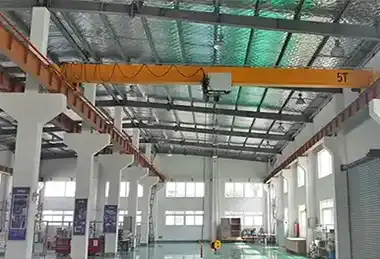
- Single girder EOT cranes: Ideal for indoor material handling across bays or above production lines. These cranes cover larger spans without taking up too much headroom.
- Electric chain hoists: Mounted on fixed beams or trolleys for vertical lifting tasks. Chain hoists are cost-effective and easy to maintain.
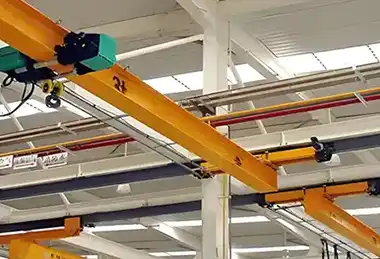
- Wall-mounted jib cranes: Fixed to structural columns or walls, they swing in a semicircular arc and are perfect for workstations or specific machinery.
- Portable gantry cranes: Used where fixed overhead cranes are not practical. These lightweight gantries can be moved and adjusted to fit different lifting spots.
Typical Loads Handled
Loads in agro-processing are often small to medium in size but need careful handling to avoid contamination or damage.
- Food packaging machines: Small to mid-sized equipment, often 1 to 3 tons, used in assembly, inspection, or relocation.
- Crate and bin systems: Empty or full crates of produce, typically weighing under 1 ton each but handled in groups.
- Mixers, conveyors, and washing units: Mechanical components moved during cleaning or repair cycles.
- Spare parts and maintenance tools: Often lightweight but bulky, requiring controlled lifts over tight areas.
Typical Crane Capacities
Cranes used in food processing don't need high lifting capacities, but they must be dependable and easy to operate. Here's a practical capacity guide:
- Production line hoists0.5–3 tons. Moving light equipment or filled packaging crates from one station to another.
- Maintenance lifting2–5 tons. Application: Lifting small machines, motors, or assemblies during scheduled repairs or cleaning.
- Material transfer inside plantUp to 10 tons. Application: Moving bulk packaging materials, pallets, or lightweight production machinery.
Design Features for Agro Environments
Food production and packaging environments demand a clean, quiet, and energy-efficient working space. Crane design must reflect this need.
- Stainless steel or coated structures: Helps prevent rust and allows easy washing or sanitizing of crane surfaces.
- Low-noise motors: Especially important in indoor plants where operators work nearby.
- Energy-saving inverters: Control motor speed efficiently and reduce power consumption during lighter lifts.
- Compact design: Cranes with minimal headroom or clearance needs are preferred in facilities with low ceilings or congested layouts.
When planning crane installations in agro-processing facilities, plant owners should also consider sanitary regulations, operator access, and clearance between existing machines. A clean lift isn't just about hygiene—it's about keeping the line running without disruption. Cranes that can handle routine maintenance and small shifts in layout help keep the plant flexible and efficient.
Typical Overhead Crane Types and Capacities for Jazan Industries
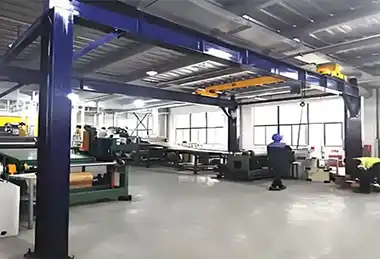
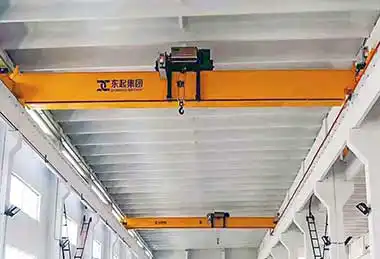
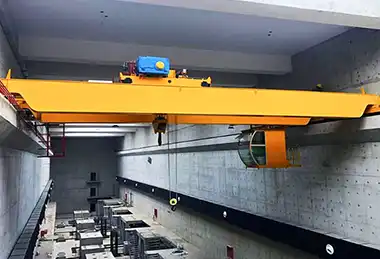
In Jazan, different industries require cranes that fit their specific lifting needs. The choice of crane type and capacity depends largely on the nature of the materials being handled, the working environment, and safety requirements. Below is a practical overview of the most common crane types used across Jazan’s key sectors, along with typical load types, lifting capacities, and notable design features.
| Industry | Crane Type | Typical Load Type | Capacity Range | Special Features |
|---|---|---|---|---|
| Petrochemical | Double Girder EOT, Explosion-Proof | Pumps, skids, reactors | 5–150 tons | Flameproof motors, dual hoists |
| Port Logistics | Rail-Mounted Gantry (RMG), Rubber-Tyred Gantry (RTG), Ship-to-Shore (STS), Gantries | Containers, bulk cargo | 35–100 tons | Container spreaders, PLC automation |
| Construction | Gantry, Tower, Portal | Steel components, precast elements | 5–50 tons | Outdoor-rated coatings, adjustable spans |
| Agro-Processing | Jib cranes, Single Girder EOT, Portable Gantry | Crates, food machinery | 0.5–10 tons | Compact design, food-grade finishes |
Petrochemical Industry
- Cranes here are built for heavy-duty use with capacities ranging from small maintenance lifts of 5 tons to heavy module lifts exceeding 100 tons.
- Explosion-proof designs and flameproof motors are essential for safety in hazardous zones.
- Dual hoists enable handling of large or awkward loads more safely and accurately.
Port Logistics
- Ports demand cranes capable of moving large containers and bulk goods efficiently.
- Typical capacities span from 35 tons (empty containers) up to 100 tons or more for heavy cargo.
- Advanced features like automated spreaders and PLC control help improve handling speed and reduce human error.
Construction
- The industry mainly uses medium-capacity cranes that handle steel structures, precast concrete panels, and construction modules.
- Capacity needs vary widely depending on the project but generally range between 5 and 50 tons.
- Cranes are designed to withstand outdoor conditions, with adjustable spans or heights to fit the site layout.
Agro-Processing
- Cranes in this sector are smaller, focusing on lifting equipment and packaging materials with capacities from half a ton up to 10 tons.
- Cleanability and compact size are important, so cranes often have food-grade finishes and low profiles to fit inside tight production spaces.
This table gives a practical snapshot for buyers and engineers in Jazan to understand what crane type and capacity they should expect for their particular sector, helping them make informed purchasing or leasing decisions.
Key Selection Factors for Jazan Crane Buyers
Choosing the right crane isn’t just about lifting capacity. There are a few important things to keep in mind to make sure your crane works well, lasts long, and stays safe.
Allow Extra Capacity
Always pick a crane that can handle 20 to 30% more weight than your heaviest load.
- For example, if your biggest load is 50 tons, choose a crane rated for at least 60 tons.
- This extra capacity helps with unexpected heavier loads and keeps the crane from working too hard.
How Often You Use the Crane (Duty Cycle)
Think about how much and how often you’ll use the crane.
- Heavy industries like refineries need cranes made for frequent, heavy lifting (rated M6 to M8).
- Smaller factories or workshops can use cranes designed for lighter, less frequent work (rated M3 to M5).
- Picking the right duty rating helps your crane last longer and reduces maintenance.
Protection Against Rust and Corrosion
Jazan’s coastal location means cranes are exposed to salty air, which can cause rust.
- Choose cranes with special coatings that protect against corrosion (rated C3 to C5M).
- Important parts like hooks and steel beams should be coated or galvanized.
- This helps cranes stay strong and avoid costly repairs.
Safety for Hazardous Areas
If your facility handles flammable gases or dust, your crane needs to be explosion-proof.
- Cranes for these zones have special motors, wiring, and controls certified to safety standards like ATEX or IECEx.
- Using the right explosion-proof crane is crucial for safety and to meet local laws.
Space and Size Requirements
Check your building or site carefully:
- Make sure your ceiling height and available space fit the crane’s size.
- The crane’s span (how far it needs to reach) should cover your whole workspace.
- In outdoor areas like ports, ground conditions and space affect which cranes you can use.
Thinking about these points before buying your crane helps avoid problems later. The right crane keeps your work safe, smooth, and reliable.
Case Study: Crane Installation in Jazan Economic City
To understand how the right crane can make a real difference, let’s look at a recent project in Jazan Economic City.
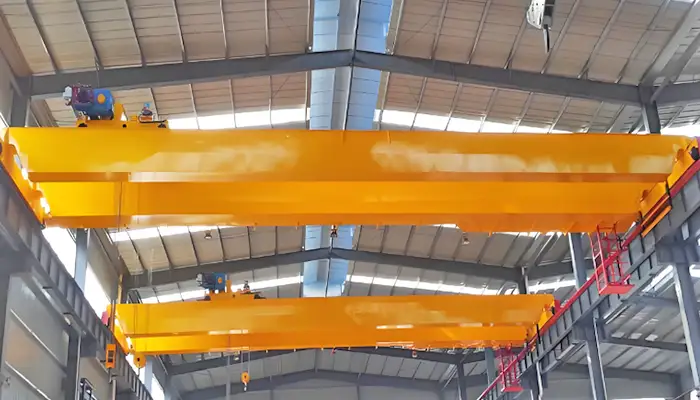
A 100-ton explosion-proof overhead crane was installed in a modular refinery workshop. This crane was specially designed to meet the strict safety and performance requirements of the oil refining industry.
- Span: 20 meters — wide enough to cover the entire workshop floor.
- Lift height: 12 meters — allowing it to handle tall equipment and vessels easily.
Key features:
- Frequency inverter for smooth and precise speed control
- Overload limiter to prevent lifting beyond safe capacity
- Redundant brake system to ensure safe stops even if one brake fails
Results and Benefits
After installation, the refinery saw noticeable improvements in their maintenance operations:
- Maintenance lifts that used to take hours were completed much faster.
- The crane’s reliability reduced downtime and avoided delays.
- Labor costs dropped by about 40% because fewer workers were needed for heavy lifting tasks.
- Safety improved thanks to the crane’s explosion-proof design and safety features.
This case shows how investing in a well-designed crane matched to your facility’s needs can boost productivity, lower costs, and improve safety. It’s a good example for other industrial projects in Jazan looking to modernize their material handling.
Conclusion: Matching the Crane to Your Industry
Picking the right crane isn’t just about how much weight it can lift. It’s about finding one that fits your industry’s needs, the kind of materials you handle, and the conditions where you work.
- Capacity and Type Matter: Different industries in Jazan have different needs. A refinery needs cranes that can safely lift very heavy and sometimes dangerous equipment. An agro-processing plant might only need smaller, more precise cranes. You want a crane with enough capacity—not just for your biggest load now, but also to handle future needs.The type of crane—whether it’s a single girder, double girder, gantry, jib, or portable—should fit your workspace and how you move loads. You also need to think about your environment. For example, cranes near the coast need extra protection against rust. Cranes in refineries might need to be explosion-proof.
- Efficiency and Safety Are Important: As Jazan’s industries grow, having the right crane helps your work run smoothly and safely. A good crane means less downtime, fewer repairs, and a safer workplace. The wrong crane can cause delays, extra costs, or even accidents.
- Work With Trusted Manufacturers: Choose crane makers who follow international safety and quality standards like ISO, CE, or ATEX. It’s better if they know the industries in Jazan well, so they can provide cranes that match local conditions and rules.
Get a Quote Tailored to Your Needs
Every project is different. The best way to get the right crane is to ask for a custom quote. Provide details like how much you need to lift, how often you’ll use the crane, and the size of your workspace. This helps manufacturers design a crane that fits your exact needs.
Choosing the right crane is a smart move. It keeps your business safe, efficient, and ready for the future. Don’t settle for just any crane—get one that works best for you.



Yuantai Cranes
Overhead Crane Manufacturer with CE, ISO, SGS, CNEX Certificates.
- Main Specifications - Capacity: 0.5–550 tons | Span: up to 40m | Speed: 0.8–12 m/min | Duty: A3–A7 | Power: 380–690V, 50/60Hz | Control: pendant/remote/cabin
- Full engineering: FEA/PLC/VFD + in-house build + global delivery + on-site support, for workshops, factories, EPC contractors, industrial projects, etc.
- Support: design, manufacturing, testing, service – end-to-end, customized lifting solutions worldwide.
How to Get an Accurate Crane Price for Your Application?
Tips: Copy the spec list, fill in your details, and paste it into the form on the right/ down-below for a quick price.
- Crane type:_____ . (e.g., overhead crane, gantry crane, jib crane)
- Max weight to lift:_____ tons. (e.g., 2t, 5t, 10t, 20t, 50t)
- Lifting height:_____ m. (How high does the hook need to reach?
- Workshop width (span):_____ m . (Distance between the two crane rails)
- Travel distance:_____ m . (How long does the crane need to move along the runway?)
- Control type:_____. (Pendant / remote / cabin Control)
- Power supply:_____. (Local voltage & frequency – e.g., 380V, 50Hz, 3-phase)
- What will it be used for?_____ (e.g., steel fabrication, concrete products, mold handling, general manufacturing, etc.)
- Any special requirements?_____ (e.g., extreme temperature, dusty or explosive environment, special paint color, etc.)
Just leave a message via the contact form and our hoist and crane engineer will contact you with in 24working hours.
Get Your Custom Quote–Quick & Easy
Fill in what you know. Skip what you don't – we'll help.Any question will be reply with 24 working hours