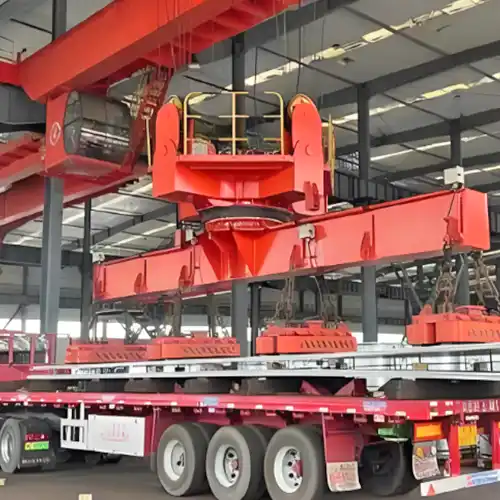
Plate Handling Overhead Bridge Crane 10-100 Tons for Shipbuilding
Heavy duty overhead bridge crane for lifting steel plates with high capacity, advanced safety & energy-efficient performance for shipbuilding
| Crane Type | Shipbuilding Steel Plate Handling Overhead Crane: Single Girder (10–20 ton) & Double Girder (20–100 ton+); Electromagnetic Beam / Magnetic Spreader configurations; Fixed or Rotary Beam; Working Duty: ISO A5–A8 / FEM 2m–5m; 380/400/415 V, 3 Ph, 50 Hz |
| Crane Capacity | 10–100 ton+; common configurations include 10–20 ton, 30–50 ton and 60–100 ton; selected according to plate weight, dimensions, handling cycle and spreader weight |
| Span Length | Typically 10–35 m+; customized to shipyard bay width, runway layout, fabrication line and plate storage area |
| Lifting Height | Typically 6–30 m+, customized according to building height, plate storage arrangement and required hook/spreader position |
| Coverage Area Type | Shipyards, steel plate warehouses, fabrication shops, welding bays, assembly halls, cutting lines and outdoor plate storage areas |
| Application | Shipbuilding, steel plate storage, plate cutting, welding, fabrication, hull assembly, section assembly, maintenance, loading and unloading |
| Certifications | CE / ISO / SGS / Other third-party inspection |
| Customization | Plate Handling: Single Plate / Multi-Plate · Spreader: Electromagnetic Beam / Magnetic Spreader / Hook / Lifting Beam · Beam: Fixed / Rotary ·Shipyard / Fabrication Shop / Outdoor / Dusty / Corrosive · Safety: Overload / Emergency Stop / Travel Limits / B |
Crane Manufacturer: Yuantai Cranes – 30+ Years Professional Crane Manufacturer from China
Category: Featured
Tags: shipyardcrane,steelplateshandling,ShipbuidingGantryCrane
Your Trusted Shipbuilding Overhead Crane Manufacturer & Supplier
Plate Handling Overhead Bridge Crane 10-100 Tons for Shipbuilding
Heavy duty overhead bridge crane for lifting steel plates with high capacity, advanced safety & energy-efficient performance for shipbuilding
Overview of Plate Handling Overhead Bridge Crane for Shipbuilding
In shipbuilding, overhead bridge cranes play a vital role in handling heavy steel plates that are essential for constructing the hulls and structural components of ships. These cranes are specifically designed to lift and transport large, heavy plates used in shipbuilding, which are often too cumbersome for manual handling or smaller cranes.
These cranes are crucial for moving steel plates across the shipyard, from storage areas to the fabrication lines, and then to the assembly stages. Their ability to operate in tight spaces, with both horizontal and vertical movement, makes them ideal for the demanding tasks of shipbuilding.
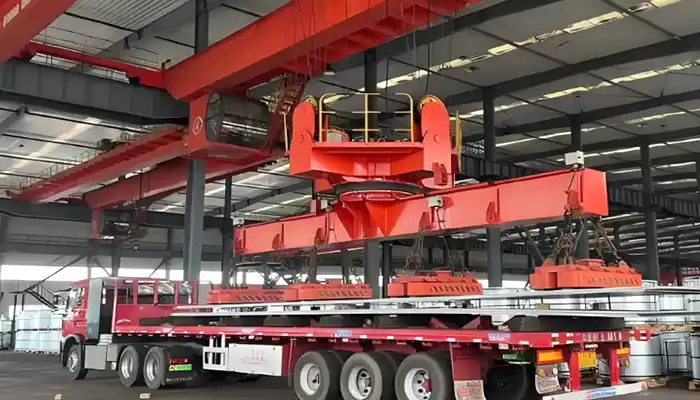
Purpose of the Crane in Shipbuilding
The primary purpose of the plate handling overhead bridge crane in shipbuilding is to lift, position, and transport steel plates used in the construction of ships. Shipbuilding involves working with massive steel plates that vary in size and thickness, and these cranes are engineered to handle such loads with precision and ease.
In shipyards, steel plates are the backbone of ship construction. The crane ensures that these plates are moved efficiently between fabrication stations, welding areas, and the final assembly points, helping reduce labor costs and improve overall workflow.
Key Function: Electromagnetic Beam Crane for Steel Plates
A distinctive feature of the plate handling overhead bridge crane in shipbuilding is the electromagnetic beam. This beam uses powerful magnetic force to handle steel plates safely and securely, without the need for slings or manual lifting.
- Electromagnetic beam: The crane is equipped with an electromagnetic beam that generates a strong magnetic field, allowing it to attract and hold steel plates, even those with varying thicknesses and sizes.
- Handling steel plates in shipbuilding: The electromagnetic crane can lift and move steel plates of all sizes, ranging from smaller plates for internal components to large, heavy plates used for the outer hull.
- Billets and sections: In addition to steel plates, the crane can handle billets and sections commonly used in the fabrication of ship parts, such as frames, girders, and bulkheads.
The electromagnetic beam crane significantly improves efficiency in shipbuilding by eliminating the need for multiple workers to manually lift and move heavy plates. With the ability to securely lift large steel plates, the crane enhances safety and ensures smooth and precise material handling throughout the ship construction process.
Crane Structure and Components for Shipbuilding Steel Plate Handling
Electromagnetic Beam Function
In shipbuilding, the electromagnetic beam is the main tool for lifting steel plates. It creates a strong magnetic force that securely holds the plates, allowing for smooth handling and transport without additional rigging. This is essential for moving large, heavy steel plates used in ship construction.
Safe Working Load (SWL)
The SWL of these cranes ranges from 10 tons to 60 tons, depending on the crane model. This capacity includes both the lifting force and the weight of the electromagnetic beam, allowing the crane to handle steel plates of various sizes and thicknesses, from smaller internal parts to large hull plates.
Duration of Electromagnetic Force
The electromagnetic force can hold the steel plates for up to 10 minutes after a power failure, ensuring safe suspension during brief power interruptions, which is vital for avoiding accidents on busy shipbuilding floors.
Main Components of the Crane
- Girder: The crane features a box-type girder, welded with high-strength robots for durability and to support the weight of heavy steel plates typically used in shipbuilding.
- Traveling Mechanisms: The crane moves horizontally across the yard using heavy-duty traveling mechanisms, allowing easy transport of steel plates from one workstation to another.
- Lifting Trolley: The lifting trolley moves up and down, allowing precise vertical lifting and placement of plates during construction, ensuring accuracy in plate positioning.
- Electromagnet Spreader: The electromagnet spreader is used to grip and lift steel plates securely. Designed for shipbuilding, it handles various plate sizes, ensuring strong, reliable lifting.
- Electric Parts: The crane is powered by Siemens electrical components, providing efficient control and consistent performance, designed specifically to handle heavy-duty tasks in a shipyard.
This crane design is built for the unique challenges of shipbuilding, where large steel plates must be moved safely and efficiently throughout the shipyard. Every component is tailored to ensure reliable, high-capacity performance under tough conditions.
Crane Types and Configurations for Shipbuilding Plate Handling
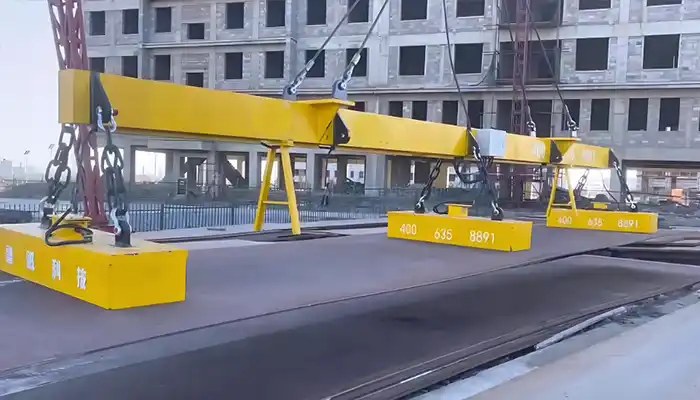
Non-Rotary Electromagnetic Beam Cranes
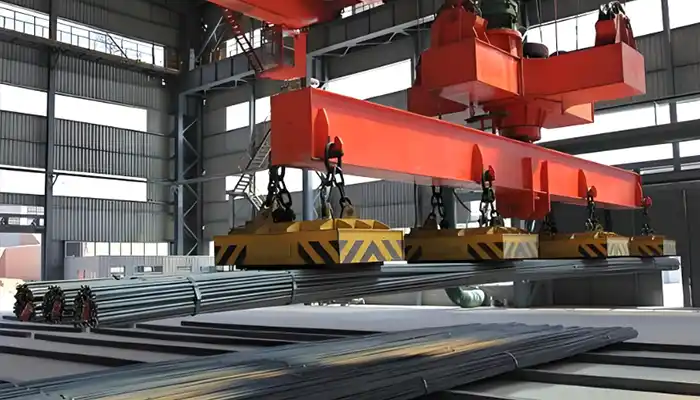
Non-Rotary Electromagnetic Beam Cranes
These cranes feature a fixed position, ideal for lifting and transporting steel plates in a specific, designated area of the shipyard. The non-rotary electromagnetic beam provides a strong, steady grip on the plates, making them suitable for straightforward lifting tasks where flexibility is not a primary concern.
Rotary Electromagnetic Beam Cranes
Rotary electromagnetic beam cranes allow the load to rotate, providing greater flexibility in positioning steel plates. This type of crane is particularly useful in tight spaces or areas where precise positioning of large plates is needed during assembly or welding. The rotation feature makes it easier to place plates at specific angles, enhancing the crane's versatility in shipbuilding operations.
Special Electromagnetic Beam Cranes
These cranes are designed with customized features to meet specific needs within the shipyard. Whether it's handling unusually shaped plates, working in challenging environments, or dealing with specialized materials, special electromagnetic beam cranes can be tailored for a particular task. These cranes can be adjusted in terms of lifting capacity, reach, and other specifications, offering a highly flexible solution for unique shipbuilding requirements.
Crane Configurations
- Double Girder Overhead Cranes: These cranes use two girders to support a large lifting capacity, making them ideal for handling heavy steel plates typically found in shipbuilding. The double girder design allows for greater stability and lifting power, especially for larger and thicker plates.
- Single Girder Overhead Cranes: With a single girder design, these cranes are lighter and more compact. They are often used in shipyards where space is limited or when handling smaller or less heavy steel plates. They are cost-effective and still provide sufficient lifting capacity for many shipbuilding tasks.
- Gantry Cranes: These cranes have a gantry structure, allowing them to move along rails positioned on the ground. Gantry cranes are especially useful for lifting heavy plates in open areas of the shipyard, offering greater flexibility in terms of mobility across the yard.
- Semi-Gantry Cranes: A hybrid design that combines elements of both overhead and gantry cranes, semi-gantry cranes are perfect for shipyards with space constraints. They provide the benefits of a gantry crane but are more compact and can handle a range of steel plates used in shipbuilding.
These crane types and configurations are specifically designed to handle the large and heavy steel plates required in shipbuilding. Each option offers distinct advantages depending on the specific needs of the shipyard, from fixed operations to flexible, customized solutions for diverse plate handling tasks.
Typical Steel Plate Weight in Shipyards
Standard Steel Plate Dimensions
Steel plates in shipyards come in various sizes, depending on the specific needs of the shipbuilding process. The key dimensions are:
- Thickness: Steel plates range from 6 mm for thinner plates to 200 mm or more for heavy-duty applications.
- Width: Typically, plates range from 1 meter to 3 meters wide, depending on the ship or structure being built.
- Length: Steel plates can vary from 3 meters to 12 meters in length, though larger plates are also common for specific projects.
Typical Plate Weight
The weight of steel plates depends on both their dimensions and thickness. Here are some typical examples:
- A 1-meter by 2-meter plate with 10 mm thickness weighs around 70 to 80 kg per square meter.
- A 1-meter by 2-meter plate with 50 mm thickness weighs approximately 350 to 400 kg per square meter.
- Larger plates, such as 3 meters by 12 meters with 50 mm thickness, can weigh 10 to 12 tons or more.
Shipyards frequently handle a range of plate weights, with some plates being much heavier, especially for the outer hulls or structural parts of ships. Therefore, the cranes used in these operations must be capable of handling substantial loads, ensuring safety and efficiency in the shipbuilding process.
Typical Crane Capacity for Plate Handling in Shipyards
Standard Crane Capacities
The capacity of cranes used for handling steel plates in shipyards varies based on the size and weight of the plates being lifted. Here are typical crane capacities:
- 10 to 20 tons: These cranes are used for smaller or thinner plates, usually with lower weight and dimensions. Ideal for internal shipbuilding components or other lighter material handling.
- 30 to 50 tons: Most common for standard-sized plates, typically 10 to 12 meters in length. These cranes are capable of handling moderate-weight plates that are commonly used in shipbuilding.
- 60 to 100 tons: These are heavy-duty cranes designed to lift larger, thicker plates or multiple plates at once. They are often used for major structural components like the hull plates of ships.
- Over 100 tons: Very large or specialized cranes are used in larger shipyards for exceptionally heavy plates or multi-ton plates. These cranes handle the most challenging lifting tasks, often used in shipyards building very large vessels.
Electromagnetic Beam Cranes
- 10 to 60 tons: Electromagnetic beam cranes typically have a capacity range from 10 tons to 60 tons, which includes the weight of the electromagnetic beam. This is the standard capacity for most shipyards and is adequate for handling a wide range of steel plates, from smaller to medium-sized plates.
- Specialized cranes: In some larger or specialized shipyards, cranes with capacities up to 100 tons or more are used, particularly for handling the heaviest steel plates, complex plate configurations, or high-volume operations. These specialized cranes are tailored to meet the unique needs of large-scale shipbuilding projects.
The crane capacity required for plate handling in shipyards is determined by the type of plate being moved and the scale of the shipbuilding operation. For smaller projects, a lighter crane may suffice, but for larger ships, heavy-duty cranes with higher lifting capacities are essential to keep operations running smoothly and efficiently.
Electromagnetic Spreader for Single Piece and Multi-Plate Handling in Shipyards
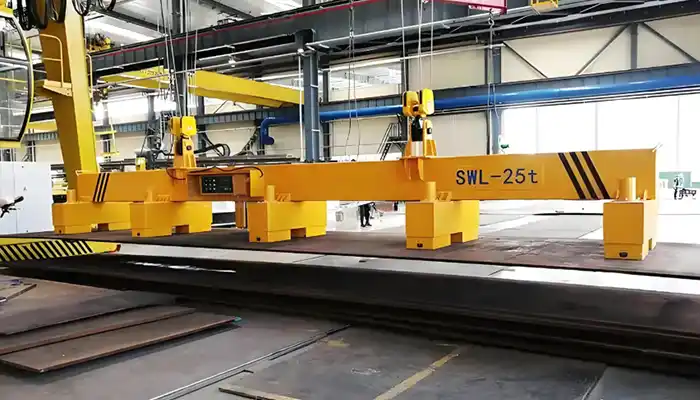
Single Piece Handling
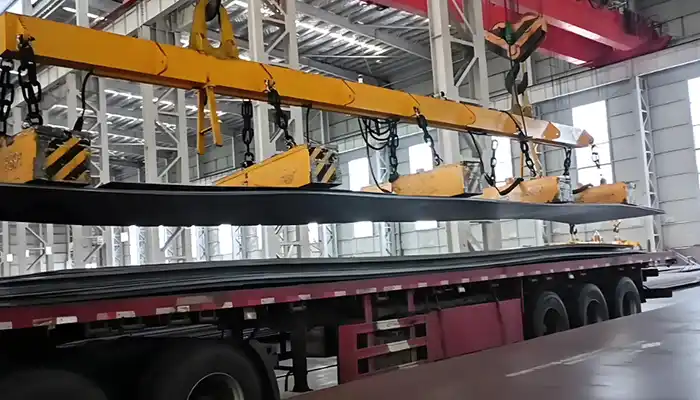
Multi-Plate Handling
Single Piece Handling
The electromagnetic spreader is primarily used for lifting and moving single steel plates in shipyards. This system generates a strong magnetic field that securely grips the steel plate, ensuring a stable and safe lift.
- Precision: The spreader's design allows for precise handling of individual plates, which is especially important for shipbuilding where each plate must be positioned with accuracy.
- Efficiency: Single-piece handling is common for larger steel plates that are moved from storage to fabrication areas or directly into assembly lines. The crane can place the plates exactly where they are needed, improving overall productivity.
Multi-Plate Handling
For multi-plate handling, the electromagnetic spreader can be adapted with multiple lifting points or additional magnets to handle several plates at once. This is often used when plates are stacked or bundled together, streamlining the lifting process.
- Lifting Capacity: The spreader can be configured with multiple magnets to distribute the lifting load evenly across several plates, allowing the crane to lift and move multiple plates at once, improving handling efficiency.
- Applications: Multi-plate handling is beneficial when plates need to be moved quickly from one area of the shipyard to another, such as from storage to cutting or welding stations. This helps to reduce cycle times and increase throughput, making it ideal for large-scale shipbuilding operations where many plates need to be handled simultaneously.
Benefits for Shipyards
- Safety: The magnetic grip ensures that plates are securely held in place, reducing the risk of accidents or damage.
- Speed: Both single and multi-plate handling are faster and more efficient with electromagnetic spreaders compared to manual handling or less specialized equipment.
- Adaptability: The spreader can be easily adjusted to handle a range of plate sizes, thicknesses, and configurations, making it versatile for various shipbuilding tasks.
The electromagnetic spreader is a critical tool in shipyards, allowing for efficient handling of both individual steel plates and multiple plates simultaneously. This versatility ensures that shipyards can move large quantities of materials quickly, safely, and with precision, ultimately enhancing productivity in the shipbuilding process.
Features and Benefits of Plate Handling Cranes in Shipyards
Lifting Capacity
- Includes the weight of the electromagnetic beam: The crane's lifting capacity is designed to include both the weight of the steel plates and the electromagnetic beam itself. This ensures that the crane can safely handle the total weight, optimizing performance during lifting operations.
High-Strength Components
- Girder Structure: The crane features a robust girder structure built using advanced welding techniques. This ensures high durability and stability, which is crucial when lifting large and heavy steel plates commonly used in shipbuilding.
- Manufacturing Quality: Components like wheels, drums, and gears are made with CNC precision to ensure high-quality, consistent performance. This manufacturing quality guarantees that all parts can handle the heavy loads and demanding conditions of shipyards.
Safety Features
- Lifting Overload Protection Device: This feature prevents the crane from lifting beyond its safe operating limits, ensuring that the equipment and plates remain protected from excessive strain or potential damage.
- Emergency Shutdown Device: In case of an emergency, the crane is equipped with a quick power-off mechanism. This allows operators to immediately stop the crane's operations, minimizing risks in case of unforeseen situations.
- Current Overload Protector: The crane is protected against electrical surges with a current overload protector. This safeguard helps maintain the electrical system's integrity, preventing damage to the crane's components due to power fluctuations.
- Travel Limit Switch: This switch prevents the crane from moving beyond its designated area. By limiting travel, it ensures the crane operates within its designed boundaries, reducing the risk of damage to infrastructure or materials.
- Decompression Protection: This safety feature guards against sudden drops of steel plates, preventing damage or accidents during lifting and lowering. It ensures that the plates are lowered in a controlled manner.
- Polyurethane Buffers: Polyurethane buffers are used to reduce the impact when the crane is traveling or during sudden stops. These buffers help protect both the crane and surrounding structures from wear and tear, extending the crane's lifespan.
The features and benefits of plate handling cranes are designed with both performance and safety in mind. From high-strength components ensuring stability to advanced safety features protecting operators and materials, these cranes are essential for efficient, secure, and reliable steel plate handling in shipyards.
Electrical and Control Systems
Electric Equipment
- Siemens Components: The crane is equipped with Siemens electrical components, which are known for their reliability and high performance. This ensures consistent, efficient operation, meeting the rigorous demands of shipyard environments.
Control System
Independent Control Options: The crane offers two control options:
- Radio remote control: Provides flexibility and ease of operation, allowing the crane operator to move freely and monitor the crane's movements from a distance.
- Cabin control: Offers a more traditional approach, giving operators direct control from a cab within the crane for precise maneuvering in complex lifting tasks.
Heavy-Duty Slip Ring Motor
- Durable Motor: The crane is powered by a heavy-duty slip ring motor, designed for continuous, heavy-duty operations. This motor ensures long-lasting performance even under the demanding conditions of shipyard environments, providing steady power to handle large steel plates.
The electrical and control systems in these cranes are designed to optimize both reliability and operator flexibility. The combination of Siemens equipment and a versatile control system ensures smooth, efficient, and safe operations, while the heavy-duty motor guarantees the crane can handle the toughest tasks day in and day out.
Operational Efficiency and Performance
Work Duty Ratings
- A6 and A7 Ratings: The crane is built for high-cycle operations with A6 and A7 work duty ratings, which makes it suitable for continuous and intensive use in the shipyard. These ratings ensure that the crane can handle heavy loads and frequent lifting without compromising performance or reliability.
Energy Efficiency
- Energy-efficient Design: The crane is designed with energy-saving features that help reduce energy consumption during its operations. From the motor to the control systems, the crane is optimized to minimize power use while maintaining high performance, making it both cost-effective and environmentally friendly.
Maintenance and Longevity
- Easy Maintenance: The crane's components are designed for easy access, ensuring that maintenance and repairs can be carried out quickly and efficiently. This helps extend the crane's lifespan and ensures long-term reliability, reducing downtime and maximizing productivity in the shipyard.
Conclusion
Summary of Advantages
- Enhanced Lifting Capacity and Flexibility: The crane's lifting capacity is tailored to handle a wide range of plate sizes and weights, while its flexibility in operations ensures that both single and multi-plate handling can be managed efficiently.
- Safety-Focused Design: With multiple protective features, including overload protection, emergency shutdown, and current surge protection, the crane is designed to prioritize operator and material safety at all times.
- High Performance and Low Maintenance: With a focus on operational efficiency, the crane is built to offer consistent performance over time, while easy maintenance and energy-efficient operations ensure it remains reliable and cost-effective in demanding shipyard environments.
These features and benefits combine to make the plate handling overhead bridge crane an invaluable asset in shipyards, providing efficient, safe, and reliable lifting solutions for large steel plates.

Yuantai Cranes
Overhead Crane Manufacturer with CE, ISO, SGS, CNEX Certificates.
- Main Specifications - Capacity: 0.5–550 tons | Span: up to 40m | Speed: 0.8–12 m/min | Duty: A3–A7 | Power: 380–690V, 50/60Hz | Control: pendant/remote/cabin
- Full engineering: FEA/PLC/VFD + in-house build + global delivery + on-site support, for workshops, factories, EPC contractors, industrial projects, etc.
- Support: design, manufacturing, testing, service – end-to-end, customized lifting solutions worldwide.
How to Get an Accurate Crane Price for Your Application?
Tips: Copy the spec list, fill in your details, and paste it into the form on the right/ down-below for a quick price.
- Crane type:_____ . (e.g., overhead crane, gantry crane, jib crane)
- Max weight to lift:_____ tons. (e.g., 2t, 5t, 10t, 20t, 50t)
- Lifting height:_____ m. (How high does the hook need to reach?
- Workshop width (span):_____ m . (Distance between the two crane rails)
- Travel distance:_____ m . (How long does the crane need to move along the runway?)
- Control type:_____. (Pendant / remote / cabin Control)
- Power supply:_____. (Local voltage & frequency – e.g., 380V, 50Hz, 3-phase)
- What will it be used for?_____ (e.g., steel fabrication, concrete products, mold handling, general manufacturing, etc.)
- Any special requirements?_____ (e.g., extreme temperature, dusty or explosive environment, special paint color, etc.)
Just leave a message via the contact form and our hoist and crane engineer will contact you with in 24working hours.
Get Your Custom Quote–Quick & Easy
Fill in what you know. Skip what you don't – we'll help.Any question will be reply with 24 working hours