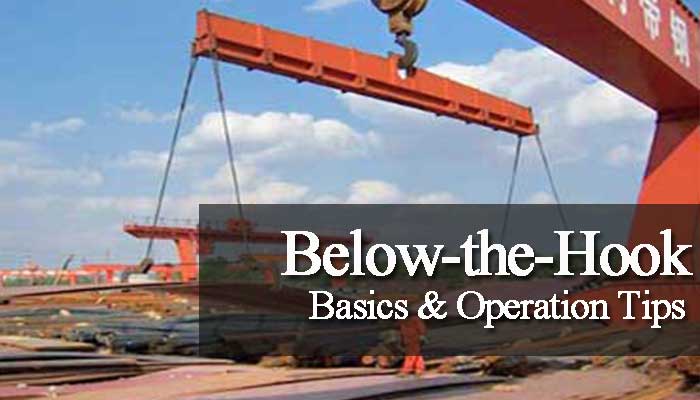
Below-the-Hook Lifting Devices Basics & Operation Tips
Content Quick Link
Below hook devices basics for you to select right below hook devices for your overhead cranes and gantry cranes to ensure operation safety. Which is right type of below hook devices for your application, Coil Hook,Gripping Lifter,Mechanical Lifter,Sheet Lifter,Pallet Lifter,Die Turner,Vacuum Lifter,Magnet Lifter or Drum Turner?
What should you do if you believe your crane isn't working as efficiently or safely as it should? Traditional rigging slings and hardware may take too long to secure or remove each load. Or maybe something about the way the load is balanced or moves once it's in the air just doesn't seem right. Using a specially designed below-the-hook lifting device can likely increase the effectiveness and safety of your lifts while also helping to secure your goods.
What is a Below-the-Hook Lifting Device?
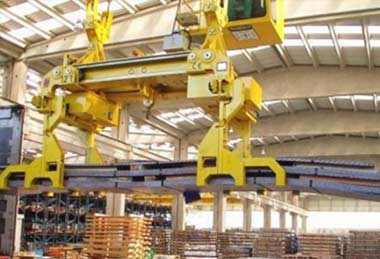
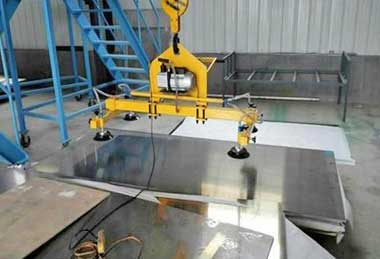
Below-the-hook lifting devices, such as this sheet lifter, are designed to pick and move a very specific load because to its size, shape, or center of gravity.
A below-the-hook lifting device is simply defined as "a mechanism for attaching a load to a hoist." Slings, hooks, and rigging hardware may be included in the device..." A below-the-hook (BTH) lifting device, in other words, is a tool or mechanical device that attaches to a crane or other lifting gear and captures and secures a load so that it can be securely moved from one area to another.
Below-the-hook devices that are custom-built are fairly frequent. Because of their size, form, or center of gravity, engineered lifting devices are designed to pick and move a very specific load. A manufacturer may work with a customer to create a brand-new gadget from the ground up or adapt a current product design to meet their specific lifting requirements.
Lifting devices in typical sizes and configurations are available from most manufacturers for common raising applications such as
- lifting and moving pipes or bars.
- Coil lifting and stacking
- Sheets, plates, and other horizontally stacked items are lifted, moved, and stacked. Pallets are lifted and moved.
- Lifting and repositioning of structural elements
Claws, tongs, hooks, and latches are commonly controlled mechanically, but they can also be operated electrically, hydraulically, or pneumatically—with particular controls integrated into the product's design to operate claws, tongs, hooks, or latches.
Why Should You Use a Below-the-Hook Lifting Device?
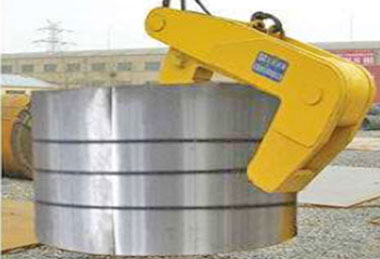
To move a load securely and efficiently, gripping lifters, such as these graphite lifting tongs, can be used instead of standard wire rope, chain slings, or synthetic slings.
The major reasons for using a below-the-hook lifting device in conjunction with your crane and rigging equipment are safety and efficiency. A typical wire rope sling, alloy chain sling, or synthetic sling isn't always enough to transport a cargo safely and securely from one position to another.
A customer that is already utilizing a lifting sling, or a variety of slings, will frequently approach a manufacturer to have an unique lifting device developed for their lifting application. It could be because standard rigging takes too long to secure their load, or it could be because of the size, shape, or weight of the load, and they don't believe their existing method is the safest or most effective.
Another incentive to upgrade to a specialized below-the-hook lifting solution could be an accident or near-miss. If the materials you're trying to move don't seem right up in the air, or you don't believe your load is secure enough—or, worse yet, you've had a rigging failure—definitely it's time to talk with an expert to see if they can help create a solution to keep your staff safe and your loads secure.
Lifting points on a load are usually there because the manufacturer thought it would be convenient, not because they're the safest, most balanced places to lift and maneuver.
Rather than attempting to get inventive with slings, an unique lifting mechanism can be created to give enough weight control. Because a below-the-hook lifting product can be constructed with an adjustable bail to re-balance a weight that is unbalanced due to an offset center of gravity, it is an ideal candidate for a load that is unbalanced.
Keep in mind that you may be lifting valuable and expensive equipment or materials, and if the load isn't secure, it could injure your staff or cause damage to your items, which could cost your company money.
What Are the Different Types of Below-the-Hook Lifting Devices?
To manage the lifting or placing of various weights, a crane's hoist can be equipped with a number of application-specific attachments. These can include the following:
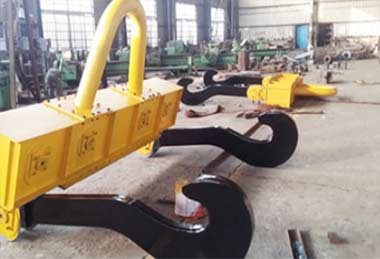
- Coil Lifter-A lifting mechanism that allows a coil to be lifted vertically or horizontally through its inner diameter. A motorized hook rotator is a device that attaches to the bottom block of a hoist and rotates the hook to regulate the weight.
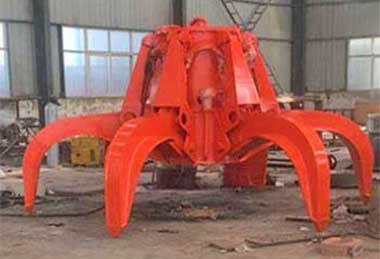
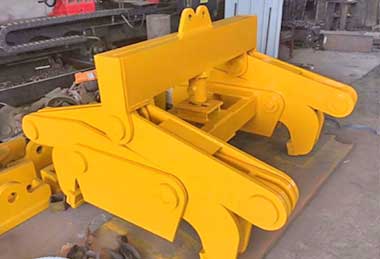
- Grip lifterTo hold a load, friction or indentation-causing pressure is used. Tong grips or clamps hold a load with a scissor-like movement. To raise or turn a coil, coil grabs use tongs or gripping mechanisms to grasp the outer diameter of the coil.
- Mechanical Lifter-For attaching a load to a hoisting mechanism, it is made up of two or more rigid pieces that move in unison.
- Sheet Lifter-Wraps two claws around the edges of a load of sheet metal or wood to grip it. The sheet is kept from falling out of the lifter by a lip on the lower half of the claws.
- Pallet Lifter-Pallets are lifted from beneath using forks.
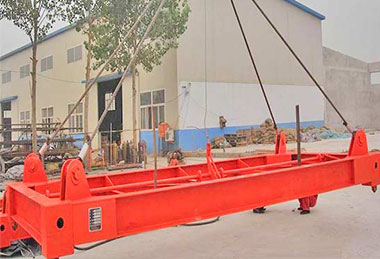
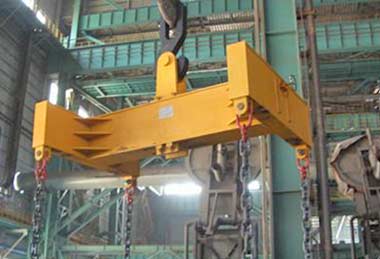
- Lifting Beams - These are lengthy beams that have one top bail and two or more load lifting points. Spreader bars are lighter and less expensive than lifting beams. The fundamental advantage of lifting beams is that the amount of headroom required for the lift is significantly reduced.
- Top rigging of wire rope slings, chain slings, or synthetic slings is used on spreader beams to help with load balancing and control. In addition, they are typically smaller in size than lifting beams.
- Spreader Bars - These are lengthy bars that are used to hold a sling apart to the proper lifting distance. Spreader bars are more lightweight and less expensive than lifting beams. They do, however, require a lot more headroom to lift than a lifting beam.
- Die Turner-Instead of "flipping" huge dies using a crane and rigging equipment, it is used to rotate or turn them safely.
- Vacuum Lifter-To attach the lifter to an object, use an electric-powered extraction pump and sealed pads to produce a vacuum.
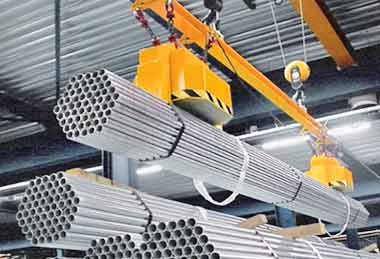
- Magnet Lifter-With or without an electrical power supply, this device is used to transport or release flat or round ferrous items.
- Drum Turner-Drums are turned over for filling and emptying.
The "Dos And Don'ts" Of Below-The-Hook Lifting Devices
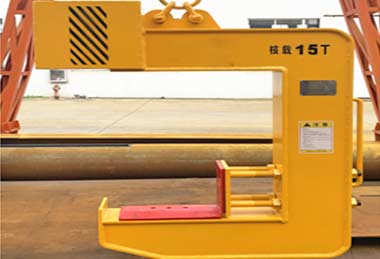
When attached to an overhead crane or monorail's hoist, below-the-hook lifting devices (also called attachments or end effectors) ensure that a specific type of load can be lifted, lowered, and positioned safely and securely. Below-the-hook lifting devices are offered by overhead handling equipment manufacturers in both standard and custom engineered designs that match the specific requirements or features of the load.It is critical that the equipment operator is trained on the safe operation of the attachment, whether it is a structural lifter (with a static, rigid structure that includes 2- or 4-point lifting beams, C-hooks, and pallet lifters) or a mechanical lifter powered manually, electrically, pneumatically, or hydraulically to securely attach to the load. Furthermore, owners of below-the-hook lifting devices bear a number of responsibilities that are crucial to the equipment's safe operation.
A list of below-the-hook equipment "Dos and Don'ts" is also included for your convenience. Following these guidelines will improve the equipment's integrity and reliability, as well as lessen the risk of injury to personnel who operate the attachment or work near it.
Below-The-Hook Equipment Dos
Read the owner's manual thoroughly. Specifications, dimensions, operation instructions, inspection requirements, parts lists, and more are included in these instructional documents created by the manufacturer of below-the-hook lifting devices.
Do keep in mind that the Occupational Safety and Health Administration (OSHA) mandates that facility operators supply their personnel with equipment that is both safe and efficient.
Require the operator to visually inspect the below-the-hook device before each shift to ensure the condition and performance of the controls, all rigging, indicators, and meters on the device, as well as look for debris on the load and lifting surfaces.
Before utilizing the gadget and engaging the load, be sure to follow these steps:
- Check that all of the equipment settings are right and secure.
- Ensure that all rigging hardware and procedures are in working order.
- Check for twists, kinks, or damage in all lifting attachments.
- Make sure the load can sustain the lifting device's forces.
- Attach the load according to the manufacturer's guidelines.
- Ascertain that the load's weight does not exceed the lifting device's rated capacity.
- Confirm that the combined weight of the cargo and the lifting mechanism does not exceed the hoist, crane, or monorail's rated capacity.
- Check to see sure the lifting device is properly seated in the crane hook.
- During hoisting or transit, be sure the load is balanced and the lifting gear is fully engaged.
- Confirm that the travel path is free of people and obstacles.
- While raising, lowering, turning, or moving a load, double-check that the device and the cargo will clear all impediments.
- When lifting, lowering, spinning, or carrying a loaded or empty below-the-hook device, accelerate and decelerate slowly and smoothly.
- Lift, lower, rotate, and carry a loaded or unloaded device through a pre-determined travel path and onto an appropriate supporting surface in a controlled way.
- Do keep in mind that below-the-hook devices used in severe settings or with a higher duty cycle will necessitate more regular and periodic checks.
- To guarantee a long service life, do routine preventative maintenance as directed by the equipment maker.
- Ensure that all employees/operators who will be using the below-the-hook lifting device have been properly taught on how to use and operate it by someone who is familiar with the equipment.
- When using the equipment, make sure to follow all of the manufacturer's safety precautions.
Below-The-Hook Equipment Don'ts
- The owner's manual should not be misplaced or thrown away. This guide is essential for owners and operators of below-the-hook lifting equipment.
- Allowing an operator to rig a load without sufficient training is not a good idea.
- Lifting a load that exceeds the capacity rating of the below-the-hook device is not recommended.
- Do not use any lifting equipment that is defective or has a mechanical or electrical malfunction, whether real or suspected.
- Use the below-the-hook device only as often as the duty cycle indicates.
- Do not use the gadget to raise, lower, rotate, or carry personnel.
- Do not use the lifting device to lift, lower, rotate, or move a load until all workers, including the operator, are clear of the load and its path.
- Ensure that the lifting device is not overloaded.
- A loaded or unloaded lifting equipment should never be hoisted or transported over people.
- Personnel should not be allowed to enter swing, fall, or crush zones.
- A loaded or unloaded lifting device should not be dragged, pushed, or pulled to the side.
- If you aren't qualified to adjust or repair a below-the-hook lifting device, don't do it.
- Do not use the lifting device as a welding ground, and do not allow a welding electrode to come into touch with it.
- Ensure that any safety placards or markings on the device are not removed or obscured.
- Do not change or disable any of the device's mechanical, structural, or electrical characteristics or components.
- Allowing unskilled personnel to operate the below-the-hook lifting device is not recommended.

Article by Bella ,who has been in the hoist and crane field since 2016. Bella provides overhead crane & gantry crane consultation services for clients who need a customized overhead travelling crane solution.Contact her to get free consultation.
Yuantai Cranes
Overhead Crane Manufacturer with CE, ISO, SGS, CNEX Certificates.
- Main Specifications - Capacity: 0.5–550 tons | Span: up to 40m | Speed: 0.8–12 m/min | Duty: A3–A7 | Power: 380–690V, 50/60Hz | Control: pendant/remote/cabin
- Full engineering: FEA/PLC/VFD + in-house build + global delivery + on-site support, for workshops, factories, EPC contractors, industrial projects, etc.
- Support: design, manufacturing, testing, service – end-to-end, customized lifting solutions worldwide.
How to Get an Accurate Crane Price for Your Application?
Tips: Copy the spec list, fill in your details, and paste it into the form on the right/ down-below for a quick price.
- Crane type:_____ . (e.g., overhead crane, gantry crane, jib crane)
- Max weight to lift:_____ tons. (e.g., 2t, 5t, 10t, 20t, 50t)
- Lifting height:_____ m. (How high does the hook need to reach?
- Workshop width (span):_____ m . (Distance between the two crane rails)
- Travel distance:_____ m . (How long does the crane need to move along the runway?)
- Control type:_____. (Pendant / remote / cabin Control)
- Power supply:_____. (Local voltage & frequency – e.g., 380V, 50Hz, 3-phase)
- What will it be used for?_____ (e.g., steel fabrication, concrete products, mold handling, general manufacturing, etc.)
- Any special requirements?_____ (e.g., extreme temperature, dusty or explosive environment, special paint color, etc.)
Just leave a message via the contact form and our hoist and crane engineer will contact you with in 24working hours.
Get Your Custom Quote–Quick & Easy
Fill in what you know. Skip what you don't – we'll help.Any question will be reply with 24 working hours