Steel Plant Maintenance Overhead Crane | Yuantai Crane
Learn how to select a steel plant maintenance overhead crane for high heat, iron dust, humidity and heavy-duty repair work. See 20 ton crane specs.
| Crane Type | Heavy-duty double-girder steel plant maintenance overhead/EOT crane; electric wire rope hoist or open winch; ISO A3–A7 / FEM 1Am–4M ; 380/400/415V, 50Hz, 3Ph; optional high-temperature protection, IP-rated motors, cabin/radio control, weighing, positioni |
| Crane Capacity | Typically 5–50 ton+; customized according to the heaviest maintenance component, lifting fixtures, load spectrum, and required handling process. |
| Span Length | Typically 10–35 m+ span with customized runway travel distance according to the steel plant layout and required maintenance coverage. |
| Lifting Height | Typically 6–30 m; customized according to plant structure, equipment elevation, maintenance access, and required hook coverage. |
| Coverage Area Type | Steelmaking maintenance bays, equipment repair areas, production lines, machinery platforms, maintenance workshops, equipment storage areas, and designated lifting zones. |
| Application | Steel plant equipment maintenance, motor and gearbox removal, pump and valve replacement, mechanical assembly handling, shutdown maintenance, equipment installation, repair, and component positioning. |
| Certifications | CE / ISO / SGS / Other third-party inspection |
| Customization | Hoist: Wire Rope / Open Winch / European-Style;Environment: High-Temperature / Iron Dust / High-Humidity / Corrosive; Control: Pendant / Radio / Cabin / PLC; Speed: 1- / 2-Speed / VFD; Attachments: Hook / Lifting Beam / Spreader / C-Hook; or customized. |
Crane Manufacturer: Yuantai Cranes – 30+ Years Professional Crane Manufacturer from China
Category: Maintenance Crane
Tags: maintenancecrane,steelmillcrane
Steel Plant Maintenance Overhead Crane
What Is a Steel Plant Maintenance Overhead Crane?
A steel plant maintenance overhead crane is an overhead crane used for repair, inspection, replacement, and shutdown maintenance work inside a steelmaking plant.
It handles loads that maintenance teams cannot move safely by hand or with mobile equipment. Typical loads include motors, gearboxes, pumps, rolls, steel components, maintenance tools, and other heavy parts.
The crane usually runs along fixed runway rails above the production or maintenance area. It can lift, lower, and move loads across the work area while equipment is being serviced.
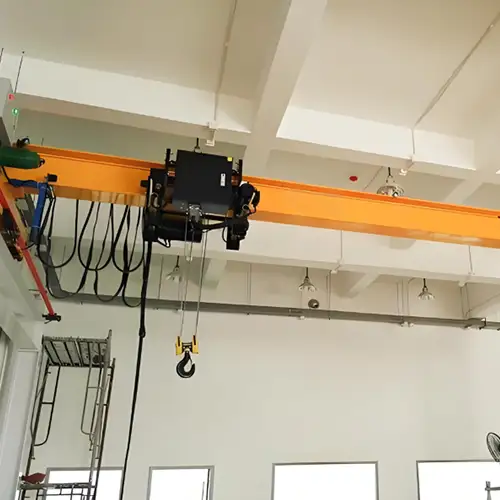
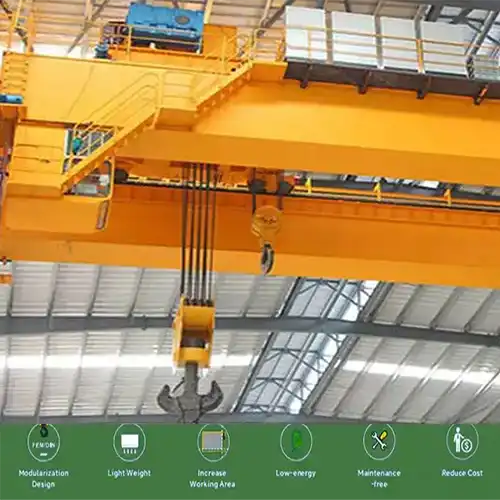
Typical applications
A steel plant maintenance EOT crane may be used for:
- Replacing electric motors and gearboxes
- Removing pumps, valves, and mechanical parts
- Maintenance of conveyors and production equipment
- Handling steelmaking equipment during shutdowns
- Moving maintenance tools and spare parts
- Supporting planned equipment overhauls
- Lifting components into or out of maintenance positions
How It Differs From a General Workshop EOT Crane
A general workshop crane may work in a relatively clean and controlled environment. A steel plant maintenance crane often works around heat, iron dust, humidity, and frequent maintenance operations.
The crane design needs to match these conditions.
For example, a steelmaking maintenance crane may require:
- Double girder EOT crane construction for higher load capacity and demanding duty
- Open winch hoist for heavy-duty lifting and easier component access
- Higher motor protection, such as IP65
- Class H motor insulation for elevated ambient temperatures
- Suitable duty rating for frequent starts and stops
- Overload protection and upper/lower limit protection
- Maintenance walkways and access platforms
- Anti-slip flooring and handrails
- Safe access for inspection and component replacement
For a 20 ton steel plant maintenance overhead crane, these details can affect the crane's reliability as much as the rated lifting capacity.
The main point is simple: the crane must be selected for the maintenance job and the actual steel plant environment where it will operate.
Why Steel Plant Maintenance Cranes Need Special Design
A steel plant maintenance crane works in conditions that can be hard on crane structures, motors, electrical equipment, and controls. Temperature, iron dust, humidity, and operating frequency all need to be considered when selecting the crane.
A crane that works well in a normal workshop may need different protection and component specifications inside a steelmaking plant.
Temperature
Steelmaking areas can have much higher ambient temperatures than ordinary factories. In one 20 ton steel plant maintenance crane project, the specified working environment temperature reached 65°C.
High temperature affects motors, electrical components, lubricants, cables, brakes, and insulation.
For a high-temperature steel plant crane, check:
- Maximum ambient temperature at the crane location
- Motor insulation class
- Motor cooling method
- Electrical enclosure protection
- Brake and gearbox temperature limits
- Cable and control component temperature ratings
- Whether additional heat protection is required
Do not select the crane from the lifting capacity alone. The site temperature should be part of the technical specification.
Dust
Steel plants can generate fine iron dust and metal particles around production and maintenance areas. Dust can enter motors, electrical enclosures, brakes, limit switches, and other components if protection is insufficient.
For dusty steelmaking environments, buyers should check:
- Motor protection rating, such as IP65
- Electrical cabinet and control box protection
- Sealing of cable entries
- Protection of limit switches and sensors
- Motor cooling arrangement
- Cleaning and inspection access
The dust condition should be stated clearly in the crane RFQ. “Indoor use” alone does not describe the actual working environment.
Humidity
Steel plant maintenance areas may also have high humidity. A reference project specified humidity up to 95%.
High humidity can increase the risk of corrosion and electrical insulation problems, especially when combined with dust.
The crane specification should cover:
- Motor and electrical enclosure protection
- Anti-corrosion treatment
- Cable and terminal protection
- Electrical insulation requirements
- Surface preparation and coating system
- Inspection and maintenance access
For example, a coating system may include SA2.5 surface preparation, zinc-rich primer, intermediate coating, and polyurethane topcoat when required by the project.
Duty
Maintenance cranes may appear to operate only during repair work, but some steel plant maintenance operations involve repeated lifting, positioning, and travelling.
The duty requirement should be based on the actual work pattern.
Important parameters include:
- Crane duty class
- Hoist duty class
- Working hours per day
- Starts per hour
- Load spectrum
- Lifting frequency
- Travel frequency
- Required service life
For example, the reference 20 ton steelmaking maintenance crane uses A5 steel structure classification and M5 hoist and trolley mechanisms, with 40% ED and up to 100 starts per hour.
These figures give the crane manufacturer a much better basis for selecting the motors, brakes, hoisting mechanism, electrical components, and control system.
How to Select the Right Crane
Selecting a steel plant maintenance overhead crane starts with the actual lifting job. Capacity alone is not enough. The crane supplier needs the load, lifting height, runway dimensions, duty, and site conditions before selecting the crane structure and lifting mechanism.
For a maintenance crane, confirm these five items first.
Capacity
The crane lifting capacity should cover the heaviest load that the maintenance team will lift.
Check the weight of:
- Motors and gearboxes
- Pumps and valves
- Rolls and steel components
- Maintenance tools and fixtures
- Replacement parts
- Any lifting beam, spreader, or special lifting attachment
For example, if the heaviest planned maintenance load is 18 tons, a 20 ton overhead crane may be suitable. If loads can exceed 20 tons, a double girder crane is normally considered.
Do not select the crane only from the average load. The maximum planned lifting load should be clear in the RFQ.
Lift Height
Lifting height means the vertical distance from the lowest required hook position to the highest required hook position.
A maintenance crane may need a high lifting height when equipment is installed at different levels or when large components must be removed from production equipment.
Check:
- Required maximum hook height
- Required minimum hook height
- Building roof height
- Obstructions below the crane
- Required headroom
- Equipment installation and removal paths
For the reference steelmaking project, the required hook stroke was 36 m. This is a major design input for the hoisting mechanism, drum, rope arrangement, motor, brake, and limit protection.
Span & Travel
The crane span should match the runway distance between the supporting rails. The crane travel length should cover all areas where maintenance lifting is required.
Before ordering, confirm:
- Crane span
- Runway length
- Required hook coverage
- Column and building dimensions
- Existing runway rail specifications
- End approach requirements
- Travel limits and stopping positions
A crane can have enough lifting capacity but still be unsuitable if the hook cannot reach the equipment that needs maintenance.
In the reference project, the crane had a 55 m travelling course. The travel distance therefore formed part of the overall crane design, not just the motor selection.
Duty
Maintenance work can involve repeated lifting, lowering, positioning, and travelling. The duty class should reflect this operating pattern.
Provide:
- Crane duty class
- Hoist duty class
- Working hours per day
- Starts per hour
- Load frequency
- Expected service life
- Lifting and travelling frequency
For the reference 20 ton steelmaking maintenance crane, the specified arrangement included A5 steel structure classification, M5 hoist and trolley mechanisms, 40% ED, and up to 100 starts per hour.
These figures help determine the hoist, motors, brakes, gearbox, electrical equipment, and control system.
Environment
The crane must be selected for the actual steel plant working environment.
Tell the crane manufacturer if the crane will operate around:
- High ambient temperature
- Fine iron or steel dust
- High humidity
- Water or steam
- Corrosive gases
- Heat sources
- Outdoor or semi-open areas
For example, the reference steelmaking maintenance crane was specified for an environment up to 65°C, with 95% humidity and fine iron dust.
These conditions can affect motor protection, insulation, cooling, electrical enclosures, cables, brakes, lubrication, and coating.
Crane Selection Checklist
Before requesting a quotation, prepare these five groups of data:
- Capacity: maximum lifting load and lifting attachments
- Lift: maximum and minimum hook height
- Span & travel: crane span and runway travel length
- Duty: A/FEM class, working hours, starts per hour
- Environment: temperature, dust, humidity, heat, water, and corrosion conditions
Once these parameters are clear, the manufacturer can determine whether a single girder or double girder EOT crane, wire rope hoist or open winch, and what level of motor and electrical protection are appropriate.
Double Girder + Open Winch
For a steel plant maintenance overhead crane, the combination of a double girder bridge crane and open winch hoist is often used when the crane has a higher capacity, longer lifting height, heavier duty, or demanding maintenance requirements.
The right choice still depends on the actual load, duty class, lift height, span, and working environment.

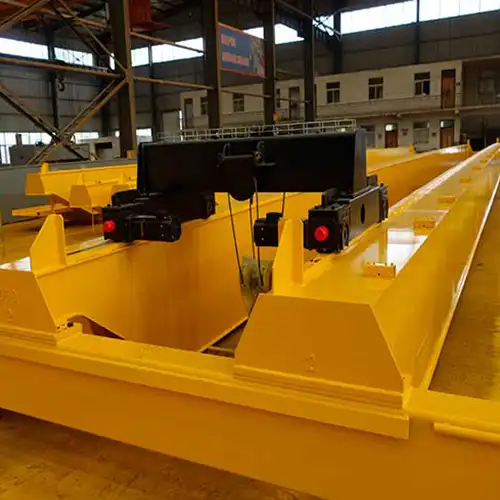
double girder heavy duty overhead crane with open winch trolley, the builtup hoist trolley

customized built up open winch trolley for heavy load or object material handling and maintenance operation
Why Double Girder?
A double girder EOT crane uses two main bridge girders with the trolley and hoisting mechanism positioned between or above the girders.
For steel plant maintenance work, this arrangement is useful when:
- The lifting capacity is relatively high
- The crane needs a long lifting height
- The crane works frequently during equipment maintenance
- A stable trolley arrangement is required
- More space is needed for maintenance access
- The crane must cover a large working area
For a 20 ton steelmaking maintenance crane, double girder construction provides a suitable platform for the open winch and associated mechanical and electrical equipment.
It also gives the maintenance team better access to major crane components. That matters when the crane itself needs inspection or repair.
Why Open Winch?
An open winch hoist is a separate hoisting mechanism with components such as the motor, gearbox, brake, drum, coupling, and rope arranged as an accessible assembly.
This configuration is commonly considered for heavy-duty overhead cranes and cranes with higher lifting heights.
Compared with a compact wire rope hoist, an open winch can offer more flexibility in equipment arrangement and maintenance access.
For steel plant maintenance cranes, the main reasons to consider an open winch include:
- Long lifting height
- Frequent lifting operations
- Higher-duty service
- Easier access to major hoisting components
- Flexible arrangement of motor, gearbox, brake, and drum
- Easier inspection and maintenance of individual components
For example, a crane with a 36 m hook stroke requires more attention to rope arrangement, drum capacity, limit protection, braking, and maintenance access than a small workshop crane.
The important point is that double girder + open winch is a crane configuration, not a specification that should be selected automatically. The manufacturer should confirm it against the required capacity, lifting height, duty class, operating environment, and maintenance requirements.
Safety & Maintenance Features
A steel plant maintenance overhead crane needs safety devices that control the load and maintenance features that give workers safe access to the crane itself.
This matters during normal lifting and during inspection, repair, and shutdown work.
Overload Protection
The crane should have an overload protection system to prevent lifting beyond the rated capacity.
For a 20 ton crane, the overload system should monitor the actual hoisting load and stop further lifting when the preset limit is reached.
A project specification may require:
- Load monitoring
- Overload protection
- Microprocessor-based overload control
- Upward hoisting cut-off
- Controlled lowering after overload detection
For the referenced steelmaking crane, the maximum overload setting was specified at 10%. When the limit is reached, upward movement is stopped while lowering remains possible.
Limit Protection
The hoisting mechanism needs reliable upper and lower limit protection, especially where the lifting height is large.
A high-lift maintenance crane may use more than one level of protection.
Typical provisions include:
- Upper hoisting limit switch
- Lower hoisting limit
- Rotary limit device
- Counterweight limit device
- Crane travel limit switches
- Emergency stop
- Additional hoisting path protection
These devices help prevent the hook block from travelling beyond its permitted position.
Walkway
Maintenance access should be considered when designing the crane.
A crane maintenance walkway gives technicians access to motors, gearboxes, brakes, electrical equipment, and other components without working from unsafe positions.
Depending on the project specification, the walkway may include:
- Full-length walkway
- Minimum 700 mm clear width where specified
- Anti-slip floor
- Handrails
- Toe boards where required
- Inspection covers
- Maintenance platforms
- Safe access around major components
The exact walkway dimensions should follow the applicable standard and project requirements.
Maintenance Access
A maintenance crane should allow technicians to inspect and replace important components safely.
Check whether the design provides access for:
- Motor inspection
- Brake adjustment
- Gearbox inspection
- Rope and drum inspection
- Electrical equipment maintenance
- Limit switch inspection
- Wheel and bearing replacement
- Lubrication
- Routine cleaning
Access provisions may include stairs, ladders, emergency ladders, lifting lugs, inspection platforms, and provisions for wheel replacement.
This is an important point when buying a steel plant EOT crane: the crane itself will need maintenance. Make sure the design gives maintenance personnel a safe way to reach the parts they need to inspect or replace.
Motor & Electrical Protection
The motor and electrical system need to match the steel plant working environment. Heat, iron dust, humidity, and frequent starts can affect motor temperature, insulation, control equipment, and service life.
For a steelmaking maintenance crane, four specifications deserve close attention: IP rating, insulation class, PTC protection, and duty cycle.
IP65 Motor Protection
IP65 crane motors provide protection against dust ingress and water jets from different directions.
This is useful where fine iron dust is present around the crane.
When specifying the motor, check:
- Motor IP rating
- Cooling method
- Cable gland and cable entry protection
- Terminal box sealing
- Brake motor protection
- Actual dust and water conditions at the crane location
IP65 should be selected based on the site conditions. It should not be treated as a substitute for proper cleaning and maintenance.
Class H Motor Insulation
Class H insulation allows the motor winding insulation system to operate at a higher temperature than lower insulation classes.
This can be useful for high-temperature steel plant cranes, especially where the specified ambient temperature is high.
The supplier should confirm:
- Ambient temperature
- Motor insulation class
- Motor temperature rise
- Cooling method
- Motor duty
- Starting frequency
For the reference steelmaking crane, Class H insulation was specified together with an ambient working temperature of up to 65°C.
PTC Motor Protection
A PTC thermistor is installed in the motor winding to monitor winding temperature.
When the motor temperature reaches the preset level, the protection system can trigger an alarm or stop the motor, depending on the control design.
PTC protection is useful for cranes with:
- Frequent starting and stopping
- High operating frequency
- High ambient temperature
- Heavy lifting duty
- Limited motor cooling conditions
It adds temperature monitoring directly at the motor winding.
Duty Cycle
The motor must be selected for the actual operating cycle, not simply for its rated power.
Important figures include:
- 40% ED duty cycle
- Starts per hour
- Working hours per day
- Load frequency
- Hoisting frequency
- Motor starting method
- Required service life
For example, the reference project specifies 40% ED and up to 100 starts per hour. This gives the crane manufacturer a clear basis for selecting the hoisting and travelling motors.
For a steel plant maintenance crane, the motor specification should be checked together with IP65 protection, Class H insulation, PTC temperature protection, cooling method, and duty cycle. These items need to work as one system.
20 Ton Steelmaking Maintenance Crane: Project Example
A practical example is a 20 ton steelmaking maintenance overhead crane designed for maintenance work inside a steel plant. The project required 2 sets of double girder EOT cranes with open winch hoists.
The crane had to work under high temperature, fine iron dust, high humidity, and frequent lifting operations. The design therefore covered both lifting performance and crane maintenance access.
Main Project Specifications
| Item | Specification |
|---|---|
| Crane type | Double Girder EOT Crane |
| Capacity | 20 ton |
| Quantity | 2 sets |
| Hoisting system | Open winch |
| Hook stroke | 36 m |
| Crane travelling course | 55 m |
| Control | Radio remote control |
| Ambient temperature | Up to 65°C |
| Humidity | Up to 95% |
| Working environment | Fine iron dust |
| Steel structure class | A5 |
| Hoist & trolley class | M5 |
| Motor protection | IP65 |
| Motor insulation | Class H |
| Motor cooling | IC411 |
| Motor protection | PTC |
| Duty cycle | 40% ED |
| Starting frequency | Up to 100 starts/hour |
What Made This Crane Different?
The 20 ton lifting capacity was only one part of the design.
The crane needed to lift maintenance loads from deep inside the plant, with a 36 m hook stroke and 55 m travelling course. The high ambient temperature and fine iron dust also affected the selection of motors and electrical equipment.
The design included:
- Double girder bridge construction
- Open winch hoisting mechanism
- IP65 motors
- Class H insulation
- PTC temperature protection
- Overload protection
- Multiple hoisting limit protections
- Full-length maintenance walkway
- Anti-slip walkway floor and handrails
- Maintenance platforms and access ladders
- Provisions for wheel inspection and replacement

Engineering Focus
For this type of steel plant EOT crane, the key question is not simply “Can it lift 20 tons?”
The more useful questions are:
- Can it operate at the specified ambient temperature?
- Can the motors handle the required starting frequency?
- Are electrical components protected against dust and humidity?
- Can the hook reach the required maintenance positions?
- Can technicians safely access the hoist, motors, brakes, and electrical equipment?
- Can worn components be inspected and replaced without creating unnecessary maintenance difficulties?
This is why the crane specification needs to cover capacity, lifting height, duty, environment, safety protection, and maintenance access together.
For steelmaking maintenance applications, the crane should be designed around the actual maintenance work and site conditions—not just around the rated lifting capacity.
Crane Quotation Checklist
A good steel plant overhead crane quotation starts with complete site information. If key parameters are missing, the supplier may need to make assumptions about the crane capacity, structure, hoist, motor, electrical protection, or duty class.
For a steel plant maintenance crane, send the following information with the RFQ.
Crane Capacity
State the required rated lifting capacity and the heaviest load to be lifted.
- Rated capacity: ___ ton
- Maximum maintenance load: ___ ton
- Number of cranes: ___ sets
- Lifting attachment: hook, spreader beam, C-hook, lifting beam, etc.
If the crane will handle maintenance tools or lifting fixtures together with the load, include their weight.
Lift Height
Give the required hook travel, rather than only the building height.
- Maximum hook height: ___ m
- Minimum hook height: ___ m
- Required hook stroke: ___ m
- Building height: ___ m
- Headroom limitation: Yes / No
This is especially important for a high-lift overhead crane. A 36 m hook stroke, for example, requires a different hoisting arrangement from a standard workshop crane.
Span and Travel
Provide the dimensions needed to determine the crane's working coverage.
- Crane span: ___ m
- Runway length / travel course: ___ m
- Existing runway rail: ___
- Required hook coverage: ___
- End approach limitation: ___
A simple building drawing with the runway dimensions is very useful.
Duty and Operation
Tell the supplier how the crane will actually be used.
- Crane duty class: A3–A8, if known
- Hoist mechanism class: M3–M8, if known
- Working hours per day: ___ h
- Starts per hour: ___
- Load frequency: occasional / regular / frequent
- Required service life: ___ years
If the duty class is not known, provide the working pattern and let the crane manufacturer calculate the required class.
Working Environment
This information is particularly important for steelmaking cranes.
Specify:
- Maximum ambient temperature: ___ °C
- Minimum ambient temperature: ___ °C
- Dust condition: fine iron dust / heavy dust / other
- Humidity: ___ %
- Water or steam exposure: Yes / No
- Indoor / outdoor / semi-open installation
- Corrosive gases or chemicals: ___
For example, a project with 65°C ambient temperature, 95% humidity, and fine iron dust needs different motor and electrical protection from a clean workshop environment.
Power and Control
Provide the available electrical supply and preferred control method.
- Power supply: ___ V / ___ Hz / ___ Ph
- Control: pendant / radio remote / cabin
- VFD required: Yes / No
- Crane and hoist speed requirements: ___
- Existing power supply system: ___
Standards and Documents
If the crane is part of an EPC or plant project, state the required standards at the RFQ stage.
For example:
- FEM
- EN standards
- Machinery Directive
- IEC electrical requirements
- Project-specific technical specifications
- Inspection and testing requirements
Also confirm the required documentation, such as drawings, calculations, QCP/ITP, electrical diagrams, material certificates, welding/NDT records, test reports, and O&M manuals. Click to Check Steel Mill Maintenance Crane Selection Checklist & P re-Quotation In formation Sheet or feel free to contact us. WhatsApp; + 86 151 3871 1597 to get free consultation.
Send These Parameters for a Faster Quote
At minimum, send:
- Capacity
- Quantity
- Span
- Lifting height
- Runway length
- Duty / working frequency
- Temperature
- Dust and humidity
- Power supply
- Control method
- Applicable standards
- Site drawing, if available
With these details, the crane manufacturer can prepare an engineering-based quotation instead of giving you a rough price based only on tonnage.
Get a Steel Plant Maintenance Crane Quote
If you are planning a steel plant maintenance EOT crane, send the basic crane parameters and site conditions first.
Yuantai Crane can review the lifting requirements, working environment, duty, hoisting arrangement, and maintenance access before preparing the quotation.
Send your crane parameters → Get an engineering-based quotation.
FAQ
What type of overhead crane is best for steel plant maintenance?
For heavy steel plant maintenance, a double girder overhead crane with an open winch is a suitable configuration when the required capacity and duty justify it. The crane should be engineered for the actual site conditions, including ambient temperature, dust, humidity, lifting height, duty cycle and maintenance access. A reference 20 ton steelmaking maintenance crane uses A5 steel structure classification, M5 hoist and trolley mechanisms, an open winch, IP65 Class H motors, 40% ED, 100 starts/hour, radio remote control and maintenance access provisions.
Can an overhead crane operate at 65°C?
Yes, but the crane must be specified for the actual ambient temperature. Motor insulation, cooling, electrical components, brakes, cables, and lubrication may need different specifications for high-temperature service.
Why use a double girder crane for steel plant maintenance?
A double girder crane provides a suitable bridge arrangement for higher-capacity lifting, long lifting heights, and open winch systems. It can also provide better access to crane components for inspection and maintenance.
What is an open winch crane?
An open winch crane uses a separate hoisting mechanism with components such as the motor, gearbox, brake, coupling, and rope drum. It is commonly used where heavy-duty service, long lifting height, and component access are important.
What motor protection is suitable for dusty steel plants?
The required protection depends on the actual site conditions. IP65 motors, Class H insulation, PTC temperature protection, and suitable cooling can be specified where high dust, temperature, and frequent operation are present.
What information is needed to quote a steel plant maintenance crane?
At minimum, provide:
- Lifting capacity
- Quantity
- Crane span
- Lifting height
- Runway length
- Duty class or working frequency
- Ambient temperature
- Dust and humidity conditions
- Power supply
- Control method
- Required standards
- Site drawing, if available

Yuantai Cranes
Overhead Crane Manufacturer with CE, ISO, SGS, CNEX Certificates.
- Main Specifications - Capacity: 0.5–550 tons | Span: up to 40m | Speed: 0.8–12 m/min | Duty: A3–A7 | Power: 380–690V, 50/60Hz | Control: pendant/remote/cabin
- Full engineering: FEA/PLC/VFD + in-house build + global delivery + on-site support, for workshops, factories, EPC contractors, industrial projects, etc.
- Support: design, manufacturing, testing, service – end-to-end, customized lifting solutions worldwide.
How to Get an Accurate Crane Price for Your Application?
Tips: Copy the spec list, fill in your details, and paste it into the form on the right/ down-below for a quick price.
- Crane type:_____ . (e.g., overhead crane, gantry crane, jib crane)
- Max weight to lift:_____ tons. (e.g., 2t, 5t, 10t, 20t, 50t)
- Lifting height:_____ m. (How high does the hook need to reach?
- Workshop width (span):_____ m . (Distance between the two crane rails)
- Travel distance:_____ m . (How long does the crane need to move along the runway?)
- Control type:_____. (Pendant / remote / cabin Control)
- Power supply:_____. (Local voltage & frequency – e.g., 380V, 50Hz, 3-phase)
- What will it be used for?_____ (e.g., steel fabrication, concrete products, mold handling, general manufacturing, etc.)
- Any special requirements?_____ (e.g., extreme temperature, dusty or explosive environment, special paint color, etc.)
Just leave a message via the contact form and our hoist and crane engineer will contact you with in 24working hours.
Get Your Custom Quote–Quick & Easy
Fill in what you know. Skip what you don't – we'll help.Any question will be reply with 24 working hours