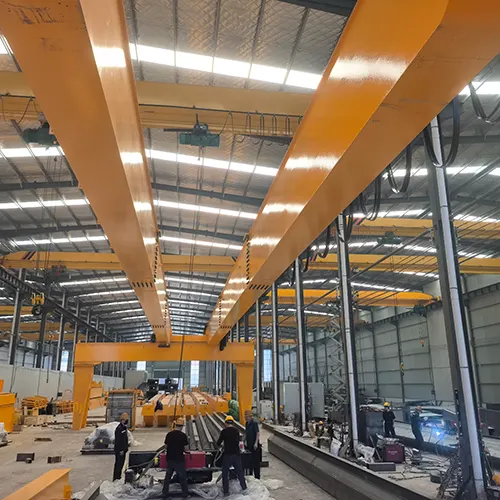
EOT Crane Middle East | Industrial Projects & Solutions
EOT crane solutions for Middle East industrial projects, from factories and workshops to steel plants and warehouses. Specify load, span, lift and duty class for your project.
| Crane Type | Customized EOT / overhead bridge crane systems for Middle East industrial uses; single girde & double girder configerations, and specialized configurations for low-headroom, freestanding, high-temperature, corrosive, or hazardous environments; |
| Crane Capacity | 0.5–100 ton+; customized according to maximum suspended load, lifting attachments, load spectrum, duty cycle, and application requirements. |
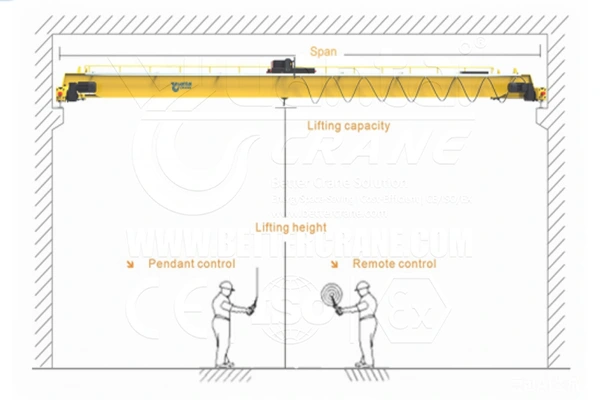
| Span Length | 7.5–35 m+ span; customized according to workshop width, runway layout, building structure, and required coverage. |
| Lifting Height | 3–30 m; customized according to building clearance, hook height, equipment dimensions, and lifting requirements. |
| Coverage Area Type | ndustrial workshops, production lines, warehouses, steel fabrication bays, maintenance areas, equipment service zones, loading areas, shipyards, and designated material handling areas across UAE, Saudi Arabia, Qatar, and Oman. |
| Application | Steel plants, oil & gas, petrochemical facilities, fabrication workshops, warehouses, power plants, shipyards, mining, logistics, machinery manufacturing, maintenance facilities, and infrastructure projects. |
| Certifications | CE / ISO / SGS / CNEX/ Other third-party inspection |
| Customization | Capacity: 0.5–100 ton+; Girder: Single / Double; Type: Top-Running / Underhung / Low-Headroom; Hoist: Electric Chain / Wire Rope / Open Winch Options: Load Monitoring / Positioning / Anti-Sway / Anti-Collision / Automation. |
Crane Manufacturer: Yuantai Cranes – 30+ Years Professional Crane Manufacturer from China
Category: Middle East
Tags: middleeast,UAE,qatar,iran,Saudi,jordan,egypt,yemen,oman,kuwait,Bahrain
Your Trusted Overhead Crane Manufacturer & Supplier
EOT Crane Middle East | Solutions for Industrial Buyers
Reliable EOT Crane Supplier for UAE, Saudi Arabia, Qatar & Oman
Yuantai EOT Cranes for Middle East Industrial Projects
Source EOT cranes for manufacturing, steel handling, machinery installation and warehouse projects across the Middle East. Get crane configurations matched to your site and workload.
Yuantai supplies EOT cranes for factories, workshops, warehouses, steel plants, mining facilities, cement plants, petrochemical projects, and other industrial sites across the Middle East.
We manufacture the crane according to the actual working conditions. Capacity, span, lifting height, working duty, lifting frequency, available headroom, power supply, and installation conditions all need to be considered before the crane is designed.
The working environment is another important part of the design. For projects in the UAE, Saudi Arabia, Qatar, Oman, and other GCC markets, we can consider high ambient temperatures, desert dust, humidity, salt air, and corrosion when selecting the electrical and mechanical components. Depending on the project, this may include higher IP protection, suitable motors and electrical components, corrosion-resistant coating systems, VFD control, and other environmental protections.
Typical Middle East Applications
- Manufacturing plants — machinery, production equipment, dies, and components
- Steel fabrication plants — steel plates, H-beams, pipes, and structural sections
- Cement plants — production equipment and maintenance work
- Mining facilities — mining machinery, components, and workshop maintenance
- Petrochemical plants — pumps, compressors, valves, vessels, and process equipment
- Warehouses and logistics facilities — machinery, steel products, and industrial equipment
- EPC projects — cranes supplied with drawings, technical documents, testing, and project support
Yuantai supplies single girder and double girder EOT cranes, European-style cranes, heavy-duty cranes, explosion-proof cranes, and complete EOT crane kits. For higher-capacity and demanding applications, double girder cranes are normally used because they provide greater structural capacity and are better suited to heavy and frequent lifting.
The supply does not stop at manufacturing. Depending on the project, Yuantai can provide engineering drawings, technical calculations, FAT, third-party inspection, export packing, shipping support, installation guidance, commissioning assistance, and spare parts.
For a Middle East project, we first need to understand how the crane will actually be used. Once the lifting requirements and site conditions are clear, we can recommend the appropriate crane type, duty classification, hoist, controls, electrical configuration, and other options.
Tell us your lifting capacity, span, lifting height, working duty, power supply, and application. We can then work out a suitable EOT crane configuration for your project.
Your Trusted Overhead Crane Manufacturer & Supplier
EOT Crane Solutions for the Middle East
Reliable EOT Crane Supplier for UAE, Saudi Arabia, Qatar & Oman
Yuantai EOT Crane Solutions for the Middle East
As a leading EOT crane manufacturer in China, Yuantai delivers custom-engineered overhead crane solutions for the Middle East – from steel plants and cement factories to oil & gas terminals and heavy fabrication workshops. The final overhead crane price depends on far more than rated capacity. Span, lifting height, duty cycle, environment, control system, and certification all play decisive roles. Below we break down the key cost drivers and configuration choices that shape your investment.
Single Girder EOT Crane – Cost-Effective for Light-to-Medium Loads
Capacity: 1–20 ton | Span: 7.5–28 m | Lifting height: 6–20 m | Duty: FEM M3–M5
This is the most economical overhead crane for workshops, warehouses,
and maintenance bays. Price is driven by span length, hoist type (wire rope vs. chain),
control mode (pendant vs. radio), and duty classification. For intermittent use
(2–4 cycles/hr), a single girder EOT crane offers the fastest return on investment.
However, if your operation runs 2–3 shifts with frequent lifts, we recommend upgrading motor power, brake sizing, and electrical protection – which adds 15–25% to
the base price but prevents premature failure.
Double Girder EOT Crane – Heavy-Duty Performance (20–550 Ton)
Capacity: 20–550 ton | Span: 10–35 m+ | Lifting height: 8–30 m+ | Duty: FEM M6–M8
Engineered for steel mills, mining, cement plants, shipyards, and petrochemical
refineries. The double girder overhead crane price is significantly
influenced by wheel load calculations, VFD drives (standard on all motions),
open-winch hoisting, and PLC-based automation. For capacities above 20 tons,
this configuration is almost always mandatory. Additional cost drivers include anti-sway technology, synchronized lifting systems, and load-cell weighing –
features that add 10–30% but are critical for precision handling and process safety.
Underhung EOT Crane – Space-Saving, but Structure-Dependent
Ideal for workshops where floor-supported runway columns are not feasible.
The under-running crane hangs from the roof steelwork, freeing up floor space
for production equipment.
Price drivers: Roof beam capacity, wheel load distribution, runway alignment, and available headroom.
Because the building structure must carry the crane's dynamic loads, Yuantai provides wheel load data and runway reaction calculations to support structural verification.
This configuration often costs 10–20% less than a top-running crane of the same capacity
(since runway columns are eliminated), but structural reinforcement costs can offset
that saving – so we always recommend a site structural review before finalizing.
Explosion-Proof EOT Crane – ATEX/IECEx Certified for Hazardous Zones
Application: Oil & gas, chemical plants, paint shops, and grain storage | Certification: ATEX / IECEx (Zone 1/2, Gas Groups IIA/IIB/IIC)
The explosion-proof overhead crane price is 40–80% higher than a standard unit
due to spark-proof materials, sealed enclosures (IP65+), temperature-rated motors,
and certified electrical components. Every detail – from the hoist brake to the radio remote control – must comply with hazardous area regulations.
Yuantai offers full documentation packages for local authority approval
(e.g., SASO, ADNOC, Qatargas). Price also varies with temperature class (T1–T6) and gas group – the more severe the zone, the more rigorous (and expensive)
the engineering.
EOT Crane Kit – Local Assembly Reduces Logistics Cost
For clients with local fabrication and installation capabilities, Yuantai offers knock-down crane kits. This approach reduces freight volume, lowers import duties,
and leverages regional labor – often cutting total landed cost by 15–30%.
What's included: Hoist (motor + gearbox), end carriages, travel motors,
gearboxes, electrical control panel, pendant/radio control, conductor bars, limit switches,
and overload protection.
Price drivers: The kit price depends on hoist capacity, electrical complexity
(VFD vs. DOL), and certification requirements. Buyers typically source bridge girders locally – we provide interface drawings, wheel load tables, and bolt patterns to ensure
precise fit. This is a popular option for EPC contractors and large steel fabricators across the GCC.
10 Critical Parameters That Determine Your Overhead Crane Price
Two cranes with the same rated capacity can have completely different price tags.
Here are the top factors:
① Capacity (ton) – Higher capacity = larger girders, heavier hoists, stronger motors.
② Span (m) – Wider span requires deeper girders and larger wheels.
③ Lifting height (m) – More rope drum wraps and longer wire rope.
④ Duty classification (FEM/ISO) – M3 vs. M8 changes motor sizing, brake torque, and electrical duty.
⑤ Control system – Pendant (cheapest) → Radio (mid) → Cabin + PLC (most expensive).
⑥ VFD vs. DOL – Variable-frequency drives add 10–20% but save energy and reduce shock.
⑦ Environmental protection – IP55, IP65, C5 corrosion coating, heat-resistant paint.
⑧ Hazardous area certification – ATEX/IECEx adds significant cost (40–80%).
⑨ Advanced features – Anti-sway, sync-lift, load cells, condition monitoring.
⑩ Certification & testing – Third-party inspection, load testing, NDT, and documentation.
Pro tip: Send us your actual load spectrum, cycles per hour, and operating hours –
not just max tonnage. We'll size the crane right-sized for your real duty, avoiding
over-specification (wasted cost) or under-specification (safety risk).
Heavy Duty EOT Crane – Middle East Industrial Solutions
Across the Middle East – from Saudi steel plants and UAE petrochemical facilities to Oman mining operations and Qatar EPC projects – heavy-duty EOT cranes are the backbone of material handling. These cranes handle large loads, frequent lifting cycles,
long operating hours, wide spans, and demanding production processes.
At Yuantai, a heavy-duty overhead crane is not defined by lifting capacity alone.
A 50-ton crane used for occasional maintenance and a 50-ton crane lifting steel
products continuously over three shifts require very different mechanical and electrical configurations.
Below we break down the capacity bands, engineering factors, application examples, and selection
criteria that define a true heavy-duty EOT crane for the Middle East.
Heavy-Duty Capacity Range – 20 Ton to 550+ Ton
For projects above 20 tons, Yuantai generally uses a double-girder bridge configuration as the starting point. The final design is then determined by the load spectrum, operating frequency, span, lifting height, duty classification, and site conditions.
Typical capacity bands (not standard specifications):
- 20 ton – Heavy workshops, steel fabrication, machinery – Double Girder EOT
- 32 ton – Steel, cement, machinery manufacturing – Double Girder
- 50 ton – Steel fabrication, mining, process equipment – Double Girder / Open Winch
- 80 ton – Steel plants, heavy fabrication, mining – Double Girder / Open Winch
- 100 ton – Steel, cement, petrochemical, heavy machinery – Double Girder / Open Winch
- 150 ton – Heavy fabrication, steel plants, mining – Double Girder / Open Winch
- 200 ton – Steel plants, heavy machinery, EPC – Double Girder / Open Winch
- 300 ton+ – Heavy industry, steel, large EPC projects – Heavy Double Girder / Open Winch
- Up to 550 ton – Selected heavy industrial applications – Customized Double Girder / Open Winch
Important: A 100-ton crane could require very different equipment depending on whether it lifts once per hour for maintenance or operates continuously in a production process. For example, a Saudi steel plant requiring a 100-ton crane with a 25 m span, 15 m lifting height, and multiple shifts per day must have its complete load spectrum and operating cycle evaluated before assigning the final ISO/FEM duty classification.
Heavy-Duty Industrial Applications Across the Middle East
Heavy-duty EOT cranes are found in virtually every heavy industry sector. Below are the key industries, typical lifting work, and crane requirements that define each application:
- Steel Plants – Billets, coils, plates, beams, production equipment – Heavy-duty double girder, open winch, VFD, special lifting devices
- Steel Fabrication – H-beams, vessels, structures, fabricated assemblies – Long-span design, smooth travel, radio remote/cabin
- Cement Plants – Motors, gearboxes, crushers, process equipment – Heavy-duty mechanisms, dust protection, maintenance access
- Mining – Mining machinery, crushers, conveyors, processing equipment – High-duty operation, robust mechanical components, dust protection
- Petrochemical Plants – Pumps, vessels, compressors, process equipment – Heavy-duty EOT / process crane; Ex configuration where required
- Heavy Machinery Manufacturing – Machine tools, engines, dies, large components – High positioning accuracy, VFD, lifting beams
- Shipyards – Engines, ship components, steel structures – Large capacity, long span, corrosion protection
- EPC Projects – Process equipment, structural components, plant machinery – Customized engineering, documentation, FAT and inspection
Whether it's a UAE petrochemical workshop or an Oman mining facility, the crane requirements must be matched to the actual load, environment, and operational rhythm – not just a generic specification.
What Makes an EOT Crane "Heavy Duty"? – 12 Critical Engineering Factors
A heavy-duty crane requires far more than simply increasing the motor size. The following engineering factors determine whether a crane will survive continuous shift operation in a Middle East industrial environment:
- Load spectrum – Determines how much of the crane's rated capacity is actually used during operation
- Operating hours – More operating hours increase mechanical and electrical duty
- Lifting cycles – Frequent starts/stops increase brake, motor and gearbox loading
- Duty classification – ISO/FEM classification must reflect actual utilization and load spectrum
- Bridge structure – Higher loads require appropriate girder stiffness and structural capacity
- End carriages & wheels – Heavy cranes generate significant wheel and runway loads
- Hoisting mechanism – Open winch or heavy-duty wire rope hoist selected according to capacity and duty
- Brakes – Brake capacity and service life must match the lifting mechanism
- Gearboxes – Gearbox rating must account for operating cycles and load conditions
- VFD control – Reduces mechanical shock and improves acceleration/deceleration
- Thermal design – Motor and electrical components must suit high ambient temperatures (up to 55°C)
- Runway structure – Crane wheel loads must be checked against the building/runway design
- Control system – Radio, cabin, PLC and synchronization can be added according to process requirements
For example, a 100-ton crane operating in a high-dust cement plant may require greater attention to electrical enclosure protection (IP65+) and maintenance access than a similar-capacity crane in a clean workshop.
Heavy-Duty Crane Features – Engineering Options for Demanding Environments
Yuantai heavy-duty EOT cranes can be engineered with a wide range of advanced features to match the specific demands of Middle East steel, cement, mining, and petrochemical projects:
- Double-girder bridge – Standard for capacities above 20 tons
- Heavy-duty wire rope hoist – Compact and reliable for most applications
- Open winch hoisting mechanism – Preferred for very high capacities and process cranes
- VFD hoisting and travel control – Smooth acceleration, precise positioning, reduced mechanical stress
- PLC control – For automation, diagnostics, and process integration
- Radio remote control – Enhanced operator safety and visibility
- Operator cabin – For high-frequency or high-precision applications
- Synchronized lifting – For tandem or multi-point loads
- Anti-sway control – Precise load placement at high speeds
- Overload protection – Load cells and limit switches for safety
- Upper and lower lifting limits – Prevents over-travel
- Travel limit protection – End-stroke safety
- Heavy-duty brakes – Sized for continuous duty and high inertia loads
- High-capacity wheels and end carriages – Designed for heavy wheel loads
- Long-span bridge design – Up to 35 m+ spans
- Special lifting beams, C-hooks, magnets or grabs – Customized to the load
Example: A crane handling long steel beams may benefit more from VFD travel control, radio remote operation, and a properly designed lifting beam than simply increasing the crane's rated capacity.
A crane handling two lifting points simultaneously may require synchronized lifting control – a feature that adds significant value in steel fabrication and heavy machinery assembly.
5. Open Winch vs. Wire Rope Hoist – Which Is Right for Your Application?
For heavy Middle East industrial projects, buyers often encounter both heavy-duty wire rope hoist cranes and open-winch cranes. The correct choice depends on the required capacity, duty, lifting speed, lifting height, operating frequency, and process requirements – not capacity alone.
Comparison guide:
- Heavy-Duty Wire Rope Hoist – Typical application: workshops and general heavy lifting. More compact, generally simpler maintenance, suitable for many capacities. Moderate to high customization.
- Open Winch – Typical application: heavy industrial/process applications. Larger mechanism, more components but serviceable. Particularly suitable for very high capacities and process cranes. Strong choice for demanding applications.
Key takeaway: A 50-ton open-winch crane may be the right choice for a continuous steel plant operation, while a 50-ton wire rope hoist crane could be perfectly adequate for intermittent maintenance lifting in the same plant. Yuantai evaluates the actual load spectrum and operating profile to recommend the optimal hoisting mechanism.
Heavy-Duty Crane Selection Examples – Saudi, UAE, Oman
Example 1 – Saudi Steel Fabrication Plant
Capacity: 50 ton | Span: 25 m | Lifting height: 12 m
Operation: 2 shifts/day | Load: Steel structures and fabricated sections
Control: Radio remote | Environment: Indoor, dusty
A suitable starting point would be a 50-ton double-girder EOT crane with VFD travel/hoisting control,
with the final duty classification calculated from the actual lifting cycle.
Example 2 – UAE Petrochemical Workshop
Capacity: 80 ton | Span: 22 m | Lifting height: 10 m
Load: Pumps, compressors and process equipment
Operation: Maintenance lifting | Environment: Classified hazardous area
The buyer must provide the hazardous-area classification before the explosion-protection system is selected. The crane may require an ATEX/IECEx-certified configuration, but the exact Ex specification
should come from the project's hazardous-area requirements.
Example 3 – Oman Mining Facility
Capacity: 100 ton | Span: 28 m | Lifting height: 15 m
Operation: Multiple shifts | Environment: High dust
In this case, the design must consider not only the 100-ton SWL but also dust protection, duty classification, wheel loads, runway structure, motor thermal conditions,
gearbox selection, and maintenance access – all of which are critical for reliable operation in a harsh mining environment.
How to Specify Your Heavy-Duty EOT Crane – Data Required for a Technical Quotation
Yuantai supplies customized heavy-duty EOT cranes for 20–550 ton applications, with double-girder configurations used as the normal starting point for cranes above 20 tons. The final crane is engineered around the actual project – not simply selected from a capacity table.
For Middle East projects, particular attention is given to:
- High ambient temperature – Motor insulation, oil viscosity, cooling
- Desert dust – IP ratings, enclosure protection, maintenance intervals
- Coastal corrosion – C5 or marine-grade corrosion protection
- Hazardous areas – ATEX/IECEx certification, Zone, Gas Group, Temperature Class
- Long-span buildings – Structural integration and runway design
- Multi-shift operation – High-duty components and redundant systems
- High utilization – FEM/ISO duty classification based on actual load spectrum
For a technical quotation, provide:
Capacity (max and average load), Span (runway center distance), Lifting height (floor to upper hook position), Crane travel length, Load type (steel, machinery, bulk, etc.), Operating hours/day, Lifting cycles per hour (average & peak), Power supply (voltage/frequency/phase), Installation environment (indoor/outdoor, dusty, corrosive, etc.),
and Hazardous-area requirements (if any).
These details are far more useful than specifying only "100-ton heavy-duty EOT crane". The more detailed the input, the more precise the engineering output – including girder type, hoist selection, motor sizing, braking torque, wheel load calculations, and control architecture.
Yuantai – Your Trusted Chinese Heavy-Duty EOT Crane Manufacturer for the Middle East
Reliable. Customized. Compliant. Delivered on Time.
Explosion Proof EOT Crane – Middle East Oil & Gas Solutions
Explosion-proof EOT cranes are essential in Middle East facilities where flammable gases, vapors, combustible dust, or explosive atmospheres are present.
From Saudi oil refineries and UAE petrochemical plants to Qatar LNG facilities and Oman gas-processing plants, these
cranes enable safe material handling and equipment maintenance in hazardous zones.
However, "explosion-proof crane" is not a complete technical specification.
The crane's electrical and mechanical equipment must be selected according to the hazardous-area classification, gas/dust characteristics, temperature class, protection concept,
ambient temperature, and project certification requirements. Below we break down the key classifications, configurations, components, and engineering considerations for explosion-proof EOT cranes across the Middle East.
Where Are Explosion-Proof EOT Cranes Used in the Middle East?
Explosion-proof overhead cranes are deployed across a wide range of hazardous-area facilities in the Middle East. Typical applications include:
- Oil Refineries – Equipment maintenance, pump/valve/motor/vessel handling – Requires hazardous-area classification and Ex equipment
- Petrochemical Plants – Process equipment maintenance, pumps, compressors, vessels – Correct gas group and temperature class required
- LNG Facilities – Maintenance and process handling of LNG equipment – Project-specific hazardous-area and certification requirements
- Gas Processing Plants – Equipment maintenance, compressors, valves – Gas classification and Ex protection
- Chemical Plants – Material and equipment handling – Gas/dust classification and chemical environment
- Hazardous Workshops – Maintenance lifting of motors, pumps, gearboxes – Zone classification and suitable Ex components
- Oil & Gas Maintenance Facilities – Repair and replacement of pumps, compressors, valves, skids – Hazardous-area documentation and electrical protection
Important: A crane does not necessarily need to be explosion-proof simply because it is located in an oil & gas facility. The requirement depends on whether the crane operates within a classified hazardous area and what the project specification requires. For example, a maintenance workshop inside a refinery may contain both classified and non-classified areas – a crane in a non-hazardous zone may not require Ex configuration.
Hazardous Area Classification – What Information Must the Buyer Provide?
Before selecting an explosion-proof crane, the buyer must provide the hazardous-area information issued by the plant's electrical, process, or safety engineering team. Do not ask the crane manufacturer to guess the classification.
Key information required:
- Hazard type – Gas/vapor or combustible dust (e.g., flammable gas)
- Zone classification – Hazardous area zone (e.g., Zone 1)
- Gas group – Substance classification (e.g., IIA, IIB, IIC)
- Temperature class – Maximum surface-temperature requirement (e.g., T4)
- Protection concept – Required Ex protection method (e.g., Ex d, Ex de)
- Ambient temperature – Maximum/minimum site temperature (e.g., up to 50–55°C)
- Installation – Indoor, outdoor, or partially enclosed
- Corrosive environment – Salt, chemicals, humidity (e.g., coastal petrochemical site)
- Power supply – Site electrical system (e.g., 415 V / 50 Hz / 3 Ph)
- Certification – Required project certification (e.g., ATEX, IECEx, CNEX)
Useful RFQ example:
"80 ton EOT crane, 20 m span, 10 m lift, Zone 1, Gas Group IIB, T4, indoor petrochemical workshop,
415 V / 50 Hz / 3 Ph."
This gives the crane manufacturer substantially more information than simply writing "80 ton explosion-proof crane."
ATEX, IECEx and Ex Protection – What Do They Mean?
These terms are not interchangeable. Each represents a specific regulatory framework, certification system, or protection concept that must be matched to the hazardous area, gas/dust group, temperature class, and equipment category.
- ATEX – European regulatory framework for equipment used in potentially explosive atmospheres. Commonly specified for projects requiring European conformity.
- IECEx – International certification system for Ex equipment. Frequently used on international oil & gas projects.
- Ex d – Flameproof enclosure protection concept. Equipment enclosure is designed to contain an internal explosion and prevent ignition transmission.
- Ex de – Combination involving flameproof and increased-safety protection. Applied according to the equipment's certified design.
- Ex t – Protection by enclosure for combustible dust atmospheres. Used for applicable dust-hazard environments.
- CNEX – Chinese explosion-protection certification system. Can be required for equipment certified for the Chinese market or specified by the project.
For a Middle East project, the buyer must specify whether the EPC contractor, end user, consultant, or local authority requires ATEX, IECEx, CNEX, or another specific certification route.
Explosion-Proof EOT Crane Configurations – Single Girder, Double Girder, Hoist & Control Options
Yuantai can configure explosion-protected EOT cranes around different bridge and hoisting arrangements, depending on the capacity, duty, and hazardous-area requirements.
- Explosion-Proof Single Girder EOT Crane – Lower-capacity hazardous-area workshops. Compact and economical for suitable loads.
- Explosion-Proof Double Girder EOT Crane – Higher-capacity and heavier-duty applications. Higher structural capacity and suitable for heavy loads. For cranes above 20 tons, this is generally the starting point.
- Explosion-Proof Wire Rope Hoist – General hazardous-area lifting. Integrated hoisting solution.
- European Explosion-Proof Hoist – Compact industrial workshops. Low headroom and smooth operation.
- Explosion-Proof Pendant Control – Local operator control where the project allows pendant operation.
- Explosion-Proof Radio Control – Large workshops or areas requiring better operator visibility.
- Explosion-Proof Cabin Operation – Large or process cranes where dedicated visibility and control are required.
The final arrangement depends on the actual load, span, duty classification, lifting height, building structure, and hazardous-area requirements – not a one-size-fits-all approach.
What Parts Need Explosion Protection? – A Complete Component Breakdown
An explosion-proof crane is not created simply by adding an Ex label to the hoist. The relevant electrical and control equipment must be selected according to the certified system.
Components that may require Ex protection:
- Hoisting motor – Explosion-protected motor where required
- Travel motors – Ex-rated travel motors where required
- Hoist brake – Suitable certified/protected brake arrangement
- Electrical control panel – Appropriate Ex enclosure/protection
- Pendant control – Explosion-protected pendant where required
- Radio control – Ex-certified radio system where specified
- Limit switches – Suitable Ex-rated devices
- Cable glands – Appropriate certified cable-entry system
- Junction boxes – Suitable Ex protection
- Sensors – Ex-rated sensors where installed in the hazardous zone
- Lighting – Ex lighting where part of the crane system and required
- Heating devices – Suitable certified Ex heating equipment where applicable
Critical note: Installing a certified Ex motor does not automatically make the entire crane suitable for a hazardous area. The complete equipment selection must be reviewed as a system.
Explosion Protection + Middle East Climate – High Temp, Dust, Humidity & Corrosion
Middle East projects often combine hazardous atmospheres with high temperature, desert dust, humidity, and coastal corrosion. These conditions must be considered together during the crane engineering process.
- High ambient temperature – Check Ex equipment temperature rating and motor thermal performance (critical in Saudi, UAE, Qatar, Kuwait)
- Desert dust – Appropriate enclosure protection and protected electrical equipment (critical in all GCC countries)
- Coastal salt air – Corrosion-resistant coating and suitable hardware (critical in UAE, Qatar, Kuwait, Eastern Saudi)
- High humidity – Electrical insulation and anti-condensation measures where required
- Outdoor installation – Weather-resistant electrical and mechanical protection
- Continuous operation – Correct duty classification and thermal calculations
Real-world examples:
Qatar LNG facility – Requires both hazardous-area certification and enhanced corrosion protection due to coastal environment.
Saudi petrochemical plant – Requires particular attention to high ambient temperature, dust, hazardous-area classification, and multi-shift operation.
UAE coastal oil & gas workshop – Requires a combination of Ex equipment, corrosion protection, appropriate enclosure protection, and temperature-rated components.
What Should an EPC Contractor Provide for an Ex Crane Quotation?
For an accurate explosion-proof EOT crane quotation, the following project data is highly recommended:
- Crane capacity – e.g., 50 ton
- Span – e.g., 22 m
- Lifting height – e.g., 12 m
- Crane travel – e.g., 80 m
- Load – Pumps, compressors, process equipment, etc.
- Duty – e.g., 2 shifts/day
- Lifting cycles – e.g., 10 cycles/hour
- Installation – Indoor / outdoor
- Ambient temperature – e.g., 50°C
- Hazardous area – e.g., Zone 1
- Gas group – e.g., IIB
- Temperature class – e.g., T4
- Protection concept – e.g., Ex d / Ex de as specified
- Power supply – e.g., 415 V / 50 Hz / 3 Ph
- Control – Ex pendant / Ex radio / cabin
- Certification – ATEX / IECEx / CNEX / project requirement
- Coating – C4/C5 where required
- Inspection – FAT / third-party inspection
The hazardous-area classification is particularly important. Without it, the supplier may be unable to correctly determine the required Ex equipment and certification scope.
How Yuantai Approaches Explosion-Proof EOT Crane Projects – From RFQ to FAT
For Middle East oil & gas and petrochemical projects, Yuantai supports the process from technical clarification and crane configuration through engineering, manufacturing, FAT, documentation, export packing, and commissioning support.
Engineering process:
Hazardous-Area Data → Crane Duty → Mechanical Design → Ex Electrical Design → Certification Requirements → Drawing Approval → Manufacturing → FAT → Export
The goal is not simply to supply an "explosion-proof crane." The objective is to provide a crane whose capacity, duty, mechanical structure, electrical equipment, Ex protection, environmental protection, and certification documentation all match the actual project requirements.
For the RFQ, the most important information is:
Capacity + span + lifting height + duty + load type + hazardous-area classification +
gas/dust group + temperature class + ambient temperature + power supply + required certification.
Yuantai – Your Trusted Chinese Explosion-Proof EOT Crane Manufacturer for the Middle East
Reliable. Customized. Compliant. Delivered on Time.
Your Trusted Overhead Crane Manufacturer & Supplier
Tailored Industrial Crane Solutions for Middle East
Experienced Tailored Overhead Crane Supplier for Every Industrial Sectors in Middle East
Comprehensive technical guide for EOT cranes in the Middle East region: UAE, Saudi Arabia, Qatar, Oman, Bahrain, Kuwait, Turkey, and Egypt. Each country has unique industrial demands, environmental conditions, and technical requirements.
🇦🇪 EOT Crane UAE
The UAE is one of the most diverse industrial markets in the Gulf. EOT cranes are used in oil & gas equipment workshops, steel fabrication, aluminum processing, manufacturing, logistics, and industrial maintenance. A UAE crane specification therefore needs to consider not only lifting capacity, but also ambient temperature, dust, coastal exposure, headroom, operating frequency, and hazardous-area requirements.
UAE EOT Crane Applications & Technical Data
Oil & Gas Workshop 5–50 t
Capacity: 5–50 t (workshop) / up to 100 t (process)
Type: Double Girder / Ex-proof / European EOT
Loads: Pumps, compressors, valves, vessels
Span / Lift: 10–30 m / 6–15 m
Special: Hazardous class, Ex components, corrosion protection
Steel Fabrication 10–100+ t
Capacity: 10–100+ t (common: 20/5t, 50/10t, 100/20t)
Type: Double Girder EOT / Heavy-Duty
Loads: Plates, H-beams, pipes, structures
Span / Lift: 15–35 m+ / 8–20 m
Special: Long loads, VFD travel, lifting beams, high utilization
Aluminum Processing 10–60+ t
Capacity: 10–60+ t (coil handling: 25–40t typical)
Type: Heavy-Duty Double Girder / Process Crane
Loads: Coils, billets, dies, rolling equipment
Span / Lift: 15–30 m / 8–18 m
Special: Frequent lifting, positioning accuracy, process temp
Manufacturing 1–50 t
Capacity: 1–50 t (most common: 5t, 10t, 16/3.2t, 20/5t)
Type: Single / European / Double Girder
Loads: Machinery, molds, motors, components
Span / Lift: 7.5–30 m / 6–12 m
Special: Headroom, smooth travel, radio remote
Logistics 3–20 t
Capacity: 3–20 t (typical: 5t, 10t, 16t, 20t)
Type: Single / Double Girder
Loads: Machinery, steel products, industrial equipment
Span / Lift: 10–30 m / 6–12 m
Special: Building structure, hook approach, operating frequency
Maintenance 1–20 t
Capacity: 1–20 t (common: 2t, 5t, 10t, 16t)
Type: Workshop / European EOT
Loads: Pumps, motors, gearboxes
Span / Lift: 7.5–25 m / 6–10 m
Special: Low maintenance, compact dimensions
UAE Environmental Design
Ambient temp: 50–55°C where specified
Power: 380/400/415 V, 50 Hz (confirm site)
Dust: Enclosed cabinets, suitable IP
Coastal: C4/C5 coating where required
Humidity: Anti-condensation measures
Hazardous: Confirm Zone, gas group, T class
Control: Pendant / radio / cabin / PLC
Drive: VFD recommended for positioning
Duty: Based on load spectrum & cycles
🇦🇪 UAE-Specific Buyer Check
• Jebel Ali / Abu Dhabi coastal: ask for corrosion & environmental electrical protection.
• Oil & gas: provide hazardous-area classification (not just "Ex").
• Aluminum / steel: provide actual lifting cycle & average load for duty classification.
Practical Tips for Crane Buyers – UAE
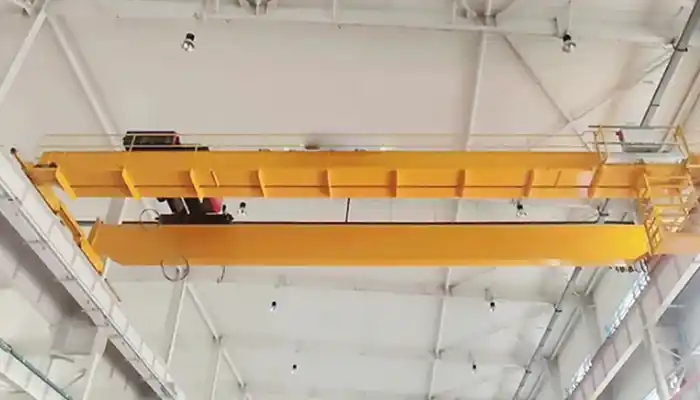
Before you send an RFQ to suppliers:
1. Get your site voltage confirmed. UAE uses 380V, 400V, or 415V – different sites have different actual voltages. Ask your site electrician for a written confirmation before specifying motors.
2. Don't just say "Ex-proof". Provide the actual Zone (e.g., Zone 1, Zone 2), gas group (e.g., IIA, IIB, IIC), and T-class (e.g., T3, T4). Suppliers cannot give a correct price without this.
3. Specify "coastal" vs "inland". A crane for Jebel Ali port needs much higher corrosion protection than one for a desert workshop. Ask for C4 or C5 coating if coastal.
4. Provide duty cycle data, not just SWL. For steel and aluminum plants, share: max load, average load, lifts per hour, hours per shift, shifts per day. This determines FEM/ISO duty class and affects the crane's structural design and price significantly.
5. Check headroom. Many UAE factories have low roof clearance. Always measure from rail to obstruction – this can force a low-headroom (European) design.
6. Ask about VFD as standard. For applications requiring precision (most UAE manufacturing and steel), VFD travel and hoist are highly recommended. Some suppliers quote with fixed speed unless you ask.
🇸🇦 EOT Crane Saudi Arabia
Saudi Arabia has one of the broadest heavy-industrial crane markets in the GCC. Petrochemical plants, steel production, mining, cement, heavy fabrication, manufacturing, renewable-energy projects, and infrastructure development can all require EOT cranes. Compared with a typical warehouse crane, Saudi industrial cranes are more likely to involve large capacities, long spans, multiple shifts, long travel distances, and high utilization.
Saudi Arabia EOT Crane Applications & Technical Data
Petrochemical 10–100+ t
Capacity: 10–100+ t (common: 30t, 50t, 75t, 100t)
Type: Double Girder / Process Crane / Ex-proof
Loads: Vessels, pumps, compressors, process equipment
Span / Lift: 15–35 m+ / 8–25 m
Special: Hazardous area, high utilization, Ex cert, high temp
Mining 20–150+ t
Capacity: 20–150+ t (often 50t, 80t, 100t, 150t)
Type: Heavy-Duty Double Girder
Loads: Crushers, motors, conveyors, mining equipment
Span / Lift: 15–35 m+ / 8–20 m
Special: High duty, heavy loads, dust, wheel/rail loads
Steel Manufacturing 20–200+ t
Capacity: 20–200+ t (typical: 50/10t, 80/20t, 100/25t, 200/50t)
Type: Heavy-Duty Double Girder / Process Crane
Loads: Billets, plates, coils, beams, equipment
Span / Lift: 20–35 m+ / 10–30 m
Special: High duty, VFD, special lifting devices, thermal protection
Cement 10–80 t
Capacity: 10–80 t (common: 20t, 30t, 50t, 80t)
Type: Heavy-Duty EOT / Double Girder
Loads: Motors, gearboxes, process machinery
Span / Lift: 12–30 m / 6–25 m
Special: Dust, maintenance lifting, frequent operation
Heavy Fabrication 20–200+ t
Capacity: 20–200+ t (common: 50t, 80t, 100t, 150t, 200t)
Type: Double Girder / Process Crane
Loads: Structures, vessels, machinery
Span / Lift: 20–35 m+ / 10–25 m
Special: Long loads, synchronized lifting, VFD
Manufacturing 5–50 t
Capacity: 5–50 t (most common: 10t, 16t, 20/5t, 32t, 50t)
Type: Double / European EOT
Loads: Machinery, tooling, production equipment
Span / Lift: 10–30 m / 6–15 m
Special: Positioning & production-cycle requirements
Renewable Energy 10–100+ t
Capacity: 10–100+ t (wind tower components: 30–80t typical)
Type: Double Girder EOT / Heavy-Duty
Loads: Heavy components, production equipment
Span / Lift: 15–35 m / 8–20 m
Special: Large components, precise positioning, VFD
Saudi Arabia Environmental & Operating Data
Ambient temp: 50–55°C (site-dependent)
Dust: Major for inland / mining – IP55+ recommended
Power: 380/400/415 V, 50/60 Hz possible
Duty: Higher than general workshops; calculate from cycles
Span: Often 20–35 m+
Lift height: 8–25 m+
Control: VFD + radio / cabin / PLC
Hazardous: Important for petrochemical
Mechanical: Check wheel loads, rail, end-carriage, runway
🇸🇦 Saudi-Specific Buyer Check
• Mining / cement: provide max load + average load + cycles/hour + hours/day + shifts/day.
• Steel plant: specify load type (billet, coil, plate, beam, structure) and process vs maintenance.
• Petrochemical: provide hazardous-area classification before Ex selection.
Practical Tips for Crane Buyers – Saudi Arabia
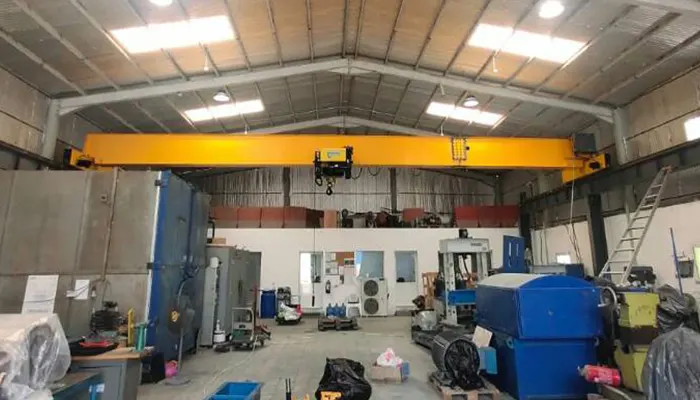
Before you send an RFQ to suppliers:
1. Duty cycle is everything. Saudi industrial cranes often run 24/7. Don't specify a crane based only on SWL – share your actual load spectrum. This determines the FEM/ISO class and has a huge impact on price and lifespan.
2. Temperature derating is real. At 55°C ambient, motor power must be derated. Ask suppliers to confirm their motor sizing for the actual site temperature – not just a standard 40°C design.
3. Dust protection matters. For inland mining and cement sites, ask for IP55 or higher enclosures, sealed contactors, and dust-resistant control panels.
4. Think about "process" vs "maintenance" cranes. A process crane in a steel mill runs every shift with high utilization – it needs a higher duty class and more robust components than a maintenance crane used once per week. Tell your supplier which one you need.
5. Check your building steelwork. Saudi factories often have heavy roofs. Provide column spacing, rail height, and crane runway beam details – this affects span, wheel loads, and end-carriage design.
6. Ask about spare parts and local service. Many Chinese suppliers have service agents in Saudi. Ask for their local service support and spare parts availability before purchase.
🇶🇦 EOT Crane Qatar
Qatar's industrial crane demand is strongly connected with LNG, natural gas, petrochemical equipment, EPC projects, pipe fabrication, ports, and industrial maintenance. Compared with a general manufacturing workshop, Qatar projects may place greater emphasis on process reliability, corrosion protection, smooth positioning, and hazardous-area requirements.
Qatar EOT Crane Applications & Technical Data
LNG Facilities 10–100+ t
Capacity: 10–100+ t (typical: 30t, 50t, 75t, 100t)
Type: Heavy-Duty / Process Crane / Ex-proof
Loads: Process equipment, pumps, compressors, maintenance
Span / Lift: 15–35 m / 8–20 m
Special: Hazardous area, reliability, corrosion protection
Gas Equipment Workshop 5–50 t
Capacity: 5–50 t (common: 10t, 16t, 20t, 30t, 50t)
Type: Double / European EOT
Loads: Compressors, valves, pumps, vessels
Span / Lift: 10–30 m / 6–15 m
Special: Smooth positioning, VFD
Pipe Fabrication 5–50 t
Capacity: 5–50 t (common: 10t, 16t, 25t, 50t)
Type: Double Girder / Workshop Crane
Loads: Pipes, fittings, fabricated sections
Span / Lift: 15–35 m / 6–15 m
Special: Long loads, radio control, positioning
EPC / Maintenance 5–50 t
Capacity: 5–50 t (common: 5t, 10t, 20t, 30t, 50t)
Type: European / Double Girder
Loads: Machinery and process equipment
Span / Lift: 10–30 m / 6–15 m
Special: Low headroom, easy maintenance
Port Maintenance 10–80 t
Capacity: 10–80 t (common: 20t, 30t, 50t, 80t)
Type: Heavy-Duty / Double Girder
Loads: Machinery, pumps, steel sections
Span / Lift: 15–35 m / 8–20 m
Special: Salt-air corrosion, outdoor exposure
Industrial Workshop 1–20 t
Capacity: 1–20 t (most common: 5t, 10t, 16t, 20t)
Type: European / Single / Double
Loads: General machinery and components
Span / Lift: 7.5–30 m / 6–12 m
Special: Compact design, smooth control
Qatar Environmental & Technical Data
Temperature: High; confirm max site
Coastal: Important – coastal locations
Salt air: Corrosion-resistant coating
Power: 400/415 V, 50 Hz typical
Control: VFD, radio, pendant, cabin
Positioning: VFD recommended for precision
Headroom: European / low-headroom if restricted
Hazardous: Critical for LNG/gas
Duty: Based on maintenance or production cycles
🇶🇦 Qatar-Specific Buyer Check
• LNG / gas: provide hazardous-area specification before final Ex quotation.
• Pipe fabrication: longest pipe length, weight, lifting points, hook approach, positioning.
• Coastal maintenance: specify corrosion category and indoor/outdoor/partially enclosed.
Practical Tips for Crane Buyers – Qatar
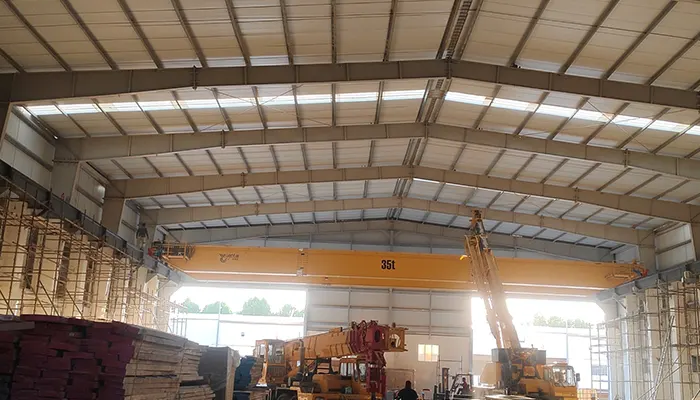
Before you send an RFQ to suppliers:
1. Hazardous area is non-negotiable. For LNG and gas facilities, you must provide the Zone, gas group, and T-class. Many suppliers cannot quote Ex equipment without this. Don't wait until after the commercial order.
2. Prioritize corrosion protection. Qatar's coastal industrial zones have high salt and humidity. Specify C4 or C5 coating, stainless steel hardware, and IP55+ electrical enclosures. This adds cost but avoids premature failure.
3. Pipe fabrication needs long-load handling. If you're buying for a pipe shop, tell the supplier the longest pipe length, typical weight, and number of lifting points. This affects hook approach and whether you need a lifting beam.
4. Ask for "European" design for headroom. Many Qatar workshops have tight headroom. European-style cranes (compact, low-headroom) are often the only practical solution. Specify this upfront.
5. VFD is not a luxury – it's a necessity. For precision positioning of expensive LNG equipment, VFD hoist and travel should be standard. Ask for it in your RFQ.
6. Confirm local inspection requirements. Qatar has specific third-party inspection requirements. Ask your supplier about third-party certification (e.g., Bureau Veritas, TÜV, DNV) and include this in your technical evaluation.
🇴🇲 EOT Crane Oman
Oman's industrial crane requirements have a strong connection with mining, ports, ship repair, steel fabrication, cement, heavy equipment, and industrial maintenance. The combination of coastal industrial areas and inland mining operations means that the crane design can vary significantly depending on location. A port crane may require enhanced corrosion protection, while a mining crane may place greater emphasis on dust protection, heavy-duty mechanical components, and high utilization.
Oman EOT Crane Applications & Technical Data
Mining 10–150+ t
Capacity: 10–150+ t (common: 30t, 50t, 80t, 100t, 150t)
Type: Heavy-Duty Double Girder
Loads: Mining machinery, crushers, motors, processing
Span / Lift: 15–35 m+ / 8–20 m
Special: Dust, heavy loads, high duty, IP protection
Ports 10–100 t
Capacity: 10–100 t (common: 20t, 30t, 50t, 80t, 100t)
Type: Heavy-Duty / Double Girder
Loads: Machinery, steel products, maintenance equipment
Span / Lift: 15–35 m / 8–20 m
Special: Salt air, corrosion, outdoor, C5 coating
Ship Repair 10–100+ t
Capacity: 10–100+ t (common: 20t, 30t, 50t, 80t, 100t)
Type: Heavy-Duty EOT / Double Girder
Loads: Engines, machinery, fabricated sections
Span / Lift: 15–35 m+ / 8–20 m
Special: Corrosion, large loads, positioning, VFD
Steel Fabrication 10–100+ t
Capacity: 10–100+ t (typical: 20/5t, 50/10t, 80/20t)
Type: Double Girder / Heavy-Duty
Loads: Plates, beams, pipes, structures
Span / Lift: 15–35 m+ / 8–20 m
Special: Long loads, VFD, lifting beams, high utilization
Cement 10–80 t
Capacity: 10–80 t (common: 20t, 30t, 50t, 80t)
Type: Heavy-Duty EOT / Double Girder
Loads: Motors, gearboxes, process equipment
Span / Lift: 12–30 m / 6–25 m
Special: Dust, maintenance cycles, IP protection
Industrial Maintenance 1–20 t
Capacity: 1–20 t (most common: 2t, 5t, 10t, 16t, 20t)
Type: Workshop / European EOT
Loads: Pumps, motors, gearboxes
Span / Lift: 7.5–30 m / 6–12 m
Special: Compact, maintenance-friendly
Heavy Equipment Workshop 5–50 t
Capacity: 5–50 t (common: 10t, 16t, 20t, 30t, 50t)
Type: Double / Heavy-Duty EOT
Loads: Construction and industrial machinery
Span / Lift: 10–30 m / 6–15 m
Special: Radio control, VFD, duty rating
Oman Environmental & Technical Data
Coastal exposure: Major for ports / coastal – C4/C5 coating
Salt atmosphere: Corrosion-resistant coating + galvanized/stainless
Temperature: Confirm max site – 50°C+ common
Desert dust: Appropriate enclosure & protection (IP55+)
Outdoor: Outdoor-rated electrical & weather protection
Power: Confirm site voltage/frequency
Duty: Heavy-duty if frequent lifting
Mechanical: Check wheel loads & runway
Control: Radio / pendant / cabin / PLC
🇴🇲 Oman-Specific Buyer Check
• Port / ship repair: state salt-air exposure and outdoor operation – affects coating & electrical spec.
• Mining: provide dust conditions, operating hours, load spectrum, maintenance schedule.
• Steel fabrication: provide max length & weight of steel assemblies – not only SWL.
Practical Tips for Crane Buyers – Oman
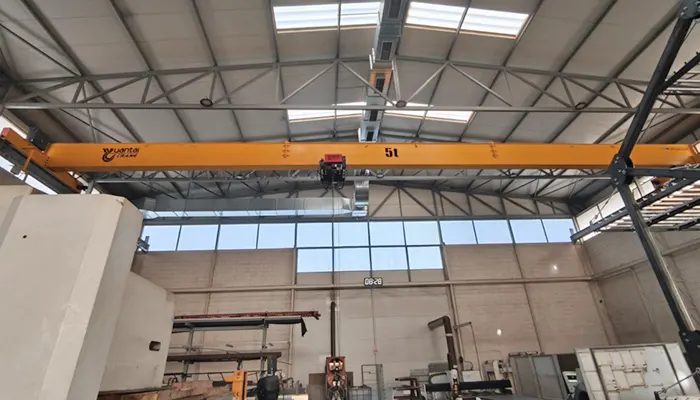
Before you send an RFQ to suppliers:
1. Location determines the design. A crane for Sohar port needs totally different protection than one for an inland mining site. Clearly state the site location – coastal or inland – in your RFQ.
2. Mining cranes need heavy-duty mechanicals. If buying for mining, provide dust density, operating hours, and typical loads. Ask for heavier wheels, larger shafts, and dust-sealed gearboxes.
3. Port cranes need marine-grade protection. For port applications, specify C5-M coating, stainless steel or galvanized hardware, and IP56 or higher for electricals. Don't accept standard industrial coating.
4. Steel fabrication requires precision. Share not just the crane capacity (SWL) but also the longest steel assembly you will lift, its weight distribution, and required positioning tolerance. This affects whether you need synchronized hoists or a lifting beam.
5. Ask about crane runway compatibility. Many Omani factories have existing runways. Provide the rail size, column spacing, and existing wheel load limits to your supplier.
6. Consider spare parts logistics. Oman has good port access but smaller local inventory. Ask suppliers to include a recommended spare parts kit and confirm lead time for critical components.
🇧🇭 EOT Crane Bahrain
Bahrain has a well-established industrial base with a strong focus on aluminum production (smelting and downstream processing), shipbuilding and repair, petrochemicals, and logistics. Given its island geography, corrosion protection is a critical design factor for EOT cranes operating in coastal and marine environments.
Bahrain EOT Crane Applications & Technical Data
Aluminum Smelting 10–100+ t
Capacity: 10–100+ t (pot tending: 20–50t, anode: 30–60t)
Type: Heavy-Duty / Special Process Crane
Loads: Pot tending, anode handling, molten metal equipment
Span / Lift: 15–35 m / 8–20 m
Special: High temp, frequent cycling, process reliability, VFD
Shipbuilding / Repair 10–100+ t
Capacity: 10–100+ t (common: 20t, 30t, 50t, 80t, 100t)
Type: Double Girder / Heavy-Duty EOT
Loads: Ship sections, engines, equipment, fabricated steel
Span / Lift: 15–35 m+ / 8–25 m
Special: Salt-air corrosion, outdoor, large components, C5 coating
Petrochemical 5–80 t
Capacity: 5–80 t (common: 10t, 20t, 30t, 50t)
Type: Double Girder / Ex-proof
Loads: Vessels, pumps, compressors, process equipment
Span / Lift: 10–30 m / 6–15 m
Special: Hazardous area, corrosion, maintenance lifting
Logistics & Warehousing 3–20 t
Capacity: 3–20 t (common: 5t, 10t, 16t, 20t)
Type: Single / Double Girder
Loads: Steel products, aluminum products, industrial goods
Span / Lift: 10–30 m / 6–12 m
Special: Building constraints, frequency of operation
Industrial Workshops 1–20 t
Capacity: 1–20 t (most common: 2t, 5t, 10t, 16t)
Type: European / Single / Double
Loads: General machinery and maintenance parts
Span / Lift: 7.5–25 m / 6–10 m
Special: Compact design, low maintenance
Bahrain Environmental & Technical Data
Coastal / Salt air: Critical factor – island location
Temperature: High; confirm max site temperature
Power: 400/415 V, 50 Hz typical
Coating: C4/C5 corrosion protection recommended
Electrical: Enclosed cabinets, IP55 or higher
Hazardous: Required for petrochemical applications
Control: Radio / pendant / cabin as required
Duty: Based on process cycle requirements
🇧🇭 Bahrain-Specific Buyer Check
• Aluminum smelting: specify if crane is for pot tending, anode handling, or general maintenance – each has very different design requirements.
• Ship repair / coastal: provide corrosion protection category and outdoor exposure details.
• All applications: confirm actual voltage and frequency at site (400 V or 415 V, 50 Hz).
Practical Tips for Crane Buyers – Bahrain
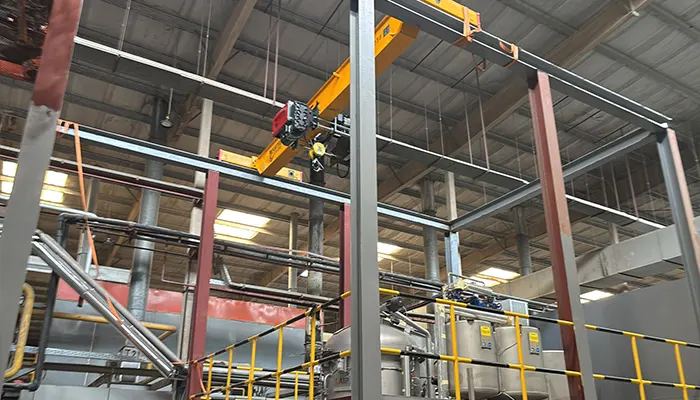
Before you send an RFQ to suppliers:
1. Corrosion is your biggest risk. Bahrain is an island with high humidity and salt. Specify C5-M coating, stainless steel hardware, and IP56 electrical enclosures. This should be non-negotiable for any coastal application.
2. Aluminum smelting cranes are specialized. If you're buying for a pot line, this is not a standard crane – it requires heat shielding, special insulation, and precise control. Only suppliers with aluminum industry experience should be considered.
3. Ship repair needs heavy lifting + marine protection. The combination of large loads (engines, ship sections) and salt air requires both high capacity and robust protection. Ask for a heavy-duty design with VFD for precise positioning of expensive marine equipment.
4. Check voltage carefully. Some Bahrain sites use 400V, others 415V. Incorrect voltage means motor replacement – confirm before ordering.
5. Get a corrosion warranty. Ask suppliers to include a corrosion-related warranty in their proposal. Reputable suppliers will offer this for Bahrain projects.
6. Consider professional shipping survey. Since Bahrain is a port hub, many cranes arrive by sea. Engage an independent surveyor for pre-shipment inspection and unloading supervision.
🇰🇼 EOT Crane Kuwait
Kuwait's EOT crane demand is driven primarily by oil and gas upstream/downstream, petrochemicals, refining, and heavy industrial fabrication. The market places high priority on reliability, hazardous-area compliance, and high-temperature operation, especially for equipment used in refinery and processing environments.
Kuwait EOT Crane Applications & Technical Data
Oil Refineries 10–100+ t
Capacity: 10–100+ t (common: 30t, 50t, 75t, 100t)
Type: Process Crane / Double Girder / Ex-proof
Loads: Process vessels, pumps, compressors, exchangers
Span / Lift: 15–35 m / 8–25 m
Special: Hazardous area, high utilization, Ex certification, high temp
Petrochemical 5–80 t
Capacity: 5–80 t (common: 10t, 20t, 30t, 50t, 80t)
Type: Double Girder / Ex-proof
Loads: Process equipment, pumps, compressors
Span / Lift: 10–30 m / 6–18 m
Special: Hazardous area, corrosion, continuous operation
Heavy Fabrication 10–100+ t
Capacity: 10–100+ t (typical: 20/5t, 50/10t, 80/20t, 100/25t)
Type: Heavy-Duty Double Girder
Loads: Steel structures, vessels, pipes, modules
Span / Lift: 15–35 m+ / 8–20 m
Special: Long spans, heavy lifts, VFD control
Manufacturing 3–50 t
Capacity: 3–50 t (most common: 5t, 10t, 16t, 20t)
Type: European / Single / Double
Loads: Machinery, tooling, production equipment
Span / Lift: 7.5–30 m / 6–12 m
Special: Headroom, positioning accuracy
Maintenance Workshops 1–20 t
Capacity: 1–20 t (common: 2t, 5t, 10t, 16t)
Type: Workshop / European EOT
Loads: Pumps, motors, gearboxes, equipment parts
Span / Lift: 7.5–25 m / 6–10 m
Special: Low maintenance, ease of service
Kuwait Environmental & Technical Data
Ambient temp: 50–55°C – critical for desert sites
Dust / sand: IP-rated enclosures, sealed components (IP55+)
Power: 400/415 V, 50 Hz typical
Coastal exposure: Important for ports and coastal sites
Hazardous: Critical for oil/gas/petrochemical
Control: VFD + radio / cabin / PLC
Duty: Often high due to 24/7 process environments
Mechanical: Check wheel loads, runway design
🇰🇼 Kuwait-Specific Buyer Check
• Refinery / petrochemical: provide full hazardous-area classification (Zone, gas group, T-class) before Ex design.
• Heavy fabrication: provide max load + average load + lifting cycles to determine correct duty rating.
• Coastal locations: specify if crane is indoor, outdoor, or partially enclosed – affects coating specification.
Practical Tips for Crane Buyers – Kuwait
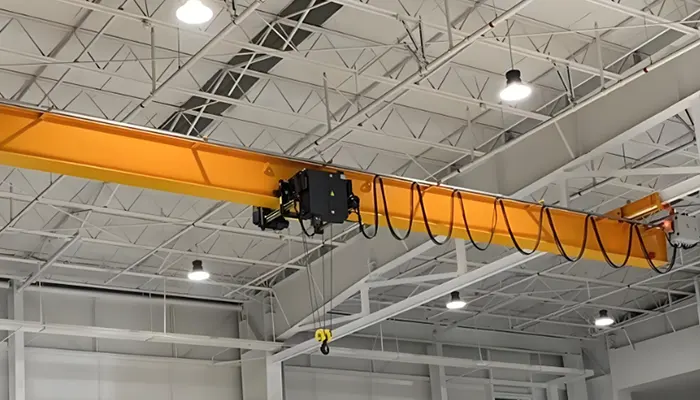
Before you send an RFQ to suppliers:
1. Hazardous area classification is a deal-breaker. In Kuwait's refinery and petrochemical sector, you cannot proceed without providing Zone, gas group, and T-class. Suppliers cannot design or price Ex equipment without this. Get it from your project HSE team early.
2. High ambient temp affects everything. Kuwait's summer temperatures can exceed 55°C. Ensure suppliers use class F or H insulation, high-temp grease, and oversized motors with proper derating.
3. Desert dust is aggressive. For inland sites, ask for positive-pressure control panels, sealed gearboxes, and IP55+ for all electrical components.
4. Refinery cranes need "process" duty not "maintenance" duty. A crane in a refinery workshop may run multiple times per day – this is not the same as a maintenance crane used weekly. Clearly state your expected operating hours and cycles.
5. Ask about third-party inspection. Kuwait often requires KNPC-approved or KOC-approved inspection bodies. Confirm with your supplier that they can work with your required third-party.
6. Plan for long-lead Ex components. Ex-rated motors and electrical panels have longer lead times. Order early and ask for manufacturing milestones.
🇹🇷 EOT Crane Turkey
Turkey has a large and diverse industrial economy, with EOT crane demand across steel production, automotive manufacturing, heavy machinery fabrication, cement, mining, construction equipment, and logistics. The Turkish market is both a manufacturing base and a strategic gateway between Europe, the Middle East, and Central Asia, so crane designs often need to meet European (FEM, DIN) standards as well as regional requirements.
Turkey EOT Crane Applications & Technical Data
Steel Production 20–200+ t
Capacity: 20–200+ t (typical: 50/10t, 80/20t, 100/25t, 200/50t)
Type: Heavy-Duty Double / Process Crane
Loads: Billets, slabs, coils, scrap, process equipment
Span / Lift: 20–40 m+ / 10–30 m
Special: High temp, high utilization, VFD, special grabs
Automotive Manufacturing 3–50 t
Capacity: 3–50 t (common: 5t, 10t, 16t, 20/5t, 30t)
Type: European / Double Girder
Loads: Press dies, assemblies, machinery, tooling
Span / Lift: 10–30 m / 6–12 m
Special: Precise positioning, smooth control, high cycle
Heavy Machinery 10–100+ t
Capacity: 10–100+ t (common: 20/5t, 50/10t, 80/20t)
Type: Heavy-Duty Double Girder
Loads: Construction equipment, engines, fabricated parts
Span / Lift: 15–35 m+ / 8–20 m
Special: Long loads, VFD, lifting beams
Cement & Mining 10–80 t
Capacity: 10–80 t (common: 20t, 30t, 50t, 80t)
Type: Heavy-Duty EOT / Double Girder
Loads: Motors, gearboxes, conveyors, crusher parts
Span / Lift: 12–30 m / 6–25 m
Special: Dust, maintenance lifting, heavy loads
Logistics & Warehousing 3–20 t
Capacity: 3–20 t (common: 5t, 10t, 16t, 20t)
Type: Single / Double Girder
Loads: Steel, machinery, industrial products
Span / Lift: 10–30 m / 6–12 m
Special: Building constraints, operational frequency
General Workshops 1–20 t
Capacity: 1–20 t (most common: 2t, 5t, 10t, 16t)
Type: European / Single / Double
Loads: General machinery and maintenance parts
Span / Lift: 7.5–25 m / 6–10 m
Special: Compact, energy-efficient designs
Turkey Environmental & Technical Data
Standards: FEM / DIN / ISO commonly required
Ambient temp: Varies by region; confirm site conditions
Power: 380/400 V, 50 Hz typical
Earthquake: Seismic requirements may apply
Control: VFD + radio / pendant / cabin / PLC
Duty: Based on load spectrum and cycles
CE marking: Often required for EU-bound or EU-financed projects
Mechanical: Check wheel loads, rail, runway capacity
🇹🇷 Turkey-Specific Buyer Check
• Steel / heavy industry: provide detailed load spectrum (max load, average load, cycles) – critical for duty classification.
• Standards: specify if FEM, DIN, or CE marking is required for your project.
• Seismic: if crane is in a high-risk zone, provide seismic design parameters.
Practical Tips for Crane Buyers – Turkey
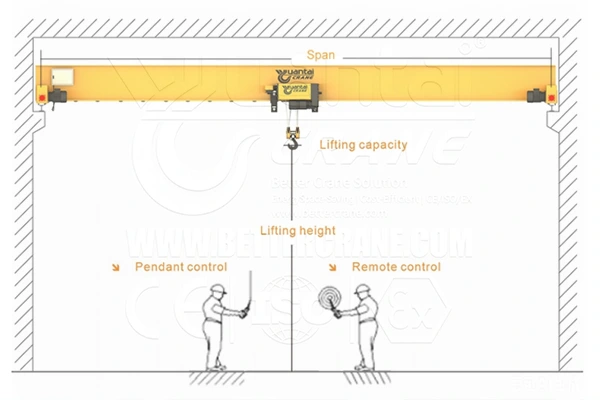
Before you send an RFQ to suppliers:
1. Know your standards. Turkey often requires FEM or DIN compliance. Some buyers also request CE marking. State this clearly in your RFQ – it affects the design and cost.
2. Steel industry cranes need high duty. Turkey's steel sector runs intense operations. Provide detailed load spectrum (max load, average load, lifts/hour, shifts/day) to select the correct FEM class (A3–A8).
3. Automotive needs precision and speed. For press shop cranes, high cycle rates and precise positioning are critical. Specify VFD for both hoist and travel, and consider anti-sway control for expensive dies.
4. Seismic design may be mandatory. Turkey is in a seismic zone. If the crane is in a high-risk area, ask suppliers to provide seismic design calculations and compliance with local regulations.
5. Turkey is a crane manufacturing hub. Many local suppliers have manufacturing plants in Turkey. Buying locally can reduce shipping costs and lead times, but also check if Chinese suppliers offer competitive pricing and similar quality.
6. Check if import duties apply. If you're importing from China, check current customs duties and VAT rates for industrial cranes in Turkey. This can add 10–30% to the landed cost.
🇪🇬 EOT Crane Egypt
Egypt has a large and growing industrial base, driven by infrastructure mega-projects, cement production, steel manufacturing, petrochemicals, ports, and logistics. The country's strategic location as a trade hub means that EOT cranes are required across heavy industry, construction-related fabrication, and port maintenance. Design considerations often include desert dust, high ambient temperatures, and coastal corrosion for port facilities.
Egypt EOT Crane Applications & Technical Data
Steel Manufacturing 20–200+ t
Capacity: 20–200+ t (typical: 50/10t, 80/20t, 100/25t, 200/50t)
Type: Heavy-Duty Double Girder
Loads: Billets, plates, coils, structures, equipment
Span / Lift: 20–35 m+ / 10–25 m
Special: High utilization, VFD, special lifting devices
Cement 10–80 t
Capacity: 10–80 t (common: 20t, 30t, 50t, 80t)
Type: Heavy-Duty EOT / Double Girder
Loads: Motors, gearboxes, crushers, process equipment
Span / Lift: 12–30 m / 6–25 m
Special: Dust, maintenance lifting, high temperature, IP protection
Petrochemical 5–80 t
Capacity: 5–80 t (common: 10t, 20t, 30t, 50t, 80t)
Type: Double Girder / Ex-proof
Loads: Vessels, pumps, compressors, process equipment
Span / Lift: 10–30 m / 6–18 m
Special: Hazardous area, corrosion, continuous operation
Ports & Ship Repair 10–100+ t
Capacity: 10–100+ t (common: 20t, 30t, 50t, 80t, 100t)
Type: Heavy-Duty / Double Girder
Loads: Ship machinery, steel sections, port equipment
Span / Lift: 15–35 m / 8–20 m
Special: Salt air, outdoor, corrosion protection, C5 coating
Heavy Fabrication 10–100+ t
Capacity: 10–100+ t (typical: 20/5t, 50/10t, 80/20t)
Type: Double Girder / Heavy-Duty
Loads: Structures, pipes, modules, equipment
Span / Lift: 15–35 m+ / 8–20 m
Special: Long loads, VFD, positioning accuracy
Manufacturing 3–50 t
Capacity: 3–50 t (most common: 5t, 10t, 16t, 20t)
Type: European / Single / Double
Loads: Machinery, tooling, production equipment
Span / Lift: 7.5–30 m / 6–12 m
Special: Headroom, smooth control, maintenance-friendly
Egypt Environmental & Technical Data
Ambient temp: 45–55°C depending on region
Dust / desert: Enclosed cabinets, high IP rating (IP55+)
Coastal: Major for ports and Suez Canal zone
Power: 380/400/415 V, 50 Hz – confirm site
Hazardous: Required for petrochemical sites
Control: VFD + radio / pendant / cabin / PLC
Duty: Based on load spectrum and operating hours
Mechanical: Check runway design and wheel loads
🇪🇬 Egypt-Specific Buyer Check
• Port / Suez Canal area: specify salt-air exposure and outdoor operation – affects coating and electrical specification.
• Desert inland: provide dust conditions and maximum ambient temperature – affects motor sizing and enclosure selection.
• Steel / cement: provide detailed duty cycle (loads, cycles, hours, shifts) to select correct FEM/ISO class.
Practical Tips for Crane Buyers – Egypt
Before you send an RFQ to suppliers:
1. Location matters. Egypt has huge regional variation – a crane for Alexandria port needs marine corrosion protection, while one for a cement plant in the desert needs dust protection and high-temp design. Clearly state the site location.
2. Mega-projects need standardization. For large infrastructure projects (e.g., New Administrative Capital, Ras El-Hekr), consider standardizing crane types across multiple workshops to simplify spare parts and maintenance.
3. Cement and steel duty cycles are intense. These sectors often run 24/7. Provide exact load spectra so suppliers can select the right FEM/ISO class (e.g., A5 vs A7 vs A8). A wrong class selection leads to premature failure.
4. Port cranes need C5-M coating. For Suez Canal and Mediterranean ports, salt air is aggressive. Specify C5-M coating, stainless steel hardware, and IP56 electricals. Don't compromise.
5. Check voltage at the actual site. Egyptian sites may vary between 380V, 400V, and 415V. Confirm with your site electrician before ordering motors.
6. Consider local logistics and customs. Egypt has specific import procedures for heavy machinery. Work with your supplier to ensure they have experience with Egyptian customs clearance and can provide the required technical documentation (e.g., COC, engineering drawings, test certificates).
7. Ask about on-site installation supervision. Many Chinese suppliers offer commissioning and training services. Include this in your RFQ to ensure proper installation and handover.
Your Trusted Overhead Crane Manufacturer & Supplier
Built Around Your Load, Your Site, Your Project - Yuantai Cranes
Less Downtime. Less Rework. Lower Total Cost
Why Choose Yuantai for EOT Cranes in the Middle East?
For a Middle East industrial project, choosing an EOT crane is not simply a matter of selecting a lifting capacity. A 10-ton crane working
eight hours a day inside a controlled workshop can have very different requirements
from a 10-ton crane operating two or three shifts in a steel plant at 50°C,
with desert dust and frequent lifting cycles.
The crane structure, hoist, motors, brakes, gearboxes, wheels, electrical cabinets,
cables, controls, coating system, and duty classification all need to match the actual working conditions. Yuantai designs EOT cranes around these conditions – not treating every project as a standard workshop crane. For projects in the UAE, Saudi Arabia, Qatar, Oman, Kuwait, and other Middle East markets,
we deliver engineered reliability, site-specific customization, and long-term value.
Designed for Harsh Middle East Environments – Heat, Dust, Salt & Humidity
Middle East projects can combine several demanding conditions at the same time. A crane installed in an inland workshop may mainly require temperature and dust protection, while a crane near a port or coastal facility may additionally require corrosion protection and outdoor electrical protection.
Typical site conditions and engineering responses:
- High temperature – Motor heating, VFD derating, electrical component temperature. Solution: Temperature-rated components, thermal verification, suitable cooling.
- Desert dust – Dust entering motors, cabinets and controls. Solution: Appropriate IP protection, enclosed cabinets, protected cable entries.
- Salt air – Corrosion of structural and electrical components. Solution: C4/C5 coating system, galvanizing, corrosion-resistant hardware.
- High humidity – Condensation and electrical insulation. Solution: Anti-condensation heaters where required.
- Outdoor exposure – Rain, UV, dust and temperature variation. Solution: Outdoor-rated electrical and mechanical protection.
- High utilization – Motor, brake, gearbox and structural fatigue. Solution: Correct ISO/FEM duty classification and component sizing.
- Hazardous area – Ignition risk. Solution: Project-specific Ex equipment and certification.
Yuantai's approach: We evaluate the complete site environment – not just the lifting capacity – to ensure every component is right-sized for the actual conditions.
High Ambient Temperature – Engineering for 50–55°C Summer Conditions
High summer temperatures can affect motors, brakes, VFDs, control cabinets, cables, lubricants, and electrical components. If a project specifies an ambient temperature approaching 50–55°C, this value must be included in the crane technical specification before equipment is selected.
Engineering measures for high-temperature environments:
- Hoisting motor – Rated for specified ambient temperature and operating duty
- Travel motors – Thermal load checked under repeated acceleration and braking
- VFD – Actual ambient-temperature derating and enclosure conditions verified
- Control cabinet – Ventilation, heat dissipation or cooling where required
- Brake – Thermal capacity checked for lifting cycle and ambient conditions
- Gearbox – Lubricant and thermal performance at expected temperature
- Cables – Temperature rating appropriate to installation
- Insulation – Motor insulation system suitable for operating temperature
- Lubricants – Suitable viscosity and temperature range
- Electrical components – Manufacturer's allowable ambient temperature verified
Buyer example: A specification stating "Ambient temperature: 55°C" is more useful than simply "20-ton EOT crane, 20 m span." However, the buyer should also provide installation location, operating hours, and lifting cycles.
Best RFQ example:
"20 ton / 20 m span / 10 m lift / 55°C ambient / 10 cycles per hour / 16 h per day"
Important: 55°C ambient temperature does not automatically mean every crane component must be rated to 55°C without further analysis. Component derating, enclosure heat dissipation, and the actual duty cycle should all be checked.
Desert Dust and Sand Protection – IP Ratings and Enclosure Strategies
Fine dust and wind-blown sand can affect electrical equipment, motors, brakes, and control systems. For cranes operating in desert or dusty industrial environments, Yuantai considers:
- IP55/IP65 electrical enclosures where required
- Enclosed electrical cabinets
- Protected cable-entry systems
- Dust-resistant electrical components
- Suitable motor protection
- Sealed or protected control devices
- Protected conductor or festoon systems
- Appropriate cable routing
- Accessible maintenance points
- Inspection and cleaning provisions
IP Protection – What should the buyer specify?
The buyer should not simply write "IP65 required" without explaining
the installation conditions. The appropriate enclosure protection depends on dust, water exposure, heat dissipation, maintenance requirements, and equipment location.
Examples by installation type:
- Indoor workshop – Provide dust level and ventilation details
- Outdoor crane – Provide dust + rain + UV + temperature details
- Desert yard – Provide wind-blown sand and dust exposure details
- Cement plant – Provide fine process dust details
- Mining facility – Provide dust type and concentration details
- Coastal industrial plant – Provide dust + humidity + salt exposure details
For an outdoor crane, the RFQ should clearly state whether the equipment is exposed to wind-blown sand, rain, direct sunlight, and large temperature fluctuations.
Coastal and Salt-Air Corrosion – C4/C5 Coating and Corrosion-Resistant Hardware
Cranes installed near ports, shipyards, coastal factories, desalination facilities, petrochemical plants, and marine logistics areas can experience humidity and salt-air exposure. This is particularly relevant to parts of the UAE, Qatar, Oman, and coastal Saudi Arabia.
Corrosion protection should be considered for the entire crane – not treated as a paint-color decision.
Possible corrosion-protection measures:
- Structural steel – Multi-layer coating system
- Surface preparation – Specified blasting/preparation grade
- Exposed steel – C4/C5 coating system where required
- Fasteners – Stainless or corrosion-resistant hardware where appropriate
- Small components – Galvanized treatment where practical
- Electrical cabinets – Corrosion-resistant enclosure
- Cable systems – Protected cable/festoon arrangement
- Outdoor components – Additional weather and corrosion protection
The coating system should be selected according to the corrosivity category, exposure level, expected service life, and project coating specification. A crane several kilometers inland should not automatically receive the same corrosion system as a crane installed directly beside a marine terminal.
Buyer example: Instead of "Paint: standard," provide:
"Installation: coastal industrial area, approximately 500 m from sea, outdoor/semi-outdoor,
high humidity and salt exposure."
Heavy-Duty Industrial Operation – Capacity Alone Does Not Define "Heavy Duty"
A crane's capacity does not by itself determine whether it is "heavy duty." Consider two 50-ton cranes:
Crane A – 50 ton capacity, 8 lifting cycles/day, maintenance application, 8 operating hours/day
Crane B – 50 ton capacity, 15 lifting cycles/hour, 16 operating hours/day, steel production, multiple shifts
Although both cranes are rated 50 tons, their mechanical and electrical requirements can be significantly different.
Parameters used to determine duty:
- Rated capacity – e.g., 50 ton
- Average lifted load – e.g., 30 ton
- Maximum lifted load – e.g., 50 ton
- Lifting cycles/hour – e.g., 15
- Operating hours/day – e.g., 16 h
- Shifts/day – e.g., 2
- Working days/year – e.g., 300
- Average lifting distance – e.g., 8 m
- Average travel distance – e.g., 30 m
- Required service life – Project-specific
- Working environment – e.g., steel production
- Control frequency – Frequent start/stop
These parameters help determine the appropriate ISO/FEM duty classification, motor rating, brake selection, gearbox rating, wheel loads, and structural design.
Heavy-Duty Mechanical Configuration – Double Girder, Open Winch, VFD & More
For higher-capacity and high-utilization applications, Yuantai can engineer:
- Double-girder bridge structures – Standard for capacities above 20 tons
- Heavy-duty wire rope hoists
- Open-winch hoisting mechanisms – Preferred for very high capacities and process cranes
- Heavy-duty motors
- Heavy-duty gearboxes
- Higher-performance brakes
- VFD-controlled lifting – Smooth acceleration, precise positioning
- VFD-controlled trolley and crane travel – Reduced mechanical shock
- Heavy-duty wheels and end carriages
- Radio remote control
- Operator cabin
- PLC control – For automation, diagnostics, and process integration
- Synchronized lifting – For tandem or multi-point loads
- Position monitoring
- Limit-control systems
- Overload protection – Load cells and limit switches for safety
For cranes above 20 tons, Yuantai generally starts with a double-girder configuration for heavy-duty applications. The final configuration is determined by the project load, span, duty, lifting height, and structural requirements.
ISO / FEM Duty Classification – Not Just a Label, but an Engineering Calculation
One common purchasing mistake is to specify "Heavy duty — A8" without providing the operating data needed to justify that classification. Duty classification should be established from the load spectrum and operating frequency.
The manufacturer should consider:
- Average load
- Maximum load
- Number of lifting cycles
- Operating hours
- Load distribution
- Travel frequency
- Acceleration and braking cycles
- Expected service life
Depending on the applicable design methodology, the crane may be classified using ISO/M or FEM classifications. These classifications should not simply be treated as interchangeable labels.
Buyer example: A maintenance crane that lifts a motor occasionally may require a substantially different duty classification from a production crane lifting steel products throughout a 24-hour operation.
Therefore, an EPC specification should ideally state the actual operating cycle and require the supplier to confirm the resulting duty classification in the technical proposal.
Engineering for the Actual Site – Not Just the Tonnage
A specification such as "20-ton EOT crane × 20 m span × 10 m lift" is a useful starting point, but it is not yet a complete engineering specification.
The following information can change the crane design and price:
- Capacity – Hoist and bridge structure
- Span – Girder design and wheel loads
- Lifting height – Drum, rope and hoist arrangement
- Load type – Hook, C-hook, magnet, grab or lifting beam
- Load spectrum – Duty classification
- Lifting cycles – Motor and brake sizing
- Operating hours – Thermal and service-life requirements
- Ambient temperature – Motor/electrical selection
- Dust – Enclosure and equipment protection
- Coastal exposure – Coating and corrosion protection
- Hazardous area – Ex equipment and certification
- Power supply – Motors, VFDs and electrical system
- Control method – Pendant, radio, cabin or PLC
- Building structure – Runway and wheel-load requirements
- Installation conditions – Crane dimensions and maintenance access
This is why Yuantai approaches Middle East projects from the working conditions first – and the crane model second.
Why This Matters to the Buyer – Avoid Under-Specification, Over-Specification & Late Changes
A detailed technical specification helps avoid three common problems:
- Under-specification – The crane is not properly designed for the actual environment or duty.
- Over-specification – Expensive features are included that the application does not actually require.
- Quotation changes later – Critical information such as 55°C ambient temperature, hazardous-area classification, 415 V power supply, or coastal exposure is discovered after the technical offer has already been prepared.
Yuantai's approach is simple:
Define the load → define the operating cycle → define the environment → define the building → define the electrical system → then select the crane configuration.
For Middle East industrial projects, this approach provides a more reliable basis for selecting the EOT crane structure, hoist, motors, brakes, electrical protection, control system, corrosion protection, and duty classification.
Yuantai – Your Trusted EOT Crane Manufacturer for the Middle East
Reliable. Customized. Compliant. Delivered on Time.
International Standards & Certifications for Middle East EOT Cranes
For an EOT crane project in the Middle East, standards and certifications should be agreed before the crane is designed and manufactured. A crane can have the correct lifting
capacity and span but still fail a project review if the design standard, electrical system,
hazardous-area protection, inspection procedure, or documentation does not match the project specification.
Yuantai cranes are manufactured in China with Chinese GB/T standards as the core engineering and
manufacturing basis. For export projects, the design can then be reviewed against the customer's required international standards, project specifications, electrical requirements, and certification requirements.
For buyers, the important point is not to ask only for "international standards" – specify which standard, for which part of the crane, and what documents are required. Check our CE, ISO and other certificaitons
Chinese GB/T Standards – The Core Engineering & Manufacturing Foundation
Yuantai uses applicable Chinese GB/T standards as the foundation for crane engineering, manufacturing, component selection, inspection, and testing.
Areas covered by applicable Chinese standards:
- Crane design
- Structural calculations
- Steel fabrication
- Hoisting machinery
- Motors and electrical equipment
- Brakes
- Wheels and gearboxes
- Safety devices
- Welding and fabrication
- Electrical control systems
- Load testing and inspection
Important: The actual GB/T standard numbers should be identified according to the crane type and contract specification – rather than putting one general standard number on every project.
For an overseas buyer, this is important because "Chinese standard crane" does not mean one fixed design. A 10-ton workshop crane, a 50-ton steel-plant crane, and a 200-ton process crane will have different engineering requirements.
How to Specify the Design Basis – A Better RFQ Example
Instead of writing "Supply one 50-ton EOT crane according to international standards," a better RFQ specification would state:
- Capacity: 50 ton
- Span: 25 m
- Lifting height: 12 m
- Working hours: 8–16 hours/day
- Lifting cycles: to be confirmed
- Application: steel fabrication
- Indoor/outdoor: indoor
- Ambient temperature: up to 50°C
- Power supply: 415 V, 50 Hz, 3 Ph
- Design basis: applicable Chinese GB/T standards, with specified international requirements where applicable
- Documentation: GA drawing, calculations, electrical drawings, component list, FAT and test records
This gives the manufacturer enough information to design the crane – rather than simply selecting a standard model from a catalog.
Chinese Standards vs International Standards – ISO, FEM, DIN, IEC, EN, CMAA
Middle East projects may also refer to ISO, FEM, DIN, IEC, EN, CMAA, or the customer's own engineering standards. These standards should not be described as automatically interchangeable – they often address different aspects of crane design and operation.
Practical approach – establish a design basis document:
- Crane structure – Yuantai: GB/T standards | Project may require: ISO / FEM / DIN / project specification
- Duty classification – Yuantai: Chinese design basis | Project may require: ISO/FEM classification if specified
- Electrical system – Yuantai: GB/T / applicable IEC requirements | Project may require: IEC / EN / customer standard
- Motors – Yuantai: Chinese standards | Project may require: IEC / customer-approved brand
- Control system – Yuantai: Chinese engineering practice | Project may require: IEC / project specification
- Safety devices – Yuantai: GB/T requirements | Project may require: ISO / EN / project requirements
- Inspection – Yuantai: Chinese inspection requirements | Project may require: Customer ITP / third-party inspection
- Explosion protection – Yuantai: Chinese Ex requirements | Project may require: CNEX / ATEX / IECEx as specified
- Documentation – Yuantai: Chinese manufacturing records | Project may require: EPC document requirements
The buyer should ask the manufacturer to clearly state which standards apply to each engineering area.
CE Compliance – What It Means and What to Specify
CE is one of the most frequently requested requirements for exported industrial equipment. However, CE is not the same thing as FEM, ISO, or a crane duty classification. CE relates to conformity with applicable European Union requirements.
For an EOT crane project, the buyer should clarify whether the project requires:
- CE marking
- Declaration of Conformity
- Technical documentation
- Risk assessment
- Electrical documentation
- Safety documentation
- Operating instructions
- Test records
- Specific European standards
Example – CE requirement for a UAE EPC project:
Suppose an EPC contractor writes "Crane shall be CE certified." Before ordering,
the buyer should ask: Which CE requirements are included in the project specification?
- Is CE marking required on the complete crane?
- Which European legislation applies?
- Are specific EN standards listed?
- Is a Declaration of Conformity required?
- Is a third-party conformity assessment required?
- What technical documents must be submitted for approval?
What the buyer should request:
For a CE-required project, include a document list in the RFQ, for example:
"CE documentation required: Declaration of Conformity, technical documentation, electrical drawings,
safety information, operating manual, test records, and applicable component documentation."
ISO Certification and Quality Control – Inspection & Test Plans (ITP)
ISO certification is different from CE certification. For a crane buyer, ISO is most useful when it is connected to the manufacturer's quality-management and production-control system.
A properly controlled crane manufacturing process should include inspection at different stages rather than relying only on a final inspection before shipment.
Typical quality-control points:
Raw Material: Steel grade verification, material certificates, incoming inspection, traceability where required
Structural Fabrication: Cutting and preparation, welding procedure control, welder qualification where required, dimensional inspection, weld inspection, girder straightness and alignment
Mechanical Assembly: Gearbox inspection, wheel alignment, brake inspection, hoist assembly, coupling and shaft inspection, end-carriage assembly
Electrical Assembly: Motor verification, VFD inspection, control cabinet wiring, insulation checks, electrical function testing, limit-switch testing
Final Testing (depending on project): No-load testing, rated-load testing, overload testing where specified, hoisting test, cross-travel test, long-travel test, brake test, limit-switch test, emergency-stop test, control-system test
What the buyer should do:
Do not simply ask "Is your factory ISO certified?" Also ask for:
"Please provide your ISO certificate and explain the inspection and quality-control procedures
applicable to this crane project."
For an EPC project, it is also useful to request an Inspection and Test Plan (ITP) before manufacturing begins.
CNEX Certification for Explosion-Proof EOT Cranes – Hazardous Area Applications
For hazardous-area applications, certification becomes much more important. Typical applications include oil refineries, petrochemical plants, LNG facilities, gas processing, chemical plants, oil & gas workshops, and hazardous maintenance areas.
Yuantai can provide explosion-proof crane configurations using appropriately certified Ex components, with CNEX certification applicable to relevant explosion-proof products. CNEX is particularly relevant to buyers purchasing explosion-proof equipment manufactured in China.
Possible protection concepts include:
- Ex d – Flameproof enclosure
- Ex de – Combination of flameproof and increased-safety
- Ex t – Protection by enclosure for combustible dust atmospheres
- Other applicable protection methods
Important: Buyers should not select an explosion-proof crane simply by saying "We need an Ex crane." The hazardous-area requirements must first be established.
How to Specify an Explosion-Proof EOT Crane – Complete RFQ Example
A better inquiry for an explosion-proof crane would provide:
- Capacity: 10 ton
- Span: 18 m
- Lifting height: 8 m
- Application: oil & gas maintenance workshop
- Ambient temperature: 50°C
- Power supply: 415 V / 50 Hz / 3 Ph
- Area classification: Zone 1
- Gas group: IIB
- Temperature class: T4
- Required certification: to be confirmed according to project specification
- Duty: 8 hours/day
- Control: explosion-proof pendant / radio remote as required
This information allows the crane manufacturer to select the appropriate:
- Explosion-proof hoist
- Motor
- Brake
- Electrical cabinet
- Pendant
- Limit switches
- Cable system
- Control components
- Protection method
- Certification
Without this information, an "explosion-proof crane" quotation may be based on assumptions and may not be acceptable to the EPC contractor or end user.
CNEX vs ATEX vs IECEx – Understanding the Differences
These terms should be clearly separated in a crane specification:
- CNEX – China's certification system for applicable explosion-protected products
- ATEX – European Union framework for equipment intended for potentially explosive atmospheres
- IECEx – International certification system based on IEC standards for equipment used in explosive atmospheres
- Ex d / Ex de / Ex t – These describe specific types of explosion protection, not alternative names for ATEX or IECEx
Therefore:
ATEX ≠ IECEx ≠ CNEX ≠ Ex d
What the buyer should do:
For an oil & gas or petrochemical project, provide the manufacturer with the
project's hazardous-area classification and certification requirements before requesting the final quotation.
If the EPC specification states "IECEx certified equipment required," do not accept a quotation that simply says "Explosion-proof crane, CNEX." Ask the supplier to confirm whether the proposed equipment meets the specific IECEx requirement stated in the project specification.
Power Supply and IEC Requirements – Electrical Specifications for the Middle East
Electrical specifications are another area where buyers should be precise. Common Middle East project requirements include:
- 380 V, 400 V, 415 V, 440 V, 460 V
- 50 Hz or 60 Hz
- 3-phase
For example, if the customer's site power is 415 V / 50 Hz / 3 Ph, this should appear directly on the crane technical specification.
The buyer should also confirm:
- Control voltage
- Motor voltage
- VFD requirements
- IP protection
- Emergency stop
- Overload protection
- Limit switches
- Grounding
- Pendant or radio control
- Electrical cabinet location
- Cable system
- Main isolator requirements
Example: Do not write only "Power supply: 415 V." Write instead:
- Main power: 415 V, 50 Hz, 3 Ph
- Control: low-voltage control system
- Travel: VFD controlled
- Hoisting: VFD controlled where required
- Control: radio remote + pendant
- Electrical protection: according to project environmental requirements
This gives the manufacturer a much clearer electrical design basis.
A Better Way to Compare Crane Suppliers – Price vs Technical Scope
When comparing quotations from Chinese, European, or other international crane manufacturers, do not compare price and tonnage alone.
Ask each supplier to provide the same technical information:
- Design standard
- Duty classification
- Crane structure
- Hoist type
- Motor specification
- Electrical components
- Environmental protection
- Certification
- Testing
- Documentation
- Warranty
Then compare the quotations on the same technical basis.
A lower initial price may come from a lower duty classification, simpler electrical equipment, lower environmental protection, fewer documents, or a different testing scope. Conversely, a higher price is not automatically better unless the additional cost corresponds to a real project requirement.
For Middle East industrial projects, Yuantai's approach is to use Chinese GB/T standards as the core engineering and manufacturing basis, then match the crane to the project's required CE, ISO, CNEX, electrical, environmental, inspection, and documentation requirements.
The best specification is therefore not the one with the longest list of standards. It is the one where the design basis, operating conditions, certifications, testing requirements, and deliverables are clearly defined before production starts.
Yuantai – Your Trusted EOT Crane Manufacturer for the Middle East
Reliable. Customized. Compliant. Delivered on Time.
China Overhead Crane Export to the Middle East
China is an important manufacturing source for overhead cranes used in
industrial projects around the world. For Middle East buyers, importing an EOT crane from China can provide access to customized engineering, a broad
component supply chain, and different crane configurations – from workshop cranes to heavy-duty double girder cranes for steel plants, mining, and petrochemical facilities.
For EPC contractors and industrial buyers, the important question is not simply
the crane price. The supplier should also be able to provide the required technical documents, factory testing, export packing, shipping support, and spare parts.
Below we outline the complete China-to-Middle-East crane supply process – from inquiry and engineering through manufacturing, FAT, logistics, and commissioning.
Why Import EOT Cranes from China? – Competitive Cost, Custom Engineering & Global Components
Yuantai offers Middle East buyers a compelling combination of competitive manufacturing cost, customized engineering, and access to a broad industrial supply chain.
What China / Yuantai can provide:
- Competitive manufacturing cost – Direct factory supply without unnecessary distribution layers
- Customized engineering – Crane design based on capacity, span, duty, and site conditions
- Wide capacity range – From small workshop cranes (1 ton) to large heavy-duty cranes (550+ ton)
- Large component supply chain – Access to motors, gearboxes, electrical components, and crane parts
- OEM production – Equipment can be manufactured according to customer specifications
- International components – Siemens, Schneider, ABB, SEW, Nord, and other approved brands where required
- Project documentation – Drawings, datasheets, manuals, certificates, and test reports
- Factory testing – FAT before shipment according to the approved inspection plan
- Export packing – Packing designed for sea transportation and project handling
- Shipping options – Container or breakbulk shipment depending on crane size
- Spare parts – Spare-parts lists and supply support for future maintenance
For the buyer: The best comparison is not "China price vs. local price" alone. Compare the complete supply scope: crane design, components, certification, documentation, FAT, packing, shipping, installation support, and after-sales service.
From Engineering to Delivery – The China-to-Middle-East Crane Project Sequence
A typical China-to-Middle-East crane project follows a clear sequence:
Inquiry → Technical Specification → Crane Design → Drawing Approval → Manufacturing → FAT → Packing → Shipping → Installation → Commissioning
Stage-by-stage breakdown:
- 1. Inquiry – Buyer provides lifting and site requirements
- 2. Technical Specification – Capacity, span, lift, duty, power, and environment are confirmed
- 3. Crane Design – Supplier selects structure, hoist, motors, controls, and protection
- 4. Drawing Approval – GA drawings and technical documents are reviewed
- 5. Manufacturing – Crane components and structures are fabricated and assembled
- 6. FAT – Crane is tested and inspected before shipment
- 7. Packing – Equipment is prepared for sea transportation
- 8. Shipping – Container or breakbulk transportation to the destination port
- 9. Installation – Local contractor installs the crane and runway equipment
- 10. Commissioning – Testing, adjustment, and operational handover
The most important point: Technical clarification should be completed before manufacturing starts. Changes to capacity, span, power supply, duty classification, control system, or environmental requirements after production begins can affect both cost and delivery.
Middle East Export Logistics – Ports, Container vs Breakbulk, Shipping Times
The logistics method depends mainly on the crane dimensions, package weight, destination port, and shipping route.
Logistics stages – what needs to be confirmed:
- China Factory – Final package dimensions, weights, and loading method
- Port Selection – Suitable Chinese export port based on cargo and shipping route
- Container Shipment – Suitable for container-compatible components
- Breakbulk Shipment – May be used for large girders or oversized crane components
- Port Delivery – Cargo delivered to the selected Middle East port
- Customs Documents – Invoice, packing list, B/L, certificate of origin, and other required documents
- Destination Handling – Port unloading and local cargo handling
- Inland Transportation – Delivery from port to the project site
- Installation – Local installation or customer-appointed contractor
- Commissioning – Supplier support according to the agreed scope
Common Middle East destination ports:
Jebel Ali (UAE), Dammam (Saudi Arabia), Jeddah (Saudi Arabia), Hamad Port (Qatar), Sohar (Oman), and Salalah (Oman) –
depending on the project location and shipping route.
Shipping time should not be presented as a fixed number for every project. It can change according to port, vessel schedule, cargo size, shipping method, transshipment, and customs conditions.
For this reason, the buyer should request a project-specific shipping quotation and estimated transit time after the final crane package dimensions and destination port are confirmed.
Complete Supply Scope – Engineering, Documentation, FAT, Packing, Shipping & Commissioning
For Middle East industrial projects, Yuantai's role can extend beyond manufacturing the crane to supporting the complete supply process:
- Engineering – Custom crane design based on project requirements
- Documentation – GA drawings, calculations, electrical schematics, component lists, manuals, and certificates
- FAT – Factory Acceptance Testing before shipment, according to the approved Inspection and Test Plan
- Export Packing – Designed for sea transportation and project handling – container or breakbulk
- Shipping Coordination – Support with logistics planning and documentation
- Commissioning Support – Technical assistance during installation and commissioning, according to the agreed scope
- Spare Parts – Recommended spare-parts lists and ongoing supply support
Key takeaway: The supplier should be evaluated on the complete package – not just the crane itself. Documentation, testing, packing, shipping support, and after-sales service are equally important for a successful Middle East project.
Yuantai – Your Trusted Chinese Overhead Crane Exporter to the Middle East
Reliable. Customized. Compliant. Delivered on Time.
EOT Crane Engineering for EPC Contractors
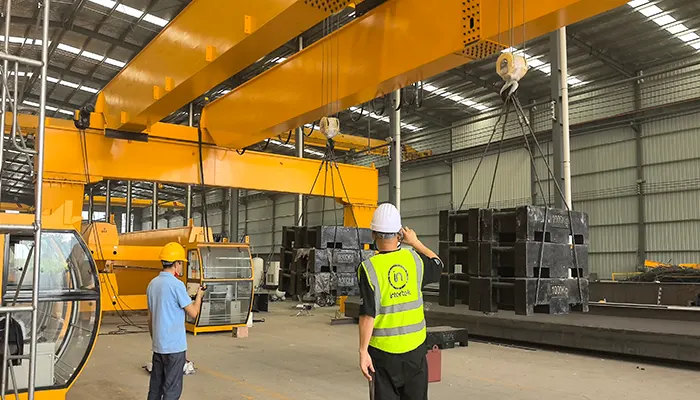
For Middle East EPC projects, an EOT crane is part of the overall plant design. The crane must match the building structure,
runway system, electrical supply, lifting process, and project specifications.
Yuantai can provide the key engineering data and documents required by owners, consultants, EPC contractors, and local installation contractors.
The aim is to make crane selection and building coordination easier before manufacturing starts – reducing the risk of redesign, delays,
and additional costs later in the project.
Technical Engineering & Project Documents – What Yuantai Provides to EPC Contractors
Yuantai provides a comprehensive engineering documentation package to support EPC contractors, consultants, and owners throughout the project lifecycle.
Key engineering documents and their purpose:
- Crane Selection – Capacity, span, lift, hoist, and crane configuration – Select the right crane for the application
- Technical Datasheet – Main crane specifications and performance data – Easy technical review and comparison
- GA Drawing – Crane dimensions, hook position, clearances, and interfaces – Coordinate with the building
- Wheel Load Data – Maximum/minimum wheel loads and wheel arrangement – Design the runway and supporting structure
- Crane Reactions – Vertical and horizontal reactions – Structural engineering and building design
- Runway Data – Rail, runway beam, and interface requirements – Coordinate crane with the workshop structure
- Motor & Component List – Motor power and major component details – Electrical and procurement review
- Electrical Drawings – Power and control circuits – Coordinate with the plant electrical system
- Foundation / Interface Data – Equipment loads and connection information where applicable – Coordinate civil and structural works
- ITP – Inspection and testing requirements – Control manufacturing quality
- FAT Documents – Test reports and inspection records – Verify crane performance before shipment
- Operation Manual – Operation and maintenance information – Support installation, operation, and maintenance
Most important for building engineers: Wheel load, crane reactions, runway requirements, overall dimensions, and hook clearance should be confirmed from the approved crane design – not estimated from the crane capacity alone.
Example: A 100-ton EOT crane with a 25 m span may generate significant wheel loads on the runway. The EPC structural engineer needs the manufacturer's actual calculated wheel loads and reactions – not a runway designed based only on the 100-ton lifting capacity.
Factory Acceptance Test (FAT) – Verifying Crane Performance Before Shipment
Before shipment, the crane can be inspected and tested according to the approved FAT procedure, applicable standards, and project requirements.
FAT items typically checked:
- Visual Inspection – Assembly, welding, painting, identification, and workmanship
- No-Load Test – Hoisting, trolley, and crane travel
- Rated-Load Test – Crane operation under rated load
- Hoisting Test – Hoisting/lowering, brake, and limit functions
- Cross-Travel Test – Trolley movement and control
- Long-Travel Test – Crane movement and braking
- Brake Test – Brake operation and load holding
- Limit-Switch Test – Hoisting and travel limits
- Electrical Test – Power, control, and protection functions
- Safety Test – Overload and other safety devices where applicable
- Overload Test – Only when required by the applicable standard or project specification
- Documentation Review – Test reports, certificates, and approved documents
Why FAT matters: FAT gives the EPC contractor, consultant, owner, or third-party inspector an opportunity to verify the crane before it leaves the factory. Any agreed corrections can be completed before packing and shipment – avoiding costly site modifications.
What EPC Contractors Should Provide – Complete RFQ Data for Accurate Proposals
To prepare an accurate technical proposal, the crane supplier should receive at least the following project information:
- Capacity – e.g., 50 ton
- Span – e.g., 22 m
- Lifting height – e.g., 12 m
- Runway length – e.g., 100 m
- Load type – Steel / machinery / vessel
- Operating hours – e.g., 16 h/day
- Lifting cycles – e.g., 10 cycles/hour
- Power supply – e.g., 415 V / 50 Hz / 3 Ph
- Installation – Indoor / outdoor
- Ambient temperature – e.g., 50°C
- Environment – Dusty / coastal / corrosive
- Hazardous area – If applicable (Zone, Gas Group, Temp Class)
- Control – Pendant / radio / cabin / PLC
- Project standard – Customer/EPC specification
- Inspection – FAT / third-party inspection
The more complete the project information, the more accurately Yuantai can determine the crane configuration, duty classification, motor and hoist selection, wheel loads, electrical system, environmental protection, and project documentation.
Recommended Workflow for EPC Projects – From Technical Inquiry to Commissioning
For EPC projects, the recommended workflow is:
Technical Inquiry → Crane Design → GA & Load Data → Drawing Approval → Manufacturing → FAT → Final Documents → Shipping → Installation → Commissioning
Why this approach works:
- Helps identify building, electrical, and crane interface issues before manufacturing
- Reduces the risk of redesign, delays, and additional costs later in the project
- Ensures all stakeholders (owner, consultant, EPC, and installation contractor) are aligned on the crane design and site interfaces
- Provides a clear documentation trail for project approvals and quality control
Yuantai – Your Trusted EOT Crane Engineering Partner for EPC Contractors in the Middle East
Reliable. Customized. Compliant. Delivered on Time.
EOT Crane Export Documentation – Shipping, Customs & Technical Papers
For Middle East projects, proper documentation is an important part of crane delivery. EPC contractors, consultants, customs agents, and end users may need different documents for technical approval, shipping, customs clearance, installation, and final handover.
Yuantai prepares export and technical documents according to the purchase contract and project requirements. The required document list should be agreed during the technical and commercial stage so that the supplier can prepare
the correct documents before shipment – avoiding delays at customs or during project handover.
Typical EOT Crane Documents – What You Need for Shipping, Customs & Technical Approval
Yuantai prepares a comprehensive documentation package to support shipping, customs clearance, installation, and project handover.
Typical EOT crane documents and their purpose:
- Commercial Invoice – Customs and commercial clearance
- Packing List – Shows package details, weights, and dimensions
- Bill of Lading – Shipping and cargo documentation
- Certificate of Origin – Confirms the country of origin (China)
- CE Documentation – Provided where required by the project
- Material Certificates – Material traceability where specified
- Motor Certificates – Motor technical/certification documents
- Electrical Drawings – Installation and electrical connection
- Operation Manual – Crane operation instructions
- Maintenance Manual – Inspection and maintenance guidance
- FAT Report – Records factory testing and inspection
- Load Test Report – Records load-test results where applicable
- Inspection Certificates – Inspection records required by the project
Important: Not every project requires the same document package. A standard workshop crane, an EPC petrochemical project, and an export project requiring third-party inspection may have very different documentation requirements.
For EPC projects, the required document list should be agreed during the technical and commercial stage so that the supplier can prepare the correct documents before shipment.
Third-Party Inspection – SGS, BV, TÜV, Intertek & Customer-Appointed Agencies
Some Middle East projects require inspection by an independent organization or a customer-appointed inspector before shipment.
Common inspection agencies:
- SGS – Third-party inspection and verification
- Bureau Veritas (BV) – Inspection and certification services
- TÜV – Testing, inspection, and certification
- Intertek – Inspection and testing
- Customer-Appointed Agency – Inspection according to owner/EPC requirements
Important: Third-party inspection is not automatically required for every crane order. It depends on the purchase contract, EPC specification, end-user requirements, financing conditions, or local project requirements.
What the buyer should do: State the inspection requirement clearly in the RFQ,
for example:
"FAT by manufacturer + third-party inspection before shipment, according to approved ITP."
This allows the crane supplier to include the correct inspection scope, documentation, and schedule in the quotation.
Documentation Best Practices – Agree the Document List Early, Avoid Customs & Handover Delays
Proper documentation planning is essential for a smooth crane delivery to the Middle East. Here are best practices for buyers and EPC contractors:
- Agree the document list early – During the technical and commercial stage, not after manufacturing
- Specify certification requirements – CE, ATEX, IECEx, CNEX, or other project-specific certifications
- Clarify third-party inspection – State whether SGS, BV, TÜV, Intertek, or a customer-appointed agency is required
- Confirm language requirements – English is standard, but some projects may require Arabic or other languages
- Request soft and hard copies – Electronic files for technical review, physical copies for customs and site handover
- Allow time for document review – Technical document approval can take time; factor this into the project schedule
By defining documentation requirements upfront, buyers can avoid:
- Customs clearance delays – Missing or incorrect shipping documents
- Technical approval rejections – Incomplete or non-compliant technical documents
- Project handover issues – Missing operation manuals, test reports, or certificates
- Additional costs – Rework, resubmission, or expedited document preparation
Yuantai – Your Trusted EOT Crane Supplier with Comprehensive Documentation Support
Reliable. Customized. Compliant. Delivered on Time.
EOT Crane FAQ – Your Questions Answered for the Middle East
Below are the most frequently asked questions about Chinese EOT cranes for Middle East industrial projects. Whether you are in the planning phase (considering crane type, duty, or certification) or the procurement phase (preparing an RFQ, comparing suppliers, or arranging shipping), these direct answers will help you make informed decisions for your project in Saudi Arabia, UAE, Qatar, Oman, Kuwait, or other GCC markets.
Single-girder vs double-girder – which Chinese EOT crane is right for my Middle East project?
Direct Answer:
- Single-girder = 1–20 tons, intermittent use, workshops, warehouses – more economical, lighter building load. Ideal for smaller Middle East workshops and maintenance facilities.
- Double-girder = 20–550+ tons, continuous operation, steel plants, mining, cement, petrochemical – higher capacity, wider spans, heavy-duty. Used in large-scale Saudi, UAE, and Qatar industrial projects.
Rule of thumb: Under 20 tons with occasional use → single. Over 20 tons or multi-shift operation in 50°C heat → double.
What makes a Chinese EOT crane "heavy-duty" – is it just the capacity?
Direct Answer:
No. Capacity alone does not define "heavy-duty." A 50-ton Chinese crane used once a day is very different from a 50-ton crane running 3 shifts, 16 hours/day in a Saudi steel plant.
Key factors for Middle East applications:
- Load spectrum (how much of the capacity is actually used)
- Lifting cycles per hour (frequent starts/stops)
- Operating hours per day (thermal and fatigue demands)
- ISO/FEM duty classification (M3–M8)
- Middle East environment (50°C+ heat, desert dust, coastal corrosion, hazardous areas)
Yuantai evaluates the complete operating profile – not just tonnage – to size motors, brakes, gearboxes, and structure correctly for Middle East conditions.
ATEX vs IECEx vs CNEX – which certification do I need for my Middle East oil & gas project?
Direct Answer:
These are different certification frameworks – NOT interchangeable. For Middle East oil, gas, and petrochemical projects, certification is critical.
- ATEX – European framework for explosive atmospheres. Specified by European EPC contractors.
- IECEx – International certification (IEC standards). Widely used on global oil & gas projects – ADNOC, Saudi Aramco, Qatargas.
- CNEX – Chinese certification for Ex equipment. Standard for Chinese-manufactured Ex cranes – can be upgraded to IECEx/ATEX on request.
- Ex d / Ex de – Protection concepts (flameproof) – not certifications. Applied based on Zone, Gas Group, and Temp Class.
Critical: If your Middle East project spec says "IECEx," confirm the Chinese supplier can provide it – do NOT accept "CNEX" unless the project allows it.
What information should I provide in my RFQ to get an accurate quote for a Chinese EOT crane?
Direct Answer:
To get a fast, accurate, and competitive quotation from a Chinese manufacturer, provide these 10 essentials:
- Capacity – e.g., 50 ton (max) / 30 ton (avg)
- Span – e.g., 25 m
- Lifting height – e.g., 12 m
- Runway length – e.g., 100 m
- Lifting cycles – e.g., 10 cycles/hour
- Operating hours – e.g., 16 h/day (2 shifts)
- Power supply – e.g., 415 V / 50 Hz / 3 Ph (UAE, Saudi, Qatar standard)
- Environment – e.g., Indoor, 50°C, dusty / coastal
- Hazardous area – e.g., Zone 1, IIB, T4 (if applicable)
- Certification – e.g., CE / IECEx / ATEX / SASO / client spec
More detail = more accurate engineering – girder type, hoist, motor sizing, wheel loads, and control architecture. This also helps the Chinese supplier quote with less contingency markup.
How do I compare quotations from Chinese vs European crane suppliers – beyond price?
Direct Answer:
Do not compare price and tonnage alone. Ask every supplier for the same technical scope:
- Design standard (Chinese GB/T, ISO, FEM, IEC, CMAA)
- Duty classification (M3–M8 – critical for Middle East heavy-duty applications)
- Hoist type (wire rope / open winch)
- Motor & electrical components (brands: Siemens, Schneider, ABB, SEW, Nord – or Chinese equivalents)
- Environmental protection (C4/C5 coating for coastal Saudi, UAE, Qatar)
- Certification (CE, ATEX, IECEx, SASO)
- Testing (FAT scope, load test, third-party inspection – SGS, BV, TÜV)
- Documentation (English drawings, manuals, certificates)
- Shipping (container vs breakbulk – Jebel Ali, Dammam, Hamad Port)
- Warranty & after-sales support
A lower Chinese price may mean lower duty, simpler components, or less documentation. A higher price isn't better unless it matches a real project need. Compare on the same technical basis for your Middle East application.
How does shipping, logistics, and documentation work for a Chinese EOT crane to the Middle East?
Direct Answer:
Shipping methods from China:
- Container – for smaller components (hoists, motors, panels, control cabinets)
- Breakbulk – for large girders and oversized parts (common for 50+ ton cranes)
Common Middle East destination ports:
- Jebel Ali (UAE) – most common
- Dammam (Saudi Arabia) – Eastern Province
- Jeddah (Saudi Arabia) – Western Region
- Hamad Port (Qatar)
- Sohar / Salalah (Oman)
- Shuaiba (Kuwait)
Shipping time: Typically 25–45 days depending on port, vessel schedule, and transshipment.
Required documents (customs + technical):
- Commercial Invoice & Packing List
- Bill of Lading
- Certificate of Origin (China) – crucial for customs clearance
- CE / IECEx / ATEX certificates (if required)
- Material & Motor Certificates
- Electrical Drawings (English)
- Operation & Maintenance Manuals (English)
- FAT Report & Load Test Report
- Third-party inspection reports (SGS, BV, TÜV – if specified)
Best practice: Agree the document list during the commercial stage – not after manufacturing – to avoid customs delays at Jebel Ali or Dammam, or project handover issues with the EPC contractor.
Yuantai – Your Trusted Chinese EOT Crane Supplier for the Middle East
Reliable. Customized. Compliant. Delivered on Time.
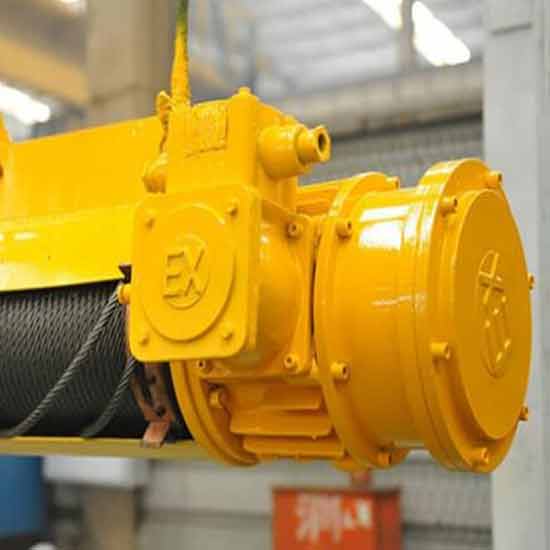

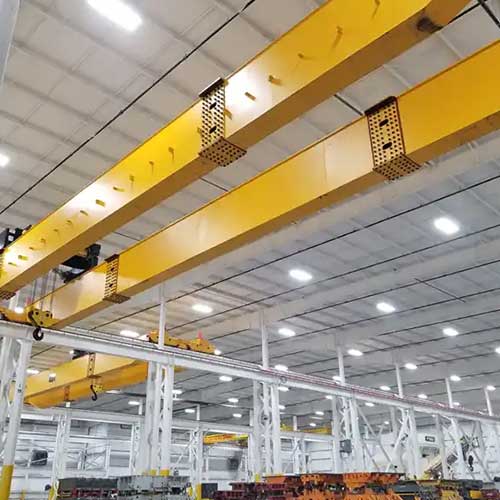


Yuantai Cranes
Overhead Crane Manufacturer with CE, ISO, SGS, CNEX Certificates.
- Main Specifications - Capacity: 0.5–550 tons | Span: up to 40m | Speed: 0.8–12 m/min | Duty: A3–A7 | Power: 380–690V, 50/60Hz | Control: pendant/remote/cabin
- Full engineering: FEA/PLC/VFD + in-house build + global delivery + on-site support, for workshops, factories, EPC contractors, industrial projects, etc.
- Support: design, manufacturing, testing, service – end-to-end, customized lifting solutions worldwide.
How to Get an Accurate Crane Price for Your Application?
Tips: Copy the spec list, fill in your details, and paste it into the form on the right/ down-below for a quick price.
- Crane type:_____ . (e.g., overhead crane, gantry crane, jib crane)
- Max weight to lift:_____ tons. (e.g., 2t, 5t, 10t, 20t, 50t)
- Lifting height:_____ m. (How high does the hook need to reach?
- Workshop width (span):_____ m . (Distance between the two crane rails)
- Travel distance:_____ m . (How long does the crane need to move along the runway?)
- Control type:_____. (Pendant / remote / cabin Control)
- Power supply:_____. (Local voltage & frequency – e.g., 380V, 50Hz, 3-phase)
- What will it be used for?_____ (e.g., steel fabrication, concrete products, mold handling, general manufacturing, etc.)
- Any special requirements?_____ (e.g., extreme temperature, dusty or explosive environment, special paint color, etc.)
Just leave a message via the contact form and our hoist and crane engineer will contact you with in 24working hours.
Get Your Custom Quote–Quick & Easy
Fill in what you know. Skip what you don't – we'll help.Any question will be reply with 24 working hours